


An engineering team lowered a generator to the ocean floor and ran it using heat from an underwater volcano. They wanted to find out whether it could produce more electricity than it needed to operate.
For 8.7 seconds, the system did just that.
Seattle-based Endurance Energy announced the results of its Adélie experiment on October 19 in a company press release.
The test took place at Axial Seamount, an underwater volcano about 480 kilometers (300 miles) off Oregon. Here, hot springs emerge from the seabed roughly 1,500 meters (5,000 feet) below the ocean’s surface.
The water gets its heat from molten rock beneath the volcano. Seawater seeps into cracks in the seabed, heats up underground, and flows back into the ocean through openings called hydrothermal vents.
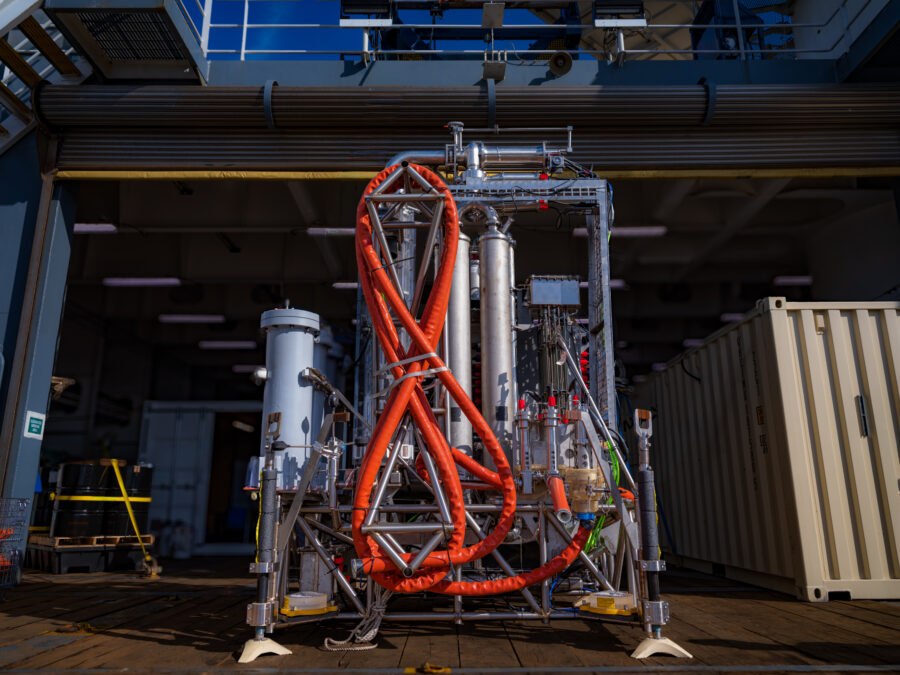
Endurance’s engineers set out to capture some of that heat. On land, geothermal power plants already use hot water or steam from underground to generate electricity. Heat drives a spinning machine called a turbine, which turns a generator. This energy source doesn’t depend on sunshine or wind.
To make it work on the seabed, the team first needed enough hot water flowing through its equipment. Engineers drilled a well extending 16 meters (52 feet) beneath the ocean floor, installed a pipe inside it, and cemented it in place.
Water emerged at about 260°C (500°F), but its flow was too restricted to run the generator.
The engineers connected Adélie to a nearby natural vent. Heat for the successful test therefore came from water already flowing out of the seabed.
During the September 27 experiment, that water was approximately 281°C (538°F). High pressure at this depth allows water to remain liquid well above its surface boiling temperature of 100°C (212°F).
As the system ran, its turbine reached approximately 26,000 revolutions per minute.
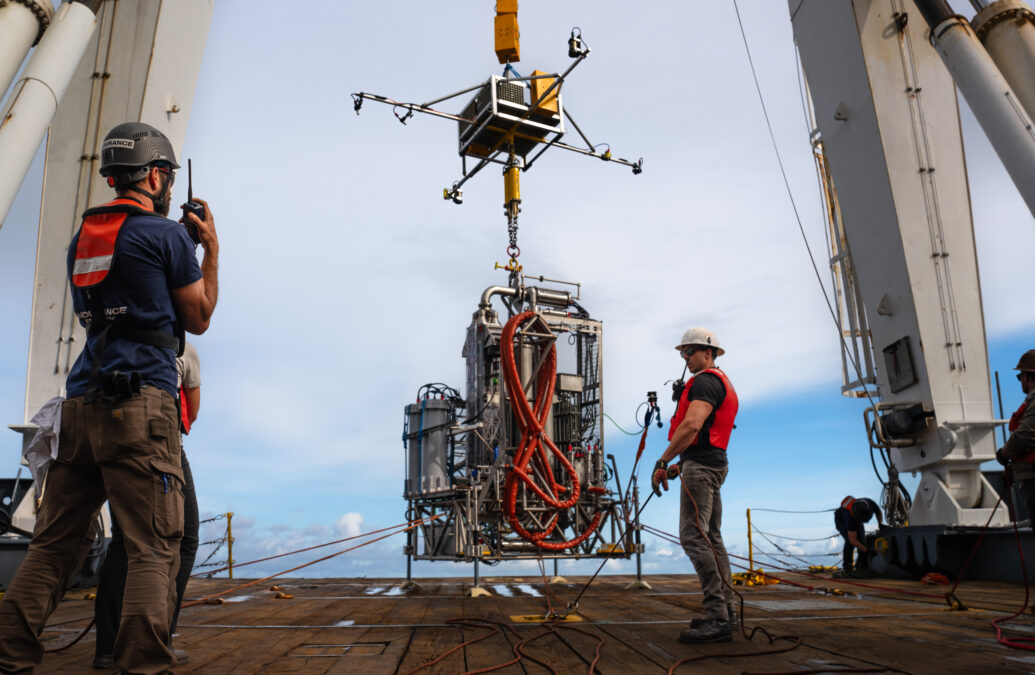
The team controlled the equipment from Seattle. Scientists already monitor the active underwater volcano using instruments connected to shore. An existing undersea cable network called the Regional Cabled Array, operated by the University of Washington, provided the connection for Endurance’s experiment.
The pumps and other components also consumed electricity. After subtracting that demand, the company’s press release reported a median surplus of about 2 kilowatts during the 8.7-second interval, with a peak of 16.5 kilowatts.
Researchers have generated electricity from seafloor vents before. In a study published in Applied Energy in 2016, a Chinese team described a device that converted the temperature difference between hot vent water and cold seawater into electricity. It continuously produced 2.6–3.9 watts during its field test and powered a data logger and an LED lamp.
Endurance’s longer-term goal is to supply customers on land. The company says its first commercial project is being developed in Tonga, a Pacific island nation whose electricity grid relies largely on imported diesel. It is targeting first power in 2027.
Reaching that goal will require much longer operation. Adélie’s run stopped when a safety system protecting its battery from excessive current activated. About 10 minutes later, a pump power cable failed during a restart attempt.
“Gentoo, Endurance’s next 100kW test generator, is an upgraded Adélie. It deploys this winter and targets higher power and longer runs,” Endurance founder and CEO Andrew Redd told ScienceAlert.
Redd said the updated equipment will address the battery protection and pump cable problems encountered during the test.
“Endurance has a new drill coming online next year which will reach 500m depth at maximum,” Redd said.
That’s about 1,640 feet, compared with the current drill’s 80-meter (260-foot) maximum. The company expects deeper wells to provide greater water flow. Redd said the team still needs to achieve sustained generation from a drilled well and develop equipment that operates reliably for months or years.
These figures describe electricity production during operation. They don’t account for the energy spent on shipping, drilling, and installation. The measurements come from Endurance, and its announcement includes no peer-reviewed paper reporting the results.
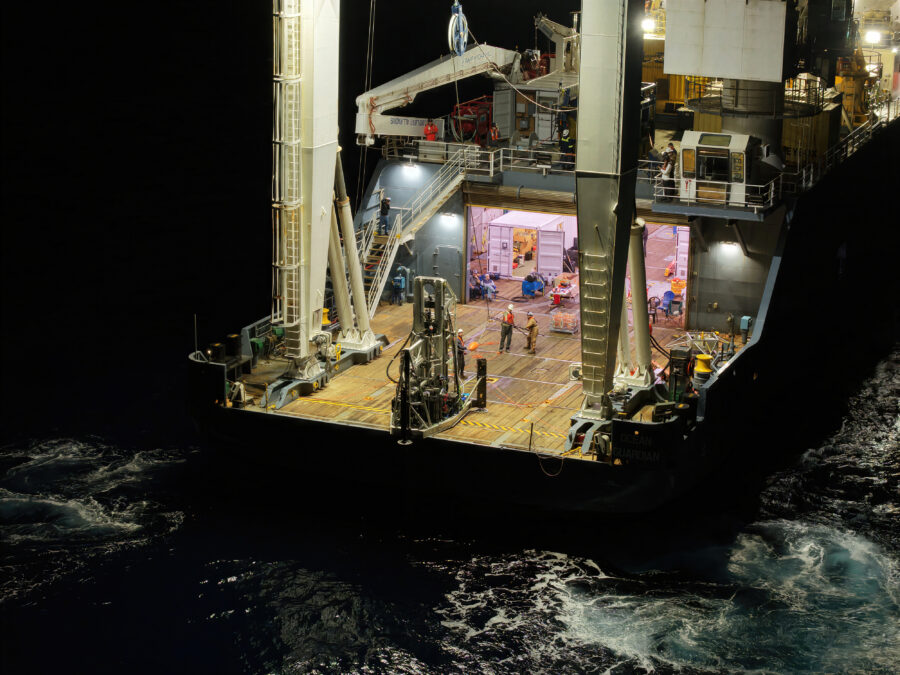
Environmental questions also remain. Microbes around vents use chemicals for energy, and tubeworms and other animals depend on those microbes.
Endurance says it chose a drilling location away from the vent chimneys and nearby animals. Its monitoring found no notable change in the life around the site, the company reported. According to the announcement, more than 40 water, rock, and mineral samples were sent to independent laboratories for analysis. Longer-term effects remain to be established.
“We recognize that larger systems running continuously over years could affect the surrounding water column, biological communities and seafloor habitat,” Redd said.
The company is working with independent researchers on further analysis and studies, Redd added.
The experiment showed that the generator could briefly produce more electricity than it consumed. The next test is whether it can keep running. Longer deployments will also help establish how it affects the surrounding ocean.
This article was fact-checked by Fiona MacDonald and edited by Fiona MacDonald. While we pride ourselves on our process, we are only human. If you spot a mistake, please let us know.