




The discovery of King Tutankhamun’s tomb in the Valley of the Kings started with the top of a staircase. On November 4, 1922, archaeologists led by Englishman Howard Carter cleared away rubble that had built up some 3,000 years prior. They were digging for the tomb of Ramesses VI. What they found was a step leading downward.
This wasn’t a pioneering expedition into unknown territory. The Valley of the Kings had been extensively studied and excavated before, but Tutankhamun’s tomb had remained hidden—and relatively well protected from looters.
In effect, the work done on one ancient pharaoh’s tomb (Ramesses VI) had helped preserve Tutankhamun right next door. In the intervening millennia, no one had cleared away these limestone chippings, and it wasn’t widely believed that there was another tomb to be found on the site. But once Carter’s team found the staircase, they made rapid progress. A sealed door at the bottom of the stairs displayed Tutankhamun’s name. Beyond that, there was a passage of rubble and a second sealed doorway.
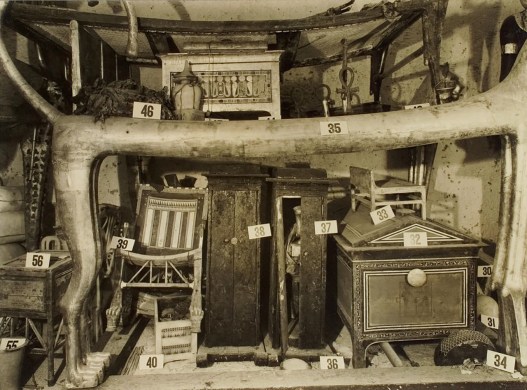
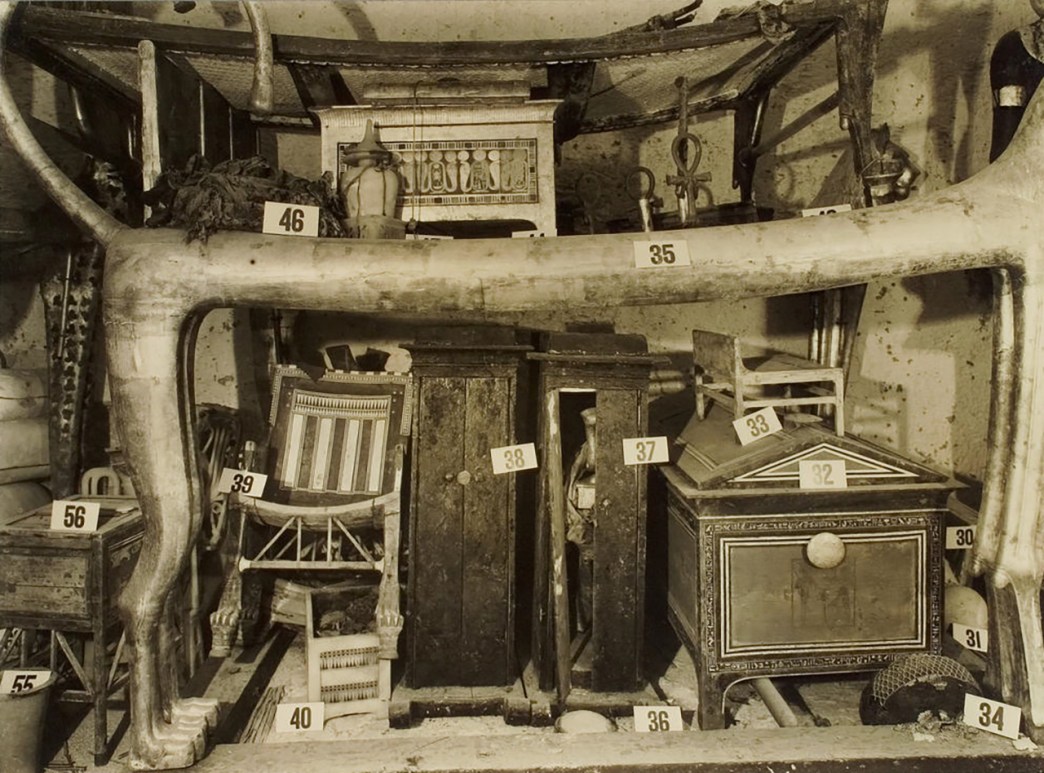
The tomb was finally breached on November 26th, through a small hole Carter made to push a candle through and assess what was inside. “As soon as one’s eyes became accustomed to the glimmer of light, the interior of the chamber gradually loomed before one, with its strange and wonderful medley of extraordinary and beautiful objects heaped upon one another,” Carter wrote in his journal.
The actual burial chamber—and Tutankhamun in all his regal glory—wouldn’t be discovered until February 16th, as the archaeologists went deeper into the tomb. But it was immediately apparent that this was the most complete and undisturbed Egyptian tomb discovered in modern times—offering up an unprecedented collection of ancient artifacts. More than 5,000 objects in all were removed for museum display, including the golden burial mask, coffins, furniture, clothing, jewelry, weapons, and chariots.
Tutankhamun’s tomb was far from the biggest or grandest to be discovered by archaeologists, but what made it special was how undisturbed it was, adding finer detail to what was already understood about pharaohs and their burial customs.
If you find yourself in the Valley of Kings today, you can still visit the king in his final resting place—walking down the same steps Howard Carter did more than a century ago.
Enjoying Nautilus? Subscribe to our free newsletter.
Lead Image: Harry Burton/Public Domain


