The world’s largest continuous sand desert wasn’t always so unforgiving.
The Rub’ al Khali, or ‘Empty Quarter’, stretches for 1,000 kilometers (620 miles) of endless sand across the Arabian Peninsula.
But during the Pleistocene, it was a different story.
In wetter phases of deep history, the world’s biggest sea of sand became at times a more hospitable place.
During these windows, temporary green corridors emerged in the Empty Quarter, through which early humans could have dispersed out of Africa, supported by the vital waters of ancient pop-up lakes that have long since disappeared.
But there’s something mysterious about these ancient lakes.
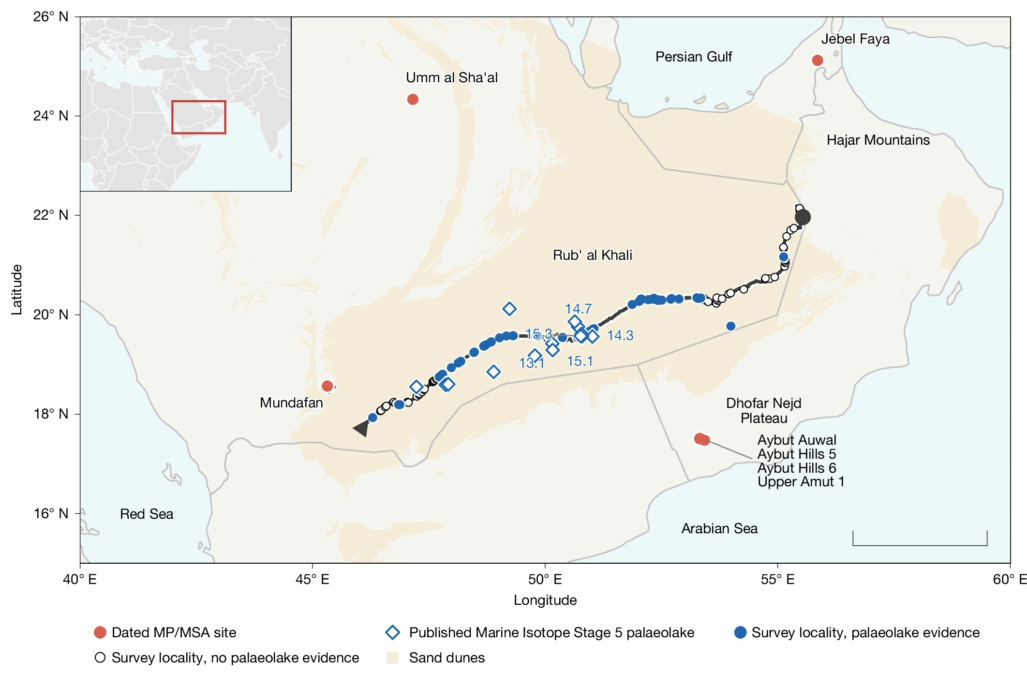
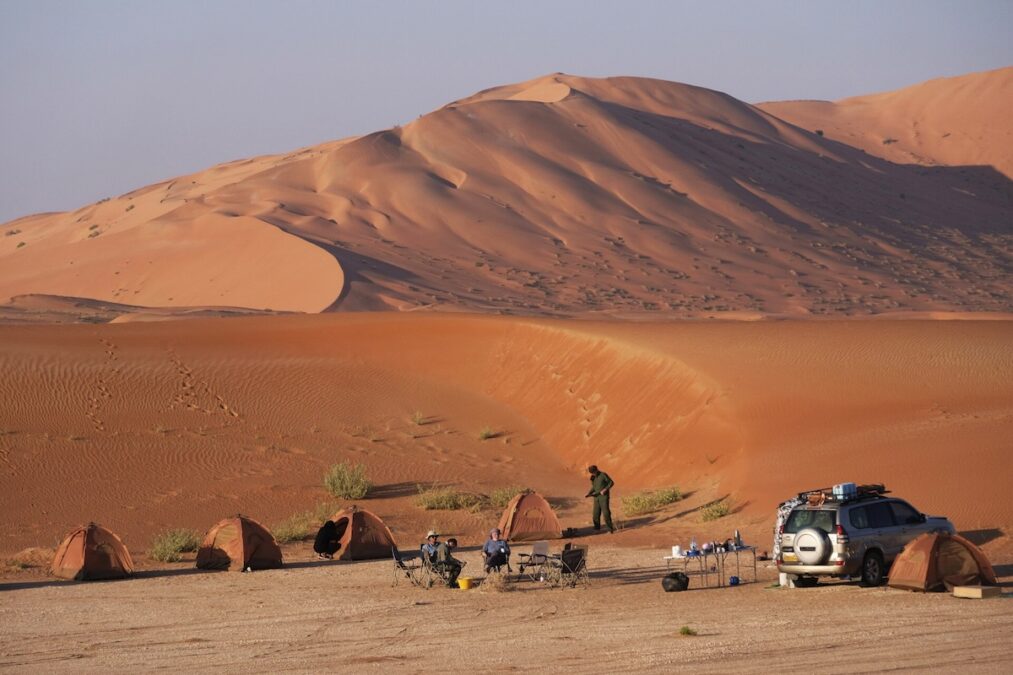
In a new study in Nature, a team of researchers trekked across approximately 1,500 kilometers of the Empty Quarter, looking for clues of these ancient lake deposits and signs of their hominin settlement.
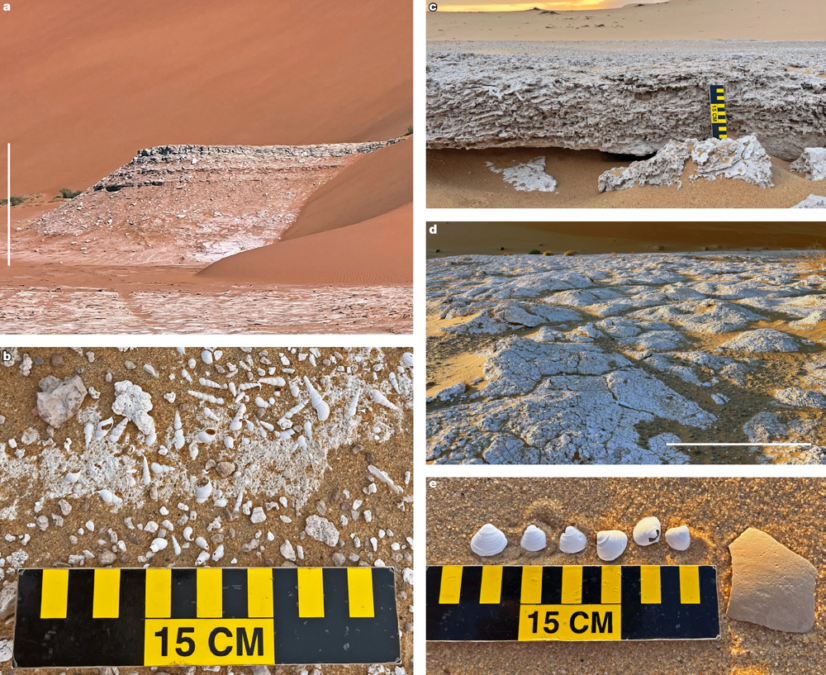
In total, they found evidence of ancient lakes at 55 of the 125 locations investigated, with previous research dating lake deposits in the region to approximately 122,000–67,000 years ago.
But no traces could be seen of ancient humans.
“We stood on the shore of one ancient lake after another, yet found nothing made by human hands,” says geoarchaeologist Rudolf Dellmour from the University of Vienna in Austria.
For decades, researchers have hypothesized that the existence of ancient, temporary lakes and neighboring grasslands in the Rub’ al Khali would have attracted human settlement, as groups migrated from Africa, across Arabia, and into Asia.
But while water is certainly vital for life, the new findings suggest ancient humans needed more than water alone if they were to set up camp.
Of the 125 locations surveyed on their trek through the Empty Quarter, the researchers found only 10 sites featuring geological deposits of knappable stone that would have enabled ancient humans to develop stone tools, and all were located on the outer margins of the desert.
So while many of the ancient freshwater lakes would have supported life, the surface geology of the desert’s central basin – composed of carbonate and evaporite formations – wasn’t suitable for stone tool manufacture, which would have been a prerequisite for sustained human settlement.
“That humans need more than just a water supply is hardly a new archaeological insight,” explains prehistoric archaeologist Emanuele Cancellieri from the University of Algarve in Portugal, who wasn’t involved with the study but has authored a commentary on it in Nature.
“The importance of this research lies instead in subjecting that idea to an ambitious study.”
That ambitious study extends beyond conducting the fieldwork in the Rub’ al Khali.
Alongside their desert expedition, the researchers developed a model to refine predictions of ancient settlement sites in the region, incorporating both water availability and geological considerations.
According to the researchers’ calculations, 57 percent of the terrain that would have been accessible to water in prehistoric Arabia lacked suitable stone for tool-making.
In their study, they note that the availability of knappable stone has previously been linked to human occupation in several historical and geographical scenarios, including Libya, Tibet, Egypt, South Africa, and North America.
“These convergent patterns, across different geological substrates, hydrological regimes and chronological contexts, provide analogical support for a ‘tethering’ effect whereby stone-tool-dependent populations become tied to raw-material sources,” the researchers write.
In many of those settings, water was widely available, so the distribution of knappable stone played a more visible role in determining where humans settled.
In Arabia, the same rules applied, but the presence of the biggest continuous desert in the world meant human migration faced a more formidable and fractured challenge.
“The Arabian Peninsula seems to have comprised a patchwork of discrete zones where water and lithic raw materials co-occurred,” the researchers explain.
“These results indicate that ‘Green Arabia’ was a lithic archipelago whose islands were defined as much by geology as by climate; dispersal models that omit lithic raw-material distributions may systematically overestimate the area habitable by stone-tool-dependent populations.”
In other words, if a lake appears in the desert, it doesn’t necessarily make a town.
The findings are reported in Nature.
This article was fact-checked by Rachel Garner and edited by Rebecca Dyer. While we pride ourselves on our process, we are only human. If you spot a mistake, please let us know.