



Hello Nature readers, would you like to get this Briefing in your inbox free every day? Sign up here.

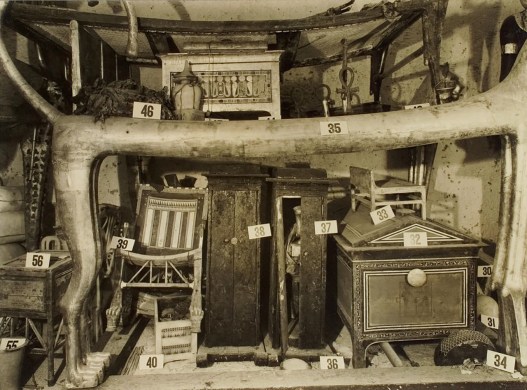
Inscriptions at the Cova de la Font Major cave system in Catalonia in northeastern Spain prompts rethink of prehistoric population and cultural trends. Credit: Vergès Bosch, J. M., Salas-Altès, M./Antiquity
Archaeologists have described hundreds of rock-art engravings dating back more than 25,000 years in a cave frequently visited by tourists in Catalonia — a region of northeastern Spain that was thought to be almost devoid of palaeolithic art. The cave system has been open to the public for decades and became a museum in the 1990s, but these motifs were missed because they “are really difficult to see”, says archaeologist and study co-author Míriam Salas-Altès. “You have to play with light from different directions to see the depressions.”
Nature | 4 min read
Flexible working policies in academia, intended to make life easier, are having the opposite impact for many women. A survey of more than 10,000 academics with children found that women were more likely to do most of the parenting. That was partly because women used flexible hours to take on more caring responsibilities, whereas men in academic couples relied on their female partner to do the flexing.
Nature | 8 min read
Reference: Gender, Work & Organization paper & European Journal of Higher Education paper
NASA’s Neil Gehrels Swift Observatory, which gathered valuable data on cosmic explosions, has been destroyed by a fiery fall into Earth’s atmosphere. In August, NASA partnered with a private company to attempt a first-of-its-kind rescue mission to boost Swift back into orbit, but the LINK spacecraft wasn’t able to grab on.
Features & opinion
A farmer receives an unsatisfying answer to a burning question in The oracle of the second quadrant.
Nature | 6 min read
Andrew Robinson’s pick of five science books to read this week includes an exquisitely illustrated survey of plants with medical properties, an engrossing history of smell and an argument for the reality of time’s arrow.
Nature | 4 min read
Linguists and historians have long debated the origin stories of the Celtic and Germanic languages. To help shed light on where they might have come from, a team has looked at ancient DNA to trace the migration patterns of people who might have carried these languages with them as they moved across Europe.
Nature Podcast | 25 min listen
Subscribe to the Nature Podcast on Apple Podcasts, Spotify or YouTube Music, or use the RSS feed.
Today Leif Penguinson is swimming in the Paraguay River in the northern Pantanal wetland region of Brazil. Can you find the penguin?
The answer will be in Monday’s e-mail, all thanks to Briefing photo editor and penguin wrangler Tom Houghton.
This newsletter is always evolving — tell us what you think! Please send your feedback to [email protected].
Thanks for reading,
Flora Graham, chief editor, Nature Briefing
With contributions by Jacob Smith
• Nature Briefing: Careers — insights, advice and award-winning journalism to help you optimize your working life
• Nature Briefing: Microbiology — the most abundant living entities on our planet — microorganisms — and the role they play in health, the environment and food systems
• Nature Briefing: Anthropocene — climate change, biodiversity, sustainability and geoengineering
• Nature Briefing: AI & Robotics — 100% written by humans, of course
• Nature Briefing: Cancer — a weekly newsletter written with cancer researchers in mind
• Nature Briefing: Translational Research — covers biotechnology, drug discovery and pharma