

Camera traps are important devices for conservationists and photographers, providing a non-invasive way in which they can keep tabs on the behaviors and movements of wildlife over time. Occasionally, camera traps also help to identify a new species too.
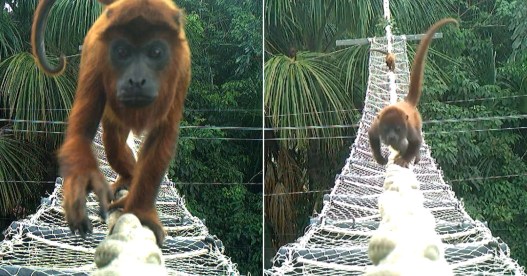
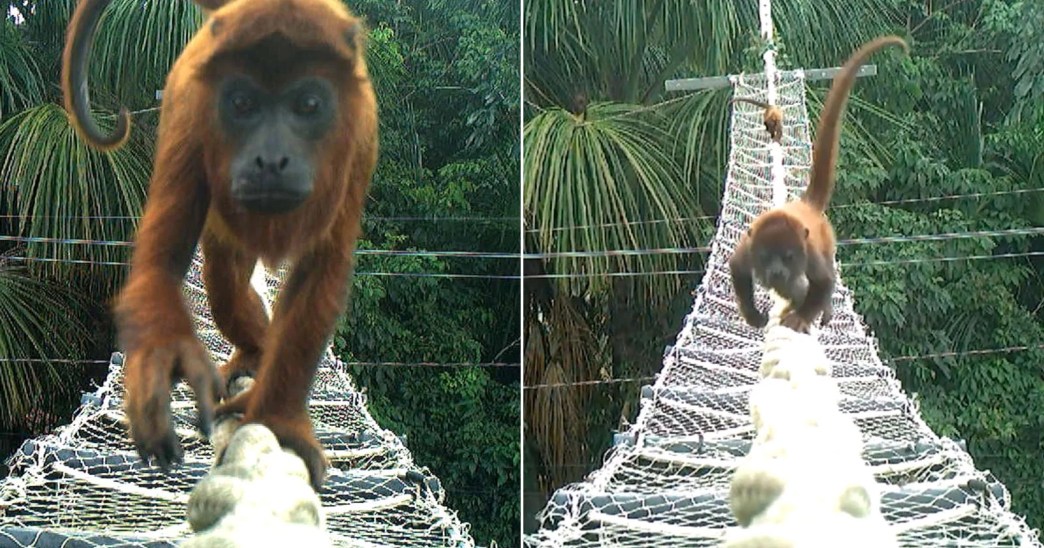
Case in point: A camera trap embedded in the Alta Floresta region of the Amazon rainforest, toward the western edge of Brazil, snapped a photo of a new howler monkey species, Alouatta matogrossensis, not long after the species was first described in a study in Communications Biology.
Read more: “Qatari Sand Cats Caught on Camera for the First Time”
Conservationists set up the trap on the end of a rope bridge installed to keep forested areas connected for tree-dwelling animals. Such bridges enable them to safely cross roads and prevent populations from declining through isolation. “We were all amazed that we were providing safe crossing opportunities for a new monkey species,” Fernanda Abra, a road ecologist who leads Projecto Reconecta, told National Geographic.
As is often the case when a new species is discovered, this type of howler monkey is under threat from several environmental pressures. If it wasn’t, experts likely would have come across it earlier.
In fact, A. matogrossensis has been hiding in plain sight. Previously, researchers had filed it away as being a more common Purus red howler (Alouatta puruensis). The fresh analysis of its genetic and physical characteristics revealed the distinction. The team behind the new study thinks A. matogrossensis may have been around for some 500,000 years, contained by rivers on one side of their natural habitat, and by a tropical savanna on the other.
According to study author Jean Boubli, from the University of Salford in the U.K., this patch of ecosystem is “where the forest is at its worst shape in the whole of Brazil.” Deforestation related to agriculture and urbanization has left smaller and smaller areas for these animals to live, even without considering the threat from road vehicle collisions.
With new rope bridges and camera traps—as well as a better understanding of the species that live in this part of the world—conservationists now have a better chance of helping the howler monkey population to grow—and discovering even more species before it’s too late.
Enjoying Nautilus? Subscribe to our free newsletter.
Lead Image: Reconecta Institute/SNZCBI