A new review warns that unless countries treat food safety as core health infrastructure, the next pandemic could disrupt supply chains, erode consumer trust, and expose a critical weakness in global preparedness.
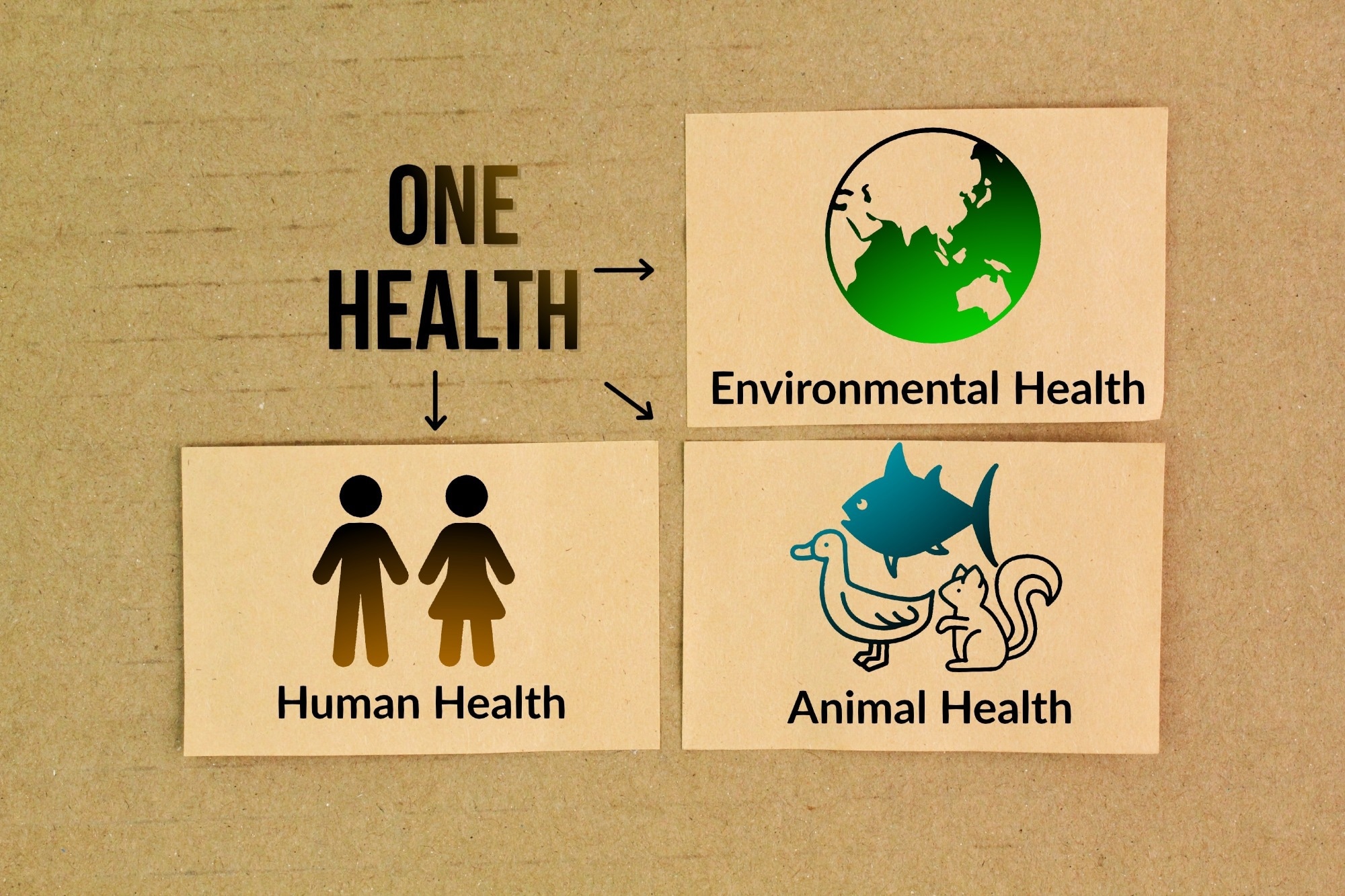
Perspective: Building resilient food safety systems through a One Health approach to prepare for the next pandemic. Image Credit: MAFPHOTOART8 / Shutterstock
In a recent ‘Perspective’ review published in the journal npj Science of Food, researchers applied a holistic One Health lens to examine how public health crises, including pandemics, can undermine food safety governance. The review examined vulnerabilities exposed during past disease outbreaks and analyzed the potential for severe, asymmetric disruption from future foodborne pandemics.
The review concluded that integrating downstream food safety controls into national emergency planning is vital to safeguarding global public health and economic stability.
Background
Against the backdrop of the recent COVID-19 pandemic, public health conversations and research efforts have intensively scrutinized how viruses and other pathogens spread through human communities to prevent future large-scale outbreaks. These efforts have often emphasized the direct clinical and epidemiological impacts of pandemics, including the risks of airborne transmission.
Epidemiological and public health research, however, has paid comparatively limited attention to the structural stability of food supply chains and their bi-directional association with pandemics.
The importance of food safety and security cannot be overstated. Evidence from past crises suggests that when pandemics emerge, regulatory institutions can experience serious operational disruption. For example, during the COVID-19 crisis, lockdowns and workforce illnesses have been documented as rapidly disrupting food oversight, leading to significant reductions in routine inspections at food processing facilities.
Simultaneously, laboratories that formerly tested food for potential pathogens shifted their analytical focus to human diagnostics. Food scientists have further suggested that during pandemic periods, public anxieties can drive people toward unmonitored informal markets, escalating risks of contamination and food fraud.
These systemic vulnerabilities surface regardless of whether the primary pathogen is air- or foodborne, underscoring the need for a structured framework that accounts for both primary pathogen dispersal mitigation and safe, stable food systems. One widely used framework aiming to address this requirement is “One Health”, an approach that recognizes that human, animal, and environmental health are deeply interdependent.
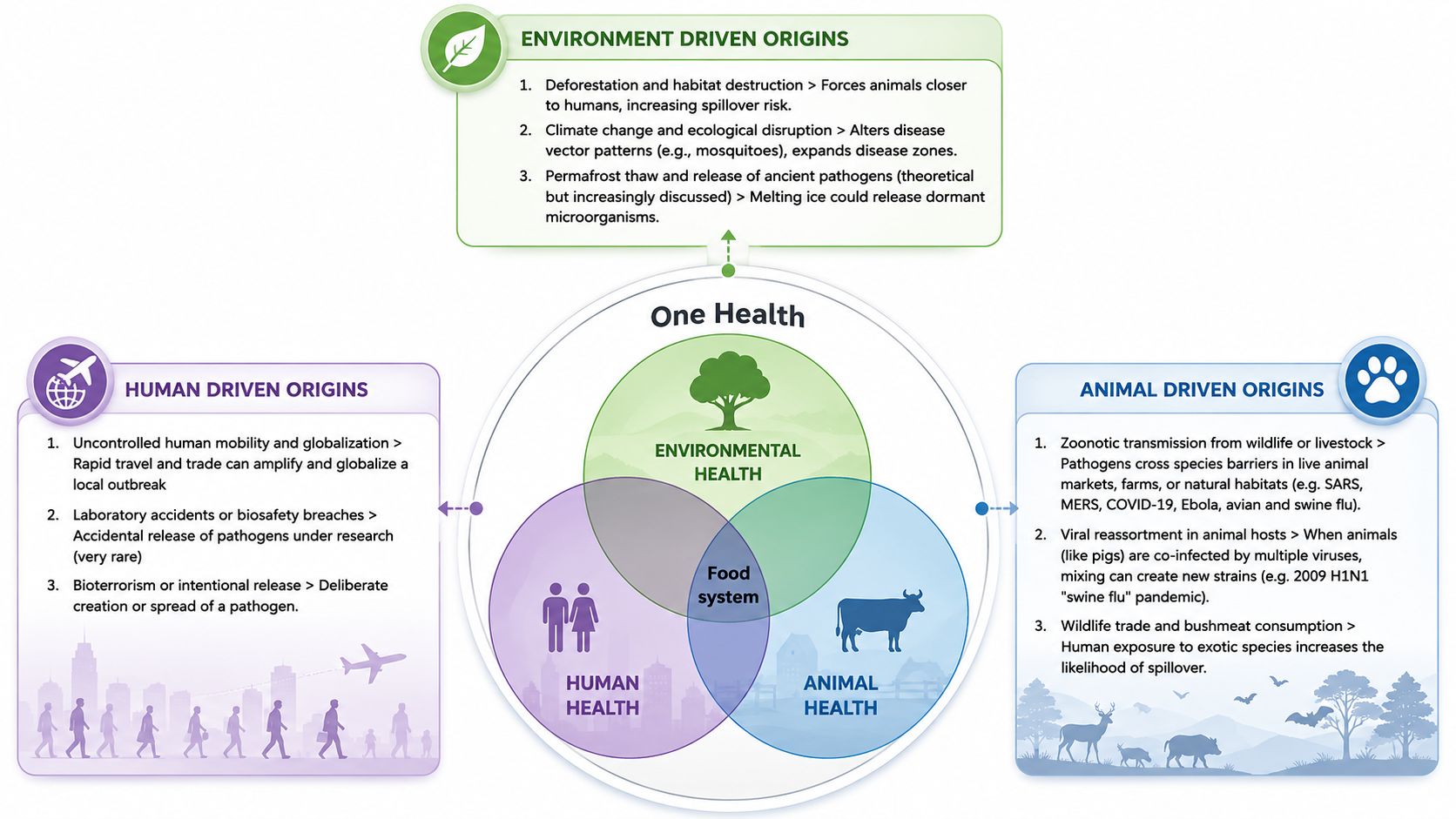
The Venn diagram illustrates the interconnected domains of Human Health, Animal Health, and Environmental Health, with the Food System at their intersection. Each domain contributes distinct but overlapping drivers of pandemic emergence: human-driven, animal-driven, and environment-driven. These drivers interact within agrifood systems, influencing the risk, scale, and transmission pathways of emerging infectious diseases. Image adapted from Di Martino, M., Shadomy, S., Topazio, D., & LeJeune, J. T. (2026). Building resilient food safety systems through a One Health approach to prepare for the next pandemic. npj Science of Food, 10(1). DOI – 10.1038/s41538-026-00798-4 using ChatGPT / OpenAI
About the review
This narrative review synthesized peer-reviewed scientific literature and institutional reports to explore the relationship between pandemics, food safety, and agrifood system resilience through the lens of the One Health framework. The review drew on literature and reports published between 1996 and 2025, identified through targeted searches of bibliographic databases and institutional repositories, with a focus on pandemic drivers and their downstream effects on food governance.
The review subsequently used a conceptual framework built on the intersection of human, animal, and environmental systems, in which both direct and indirect hazards across these domains were systematically evaluated to map their systemic risks.
In parallel, the review sought to elucidate potential future threats from foodborne pathogens, and the authors considered a 2024 World Health Organization (WHO) framework that evaluated 1,652 pathogens and identified 35 as high risk for causing a Public Health Emergency of International Concern or a pandemic based on virulence and transmission traits. Of the 35 high-risk pathogens, seven, including four bacteria and three coronaviruses, were highlighted as having the greatest potential for food-related introduction and wider spread through human populations.
Finally, the review contrasted the indirect economic impacts of airborne pathogen crises with industry-specific data from historical foodborne outbreaks.
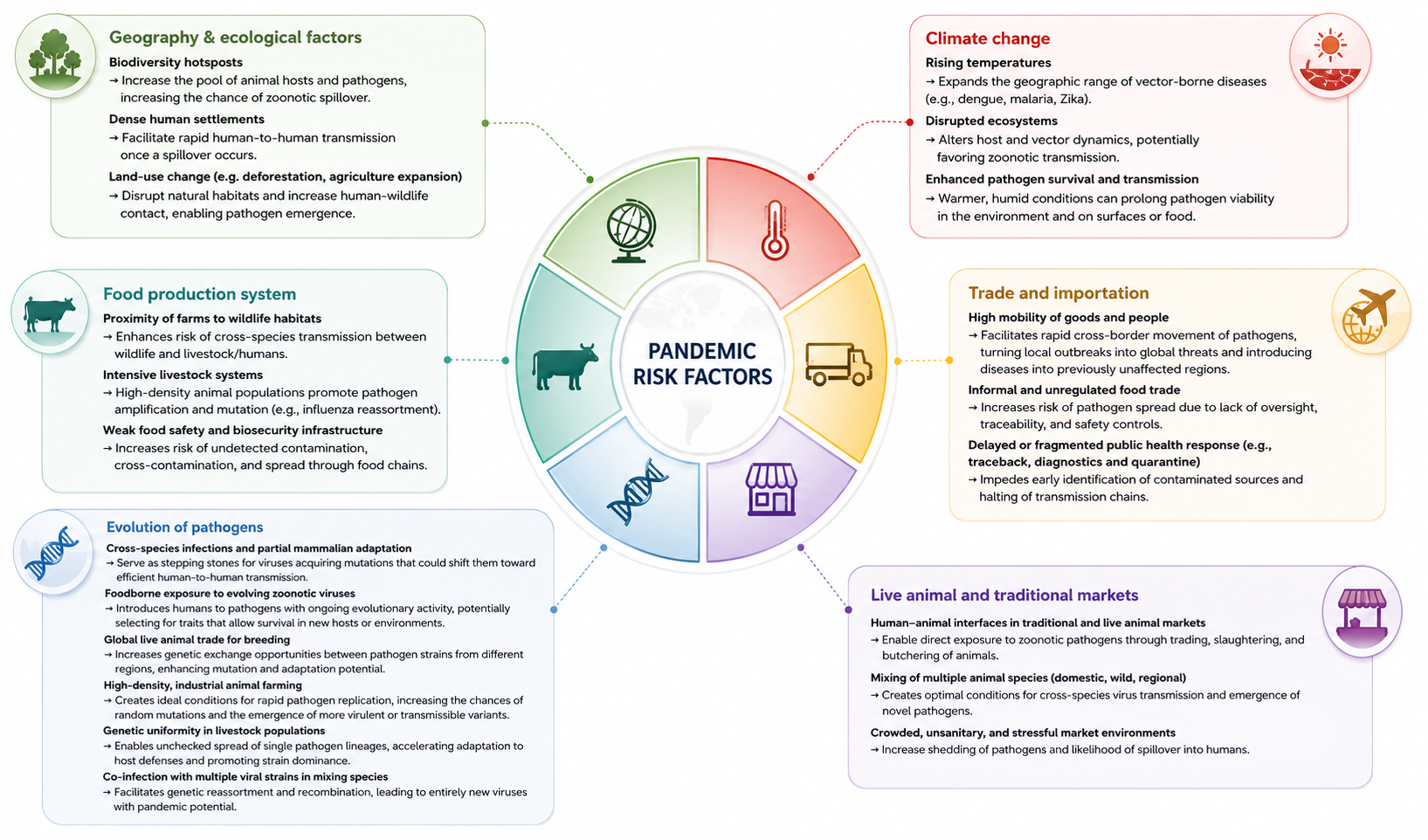
The diagram illustrates six interconnected domains contributing to pandemic risk: geography and ecological factors, climate change, food production systems, trade and importation, pathogen evolution, and socio-political conditions. Each domain highlights specific risk-enhancing mechanisms that facilitate zoonotic spillover, pathogen amplification, and cross-border transmission. Image adapted from Di Martino, M., Shadomy, S., Topazio, D., & LeJeune, J. T. (2026). Building resilient food safety systems through a One Health approach to prepare for the next pandemic. npj Science of Food, 10(1). DOI – 10.1038/s41538-026-00798-4 using ChatGPT / OpenAI
Review findings
The review described environmental changes as one part of a broader set of interacting factors that transform regional pathogenic spillover events into global pandemics. Deforestation and human land-use change, for example, result in formerly wildlife-restricted pathogens and vectors overlapping with human settlements, a scenario exacerbated by the high density of modern human communities and the livestock that accompany them.
Concurrently, intensive industrial livestock farming can foster pathogen amplification, reassortment, and evolution, while live animal markets create high-risk interfaces for interspecies transmission. One of the best examples of this is the H5N1 avian influenza virus (clade 2.3.4.4b), which has spread across bird and mammal populations and has remained infectious in raw dairy products.
When examining the impacts of a potential foodborne pandemic on the global economy and food security, the review argued that the economic fallout of such a pandemic would be targeted, persistent, trust-driven, and arguably more asymmetric than that of COVID-19.
While COVID-19 caused a sharp 12.2% contraction in global goods trade in the second quarter of 2020, food trade remained relatively protected. Conversely, a foodborne pandemic could rapidly erode consumer and regulatory trust, triggering import bans, precautionary restrictions, and sharp demand shocks.
These outcomes were based on severe baseline metrics from historical localized outbreaks, such as the 2008 US Salmonella outbreak, which was erroneously linked to contaminated tomatoes and estimated to have cost the country’s tomato industry more than $100 million.
The 2011 European E. coli outbreak was documented to result in even greater losses. To mitigate the pathogen’s dispersal, export bans, trade restrictions, and retail pullbacks followed, resulting in a peak loss of €417 million per week for the region’s producers.
Conclusions
The review concludes that ensuring food safety is a critical foundation for global food security and emphasizes that unless international policy shifts from viewing food safety as a secondary issue to a core pillar of health infrastructure, our food supply will remain an Achilles’ heel during the next pandemic crisis. However, the authors also emphasize that food safety is necessary but not sufficient for food security, which also depends on access, availability, affordability, infrastructure, and broader socio-economic conditions.
The authors recommend five measures aimed at mitigating these challenges: 1. Integrated food safety and pandemic planning, 2. Multisectoral surveillance and early warning, 3. Stronger laboratory testing capacity, 4. The formation of rapid-response workforces and regulatory teams, and 5. Modernized regulatory frameworks and policies.
Want to read later? Download your PDF copy by clicking here.
Journal reference:
- Di Martino, M., Shadomy, S., Topazio, D., & LeJeune, J. T. (2026). Building resilient food safety systems through a One Health approach to prepare for the next pandemic. npj Science of Food, 10(1). DOI – 10.1038/s41538-026-00798-4. https://www.nature.com/articles/s41538-026-00798-4