


We had so much hope for new generations of Alzheimer’s drugs, but unfortunately, many just aren’t performing like we thought they would.
A rare brain autopsy now hints at why.
According to a recent case study published in JAMA, a discontinued Alzheimer’s drug called aducanumab may have partly failed because it does not penetrate every wrinkle of the brain.
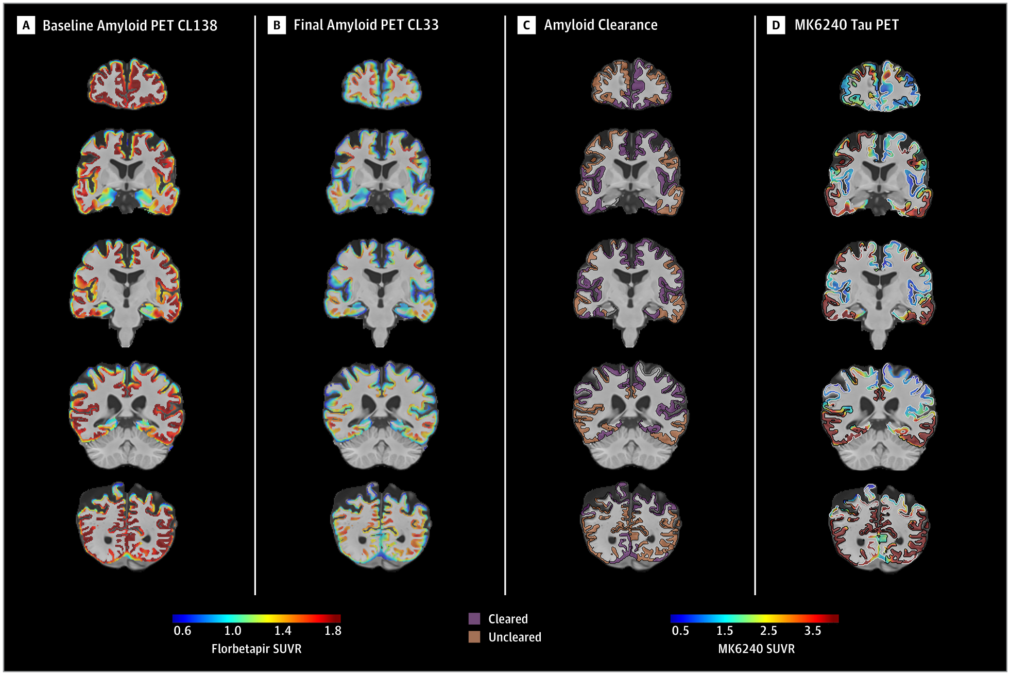
A postmortem analysis of a male patient, who received 30 doses of aducanumab over 4.5 years, shows that only some brain regions were cleared of amyloid-beta plaques and tau tangles.
Others were still littered with these hallmarks of cognitive decline.
“Many previous reports have shown either extensive amyloid clearance or limited clearance,” explains neuropathologist Edward Lee from the University of Pennsylvania.
“This case represented a unique ‘Goldilocks’ scenario in which some regions cleared amyloid and others did not. It allowed us to directly compare what happened next in neighboring brain regions and better understand the relationship between amyloid, tau, and neurodegeneration.”
Today, many drugs for Alzheimer’s are largely focused on removing amyloid-beta plaques as well as tau tangles, which can build up in the brain and which are linked to cognitive decline in some (but not all) cases.
Numerous investigations using these anti-amyloid drugs in mice have shown promising results for cognition, but often, these outcomes are not translating to humans.
One example of this is a drug called aducanumab.
In 2021, the US Food and Drug Administration controversially accelerated this medicine’s approval to treat Alzheimer’s disease, on the basis of very preliminary results.
Aducanumab is an antibody targeting beta-amyloid, designed to clear these plaques from the brain, but it has shown mixed and unclear results among human patients.
In 2024, the drug manufacturer, Biogen, discontinued production of aducanumab “to reprioritize its resources in Alzheimer’s disease.”
Now, the brain of a patient treated with this drug in a clinical trial has revealed some of its limitations.
Four years after receiving the final dose of aducanumab, the middle-aged patient with mild cognitive impairment died.
His next of kin provided legal consent for his brain to be donated to science, allowing scientists to compare how his brain had changed from scans before the clinical trial.
A postmortem autopsy showed great discrepancy in how this medicine may have worked.
Compared with the brain regions of dementia patients who died without being treated with aducanumab, the patient in this case did show some hopeful outcomes.
The more superficial layers of his brain typically possessed less amyloid, but there were still high levels of the plaques in the deep cortical layers of his brain.
This suggests the medicine may not have penetrated far enough into the brain.
Interestingly, the brain regions that showed low levels of amyloid also had fewer tau tangles at autopsy, and these were associated with slower atrophy of brain tissue.
These findings suggest that by sweeping away amyloid, it may stop tau from accumulating and causing damage to neurons.
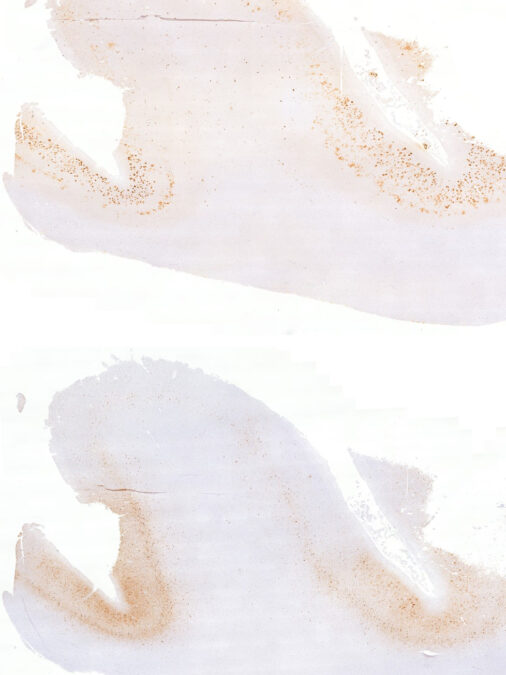
“Seeing both disease patterns side-by-side in the same brain gave us a rare opportunity to understand how amyloid removal affects other proteins that contribute to Alzheimer’s disease,” says co-senior author David Wolk, a neurologist and director of the Penn Alzheimer’s Disease Research Center.
“The findings provide some of the clearest human evidence to date that anti-amyloid therapies may limit the accumulation of tau and slow the brain changes that lead to memory loss and cognitive decline.”
This is only one case study, and dementia is a highly varied disease, but the findings offer an important clue at least for some cases.
Even though aducanemab failed, lead author and neurologist Christopher Brown thinks that amyloid remains a useful drug target. It can appear in the brain years, or even decades, before the first symptoms of cognitive decline show.
“This case suggests that removing amyloid early may help limit the changes that ultimately damage brain cells,” Brown argues.
“Ongoing trials will help determine whether starting treatment before symptoms begin can provide even greater benefit.”
But not all scientists are convinced that there is a strong causal link between clearing beta-amyloid and improving cognition.

Increasingly, evidence suggests that amyloid plaques and tau tangles may be symptoms of dementia, not necessarily early triggers of it.
For instance, tau proteins are tangles of material that are thought to smother neurons from the inside out. But while they are linked to toxic effects, some scientists think they are actually there to protect the brain.
If that is true, then clearing these entities away may not fix the underlying problem. It may even harm outcomes.
Some scientists have warned that we are in an amyloid beta/tau tangle ‘rut’, and that we need to start thinking outside of the box to come up with better Alzheimer’s treatments.
“Just because [amyloid-beta] plays some kind of role early on – and it clearly does – doesn’t mean removing plaque is going to be helpful,” said Stanford Medicine neurologist Mike Greicius in 2024.
“We’re seeing patients in the trials getting plaque pulled out but without any real impact on their memory, mood or cognition.”
In April of this year, a review of 17 clinical trials, including more than 20,000 participants, found that anti-amyloid drugs showed no clinically meaningful positive effects in people with mild cognitive impairment or mild dementia due to Alzheimer’s disease.
Related: One of Our Biggest Hopes For Alzheimer’s Treatment Doesn’t Seem to Work
So are we barking up the wrong tree?
Thanks to patients who have donated their brains and bodies to science after death, we are getting closer to an answer.
The case study is published in JAMA.
This article was fact-checked by Clare Watson and edited by Michael Irving. While we pride ourselves on our process, we are only human. If you spot a mistake, please let us know.


