Scientists have now identified a strange slice of Earth deep below the Pacific that may explain why this region is currently creating the world’s fastest spreading ocean ridge – the East Pacific Rise.
Using seismic data, University of Maryland geologist Jingchuan Wang and colleagues have found ancient ocean slabs hiding deep in Earth’s interior, which could be contributing to the spread, and they date back to the time of the dinosaurs.
“Our discovery opens up new questions about how the deep Earth influences what we see on the surface across vast distances and timescales,” says Wang.
Sending bouncing soundwaves deep into the ground to form seismic maps, Wang and team identified an odd blob of mantle moving surprisingly slow beneath the Nazca Plate that borders South America’s own continental plate.
Most of Earth’s volume is made up heated silicate rocks sandwiched between a cool, thin outer crust and a scorching hot core. Referred to as the mantle, this partially molten layer of minerals flows in cycles over the very slow course of tens of millions of years due to the extreme temperature differences above and below. Denser, cooler material is drawn into the warmer interior in a process called subduction.
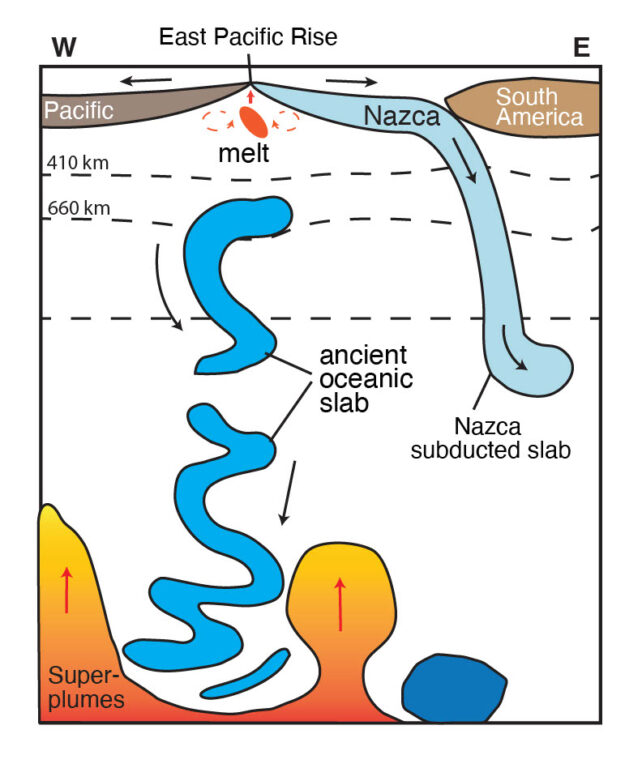
In this area the Nazca Plate is currently subducting beneath South America, as shown in the diagram below. But on the western side of the plate is the rapidly growing ocean ridge and a hotspot of geological activity under the Easter Islands and a mysterious structural gap between the the central and eastern Pacific.
“We found that in this region, the material was sinking at about half the speed we expected, which suggests that the mantle transition zone can act like a barrier and slow down the movement of material through the Earth,” explains Wang.
The team determined this slab structure is colder and denser than the surrounding regions and it appears to be a fossilized chunk of an ancient seafloor.
“This thickened area is like a fossilized fingerprint of an ancient piece of seafloor that subducted into the Earth approximately 250 million years ago,” Wang describes. “It’s giving us a glimpse into Earth’s past that we’ve never had before.”
By not melting as completely as the surrounding mantle, the remnants of what had once been a Triassic ocean floor protrude deeper into the hotter mantle layers, causing the material to bulge into structures called super plumes.
“Geodynamic simulations have attributed the geometry and stability of the lower mantle structures to their direct interactions with subducting slab,” the team write in their paper.
The researchers suspect this series of anomalies, which orient from east to west, may help tell the story of the Nazca Plate, and how it has moved throughout Earth’s history.
By deciphering historic traces of these ancient impacts deep within the ground, geologists can learn more about how our planet’s inner workings shape the surface of our world today.
“Seeing the ancient subduction slab through this perspective gave us new insights into the relationship between very deep Earth structures and surface geology, which were not obvious before,” explains Wang.
On Feb. 3, 2023, a train carrying chemicals jumped the tracks in East Palestine, Ohio, rupturing railcars filled with hazardous materials and fueling chemical fires at the foothills of the Appalachian Mountains.
The disaster drew global attention as the governors of Ohio and Pennsylvania urged evacuations for a mile around the site. Flames and smoke billowed from burning chemicals, and an acrid odor radiated from the derailment area as chemicals entered the air and spilled into a nearby creek.
Three days later, at the urging of the rail company, Norfolk Southern, about 1 million pounds of vinyl chloride, a chemical that can be toxic to humans at high doses, was released from the damaged train cars and set aflame.
The scene after a train carrying hazardous chemicals derailed in East Palestine, Ohio, on Feb. 3, 2023. (AP Photo/Gene J. Puskar)
As environmental engineers, I and my colleagues are often asked to assist with public health decisions after disasters by government agencies and communities. After the evacuation order was lifted, community members asked for help.
In a new study, we describe the contamination we found, along with problems with the response and cleanup that, in some cases, increased the chances that people would be exposed to hazardous chemicals. It offers important lessons to better protect communities in the future.
A computer model shows how chemicals from the train may have spread, given wind patterns. The star on the Ohio-Pennsylvania line is the site of the derailment. Click the image for a larger version. (Andrew Whelton/Purdue University, CC BY-ND)
Air pollution can find its way into buildings through cracks, windows, doors and other portals. Once inside, the chemicals can penetrate home items like carpets, drapes, furniture, counters and clothing. When the air is stirred up, those chemicals can be released again.
Evacuation order lifted, but buildings were contaminated
Three weeks after the derailment, we began investigating the safety of the area near 17 buildings in Ohio and Pennsylvania. The highest concentration of air pollution occurred in the 1-mile evacuation zone and a shelter-in-place band another mile beyond that. But the chemical plume also traveled outside these areas.
In and outside East Palestine, evidence indicated that chemicals from the railcars had entered buildings. Many residents complained about headaches, rashes and other health symptoms after reentering the buildings.
A rail company contractor air testing report dated 11 days after the derailment noted a ‘strong odor’ but said the handheld air testing device did not detect chemicals. (Andrew Whelton/Purdue University, CC BY-ND)
At one building 0.2 miles away from the derailment site, the indoor air was still contaminated more than four months later.
Nine days after the derailment, sophisticated air testing by a business owner showed the building’s indoor air was contaminated with butyl acrylate and other chemicals carried by the railcars. Butyl acrylate was found above the two-week exposure level, a level at which measures should be taken to protect human health.
When rail company contractors visited the building 11 days after the wreck, their team left after just 10 minutes. They reported an “overwhelming/unpleasent odor” even though their government-approved handheld air pollution detectors detected no chemicals. This building was located directly above Sulphur Run creek, which had been heavily contaminated by the spill. Chemicals likely entered from the initial smoke plumes and also rose from the creek into the building.
Our tests weeks later revealed that railcar chemicals had even penetrated the business’s silicone wristband products on its shelves. We also detected several other chemicals that may have been associated with the spill.
Weeks after the derailment, government officials discovered that air in the East Palestine Municipal Building, about 0.7 miles away from the derailment site, was also contaminated. Airborne chemicals had entered that building through an open drain pipe from Sulphur Run.
More than a month after the evacuation order was lifted, the Ohio Environmental Protection Agency acknowledged that multiple buildings in East Palestine were being contaminated as contractors cleaned contaminated culverts under and alongside buildings. Chemicals were entering the buildings.
As tainted water flowed downstream, light chemicals like butyl acrylate naturally left the creek and entered the air by a process called volatilization.
Equipment installed at various points along contaminated creeks to aerate the water ended up releasing chemicals into the air. (Andrew Whelton/Purdue University, CC BY-ND)
Unnaturally however, the equipment used for cleaning the creeks also transferred chemicals from the water into the air. Residents near aeration equipment, which injects air into water, in part to help fish survive, complained of odors entering their homes and experiencing health problems. Our study shows the chemicals in the air may have been up to 2 to 25 times higher near these aerators.
Over the four-month study period, rain and the actions of contractors increasing and decreasing water flow also stirred up the creeks, releasing more chemicals into the air.
Steps to protect public health in future disasters
As withpastdisasters, what happened in East Palestine offers many lessons for communities.
One of the most important is for communities to demand an exposure pathway diagram immediately after a chemical incident occurs. An illustration can help the community recognize potential threats, whether from the air or from culverts beneath their buildings, and see where testing and guidance are needed.
A diagram illustrates chemical exposure pathways in East Palestine. Visualizing these risks can help residents and communities figure out how to respond. Click image to expand. (Andrew Whelton/Purdue University, CC BY-ND)
Monitoring the health of people exposed to the chemicals is also crucial. Because so many people became ill in and around East Palestine, and because testing overseen by government agencies did not pinpoint the exact conditions responsible for the illnesses, we recommend long-term medical monitoring for those affected.
Indoor building contamination can be a long-term problem. Just like with wildfire smoke, affected buildings need to be professionally cleaned because the chemicals can remain for months.
Building exteriors also need to be decontaminated. Chemicals may continue to release from surfaces into the air.
A sheen from the chemical spill was still evident on a creek in East Palestine on March 24, 2024, more than a month after the derailment. (Andrew Whelton/Purdue University, CC BY-ND)
There is also a need for better methods and evidence-based policies to rapidly identify chemical exposures. The US Environmental Protection Agency, months after approving the use of handheld air testing devices to screen homes, determined that those chemical detectors could not have reliably alerted to butyl acrylate at alllevels that can cause health problems. Not all the chemicals spilled were monitored for in buildings.
For complex disasters, we recommend calling in experts from outside the responding agencies and companies involved to provide the needed specialized expertise.
Experts expressed enthusiasm Friday after US health regulators approved the first new form of treatment for schizophrenia in decades.
The drug, called Cobenfy and developed by US pharma giant Bristol Myers Squibb, works differently from existing treatments, targeting the so-called cholinergic receptors, not the dopamine receptors.
“This drug takes the first new approach to schizophrenia treatment in decades,” Tiffany Farchione, a top official in the US Food and Drug Administration (FDA), said in a statement Thursday.
“This approval offers a new alternative to the antipsychotic medications people with schizophrenia have previously been prescribed,” she said.
It can cause hallucinations, feelings of persecution and difficulty in controlling one’s thoughts. About five percent of diagnosed schizophrenics die by suicide.
Lynsey Bilsland, who heads the mental health division of the Wellcome charitable foundation, said Cobenfy could be “game-changing, especially for those for whom other drugs do not work.”
She added: “It works in a completely different way from any other currently used schizophrenia drugs. It has the potential to change the lives of millions of people.”
Cobenfy – its scientific name is “xanomeline and trospium chloride” – is taken orally.
Two clinical trials confirmed its effectiveness, showing it can significantly reduce patients’ symptoms.
Side effects include nausea, vomiting, indigestion, diarrhea, constipation, urinary retention and liver problems.
But compared to current drugs, those side effects are “reduced,” said Matt Jones, a professor of neuroscience at the University of Bristol in England.
“It’s obviously great news for people living with schizophrenia,” he said, while noting that the drug has yet to receive approval in Britain.
Sameer Jauhar, a senior clinical lecturer in affective disorders and psychosis at King’s College in London, said the side effects of current medications – including weight gain and sluggishness – can deter some people from following through with treatment.
He said he wants to see the results of longer-term trials, but quickly added that the positive results so far amount to “possibly one of the most exciting developments in our field, and I am very excited about this.”
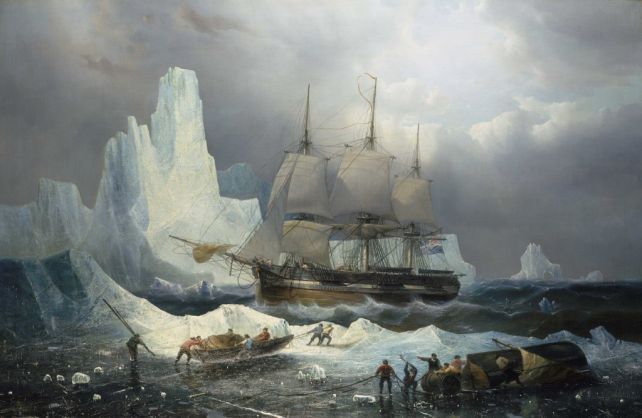
Sir John Franklin’s Northwest Passage expedition is a moment of history that piques a great deal of interest and imagination today.
The sailors who died trying to escape the Arctic after their ships Terror and Erebus became frozen and icebound in 1846 are a testament to human endurance – and desperation.
The bones of James Fitzjames, captain of the Erebus, who led that last desperate push for home, have been identified. And they tell a harrowing tale.
In 1848, as the remaining 105 sailors abandoned their ships to the pitiless fangs of the ice, Captain Fitzjames penned a grim report, later found in a cairn on King William Island.
“HMS ships Terror and Erebus were deserted on the 22nd April, 5 leagues NNW of this having been beset since 12th Sept 1846,” he wrote.
“Sir John Franklin died on the 11th of June 1847 and the total loss by deaths in the Expedition has been to this date 9 officers and 15 men.”
Those 105 survivors never made it home, and probably never off the island. Since then, many of the sailors’ bones have been found on that remote patch of land. And now we can lay some of them to rest at last.
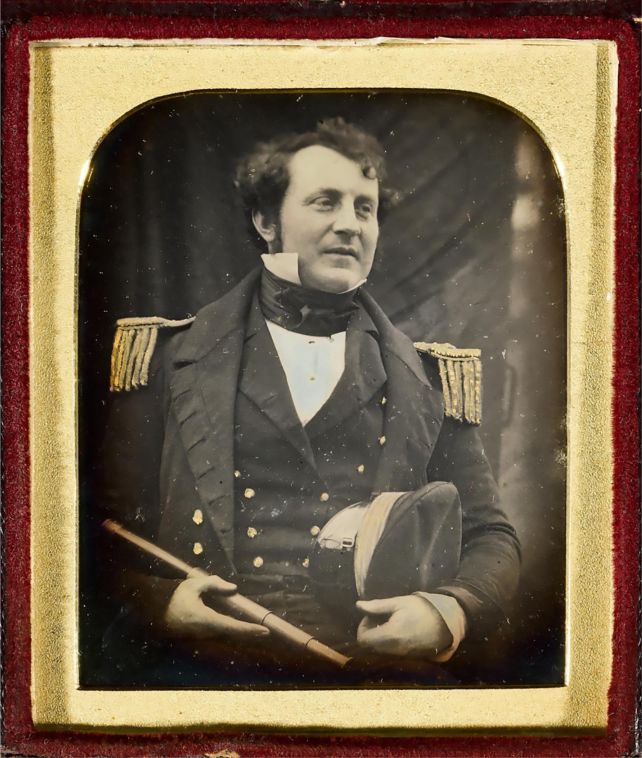
Daguerreotype of Captain James Fitzjames, taken in May 1845. (Sotheby’s)
The identification of James Fitzjames was made by tracking down known descendants and relatives of the crewmembers, and comparing their DNA to that obtained from the bones found on King William Island.
A sample from a descendant of Fitzjames was a successful match with DNA from a tooth from one of the more than 400 bones recovered to date. The identification is only the second ever made of Franklin remains on King William Island.
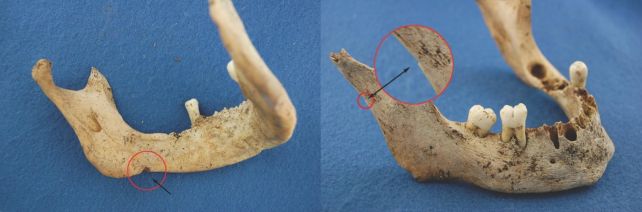
The jawbone matched to that tooth is what reveals at least some of the fate of Fitzjames. Notches on the bone are consistent with butchering – suggesting that the captain’s crew members, likely starving and sick, made what use they could of his corpse – they ate him.
“This shows that he predeceased at least some of the other sailors who perished, and that neither rank nor status was the governing principle in the final desperate days of the expedition as they strove to save themselves,” says archaeologist Douglas Stenton of the University of Waterloo in Canada.
Cut marks on what we now know to be the mandible of Captain James Fitzjames. (Stenton et al., J. Archaeol. Sci. Rep., 2024)
This is consistent with reports at the time: British expeditions mounted to find the lost explorers in the 1850s received reports from Inuit residents of King William Island that the survivors’ remains showed signs of cannibalism.
Later research conducted in the 1990s revealed the veracity of the reports: bones from at least four of the individuals recovered from the archaeological had evidence of being butchered.
But this is not a salacious tale of wrongdoing, or scandal, but of men at the very limit of their endurance. They were likely starving, and ill, having been deprived of adequate nutrition for quite some time. Food was scarce. In such circumstances, cannibalism can be a last resort for survival.
“It demonstrates the level of desperation that the Franklin sailors must have felt to do something they would have considered abhorrent,” says anthropologist Robert Park of the University of Waterloo.
“Ever since the expedition disappeared into the Arctic 179 years ago there has been widespread interest in its ultimate fate, generating many speculative books and articles and, most recently, a popular television miniseries which turned it into a horror story with cannibalism as one of its themes. Meticulous archaeological research like this shows that the true story is just as interesting, and that there is still more to learn.”
With this research, Fitzjames becomes the first identified victim of cannibalism from the Franklin expedition. His recovered bones have been placed in a cairn, along with the others, and marked with a memorial plaque at the site of their deaths.
Stenton and his colleagues urge any other descendants of the expedition crew members to contact them to try and identify the rest of the remains.
Scientists have genetically engineered a special ‘golden lettuce’ that provides significantly higher amounts of vitamin A, a nutrient necessary for our immune function, vision, and growth and development.
Not only could the product itself deliver a critical nutrient to consumers, the same approach could be used to give other vegetables a health boost in the future.
After boosting the compound five-fold in the tobacco relative Nicotianabenthamiana, the team led by scientists from Valencia Polytechnic University (UPV) in Spain tweaked the genetic make-up of lettuce (Lactuca sativa) to increase its levels of beta-carotene; a red-orange colored compound that gets turned into vitamin A in our body.
Typically stored in the tiny green ‘solar panels’ that power photosynthesis known as chloroplasts, increasing the plant’s beta-carotene stockpile would’ve been disruptive. To avoid interfering with the natural photosynthesis processes the lettuce needs to live and grow, the researchers had to think outside of the box.
“Leaves need carotenoids such as beta-carotene in the photosynthetic complexes of chloroplasts for their proper functioning,” says molecular biologist Manuel Rodríguez Concepción, from UPV. “When too much or too little beta-carotene is produced in the chloroplasts, they stop functioning, and the leaves eventually die.”
“Our work has successfully produced and accumulated beta-carotene in cellular compartments where it is not normally found by combining biotechnological techniques and treatments with high light intensity.”
Some of the extra beta-carotene was stored in the cytosol, the fluid part of the leaf cells. More of the compound was produced by converting some chloroplasts into chromoplasts (or pigment wells) – via the introduction of the gene for the bacterial enzyme crtB – capable of storing even more beta-carotene.
On top of the genetic modifications, the plants were also subjected to high-intensity light treatments, which led to more fatty storage units known as plastoglobules being created inside the lettuce.
“Stimulating the formation and development of plastoglobules with molecular techniques and intense light treatments not only increases the accumulation of beta-carotene but also its bioaccessibility,” says molecular biologist Luca Morelli, from UPV.
Improving the bioaccessibility of the lettuce’s supply of beta-carotene increases its availability in the intestines, where it is converted into vitamin A. All this additional beta-carotene – which is found in abundance in carrots and pumpkins – turns the lettuce yellow, hence the name given to it by the researchers.
A 2023 study found vitamin A deficiency affects hundreds of millions of developing bodies around the globe. Finding novel ways to give the diets of more more people a much-needed upgrade is critical to limit the consequences of poor nutrition.
“Micronutrient deficiency, also known as hidden hunger, is still a major problem in many countries,” write the researchers in their published paper.
“In particular, vitamin A deficiency causes xerophthalmia and can lead to other health problems and even death, affecting children from malnourished populations worldwide.”
The research has been published in the Plant Journal.
Ant mothers are the queens of tough love. They simply don’t have time to coddle their sick young.
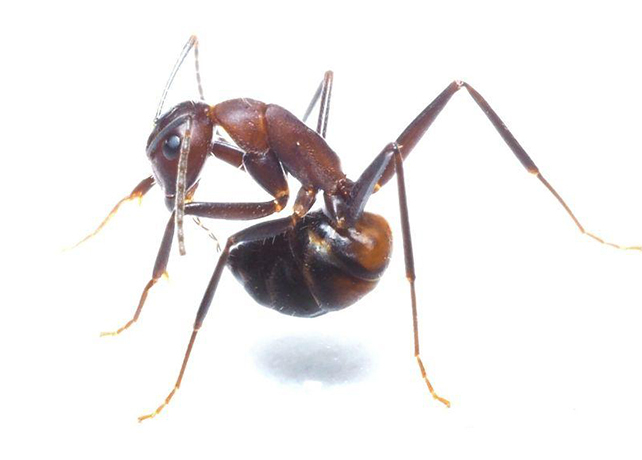
If a newly hatched black garden ant is exposed to a pathogen, researchers in the US have found the queen will slurp up and gulp down every bit of her offspring’s maggoty little body before it becomes contagious.
This act of ‘hygienic cannibalism’ stops other larvae and the queen herself from falling ill while sealed up together in a nest. It also ensures the mother has more energy to produce eggs the next time around.
“Ant queens start their colonies alone and essentially starve themselves to raise their first workers,” explains biologist Flynn Bizzell from the University of Oxford.
“The queens who produce the most workers have the best chances of survival, so being able to eat and recycle infected larvae back into brood production means valuable resources are not wasted.”
Bizzell and his colleague, University of Oxford biologist Christopher Pull, have found that worker ants in established colonies do not show the same cannibalistic tendencies.
In some ant species, workers and soldiers have actually been found treating ill or injured peers with medicine or life-saving operations. But those measures won’t do in the nursery of a black garden ant (Lasius niger), especially when the colony is just getting started.
In this vulnerable state, queens can’t just drag sick larvae away from their nest. They are sealed up inside with their young, packed to the rafters, with no one else to help.
The risk of an infection spreading in this environment is too severe for a queen to ignore. When she detects a pathogen in her nest, she takes out every infected larva she can find as soon as possible.
If need be, the researchers found the queen will cannibalize 92 percent of infected larva. Those queens that do so can lay 55 percent more eggs the next time around.
In their recent experiments, Bizzell and Pull exposed five larvae per queen to the infectious spores of a fungal pathogen.
The larvae were then left alone for 24 hours so they could develop the lethal infection, although at this point, they were not yet contagious. Once the infected larvae were returned to their nest, Bizzell and Pull watched as the queens took action.
For several hours, the mothers chewed. They consumed almost all of the sick individuals, while leaving most of the healthy ones alive.
The fungal pathogen seemed to have no impact on the queens, even after they ate it. Bizzell and Pull suspect that this is because the ants are somehow protecting themselves from the inside.
Before and after the queens were observed tucking into their young, the two biologists noticed some ants grooming a gland on their abdomens. This gland produces an acidic, antimicrobial venom, and by swallowing the venom, ants could possibly neutralize the pathogen in their gut.
Florida carpenter ants also consume their own venom for protection. (Simon Tragust)
In further experiments, when queens were presented with sick larvae that had already died and begun to produce fruiting bodies with infectious spores, the queens groomed and sprayed the cadavers with venom from their gland.
This stage of infection, however, is clearly quite dangerous to the queen. Even after spraying the larvae, the queen died from the infectious disease almost 80 percent of the time.
When the queen did survive, her brood didn’t. They were all lost to secondary infections. So acting early to prevent spread is important.
The findings provide evidence that queen ants are eating their young as an adaptive response to disease, protecting their own lives as well as the lives of their offspring, now and to come.
Scientists think they have figured out why Mount Everest, known as Chomolungma in Tibet and Sagarmatha in Nepal, stands out so starkly from the rest of the peaks in the Himalayas.
According to new models, there is an overlooked force of ‘piracy’ at play that could account for as much as 50 meters (around 160 feet) of the world’s highest peak. But not the kind that raids ships on the high seas. The kind that captures rivers.
Obviously, Everest’s record height of 8,849 meters would be nowhere without the smashing of tectonic plates, but the uniformity of geology along the fault should make all peaks more or less the same height.
The difference between most Himalayan peaks is no more than 100 meters. Extending a whole 250 meters above any of its neighbors, one is clearly hiding a secret.
Plus, Everest is still growing to this day, several millimeters every year, according to GPS data, and that’s faster than the uplift rate expected by tectonic plates.
Another force must be at play, and scientists at the China University of Geosciences and University College London think they have found it.
Their models suggest the world’s tallest summit was raised above its peers by geological piracy, which occurs when one river is ‘captured’ by a neighbor. This alters sediment flow and reshapes rivers and their tributaries into new patterns.
Today, the Arun River is a major tributary that cuts a deep, narrow gorge through the core of the Himalayas, dropping 7 kilometers in elevation over a 35-kilometer stretch.
But when this river formed long ago, it didn’t need landslides or glaciers to help it chisel such a deep path through the northern slopes of Chomolungma. Its sheer volume of flowing water gave it all the power it needed.
Roughly 89,000 years ago, models suggest, the Arun tributary began capturing more water from its parent, the Kosi River, and the sudden increase in power could have easily driven the incision of a gorge.
The removal of great chunks of rock would have caused Earth’s crust, which ‘floats’ on the mantle, to rebound, thereby causing a “surface uplift of the unincised parts of the surrounding area, including the mountain peaks,” writes the international team, led by Xu Han from China University of Geosciences.
Based on their models, the team estimates between 15 and 50 meters of Chomolungma’s current height could have stemmed from river drainage piracy.
Compared to the Arun, other rivers that flow through the Himalayas have had a more consistent history of flow, which means that erosion at the base of the mountains is about the same as erosion occurring at the peaks. This means the overall weight of the crust sitting on the mantle remains relatively stable.
But when the Arun River began taking on more water all those millennia ago, this balanced rate of erosion was thrown out of whack. As more rock was carried away by rivers, it caused the Earth’s crust to lift in certain spots.
Given the crust’s elastic thickness of 10 to 30 km, researchers estimate this phenomenon would lead to an increased surface uplift rate for Chomolungma of up to 0.53 mm a year.
The findings suggest the tallest peak on Earth today could still be growing from the formation of a river gorge – 89,000 years ago.
The electrical effects of a thunderstorm are not confined just to high up in the atmosphere. Close to the ground, Earth’s atmosphere hums with intense electric fields that accelerate particles, flinging electrons in ways that force atoms to glow with gamma rays.
From atop a mountain in Armenia, scientists have taken a close look at this mysterious meteorological phenomenon.
At the Alikhanyan National Science Laboratory’s cosmic ray facility on Mount Aragats, physicist Ashot Chilingarian and his colleagues have been working to understand Thunderstorm Ground Enhancements, or TGEs.
This electromagnetic enhancement, Chilingarian says, has been overlooked in thunderstorm research – but it could be a piece of the puzzle in our understanding of the physical Universe, from thunderstorms here on Earth, to the cosmic rays that travel vast distances across space.
“Each day, 40,000 thunderstorms occur. Numerous networks detecting atmospheric discharges and satellites with precise optical instruments are monitoring lightning flashes. Still, when we started TGE research, nobody monitored the huge flux of mega-electronvolt (MeV) electrons bombarding our planet and space above it,” he told ScienceAlert.
“We established the SEVAN particle detector network ten years ago to monitor TGEs in Eastern Europe, Germany, and Armenia. Electron accelerators with energies of tens of MeV cover vast volumes in the atmosphere and many square kilometers on the Earth’s surface.
“This huge flux is accompanied by life on Earth through its billion years of evolution and surely influences all aspects of the geospace and biosphere.”
TGEs consist of electric fields in the atmosphere, generated by thunderstorms. Within these electric fields, electrons are accelerated to high speeds – speeds approaching that of light in a vacuum, or relativistic speeds.
These are known as relativistic runaway electron avalanches, propelled by the electric field both towards the ground and upward into the atmosphere. It’s these electrons that produce the radiation.
When they decelerate suddenly, deflected by a collision with an atomic nucleus in the atmosphere, the loss of energy manifests as gamma rays – a form of radiation known as bremsstrahlung radiation.
Using their network of detectors, Chilingarian and his colleagues collected data on thunderstorms across Europe in 2023, performing detailed measurements of the electrons and the gamma radiation that occurred during the 56 intense TGEs they recorded.
The most intense TGEs mostly took place from May to July, and the most powerful was recorded on Mount Lomnický štít in Slovakia in May. For this one event, the particle flux was 100 times the normal, fair-weather level. In total, there were seven events that exceeded the fair weather flux by more than 75 percent.
“We measure the stable electron flux on Earth’s surface, covering a hundred thousand square meters. Some mechanism provides this stability for a minute or more,” Chilingarian explained.
“A huge electron beam emerges in the thundercloud, where the charge structure changes on the second-time scale. Atmospheric discharges kill the potential difference, but the flux is stable. It was exciting to measure!”
Surprisingly, the researchers also found that the electric field is much closer to the ground than they expected to find. They measured a strong electric field strength down to 50 meters (164 feet) above ground.
“This discovery was astonishing to meteorologists, who didn’t believe it until we presented exhaustive proof,” Chilingarian noted.
The consistency of the acceleration, able to maintain particle flux for up to several minutes, as well as the low height of the electric field, reveals new details about the structure of atmospheric electric fields, and thunderstorms, that we didn’t know before.
For example, TGEs might provide a pathway whereby lightning strikes can reach the ground. And their role in geophysics needs to be investigated. The researchers have made an open-access TGE database available for the scientific community to explore and analyze.
Their thunderstorm research is only part of the work performed on Aragats. This year, the Sun has reached a frenzy as it approaches solar maximum, the peak of its activity cycle, sending particles spewing into space powered by coronal mass ejections.
Chilingarian and his colleagues have also detected solar events with the mountaintop equipment, publishing three papers with a fourth on the way.
“Violent explosions in our galaxy also send ultra-high energy particles to the solar system. Recently, Pevatrons, sources of 1015 eV gamma rays, were discovered. We critically analyzed this discovery based on our knowledge of atmospheric physics,” Chilingarian told ScienceAlert.
“The synergy of atmospheric, space, and solar accelerators is important for understanding nature!”
The findings are due to be published in Physical Review D.
In the arms race over sportswear technology, an advanced form of footwear has recently disrupted the racing scene, giving short and long distance runners a distinct advantage.
New research shows that so-called ‘super spikes‘ on soles can also increase running speeds across middle distances by as much as 3.1 percent.
The international team of scientists behind the study wanted to take a closer look at the impact of these spikes – technically known as advanced footwear technology (AFT) – as their use at the elite level has become commonplace.
With world records continuing to tumble, there’s an interesting question to be answered here: are human beings getting faster, training harder, or using better equipment (such as super spikes) to continue to drive improvements?
“Super spikes have a thicker yet lighter, more resilient and more compliant midsole often combined with a stiff-carbon-fiber plate embedded in the midsole,” says University of Massachusetts biomechanical engineer Montgomery Bertschy.
Where sprints and long distance events have features that make factors like energy efficiency and speed easy to test in the lab and field, middle distance feats come with added complications, which means to date it’s hard to know if anecdotes over super spike superiority give all running methods a boost.
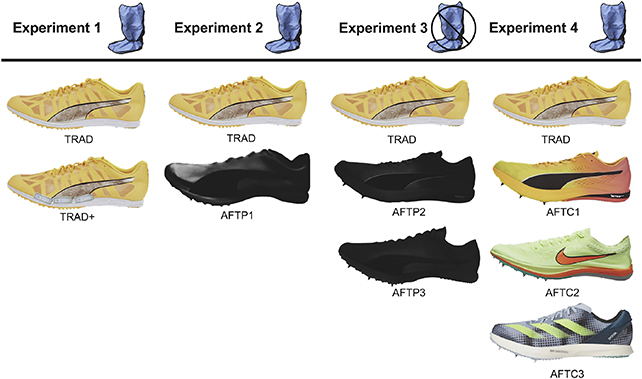
To get around these obstacles, super spike shoes were compared to standard track spike shoes in four separate experiments, each with 12 different participants, and all across distances of 200 meters with recovery periods in between.
Rather than going flat out, runners were asked to stick to their ‘race pace’ for 800 meter or 1,500 meter runs. The idea was to level out the amount of effort the athletes were putting in, in order to isolate the effects of the footwear.
The data showed several points of interest: AFT spikes showed an increase of around 2 percent in performance on average, though it varied depending on the runner and the brand of footwear. Running speed boosts ranged from 1.8 percent up to 3.1 percent, with athletes cutting their race times by as much as 5 seconds over the 1,500 meter events.
What’s more, the gains seemed to be due to a longer step length, rather than more steps. That’s an important point when assessing the difference shoes can make, and in making the best possible preparations for athletic tournaments like the Olympics.
“Historically, we can expect to see differences of less than 0.5 percent in race time determining who will win the gold, who will get silver, or will not make the podium,” says sport biomechanist Ethan Wilkie from the University of New Brunswick in Canada.
“Our 2 percent findings highlight that some of that might be because some people have slightly better shoes than others.”
Other studies on AFTs have suggested they’re more beneficial for women than for men, and make more of a difference over longer distances. Multiple studies consistently show super spike technology is only part of the story – the athlete’s speed, size, and choice of running shoe has an influence too.
Another 32 world records tumbled during the course of the Paris Olympics 2024, and with the competition stronger than ever, athletes will be continuing to look for any advantage they can get in driving performance improvements.
“Part of it is because the shoes are getting better and better, and we have evidence for that,” says University of Massachusetts kinesiologist Wouter Hoogkamer.
In January 2023, a new comet was discovered. Comets are found regularly, but astronomers quickly realised this one, called C/2023 A3 (Tsuchinshan-ATLAS), had the potential to be quite bright.
Some hyperbolic reports have suggested it might be the “comet of the century“, but any astronomer will tell you the brightness of comets is notoriously hard to predict. As I explained last year, we’d have to wait until it arrived to be sure how bright it would become.
Now, the time has come. Comet C/2023 A3 is currently visible with the naked eye in the morning sky in Australia and Aotearoa New Zealand, with its best yet to come in the next few weeks.
And it does look promising. It’s unlikely to be the comet of the decade (never mind the comet of the century), but it will almost certainly become the best comet of the year.
So where, and when, should you look to get your best views of this celestial visitor?
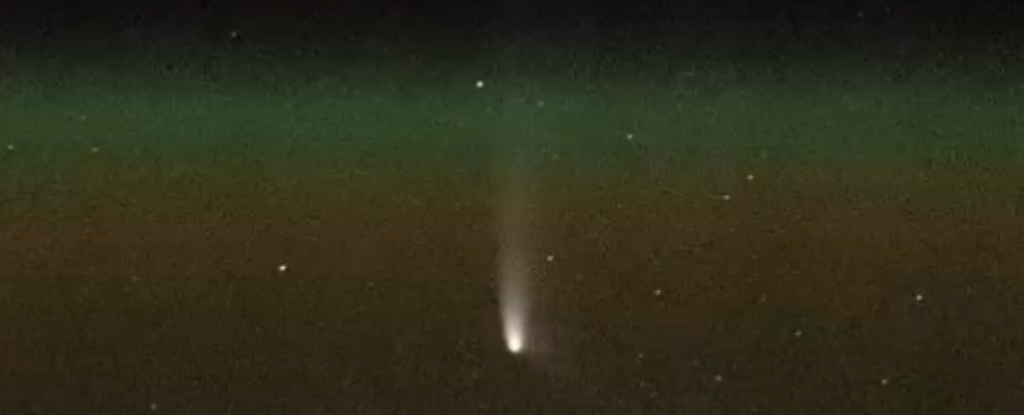
So far Comet Tsuchinshan-ATLAS looks like a fuzzy star to the naked eye looking out the cupola windows. But with a 200mm, f2 lens at 1/8s exposure you can really start to see it. This comet is going to make for some really cool images as it gets closer to the sun. For now a… pic.twitter.com/JstaSLJ4Ui
At the moment, comet C/2023 A3 (Tsuchinshan-ATLAS) is a morning object, rising around an hour and a half before sunrise. It is visible to the naked eye, but not yet spectacular. However, with binoculars you can easily see the comet’s dusty tail pointing away from the Sun.
The comet will remain at about the same altitude in the morning sky until around September 30. It will then get closer to the horizon on each consecutive morning until it’s lost in the glare of the approaching dawn by October 6 or 7.
If you want to spot the comet in the morning sky, look east. The sliders below will help you orient yourself and choose the best time to look, depending on your latitude.
During this period, the comet should slowly brighten. It reaches its closest approach to the Sun (perihelion) on September 27, when it will be 58 million kilometres from our star.
As it swings around the Sun, it will continue to approach Earth, and so should continue to brighten. The best show in the morning sky will likely be during the last couple of days of September and the first few days in October, before the comet is lost to view.
This could cause a spectacular brightening of the comet, thanks to “forward scattering” caused by its dust. Imagine looking towards a bright light source through a cloud of dust grains. The grains nearest to the light source will scatter light from the source back towards you.
As the comet swings between Earth and the Sun, it will be perfectly placed for this forward scattering process to occur. If the comet is particularly dusty, this could cause its apparent brightness to increase by up to 100 times.
If it does, there’s a small chance the comet could briefly become visible in the daylight sky on October 9 and 10.
However, it will be very close to the Sun in the sky, and incredibly hard to spot. Only the most experienced observers may be able to detect the comet at this time, and it requires a special technique. Do not try to stare at the Sun to see it.
The best show could be after October 12
After swinging between Earth and the Sun, the comet will appear in the evening sky. It will rapidly climb in the western sky, and should be a bright, naked-eye object for a few days from October 12. The sliders below will give you a sense of where to look.
For the first few days of this period, the comet will still benefit from the forward scattering of sunlight, but this will decrease as it moves away.
What about the tail?
The positioning of the comet, Earth and the Sun in the Solar System means the comet’s tail will be streaming outwards, past our planet. This means it could grow to prodigious lengths in the night sky.
The bulk of that tail will likely be too dim to see easily with the naked eye, but it could be a fantastic spectacle for photographers. Expect to see a wealth of comet images flooding the internet around the middle of October.
As the days pass and the comet climbs higher, it will fade quite rapidly. It will likely become too faint to see with the naked eye, even for seasoned and experienced observers, before the end of October.
At that point, the show will be over. Comet C/2023 A3 (Tsuchinshan-ATLAS) will continue to flee the inner Solar System, moving into the icy depths of space, never to return.
But remember the classic saying – comets are like cats. They have tails and will often surprise us. For now, comet C/2023 A3 is behaving itself. It’s brightening predictably, and putting on a good show.
But comets that approach this closely to the Sun often fragment. This is impossible to predict, and far from guaranteed. If the comet did break up, it could become even more spectacular because of all the dust and gas it would release.
The opposite could still happen, too. The comet could fail to brighten as much as we expect, although that seems unlikely at this stage.
Whatever happens, we’re in for a fascinating few weeks of comet watching. Hopefully, a real spectacle awaits us.