How animals adjust their visual attention as goals or environmental conditions change is unknown. In the fruit fly Drosophila melanogaster, wiring diagrams of the brain, behavioural experiments and recordings of neuronal activity reveal pathways through which social states such as aggression modulate vision.
Evidence that animals mourn the death of loved ones is growing, but we should be wary of letting our biases cloud this topic, says philosopher Susana Monsó
Hairy animals including mice and dogs shake themselves dry
atikinka2/Getty Images
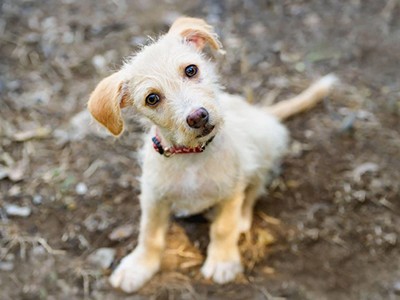
If you have ever been close to a dog after it has gone for a swim, you have probably been sprayed with water flinging from its fur. We now know the brain pathway that causes animals to rapidly wiggle themselves dry – a phenomenon known as the wet dog shake.
At least 12 different types of nerve cells help hairy mammals like mice and dogs feel physical sensations, such as temperature changes or touch. Yet it wasn’t clear which of these neurons sense irritating substances that animals want to shake…
Experiments with mice have revealed the neuroscience of why dogs shake their wet fur.Credit: Nat NT/Getty
When a dog shakes water off its fur, the action is not just a random flurry of movements — nor a deliberate effort to drench anyone standing nearby.
This instinctive reflex is shared by many furry mammals including mice, cats, squirrels, lions, tigers and bears. The move helps animals to remove water, insects or other irritants from hard-to-reach places. But underlying the shakes is a complex — and previously mysterious — neurological mechanism.
Now, researchers have identified the neural circuit that triggers characteristic ‘wet dog’ shaking behaviour in mice — which involves a specific class of touch receptors, and neurons that connect the spinal cord to the brain. Their findings were published in Science on 7 November1.
“The touch system is so complex and rich that [it] can distinguish a water droplet from a crawling insect from the gentle touch of a loved one,” says Kara Marshall, a neuroscientist at Baylor College of Medicine in Houston, Texas. “It’s really remarkable to be able to link a very specific subset of touch receptors to this familiar and understandable behaviour.”
Sensitive skin
The hairy skin of mammals is packed with more than 12 types of sensory neuron, each with a unique function to detect and interpret various sensations. A team led by Dawei Zhang, a neuroscientist then at Harvard University in Cambridge, Massachusetts, focused on a type of ultra-sensitive touch detecting receptors called C-fibre low-threshold mechanoreceptors (C-LTMRs), which wrap around hair follicles.
Dogs might have evolved to read your emotions
In humans, these receptors are associated with pleasant touch sensations, such as a soft hug or a soothing stroke. But in mice and other animals, they serve a protective role: alerting them to the presence of something on their skin, whether it’s water, dirt or a parasite. When these stimuli cause hairs on the skin to bend it activates the C-LTMRs, says Marshall, “extending the sensibility of the skin beyond just the surface”.
To get laboratory mice to shake their fur like wet dogs, the researchers applied drops of sunflower oil to the backs of the mice’s necks. Nearly all the animals shook off these drops within ten seconds. The team then genetically modified some of the mice to remove most of their C-LTMRs. These animals showed a 50% reduction in shakes when oil droplets landed on their neck, compared with unmodified control mice.
The researchers also wanted to explore how signals from C-LTMRs travel through the nervous system to orchestrate the wet dog shakes. They traced the pathway to a group of neurons in the spinal cord; this connects to an area in the brain called the parabrachial nucleus, which is involved in processing pain, temperature and touch.
Using optogenetics, a technique that engineers neurons so that they can be switched on and off in response to light, the researchers blocked the activity of the spinal neurons. These mice showed a 58% reduction in shakes compared with control mice. Blocking activity in the parabrachial nucleus produced similar results. The mice still scratched, groomed and moved normally, suggesting that the neural circuit is specific to wet dog shakes.
Specialized circuit
The discovery opens up avenues for future research. “The wet dog shake is a very coordinated motor response,” says Thomas Knöpfel, a neuroscientist at Hong Kong Baptist University in Kowloon Tong, who adds that the study is a good starting point to study how the brain sends commands to control the movement. “Wet dog shake is triggered in many animals by psychedelic drugs,” he says. The response to psychedelics involves serotonin receptors, which also play a part in pleasurable touch. “That gives inspiration for some more work connecting the dots.”
Zhang says that future research could also investigate whether overactive C-LTMRs contribute to conditions such as twitch-skin syndrome in cats, which involves sudden rippling of the skin and excessive twitching, or to other kinds of skin hypersensitivity in humans.
When my ginger rescue cat Marmalade crawls on my lap and meows at me urgently, I often find myself wishing I really knew what was going on inside his head.
It might seem like storybook stuff, but communicating with animals may be closer than we think. Earlier this year, researchers revealed they had discovered that sperm whales in the east Caribbean use a phonetic alphabet of 143 combinations of clicks. They described it as the closest system to human language yet discovered and hope that one day they will be able to communicate with these complex, social creatures.
Halloween, celebrated on 31 October, originated with the ancient Celtic festival of Samhain, during which people lit bonfires and wore costumes to ward off spirits. Today, it’s a holiday synonymous with not just witches and ghouls, but also crows, bats, owls, snakes and other ‘spooky’ creatures. Nature asked nine scientists what inspired them to study unorthodox animals and plants and what they want the world to know about their favourite organisms, and gave them the chance to correct misconceptions around the much-maligned reputations of these flora and fauna.
IVO JACOBS: The ‘playful genius’ of crows
Ivo Jacobs studies the evolution of cognition at Lund University in Sweden.
Ivo Jacobs says that ravens compete to participate in his group’s research on cognition.Credit: Ivo Jacobs
Corvids, birds in the crow family, have quite the mythological status — from ominous tricksters to playful geniuses — across diverse cultures. I have always been fascinated by how creatures with walnut-sized brains and no hands have cognitive capacities similar to those of great apes1, despite the evolutionary gap of 320 million years. This suggests that complex cognition has evolved independently several times. Cognition is a solution to buffer against environmental changes that occur faster than evolution. I examine the problem-solving abilities that help corvids, such as the common raven (Corvus corax), to adjust to changing conditions.
Misconceptions about corvids are rife: they are often viewed as unpleasant and dangerous birds, exhibiting behaviours such as pecking out of frustration. However, they are more likely to gently preen your eyebrows than to try plucking out your eyes. My chances of leaving the aviary with a peck mark are lower than the likelihood of them undoing my shoelaces, stealing my hat or stashing food in my pockets. I once had the surreal experience of explaining to airport security why a piece of rotten liver had fallen out of my jacket.
Our corvids enjoy participating in research — essentially playtime for food rewards — so much that they compete to enter the testing room. Another widespread myth is that corvids have a proclivity to steal shiny things. Our research revealed that they prefer round objects that are not shiny2. Sometimes, they will even forgo food to take a small wooden ball. Their extensive play with objects fuels their innovative tool use.
LINFA WANG: Bats help to unravel infectious diseases
Linfa Wang studies zoonotic diseases and bat immunology at Duke-NUS Medical School in Singapore.
Studying viruses in bats can help to better understand human disease, says Linfa Wang.Credit: Dr Feng Zhu/Duke-NUS
I became interested in bats because the viruses that my research group studies, including Hendra virus, Nipah virus and SARS-CoV-1, are transmitted by them. The question of why bats can carry so many viruses without showing signs of disease propelled me to study bat genomics and immunology. The more I study these creatures, such as the cave nectar bat (Eonycteris spelaea), the more fascinated I am by their unique traits — from their relatively long lifespan to their resistance to cancer. We are motivated to discover bat-inspired therapeutics to treat disease in people.
Many people mistakenly blame bats for viral outbreaks of severe acute respiratory syndrome and COVID-19. I try to emphasize that it is not the bats’ fault. They have co-existed with these viruses for millions of years, and it is human activities that have led to these spillover events.
This field was very small 15–20 years ago, and it was hard to get funding and standard research tools. As a pioneering ‘batman’, I worked to expand the field. Here are some tips to do so for your favourite organism: first, focus on gathering essential tools and reagents, such as cell lines, a breeding colony, sequenced genomes and organism-specific antibodies. Second, share your resources with as many groups as possible. Third, actively promote and participate in activities in your organism’s research community, including workshops and symposiums. Fourth, convince funding bodies to expand this area of research. And finally, solicit commercial companies to support your efforts to develop products inspired by the organism.
DAVID HU: Physics behind cat tongues and wombat poo
David Hu is a biophysicist at the Georgia Institute of Technology in Atlanta.
Cat tongues look creepy in a close-up, and inspire better brush designs.Credit: Alexis Noel and David Hu
I study the physics of animal form and movement, with the goal of designing bio-inspired robots and devices. I have studied how a cat’s tongue functions as a cleaning brush, how wombats produce cube-shaped poo and how elephants reach with their trunks. My work gathers inspiration from a variety of unconventional model organisms, and they have a key role in bio-inspired design of complex materials and soft adaptable robots.
Many people think bio-inspiration is simply about searching for ideas by watching animal videos on the Internet. Long ago, biologists taught me to work with animals in person, filming them and collecting biological samples. I have since worked with zoos, aquariums, museums and field stations to find animal subjects. This process takes longer, but leads to so many discoveries.
Animals do not usually do what you want. Studying each species requires techniques that I have learnt from animal specialists. An hour of networking can save days or months in the laboratory or field, turning seemingly impossible experiments into achievable ones.
A big misperception about animals is that scientists already know everything about them. The simplest-looking movements, such as the leap of a cat or shake of a dog, cannot be robustly replicated by robots. Understanding how animals can move so well in unpredictable environments will help us to build devices that can do the same.
MOYUAN CAO: Cacti offer a prickly way to collect water
Moyuan Cao is a materials scientist at Nankai University in Tianjin, China.
After millions of years of evolution, plants and animals have developed superb abilities to manipulate and collect fluids. These processes are efficient, energy-saving and diverse — and offer numerous ideas to improve technology to collect water in arid environments. My work focuses on fluid-transport processes on bio-inspired interfaces that mimic cactus spines. In cactus clusters, a water droplet on the conical spine moves from the spine tip to its root. When the droplet reaches the root, the hydrophilic trichome — a fine outgrowth on the surface — rapidly absorbs it into the stem.
My team has designed a fog collector, which acts like a cactus spine. These cactus-like devices are useful for collecting water in arid, foggy regions with no surface water, for example deserts near the sea, such as the Namib desert in southern Africa, and coastal mountain ranges, such as those near Antofagasta, Chile. Nature might have already found the best solution for unique environments, and my role is to identify the environmental conditions where those solutions can be best applied.
DRIES KUIJPER: Debunking the false folklore about wolves
Dries Kuijper is an ecologist at the Mammal Research Institute of the Polish Academy of Sciences in Białowieża.
Centuries ago, the balance between humans and wolves was different — there was more wilderness, more wolves and fewer people. Back then, most wolf–human accidents involved wolves with rabies, whose behaviour is very unnatural, and this led to the folklore that wolves are dangerous. Interestingly, a review of all documented cases of wolves attacking humans from 2002 to 2020 shows that, despite large increases in wolf numbers in human-dominated landscapes of Europe, there has not been an increase in attacks (see go.nature.com/4iuop). No fatal attacks, and only a few bite incidents, have been documented in the past 20 years in Europe. Wolves are not dangerous to us, but people should respect the boundaries needed to keep wolves wild.
From the archive: Halloween horrors
I study how grey wolves (Canis lupus) affect the functioning of ecosystems in the Białowieża forest in eastern Poland and in other places in Europe. I was inspired by the reintroduction of wolves in Yellowstone National Park in Montana, Idaho and Wyoming, and how it caused trophic cascading effects: the wolves decreased the density of prey species, such as deer, which reduced the deer’s feeding on young trees, and that facilitated tree regeneration. But I realized pretty quickly that the Białowieża forest is very different from Yellowstone’s vast wilderness. Outside the Białowieża National Park, the forest hosts plenty of human activities. People live and hunt in the forest, and many tourists visit it. This directly or indirectly influences the behaviour of deer, which the wolves prey on, and how wolves use the landscape to generally avoid humans.
Wolves are not afraid of human-dominated landscapes in Europe and have recolonized many countries. That has resulted in more human–wolf conflicts — especially due to livestock predation — but it also raises the scientific question how the presence of wolves can reshape their environment. In human-dominated landscapes that have been modified and restructured, wolves often engage in interactions with other species in different ways, which can have different influences on ecosystems3.
RIZMOON N. ZULKARNAEN: Ghost orchids ‘haunt’ the forest
Rizmoon N. Zulkarnaen is a plant conservationist at the National Research and Innovation Agency in Jakarta, Indonesia.
The ghost orchid floats above the forest floor — a fragile sentinel of a healthy ecosystem.Credit: Rizmoon Nurul Zulkarnaen
As a plant conservationist, I am fascinated by the biodiversity of endemic and threatened plants, and recognize the urgent need for conservation, particularly in Indonesia. I study Didymoplexis pallens, known as the ghost orchid because of its pale, ethereal appearance, which makes it look as though it is floating. These orchids are entirely leafless, lack chlorophyll and often grow on decaying plant matter in dense forests.
Ghost orchids are epiphytic plants, meaning they grow on the surface of other plants: they depend on relationships with mycorrhizae, or symbiotic fungi, for nutrients. In the past few years, bamboo litter in their habitat, an important source of organic material for mycorrhizae, has significantly decreased or even disappeared. This was due to land clearing in the Bogor Botanical Gardens in Indonesia, for beautification and land management. As a result, the population of ghost orchids has drastically declined.
I found that ghost orchids have a significant role in their ecosystem, acting as indicators of environmental health owing to their reliance on specific conditions, such as soil type, humidity and the amount of light, to grow. I do fieldwork with students to foster a community centred on plant conservation. We have reframed ghost orchids from merely rare plants to fragile components of a larger ecosystem that are crucial for biodiversity conservation.
JANE HILL: Corpse plants reflect nature’s cleverness
Jane Hill is a chemical engineer at the University of British Columbia in Vancouver, Canada.
Jane Hill with a corpse plant, which can mimic odours produced during human and animal diseases.Credit: Jane E. Hill
The rare flowering of the corpse plant is a wonderful example of the artistry and cleverness of nature. Plants must attract creatures to help them reproduce, and the corpse plant (Amorphophallus titanum) uses striking colours and odours to attract insect pollinators. My research team investigates molecules related to metabolism in human and animal disease, which we test as potential diagnostic biomarkers. We discovered that, during certain human infections, the odours that people emit are similar to those of corpse plants. We want to know how the plant evolved to mimic the smells of humans and other animals.
Very few people study this rare plant, which grows in the tropical rainforest in Sumatra, Indonesia. Currently, my team studies the corpse plant as a hobby, using our tools to discover volatile molecules that give rise to odour. Although my team is not highly connected to the botanists studying corpse plants, our curiosity about which volatile molecules attract which insects, for example, has led to discussions with people studying insects, genetics and ecology. These fruitful exchanges stimulate our work, which helps us to better understand the smelly, odour-causing molecules produced during human disease. Those molecules might one day allow us to develop tools to diagnose diseases more quickly.
DANIEL RABOSKY: Protect lizards to preserve ecosystem diversity
Daniel Rabosky is an ecologist at the University of Michigan in Ann Arbor.
Ecologist Daniel Rabosky, holding a yellow-spotted monitor (Varanus panoptes), says we understand very little about most lizard species.Credit: Alison Davis Rabosky
I became obsessed with reptiles, especially snakes, as a child. My parents did not like snakes, but they took me to local swamps to catch them — and they even helped me to house my collection of live snakes and turtles. Just before graduate school, I read work by the late ecologist Eric Pianka on the spectacular diversity of lizards in Australian deserts. Those environments have more species of lizard than anywhere else on Earth, even tropical rainforests. This is a striking outlier, and I wanted to study what regulates species diversity in time and space — a very important issue now, given the fast pace of global ecological change.
A common misunderstanding is that, because lizards are vertebrates, scientists have a good handle on their basic biology and ecology. But the truth is that we have an incredibly poor understanding of the natural history of most lizard species. We are wiping out populations around the world and losing crucial information needed to understand and preserve the biodiversity of these reptiles.
One group that I lean on tremendously for support is the natural-history collection and museum community. Its members are passionate about building global knowledge infrastructure to support basic biodiversity science, including my group’s research on snakes and lizards. These folks inspired my choice to serve as a museum curator, and I hope I can continue mentoring the next generation of biodiversity scientists.
YORAM GUTFREUND: Owls find their way in the dark
Yoram Gutfreund is a neuroscientist at the Technion — Israel Institute of Technology in Haifa.
To truly understand the brain, we must learn how animals adapt their behaviours to natural settings. The barn owl (Tyto alba), a nocturnal predator, excels at detecting and capturing small prey in very-low-light environments, making it a great model to study sensory-based responses. Barn owls have been a focus of neuroscience research since the 1970s, but we still don’t know how they integrate information from several senses to guide their behaviour and filter out irrelevant sensory inputs.
My group and others have shown that barn owls’ senses are surprisingly similar to people’s. Their stereo vision (the ability to perceive depth using two eyes), the auditory frequency range they can perceive and the way their brains interpret sound are more akin to traits of people than of most other mammals studied in neuroscience. Moreover, like humans, barn owls rely on vision as their dominant sense in cases of sensory conflict. Their sensory attention, like ours, is drawn to salient events and objects in their surroundings. While viewing an alert barn owl perched on a branch, scanning its environment with a human-like gaze, it is easy to imagine a ‘wise’ creature considering its next move.
The barn owl research community is small but close-knit, with only about six labs worldwide. We all know each other well, and there is a strong spirit of collaboration. My work on the hippocampus brain region and spatial processing connects me to a much larger field, but being the only researcher focusing on this topic in barn owls allows me to offer a fresh, unique perspective.
Male mice have a technique for escaping aggressive encounters
Edward Berthelot/Getty Images
In male-on-male mouse squabbles, the victims of aggression often hide behind a female mouse to divert their attacker’s attention.
“Think back to a time when you were confronted by a bully or found yourself in another challenging situation – you either confronted the issue directly or looked for ways to escape it,” says Joshua Neunuebel at the University of Delaware. “Animals often deal with similar struggles.”
Fights between male mice can be vicious, often involving biting, wrestling…
A northern sea robin (Prionotus carolinus) scurries across the sand on its six legs, which it also uses as shovels and sensory organs.Credit: Anik Grearson
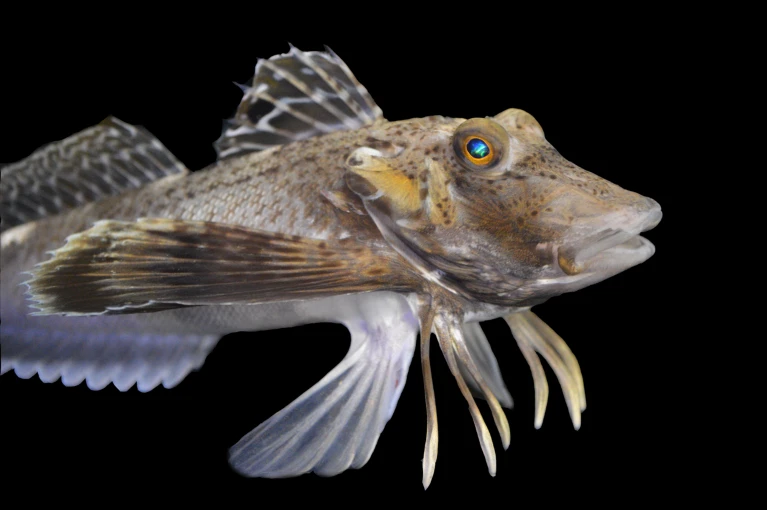
This fish has legs — but they’re not just for walking. Scientists have found that the northern sea robin (Prionotus carolinus) uses its limbs both to stroll the ocean bottom and to taste the sea floor for buried prey.
The research also uncovered clues about how P. carolinus repurposed its appendages as sensory organs over the course of its evolution. And genomic analysis revealed the evolutionary history of legs in the broader sea-robin family (Triglidae). The findings are described in two papers1,2 published today in Current Biology.
Fish with a difference
Sea robins have bulging eyes like a frog’s, fins that look similar to a bird’s wings and six legs resembling a crab’s. They are “the weirdest, coolest fish I’d ever seen”, says developmental biologist David Kingsley at Stanford University in California, who studies the animals.
Researchers have long known that P. carolinus’slegs have special sensory capabilities3,4. Molecular biologist Nicholas Bellono at Harvard University in Cambridge, Massachusetts, notes that the sea robins’ preternatural hunting abilities are so efficient that other fish follow them around hoping for leftovers. And it’s known that the fish’s six legs are covered with small bumps that look like taste buds. But scientists hadn’t probed the origins of the animal’s abilities in detail before.
The northern sea robin’s prowess at finding food attracts bands of hangers-on.Credit: Anik Grearson
Bellono’s team set out to change that and ultimately joined forces with Kingsley and his group. The researchers placed the fish in a tank with mussels and amino-acid capsules, all buried under sediment. The fish were able to find these items and dig them up with their shovel-like feet. A close look at these bumps, known as papillae, revealed taste-receptor molecules, which the researchers found were specialized in detecting amino acids and chemicals produced by deep-sea organisms.
But the most interesting finding came after the researchers had replenished their sea robin supply. These fish couldn’t find the buried food, and the researchers realized that they’d accidentally ended up with a different leggy species: P. evolans. This species’ legs were narrower and didn’t have papillae, suggesting that legginess and tasting ability had evolved separately.
The scientists compared the genomes of 13 sea robin species from around the world and drew an evolutionary family tree. This showed that legs for walking developed first. Sensory organs evolved on some species’ legs later.
Long-legs gene
After examining the genes active in the animals’ appendages, the researchers zeroed in on a gene called tbx3a. Experiments showed that it plays a part in creating a leg where other fish have a fin. When the researchers used the CRISPR–Cas9 gene-editing tool to mutate tbx3a in some P. carolinus, the fish lost their papillae and the ability to dig for food.
Tbx3a encodes a type of protein known as a transcription factor. A single transcription factor often regulates the activity of an array of genes, allowing it to have widespread effects. Bellono and Kingsley say that it’s clear that tbx3a plays some part in leg development and taste perception. But the scientists add that they don’t yet know which mutation caused tbx3a activity to change in species with sensory legs or how it created the fishes’ new abilities. Once they understand that, Kingsley says, researchers could theoretically use CRISPR genome editing to put legs and sensory organs on a different fish.
“They’re really nice, significant findings,” says Thomas Finger, a cell and developmental biologist at the University of Colorado School of Medicine in Aurora. He was surprised to see that some species lacked the ability to sense chemicals, but says that the study effectively showed how the ability seems to have evolved by tweaking an existing set of genes to form a new trait.