Recent announcements showcase the UK as an attractive location for battery manufacturing, but redoubling of efforts are needed to keep pace with investments across Europe.
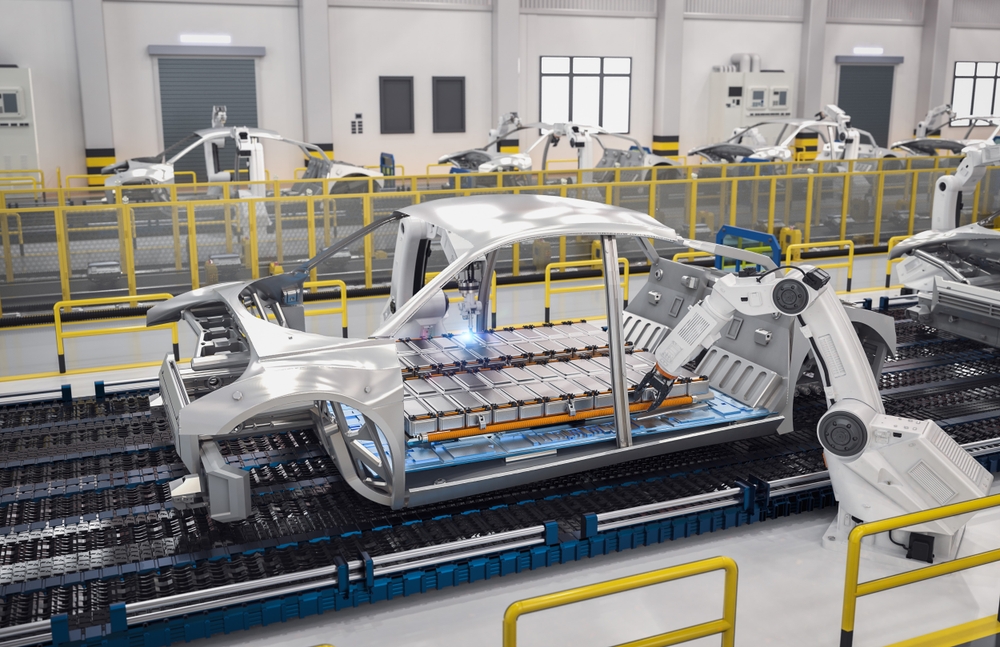
In an update to its 2022 study, the Faraday Institution predicts that by 2030, the UK will need the equivalent of six gigafactories (large, high-volume battery manufacturing facilities), each producing 20 GWh per year of batteries.
By 2040, the demand is expected to rise to the equivalent of ten of these gigafactories. Fewer, larger gigafactories reaching the same total capacity could meet this demand.
EV battery manufacturing is moving slowly in the UK
Recent gigafactory announcements in the UK by AESC and Tata Group have built excitement about the potential to create a new, dynamic and highly skilled battery industry in the UK.
The report finds that 270,000 UK jobs could be supported by the EV and battery industry by 2040.
These announcements showcase the UK as an attractive location for EV battery manufacturing companies to build their European plants. However, the UK is making progress but not moving fast enough compared to its European competitors.
UK battery manufacturing plants announced or under construction are expected to reach a combined capacity of 57.6 GWh by 2030, equivalent to around 4% of total European GWh capacity, behind Germany (21%) and six other countries.
At present, existing gigafactory development plans do not address 47% of the projected demand for UK batteries by 2030.
Furthermore, 71% of the demand projected for 2040 has yet to be met.
Developing an efficient supply chain
The UK Government previously developed a strategy and implemented a wide range of policies and incentives to help create a new battery manufacturing industry in the UK.
For example, the UK Battery Strategy adopts a Design-Build-Sustain approach to enhance innovation, manufacturing and sustainability across the battery ecosystem.
The UK Government and industry stakeholders still need to make timely and coordinated efforts to attract more gigafactories to the UK.
Developing a resilient, sustainable, and efficient supply chain alongside building up skills and capability will also be critical to securing the future of the UK automotive industry.
Minister for Industry and Decarbonisation Sarah Jones said: “Our modern Industrial Strategy will build on this legacy and bring growth, jobs and opportunities to every part of the UK.
“We continue to work with investors and industry through our Automotive Transformation Fund (ATF) to progress plans to build a globally competitive electric vehicle supply chain here in the UK, including work on unlocking crucial investment in gigafactories.”
Stephen Gifford, Chief Economist, Faraday Institution, added: “There is a growing sense of optimism that a highly productive and sustainable battery manufacturing industry can be built in the UK.
“By 2040, a successful industry could employ 170,000 people in EV battery manufacturing, 35,000 people in gigafactories and 65,000 people in the battery supply chain.”
Continued efforts needed
Concerted and coordinated efforts will be needed to improve the competitiveness of the UK and position the UK as a leader in cutting-edge battery technology through action in the following areas:
Attract inward investment to establish new gigafactories and expand existing plants in the UK. This will enhance large-scale battery manufacturing capabilities and position the UK as a competitive player in the European battery market.
Strengthen component manufacturing within the UK, focusing on producing vital battery components such as cathodes, anodes, electrolytes, separators and cell casings to comply with trade agreements and improve supply chain efficiency.
Invest in the development of UK-based refining and processing facilities for key battery materials such as lithium, nickel, cobalt and graphite to enhance the self-sufficiency of the UK battery supply chain and reduce reliance on imports.
Enhance supply chain resilience by securing critical raw materials from international agreements with the USA, Canada, Australia and lithium-triangle countries in South America and by establishing a competitive lithium battery recycling industry in the UK.
Accelerate the exploration and commercial extraction of key battery materials within the UK, especially for lithium and graphite, to reduce dependence on imports and ensure a steady supply of raw materials critical for battery manufacturing.
Provide a long-term commitment to mission-based research into batteries that are cheaper, lighter weight, longer-lasting, safer, manufacturable, and fully recyclable.
Intensify investment in pioneering research into next-generation battery technologies such as solid-state, sodium-ion and lithium-sulfur.
Strengthen initiatives to commercialise innovative battery technologies through strategic partnerships and collaboration, focusing on accelerating the path to market readiness.
As the global demand for lithium-ion batteries (LIBs) increases pressures on critical raw material supply chains, researchers are on the hunt for affordable, safe, and sustainable alternatives.
Scientists at Flinders University are now pioneering efforts to develop practical polymer-based AZIBs using organic cathodes, marking a significant step toward sustainable energy storage.
Why aqueous zinc-ion batteries are the future
The search for alternatives to lithium-ion batteries is intensifying due to various issues, such as the scarcity of raw materials and supply chain disruptions.
Aqueous zinc-ion batteries could address these challenges by leveraging zinc, a material far more abundant than lithium. Zinc is ten times more plentiful in the Earth’s crust, making it an attractive, sustainable option for energy storage.
“Aqueous zinc-ion batteries could have real-world applications,” says Associate Professor Zhongfan Jia, a nanotechnology expert at Flinders University’s College of Science and Engineering.
AZIBs could revolutionise industries from electric vehicles to portable electronics, offering a viable and eco-friendly alternative to lithium-ion batteries.
Environmental and economic benefits
Beyond their resource availability, AZIBs offer several advantages over their lithium-based counterparts.
Unlike lithium-ion batteries, which often rely on rare and expensive materials like cobalt, AZIBs use zinc—a cheaper and more environmentally friendly alternative. Zinc is also less toxic and safer, further enhancing its appeal for widespread adoption.
Another critical advantage lies in the environmental impact. The improper disposal of lithium-ion batteries has resulted in significant environmental risks, with millions of spent batteries contributing to hazardous waste.
AZIBs, being less toxic, could mitigate these risks and help reduce the environmental footprint of energy storage technologies.
The challenge of developing high-performance cathodes
While AZIBs hold tremendous potential, a major challenge remains: developing high-performance cathodes.
Most AZIBs use zinc metal as an anode, but the cathode material, whether inorganic or organic, plays a crucial role in determining the battery’s efficiency and lifespan.
The researchers developed a prototype lab-made pouch battery using scalable and affordable materials.
The battery utilised a non-fluoro zinc electrolyte and BP 2000 carbon black to deliver an impressive capacity of nearly 70 mAh g-1 with a stable discharge voltage of 1.4 V.
This innovation, which can power small devices such as electric fans and model cars, demonstrates the practical potential of AZIBs for everyday use.
The road ahead for aqueous zinc-ion batteries
Aqueous zinc-ion batteries present a promising, eco-friendly, and cost-effective solution to the energy storage challenges of the future.
With continued advancements in polymer-based cathodes and battery performance optimisation, AZIBs could soon replace lithium-ion batteries across various applications, from electric vehicles to consumer electronics.
As the world moves toward sustainable, energy-efficient solutions, a groundbreaking innovation in battery technology is set to transform everything from electric cars to mobile devices.
Picture a future where vehicles are lighter, laptops are thinner, and mobile phones are as slim as credit cards—without sacrificing performance. This vision is becoming a reality thanks to structural batteries, a cutting-edge technology that combines energy storage with structural support.
This breakthrough promises longer ranges for electric vehicles (EVs), extended battery life for consumer electronics, and reduced energy consumption across industries.
A research team at Chalmers University of Technology in Sweden is at the forefront of developing this revolutionary technology. But what exactly is a structural battery, and how could it change the future of energy storage?
What is a structural battery?
A structural battery is a next-generation technology that integrates a battery’s energy-storing function with a load-bearing structure.
This dual-purpose material not only powers devices but also provides physical support. By reducing the overall weight of a product, structural batteries enhance energy efficiency, particularly in vehicles, aircraft, and electronic devices.
For instance, incorporating structural batteries into EVs could increase driving range by up to 70% while making laptops lighter and mobile phones as slim as a credit card.
At the forefront of this field, Chalmers University researchers are pushing the boundaries of structural battery development, aiming to revolutionise how we store and use energy.
Pioneering massless energy storage
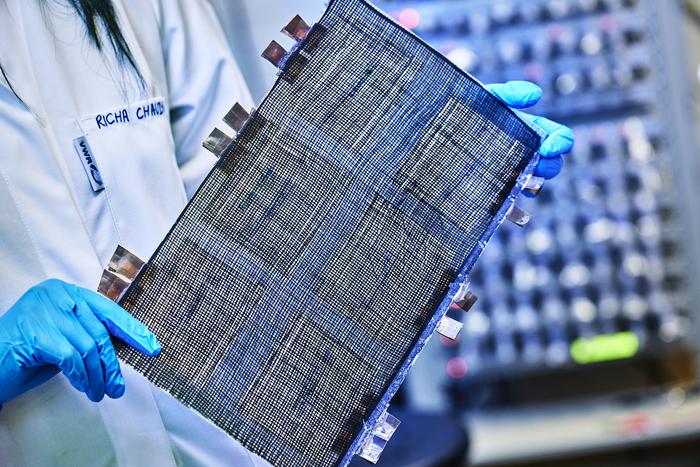
The research team at Chalmers has developed a carbon-fibre-based structural battery that is as strong as aluminium and energy-dense enough to compete with traditional batteries.
As Richa Chaudhary, lead author of the research, explains, the new battery functions similarly to a human skeleton, providing both support and power. This development represents a significant advance in ‘massless energy storage’—where energy storage is seamlessly integrated into the material used for a product’s structure.
Chalmers has been working on structural batteries for years, and recent breakthroughs in energy density and material stiffness mark major steps toward commercial use.
The batteries developed by Chalmers use composite materials, with carbon fibre serving as both the positive and negative electrodes.
Lithium iron phosphate is applied to the carbon fibre in the positive electrode, while the negative electrode acts as both an energy storage material and structural reinforcement.
This multifunctional design eliminates the need for traditional heavy current collectors like aluminium and copper, further reducing the battery’s overall weight.
Additionally, the design avoids using conflict metals like cobalt, making the technology more sustainable. The semi-solid electrolyte used in the battery enhances safety by reducing the risk of fire, although further research is needed to achieve high power output for commercial applications.
Lighter vehicles, lower energy use
One of the most exciting applications of structural batteries is in the automotive and aerospace industries, where reducing vehicle weight can significantly improve energy efficiency.
The new batteries, with an energy density of 30 watt-hours per kilogram (Wh/kg), could allow electric vehicles to travel up to 70% farther on a single charge.
While this energy density is slightly lower than current lithium-ion batteries, the weight reduction achieved through structural integration offsets this, leading to overall better performance.
Additionally, the stiffness of the battery materials has greatly improved, from 25 to 70 gigapascals (GPa), making the structural batteries both lightweight and strong enough to meet safety standards for vehicles and aircraft.
According to Leif Asp, the research team’s leader, these advancements pave the way for more efficient transportation, making lighter, longer-lasting electric cars more feasible.
Moving towards commercialisation
Despite the promise of structural batteries, the path to commercialisation is complex. To help bridge this gap, Chalmers has launched a spin-off company, Sinonus AB, to scale up production and bring the technology to market.
The goal is to integrate structural batteries into consumer electronics and transport systems in the near future.
Professor Asp envisions a world where mobile phones and laptops are thinner, lighter, and more durable thanks to this innovation.
The automotive and aerospace industries have already shown great interest in structural batteries, highlighting their potential to revolutionise these sectors.
However, challenges remain, including improving energy density, optimising electrolyte performance, and scaling up production.
Despite these hurdles, Asp is optimistic that structural batteries will soon reshape how we think about energy storage and material design.
The future of structural batteries
As structural battery technology advances, its potential applications are vast. From lightweight EVs to ultra-thin consumer electronics, this technology could reshape industries that rely on both power and structural integrity.
While widespread commercialisation may still be a few years away, the rapid progress in this field suggests that structural batteries are poised to become a key player in the future of energy storage.
Sean De Vries, from the Battery Metals Association of Canada, debunks the myths of declining EV sales and highlights the promising investments and developments that indicate Canada’s strong position in the global battery metals industry.
With a solid foundation of resources and expertise, as well as support from strategic investment by the government and private sector, Canada’s battery metals sector has flourished in recent years. While recent concerns have surfaced about the deceleration of the EV market due to various economic factors and infrastructure availability, the reality seems to indicate cause for optimism.
The Battery Metals Association of Canada (BMAC) brings together the entire supply chain of Canada’s battery metals sector. BMAC is committed to supporting Canada’s rapidly evolving energy landscape and enabling the country to fully leverage its abundant resources. By promoting research and development and fostering collaboration, BMAC aims to expand the domestic supply chain and position Canada as a global leader in driving the energy transition.
What is the current outlook for battery metals in Canada? Despite recent concerns, why should we be optimistic about the EV market?
Despite the prevailing doom-and-gloom stories, the numbers clearly indicate a continuous growth in the sale of electric vehicles (EVs) as well as the battery capacity entering the market. Thus, the demand for critical materials shows no signs of slowing. According to Adamas Intelligence, there has been a 12% month-over-month growth in EV sales and a 22% year-over-year growth from the beginning of the year until May. These figures point to a substantial and ongoing expansion in the market, which is likely to increase further.
Are EV sales the main driver behind this growth?
While EV sales significantly impact the demand for critical minerals, they are not the only drivers behind the growth. Canada also has a strong energy storage market developing, largely because it is fortunate to have abundant supplies of clean energy, including hydroelectric and nuclear power. The main challenge now is how to effectively capture excess energy created during low consumption periods and store this energy for later use during peak times.
Energy storage is essential for balancing and ensuring grid reliability, and it goes hand in hand with renewable energy generation. Significant advancements have been made in both fields, and we are seeing more of these developments taking place in partnership, particularly as wind and solar become increasingly larger contributors to the overall energy picture.
Which battery energy storage technologies are currently most prevalent in Canada?
Lithium-ion batteries have become the leading technology in the current market landscape owing to their superior performance and energy storage capabilities.
However, it’s important to acknowledge that future developments could lead to the emergence of alternative battery chemistries, such as sodium or zinc-based systems. The decision on which battery technology to pursue will likely be influenced by factors such as mineral availability, extraction costs, and overall capacity.
Despite these potential advancements, lithium-ion batteries currently remain the predominant choice for a wide range of applications due to their proven reliability and versatility.
Can you discuss some of the industry developments happening across the battery metal supply chain?
There is currently a flurry of activity across the entire value chain, but many of these developments appear to be happening in isolation. At BMAC, our primary focus is to help bring together these individual projects to facilitate the development of a comprehensive battery ecosystem that incorporates all segments of the battery value chain and provides opportunities right across Canada.
Although Canada is rich in critical minerals, which provide significant opportunities for development, the processing capacity for these minerals is lacking. To address this gap, a crucial next step is to develop processing facilities that can domestically transform these minerals into battery-grade materials to avoid having to export them for processing. There is progress in this area, with announcements that pre-CAM and CAM facilities are capable of creating these materials, but those developments are still underway.
Furthermore, multiple battery gigafactories have been announced, and they present significant opportunities for the rest of the value chain by creating a demand for the minerals and other components. Although these facilities are still in development, they will take us one step closer to bridging the gap in processing capacity and completing Canada’s battery supply chain.
How has the government supported the growth and development of the battery metals sector?
There has been strong support for the industry from various levels of government right across Canada. Starting with the federal Electric Vehicle Availability Standard that will require 100% of passenger vehicle sales in 2035 to be zero-emission vehicles, the government has created significant domestic market demand for EVs and batteries.
In addition, substantial investment has been made across the entire value chain, with significant projects taking place in each segment. The objective now is to integrate these projects and establish a comprehensive battery ecosystem rather than isolated initiatives, and BMAC is working to identify where these investments will have the most impact, both in terms of the types of operations that are best suited for the industry in Canada and the ideal locations to support those developments.
This investment and incentivisation complement the regulation and framework established by the Canadian Government to develop comprehensive supply chain capabilities.
How is BMAC looking to support and expand Canada’s battery metals industry?
BMAC is focusing on a few key areas. First, we are working with industry experts to identify the ideal mineral processing operations that can be implemented in Canada to enable the processing of key materials in a competitive and low-carbon manner.
Second, we are exploring opportunities for battery hubs in Western Canada that can support the hubs in Ontario and Quebec. For example, with the enormous potential of the lithium-brine projects underway in Western Canada, we will examine how those resources and existing assets, infrastructure, and skills can be leveraged to support the development of integrated industry clusters or hubs. Rather than replicating existing operations in the East, this will consider which regions are best suited for particular projects or purposes, ideally addressing gaps in the overall ecosystem.
Finally, we are supporting organisations right across the value chain in better understanding the need for early engagement with Indigenous communities and stakeholders to ensure they are included in projects in meaningful ways, right from the early development stages. The goal is to find pathways to build strong relationships and partnerships between Indigenous communities and industry to design projects in a way that meets the needs of each.
Ultimately, we are trying to build the case for smart and strategic development while identifying areas of untapped potential that could be the key to scaling up Canada’s battery metals operations.
Are there any parallels that can be drawn between the current developments in the mining to energy metals sectors in Canada with other sectors or past developments? What lessons can they provide?
Interestingly, although the energy transition is about replacing fossil fuels with renewables, in the development of this new clean energy industry, much can be learned from another significant energy development in Canada – the Alberta oil sands.
The development of the oil sands required significant industry and government collaboration in areas such as research and development, project approvals, and funding. It also required the inclusion and support of local communities, particularly Indigenous communities, to integrate their perspectives into the developments. Technological innovation was also pivotal in making extraction from the oil sands feasible and economically viable.
We can draw parallels to similar requirements for success in the extraction of critical minerals and the approval of related projects. Canada has done this before and, with a concerted focus on collaboration, inclusion, and innovation, can once again build a solid foundation for these new industrial developments.
What are the primary challenges to the battery sector’s development, and how is Canada positioned to overcome these challenges?
Canada is well-positioned to overcome the challenges facing the battery sector’s development despite China’s current dominance in the mineral and EV markets. While China controls a significant portion of the global lithium-ion battery supply chain and EV production, Canada’s abundant natural resources, strategic partnerships, and commitment to sustainable practices offer a compelling alternative.
Canada possesses all the necessary pieces to develop a battery value chain and must now bring these together to bolster its competitiveness as an alternative value chain. Our international collaboration is a considerable asset. Canada’s automotive industry is highly integrated with that of the US and is able to capitalise on the large US market so close by.
The aforementioned industry and government collaboration is also crucial. These initiatives, investments, and clean energy tax breaks support the sector’s development and create a business-friendly climate for organisations to thrive. Canada’s human capital, in regard to its extensive skill sets and knowledge of mineral exploration, chemical engineering, and manufacturing, is another significant advantage, setting it above other locations.
Thanks to the country’s long history of mining, minerals processing, and manufacturing, the workforce is highly skilled, with many opportunities for industry transfer and redeployment.
Not only is Canada capable of producing a high-value battery supply chain, but it is also determined to achieve this in a clean, low-carbon manner, which will set it apart from current competitors.
Innovation will be directed at comprehensive decarbonisation across the industry, and the processing capacity will be developed to allow us to complete the domestic supply chain. Canada is set to have a considerably strong market not just for batteries and minerals but for the entire EV and green energy supply chains, truly cementing its future as a global leader.
Please note, this article will also appear in the 19th edition of our quarterly publication.
Researchers at Swansea University, in collaboration with Wuhan University of Technology and Shenzhen University, have made a significant breakthrough in lithium battery safety.
This innovation addresses a critical challenge in energy storage technology, particularly for applications in electric vehicles and renewable energy systems.
Breakthrough in graphene technology
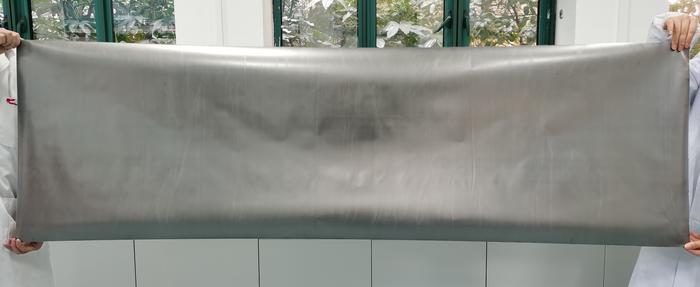
The study outlines the first successful protocol for fabricating defect-free graphene foils on a commercial scale.
These foils boast exceptional thermal conductivity, with measurements reaching up to 1,400.8 W m–1 K–1, nearly ten times higher than traditional copper and aluminium current collectors typically used in lithium batteries. This superior thermal performance is a game-changer for lithium battery safety and efficiency.
“This is a significant step forward for battery technology,” said Dr Rui Tan, co-lead author from Swansea University.
“Our method allows for the production of graphene current collectors at a scale and quality that can be readily integrated into commercial battery manufacturing.
“This not only improves battery safety by efficiently managing heat but also enhances energy density and longevity.”
Researchers at Swansea University, in collaboration with Wuhan University of Technology, Shenzhen University, have developed a pioneering technique for producing large-scale graphene current collectors. Credit: Swansea University
Addressing thermal runaway risks
One of the most pressing issues in the development of high-energy lithium-ion batteries, especially those used in electric vehicles, is the risk of thermal runaway.
This dangerous scenario occurs when excessive heat leads to battery failure, often resulting in fires or explosions.
Traditional current collectors made of copper or aluminium struggle to dissipate heat effectively, making them vulnerable to this catastrophic failure mode.
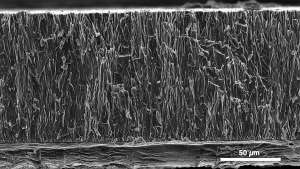
The new graphene current collectors offer a robust solution to this problem. Their dense, aligned graphene structure not only dissipates heat more efficiently but also acts as a barrier against the formation of flammable gases and the permeation of oxygen into the battery cells.
“Our dense, aligned graphene structure provides a robust barrier against the formation of flammable gases and prevents oxygen from permeating the battery cells, which is crucial for avoiding catastrophic failures,” explained Dr Jinlong Yang, co-lead author from Shenzhen University.
Scalable and flexible production
The researchers have demonstrated that their process is not just a laboratory success but a scalable solution capable of producing graphene foils in lengths ranging from metres to kilometres.
In a significant demonstration of its potential, the team produced a 200-metre-long graphene foil with a thickness of just 17 micrometres.
This foil retained its high electrical conductivity even after being bent over 100,000 times, showcasing its potential for use in flexible electronics and other advanced applications.
Moreover, this new approach allows for the production of graphene foils with customisable thicknesses.
This flexibility could lead to even more efficient and safer batteries, as the material properties can be tailored to specific applications.
The researchers are continuing to refine their process, with ongoing efforts to reduce the thickness of the graphene foils and further enhance their mechanical properties.
Importance of improving lithium battery safety and performance
The development of safer and more efficient lithium-ion batteries is crucial as the world shifts towards renewable energy and electric transportation.
The performance and safety of these batteries are paramount, especially in electric vehicles, where battery failures can have devastating consequences.
Enhancing lithium battery safety is not just about preventing catastrophic failures like thermal runaway; it’s also about improving the overall reliability and longevity of the batteries.
By integrating graphene current collectors into commercial battery manufacturing, the potential for safer, more efficient, and longer-lasting batteries becomes a reality.
Future implications and ongoing research
The implications of this research extend far beyond lithium-ion batteries. The international collaborative team is exploring the application of this new material in other types of batteries, such as redox flow batteries and sodium-ion batteries.
As the demand for safer and more efficient energy storage solutions grows, innovations like these graphene current collectors will play a critical role in shaping the future of energy technology.
The continued research and development in this field promise to bring even more advanced and safer batteries to the market, addressing the global need for reliable and sustainable energy storage.
A revolutionary development in lithium-ion battery technology promises to enhance the performance, stability, and lifespan of batteries in electric vehicles (EVs).
This innovation, spearheaded by a research team at the Korea Electrotechnology Research Institute (KERI), aims to overcome the challenges associated with fast charging.
This milestone in fast-charging EV batteries could prove crucial in increasing the adoption of EVs.
Enhancing EV battery performance
The team focused on improving the charging and discharging stability of lithium-ion batteries, especially under fast-charging conditions.
Traditionally, increasing energy density in these batteries has involved thicker electrodes, which often leads to battery degradation and reduced performance during rapid charging.
Unlike many approaches that modify the internal materials of the electrode, the team utilised a simpler technique to apply this coating.
Aluminium oxide, known for its excellent electrical insulation, heat resistance, chemical stability, and mechanical properties, was found to manage the interface between the anode and the electrolyte effectively.
This coating forms an efficient pathway for lithium-ion transport, preventing the detrimental electrodeposition of lithium during fast charging.
Boosting energy density
This coating technique offers another significant advantage: it increases the energy density of lithium-ion batteries.
Conventional methods that introduce functional materials into the electrode interior can complicate the synthesis process and reduce the amount of reversible lithium, leading to thicker electrodes and performance issues during fast charging.
However, by treating the surface of the graphite anode, KERI’s technology achieves stable performance without compromising the amount of reversible lithium, even in high-energy-density, thick-film electrodes.
Promising test results
In various tests, the aluminium oxide-coated high-energy-density anode demonstrated world-class performance.
The batteries maintained over 83.4% of their capacity even after 500 cycles of rapid charging. This impressive performance was verified with pouch cells of up to 500mAh, showcasing the potential for real-world application.
The research team is now focusing on scaling up this technology to make it applicable to larger, medium- to large-capacity cells.
This development marks a significant step forward in the quest for efficient, long-lasting, and fast-charging EV batteries, potentially accelerating the adoption of electric vehicles worldwide.
While lithium-ion batteries hold great potential for the future of sustainable energy, a few issues still need to be addressed. Xerion Advanced Battery Corp. is at the forefront of developing solutions to these problems.
As the world races toward decarbonisation goals aimed at mitigating the impacts of climate change, batteries have taken a central role in the shift away from fossil fuel reliance. Lithium-ion batteries specifically have emerged as a key innovation in the clean energy transition since their inception over 30 years ago. From electric vehicles (EVs) to renewable energy storage systems, these advanced batteries are the enabling technology driving the shift away from fossil fuels. However, while current lithium-ion battery technologies offer many benefits, there remains a long way to go in addressing the shortcomings of these technologies.
Lithium-ion batteries have become the technology of choice for a wide range of applications due to their exceptional energy density, long cycle life, and low self-discharge rate. These advantages have made them the go-to power source for consumer electronics, power tools, and, most importantly, EVs and stationary energy storage systems.
The transportation sector, responsible for a significant portion of global greenhouse gas emissions, is undergoing a seismic shift towards electrification. Major automakers have announced ambitious plans to phase out internal combustion engines in favour of EVs, driven by increasingly stringent emissions regulations and consumer demand for more sustainable transportation options.
Similarly, integrating renewable energy sources, such as solar and wind, into the electricity grid has created an urgent need for large-scale energy storage solutions. Lithium-ion batteries store excess renewable energy when production exceeds demand and release it back into the grid when needed, ensuring a reliable and sustainable electricity supply.
Unfortunately, despite the great promise that lithium-ion batteries offer for advancing the transition to clean, renewable energy, technologies on the market today possess significant drawbacks. Namely, the technologies and configurations dominating today’s market are expensive and reliant on unstable supply chains. Beyond the costs, there are opportunities for improvement in both the performance and safety of Li-ion batteries.
Xerion – Building a better lithium-ion battery
Further innovations are required to harness the true potential of lithium-ion batteries as a driver of the energy transition. At Xerion, we are doing just that. Xerion has spent more than a decade flying under the radar, quietly developing a high-performance, low-cost lithium-ion battery technology platform that now promises to not only revolutionise the battery and short-term energy storage sector landscape but also to propel the electrification of the global economy forward. Xerion’s revolutionary manufacturing platform is founded upon two patented core technologies – DirectPlate™, an innovative refining and deposition technique, and StructurePore™, a novel battery electrode architecture.
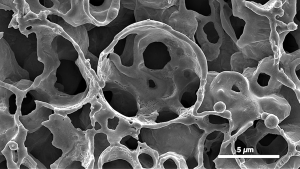
Xerion’s DirectPlate™ manufacturing process leverages a molten salt electroplating process to eliminate many of the steps and materials required in traditional lithium-ion battery manufacturing processes. The company’s novel StructurePore™ nanostructured metal foam electrode architecture dramatically reduces resistance, allowing lithium ions to move rapidly through the battery. This architecture also minimises the potential for thermal runway by reducing heat generated by the battery during failure events, granting significant safety advantages over traditional lithium-ion batteries.
Combined, these core technologies deliver a dramatically lower-cost lithium-ion battery with higher energy density, more power, faster charge, longer life, improved safety, and 40% lower carbon emissions than conventional battery manufacturing.
Optimising battery manufacturing sustainability
An under-discussed element of the ever-growing demand for lithium-ion batteries is ensuring that procuring critical battery materials, such as lithium and cobalt, remains sustainable. Demand for these materials is far outstripping supply, as the International Energy Agency (IEA) reported that the global demand for lithium tripled between 2017 and 2022, and it is projected to double again by 2030. With that increased demand comes increasing importance to optimise sustainability.
Xerion’s cutting-edge technology is elevating sustainability to new frontiers. The company’s DirectPlate™ manufacturing process has yielded a critical innovation as it pertains to the environmental impact of battery supply chains. This revolutionary process extracts lithium directly from geothermal brines, which exist in abundance in regions such as California’s Salton Sea and South America’s Lithium Triangle. This novel ceramic redox membrane technology allows for low-cost, highly efficient extraction of lithium from geothermal brines with minimal impact on the surrounding environment. While the concept of extracting lithium from geothermal brines, in a process called direct lithium extraction (DLE), is currently utilised, existing methods have been plagued by poor lithium selectivity, material instability, and high cost.
In contrast, Xerion’s technology is exceptionally resistant to the temperature and chemistry of geothermal brines, providing the required lithium selectivity and durability for practical application. The company has demonstrated this technology is capable of efficiently extracting lithium from raw geothermal brines with low lithium concentrations to produce high-quality lithium hydroxide. This lithium hydroxide can be used directly as a battery feedstock to synthesise cathodes in a single step using Xerion’s DirectPlate™ molten salt electroplating process, converted to a lithium metal anode for use in solid-state batteries, or as feedstock for the current conventional slurry cast cathode production process.
Notably, Xerion’s DirectPlate™ process can also use less pure, 100% domestically sourced battery precursors and can be adapted to recycle end-of-life batteries, allowing for increased circularity and waste reduction within the battery supply chain.
Strengthening domestic supply chains
As the demand for lithium-ion batteries continues to surge, another critical challenge emerges: Establishing a robust and secure domestic battery supply chain. The production of lithium-ion batteries involves a complex global supply chain, and the United States is currently heavily dependent on international markets for the sourcing of lithium, resulting in high costs, supply chain challenges, and national security concerns. Today, Australia, Chile, China, and Argentina produce over 90% of the world’s lithium, while the vast majority of lithium-ion batteries – roughly 77% of global supply – are produced in China.
To address these challenges, the United States must prioritise the development of a domestic battery supply chain, from raw material sourcing to advanced manufacturing capabilities. Xerion is deeply committed to leading the charge on this front and passionately believes that its technology offers a significant opportunity to make strides toward that goal.
In sum, lithium-ion batteries are a valuable tool for electrifying global economies as we transition to renewable energy, but we cannot remain satisfied with the status quo of today’s technologies. Continued innovation is an absolute requirement moving forward, and those innovations must be focused on improving performance and cost, securing supply chains, and reducing environmental impact. Xerion is committed to these ideals.
Please note, this article will also appear in the 18th edition of our quarterly publication.
Thore Sekkenes, European Battery Alliance Program Director at EIT InnoEnergy, highlights the importance of EIT InnoEnergy’s One-Stop-Shop for providing guidance to SMEs about efficient access to public funding.
In Europe’s energy transition, small and medium-sized enterprises (SMEs) are emerging as catalysts for innovation within the battery industry.
With their capacity for rapid adaptation, SMEs can drive significant advancements in battery technology.
However, despite their potential, accessing funding and navigating Europe’s complex financial landscape must be overcome.
Services like EIT InnoEnergy’s One-Stop-Shop to EU finance play a pivotal role in addressing these challenges. This service offers tailored guidance to simplify access to public funding across the battery value chain so that SMEs can reach their full potential in the energy sector.
To learn more about the potential of the One-Stop-Shop service, we spoke to Thore Sekkenes, European Battery Alliance Program Director at EIT InnoEnergy.
Can you elaborate on the important role of battery SMEs in Europe’s wider energy transition?
When it comes to implementing changes, smaller companies tend to be quicker compared to larger ones.
While larger companies possess greater resources and infrastructure, they often find it more challenging to pivot due to their established processes and systems. Conversely, SMEs, often associated with agility, exhibit a greater ability for adapting and innovating.
Large companies, however, are aware that they need to adapt to drive change.
They seek out SMEs, recognising their potential for innovation, and invest in supporting their evolution. This strategy allows larger enterprises to leverage the agility and fresh perspectives of smaller entities to drive broader organisational change.
What challenges do SMEs face regarding access to public funding?
First, establishing credibility is vital; it’s what inspires trust and prompts individuals to entrust their funds for investment purposes.
Public funding is very important in establishing credibility. Relying solely on personal funds may raise questions among potential investors regarding the breadth of financial support.
Ensuring sound financial arrangements not only facilitates current operations but also instils confidence in prospective investors.
Another aspect to bear in mind is proficiency in fundraising, which isn’t necessarily synonymous with technical expertise.
You might excel as a technician or scientist yet lack the know-how to navigate the intricacies of fundraising – knowing whom to approach, how to network effectively, or how to access public funds. These are distinct skill sets.
As implied by their size, small companies typically have limited resources. Hiring key personnel tends to focus on their core expertise rather than on financial matters, particularly in technology-driven companies.
Because of this, companies need to hire individuals with diverse skill sets, including HR professionals, process specialists, and finance experts.
It is important to have experts who understand the intricacies of financial navigation.
What motivated the development of the One-Stop-Shop?
The concept of a One-Stop-Shop is essential. The One-Stop-Shop aims to firstly streamline navigation through the complex public funding landscape, and secondly, to provide tailored guidance based on the applicant’s profile and stage of development.
Public funding in Europe is particularly complex.
The landscape is intricate, given the multitude of Member States, the EU’s overarching role, and the varying stages of development across regions. There are a plethora of tools available for different stages, both public and private, spanning from early-stage to development phases. This complexity underscores the need for a One-Stop-Shop aiming to assist SMEs in navigating this intricate terrain.
Secondly, it’s essential to acknowledge that not all companies are alike. What works for one may not necessarily be suitable for another due to factors such as geographical location, position within the value chain, or the stage of development.
The One-Stop-Shop directs individuals to relevant public funding programs which are the best fit for them and even offers training courses to enhance their efficacy in securing funding.
From the financing entity’s perspective, it’s crucial to avoid investing time and resources in applicants who may not be the right fit or who aren’t adequately prepared to receive funding.
A key function of the One-Stop-Shop is to assess the maturity level of companies seeking assistance. If an application indicates that the applicant lacks the readiness or capability to answer crucial questions, it’s a clear indication of their maturity level.
In such cases, the One-Stop-Shop ensures that the applicant is redirected appropriately, preventing them from consuming the time of entities with more pressing responsibilities. This scrutiny in the process ensures that immature companies receive guidance on prerequisites before engaging with potential financiers, while mature companies are directed towards suitable avenues for their financing needs, such as scaling up operations.
This approach aims to streamline the process and ensure that resources are allocated effectively.
The One-Stop-Shop accelerates the vetting process for private investors, signalling that certain credibility benchmarks have been achieved, thereby facilitating subsequent investment decisions.
Once a case has been evaluated, what services will they receive?
We offer training sessions, particularly for those interested in the Innovation Fund.
This is designed to help applicants navigate relevant aspects of the funding landscape, tailored to their needs. Our goal is to provide clear guidance on the most pertinent areas of interest.
For those companies with exceptional potential, we offer additional support through EIT InnoEnergy, providing a fast track for their development.
Although this isn’t the major aspect of the One-Stop-Shop, we closely monitor promising projects and may offer individualised assistance when necessary. This is at the top end of the scale.
How does the European Battery Alliance ensure that companies within the battery industry consider the entire value chain when developing their products?
An examination of the entire value chain is of great importance to the European Battery Alliance.
If this approach is not taken, a company could examine one segment without considering upstream or downstream aspects, becoming vulnerable. Someone opening a mine is just as welcome as someone in the battery recycling sphere.
Companies from different aspects of the value chain are welcome to the One-Stop-Shop as well. Focusing on the entire value chain is key to our success.
The launch of the EBA Raw Material Fund underscores the significance of upstream activities. While considerable attention is rightfully placed on manufacturers, it’s crucial to acknowledge that their operations are wholly reliant on the accessibility of raw materials necessary for anode and cathode production.
Upstream and, to some extent, downstream are the two weakest parts of the value chain.
No chain is stronger than its weakest link, so focusing on the entire value chain is important for the raw materials sector as a whole.
Through streamlined financing mechanisms for small and medium-sized enterprises across the whole value chain, the One-Stop-Shop will help the battery industry work towards a sustainable future.
Honda has revealed it will invest $15bn to build an EV production and EV battery plant in Ontario, Canada.
The company unveiled plans to create an innovative and environmentally responsible EV value chain in Canada.
The multi-billion dollar investment will cover all aspects of the value chain, helping Honda accelerate production capabilities through a stand-alone battery plant that will produce the cells essential for the separate EV production facility.
The Honda EV value chain will also include a cathode active material and precursor (CAM/pCAM) processing plant through a joint venture with POSCO Future M Co., Ltd. And a separator plant in collaboration with Asahi Kasei Corporation.
The company has begun evaluating the investment and is working to complete negotiations with its joint partners, with the work expected to be finalised in the next six months.
Commenting on Honda’s Canadian EV value chain plans, Toshihiro Mibe, Global CEO of Honda, said: “Honda is making progress in our global initiatives toward the realisation of our 2050 carbon neutrality goal.
In North America, following the initiative to establish our EV production system capability in the US, we will now begin formal discussions toward the establishment of a comprehensive EV value chain here in Canada, with the support of the governments of Canada and Ontario.
“We will strengthen our EV supply system and capability with an eye toward a future increase in EV demand in North America.”
Overview of Honda’s EV value chain plans
The Honda EV value chain is expected to open in 2028 – with the battery plant estimated to have a 36 GWh annual capacity and the EV production facility manufacturing 240,000 vehicles per year.
The new EV battery plant will create 1,000 new jobs on top of the 4,200 jobs currently at the EV production hub.
Honda says the new facilities could also create a large amount of ‘spin-off’ jobs, such as in the construction sector.
Jean Marc Leclerc, President and CEO of Honda Canada Inc., added: “Honda of Canada Manufacturing is one of the premier automotive manufacturing facilities in the world, and for nearly forty years, our work has been guided by determination, innovation, and a relentless drive to evolve.
“Today’s announcement is a historic investment by a manufacturer in the Canadian auto industry. It proudly honours the highly skilled associates who have earned a global reputation for manufacturing excellence and represents Honda’s recognition of the long-term attractiveness of the Canadian electric vehicle manufacturing ecosystem.”
Building on US success
Honda’s plans for an EV production facility and battery plant in Canada follow the announcement of an advanced EV hub in Ohio.
The company has invested $700m to retool existing plants in the region to support EV manufacturing.
This is supplemented by an additional $4.4bn investment to create an EV battery plant in partnership with LG Energy Solution.
The Ohio EV hub is set to open in late 2025, and the knowledge gained will be shared with the EV production facility and EV battery plant in Canada.
In addition to boosting manufacturing capabilities, Honda says it will also invest in securing sustainable supply chains for raw materials and battery recycling to cover all aspects of the value chain internally.
A new report from Troutman Pepper has outlined critical strategies for boosting EV battery manufacturing, adoption, regulations, and infrastructure across the US.
The “Driving Change: Scaling up EVs in the US” report warns that outdated and insufficient infrastructure, combined with lacklustre environmental regulatory programmes, is slamming the brakes on domestic EV battery manufacturing and consumer uptake.
Barriers to EV scale-up in the US
Federal incentives, growing consumer demand, and supportive policies fuel the automotive industry’s push to ramp up EV production and adoption.
This surge in demand has resulted in a record number of EVs hitting the roads. Businesses, consumers, and policymakers are increasingly united in supporting this growth.
However, further scaling requires significant changes to infrastructure and environmental regulations.
The report emphasises the necessity of a comprehensive upgrade and expansion of charging station infrastructure alongside a supportive regulatory framework for establishing new EV battery and vehicle manufacturing facilities in the US.
Despite substantial federal incentives, auto manufacturers face challenges navigating complex infrastructure permitting rules, exacerbated by varying interpretations and implementations of federal policies at the state level.
Moreover, the report underscores the pressing need for expedited permitting processes for expanded EV battery manufacturing facilities, as well as concerns regarding workforce skills, technology, machinery, and raw materials required to sustain the industry’s desired growth.
Dan Anziska, Partner at Troutman Pepper, explained: “A lot needs to happen for EVs by 2026 to be widely adopted. That includes speeding up the permitting process for battery gigafactories and speeding up manufacturing facilities.
“It is expensive and time-consuming to build a massive gigafactory, as well as being reliant on many suppliers, and there are so many that have been announced. There’s competition for everything from labour to equipment and resources.”
Optimising the EV landscape
The EV experts involved in the report have outlined four key recommendations to advance the EV sector in the US.
Expand the public charging network
To ensure efficient charging station operation, states must clarify the roles between electric utilities and non-utility operators.
Regulatory bodies should confirm that non-utility operators won’t be deemed public utilities, fostering a competitive environment.
Provide clarity on environmental rules for EV battery factories
Regulatory ambiguity can hinder investments in new battery plants. Policymakers are urged to clarify regulations, particularly concerning chemical component imports, manufacturing, and recycling processes, to spur innovation in battery management.
Streamline approval processes for key battery chemicals
The EPA should expedite approvals for chemicals used in EV battery manufacturing, leveraging available information to make informed decisions.
Clear guidelines on wastewater management under existing standards would further streamline the process.
Encourage innovation and collaboration in battery recycling and disposal
Collaboration is key for developing best practices in EV battery recycling, including shredding operations management.
Establishing uniform environmental permitting programs for battery recycling will enhance efficiency and sustainability.
Efforts to supercharge EV sales require addressing infrastructure and regulatory bottlenecks. With the right mix of public policy, investment, and innovation, the EV sector can realise its full potential.