In the face of increased human pressures and climate change, a team of Australian scientists led by Dr Georgina Wood at Flinders University have launched a new online tool to assist marine managers and restoration experts in bolstering climate-resilient marine ecosystems.
The ‘Reef Adapt’ initiative, developed by experts from the NSW Department of Primary Industries and Regional Development (NSW DPIRD), Flinders University, and the University of Western Australia (UWA), aims to expand the tools available to promote diverse, adaptable, and climate-resilient marine ecosystems.
Reef Adapt harnesses genetic data from diverse marine species – including key reef-building corals and habitat-forming kelps, but with scope to expand to other taxa – to map out areas likely to harbour populations adapted to current and future environmental conditions.
The innovative web platform is designed to rapidly include genetic, biophysical, and environmental data in planning marine restoration and assisted conservation initiatives.
Identifying areas to restore marine ecosystems
The tool provides users with maps identifying areas with populations suited to their specific marine restoration sites under current and future climate scenarios.
The platform will initially house data for 27 species collected from 420 sample locations worldwide. Users will also be able to upload their own data to the site, further supporting the conservation of other species and areas.
While guidelines for terrestrial ecosystem restoration seed-sourcing exist, for example, the US National Seed Strategy and Australia’s Florabank, Reef Adapt is one of the first tools of its kind for marine ecosystems.
The project follows similar projects on land, such as Australia’s NSW Restore and Renew programme, to remove barriers to access to genetic data and improve restoration and assisted gene flow.
Intensifying global efforts to restore ecosystems
Dr Georgina Wood, an Australian Research Council Early Career Industry Fellow with Flinders University and Adjunct Research Fellow at UWA, says global efforts to restore ecosystems are intensifying.
Initiatives include the Convention on Biological Diversity’s recent adoption of the Kunming-Montreal Global Biodiversity Framework, which aims to put 30% of degraded marine ecosystems under effective restoration by 2030.
“Alongside the increase in scale of marine restoration projects, there is a need to ensure that restoration practices keep up with the latest available science, including the use of cutting-edge genomic information to make informed decisions about where to source restoration stock material,” Dr Wood explained.
She added, “Our world is changing more rapidly than ever. Ideally, every restoration project would incorporate climate adaptation into their design, but the data needed for this are typically difficult to access.
“Reef Adapt puts this information directly into the hands of both managers and practitioners.”
Reef Adapt removes access barriers for effective restoration
The easy-to-use web platform hosts vital genetic information for government, not-for-profit and community organisations – removing barriers to access to vital information that the team hopes will improve both immediate and long-term marine restoration outcomes.
“The revolutionary new Reef Adapt tool will use cutting-edge genomic data and seascape analyses to help marine managers, restoration practitioners, and other stakeholders, including aquaculture, make informed decisions about where to source stock for restoration or aquaculture.
“It will also help select a climate-proof stock that will withstand future ocean conditions,” stated Dr Melinda Coleman, NSW DPIRD Senior Principal Research Scientist.
She concluded: “We hope that this web tool will be used broadly by marine and conservation managers, community groups, anyone embarking on marine restoration, and aquaculture proponents.”
Workers plant trees in the outskirts of Bogotá as part of a reforestation project.Credit: Florian Kopp/imageBroker/Shutterstock
This year’s Global Risks Report from the World Economic Forum ranked ‘biodiversity loss and ecosystem collapse’ as one of the three most severe risks that societies face over the next ten years, alongside ‘extreme weather’ and ‘critical change to Earth systems’ caused by climate change1.
There is a plan to address this threat. In 2022, 196 countries adopted the Kunming–Montreal Global Biodiversity Framework, agreeing to halt and reverse biodiversity loss by 2030 and ensure that natural resources are used sustainably by 2050. Yet, an estimated funding gap of US$598 billion–$824 billion exists between current annual spending on conservation and restoration and what is needed to achieve the goals of the framework2. Public finance and policies can help to close this gap — for example, governments could lower taxes for green technologies and redirect subsidies from activities that are environmentally harmful to those that are more sustainable. But a new source of finance is also needed.
Biodiversity credits are one mechanism, highlighted by the Global Biodiversity Framework, that could help to generate private-sector funds and ensure that those funds pay for demonstrable conservation and restoration achievements. By buying these credits, which would be used to fund certain projects, companies could achieve any one of three goals. First, to boost their profile and marketing, organizations could make contributions to improving the world’s biodiversity independent of their own activities. Second, after assessing their impact on the environment and doing all they can to avoid or minimize harm, companies could compensate for any residual harm in a like-for-like way — meaning the credits they purchase would need to fund remediation efforts in the same location and ecosystem type as wherever the harm is being done3. Last, organizations could invest in efforts that enhance biodiversity and resilience in their supply chains.
Analysis: the biodiversity footprint of the University of Oxford
Some corporations are already making promises not just to minimize their impact on nature but also to enhance ecosystems and enrich biodiversity — in other words, to become ‘nature positive’. And mandatory biodiversity-credit markets (in which companies that are harming the environment are required by law to purchase credits) are emerging in several countries, including Colombia, Germany, India, France and England. But — as the failures of carbon-credit markets, designed to reduce greenhouse-gas emissions, have made plain — for biodiversity-credit markets to grow and achieve what’s needed, they must be built in the right way, and they must operate in the right way.
As members of the International Advisory Panel on Biodiversity Credits, we have been developing a road map for biodiversity credits for about a year. Our panel consists of scientists, Indigenous Peoples and representatives from local communities, non-governmental organizations (NGOs), finance and industry. Together, we have analysed 31 initiatives that are trialling the use of biodiversity credits in 21 countries. We have organized events at international meetings and held hundreds of discussions and numerous workshops in multiple languages. We have also conducted two global surveys to assess people’s interest and understanding, and to better understand how potential sellers and buyers imagine using biodiversity credits in practice.
Drawing on this work and taking lessons from other markets, including carbon-credit and finance markets, here we lay out what we think is needed to establish trustworthy, impactful biodiversity-credit markets. We will present our recommendations in full (which we have developed in collaboration with the World Economic Forum and the Biodiversity Credit Alliance, an international organization that aims to support the implementation of the Global Biodiversity Framework) at this month’s United Nations biodiversity summit COP16 in Cali, Colombia.
Carbon-credit conundrum
For most people working on issues tied to the environment, mentioning the word ‘credits’ brings to mind carbon credits. It probably also raises misgivings.
Carbon-credit markets generally involve carbon-offsetting projects, which promise reductions in emissions in one place (often through the planting of trees to absorb carbon dioxide, or through the protection of existing forests that act as carbon sinks) to compensate for the emission of CO2 in another location. Despite their promise in helping to reduce greenhouse-gas emissions, however, carbon-credit markets have hit problems4.
The non-profit organization Environmental Conservation Trust of Uganda is helping to restore forested land in the northern Albertine Rift in Uganda.Credit: Martin Zwick/Avalon
There has been a lack of transparency about how many offsetting projects have achieved or will achieve their long-term goals5,6, and a lack of clarity for buyers about how they can use the credits they purchase, and what claims they can make about them. Some schemes that focus only on the removal of CO2 from the atmosphere, such as the planting of eucalyptus trees in African savannahs, can harm biodiversity and the communities that depend on it. Because most projects have focused on forested ecosystems, other important carbon sinks, such as salt marshes, have been overlooked. It has been unclear how the costs and benefits of carbon-offset projects will be shared among those involved, and who gets to decide this. Also, few efforts have engaged Indigenous Peoples or local communities — or engaged them enough.
But carbon-credit markets are evolving and many of these problems could be resolved in the future. Also, well-designed biodiversity-credit markets — that help to strengthen the rights and voices of Indigenous Peoples and local communities — wouldn’t operate in the same way as today’s carbon-credit markets do. In fact, for biodiversity credits to drive the flow of money towards conservation and restoration that is needed — and for the work on the ground to be effective — governments and companies establishing biodiversity-credit markets must ensure that the problems that have arisen with carbon-credit markets are avoided. They will also need to ensure that the necessary conditions for biodiversity-credit markets to operate effectively are in place.
Carbon offsets aren’t helping the planet — four ways to fix them
Companies buying biodiversity credits should view them as a way to channel funds into long-term conservation and restoration initiatives, rather than as something they can quickly sell to another firm to make a profit — as can happen, for example, in cap-and-trade schemes in which a limited supply of carbon credits can make for valuable commodities in their own right. Also, one tonne of CO2 will have the same impact wherever it is released, whereas the effects of damage to biodiversity are hugely variable depending on the precise location. If a company negatively affects a rainforest in Borneo, for instance, any biodiversity credits that the company buys to compensate for that harm will need to fund equivalent conservation and restoration in the same ecosystem.
Five aspects in particular need addressing.
Measuring the state of nature. One of the most commonly asked questions in our discussions was, ‘How do you measure actual improvements to biodiversity (or the amount of biodiversity loss that will be avoided thanks to an initiative) in a consistent, reliable and credible way?’
Biodiversity is much more complicated to measure than are carbon emissions7. It encompasses genetic, taxonomic, functional, evolutionary and ecosystem diversity — all of which can be assessed in different ways8. For instance, when assessing taxonomic diversity, biologists might count the number of species in an area, or they might just count the number of genera. More than 570 biodiversity metrics have been proposed so far, and standards for monitoring biodiversity continue to be debated at international and national levels9. Also, how people value biodiversity will vary depending on the species or ecosystem in question, and the geographical and cultural context. Adding to these difficulties, the restoration of habitats can take decades, making it hard to measure a project’s actual or potential impact.
But a balance can be found between technical rigour and practicability.
Even relatively simple metrics, such as the probable impact of land-use changes on the risk of certain species going extinct (which can be readily estimated10), can provide clues about an ecosystem’s integrity and, crucially, about how this changes over time. And an array of metrics, such as the number of individuals in easily identifiable and ecologically important species groups, can be used to support assertions about improvements made to biodiversity and enable biologists to detect positive change in a relatively short time frame.
Through our consultations and analyses, we have identified six key criteria for biodiversity measurements and reporting standards. First, with the objectives and rights of Indigenous Peoples and local communities and of those buying the biodiversity credits in mind, a project’s goals — meaning what aspects of biodiversity are to be conserved or restored and to what degree — should be made clear at the outset. Second, measurements should be verifiable, appropriate for that ecosystem and based on robust science11. Third, measurements should be confirmed and assured by individuals or organizations working independently of the project. Fourth, all data should be made publicly available. Fifth, measurements should be made before the conservation or restoration work begins, while the project is under way, and after the project has been completed. Last, results should show that, thanks to the project, more biodiversity conservation or restoration is enabled than what would have happened anyway.
Driving up demand. Many of the people we consulted questioned why companies would want to buy biodiversity credits. Certainly, outside the mandatory schemes, such as those established in Colombia and England, few companies are buying them today12. This is because companies are unsure of what biodiversity credits are, what makes a biodiversity credit high quality and how biodiversity credits should be used13. Companies are also wary because it can take years for substantial benefits of conservation and restoration projects to be detected — which in turn affects what statements an organization can make about what their purchases of biodiversity credits are achieving.
Technologies, such as camera traps, are making it easier to monitor changes to biodiversity.Credit: Ann & Steve Toon/Nature Picture Library
Yet, our discussions have convinced us that all sorts of organizations recognize humanity’s dependence on nature and are committed to addressing the biodiversity crisis as well as the climate crisis. Also, many of these obstacles listed can be tackled.
National and regional legislation should aid the development of ethical and trustworthy projects and transactions. This could entail requirements for companies to compensate for their harms to biodiversity. In February, the English government introduced a scheme called biodiversity net gain, a requirement that all new building projects achieve a 10% net gain in biodiversity (measured by the size, type, condition and strategic significance of the habitats being affected, on the basis of information such as species richness and rarity).
More governments should establish rules on what counts as like-for-like habitat and lay out what principles should underlie accepted methodologies and assertions — just as we are doing here. Also, more governments should provide publicly available lists of independently approved approaches that involve the use of biodiversity credits, and registries of conservation and restoration projects that need funding. Colombia’s government is doing exactly this in association with the environmental-investment company Terrasos in Bogotá.
Meanwhile, philanthropic organizations and impact-fund providers — which channel funds into investments that generate a measurable and beneficial social or environmental impact alongside a financial return — could provide the seed money needed to get projects up and running. This would in turn lower the risks of investment for private companies.
Stimulating supply. Most of the conservation and restoration projects being funded by biodiversity credits today are at an early stage, in which the suppliers of the credits (that is, those developing the conservation or restoration projects) are still refining their methodologies for measuring biodiversity, setting the prices of the credits, assessing demand, identifying buyers and so on.
To increase the number of biodiversity credits available for sale, governments, impact-fund providers and philanthropic organizations should invest in the people, training and technology needed for measuring, conserving and restoring biodiversity. In other words, seed investment from these organizations would help to bolster both the demand for and the supply of biodiversity credits.
Environmentalists are trying to protect endangered marine species in the Colombian Pacific.Credit: Luis Acosta/AFP via Getty
Initially, the use of biodiversity credits will work better for some projects and regions than others. A current difficulty is the complexity of people’s rights to ownership of land, seas and natural resources. Such rights might not be officially registered, but might align with the customary laws, values and traditions of Indigenous Peoples or local communities. Also, the rules and customs around who owns what vary in and between countries, and in the case of international waters, multiple countries are involved in governance14. Longer term, these challenges can and must be addressed.
Setting the rules. The main lesson from carbon-credit markets is that governments should develop and enforce clear rules — about how biodiversity credits can be used, what needs to be reported by those selling them, what can be said about them and so on. Establishing and enforcing these rules will require governments and international oversight bodies to work together with organizations that set standards (such as those establishing certification schemes), Indigenous Peoples, local communities and international and national NGOs.
Governments should require, for example, project developers selling biodiversity credits to make project information publicly available — from the impact of projects on biodiversity to the benefits they provide to local communities. In principle, a new or existing body at the international level could support the development of ethical and trustworthy biodiversity markets by developing standards, and sharing information and lessons from biodiversity-credit funded projects.
Certification schemes could also help to ensure that biodiversity credits are ethical and trustworthy. Various media reports suggest that some certification systems have failed to protect either biodiversity or Indigenous Peoples. But emerging schemes are tackling these issues — such as the Global Biodiversity Standard for habitat restoration, which aims to provide assurance that tree planting, habitat restoration and agroforestry practices are protecting, restoring and enhancing biodiversity.
Making projects work on the ground. One of the most common criticisms that we have heard environmentalists and others make about carbon-offset projects is that those involved fail to sufficiently engage the local stewards and custodians of land and seas in the design, planning and running of projects.
In many carbon-offset projects, if Indigenous Peoples and local communities are considered at all, they are consulted only in the final stages of the project. Or they might be asked to sign forms to give their ‘free, prior and informed consent’. Such forms are a crucial tool. But in many cases, if they are given to people at all, they are given too late or without sufficient discussion. Also, often the forms are not legally binding.
A project in Uganda is trialling the use of biodiversity credits to help the conservation of the chimpanzee.Credit: Godong/Universal Images Group via Getty
Formally recognizing the importance of Indigenous and local knowledge, and the rights of Indigenous Peoples and local communities to govern and manage their lands according to traditional practices, when designing biodiversity-credit markets would be a game-changer. Securing and protecting the rights of these communities is ultimately the duty of governments. Yet, to ensure that biodiversity-credit markets do not worsen current inequities, no biodiversity credits should be bought or sold without a seller first certifying to the buyer how people’s rights are being (or will be) observed and protected in the projects tied to the credits.
In practice, this means companies enabling Indigenous Peoples and local communities to drive projects forwards from the outset. It means ensuring that individuals get the conservation or restoration training they need; that Indigenous Peoples and local communities receive fair compensation for their stewardship of biodiversity; that benefit-sharing mechanisms are integrated into contracts and so on.
As an example, in one of the 31 projects that we have analysed, the non-profit Environmental Conservation Trust of Uganda is building on its 25 years of experience and working with nearly 42,000 smallholder farming households. Project goals include: restoring 12,000 hectares of forested land to provide connectivity for wildlife between currently protected but fragmented blocks of forest in the northern Albertine Rift in Uganda; supporting the conservation of several threatened species, such as the chimpanzee; and creating income opportunities for more than 15,000 households. Crucially, the project has been designed by rural communities, and it will be owned and led by them.
One year on
When we were invited to develop a road map for biodiversity credits in 2023, we recognized the importance of the task, but were also concerned about the risks. We knew about the problems with carbon offsets and we were daunted by the ecological, social, financial, ethical and legal challenges that biodiversity-credit markets present.
One year on, we still think that unregulated markets could lead to a poor use of public and private funds just when those funds are needed the most. These markets could even worsen the situation if investors are unable to recognize greenwashing claims; if companies use biodiversity credits to sustain or increase their negative impacts on biodiversity; and if efforts to protect and restore biodiversity fail to embrace the rights and needs of Indigenous Peoples and local communities.
But all of us that have worked on this project are now convinced that — designed in the right way and used alongside other approaches, including those using high-quality carbon credits or payments for ecosystem services15,16 — biodiversity-credit markets could become one of the most important funding sources for implementing the Global Biodiversity Framework.
Governments shape economies, champion innovation and enable markets through the signals they send and the rules they set. We therefore urge all governments to introduce policy measures and legislation that encourages — or preferably requires — companies to assess, disclose and address their impacts on biodiversity (as outlined in target 15 of the Global Biodiversity Framework). As part of this process, we recommend that the regulation, certification and enforcement of biodiversity credits be based on the framework laid out here and in our full report.
Over time, success will be measured, not so much by the total market value, but by the long-term benefits that such credits bring — to biodiversity and to people.
I relocated from California to Placencia, on the coast of southern Belize, in 1995, when there were no paved roads, no vehicles and everybody walked around barefoot. Back then, I was working as a research assistant and scuba-diving instructor. That meant that I had access to Belize’s stunning coral reefs, but also that I began to witness — and document — an ever-more depressing decline in the reefs’ health.
In 1999, while managing Glover’s Reef Marine Reserve for the Belize Fisheries Department, I saw the effects of the 1998 global bleaching event caused by an El Niño followed by a strong La Niña — weather patterns resulting from variations in ocean temperatures in the Equatorial Pacific.
Coral reefs deserve evidence-based management not heroic interference
Then in 2001, the category-4 Hurricane Iris hit Placencia and the Laughing Bird Caye National Park 12 miles offshore, causing catastrophic damage. Laughing Bird Caye, part of the Belize Barrier Reef World Heritage Site, is crucial to local tourism. The devastation, for both the reef and the community, got me thinking about whether the corals could be re-established.
Coral-reef restoration or rewilding has since become the subject of often intense debate, with a growing number of scientists maintaining that it is a losing battle in a rapidly warming world. Specialists continue to argue over even such basic questions as ‘what is a coral?’ and ‘what is a reef?’, before you get to ‘how much coral cover restored counts as restoration?’ Some researchers question whether reef restoration can be done at scale, whereas others have made overzealous assertions about how easy it is, what it can achieve and how. Reef restoration has taken off — like yoga, I often joke — with ever-wilder ideas about how to ‘save the reefs’. Instead of ‘yoga with babies’, ‘yoga with goats’ or ‘yoga with snakes’, it’s ‘feed the corals’, ‘shade the corals’ or ‘mix in some probiotics’.
My and my team’s experiences, over almost two decades in Belize, show that coral-reef restoration projects can be an uphill battle. But — for now at least — done in the right way, the work can help the corals, their surrounding ecosystems and the communities that depend on them.
Great Barrier Reef’s temperature soars to 400-year high
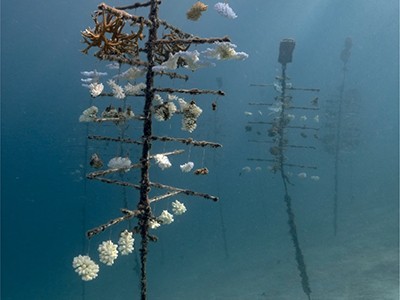
It took four years to find funding to trial transplanting coral fragments from Belize’s outer reef to Laughing Bird Caye. But since 2010, a team of Belizeans and I have moved genetically distinct colonies of elkhorn coral (Acropora palmata), staghorn coral (A. cervicornis) and hybrids (A. prolifera) — amounting to more than 96,000 fragments — to Laughing Bird Caye and more than 20 other sites across 7 marine protected areas.
To better assess changes in coral cover, in 2014 we started using an imaging approach called diver-based photomosaics, a type of large-area imaging. Annual analyses of nine plots (each measuring 50–200 square metres) showed that coral cover increased from 4–6% in 2014 to more than 60% in 2021.
In 2019, we began using drones to assess larger areas, and, by 2021, showed that we had re-established live corals in more than 0.2 hectares of reef around Laughing Bird Caye alone. Although survival rates could turn out to be a lot worse this year, even after two major coral-bleaching events in 2023, nearly 80% of 1,200 transplanted A. palmata fragments at four Cayes in southern Belize had survived (these data are yet to be published).
‘Ecological grief’ grips scientists witnessing Great Barrier Reef’s decline
We are trying to keep portions of shallow reefs alive for as long as possible in a warming world, partially in the hope — which admittedly is thinning — that humanity begins to bend the warming curve so that corals can thrive again. But our experiences suggest that these efforts are likely to prove beneficial only if the water quality is good enough, and if living corals and macroalgae grazers are present. Macroalgal mats interfere with the settlement of coral larvae when they switch from their planktonic phase to the sessile one; sea urchins, crabs and other grazers keep levels of macroalgae down. No-take or highly protected marine zones are also crucial because they preserve species such as lobsters, which feed on the snails that feed on corals.
Restoration can have all sorts of benefits. It can provide a habitat for hundreds of species and protect shorelines from erosion and flooding. It can provide an economic boost, too — and not just by driving tourism. In 2013, a group of us founded an initiative called Fragments of Hope to continue our coral-restoration work. Since then, we have employed only people who live in Belize. More than 100 have trained with us so far. Last year, more than 70% of our operating costs (nearly US$250,000 per year) were spent in Belize. Each person who worked with us last year (for 20 hours a week) earned around $5,000. And this year, it will be around $10,000. This is in a country where the minimum wage is $2.50 per hour and the gross domestic product per capita was less than $7,000 in 2023.
Today, around 25 researchers from different disciplines use Fragments of Hope for their work. Environmental engineers are trying to quantify wave attenuation or work out how to improve waste-water treatment, and anthropology students are pursuing socio-economic studies.
I often feel like giving up. But as long as the corals don’t, nor will I. Whenever I see tiny remnants of coral fusing together — often in the space of a year — to create a living coating over what had looked like a huge dead coral skeleton, I am persuaded to keep trying. Fragments of Hope and other interdisciplinary learning hubs should not be abandoned yet.
The critically endangered Lehmann’s poison frog is endemic to southwestern Colombia, where negotiators are meeting for the COP16 biodiversity summit
Minden Pictures/Alamy
The 16th Conference of the Parties to the UN Convention on Biological Diversity, CBD COP16 for short, starts in Cali, Colombia, this week. The summit will discuss a slate of essential actions needed to stem biodiversity loss, such as protecting 30 per cent of the planet’s land and water by 2030.
In 2022, the world agreed in Montreal on an ambitious plan to protect nature. This “Global Biodiversity Framework” has 23 targets, but the reality is that achieving any of them depends on one thing: money. The United Nations estimates around $700 billion a year is needed. Of that, $500 billion is expected to come from reforming subsidies that harm biodiversity, leaving a funding gap of $200 billion. But rich countries have so far pledged just $30 billion a year by 2030, far short of what’s required. Where will the rest of the cash come from?
One possible solution on the table in Cali is a proposal to collect a 1 per cent benefit sharing levy on global retail sales and channel the money to support conservation and sustainable use of biodiversity. With global retail sales predicted to reach $25 trillion soon, a “penny on the pound for life on Earth” could mobilise $250 billion a year. That would be a simple solution to the complex issue of how to make sure everyone, nature included, benefits from the wealth of biodiversity.
This proposal first came back in June 2021 from the African Group of countries, for which I served as a lead negotiator on issues related to biodiversity for more than a decade. The idea stemmed from debates about how to fairly share benefits from using the planet’s biodiversity, which is the little-known third objective of the biodiversity convention, after conservation and sustainable use. This longstanding question was rekindled by debates about how to manage the flood of electronic biological data enabled by DNA sequencing and other technologies.
Converting biological information like DNA into electronic data (known in the arcane language of UN negotiations as digital sequence information or DSI) that can be shared online and manipulated by computers has radically transformed virtually all life sciences and boosted a host of industries. But the benefits aren’t being shared fairly, and digital data creates new opportunities for making profits without giving anything back to nature. Profitable biotech firms are concentrated in higher-income countries, while the biodiversity that forms the basis for much of their research and development is concentrated in lower-income countries. The existing framework to share benefits, known as the Nagoya Protocol, deals only with physical specimens and is woefully inadequate for the digital age.
Resolving this problem presents an opportunity. After six years of deliberations, we achieved a breakthrough on this issue in Montreal, with all countries agreeing to create a multilateral mechanism to share benefits from biological digital sequence information. The job in Cali is to put this into action. Yet exactly how this is done matters a great deal, especially to scientists and other innovators who are the users of such data. If countries are serious about solving the biodiversity crisis, they should design a mechanism that is of appropriate scale.
A 1 per cent levy on global retail would achieve that. Such a predictable financial flow to environmental prerogatives would completely change the “mood music” of global environmental governance. And it would come while there is still time to save the most precious remainders of life’s vast profusion before we humans push it into oblivion.
The retail sector has a unique position in latter-day capitalism: it collects consumer spending on behalf of all actors in the value chain. Charging “nature’s share” at the retail level means everyone involved contributes a little bit, and no one has to carry a huge burden. The system doesn’t have to be perfect either: if the richest half of humanity paid one dollar a week, $200 billion a year is within reach.
This approach is also by far the simplest of the options now on the table. The alternatives would all require scientists and companies that use genetic data to report on their research and business activities and pay a share of their total turnover, or their profits from those products. That would create unnecessary complexities such as reporting, monitoring, opportunities for avoidance, hair-splitting and other work for lawyers. The total income to biodiversity would be orders of magnitude lower than 1 per cent of all retail sales.
That simplicity is why most scientists, businesses and governments I’ve spoken with privately support this proposal in principle. They don’t say so in public, though, because they think it’s too idealistic to work in practice. I would remind them of Nelson Mandela’s wise words: “It always seems impossible until it’s done”. Governments have never achieved any global biodiversity goals, while companies have reluctantly contributed as little as they could get away with, so why not let the world’s consumers give it a try?
Any agreement in Cali on sharing DSI benefits won’t be legally binding. But the 1 per cent of retail plan needn’t be legally binding to be successful: if all the governments of the world unanimously asked all retailers to collect the benefit sharing levy and obliged them to report transparently whether or not they have done so, the court of public opinion will be the final judge of who the good corporate citizens are. As already agreed in Montreal the money would be disbursed through a global biodiversity fund to support biodiversity conservation and restoration, in particular by indigenous peoples and local communities who are the best stewards of nature.
If Colombia’s COP16 presidency can lead the world to agree to this simple but ambitious plan, Cali might yet be remembered for mobilising the massive resources needed to stem biodiversity loss and achieving its mission to “make peace with nature”.
Thylacines, or Tasmanian tigers, went extinct in 1936
Colossal Biosciences
The genome of the extinct thylacine has been nearly completely sequenced, de-extinction company Colossal has announced. It says the genome is more than 99.9 per cent complete, with just 45 gaps that will soon be closed – but it has provided no evidence to back up its claim.
“It’s a fairly difficult thing to get a fully complete genome of almost any organism,” says Emilio Mármol-Sánchez at the University of Copenhagen, Denmark, whose team was the first to extract RNA from a preserved thylacine. For example, the last few holdouts of the human genome were only fully sequenced in the past few years.
Thylacines, also known as Tasmanian tigers, were carnivorous marsupials once found throughout Australia, but by the time European explorers arrived, they were limited to Tasmania. The last known thylacine died in a zoo in 1936.
The genome of a preserved thylacine was first sequenced in 2017 using tissue from a then-108-year-old thylacine pouch preserved in alcohol. However, this genome was far from complete, with many gaps. Now Colossal, which also aims to recreate the woolly mammoth, says it has largely completed this genome with the help of additional DNA from a 120-year-old tooth.
“Our genome is not as complete as the most complete human genome, but we were able to take advantage of some of the same technologies,” says Andrew Pask at the University of Melbourne in Australia, a member of Colossal’s scientific advisory board.
It is difficult to completely sequence the genomes of plants and animals because there are large sections where the same sequences are repeated many times. Standard techniques that sequence small segments of DNA at a time don’t work for these parts – it is like trying to reassemble a book from a list of the words in it.
Newer, long-read techniques can sequence much larger segments of DNA – whole pages of the book. However, old DNA usually breaks up into lots of small pieces, so these methods don’t often help.
“Most ancient samples preserve DNA fragments that are on the order of tens of bases long – hundreds if we are lucky,” says Pask. “The sample we were able to access was so well preserved that we could recover fragments of DNA that were thousands of bases long.”
Given the lack of any other thylacine genomes to make a comparison with, there is no direct way to tell how complete it is – instead Pask says Colossal is using other related species in the same family to make this estimate.
But even if the genome is as complete as Colossal thinks and it really can fill in the remaining gaps, there is currently no feasible way to generate living cells containing this genome. Instead, Colossal plans to genetically modify a living marsupial called the fat-tailed dunnart to make it more like a thylacine.
“It’s more a recreation of some traits,” says Mármol-Sánchez. “It would not be an extinct animal, but a pretty weird, modified version of the modern animal that resembles our image of those extinct animals.”
Colossal says it has made a record 300 genetic editsto the genomes of dunnart cells growing in culture. So far, all are small changes, but Pask says the team plans to swap in tens of thousands of base pairs of thylacine DNA in the near future. It isn’t yet clear how many edits will be required to achieve the company’s goal of recreating the thylacine, he says.
When asked why Colossal had provided no evidence in support of its claims, CEO Ben Lamm said the company’s sole focus is de-extinction, not writing scientific papers. “We are not an academic lab where papers are their main focus,” said Lamm. “We will continue to make progress much faster than the process of writing scientific papers.”
Climate change is raising winter temperatures faster than those of summer, especially in high-altitude areas. This “asymmetric” warming could spell trouble for the vast amount of carbon stored in soils there by altering microbial activity more than expected.
The planet’s soils store more carbon than any ecosystem other than the oceans, and could store much more if better managed. But soil carbon is threatened by climate change. Researchers expect warmer temperatures will boost the amount of soil carbon lost to the atmosphere as greenhouse gases, largely due to changes in the behaviour of soil microbes. However, the scale of this warming feedback remains uncertain.
Ning Ling at Lanzhou University in China and his colleagues heated soils in an experimental grassland on the Tibetan plateau to test how different patterns of warming might change microbial activity. Some of the soils were kept at ambient temperatures, while others were exposed to a “symmetric” warming of 2°C throughout the year. A third group was exposed to warming of 2.5 to 2.8°C during winter and 0.5 to 0.8°C during the rest of the year, a more realistic simulation of actual warming patterns.
After a decade of this treatment between 2011 and 2020, the researchers tested microbial activity of samples from the different soils. They focused on two measures in particular: growth rate and an indicator of how the organisms are using carbon, known as carbon use efficiency. This has been shown to be a major determinant of the amount of organic carbon stored in soils.
“When a microbe eats carbon, it can do one of two things with it: it can break it down for energy and breathe that carbon as CO2, or it can use it to make new body structures,” says Daniel Rath at the Natural Resources Defense Council, an environmental non-profit organisation based in New York. A higher growth rate means microbes are using more carbon, and higher carbon use efficiency means more of that carbon is being made into body structures, rather than respired as CO2, he says.
Ling and his colleagues found both warming patterns substantially reduced microbial activity. Soils under symmetric warming saw growth rate decline 31 per cent and carbon use efficiency decline 22 per cent relative to soil exposed to ambient temperatures. Under asymmetric warming, this effect was even stronger, with growth rate lowered by 58 per cent and carbon use efficiency lowered by 81 per cent relative to soils exposed to ambient temperatures. They ascribed the differences to factors including a change in the nutrients available to the microbes.
“Their findings suggest that soil carbon storage likely will decrease, reducing the capacity of terrestrial ecosystems to sequester carbon and degrading the soil’s efficacy for nature-based solutions to climate change,” says Yiqi Luo at Cornell University in New York.
Rath says the fact that current models don’t take asymmetric warming into account means we are probably underestimating soil carbon losses due to climate change. However, he says the findings may only apply to soils from frigid ecosystems, and more research is needed to understand exactly what these changes in microbial activity mean for carbon. For instance, despite the significant change in microbial activity, the total amount of carbon stored in the soil didn’t change over the course of the experiment.
Tiny foraminifera shells can help us understand the future of El Niño
Scenics & Science/Alamy
A reconstruction of Pacific Ocean temperatures 21,000 years ago based on the chemistry of tiny shells adds hefty support to projections that climate change will make strong El Niño events far more common, leading to more extreme weather around the world.
“We’re projecting a pretty dramatic change,” says Kaustubh Thirumalai at the University of Arizona.
The irregular cycle between warmer- and cooler-than-average temperatures in the equatorial Pacific Ocean –…
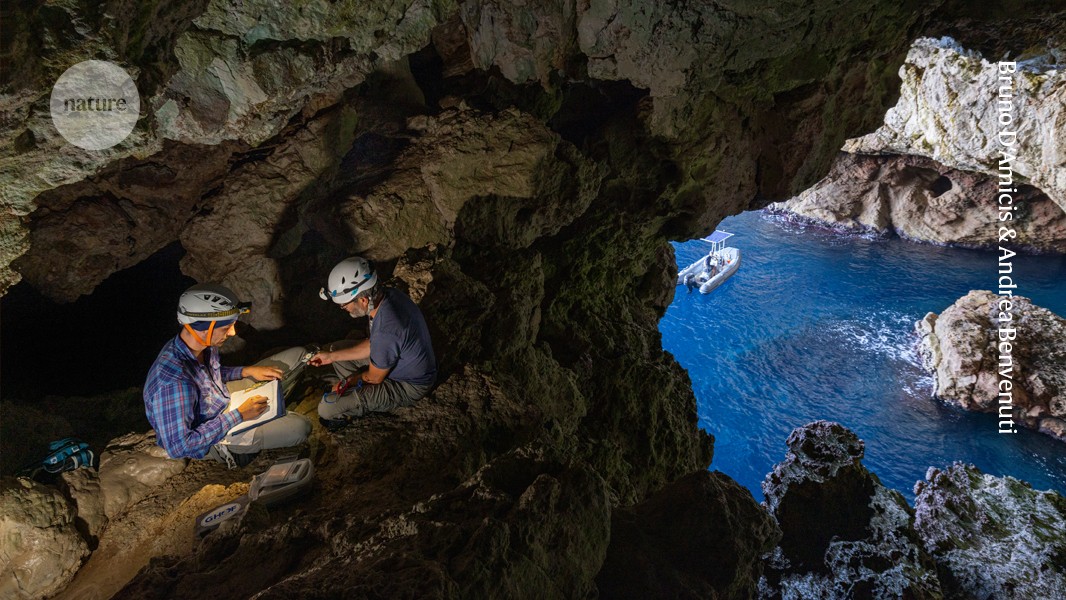
“I’ve always felt a connection with the ocean. I completed my PhD, on seabirds’ movement decisions, at the University of Milan in 2022. The following year, I joined the Institute for Environmental Protection and Research (ISPRA) at Ozzano dell’Emilia, Italy, as a researcher. In this photograph, taken in 2021, I was on an expedition that forms part of a collaborative project between ISPRA and the University of Milan. Its aim is to track the sea movements of European storm petrels (Hydrobates pelagicus).
My colleagues and I had travelled to the caves on Foradada Island off the northwestern coast of Sardinia, which is a popular nesting site for the birds. It’s hard to get there: you arrive on a small boat, before climbing through the cave in the picture to reach the main chamber. Here, field assistant Danilo Pisu (on the right) and I are fitting petrels with tiny GPS loggers before returning them to their eggs. The birds have a distinctive smell, which everyone describes differently. To me, they have the slightly dusty scent of an old book.
For thousands of years, humans have lived around the coastline of the Mediterranean Sea, and because of this it’s heavily polluted. We wanted to find out where the storm petrels range over the sea, and why, so that we could protect them better in this area.
We found that the birds are attracted to parts of the sea where the water churns from currents meeting far below the waves. This creates a phenomenon that brings plankton up to the surface.
Out of all the birds I have studied, these are the most interesting. They have a history of myth and mystery. In nineteenth-century folklore, seafarers believed them to be the spirits of dead sailors, who brought storms to ships. In reality, the birds were seeking shelter near the boats in bad weather. Having a deeper understanding of them makes them even more special.”
This interview has been edited for length and clarity.
As a student in China in the late 1980s, I spent several wonderful semesters studying zoology and botany. I vividly remember the joy of a summer field trip, immersed in taxonomy and biodiversity, where I learnt about a weed called goose-grass. Its well-developed root system makes it difficult to pull out of the soil — earning it the nickname the ‘Dunzhao donkey’, because those attempting to extract it look like exhausted donkeys squatting on the ground.
Taxonomy is crucial for biodiversity conservation — if we can’t properly identify animals, plants and fungi, we can’t find ways to preserve them. But since my student years, working as an ecologist in Shandong, China, I’ve witnessed a decline in the teaching of this important subject. Credit hours for botany and zoology modules have halved at many universities in China. The length of field trips has been reduced owing to lack of funding.
No basis for claim that 80% of biodiversity is found in Indigenous territories
It’s a similar story worldwide. Funding for projects involving taxonomy dropped drastically in the United Kingdom in the 1990s, replaced by those using molecular biology and genetics. Taxonomists in Europe worry that they themselves are becoming an endangered species, with retiring experts often not being replaced. And some low- and middle-income countries (LMICs), including tropical nations that contain some of the world’s biodiversity hotspots, have long faced a shortage of domestic talent.
Decades on, and the costs of these cuts are now apparent. Biodiversity initiatives are struggling to find specialists. For example, in China, hundreds of surveys of animals, plants and fungi are under way, with the aim of improving the conservation of native habitats and species. But many organizers have found it difficult to recruit qualified researchers. Qiao Gexia, an entomologist at the Chinese Academy of Sciences in Beijing, has voiced concern that, as current taxonomists retire, there will be a reduction in studies of important taxa — such as termites, which are crucial to ecosystems but also can damage buildings, roads and bridges, and earwigs, which are useful for pest control but are detrimental to fruit production (see go.nature.com/3msjcxh).
Indeed, a lack of taxonomic knowledge, especially at the local level, is leading to errors. For example, in 2022, a common fish in Xiaoqing River, China, was mistakenly reported to be an endangered species, causing confusion among conservationists and the public.
Harrowing trends: how endangered-species researchers find hope in the dark
If taxonomic knowledge is not maintained, it will become harder to prevent species becoming extinct.
That’s why I feel it’s so important that the Kunming Biodiversity Fund — aimed at supporting global biodiversity conservation — includes a substantial pot of money for biodiversity education. The fund was launched in Beijing in May. Its co-chairs, the Chinese government and the United Nations Environment Programme, hope that the initial investment of 1.5 billion yuan (US$210 million) from China will attract other countries, institutes and organizations to invest in the fund. The money will be used to help LMICs meet the goals of the Kunming–Montreal Global Biodiversity Framework, which has been agreed on by almost 200 countries. The framework sets out 23 targets to be reached by 2030 and 4 goals for 2050, all of which aim to see humans living in harmony with nature.
The first projects to be supported by the Kunming fund are expected to be announced before the start of the COP16 UN biodiversity conference on 21 October, at which progress towards meeting the biodiversity framework targets will be discussed and evaluated. As yet, education has not been mentioned as a focus — but I think it should be.
I would like to see 10% of the Kunming fund’s annual budget put aside for education. It’s crucial to build up taxonomic know-how in LMICs that lack it, and to ensure that it is preserved in those where it might be dwindling.
One priority should be funding programmes in LMICs that teach students taxonomic methods, such as observation of specimens, and modern techniques for assessing the biodiversity of animal and plant communities.
Can floating homes make coastal communities resilient to climate risk?
Laying camera traps and analysing the footage, for instance, is often cheaper, easier and requires fewer people than using live traps does. Analysis of DNA gathered from soil, water or air can be used to accurately assess the species in a local community, without the need to spot them all in the wild. And training in the use of online digital herbaria and collection galleries will enable young scientists to share knowledge and resources across countries.
Universities can support this endeavour by incentivizing biodiversity and taxonomy courses for their students, perhaps by giving them more credits. And they should also offer general courses in taxonomy and biodiversity to students outside the biological sciences, to build awareness.
Some might argue that a focus on direct conservation efforts is the best way for the Kunming fund to help achieve the framework’s 2030 targets. But education is the key to reaching many of those goals, especially because those living in a particular country are the ones best placed to understand its flora and fauna.
Ignoring education will waste the Kunming fund’s resources. There can be no sustainable support for global conservation efforts without generation after generation of properly educated specialists. A lack of expertise will be devastating for the estimated one million species facing extinction worldwide today.
The views expressed are the author’s own and do not necessarily represent those of their institution.