Tag: biodiversity

  • Blaser, J., Sarre, A., Poore, D. & Johnson, S. Status of Tropical Forest Management 2011 (ITTO, 2011).

  • Romero, C. et al. Evaluation of the impacts of Forest Stewardship Council (FSC) certification of natural forest management in the tropics: a rigorous approach to assessment of a complex conservation intervention. Int. For. Rev. 19, 36–49 (2018).


    Google Scholar
     

  • van der Ven, H. & Cashore, B. Forest certification: the challenge of measuring impacts. Curr. Opin. Environ. Sustain. 32, 104–111 (2018).

    Article 

    Google Scholar
     

  • Benítez-López, A. et al. The impact of hunting on tropical mammal and bird populations. Science 356, 180–183 (2017).

    Article 
    ADS 
    PubMed 

    Google Scholar
     

  • Kleinschroth, F., Laporte, N., Laurance, W. F., Goetz, S. J. & Ghazoul, J. Road expansion and persistence in forests of the Congo Basin. Nat. Sustain. 2, 628–634 (2019).

    Article 

    Google Scholar
     

  • Leisher, C. et al. Ranking the direct threats to biodiversity in sub-Saharan Africa. Biodivers. Conserv. 31, 1329–1343 (2022).

    Article 

    Google Scholar
     

  • Tilker, A. et al. Habitat degradation and indiscriminate hunting differentially impact faunal communities in the Southeast Asian tropical biodiversity hotspot. Commun. Biol. 2, 396 (2019).

    Article 
    PubMed 
    PubMed Central 

    Google Scholar
     

  • Abernethy, K. A., Coad, L., Taylor, G., Lee, M. E. & Maisels, F. Extent and ecological consequences of hunting in Central African rainforests in the twenty-first century. Phil. Trans. R. Soc. B 368, 20120303 (2013).

    Article 
    CAS 
    PubMed 
    PubMed Central 

    Google Scholar
     

  • Tritsch, I. et al. Do forest-management plans and FSC certification help avoid deforestation in the Congo Basin? Ecol. Econ. 175, 106660 (2020).

    Article 

    Google Scholar
     

  • Cerutti, P. O. et al. Social Impacts of the Forest Stewardship Council Certification (Center for International Forestry Research, 2014).

  • Roopsind, A., Caughlin, T. T., Sambhu, H., Fragoso, J. M. V. & Putz, F. E. Logging and indigenous hunting impacts on persistence of large neotropical animals. Biotropica 49, 565–575 (2017).

    Article 

    Google Scholar
     

  • Tobler, M. W. et al. Do responsibly managed logging concessions adequately protect jaguars and other large and medium-sized mammals? Two case studies from Guatemala and Peru. Biol. Conserv. 220, 245–253 (2018).

    Article 

    Google Scholar
     

  • Bahaa-el-din, L. et al. Effects of human land-use on Africa’s only forest-dependent felid: the African golden cat Caracal aurata. Biol. Conserv. 199, 1–9 (2016).

  • Stokes, E. J. et al. Monitoring great ape and elephant abundance at large spatial scales: measuring effectiveness of a conservation landscape. PLoS ONE 5, e10294 (2010).

    Article 
    ADS 
    PubMed 
    PubMed Central 

    Google Scholar
     

  • Polisar, J. et al. Using certified timber extraction to benefit jaguar and ecosystem conservation. Ambio 46, 588–603 (2017).

    Article 
    ADS 
    CAS 
    PubMed 

    Google Scholar
     

  • Sollmann, R. et al. Quantifying mammal biodiversity co-benefits in certified tropical forests. Divers. Distrib. 23, 317–328 (2017).

    Article 

    Google Scholar
     

  • Ramage, B. S. et al. Pseudoreplication in tropical forests and the resulting effects on biodiversity conservation. Conserv. Biol. 27, 364–372 (2013).

    Article 
    PubMed 

    Google Scholar
     

  • Burivalova, Z., Hua, F., Koh, L. P., Garcia, C. & Putz, F. A critical comparison of conventional, certified and community management of tropical forests for timber in terms of environmental, economic and social variables. Conserv. Lett. 10, 4–14 (2017).

    Article 

    Google Scholar
     

  • Campos-Cerqueira, M. et al. How does FSC forest certification affect the acoustically active fauna in Madre de Dios, Peru? Remote Sens. Ecol. Conserv. https://doi.org/10.1002/rse2.120 (2019).

  • Grantham, H. S. et al. Spatial priorities for conserving the most intact biodiverse forests within Central Africa. Environ. Res. Lett. 15, 0940b5 (2020).

    Article 
    CAS 

    Google Scholar
     

  • Atwood, T. B. et al. Herbivores at the highest risk of extinction among mammals, birds and reptiles. Sci. Adv. 6, eabb8458 (2020).

    Article 
    ADS 
    PubMed 
    PubMed Central 

    Google Scholar
     

  • Cardillo, M. et al. Multiple causes of high extinction risk in large mammal species. Science 309, 1239–1241 (2005).

    Article 
    ADS 
    CAS 
    PubMed 

    Google Scholar
     

  • Figel, J. J., Hambal, M., Krisna, I., Putra, R. & Yansyah, D. Malignant snare traps threaten an irreplaceable megafauna community. Trop. Conserv. Sci. 14, 1940082921989187 (2021).


    Google Scholar
     

  • Yasuoka, H. et al. Changes in the composition of hunting catches in southeastern Cameroon: a promising approach for collaborative wildlife management between ecologists and local hunters. Ecol. Soc. 20, 25 (2015).

  • Peres, C. A. & Dolman, P. M. Density compensation in neotropical primate communities: evidence from 56 hunted and nonhunted Amazonian forests of varying productivity. Oecologia 122, 175–189 (2000).

    Article 
    ADS 
    CAS 
    PubMed 

    Google Scholar
     

  • Maisels, F. et al. Devastating decline of forest elephants in Central Africa. PLoS ONE 8, e59469 (2013).

    Article 
    ADS 
    CAS 
    PubMed 
    PubMed Central 

    Google Scholar
     

  • Wall, J. et al. Human footprint and protected areas shape elephant range across Africa. Curr. Biol. 31, 2437–2445 (2021).

    Article 
    CAS 
    PubMed 

    Google Scholar
     

  • Beirne, C. et al. African forest elephant movements depend on time scale and individual behavior. Sci. Rep. 11, 12634 (2021).

  • Challender, D. W. S., Heinrich, S., Shepherd, C. R. & Katsis, L. K. D. in Pangolins (eds Challender, D. W. S. et al.) 259–276 (Academic, 2020).

  • Rogers, H. S., Donoso, I., Traveset, A. & Fricke, E. C. Cascading impacts of seed disperser loss on plant communities and ecosystems. Annu. Rev. Ecol. Evol. Syst. 52, 641–666 (2021).

    Article 

    Google Scholar
     

  • Bello, C. et al. Defaunation affects carbon storage in tropical forests. Sci. Adv. 1, e1501105 (2015).

  • Chanthorn, W. et al. Defaunation of large-bodied frugivores reduces carbon storage in a tropical forest of Southeast Asia. Sci. Rep. 9, 10015 (2019).

  • Berzaghi, F., Bretagnolle, F., Durand-Bessart, C. & Blake, S. Megaherbivores modify forest structure and increase carbon stocks through multiple pathways. Proc. Natl Acad. Sci. USA 120, e2201832120 (2023).

    Article 
    CAS 
    PubMed 
    PubMed Central 

    Google Scholar
     

  • Berzaghi, F., Chami, R., Cosimano, T. & Fullenkamp, C. Financing conservation by valuing carbon services produced by wild animals. Proc. Natl Acad. Sci. USA 119, e2120426119 (2022).

    Article 
    CAS 
    PubMed 
    PubMed Central 

    Google Scholar
     

  • Johnson, C. K. et al. Global shifts in mammalian population trends reveal key predictors of virus spillover risk. Proc. R. Soc. B 287, 20192736 (2020).

    Article 
    PubMed 
    PubMed Central 

    Google Scholar
     

  • Ibbett, H. et al. Experimentally assessing the effect of search effort on snare detectability. Biol. Conserv. 247, 108581 (2020).

    Article 

    Google Scholar
     

  • Wilkie, D. S., Sidle, J. G., Boundzanga, G. C., Auzel, P. & Blake, S. in The Cutting Edge (eds Fimbel, R. A. et al.) 375–400 (Columbia Univ. Press, 2001).

  • Bicknell, J. E., Struebig, M. J. & Davies, Z. G. Reconciling timber extraction with biodiversity conservation in tropical forests using reduced-impact logging. J. Appl. Ecol. 52, 379–388 (2015).

    Article 
    PubMed 
    PubMed Central 

    Google Scholar
     

  • Laméris, D. W., Tagg, N., Kuenbou, J. K., Sterck, E. H. M. & Willie, J. Drivers affecting mammal community structure and functional diversity under varied conservation efforts in a tropical rainforest in Cameroon. Anim. Conserv. 23, 182–191 (2020).

    Article 

    Google Scholar
     

  • Morgan, D. et al. African apes coexisting with logging: comparing chimpanzee (Pan troglodytes troglodytes) and gorilla (Gorilla gorilla gorilla) resource needs and responses to forestry activities. Biol. Conserv. 218, 277–286 (2018).

    Article 

    Google Scholar
     

  • Sollmann, R., Mohamed, A., Samejima, H. & Wilting, A. Risky business or simple solution—relative abundance indices from camera-trapping. Biol. Conserv. 159, 405–412 (2013).

    Article 

    Google Scholar
     

  • Doumenge, C., Palla, F., Madzous, I. & Ludovic, G. (eds) State of Protected Areas in Central Africa: 2020 (OFAC-COMIFAC, Yaounde, Cameroon & IUCN, 2021).

  • Strindberg, S. et al. Guns, germs and trees determine density and distribution of gorillas and chimpanzees in Western Equatorial Africa. Sci. Adv. 4, eaar2964 (2018).

    Article 
    ADS 
    PubMed 
    PubMed Central 

    Google Scholar
     

  • Laurance, W. F. et al. Averting biodiversity collapse in tropical forest protected areas. Nature 489, 290–293 (2012).

    Article 
    ADS 
    CAS 
    PubMed 

    Google Scholar
     

  • Poulsen, J. R. et al. Poaching empties critical Central African wilderness of forest elephants. Curr. Biol. 27, R134–R135 (2017).

    Article 
    CAS 
    PubMed 

    Google Scholar
     

  • Poulain, F. et al. A camera trap survey in the community zone of Lobéké National Park (Cameroon) reveals a nearly intact mammalian community. Afr. J. Ecol. 61, 523–529 (2023).

  • Hedwig, D. et al. A camera trap assessment of the forest mammal community within the transitional savannah–forest mosaic of the Batéké Plateau National Park, Gabon. Afr. J. Ecol. 56, 777–790 (2018).

    Article 

    Google Scholar
     

  • Bruce, T. et al. Using camera trap data to characterise terrestrial larger‐bodied mammal communities in different management sectors of the Dja Faunal Reserve, Cameroon. Afr. J. Ecol. 56, 759–776 (2018).

    Article 

    Google Scholar
     

  • Breuer, T., Breuer‐Ndoundou Hockemba, M., Opepa, C. K., Yoga, S. & Mavinga, F. B. High abundance and large proportion of medium and large duikers in an intact and unhunted afrotropical protected area: insights into monitoring methods. Afr. J. Ecol. 59, 399–411 (2021).

    Article 

    Google Scholar
     

  • Potapov, P. et al. The last frontiers of wilderness: tracking loss of intact forest landscapes from 2000 to 2013. Sci. Adv. 3, e1600821 (2017).

  • Gibson, L. et al. Primary forests are irreplaceable for sustaining tropical biodiversity. Nature 478, 378–381 (2011).

    Article 
    ADS 
    CAS 
    PubMed 

    Google Scholar
     

  • Burivalova, Z., Şekercioğlu, Ç. H. & Koh, L. P. Thresholds of logging intensity to maintain tropical forest biodiversity. Curr. Biol. 24, 1893–1898 (2014).

    Article 
    CAS 
    PubMed 

    Google Scholar
     

  • Ward, M. et al. Just ten percent of the global terrestrial protected area network is structurally connected via intact land. Nat. Commun. 11, 4563 (2020).

  • Brennan, A. et al. Functional connectivity of the world’s protected areas. Science 376, 1101–1104 (2022).

    Article 
    ADS 
    CAS 
    PubMed 

    Google Scholar
     

  • Clark, C. J., Poulsen, J. R., Malonga, R. & Elkan, P. W. Logging concessions can extend the conservation estate for Central African tropical forests. Conserv. Biol. 23, 1281–1293 (2009).

    Article 
    CAS 
    PubMed 

    Google Scholar
     

  • Rayden, T. & Essono, R. E. Evaluation of the Management of Wildlife in the Forestry Concessions Around the National Parks of Lopé, Waka and Ivindo (WWF, 2010).

  • Edwards, D. P., Tobias, J. A., Sheil, D., Meijaard, E. & Laurance, W. F. Maintaining ecosystem function and services in logged tropical forests. Trends Ecol. Evol. 29, 511–520 (2014).

    Article 
    PubMed 

    Google Scholar
     

  • Nasi, R., Billand, A. & van Vliet, N. Managing for timber and biodiversity in the Congo Basin. For. Ecol. Manag. 268, 103–111 (2012).

    Article 

    Google Scholar
     

  • FSC Global Strategy 2021–2026: Demonstrating the Value and Benefits of Forest Stewardship (FSC, 2020).

  • Salzman, J., Bennett, G., Carroll, N., Goldstein, A. & Jenkins, M. The global status and trends of payments for ecosystem services. Nat. Sustain. 1, 136–144 (2018).

    Article 

    Google Scholar
     

  • Zwerts, J. A. et al. Methods for wildlife monitoring in tropical forests: comparing human observations, camera traps and passive acoustic sensors. Conserv. Sci. Pract. 3, e568 (2021).

    Article 

    Google Scholar
     

  • Kingdon, J. The Kingdon Field Guide to African Mammals (Bloomsbury, 2015).

  • The IUCN Red List of Threatened Species Version 2022-1 (IUCN, accessed 10 August 2022).

  • Anderson, D. R. Model Based Inference in the Life Sciences: A Primer on Evidence Vol. 31 (Springer, 2008).

  • Zwerts, J. A. FSC-certified forest management benefits large mammals compared to non-FSC. Zenodo https://doi.org/10.5281/zenodo.10061155 (2023).

[ad_2]

Source link
  • last chance to save a native forest

    last chance to save a native forest

    [ad_1]

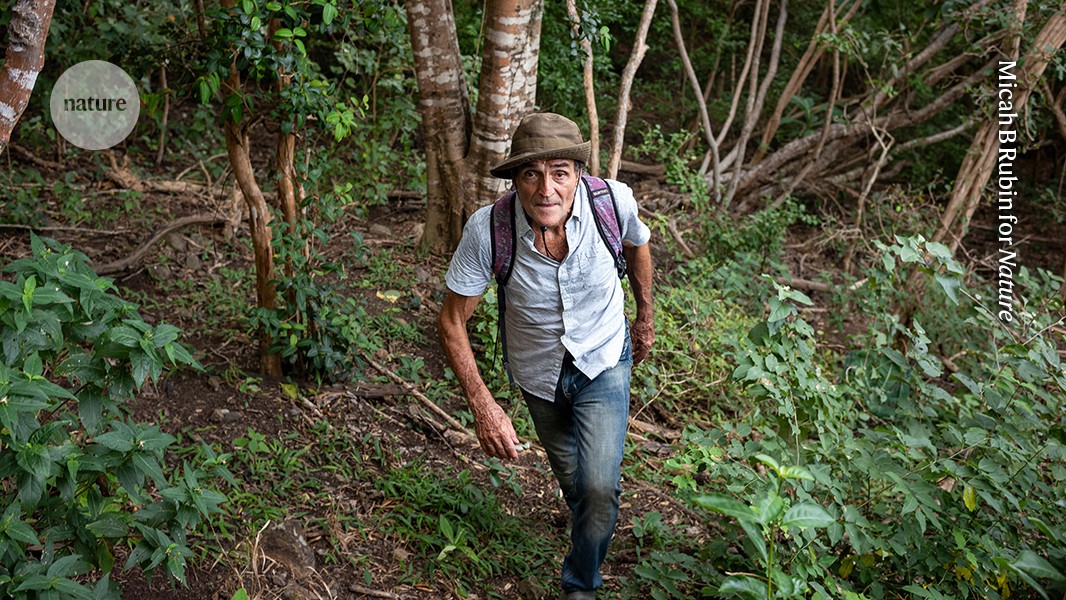
    “When I first came to the small Caribbean island of Carriacou in 1990, I had no intention of staying. But something clicked; my partner and I have been here ever since.

    I’m from Venice, Italy, so a small island feels cosy to me. We also thought that Carriacou was small enough to tackle environmental problems and help make a difference. We saw the overfishing, deforestation and environmental damage here — not by multinational corporations, but by local people who were unaware of the ecological consequences of their actions.

    Since starting an environment and education foundation, called KIDO, in 1995, we have run around 30 projects — from protecting sea turtles to replanting mangroves.

    In this photograph, I am hiking to our latest project, the 40-hectare Anse La Roche nature reserve. Deforestation affected several areas of the plot, and one spot was devastated, illegally, with a bulldozer. To reconstitute the forest’s eroded soil, we gather Sargassum seaweed — overgrowth of which is afflicting Caribbean beaches as the sea warms — and use it as fertilizer.

    We will also plant thousands of native trees, including replanting 20 key canopy tree species that have almost been lost from Carriacou. This might be the last chance to save the forest: Carriacou’s diminishing rainfall is our nemesis, and each day we water around 3,000 saplings.

    With another ten years of care, we will see the forest resurge. Today when it rains, water rushes down the hillsides, taking the topsoil with it — but once the trees are established, rainwater will be caught in the natural terracing across the slope that the formidable buttress-root systems create. Forests take decades to grow, and it will be somebody else sitting under those trees saying, ‘Wow, it’s much cooler here!’”

    [ad_2]

    Source link

  • Jurassic shuotheriids show earliest dental diversification of mammaliaforms

    [ad_1]

  • Chow, M.-C. & Rich, T. H. Shuotherium dongi, n. gen. and sp., a therian with pseudo-tribosphenic molars from the Jurassic of Sichuan, China. Aust. Mammal. 5, 127–142 (1982).

    Article 

    Google Scholar
     

  • Wang, Y. Q., Clemens, W. A., Hu, Y. M. & Li, C. K. A probable pseudo-tribosphenic upper molar from the Late Jurassic of China and the early radiation of the Holotheria. J. Vertebr. Paleontol. 18, 777–787 (1998).

    Article 

    Google Scholar
     

  • Sigogneau-Russell, D. & Ensom, P. Thereuodon (Theria, Symmetrodonta) from the Lower Cretaceous of North Africa and Europe, and a brief review of symmetrodonts. Cretaceous Res. 19, 445–470 (1998).

    Article 

    Google Scholar
     

  • Luo, Z.-X., Ji, Q. & Yuan, C.-X. Convergent dental adaptations in pseudo-tribosphenic and tribosphenic mammals. Nature 450, 93–97 (2007).

    Article 
    ADS 
    CAS 
    PubMed 

    Google Scholar
     

  • Kermack, K. A., Lee, A. J., Lees, P. M. & Mussett, F. A new docodont from the Forest Marble. Zool. J. Linn. Soc. 89, 1–39 (1987).

    Article 

    Google Scholar
     

  • Butler, P. M. An alternative hypothesis on the origin of docodont molar teeth. J. Vertebr. Paleontol. 17, 435–439 (1997).

    Article 

    Google Scholar
     

  • Kielan-Jaworowska, Z., Cifelli, R. L. & Luo, Z. X. Dentition and relationships of the Jurassic mammal Shuotherium. Acta Palaeontol. Pol. 47, 479–486 (2002).


    Google Scholar
     

  • Kielan-Jaworowska, Z., Cifelli, R. L. & Luo, Z.-X. Mammals from the Age of Dinosaurs: Origins, Evolutions, and Structure (Columbia Univ. Press, 2004).

  • Averianov, A. O. Early Cretaceous symmetrodont mammal Gobiotheriodon from Mongolia and the classification of Symmetrodonta. Acta Palaeontol. Pol. 47, 705–716 (2002).


    Google Scholar
     

  • Luo, Z. X. & Martin, T. Analysis of molar structure and phylogeny of docodont genera. Bull. Carnegie Mus. Nat. Hist. 2007, 27–47 (2007).

    Article 

    Google Scholar
     

  • Rougier, G. W., Sheth, A. S., Carpenter, K., Appella-Guiscafre, L. & Davis, B. M. A new species of Docodon (Mammaliaformes: Docodonta) from the Upper Jurassic Morrison Formation and a reassessment of selected craniodental characters in basal mammaliaforms. J. Mamm. Evol. 22, 1–16 (2015).

    Article 

    Google Scholar
     

  • Butler, P. M. The teeth of the Jurassic mammals. Proc. Zool. Soc. Lond. B 109, 329–356 (1939).

    Article 

    Google Scholar
     

  • Hopson, J. A. in Major Features of Vertebrate Evolution (ed. Spencer, R. S.) 190–219 (The Paleontological Society, 1994).

  • Martin, T. & Averianov, A. O. A new docodont (Mammalia) from the Middle Jurassic of Kyrgyzstan, central Asia. J. Vertebr. Paleontol. 24, 195–201 (2004).

    Article 

    Google Scholar
     

  • Martin, T. & Averianov, A. O. Mammals from the Middle Jurassic Balabansai Formation of the Fergana Depression, Kyrgyzstan. J. Vertebr. Paleontol. 30, 855–871 (2010).

    Article 

    Google Scholar
     

  • Rich, T. H. et al. Evidence that monotremes and ausktribosphenids are not sister groups. J. Vertebr. Paleontol. 22, 466–469 (2002).

    Article 

    Google Scholar
     

  • Woodburne, M. O., Rich, T. H. & Springer, M. S. The evolution of tribospheny and the antiquity of mammalian clades. Mol. Phylogenet. Evol. 28, 360–385 (2003).

    Article 
    CAS 
    PubMed 

    Google Scholar
     

  • Flannery, T. F., Rich, T. H., Vickers-Rich, P., Veatch, E. G. & Helgen, K. M. The Gondwanan origin of Tribosphenida (Mammalia). Alcheringa 46, 277–290 (2022).

    Article 

    Google Scholar
     

  • Mao, F. et al. Fossils document evolutionary changes of jaw joint to mammalian middle ear. Nature https://doi.org/10.1038/s41586-024-07235-0 (2024).

  • Butler, P. M. A theory of the evolution of mammalian molar teeth. Am. J. Sci. 239, 421–450 (1941).

    Article 
    ADS 

    Google Scholar
     

  • Van, V. L. M. Serial homology: the crests and cusps of mammalian teeth. Acta Palaeontol. Pol. 38, 145–158 (1994).


    Google Scholar
     

  • Butler, P. M. in Teeth Revisited: Proceedings of the VIIth International Symposium on Dental Morphology Vol. 53 (eds Russell, D. E. et al.) 329–340 (Mémoires du Muséum National d’Histoire Naturelle, 1988).

  • Martin, T. et al. in Mammalian Teeth – Form and Function (eds Martin, T. & von Koenigswald, W.) 187–214 (Verlag Dr. Friedrich Pfeil, 2020).

  • Meng, Q.-J. et al. An arboreal docodont from the Jurassic and mammaliaform ecological diversification. Science 347, 764–768 (2015).

    Article 
    ADS 
    CAS 
    PubMed 

    Google Scholar
     

  • Zhou, C.-F., Bhullar, B. A. S., Neander, A. I., Martin, T. & Luo, Z.-X. New Jurassic mammaliaform sheds light on early evolution of mammal-like hyoid bones. Science 365, 276–279 (2019).

    Article 
    ADS 
    CAS 
    PubMed 

    Google Scholar
     

  • Ji, Q., Luo, Z.-X., Yuan, C.-X. & Tabrum, A. R. A swimming mammaliaform from the Middle Jurassic and ecomorphological diversification of early mammals. Science 311, 1123–1127 (2006).

    Article 
    ADS 
    CAS 
    PubMed 

    Google Scholar
     

  • Schultz, J. A., Bhullar, B. A. S. & Luo, Z. X. Re-examination of the Jurassic mammaliaform Docodon victor by computed tomography and occlusal functional analysis. J. Mamm. Evol. 26, 9–38 (2019).

    Article 

    Google Scholar
     

  • Butler, P. M. Evolutionary transformations of the mammalian dentition. Zoosyst. Evol. 77, 167–174 (2001).

    Article 

    Google Scholar
     

  • Van Valen, L. M. Homology and causes. J. Morphol. 173, 305–312 (1982).

    Article 
    PubMed 

    Google Scholar
     

  • Butler, P. M. in Development, Function and Evolution of Teeth (eds Butler, P. M. & Joysey, K. A.) 439–453 (Academic, 1978).

  • Parrington, F. R. On the Upper Triassic mammals. Philos. Trans. R. Soc. B 261, 231–272 (1971).

    ADS 

    Google Scholar
     

  • Crompton, A. W. & Jenkins, F. A. Molar occlusion in Late Triassic mammals. Biol. Rev. 43, 427–458 (1968).

    Article 
    CAS 
    PubMed 

    Google Scholar
     

  • Crompton, A. W. & Sun, A.-L. Cranial structure and relationships of the Liassic mammal Sinoconodon. Zool. J. Linn. Soc. 85, 99–119 (1985).

    Article 

    Google Scholar
     

  • Kemp, T. S. The Origin and Evolution of Mammals (Oxford Univ. Press, 2005).

  • Wang, Y. Q. & Li, C. K. Reconsideration of the systematic position of the Middle Jurassic mammaliaforms Itatodon and Paritatodon. Palaeontol. Pol. 67, 249–256 (2016).


    Google Scholar
     

  • Luo, Z. X., Cifelli, R. L. & Kielan-Jaworowska, Z. Dual origin of tribosphenic mammals. Nature 409, 53–57 (2001).

    Article 
    ADS 
    CAS 
    PubMed 

    Google Scholar
     

  • Averianov, A. O. & Lopatin, A. V. Itatodon tatarinovi (Tegotheriidae, Mammalia), a docodont from the Middle Jurassic of western Siberia and phylogenetic analysis of Docodonta. Paleontol. J. 40, 668–677 (2006).

    Article 

    Google Scholar
     

  • Sigogneau-Russell, D. & Godefroit, P. A primitive docodont (Mammalia) from the Upper Triassic of France and the possible therian affinities of the order. C. R. Acad. Sci. 324, 135–140 (1997).


    Google Scholar
     

  • Datta, P. Earliest mammal with transversely expanded upper molar from the Late Triassic (Carnian) Tiki Formation, South Rewa Gondwana Basin, India. J. Vertebr. Paleontol. 25, 200–207 (2005).

    Article 

    Google Scholar
     

  • Averianov, A., Lopatin, A., Krasnolutskii, S. & Ivantsov, S. New docodontans from the Middle Jurassic of Siberia and reanalysis of Docodonta interrelationships. Proc. Zool. Inst. Russ. Acad. Sci. 314, 121–148 (2010).

    Article 

    Google Scholar
     

  • Sigogneau-Russell, D. Docodonts from the British Mesozoic. Acta Palaeontol. Pol. 48, 357–374 (2003).


    Google Scholar
     

  • Sigogneau-Russell, D. A new therian mammal from the Rhaetic locality of Saint-Nicolas-de-Port (France). Zool. J. Linn. Soc. 78, 175–186 (1983).

    Article 

    Google Scholar
     

  • Patterson, B. Early Cretaceous Mammals and the Evolution of Mammalian Molar Teeth Vol. 13 (Chicago Natural History Museum, 1956).

  • Clemens, W. A. & Kielan-Jaworowska, Z. in Mesozoic Mammals: the First Two-Thirds of Mammalian History (eds Lillegraven, J. A. et al.) 99–149 (Univ. California Press, 1979).

  • Meng, J. Mesozoic mammals of China: implications for phylogeny and early evolution of mammals. Natl Sci. Rev. 1, 521–542 (2014).

    Article 

    Google Scholar
     

  • Sulej, T. et al. The earliest-known mammaliaform fossil from Greenland sheds light on origin of mammals. Proc. Natl Acad. Sci. USA 117, 26861–26867 (2020).

    Article 
    ADS 
    CAS 
    PubMed 
    PubMed Central 

    Google Scholar
     

  • Jäger, K. R., Gill, P. G., Corfe, I. & Martin, T. Occlusion and dental function of Morganucodon and Megazostrodon. J. Vertebr. Paleontol. 39, e1635135 (2019).

    Article 

    Google Scholar
     

  • Crompton, A. W. The dentitions and relationships of the southern African Triassic mammals, Erythrotherium parringtoni and Megazostrodon rudnerae. Bull. Brit. Mus. (Nat. Hist.) Geol. 24, 399–443 (1974).


    Google Scholar
     

  • Davis, B. M. Evolution of the tribosphenic molar pattern in early mammals, with comments on the “dual-origin” hypothesis. J. Mamm. Evol. 18, 227–244 (2011).

    Article 

    Google Scholar
     

  • Schultz, J. A. & Martin, T. Function of pretribosphenic and tribosphenic mammalian molars inferred from 3D animation. Naturwissenschaften 101, 771–781 (2014).

    Article 
    ADS 
    CAS 
    PubMed 

    Google Scholar
     

  • Mao, F.-Y. et al. Integrated hearing and chewing modules decoupled in a Cretaceous stem therian mammal. Science 367, 305–308 (2020).

    Article 
    ADS 
    CAS 
    PubMed 

    Google Scholar
     

  • Flynn, J. J., Parrish, J. M., Rakotosamimanana, B., Simpson, W. F. & Wyss, A. E. A Middle Jurassic mammal from Madagascar. Nature 401, 57–60 (1999).

    Article 
    ADS 
    CAS 

    Google Scholar
     

  • Yuan, C.-X., Ji, Q., Meng, Q.-J., Tabrum, A. R. & Luo, Z.-X. Earliest evolution of multituberculate mammals revealed by a new Jurassic fossil. Science 341, 779–783 (2013).

    Article 
    ADS 
    CAS 
    PubMed 

    Google Scholar
     

  • Lopatin, A. & Averianov, A. Kielantherium, a basal tribosphenic mammal from the Early Cretaceous of Mongolia, with new data on the aegialodontian dentition. Acta Palaeontol. Pol. 52, 441–446 (2007).


    Google Scholar
     

  • Rich, T. H. et al. The mandible and dentition of the Early Cretaceous monotreme Teinolophos trusleri. Alcheringa 40, 475–501 (2016).

    Article 

    Google Scholar
     

  • Mao, F., Zhang, C., Liu, C. & Meng, J. Fossoriality and evolutionary development in two Cretaceous mammaliamorphs. Nature 592, 577–582 (2021).

    Article 
    ADS 
    CAS 
    PubMed 

    Google Scholar
     

  • Mao, F., Li, Z., Hooker, J. J. & Meng, J. A new euharamiyidan, Mirusodens caii (Mammalia: Euharamiyida), from the Jurassic Yanliao Biota and evolution of allotherian mammals. Zool. J. Linn. Soc. 199, 832–859 (2023).

  • Liu, J. & Olsen, P. The phylogenetic relationships of Eucynodontia (Amniota: Synapsida). J. Mamm. Evol. 17, 151–176 (2010).

    Article 
    ADS 

    Google Scholar
     

  • Krause, D. W. et al. Skeleton of a Cretaceous mammal from Madagascar reflects long-term insularity. Nature 581, 421–427 (2020).

    Article 
    ADS 
    CAS 
    PubMed 

    Google Scholar
     

  • Panciroli, E. et al. New species of mammaliaform and the cranium of Borealestes (Mammaliformes: Docodonta) from the Middle Jurassic of the British Isles. Zool. J. Linn. Soc. 192, 1323–1362 (2021).

    Article 

    Google Scholar
     

  • Panciroli, E. et al. Postcrania of Borealestes (Mammaliformes, Docodonta) and the emergence of ecomorphological diversity in early mammals. Palaeontology 65, e12577 (2022).

    Article 

    Google Scholar
     

  • Wallace, R. V. S., Martínez, R. & Rowe, T. First record of a basal mammaliamorph from the early Late Triassic Ischigualasto Formation of Argentina. PLoS ONE 14, e0218791 (2019).

    Article 
    CAS 
    PubMed 
    PubMed Central 

    Google Scholar
     

  • Swofford, D. L. Phylogenetic Analysis Using Parsimony, v4.0b10 (Sinauer Associates, Inc, 2002).

  • Mao, F., Zhang, C. & Meng, J. Morphological dataset of mammaliamorphs and phylogenetic analysis codes (MrBayes 3.2.4 and PAUP*4.0a152). Zenodo https://doi.org/10.5281/zenodo.10597270 (2024).

  • Ronquist, F. et al. MrBayes 3.2: efficient Bayesian phylogenetic inference and model choice across a large model space. Syst. Biol. 61, 539–542 (2012).

    Article 
    PubMed 
    PubMed Central 

    Google Scholar
     

  • Gavryushkina, A., Welch, D., Stadler, T. & Drummond, A. J. Bayesian inference of sampled ancestor trees for epidemiology and fossil calibration. PLoS Comput. Biol. 10, e1003919 (2014).

    Article 
    ADS 
    PubMed 
    PubMed Central 

    Google Scholar
     

  • Zhang, C., Stadler, T., Klopfstein, S., Heath, T. A. & Ronquist, F. Total-evidence dating under the fossilized birth–death process. Syst. Biol. 65, 228–249 (2016).

    Article 
    PubMed 

    Google Scholar
     

  • Lewis, P. O. A likelihood approach to estimating phylogeny from discrete morphological character data. Syst. Biol. 50, 913–921 (2001).

    Article 
    CAS 
    PubMed 

    Google Scholar
     

  • Yang, Z. Maximum likelihood phylogenetic estimation from DNA sequences with variable rates over sites: approximate methods. J. Mol. Evol. 39, 306–314 (1994).

    Article 
    ADS 
    CAS 
    PubMed 

    Google Scholar
     

  • Stadler, T. Sampling-through-time in birth-death trees. J. Theor. Biol. 267, 396–404 (2010).

    Article 
    ADS 
    MathSciNet 
    PubMed 

    Google Scholar
     

  • Heath, T. A., Huelsenbeck, J. P. & Stadler, T. The fossilized birth-death process for coherent calibration of divergence-time estimates. Proc. Natl Acad. Sci. USA 111, E2957–E2966 (2014).

    Article 
    ADS 
    CAS 
    PubMed 
    PubMed Central 

    Google Scholar
     

  • Drummond, A. J., Ho, S. Y., Phillips, M. J. & Rambaut, A. Relaxed phylogenetics and dating with confidence. PLoS Biol. 4, e88 (2006).

    Article 
    PubMed 
    PubMed Central 

    Google Scholar
     

  • Geyer, C. J. Practical Markov chain Monte Carlo. Stat. Sci. 7, 473–483 (1992).


    Google Scholar
     

  • Luo, Z.-X. et al. New evidence for mammaliaform ear evolution and feeding adaptation in a Jurassic ecosystem. Nature 548, 326–329 (2017).

    Article 
    ADS 
    CAS 
    PubMed 

    Google Scholar
     

  • King, B. & Beck, R. M. Tip dating supports novel resolutions of controversial relationships among early mammals. Proc. R Soc. B 287, 20200943 (2020).

    Article 
    PubMed 
    PubMed Central 

    Google Scholar
     

  • Ronquist, F. et al. A total-evidence approach to dating with fossils, applied to the early radiation of the Hymenoptera. Syst. Biol. 61, 973–999 (2012).

    Article 
    PubMed 
    PubMed Central 

    Google Scholar
     

  • King, B. Bayesian tip-dated phylogenetics in paleontology: topological effects and stratigraphic fit. Syst. Biol. 70, 283–294 (2021).

    Article 
    PubMed 

    Google Scholar
     

  • Rowe, T. Definition, diagnosis, and origin of Mammalia. J. Vertebr. Paleontol. 8, 241–264 (1988).

    Article 

    Google Scholar
     

  • Averianov, A. O., Lopatin, A. V. & Leshchinskiy, S. V. New interpretation of dentition in Early Cretaceous docodontan Sibirotherium based on micro-computed tomography. J. Mamm. Evol. https://doi.org/10.1007/s10914-023-09682-4 (2023).

    Article 

    Google Scholar
     

  • Van Valen, L. An analysis of developmental fields. Dev. Biol. 23, 456–477 (1970).

    Article 
    PubMed 

    Google Scholar
     

  • [ad_2]

    Source link

  • Heat and desiccation tolerances predict bee abundance under climate change

    [ad_1]

  • Kazenel, M. R. et al. Predicting changes in bee assemblages following state transitions at North American dryland ecotones. Sci. Rep. 10, 708 (2020).

    Article 
    CAS 
    PubMed 
    PubMed Central 

    Google Scholar
     

  • Rudgers, J. A. et al. Climate sensitivity functions and net primary production: a framework for incorporating climate mean and variability. Ecology 99, 576–582 (2018).

    Article 
    PubMed 

    Google Scholar
     

  • Gagic, V. et al. Functional identity and diversity of animals predict ecosystem functioning better than species-based indices. Proc. R. Soc. B 282, 20142620 (2015).

    Article 
    PubMed 
    PubMed Central 

    Google Scholar
     

  • Garibaldi, L. A. et al. Trait matching of flower visitors and crops predicts fruit set better than trait diversity. J. Appl. Ecol. 52, 1436–1444 (2015).

    Article 

    Google Scholar
     

  • Didham, R. K. et al. Interpreting insect declines: seven challenges and a way forward. Insect Conserv. Divers. 13, 103–114 (2020).

    Article 

    Google Scholar
     

  • Goulson, D., Nicholls, E., Botías, C. & Rotheray, E. L. Bee declines driven by combined stress from parasites, pesticides, and lack of flowers. Science 347, 1255957 (2015).

    Article 
    PubMed 

    Google Scholar
     

  • Willmer, P. G., Cunnold, H. & Ballantyne, G. Insights from measuring pollen deposition: quantifying the pre-eminence of bees as flower visitors and effective pollinators. Arthropod Plant Interact. 11, 411–425 (2017).

    Article 

    Google Scholar
     

  • Jordan, A., Patch, H. M., Grozinger, C. M. & Khanna, V. Economic dependence and vulnerability of United States agricultural sector on insect-mediated pollination service. Environ. Sci. Technol. 55, 2243–2253 (2021).

    Article 
    CAS 
    PubMed 

    Google Scholar
     

  • Potts, S. G. et al. Declines of managed honey bees and beekeepers in Europe. J. Apic. Res. 49, 15–22 (2010).

    Article 

    Google Scholar
     

  • Soroye, P., Newbold, T. & Kerr, J. Climate change contributes to widespread declines among bumble bees across continents. Science 367, 685–688 (2020).

    Article 
    CAS 
    PubMed 

    Google Scholar
     

  • Cameron, S. A. et al. Patterns of widespread decline in North American bumble bees. Proc. Natl Acad. Sci. 108, 662–667 (2011).

    Article 
    CAS 
    PubMed 
    PubMed Central 

    Google Scholar
     

  • Zattara, E. E. & Aizen, M. A. Worldwide occurrence records suggest a global decline in bee species richness. One Earth 4, 114–123 (2021).

    Article 

    Google Scholar
     

  • Burkle, L. A., Marlin, J. C. & Knight, T. M. Plant-pollinator interactions over 120 years: loss of species, co-occurrence, and function. Science 339, 1611–1615 (2013).

    Article 
    CAS 
    PubMed 

    Google Scholar
     

  • Michener, C. D. The Bees of the World (Johns Hopkins Univ. Press, 2007).

  • Hofmann, M. M., Fleischmann, A. & Renner, S. S. Changes in the bee fauna of a German botanical garden between 1997 and 2017, attributable to climate warming, not other parameters. Oecologia 187, 701–706 (2018).

    Article 
    PubMed 

    Google Scholar
     

  • Martínez-López, O. et al. Reduction in the potential distribution of bumble bees (Apidae: Bombus) in Mesoamerica under different climate change scenarios: conservation implications. Glob. Change Biol. 27, 1772–1787 (2021).

    Article 

    Google Scholar
     

  • Jackson, H. M. et al. Climate change winners and losers among North American bumblebees. Biol. Lett. 18, 20210551 (2022).

    Article 
    PubMed 
    PubMed Central 

    Google Scholar
     

  • Martinet, B. et al. Global effects of extreme temperatures on wild bumblebees. Conserv. Biol. 35, 1507–1518 (2021).

    Article 
    PubMed 

    Google Scholar
     

  • Pardee, G. L. et al. Life-history traits predict responses of wild bees to climate variation. Proc. R. Soc. B 289, 20212697 (2022).

    Article 
    PubMed 
    PubMed Central 

    Google Scholar
     

  • Kammerer, M., Goslee, S. C., Douglas, M. R., Tooker, J. F. & Grozinger, C. M. Wild bees as winners and losers: relative impacts of landscape composition, quality, and climate. Glob. Change Biol. 27, 1250–1265 (2021).

    Article 
    CAS 

    Google Scholar
     

  • Giannini, T. C. et al. Projected climate change threatens pollinators and crop production in Brazil. PLoS ONE 12, e0182274 (2017).

    Article 
    PubMed 
    PubMed Central 

    Google Scholar
     

  • Decourtye, A., Alaux, C., Le Conte, Y. & Henry, M. Toward the protection of bees and pollination under global change: present and future perspectives in a challenging applied science. Curr. Opin. Insect Sci. 35, 123–131 (2019).

    Article 
    PubMed 

    Google Scholar
     

  • Scaven, V. L. & Rafferty, N. E. Physiological effects of climate warming on flowering plants and insect pollinators and potential consequences for their interactions. Curr. Zool. 59, 418–426 (2013).

    Article 
    PubMed 

    Google Scholar
     

  • Hamblin, A. L., Youngsteadt, E., López-Uribe, M. M. & Frank, S. D. Physiological thermal limits predict differential responses of bees to urban heat-island effects. Biol. Lett. 13, 20170125 (2017).

    Article 
    PubMed 
    PubMed Central 

    Google Scholar
     

  • Oyen, K. J. & Dillon, M. E. Critical thermal limits of bumblebees (Bombus impatiens) are marked by stereotypical behaviors and are unchanged by acclimation, age or feeding status. J. Exp. Biol. 221, jeb165589 (2018).

    Article 
    PubMed 

    Google Scholar
     

  • Renner, S. S. & Zohner, C. M. Climate change and phenological mismatch in trophic interactions among plants, insects, and vertebrates. Annu. Rev. Ecol. Evol. Syst. 49, 165–182 (2018).

    Article 

    Google Scholar
     

  • Burdine, J. D. & McCluney, K. E. Differential sensitivity of bees to urbanization-driven changes in body temperature and water content. Sci. Rep. 9, 1643 (2019).

    Article 
    PubMed 
    PubMed Central 

    Google Scholar
     

  • Céréghino, R. et al. Desiccation resistance traits predict freshwater invertebrate survival and community response to drought scenarios in a Neotropical ecosystem. Ecol. Indic. 119, 106839 (2020).

    Article 

    Google Scholar
     

  • Harrison, J. F., Woods, H. A. & Roberts, S. P. Ecological and Environmental Physiology of Insects (Oxford Univ. Press, 2012).

  • Sheridan, J. A. & Bickford, D. Shrinking body size as an ecological response to climate change. Nat. Clim. Change 1, 401–406 (2011).

    Article 

    Google Scholar
     

  • Schoener, T. W. Field experiments on interspecific competition. Am. Nat. 122, 240–285 (1983).

    Article 

    Google Scholar
     

  • Greenleaf, S. S., Williams, N. M., Winfree, R. & Kremen, C. Bee foraging ranges and their relationship to body size. Oecologia 153, 589–596 (2007).

    Article 
    PubMed 

    Google Scholar
     

  • Van Wyk, J. I., Amponsah, E. R., Ng, W. H. & Adler, L. S. Big bees spread disease: body size mediates transmission of a bumble bee pathogen. Ecology 102, e03429 (2021).

    Article 
    PubMed 

    Google Scholar
     

  • Gérard, M. et al. Shift in size of bumblebee queens over the last century. Glob. Change Biol. 26, 1185–1195 (2020).

    Article 

    Google Scholar
     

  • Gérard, M. et al. Patterns of size variation in bees at a continental scale: does Bergmann’s rule apply? Oikos 127, 1095–1103 (2018).

    Article 

    Google Scholar
     

  • Osorio‐Canadas, S. et al. Body size phenology in a regional bee fauna: a temporal extension of Bergmann’s rule. Ecol. Lett. 19, 1395–1402 (2016).

    Article 
    PubMed 

    Google Scholar
     

  • Osorio-Canadas, S., Flores-Hernández, N., Sánchez-Ortiz, T. & Valiente-Banuet, A. Changes in bee functional traits at community and intraspecific levels along an elevational gradient in a Mexical-type scrubland. Oecologia 200, 145–158 (2022).

    Article 
    PubMed 

    Google Scholar
     

  • Oyen, K. J., Giri, S. & Dillon, M. E. Altitudinal variation in bumble bee (Bombus) critical thermal limits. J. Therm. Biol 59, 52–57 (2016).

    Article 
    PubMed 

    Google Scholar
     

  • Földesi, R., Howlett, B. G., Grass, I. & Batáry, P. Larger pollinators deposit more pollen on stigmas across multiple plant species—a meta-analysis. J. Appl. Ecol. 58, 699–707 (2021).

    Article 

    Google Scholar
     

  • Lawson, C. R., Vindenes, Y., Bailey, L. & van de Pol, M. Environmental variation and population responses to global change. Ecol. Lett. 18, 724–736 (2015).

    Article 
    PubMed 

    Google Scholar
     

  • Dillon, M. E. et al. Life in the frequency domain: the biological impacts of changes in climate variability at multiple time scales. Integr. Comp. Biol. 56, 14–30 (2016).

    Article 
    PubMed 

    Google Scholar
     

  • Minckley, R. L. & Radke, W. R. Extreme species density of bees (Apiformes, Hymenoptera) in the warm deserts of North America. J. Hymenopt. Res. 82, 317–345 (2021).

    Article 

    Google Scholar
     

  • Zinnert, J. C. et al. State changes: insights from the U.S. Long Term Ecological Research Network. Ecosphere 12, e03433 (2021).

    Article 

    Google Scholar
     

  • Danforth, B. N. Emergence dynamics and bet hedging in a desert bee, Perdita portalis. Proc. R. Soc. Lond. B Biol. Sci. 266, 1985–1994 (1999).

    Article 

    Google Scholar
     

  • Danforth, B. N., Minckley, R. L. & Neff, J. L. The Solitary Bees: Biology, Evolution, Conservation (Princeton Univ. Press, 2019).

  • Minckley, R. L., Roulston, T. H. & Williams, N. M. Resource assurance predicts specialist and generalist bee activity in drought. Proc. R. Soc. B 280, 20122703 (2013).

    Article 
    PubMed 
    PubMed Central 

    Google Scholar
     

  • Clusella-Trullas, S., Garcia, R. A., Terblanche, J. S. & Hoffmann, A. A. How useful are thermal vulnerability indices? Trends Ecol. Evol. 36, 1000–1010 (2021).

    Article 
    PubMed 

    Google Scholar
     

  • Prugh, L. R. et al. Ecological winners and losers of extreme drought in California. Nat. Clim. Change 8, 819–824 (2018).

    Article 

    Google Scholar
     

  • Wang, T., Hamann, A., Spittlehouse, D. & Carroll, C. Locally downscaled and spatially customizable climate data for historical and future periods for North America. PLoS ONE 11, e0156720 (2016).

    Article 
    PubMed 
    PubMed Central 

    Google Scholar
     

  • Dew, R. M., Silva, D. P. & Rehan, S. M. Range expansion of an already widespread bee under climate change. Glob. Ecol. Conserv. 17, e00584 (2019).


    Google Scholar
     

  • Biesmeijer, J. C. et al. Parallel declines in pollinators and insect-pollinated plants in Britain and the Netherlands. Science 313, 351–354 (2006).

    Article 
    CAS 
    PubMed 

    Google Scholar
     

  • Hung, K.-L. J., Sandoval, S. S., Ascher, J. S. & Holway, D. A. Joint impacts of drought and habitat fragmentation on native bee assemblages in a California biodiversity hotspot. Insects 12, 135 (2021).

    Article 
    PubMed 
    PubMed Central 

    Google Scholar
     

  • Kelemen, E. P. & Rehan, S. M. Opposing pressures of climate and land‐use change on a native bee. Glob. Change Biol. 27, 1017–1026 (2020).

    Article 

    Google Scholar
     

  • Brown, J. H., Gillooly, J. F., Allen, A. P., Savage, V. M. & West, G. B. Toward a metabolic theory of ecology. Ecology 85, 1771–1789 (2004).

    Article 

    Google Scholar
     

  • Pincebourde, S. & Woods, H. A. There is plenty of room at the bottom: microclimates drive insect vulnerability to climate change. Curr. Opin. Insect Sci. 41, 63–70 (2020).

    Article 
    PubMed 

    Google Scholar
     

  • Ogilvie, J. E. et al. Interannual bumble bee abundance is driven by indirect climate effects on floral resource phenology. Ecol. Lett. 20, 1507–1515 (2017).

    Article 
    PubMed 

    Google Scholar
     

  • Cárdenas, P. A. et al. Declines in rodent abundance and diversity track regional climate variability in North American drylands. Glob. Change Biol. 27, 4005–4023 (2021).

    Article 

    Google Scholar
     

  • Siepielski, A. M. et al. No evidence that warmer temperatures are associated with selection for smaller body sizes. Proc. R. Soc. B 286, 20191332 (2019).

    Article 
    PubMed 
    PubMed Central 

    Google Scholar
     

  • Olden, J. D., Comte, L. & Giam, X. The Homogocene: a research prospectus for the study of biotic homogenisation. NeoBiota 37, 23–36 (2018).

    Article 

    Google Scholar
     

  • Aldea-Sánchez, P., Ramírez-Cáceres, G. E., Rezende, E. L. & Bozinovic, F. Heat tolerance, energetics, and thermal treatments of honeybees parasitized with Varroa. Front. Ecol. Evol. 9, 463 (2021).

    Article 

    Google Scholar
     

  • Peters, D. P. C. & Yao, J. Long-term experimental loss of foundation species: consequences for dynamics at ecotones across heterogeneous landscapes. Ecosphere 3, 27 (2012).

    Article 

    Google Scholar
     

  • Collins, S. L. & Xia, Y. Long-term dynamics and hotspots of change in a desert grassland plant community. Am. Nat. 185, E30–E43 (2015).

    Article 
    PubMed 

    Google Scholar
     

  • Caracciolo, D., Istanbulluoglu, E., Noto, L. V. & Collins, S. L. Mechanisms of shrub encroachment into Northern Chihuahuan Desert grasslands and impacts of climate change investigated using a cellular automata model. Adv. Water Resour. 91, 46–62 (2016).

    Article 

    Google Scholar
     

  • Wilson, J. S., Griswold, T. & Messinger, O. J. Sampling bee communities (Hymenoptera: Apiformes) in a desert landscape: are pan traps sufficient? J. Kans. Entomol. Soc. 81, 288–300 (2008).

    Article 

    Google Scholar
     

  • Portman, Z. M., Bruninga-Socolar, B. & Cariveau, D. P. The state of bee monitoring in the United States: a call to refocus away from bowl traps and towards more effective methods. Ann. Entomol. Soc. Am. 113, 337–342 (2020).

    Article 

    Google Scholar
     

  • Prendergast, K. S., Menz, M. H. M., Dixon, K. W. & Bateman, P. W. The relative performance of sampling methods for native bees: an empirical test and review of the literature. Ecosphere 11, e03076 (2020).

    Article 

    Google Scholar
     

  • R Core Team. R: A Language and Environment for Statistical Computing, version 4.2.2. http://www.R-project.org/ (R Foundation for Statistical Computing, 2022).

  • Petrie, M. D., Collins, S. L., Gutzler, D. S. & Moore, D. M. Regional trends and local variability in monsoon precipitation in the northern Chihuahuan Desert, USA. J. Arid. Environ. 103, 63–70 (2014).

    Article 

    Google Scholar
     

  • Beguería, S., Vicente-Serrano, S. M., Reig, F. & Latorre, B. Standardized precipitation evapotranspiration index (SPEI) revisited: parameter fitting, evapotranspiration models, tools, datasets and drought monitoring. Int. J. Climatol. 34, 3001–3023 (2014).

    Article 

    Google Scholar
     

  • Pinheiro, J., Bates, D., DebRoy, S., Sarkar, D. & R Core Team. nlme: Linear and nonlinear mixed effects models. R package version 3.1-161 (2022).

  • Burnham, K. P. & Anderson, D. R. Model Selection and Multimodel Inference: A Practical Information-Theoretic Approach (Springer, 2002).

  • Gałecki, A. T. & Burzykowski, T. Linear Mixed-Effects Models Using R: A Step-By-Step Approach (Springer, 2013).

  • Stralberg, D. et al. Projecting boreal bird responses to climate change: the signal exceeds the noise. Ecol. Appl. 25, 52–69 (2015).

    Article 
    CAS 
    PubMed 

    Google Scholar
     

  • Jin, C., Wang, B. & Liu, J. Future changes and controlling factors of the eight regional monsoons projected by CMIP6 models. J. Clim. 33, 9307–9326 (2020).

    Article 

    Google Scholar
     

  • Almazroui, M. et al. Projected changes in temperature and precipitation over the United States, Central America, and the Caribbean in CMIP6 GCMs. Earth Syst. Environ. https://doi.org/10.1007/s41748-021-00199-5 (2021).

  • Oksanen, J. et al. vegan: Community ecology package. R package version 2.6-4 (2022).

  • Gonzalez, V. H., Oyen, K., Ávila, O. & Ospina, R. Thermal limits of Africanized honey bees are influenced by temperature ramping rate but not by other experimental conditions. J. Therm. Biol 110, 103369 (2022).

    Article 
    PubMed 

    Google Scholar
     

  • Little, A. G. & Seebacher, F. Physiological performance curves: when are they useful? Front. Physiol. 12, 805102 (2021).

    Article 
    PubMed 
    PubMed Central 

    Google Scholar
     

  • Diamond, S. E. et al. A physiological trait-based approach to predicting the responses of species to experimental climate warming. Ecology 93, 2305–2312 (2012).

    Article 
    PubMed 

    Google Scholar
     

  • Hoffmann, A. A. & Harshman, L. G. Desiccation and starvation resistance in Drosophila: patterns of variation at the species, population and intrapopulation levels. Heredity 83, 637–643 (1999).

    Article 
    PubMed 

    Google Scholar
     

  • Li, D., Dinnage, R., Nell, L. A., Helmus, M. R. & Ives, A. R. phyr: an R package for phylogenetic species-distribution modelling in ecological communities. Methods Ecol. Evol. 11, 1455–1463 (2020).

    Article 

    Google Scholar
     

  • Hedtke, S. M., Patiny, S. & Danforth, B. N. The bee tree of life: a supermatrix approach to apoid phylogeny and biogeography. BMC Evol. Biol. 13, 138 (2013).

    Article 
    CAS 
    PubMed 
    PubMed Central 

    Google Scholar
     

  • Paradis, E. & Schliep, K. ape 5.0: an environment for modern phylogenetics and evolutionary analyses in R. Bioinformatics 35, 526–528 (2018).

    Article 

    Google Scholar
     

  • Pearse, W. D. et al. pez: phylogenetics for the environmental sciences. Bioinformatics 31, 2888–2890 (2015).

    Article 
    CAS 
    PubMed 

    Google Scholar
     

  • Duursma, R. A. Plantecophys – an R package for analysing and modelling leaf gas exchange data. PLoS ONE 10, e0143346 (2015).

    Article 
    PubMed 
    PubMed Central 

    Google Scholar
     

  • Keck, F., Rimet, F., Bouchez, A. & Franc, A. phylosignal: an R package to measure, test, and explore the phylogenetic signal. Ecol. Evol. 6, 2774–2780 (2016).

    Article 
    PubMed 
    PubMed Central 

    Google Scholar
     

  • Kendall, L. K. et al. Pollinator size and its consequences: robust estimates of body size in pollinating insects. Ecol. Evol. 9, 1702–1714 (2019).

    Article 
    PubMed 
    PubMed Central 

    Google Scholar
     

  • Cane, J. H. Estimation of bee size using intertegular span (Apoidea). J. Kans. Entomol. Soc. 60, 145–147 (1987).


    Google Scholar
     

  • Schneider, C. A., Rasband, W. S. & Eliceiri, K. W. NIH Image to ImageJ: 25 years of image analysis. Nat. Methods 9, 671–675 (2012).

    Article 
    CAS 
    PubMed 
    PubMed Central 

    Google Scholar
     

  • Bates, D., Mächler, M., Bolker, B. & Walker, S. Fitting linear mixed-effects models using lme4. J. Stat. Softw. 67, 1–48 (2015).

    Article 

    Google Scholar
     

  • Breheny, P. & Burchett, W. Visualization of regression models using visreg. R J. 9, 56–71 (2017).

    Article 

    Google Scholar
     

  • Kazenel, M. melaniekazenel/BeesClimateChangeSevilleta: Code for “Heat and desiccation tolerances predict bee abundance under climate change”. Zenodo https://doi.org/10.5281/zenodo.8412360 (2023).

  • Esri. World Imagery. https://www.arcgis.com/home/item.html?id=10df2279f9684e4a9f6a7f08febac2a9 (2022).

  • Clarke, K. R. & Gorley, R. N. PRIMER v7: User Manual/Tutorial (PRIMER-E, 2015).

  • [ad_2]

    Source link

  • Revealing uncertainty in the status of biodiversity change

    [ad_1]

    Data

    We compiled ten datasets that describe population abundances through time2,3,4,5,6,7,8,9,10,11,41. These datasets represent some of the most influential in ecology and conservation biology, forming a basis for influential reports such as the Living Planet15, as well as a series of high-profile and highly cited publications (see Supplementary Table 2 for a full summary). For each dataset, we extracted the population abundance estimates, the accompanying time-stamps, the scientific names of the species, the name of the site (location) where the population was sampled and any site coordinates. For datasets to be included, they had to be open access, and contain multiple abundance time series for a selection of species and locations. Although these datasets are vital in biodiversity science, many of the datasets are prone to biases (for example, lacking tropical representation, and contain few plant and invertebrate species). The datasets have been compiled from a variety of methods, realms and systems, covering a vast array of spatial, taxonomic and temporal scales. Further, there is probably some overlap in data between datasets where population time series may occur in more than one dataset. We take no action to correct or acknowledge these biases and features, as our analysis is designed to show how model choice can have a substantial influence on inference in a variety of datasets, rather than to derive a consensus trend across datasets.

    To account for correlative non-independence introduced by species’ shared evolutionary past, we extracted a phylogeny for each dataset. We used synthetic trees from the Open Tree of Life42,43 and estimated missing branch lengths using Grafen’s approach44 from the compute.brlen function in the R package ape45. The Open Tree of Life identified a phylogeny for 80% of species (n = 23,871); all other species were removed from the analysis. For studies with the overall aim of assessing biodiversity change, removing species could be problematic, as the collective trend would not be representative of all species. However, in our case, in which the aim is to assess how collective trend inference changes under a variety of modelling approaches, trimming the data to species with an accompanying phylogeny has no impact on our conclusions. Regardless, in sensitivity analyses in the Supplementary Information section entitled Phylogeny, we investigated this trade-off, and found that more than 1,000 species would have to be excluded from the data if higher-quality phylogenies were used (Supplementary Table 3). Further, inference is generally consistent across the datasets regardless of phylogeny quality (Supplementary Figs. 6 and 7).

    After removing species not present in the Open Tree of Life topology, we further trimmed the data to include only higher-quality time series, removing the following: time series that contained zeros (which we considered extreme cases of extinctions or recolonizations) and time series with missing abundance values for a given year throughout the sampling duration (that is, we required consecutive abundance estimates). In all datasets except the two smallest ones—Atlantic reef fishes and Large carnivores—we further trimmed the datasets to keep only time series that had greater than or equal to the median number of abundance observations (that is, including the longest 50% of time series in each dataset). In some cases, this cutoff was not sufficient as the median number of observations in the time series equalled two. With only two abundance observations, trends are highly exposed to error purely driven by random fluctuations in abundance19. To partially address this issue, we imposed a further cutoff on these datasets, ensuring that each time series had at least five observations. These datasets are characterized in Supplementary Table 2. With our trimmed dataset, we derived a mean abundance in each year (in cases for which there were more than one observation per year) for each time series. In some datasets, there is a possibility that some species will have overlapping populations measured at different scales (for example, a national trend and a regional trend).

    Modelling

    We explored which models have been used in the literature to infer abundance change. We focused on studies that characterized the average change in abundances over time, rather than studies assessing how many species are declining or increasing, as this avoids discretizing a numeric value; that is, we avoid having to define what change is necessary to be classified as a decline. To evaluate the diversity of approaches used to model abundance change over time in multi-species and/or multi-location datasets, we conducted a literature search in a selection of high-profile ecology journals over the past 13 years (Supplementary Information). Our search identified 282 research papers, 28 of which described approaches to model abundance change across multi-species and/or multi-location datasets. A further 16 methods were not detected in the literature search but were known priori to the authorship team, resulting in 44 different studies and/or methods. Models of abundance change varied in complexity, each containing their own assumptions, with no clear ‘standard’ approach for deriving the rate of change in abundance. However, across the 44 studies and/or methods that we compiled (Supplementary Table 1), five general approaches were present, as follows.

    1. 1.

      Abundance average: The simplest models derive an average or total abundance across all species or sites in a given year, and then regress average abundance against time. This approach fails to recognize any of the hierarchical structures in the data.

    2. 2.

      Trend average: A slightly more complex model, which estimates abundance change per population by fitting a series of log-linear modes of abundance against year; averaging over the extracted slope coefficients. This approach fails to propagate uncertainty in average rates of change of each population, and ignores the implicit spatial and taxonomic structures in the data, inducing pseudoreplication.

    3. 3.

      Random intercept: Some studies partially address the aforementioned pseudoreplication (for example, certain sites or species having multiple estimates) with mixed models, regressing log-linear abundance against year across all populations, while specifying that populations belong to a site and/or species. However, often this mixed model structure extends only to random intercepts, which only acknowledge that mean abundance can differ between sites, species and locations, and assumes that the abundance trends will all remain the same. This is a particularly common approach among the indicators from population monitoring schemes that shape policy46.

    4. 4.

      Random slope: In the scientific literature, it is common to use more complex models, with a similar structure to the random intercept model, but now also capturing the differences in abundance trends (not only mean abundances) across populations, sites and species with random slope terms.

    5. 5.

      Decomposition: This is the rarest of the approaches and deviates from the linear mixed model methods. Instead, the decomposition approach involves fitting generalized additive models through each time series to smooth abundance estimates and reduce noise. The smoothed time series is then decomposed into a time series of rates of change (or λ values), which are then averaged across species and biomes to derive estimates of the average change in abundance for each year across all of the time series.

    The most common approaches were the random intercept and random slope models, used 19 and 23 times, respectively. The abundance average, trend average and decomposition approaches were rare, used just five, two and three times, respectively. Not all studies adopted just one approach, sometimes splitting their model into two steps (for example, using a random intercept model to estimate a given species trend across locations, which could then be aggregated across broader taxonomies with a random slope model). Further, all approaches regularly failed to account for temporal, spatial and phylogenetic structures (that is, closely related species are likely to have more similar trends than distant species), with only 14 of the 44 approaches accounting for temporal autocorrelation. Studies that accounted for phylogenetic or spatial covariance were comparably rarer—included in just six and three studies, respectively. Four studies attempted to account for two sources of correlative non-independence in their models, by first deriving population trends while accounting for temporal autocorrelation of abundances in time series, and then using phylogenetic least squares to aggregate these trends. However, no study captured more than one of these covariances simultaneously (for example, spatio-temporal models). Further, no study attempted to account for all three sources of correlative non-independence.

    Given the apparent rarity of the abundance average, trend average and decomposition approaches in the literature, we focus on understanding how the dominant approaches (that is, the random intercept and random slope models) compare to our newly developed correlated effect model. Full model equations are available in the Supplementary Information.

    Model 1 (random intercept)

    In model 1, we fit a linear mixed-effect model between the natural logarithm of abundance and year, with five random intercepts: population (the unique time series), site (unique locations), region (broader spatial category to nest sites; flexibly determined on the basis of the spatial extent of the dataset), species (unique species) and genus (broader taxonomic category to nest species; measured as the parent node to the species tip). In the model, we do not specify any nesting of the population in the site and species random intercepts as the hierarchical structure of the data is poorly defined (for example, although populations always occur in a species and site, some species are nested in sites, and some sites are nested in species, creating a crossed random effect design). Model 1 assumes all populations, sites, regions, species and genera have the same trend in abundance.

    Model 2 (random slope)

    In model 2, we develop a linear mixed-effect model, in which we regress the natural logarithm of abundance against year, including population, site, region, species and genus all as random slopes. This builds on the random intercept model by allowing abundance–year slope coefficients to vary for each category in each random slope term (for example, each species can have a different slope)—not simply differing intercepts as in model 1. Unlike in model 1, we centre the year and abundances of each population time series at zero (for example, subtracting each year by the mean year in each population, and subtracting the log of each abundance by the mean log abundance value in each population). This centring fixes the y and x intercepts at zero for each slope, and is a convenient solution to account for variance captured by the random intercepts without increasing the number of parameters. To all intents and purposes, assuming that the objective is to characterize the abundance–year coefficient, the random slope model is equivalent to a model with random intercepts and slopes.

    Model 3 (correlated effect)

    Model 3 is structurally similar to model 2, but accounts for correlative non-independence. For temporal non-independence, we model the population level time series with a discrete first-order autoregressive temporal process, which assumes that sequential abundance observations in a time series will be more similar. To capture the spatial and phylogenetic correlative non-independence, we focus on non-independence across time-series trends (instead of abundance observations), assuming that trends in population abundances through time will be more similar in neighbouring sites and more closely related species. In models 1 and 2, we try to capture this non-independence with grouping categories (genus and region). However, in the correlated effect model, we more explicitly describe shared correlations between every species and site by specifying the covariance structures of our site and species random slopes. The site covariance matrix was derived by taking each site’s coordinates and estimating the pairwise Haversine (spherical) distance between the sites (for example, how far is every site from every other site). This was then converted into a matrix, normalized between 0 and 1, with values close to 1 indicating neighbouring sites, whereas values approaching 0 indicate distant sites. The species covariance matrix was derived by converting the phylogeny into a variance–covariance matrix, in which phylogenetic branch lengths describe the evolutionary distance between species.

    All models were developed using Bayesian Integrated Nested Laplace Approximation (INLA)47 in R v.4.0.5 (ref. 48). We describe our model priors in the Supplementary Information section entitled Priors and validate our model assumptions in the Supplementary Information section entitled Assumptions (Supplementary Figs. 1–5). We also conduct additional sensitivity analyses exploring how phylogeny quality and how the addition of each correlative component (space, time or phylogeny) affect inference (see the Supplementary Information sections entitled Phylogeny and Component importance). We compiled the data using the following R packages: tidyverse49, countrycode50, janitor51, here52 and arrow53. Figures were produced using the following R packages: ggplot254, ggtree55 and ape45.

    Outputs

    Measuring non-independence

    We assess whether correlative terms capture a meaningful proportion of variance in the data, by dividing the proportion of variance captured by the correlated slopes (for example, spatial covariance) by the combination of the variance captured by the correlated and independent slopes (for example, spatial covariance + site random slope + region random slope). This was carried out separately for the spatial and phylogenetic terms. As the spatial and phylogenetic components each contain three terms (an independent species or location slope, an independent genera or region slope and a correlated species or location slope), a proportional variance captured of 0.33 would indicate that the correlative slope captures an equal proportion of variance compared to the two independent slopes. A value greater than 0.33 indicates that correlative slopes account for more variation than independent random slopes. We measure temporal non-independence as the degree of correlation between sequential abundances (ρ).

    Differing inference between the models

    Using the mean and 50% credible intervals of the global trend (overall abundance–time coefficients), we display abundance projections for each model in each dataset. These projections are based on an arbitrary baseline abundance of 100, set at the first year of available data in each dataset, and this abundance would change according to the overall coefficients and credible intervals. For instance, with a 1% annual rate of change, an abundance in year zero of 100 would become 101 in year 1, and 164 in year 50. The purpose of these projections is to showcase varying abundance trajectories under different model complexities. We also report the fold change in the collective trend s.d. of the correlated effect model, relative to the random intercept and random slope models. This involved regressing fold change against category (for example, correlated effect versus random intercept) in a linear model. We report the mean fold change and 95% CIs. Model outputs are reported in Supplementary Tables 4 and 5.

    Predictive performance

    We assess the predictive performance of the different models by determining their ability to predict final observations in time series, and their ability to predict population trends of a given species in a given location. To test the predictive accuracy for the final observation in the time series, we removed the final observation from half of the time series in each dataset and predicted the missing values using each of the three models on the log scale. We report the percentage error (PE), a metric describing the median of the absolute percentage difference between predicted and observed values (for example, with a 5% error, an abundance on the log scale of 1 would become 1.05). This is calculated by finding the absolute difference between the true value and prediction, divided by the true value, before being multiplied by 100 and converted to an absolute error.

    To test the accuracy of the population trend prediction, we conducted leave-one-out cross-validation, removing one population time series (or trend) from each dataset, and estimating the missing trend using the random slope and correlated effect models. We solely removed population time series with a trend not overlapping zero at 95% credible intervals (that is, populations changing significantly), to test our ability to identify which populations are changing or not. We repeated this process 50 times per dataset and compare the predicted trends to trends from a simplified correlated effect model, which contains a population-level slope and accounts for temporal autocorrelation, but does not include the spatial and phylogenetic correlation terms or any of the hierarchical terms, which have no influence on the required population-level inference. We measured trend-predictive performance using the same approaches as above (PE). In the random slope model, the population trend coefficients were derived by adding the species, location, genus, region and overall coefficients together, meaning that missing population trends can still be informed by other hierarchical information. For the correlated effect model, the population trend is informed by the phylogenetic and spatial variance–covariance matrices, as well as all hierarchical information in the random slope model. Prediction accuracy for each dataset is reported in Supplementary Tables 6 and 7.

    Phylogenetic and spatial distribution of abundance change

    To plot abundance change across a phylogeny, we derived species-level rates of change in abundance from the taxonomic (species and genera) and phylogenetic random effects. We incorporate uncertainty in species-level trend prediction by estimating the CI threshold by which a species would be considered to have increased or decreased. For instance, a negative trend at an 80% CI threshold would be considered stronger evidence of decline than a negative trend at a 20% interval threshold. We derive four asymptotic CI thresholds (20%, 40%, 60% and 80%) using the uncertainty (s.d.) from the phylogenetic random effect and a series of z-scores (0.25, 0.52, 0.84 and 1.28).

    To plot abundance change across space, we focus solely on one abundant and iconic species, the American robin T.migratorius, as site-level trend variability is high at the community level (that is, community trends across space are rarely significant). To produce abundance change predictions for the American robin across space, we expanded the BioTIME spatial Haversine distance matrix (describing distances between each time series) by supplementing it with a gridded extent covering North America. This new grid had a latitudinal range of 20 to 60 and 1° spacing (for example, 15, 16 and so on), and longitudinal range of −130 to −60 with 1° spacing. This new matrix allows us to estimate expected covariance (similarity) in abundance trends for any pair of 1° cells across North America. We then derived the average rate of change in abundance across all hierarchical and correlative random effects, and used population-level trend uncertainty to derive the selection of CI thresholds described above.

    Reporting summary

    Further information on research design is available in the Nature Portfolio Reporting Summary linked to this article.

    [ad_2]

    Source link

  • How a tree-hugging protest transformed Indian environmentalism

    How a tree-hugging protest transformed Indian environmentalism

    [ad_1]

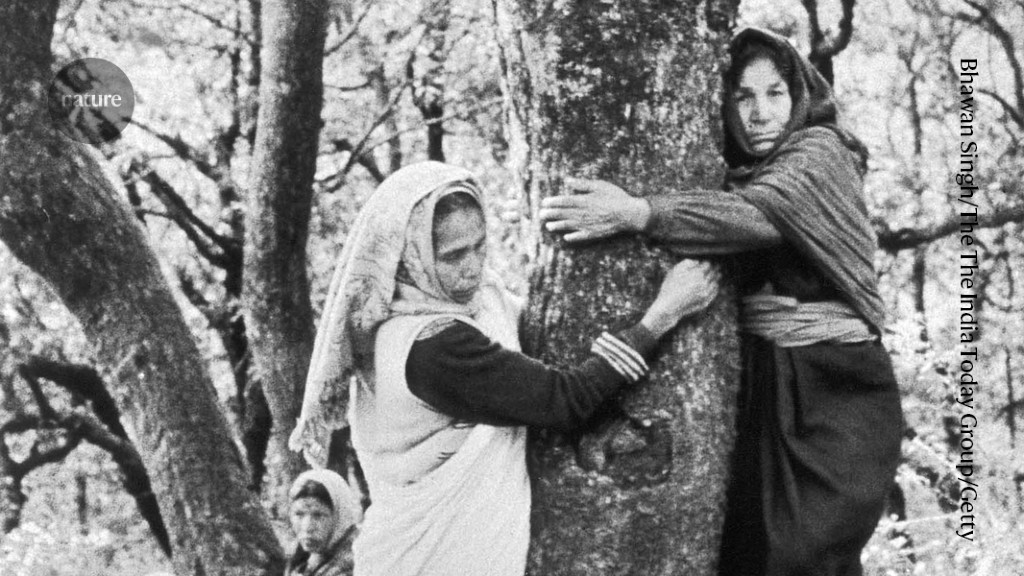
    Fifty years ago this week, Gaura Devi, an ordinary woman from a nondescript village in India, hugged a tree, using her body as a shield to stop the tree from being cut down. Little did she know that this simple act of defiance would be a seminal moment in the history of India and the world. Or that Reni village, where she lived, would come to be recognized as the fountainhead of the Chipko environmental movement.

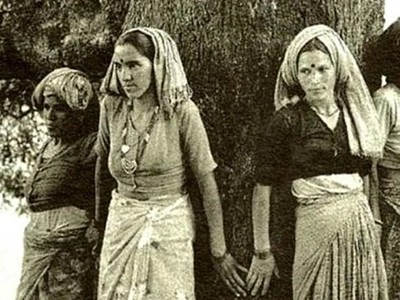
    Chipko, in Hindi, means ‘to stick’ or ‘to cling’. In the early 1970s, the Western Himalayan regions of Garhwal and Kumaon, where Reni is situated, were in turmoil. Villagers had been using non-violent methods, including tree hugging, to save their local forests from industrial logging for several months by the time Gaura Devi — and about two dozen women from Reni — showed up on the scene1. But the courage of this small group of women, who stood their ground against loggers who hurled threats and abuses at them, shot the movement to international attention.

    What followed holds lessons for a planet teetering on the edge of a climate crisis: marginalized communities can succeed in catapulting environmental concerns into the global spotlight through innovative protest tactics. The Chipko movement gave rise to India’s Forest Conservation Act of 1980, the express aim of which is to conserve woodlands. A few years later, a new federal environment ministry was set up to act as a nodal agency for the protection of biodiversity and to safeguard the country’s environment13. Even the origin of the term tree hugger — which has since acquired pejorative connotations — can be traced back to the grassroots ecological consciousness that surfaced in India’s villages.

    The movement and its aftermath hold sobering lessons, too. Villagers who threatened to cling on to trees were voicing concern not just about the state of the forests, but also about their own lives and livelihoods. Their desire was to exercise greater local control over woodland resources. Women such as Gaura Devi, for instance, had to walk long distances to gather firewood once the forests were denuded1,4.

    Beginning in the late 1960s, activists who took inspiration from the leader of India’s anti-colonial nationalist campaign, Mohandas Gandhi, had begun to mobilize villagers in the Western Himalayas. Their strategy to improve economic opportunity in the region hinged on the Gandhian vision of bottom-up development. A network of cottage industries and cooperatives began to be set up to market forest products. The government’s competing top-down approach of auctioning forests to big private contractors came as an unwelcome intrusion3,5,6.

    In essence, what the foot soldiers of Chipko wanted was an acknowledgement of their Indigenous rights to access forest resources that were crucial for their survival. What they got instead was a national law and a ministry populated by a new breed of power brokers — who, in the years to come, would decide at times that habitat preservation is possible only by keeping local communities out.

    The big debate

    Garhwal and Kumaon, part of the present-day state of Uttarakhand, were at the heart of independent India’s first big debate on environmental justice and equity for a reason. The terrain is mountainous and most of the land is forested. Lives and livelihoods centre heavily around access to land and water resources. Apart from subsistence agriculture, the main source of income in the region 50 years ago was remittance — money sent home from men who had migrated to cities or joined the armed forces2,4,5.

    Although daily life was economically precarious for the villagers, the hills also presented them with a fragile environment. In the years preceding the Chipko movement, floods and landslides had wreaked havoc. Some of the villages worst affected lay near forests that had been felled1,5,6.

    The idea of ‘commons’ and ‘sacred forests’ had been an intrinsic part of the cultural ethos of rural India, but the colonial period frayed the bonds that villagers tended to have with their immediate environment. The British Raj’s primary source of income was land revenue. As a result, converting forest or common land into agricultural land by getting rid of existing vegetation was very lucrative1,2.

    Things did not improve after independence — the Indian government’s fourth five-year plan (1969–74) directed the state forest departments to take control of forests and open lands. This policy resulted in more restrictions to access for the locals, who depended on nearby woodlands to meet their needs for food, fruit, fodder, firewood and other raw materials2,3.

    The spark that ignited Gaura Devi’s tree-hugging protest came when the provincial government handed over ash trees in the Chamoli district of Garhwal to a private contractor to make sports goods. This disregarded the request put forward by a local artisan’s cooperative, the Dashauli Gram Swarajya Sangh (DGSS, Society for Village Self-Rule), which wanted to use the trees to make agricultural implements1,5.

    The manner of protest itself was not new. A year earlier, in March 1973, in the nearby village of Mandal, women and men had come together to prevent the felling of trees under the leadership of a local activist, Chandi Prasad Bhatt, who was associated with the DGSS. As word spread, the act of chipko, or embracing a tree, became an andolan — a movement — which united people across social, caste and age groups, with even children participating in many villages1,5.

    However, the protest in Reni village is now recognized as a seminal moment. Gaura Devi was an ordinary woman. But her extraordinary act continues to stand as a prominent signpost in the evolution of India’s ecological consciousness, even 50 years later.

    Surprising saviours

    On the day the trees near Reni village were to be felled, neither the DGSS members nor the men of the village were present. This was no coincidence, but a deliberate plan by forest department staff, who had organized meetings elsewhere to minimize the possibility of a large-scale protest. However, what they did not account for was the leadership of Gaura Devi, who headed the village’s mahila mandal (women’s group). On being alerted by a young girl who had seen the bus carrying the loggers, Gaura Devi marshalled the women of the village. They put their bodies in front of the axe-wielding men, eventually forcing the loggers to leave1,5.

    A woman sits beside a cracked wall of her house in India

    In Joshimath, India, cracks developed in homes in January 2023 as the town began to sink.Credit: Brijesh Sati/AFP/Getty

    What made these village women, whose roles were conventionally restricted to the home, come out in force to protect the trees? The environmental activist Vandana Shiva, adopting an ecofeminist lens, argues that women, especially in rural areas, share close bonds with nature because their daily tasks are entwined with nature7. For the historian Ramachandra Guha, however, although Chipko did see women participating on a scale like never before, it would be simplistic to reduce it to a women’s movement. For Guha, Chipko is a peasant movement centred on the environment, in which both men and women were involved1,5.

    Chipko is also synonymous with two men: Bhatt and Sunderlal Bahuguna. Both had strong roots in the community, having worked with voluntary organizations based on the Gandhian ideology of non-violence and satyagraha (which loosely translates as ‘truth force’). Through eco-development camps, Bhatt worked tirelessly to raise awareness about the fragility of the region’s environment. Bahuguna’s padayatras (journeys on foot) across India brought Chipko to the attention of people in other parts of the country and across the world. Chipko thus began to spread3,5,6.

    In the forests of the Western Ghats in the south Indian state of Karnataka, Chipko inspired similar protests called Appiko (meaning ‘cling’ in the local language, Kannada). Internationally, Bahuguna took Chipko to university lecture halls in western Europe, and the simple idea of hugging trees for protection also resonated with activists in Canada and the United States6. In 1987, the movement was awarded the Right Livelihood Award, known as the alternative Nobel prize, for its impact on the conservation of natural resources in India.

    The afterlife

    Over the years, Chipko has been interpreted and reinterpreted by academics and activists. It has been the subject of many books, peer-reviewed papers and popular articles, and is mentioned in the curriculum of Indian schools. Chipko has a prominent place in the discourse on sustainability, too — as an example of the demand for sustainable development at a regional or local level. In March 2018, to commemorate the 45th anniversary of the movement, an iconic photograph of women joining hands around a tree appeared as a Google doodle, highlighting the movement’s international fame.

    An immediate effect of the 1974 Reni protest was a 15-year moratorium on tree felling4. A slew of laws and regulations for protecting the forest came into effect. Ironically, Chipko, which had set these laws in motion, resulted in local communities losing access to the very forests that met their livelihood and subsistence needs. Little changed in terms of development or employment opportunities for the locals. With forest protection prioritized, even minor development projects, such as village roads or small irrigation channels, were denied permission. At the same time, large infrastructure projects promoted by the government, such as hydroelectric dams, got the go-ahead2.

    The fragility of the landscape has steadily worsened. In February 2021, a catastrophic landslide in Chamoli district caused the death of some 200 people. What made the disaster worse were the multiple hydropower plants situated in the path of the landslides. In January 2023, disaster struck again when the town of Joshimath in Chamoli began sinking. Cracks developed on roads and in homes, and people had to be moved to relief camps. The unplanned development of the town on top of an earthquake-induced subsidence zone was a key reason. But a persistent concern in the region is its intrinsic ecological vulnerability, compounded in recent years by climate change.

    What is the relevance of Chipko today? According to the United Nations, all of us are living amid the triple planetary crises of climate change, biodiversity collapse and air pollution. Humanity has also transgressed six out of the nine ‘planetary boundaries’ that ensure Earth stays in a safe operating space8. In the context of these monumental concerns, it’s remarkable that Chipko continues to inspire.

    Social and environmental movements in India are still guided by its spirit. It is a strategy used by non-governmental organizations, activists and citizen groups in their fight against development projects that adversely affect tree cover. Thus, hundreds of Chipko-like movements have bloomed in villages and cities across India, inspired by a simple idea — hugging a tree to save it — and by the courage of village folk.

    A villager from Chamoli, Dhan Singh Rana, wrote a song describing the life and struggles of Gaura Devi, in which he says, “In this world of injustice, show us your miracle again.”3 As the world careens from one crisis to the next, it is more imperative than ever to rekindle the memory of Gaura Devi. It should inspire us to act to save the planet and contribute to sustainable change, putting aside any misgivings about our own limitations as individuals or communities.

    [ad_2]

    Source link

  • Deep-sea mining plans should not be rushed

    Deep-sea mining plans should not be rushed

    [ad_1]

    Employees of Soil Machine Dynamics (SMD) work on a subsea mining machine being built for Nautilus Minerals at Wallsend, northern England April 14, 2014.

    Giant excavators for use in deep-sea mining must stay parked for now.Credit: Nigel Roddis/Reuters

    For more than a week, representatives of nations around the world have been meeting at a session of the International Seabed Authority (ISA) in Kingston, Jamaica. The ISA was established under the UN Convention on the Law of the Sea 30 years ago with the task of protecting the sea bed in international waters — which comprise roughly half of the world’s ocean. The goal of the latest meeting is to write the rules for the commercial mining of metals such as cobalt, manganese and nickel. These are needed in increasing quantities, mainly to power low-carbon technologies, such as battery storage.

    The meeting is set to end on 29 March, and there’s mounting concern among researchers that the final text is being rushed, not least because some countries including China, India, Japan and South Korea want to press ahead with commercial exploitation of deep-sea minerals. Some in the mining industry would like excavations to begin next year.

    China dominates the global supply of critical minerals and so far has the most sea-bed exploration licences of any country. These permits do not allow commercial exploitation. One company, meanwhile, The Metals Company, based in Vancouver, Canada, wants to apply for a commercial permit, potentially in late July.

    There is little justification for such haste. Commercial sea-bed mining is not permitted for a reason: too little is known about the deep-sea ecosystem, such as its biodiversity, and its interactions with other ecosystems, and the impact of disturbance from commercial operations. Until we have the results of long-term studies, the giant robotic underwater excavators, drills and pumps that are ready to go must remain parked. Researchers have told Nature that the text is nowhere near ready, and that important due diligence is being circumvented. Outstanding issues need to be resolved, such as what is considered an acceptable level of environmental harm and how much contractors should pay the ISA for the right to extract minerals.

    Last month, the ISA published the latest draft of its mining regulations text. This ran to 225 pages, and researchers and conservation groups were alarmed to see that, unlike previous drafts, it incorporated proposals that would speed up the process for issuing commercial permits, and it also weakened environmental protections.

    Worryingly, a few of the changes in the latest text were not identified by square brackets — the practice in international negotiations to highlight wording that has not been agreed on by all parties. Nor were the sources for some changes attributed.

    Furthermore, in an earlier version of the text, there was a proposal to include measures to protect rare or fragile ecosystems, but this wording is not in the latest draft. Another suggestion was to require that mining applications be decided on within 30 days of their receipt, rather than waiting for the ISA’s twice-yearly meeting — an idea that has support from some in the industry and that does appear in the latest draft.

    Proposing changes to draft texts is normal in a negotiation, but failing to publicly identify who is proposing them is not. It is damaging to trust and a risk to reaching an outcome in which all parties are happy.

    Questions are rightly being asked of the leadership of the ISA secretariat, which organizes meetings and is responsible for producing and distributing texts, as well as the leadership of the ISA’s governing council. Nature has reached out to the secretariat with questions, but no response was received by the time this editorial went to press. We urge the ISA to respond, engage and explain.

    It is possible that the benefits to low-carbon technologies outweigh the risks of deep-sea mining if these are mitigated. But some 25 countries are calling for a moratorium on the practice, at least until the science is better understood. The European Parliament also backs a moratorium. This is also the official view of the High Level Panel for a Sustainable Ocean Economy, a group of 18 countries that pledged to not undertake commercial deep-sea mining in their national waters — despite founding member Norway’s decision to open up applications for commercial licences, which the European Parliament has criticized.

    The UN Convention on Migratory Species is urging that its member states should neither encourage nor engage in deep-sea mining “until sufficient and robust scientific information has been obtained to ensure that deep-seabed mineral exploitation activities do not cause harmful effects to migratory species, their prey and their ecosystems”.

    The ISA and its member states should exercise care, make their decisions on a consensus of evidence and be transparent in doing so, because transparency is foundational to the success of international relations. The deep seas are the least explored parts of the planet; we should not allow for their loss before we even understand their complexities.

    [ad_2]

    Source link

  • How genomic sequencing is transforming biodiversity conservation

    How genomic sequencing is transforming biodiversity conservation

    [ad_1]

    Neil Ward, Vice President and General Manager at PacBio, outlines the potential of genomic sequencing to understand and address threats to wildlife.

    The past few decades have seen biodiversity decline at an alarming rate, stemming from human activities like land use change and habitat pollution, combined with the effects of climate change.

    Subsequently, global biodiversity intactness has fallen to 75%, markedly under the agreed safe limit of 90% for warding off an ecological recession. Wildlife in the UK is equally as vulnerable; since 1970, the abundance of UK priority species has declined by 60%, making it the worst of the G7 countries.

    But there is hope. Innovations in biodiversity genomics have the potential to help scientists address threats to biodiversity. With highly accurate genomic sequencing, researchers gain molecular-level insights into organisms, so they can investigate species’ health and population dynamics. Such granular data powers early and targeted action for endangered species, including conservation strategies such as breeding programmes and reforesting initiatives.

    How to unravel biodiversity with genomics

    Biodiversity genomics helps researchers understand why some species thrive, and to uncover warning signals that suggest a population may soon be in decline. Here is a brief overview of how this research works:

    1. Capturing and cataloguing species

    Biodiversity research begins by building reference genomes. These references capture and catalogue species to demonstrate how ecosystems operate and locate any dependencies. To build high-quality reference genomes, researchers must consider the read length of sequences. There are two main approaches, short- and long-read.

    Short-read has previously been the most popular method and involves breaking the genome into small fragments and then piecing them back together.

    However, this process is intricate and can lead to errors or an incomplete picture of an organism, especially for species with complex genomes. Choosing long-reads to build reference genomes improves accuracy and completeness, since DNA is sequenced in larger segments. A jigsaw with a few large pieces is much easier to put together than one with many small pieces that all look similar.

    Researchers should also consider a multiomic approach, including data from the genome, proteome, transcriptome, and epigenome in references. DNA doesn’t often tell the whole story, so the other ‘omes’ add more dimension to better understand underlying biological connections and associations with risk factors like disease.

    2. Identify traits for adaptation

    Once reference genomes are assembled, scientists can use the data to answer crucial questions about how species are evolving. Reference genomes help identify which genes are most likely to cause physical changes and which genetic variations are most dominant.

    © shutterstock/miroslav chytil

    For example, sequencing can unravel why the badger is more vulnerable to tuberculosis, or why red squirrels are susceptible to leprosy. Such insights can help inform breeding programmes by pinpointing plants and animals with more favourable adaptations.

    3. Understand population diversity

    Understanding the level of genetic diversity in a population allows researchers to predict which species are at risk of decline. Populations with high genetic diversity are more likely to survive new environmental conditions, whereas species with low genetic diversity are less likely to adapt, increasing the risk of extinction.

    Scientists know to prioritise intervention in that area if genetic variation declines in a local population.

    Sequencing the UK’s wildlife with Darwin Tree of Life

    One example of a DNA-driven conservation project is The Darwin Tree of Life, which is working on the genomic sequencing of all 70,000 species on the British Isles. By building detailed reference genomes, researchers are monitoring the evolution of the UK’s ecosystems to support biological research and aid conservation.

    The project chose to use the latest, most advanced long-read sequencing technology to afford researchers the deepest and most accurate possible insights into species, especially those with more complex biology.

    The Darwin Project has already sequenced many species, including:

    • The killer whale (Orca) – Killer whales have a genome about 96% of the size of the human genome. British populations can be small and highly inbred, making them prone to ill health. By understanding the orca genome, researchers can identify health problems earlier and help local populations to thrive.
    • Freshwater alga This species produces around one-third of all oxygen in the atmosphere and locks away enormous amounts of carbon dioxide. With a greater understanding of its genome, researchers hope to harness its ability to confine carbon dioxide, and produce more efficient biofuels.
    © shutterstock/Tory Kallman

    How genomic sequencing technology shapes the next era of conservation

    The Darwin Tree of Life project is one of many collaborative partnerships deepening our understanding of wildlife and shaping conservation – but there is still a long way to go. Despite advances in scientific research, an estimated 80% of the world’s species still await scientific discovery and description. Even for described species, telling them apart can often be challenging without biological insight.

    To realise the promise of genomics in biodiversity, there must be greater uptake of complete and accurate sequencing technology in wildlife projects, giving researchers the full picture of genetic variation in nature. Advances in long-read sequencing have made such technology increasingly accessible, bringing us one step closer to scaling in-depth biodiversity research.

    Long-read sequencing systems are more affordable today and can now deliver more genomes per year, with reduced sample sizes and exceptional accuracy. By harnessing the latest sequencing technology, researchers can better understand the ecology and conservation needs of species before they are lost.

    [ad_2]

    Source link

  • Why biodiversity offsetting is a contentious issue in conservation

    Why biodiversity offsetting is a contentious issue in conservation

    [ad_1]

    Sand Martin Wood in Faugh near Carlisle, Cumbria, UK, was acquired by the carbon offset company co2balance in September 2006 It has been planted with a broad mix of native trees over 6 hectares and is managed for wildlife as well as the companies offset clients Though seen as controversial by some carbon offsetting is one way of a company or individual to reduce their emissions, as the trees absorb and sequestrate carbon as they grow. (Photo by Ashley Cooper/Construction Photography/Avalon/Getty Images)

    Sand Martin Wood in Faugh near Carlisle in Cumbria, UK, was acquired by the carbon offset company co2balance in September 2006

    Construction Photography/Avalon/Getty​ Images

    I LIVE close to Holloway Prison in north London, a former women’s jail. It closed in 2016 and is currently a demolition site being readied for flats. Over the fence, I can see huge piles of rubble – and a single magnificent plane tree in the middle of what will become a park. I am glad the developers didn’t raze it to the ground along with all the others.

    The work…

    [ad_2]

    Source link

  • Indigenous Australians have managed land with fire for 11,000 years

    Indigenous Australians have managed land with fire for 11,000 years

    [ad_1]

    Aboriginal people use fires to manage the landscape

    Penny Tweedie/Getty Images

    Indigenous Australians have been managing the environment with fire for at least 11,000 years, according to an analysis of sediment cores retrieved from an ancient lake.

    Michael Bird at James Cook University in Cairns, Australia, says the findings suggest that a return to an Indigenous regime of more frequent but less intense fires could reduce the risk of catastrophic bushfires and improve environmental management.

    It has long been known that Australia’s first peoples, who are thought to have been on the continent for 65,000 years, carefully managed the landscape with fire to make it easier to move around and hunt prey. They also figured out that this benefited some animals and plants that they preferred and reduced the risk of more dangerous fires.

    However, it has been difficult to establish how long this has been happening for, says Bird. That is because most waterways completely dry out in the dry season each year and the carbon in their sediments is destroyed.

    Girraween Lagoon, near Darwin in the Northern Territory, is a massive sinkhole covering an area of about 1 hectare that has stayed permanently wet for at least 150,000 years. As the climate changed over millennia, so, too, did the vegetation around the sinkhole. “From Girraween Lagoon, we have got 150,000 years’ worth of sediment that has never dried out,” says Bird.

    By analysing sediment cores from the lagoon’s bed, Bird and his colleagues were able to study three key metrics: the accumulation of micro-charcoal particles, the proportion of burnt material in the charred vegetation matter and a measure of the amount of the different kinds of carbon that remain after burning.

    The first two metrics allow researchers to infer the intensity of fires, while the third indicates whether fires were cool enough to leave traces of grasses preserved.

    Prior to the arrival of people, natural fires in the savannahs of northern Australia were ignited by lightning late in the dry season, when vegetation and the landscape had almost fully dried out. This kind of higher-intensity fire combusts biomass more completely, particularly fine fuels such as grass and litter, leaving less charred remains from grasses.

    Indigenous fire regimes, on the other hand, burn frequently but with much less heat, affect small areas and are limited to the ground layer, promoting a mosaic of vegetation and helping to protect biodiversity.

    Bird says the more recent layers in the cores show clear evidence of more frequent fires and grasses that haven’t been fully combusted, indicating cooler fires. These kinds of fires are a sharp departure from the previous natural pattern of fires and provide the tell-tale fingerprint of Indigenous fire management, he says.

    New Scientist Default Image

    Researchers collect sediment cores at Girraween Lagoon in Northern Territory, Australia

    Michael Bird

    This signal can be seen in sediments dating back to at least 11,000 years ago, the study found, but before that point the metric for the proportion of grasses and tree remains becomes harder to study. Bird says there are hints of a human burning signal from as early as 40,000 years ago, but the evidence isn’t as clear-cut.

    “It means that for at least 11,000 years, the savannah has grown up with humans,” he says. “The biodiversity has grown up with that fire regime. Take that kind of burning away and you start to see significant problems with biodiversity.”

    David Bowman at the University of Tasmania, Australia, says the paper highlights the twin importance of climate and humans in shaping fire regimes.

    “Separating climate from anthropogenic – and importantly Indigenous – fire management is a hugely important topic,” he says. “We are battling to counteract climate-driven wildfires globally and such a deep-time perspective will be an invaluable addition to current research and development of sustainable fire management.”

    Topics:

    [ad_2]

    Source link