Tag: Critical Raw Materials

  • A strategic Canadian battery metals opportunity

    A strategic Canadian battery metals opportunity

    [ad_1]

    Mink’s drilling and exploration for battery metals nickel, copper, and cobalt, in Ontario, continues with compelling projects in the emerging Timmins Nickel District, an area currently attracting global interest.

    Mink Ventures Corporation (TSXV:MINK) is a Canadian mineral exploration company exploring for battery metals (nickel, copper, cobalt) at its Warren and Montcalm projects in the Timmins Nickel District, Ontario, Canada.

    Mink’s flagship Montcalm project covers 40km² adjacent to Glencore’s former Montcalm Mine, which had historical production of 3.93 million tonnes of ore grading 1.25% Ni, 0.67% Cu and 0.051% Co (Ontario Geological Survey, Atkinson, 2010). Its Warren project is located just 35km away.

    These projects sit on the western edge of the Porcupine Camp and approximately 50km southwest of Canada Nickel’s Crawford project, which has attracted significant investment and attention recently by major mining companies and battery manufacturers seeking opportunity and a secure Canadian supply of these battery metals.

    Both of Mink’s polymetallic critical minerals projects are ideally situated with low geopolitical risk factors. Ontario is a top-ranking Canadian mining jurisdiction. The province is mineral-rich, with a wide range of deposits that significantly contribute to the economy and the local communities.

    Polymetallic deposits typically offer better value per ton, especially when located in established mining camps with existing infrastructure. Access and infrastructure to Mink’s projects are exceptional. Plentiful green hydropower and all-weather roads run adjacent to Mink’s projects, as well as mining infrastructure in the long-established Timmins Mining Camp.
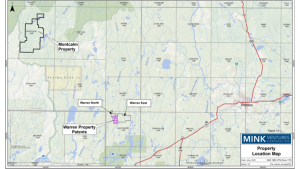
    Fig. 1: Detailed location map

    Further, a straightforward permitting process for both of Mink’s projects adds tremendous value to the equation and provides for highly cost-effective exploration due to the availability of drills, crews, skilled labour force, equipment, and lower mobilisation costs. In Mink’s case, there are significant efficiencies in logistics to move between its two projects, located only 35km apart along the same Montcalm Mine Road.

    This article is focused on the Warren nickel-copper-cobalt project, as Mink is initiating a 500m drill programme on the A Zone at Warren. The Warren property covers 1,010 hectares of land in the Whitesides Township, approximately 35km west of Timmins, Ontario. (See Fig. 1) The first phase of drilling will consist of a series of short holes on the A Zone to determine the extent of the mineralisation down plunge, down dip, and along strike before evaluating the other mineralised zones and numerous untested priority geophysical targets on the property.

    The A Zone (See Fig. 2) was selected as a high-priority target for drill testing as a result of an extensive geological review of data, a field examination, and a confirmation sampling programme conducted in summer 2023 by company geologists.

    In July 2023, Mink acquired these underexplored patented mining claims. The Warren patents have had a sporadic exploration history from the late 1920s to the present, and several promising historical mineralised Cu Ni zones were outlined. The majority of the battery metals exploration completed on the property to date is in an area representing a very minimal portion of the property, and was completed well over 60 years ago as the patents were locked up and relatively untouched.

    With the favourable geology, recent geophysics, and extensive surface mineralisation observed, there is a significant opportunity for new discoveries on the patents and across the expanded Warren project, including additional staked claims (Warren East) and acquired claims (Warren North). Mink’s work commitment to earn a 100% interest in the patents is $300,000. The company will make a significant dent in that obligation with this initial drill programme, which is expected to last two to three weeks. Mink has been fortunate to receive exploration grants through Ontario’s OJEP programme, and as such, half of this initial drill programme will be offset with the non-dilutive capital provided.
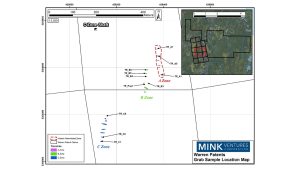
    Fig. 2: Trench location map

    Property highlights

    • Prospecting, sampling, and a geological evaluation of known mineralised zones A, B, and C was completed in the summer of 2023 to locate the most prospective zones of mineralisation for drill testing. A total of 20 reference grab samples were taken;
    • Sampling efforts confirmed the presence of extensive zones of mineralisation; recent sampling demonstrated excellent copper grades and significant nickel, cobalt and silver grades associated with some of the best copper grades;
    • The sampling efforts confirmed that the highest priority target is the A Zone, where approximately 120m of the zone is exposed in a series of trenches in outcrop. The A Zone trenches noted excellent copper values ranging from 1.075% to 2.08%. Nickel values from the A Zone ranged from 0.313% to 0.348% Ni, and cobalt values ranged from 0.0389% to 0.0498% Co. Some interesting silver values ranging from 10.3ppm to 23.8ppm were also associated with some of the better copper values on the A Zone;
    • To date, the Warren patents host three known zones with copper, nickel, and cobalt mineralisation; these have been designated A, B, and C. Two historical bulk samples were completed on the Warren patents; the first bulk sample returned 0.21% Cu, 0.96% Ni, 0.11% Co and 0.10% Zn, and a second bulk sample returned 2.83% Cu, 0.58% Ni, 0.10% Co and 0.13% Zn. The combined A-B zones and the C zone have projected strike lengths of 800 and 1,000 metres respectively, from geophysical data;
    • In the 1950s, a resource calculation of 385,000 tons of 1% Cu + Ni was outlined by Jade Oil & Gas on the Warren patents. Jade Oil and Gas drilled 23 holes to test Zones A and B in the mid-1950s. Highlights include 2.5% Cu+Ni over 7.6m and 2.8% Cu+Ni over 8.2m (Please be aware that the resource calculation is historical in nature and is not NI43-101 compliant; it is not to be relied upon and is reported as a historical statement only. Note: The methods and parameters used to prepare this estimate and the category of the estimate are unknown. A qualified person has not done sufficient work to classify the historical estimate as current mineral resources or mineral reserves, and the company is not treating the historical estimate as current mineral resources or reserves. References: Technical Report for Western Troy Capital Resources on the Warren Property (W. Hawkins P. Eng, 2021) and Maxmin, Magnetometer and VLF Surveys Evaluation Report, Whitesides and Massey Twp. Claims (C. Mackenzie Consulting Geologist, 1990); and
    • Despite fairly significant historical work on both the A and B zones in the past, the bulk of the battery metals exploration efforts were limited to relatively shallow drilling and/or surface work. Consequently, there is limited understanding of the geometry of these mineralised zones at depth. The first phase of drilling by MINK will consist of a series of short holes on the A Zone to determine the extent of the mineralisation down plunge, down dip, and along strike prior to evaluating the other mineralised zones and numerous untested priority geophysical targets in a second phase programme.

    Warren property geological discussion

    Mink’s expanded Warren project is hosted within the Kamiskotia Gabbro Complex (KGC), and it is thought to be broadly equivalent to the Montcalm Gabbro Complex (MGC) but separated by a granitic arch. The MGC hosts the former Montcalm Mine, which produced approximately 3.93 million tonnes grading 1.25% Ni, 0.67% Cu and 0.05% Co (OGS, Atkinson, B., 2010).

    Gabbro complexes such as MGC and KGC are known to be prospective for magmatic nickel-copper sulfide deposition, as demonstrated by the Montcalm Mine located within the MGC. The Warren property complements Mink’s Montcalm property due to the distinctly similar prospective geological environments found in the MGC and the KGC, as well as the presence of significant Cu Ni zones on the Warren property.

    As highlighted above, the Warren patents have had a sporadic exploration history from the late 1920s to the present day, and several promising historical mineralised Cu Ni zones were outlined. The majority of the battery metals exploration on the property was completed in an area representing a very minimal portion of the property and completed well over 60 years ago. More recent geophysical surveys from the early 1990s and 2008-2009 outlined a series of untested targets along strike from known mineralisation and/or new targets proximal to known mineralisation. These targets are particularly evident in the accompanying magnetic and IP compilation map shown in Fig. 3.

    Q&A:

    How does Mink Ventures plan to use historical data and advanced technologies to identify and validate drill targets specifically for the Warren project?

    Company geologists have re-evaluated the very limited available historical drill data. A property visit was made to examine the surface exposure of the zone, which is exposed over 120m of strike length in a series of trenches. Re-sampling of the zones confirmed excellent base metal values. With a geological evaluation of the surface exposure and some strike and dip measurements, a series of short drill holes have been proposed to confirm the dip and plunge of the zone and tenure of the mineralised zone.

    Fig. 3: Warren project – compilation map

    Once an understanding of the zone geometry is confirmed, deeper holes will be considered in a subsequent phase. Mink may consider using the new 3D Borehole IP geophysics system it used at Montcalm, which can seek both disseminated and massive sulfide mineralisation for a 250m radius around boreholes and further at depth to map any
    zones in 3D.

    What steps will Mink take to validate and expand upon the historical resource calculation in the Warren project, ensuring accuracy and compliance?

    A series of drill holes in multiple phases of drilling will be required to establish the size and dimension of the zone. Canadian geologists comply with NI43-101 professional standards, which will ensure the accurate representation of all field data collected.

    How will Mink prioritise community engagement and address environmental considerations?

    Mink is operating in a part of Northern Ontario, where there is a clear and articulate process to build solid relationships and work side by side with local communities and First Nations. MINK’s projects fall in the traditional territory governed by the Waban Tribal Council, which has developed a straightforward process and model for discussion and negotiations that is now being replicated across Canada and admired globally.

    The overall intent of the process they have developed to use with mining companies is to provide winning outcomes for all stakeholders while providing for and protecting future generations and showing consideration for the environment from start to finish. Mink is in the process of completing a draft Memorandum of Understanding (MOU) for submission to ensure co-operation even at this early stage of battery metals exploration.

    Further, Mink complies with all the environmental and permitting requirements of the province. The mineralised zones at Warren that are currently being evaluated are present on patented mining claims, which means the company controls surface rights and mineral rights. Early-stage battery metals exploration efforts like diamond drilling do not require permitting when working on patented claims.

    However, the same standard of care concerning the environment is taken as if we were working on regular claims, and all activities adhere to the same permit guidelines.

    How does Mink plan to optimise existing advantages for cost-effective exploration at the Warren project, and what are the anticipated challenges?

    The Warren project is located in the Timmins camp with proximity to infrastructure, mills, workforce, and experienced exploration contractors, including diamond drillers. All-in diamond drill costs are in the range of approximately CAD$230 per metre. This is exceptionally reasonable when compared with drill programmes conducted outside of established mining areas, such as the Canadian Arctic, where costs may be three to four times higher per metre. Access to the Warren Project is reasonable from established roads, but winter access for the Warren Project is best due to the ground conditions.

    How does Mink intend to address historical gaps and explore untested targets along strike from known mineralisation?

    The company will conduct several days of prospecting and sampling to evaluate the numerous mineralised occurrences across the property. Recent sample data, a relatively recently induced polarisation survey, and the information from this current drill programme compiled into the geological database will allow for prioritising the best targets for the next round of drill testing.

    What are the primary exploration goals that Mink Ventures aims to achieve with the drilling programmes at the Warren project, and how do these align with the company’s broader objectives?

    The primary goal of the current programme is to confirm the orientation and tenure of mineralisation in known historical zones of mineralisation to build an NI43-101 compliant resource that can be grown and eventually attract a JV partner with mining capability. Mink Ventures is an exploration company aiming to secure the best projects as cost-effectively as possible while providing significant opportunities to make new discoveries and enabling our shareholders to ride the Lassonde curve. Mink has two strategically located, highly prospective, polymetallic critical minerals projects in a well-built company with a very attractive share capital structure. This combination is set up to deliver value to our shareholders.

    Please note, this article will also appear in the seventeenth edition of our quarterly publication.

    [ad_2]

    Source link

  • Shaping a sustainable and innovative future

    Shaping a sustainable and innovative future

    [ad_1]

    With a commitment to collaboration and demonstrated leadership in energy, health and Artificial Intelligence, the University of Alberta is a critical partner in solving the world’s most pressing challenges.

    In the heart of the province of Alberta, the University of Alberta (U of A) stands as a beacon of innovation, shaping a future that addresses the grand challenges of our time. With a commitment to collaborative excellence, the U of A seamlessly integrates its leadership in energy, health, and artificial intelligence (AI), enabling a multidisciplinary approach that propels groundbreaking research and innovation forward.

    With the recent expansion of Horizon Europe, the world’s most extensive research and innovation funding programme, into Canada, the University of Alberta is poised to be a key partner of choice in developing solutions to the world’s most pressing challenges. Garnering more than $550m (€375.9m) annually in sponsored research revenue, the
    U of A stands as an intellectual powerhouse. Collaborations with over 150 companies, contributing more than $36m (€24.6m) annually, underscore the tangible support from industry for the U of A’s numerous research initiatives.

    Darren Fast, Associate Vice-President (Innovation, Knowledge
    Mobilization & Partnerships), University of Alberta.

    Pioneering sustainable energy solutions

    Alberta, a global energy hub, has a key contributor in the U of A. Recognised as Canada’s top university in energy research, the U of A boasts a strong network of industry, government, academic, and community partners. This collaborative ethos extends beyond the institution, fostering an ideal environment for testing and commercialising scalable solutions that drive the transition to more sustainable energy technologies.

    World-renowned energy researchers – including 19 Canada Research Chairs, a federal programme that recognises research excellence in engineering and the natural sciences, health sciences, humanities, and social sciences – coupled with cutting-edge facilities, position the U of A as a global leader in developing and commercialising net-zero energy solutions.

    As Alberta increasingly focuses on hydrogen as a sustainable energy source, the U of A’s research focuses on overcoming challenges associated with next-generation hydrogen technologies. From developing catalysts for turquoise, blue, and green hydrogen production to designing safe and effective transportation and storage systems, the U of A collaborates closely with the Alberta Hydrogen Centre of Excellence.

    In Carbon Capture, Utilisation and Storage (CCUS), the University of Alberta leverages expertise in point-source and direct air capture, geological storage, and carbon dioxide utilisation. Aiming to reduce the cost of CCUS, the U of A explores synergies like co-locating direct air capture plants near CO2 hubs. This strategy not only lowers the cost of harmful emissions but also identifies valuable products manufactured, including carbon fibre from bitumen, using CO2 as a raw material.

    Related research initiatives include developing new materials for CO2 capture, integrating them into processes, and offering a test bed in collaboration with the Alberta Carbon Conversion Technology Centre. The U of A leads in advanced modelling and experimental methods for identifying storage sites, monitoring and forecasting, and ensuring the safety and efficiency of CCUS technologies.

    Meanwhile, in the waste streams of Alberta’s oil and gas industry, critical minerals lie in wait to be responsibly reclaimed and utilised. Collaborating with an extensive network of academic, industrial, and Indigenous groups, the U of A addresses key technical, economic, environmental, and social challenges, ensuring a robust national critical minerals value chain. As energy systems evolve, new tools will be required to measure and address the environmental impacts of both new and legacy technologies. At the University of Alberta, work in this area provides rapid, accurate, cost-effective monitoring, mitigation, remediation and reclamation technologies and processes.

    In the area of critical minerals, research spans a range of areas, from exploring and identifying rare earth elements and uranium deposit potentials to developing technologies for extracting lithium from brines and collaborating with major mining companies to enhance production. This leading-edge work promises not only environmental sustainability but also economic and technological advancement.

    Transformative health solutions

    At the forefront of health innovation, the University of Alberta leads in biomanufacturing, leveraging its expertise to address critical health challenges. With a strategic focus on the Canadian Critical Drug Initiative (CCDI) and its role as the central institution in the PRAIRIE Hub for Pandemic Preparedness, the U of A is shaping a resilient future in healthcare.

    A beacon of progress, the U of A collaborates with Applied Pharmaceutical Innovation (API) to spearhead the CCDI. This groundbreaking initiative is poised to revolutionise small-molecule drug production, representing the majority of drugs administered in Canada. With the potential to create up to 1,000 high-paying jobs, the CCDI addresses immediate healthcare needs and provides a stable revenue source for the region.

    University of Alberta

    Recognising its cross-disciplinary strength in combating COVID-19 and potential pandemic diseases, the U of A has taken the lead in the PRAIRIE Hub for Pandemic Preparedness. Positioned as the central institution, the U of A collaborates with major partners across Canada, including the University of Calgary, the University of Saskatchewan, the University of Manitoba, and more. This collaborative effort accelerates developing and commercialising vaccines, antivirals, and diagnostics, ensuring a robust response to future health crises.

    The U of A’s proactive stance in establishing the PRAIRIE Hub receives significant support, with a $2m (€1.4m) allocation over four years and access to a potential $570m (€323m) in federal funding. By safeguarding Canada and the world against potential pandemic pathogens, the U of A’s leadership in the PRAIRIE Hub exemplifies its commitment to advancing solutions for a resilient and prepared future in healthcare.

    As the U of A pioneers innovative health solutions, the CCDI initiative and the PRAIRIE Hub reinforce the university’s pivotal role in shaping a robust and responsive healthcare ecosystem.

    AI leadership

    In the dynamic landscape of AI and machine learning, the University of Alberta stands as a global leader, home to some of the world’s top researchers in these transformative fields. Recognised for its exceptional contributions, the U of A has secured $100m (€68.7m) in funding for AI since 2017, reflecting its commitment to pushing the boundaries of AI research and application.

    Boasting one of Canada’s oldest and largest computing science departments, the U of A has earned an international reputation for advancing both the foundations and applications of computing. Meanwhile, a commitment to AI education has led to the creation of Everywhere, a new course at the U of A to equip students across disciplines with crucial AI understanding in collaboration with the Alberta Machine Intelligence Institute (Amii).

    The course marks just one example of the U of A’s collaboration with Amii, a globally recognised hub for AI excellence and one of Canada’s three named institutes in the Pan-Canadian AI Strategy. The two organisations work closely to advance leading-edge AI and machine learning research, support talent recruitment and development, and provide pathways for emerging researchers and academics to collaborate directly with industry partners.

    In AI in health, the Medical Informatics Group collaborates extensively with medical researchers and clinicians to develop meticulous diagnostics. Their focus spans various medical domains, including cancers (breast, brain, and leukaemia, among others), transplant, diabetes, stroke, and depression, showcasing the broad societal impact of AI in healthcare.

    This unified vision integrates AI with the U of A’s groundbreaking work in energy and health, positioning the university at the forefront of innovation. A multidisciplinary approach emphasises the interconnectedness of energy and environment, health, and artificial intelligence, exemplifying the U of A’s commitment to shaping a sustainable and technologically advanced future.

    Forging a path to tomorrow

    The University of Alberta’s journey through energy, health, and artificial intelligence is not merely a collection of disparate achievements; it is a tapestry woven with threads of innovation, collaboration, and commitment. The seamless integration of these pillars reflects the U of A’s dedication to addressing the grand challenges of our time.

    As a global leader, the U of A’s cutting-edge research and collaborative ethos propel us toward a future where sustainability, health, and technology converge. The intertwining narratives of net-zero energy solutions, transformative healthcare, and AI leadership demonstrate the university’s capabilities and role as a positive change catalyst.

    The recent agreement between Canada and the European Union to allow Canadian institutions to pursue research as part of the Horizon Europe programme provides new opportunities for the U of A to collaborate. The Horizon Europe research objectives for climate, energy and health are areas where the University of Alberta has demonstrated world-leading expertise. Pursuing those opportunities will further the U of A’s place as an essential partner of choice for like-minded organisations working to address today’s global challenges.

    Please note, this article will also appear in the seventeenth edition of our quarterly publication.

    [ad_2]

    Source link

  • LNMO on the charge as Topsoe powers up industrialisation pilot for large-scale process validation

    LNMO on the charge as Topsoe powers up industrialisation pilot for large-scale process validation

    [ad_1]

    The inauguration of a new large-scale LNMO material industrialisation pilot in Frederikssund, Denmark, in February, marked a significant milestone for Topsoe, and it is only the beginning.

    Topsoe’s LNMO material production industrialisation pilot is up and running. This is exciting progress in the development of the Li-ion batteries so crucial to our green future, with Topsoe committed to high-quality, efficient products that not only meet but exceed customer needs.

    With one supply agreement already in place, Jonathan Højberg, Research and Development Director for Batteries, is rightly optimistic for the future, with commercialisation only a stone’s throw away. Jonathan Højberg elaborates on the project, its significance in the sector, and Topsoe’s commitment to excellence.

    What have been the main drivers for the project and the expected outcome?
    Topsoe has developed LNMO cathode active material for Li-ion batteries for the past ten years. Specifically, we have developed materials with high-phase purity and superior morphology that enable easy processing and high electrode energy density. In parallel, we have worked on ramping up the production process to an industrial scale. The industrialisation pilot with a design capacity of 200 tonnes/year was inaugurated in February 2024 and is an important milestone in our strategy to deliver to the market.

    Although scaling of material production is a core competence in Topsoe, at an early stage, we identified a need to demonstrate production-at-scale for two main reasons. First, it enables us to meet increasing demand from customer qualification programmes. Second, we can test key equipment and fine-tune the design of the future full-scale production.

    What are the advantages Topsoe sees in LNMO compared to other cathode-active materials?

    LNMO is a multipurpose, electrode-active material optimised for low cost and high energy and fits into electric vehicle (EV) batteries. It is suitable for demanding applications that require fast charge or discharge. Batteries based on our LNMO material will be fully competitive globally and help build a Europe-based battery value chain. We see the current combination of technological maturity and growth in the relevant market segments as a significant driver of interest in LNMO.

    What advancements or optimisations does the industrialisation pilot aim to achieve?
    The industrialisation pilot has a few features that I would like to highlight. First, it is unique in its flexibility to use various raw materials. This is key to ensuring that we base our full-scale production on the optimal combination of capital expenditure (CapEx) and operating expenditure (OpEx). Second, we have combined industry-standard processes with several Topsoe processes that allow us to unlock the full potential of the LNMO technology. Third, all processes are electrified to enable the production of LNMO with low CO2 emissions.

    A key deliverable of the first year of operation is validation by confirming that production capacity, product quality and product variation are as planned and designed. Additionally, the pilot’s flexibility will be used to validate raw materials and processes that will guide the design of full-scale production.

    What key performance criteria must the LNMO cathode active material meet, and how will the pilot contribute to meeting these criteria?

    The LNMO cathode active material must fulfil a set of design parameters, such as morphology and impurity levels. The industrialisation plant is designed to ensure low variability in product quality, and confirming this ability will be a priority.

    What quality measures are in place in the industrialisation pilot, and how do they align with the Topsoe approach?

    To ensure high-quality standards, we adhere to a management system that meets the stringent requirements of ISO 9001:2015. This system ensures we fully understand customer technical and commercial needs and regularly assess customer satisfaction.

    Our commitment to quality is deeply embedded in our company mission at Topsoe, ‘to perfect chemistry for a better world.’ We are steadfast in pursuing continuous improvement, optimising processes to enhance safety, quality, productivity, timeliness, and cost-effectiveness. These priorities have been at the heart of the industrialisation pilot since the first stages.

    Innovation is at the heart of our approach: We aim to provide solutions within batteries that meet and exceed the needs of our customers. Our production processes are designed to be efficient and secure, always in compliance with all regulatory requirements.

    How will the data and insights gathered from the pilot be utilised to improve the LNMO cathode active material production process further? 

    The complete testing of processes and raw materials is key to ensuring that we design our full-scale production with an optimal combination of CapEx, OpEx, and quality. We must deliver the required quality without overengineering. This will ensure we stay competitive and meet customer needs.

    What does the commercial rollout plan look like from here? 

    We are already looking beyond our industrialisation pilot and have finalised a conceptual design for a future large-scale production facility, which is an exciting step forward. We will use the learnings to fine-tune the design as soon as we have successfully demonstrated and commercialised the material from the industrialisation pilot.

    An important milestone in this journey was signing a supply agreement with Norway-based Morrow Batteries. The agreement enables Morrow to develop battery cell chemistries based on our innovative LNMO material with a path towards industrialisation.

    We are seeking and relying on strong collaborations and partnerships and exploring potential new pathways within the entire value chain for the years to come. We will work with partners to ensure sustainably produced raw materials, better battery cell components, and high-performing cells. We see this collaboration as a prerequisite for success, enabling us to be an important player in the market for cathode active materials.

    Please note, this article will also appear in the seventeenth edition of our quarterly publication.

    [ad_2]

    Source link
  • Streamline your mining operations with visual and metric data

    Streamline your mining operations with visual and metric data

    [ad_1]

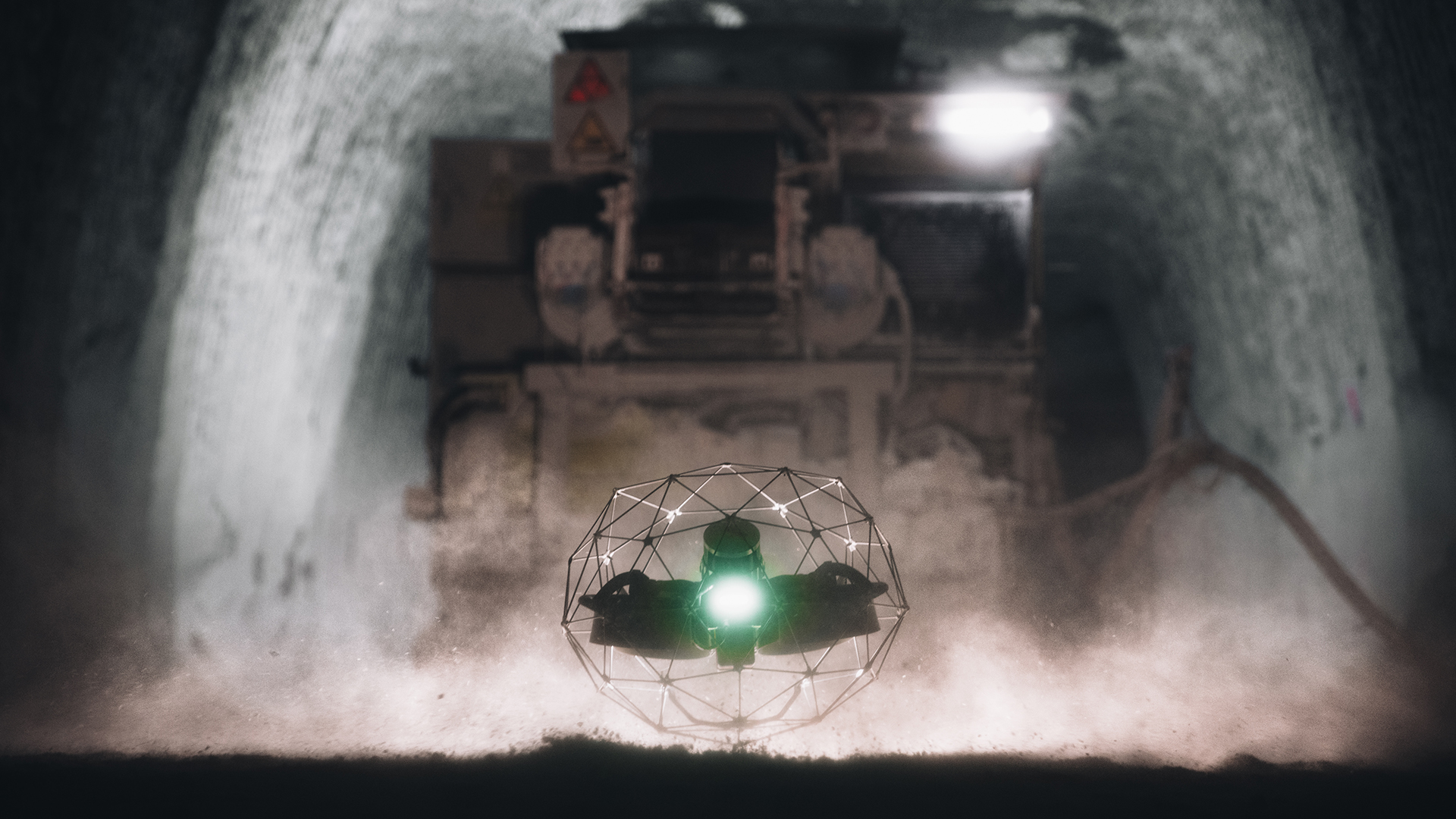
    Mining companies are turning to UAS inspection technology, like the Elios 3, to prevent humans from being exposed to dangerous situations.

    Mines around the world vary in size, material, and age, but they all have the potential to pose risks for the humans who work in them. Thankfully, technological advancements are enhancing mining safety for the people who work there, with drones emerging as a game changer, particularly in confined or inaccessible spaces.

    The Elios 3, Flyability’s specialised remote visual inspection tool, revolutionises the safety and efficiency of inspections while decreasing downtime. The Elios 3 is a very flexible tool, and its applications in mining include drilling and blast assessment, exploring old workings, volume calculations and stockpile tracking, mapping, and more.

    Features and capabilities of the Elios 3

    The Elios 3 is a specialised drone created to access and collect data in the most challenging environments. It has a collision-tolerant cage along with special flight monitoring settings that help it withstand and correct impact in confined spaces.

    The drone also carries a unique set of capabilities in that it can simultaneously gather visual and LiDAR data.

    The drone’s LiDAR data, particularly with the Surveying Payload, is accurate to one centimetre. The Ouster Rev 7 sensor ensures high-quality results, gathering 1.3 million points per second with superior photon sensitivity, empowering surveyors with reliable and precise data for various projects.

    Ensuring safety in mining

    Traditionally, mining has been a hazardous occupation where workers must enter dangerous or unstable environments on a regular basis. They encounter heat exposure, unpredictable air movement, and unstable structures.

    To mitigate these risks, mining companies can use drones to do the initial inspection and gather data to assess possible risk.

    The Elios 3 aids in determining safe entry and conducting regular surveys of different environments over time.

    It can even be used as an emergency response, thanks to fast deployment, and its ability to gather visual and LiDAR data for locations beyond visual line-of-sight.

    Access to unreachable areas

    Each mine presents unique challenges, and drones can provide unparalleled access to areas previously unreachable. This could include reaching orepass hangups or fall-of-ground locations.

    Drones present an ideal tool for accessing places that were previously unreachable. They can fly and work at height, while specialised drones can also enter confined spaces to gather information and conduct surveys. This is particularly useful when working in potentially hazardous environments, such as surveying old workings.

    This improved access to an area with a drone can unlock new information. Drones can be flown through ventilation systems to check the condition of pipes and plan maintenance, or similarly down blocked pipes and tunnels that cannot be safely reached by people, traditional laser scanners, or cable-mounted cameras.

    The Elios 3 drone can fly beyond the line of visual sight, and the pilot can rely on the LiDAR live map and video feed to guide the drone into tricky locations measuring as small as 50x50cm. This ability to reach new areas makes it a valuable tool for improving access to more of a mine with greater ease and safety.

    Data quality

    The LiDAR data gathered with a drone can be used for various projects, from stockpile tracking to convergence monitoring or inspecting old workings.

    The LiDAR data gathered with the Elios 3’s specialised Surveying Payload is accurate to one centimetre using the Ouster Rev 7 sensor, which has ten times higher photon sensitivity than the Elios 3’s standard LiDAR sensor.

    The Rev 7 provides incredibly high-quality results in shorter flight times, empowering surveyors to analyse their results with confidence in the data accuracy.

    Efficiency and decision making

    The quick deployment, high-quality data, and flexible operation make the Elios 3 a highly efficient solution. There is no need to set up scaffolding and PPE or implement extended shutdowns. A ten-minute flight can cover an ore pass that traditionally takes hours or even days.

    One customer praised the Elios 3, stating: “To get to some of the places we send the drone, you’re pulling a $2m loader off its job, strapping a scanner onto it and sending it somewhere remotely. This becomes a 15-minute job with Elios.”

    About the Elios 3

    Elios 3 is the outcome of four years of extensive engineering work. The integration of FlyAwareTM – a proprietary SLAM engine that works in combination with a brand-new LiDAR payload – enables significant upgrades in terms of performance, versatility, and stability.

    Elios 3 is designed to be used by anyone on your team, indoors, in complete darkness, and no matter the dust.

    Its SLAM-based stabilisation algorithm, powered by the fusion of three VIO cameras and the LiDAR, catches the tiniest unpredictable movements of the drone and instructs the flight controller to compensate for it, allowing for the drone to float in the air still as a stone, even in the toughest conditions.

    This stability and other ease-of-use features make the Elios 3 incredibly easy to operate, so pilots from all skill levels will succeed at performing complex missions with almost training.

    The quick hits

    •    Accessibility: Excels in GPS-deprived, dusty, and dark
    environments reaching small, inaccessible areas that
    traditional tools and other UAVs can’t access.
    •    Safety: Enables scanning and inspection of indoor
    assets before human entry.
    •    Data quality: Capture centimetre-accurate scans, with
    4k videos and 12 MP images
    •    Efficiency: Inspect your assets in just a fraction of the
    time compared to traditional methods.

    The Elios 3: Bringing higher quality data results to mines globally

    The Elios 3 stands out as a key tool for bringing safer, higher quality, and more efficient data collection and results to mines worldwide.

    Tailored for complex environments, its modular design ensures ongoing capabilities as new payloads unlock additional applications.

    Witness the Elios 3 in action by contacting our team to organise a demo at a site near you.

    Please note, this article will also appear in the seventeenth edition of our quarterly publication.

    [ad_2]

    Source link

  • Growing value through discovery in the Balkans

    Growing value through discovery in the Balkans

    [ad_1]

    Terra Balcanica, a junior Canadian explorer of critical metals, eyes untapped opportunities at Europe’s doorstep.

    What do you get when you combine a millennia of mining history, two resource extraction-friendly European jurisdictions with clear paths to permitting mineral exploration concessions, a knowledgeable workforce, and a continent starved for critical metallic resources?

    Add to that a world class metallogenic expertise and a plethora of innovative geochemical and geophysical techniques that helped define grassroot drill targets in less than a year, all of which proved to be mineralised. Welcome to Terra Balcanica Resources Corp. and its ~350km² polymetallic portfolio of the Western Balkan Peninsula.

    Terra Balcanica is a junior Canadian explorer of precious and base metal resources in Europe’s front yard, where it has been advancing five exploration licenses in Bosnia and Serbia. Listed on both the Canadian Securities Exchange (CSE:TERA), and the Frankfurt Stock Exchange (FRA:UB1), the company has made strides since acquiring its flagship land package in eastern Bosnia in 2020.

    Called the Viogor-Zanik Project, the 215km² aggregate of licences surrounds the operation Sase mine (Mineco Ltd.) with an annual production of 350,000 tonnes of Pb-Zn-Ag+/- Sb concentrate, and is centred upon a mining district mined as far back as the Roman times when it was known as Argentaria.

    A multidisciplinary approach to target definition

    In slightly over three years, Terra’s technical and field teams have mapped, sampled, surveyed, and drilled two out of three highly prospective target zones within the only Oligo-Miocene manifestation of the highly prolific Western Tethyan orogen in Bosnia and Herzegovina.

    The belt, whose mapped southeastern extension reaches Afghanistan via the Balkans, Turkey, and Iran, features world class porphyry copper and epithermal gold-silver deposits (Sarcheshmeh, Sari Guni, Kişladag, Skouries, Olympias, Trepca), and terminates right at Terra Balcanica’s feet as the metalliferous Srebrenica Magmatic Complex.

    Here, a meticulously systematic approach of layering dozens of data sets obtained by months of lithological and structural mapping, combined by those gained from airborne geophysics, satellite multispectral terrain surveys, and thousands of rock and soil chemical assays revealed two genetically distinct, yet equally attractive targets worth drill testing.

    terra balancia, mineral exploration

    And drill, Terra did. Both the Cumavici and Brezani targets were tested to the tune of over 2,000m of diamond drilling, respectively, with attractive metal grades intercepted close to surface but the story does not stop with Bosnia.

    In neighbouring Serbia and another mining heavyweight of Europe (e.g. Timok District), Terra Balcanica operates two exploration concessions in the historic Rashka district, once home to many a medieval Saxon miner employed by the Serbian kings of the epoch.

    Here, the Ceovishte and Kaludra licences comprise a 130km² land portfolio rich in Zn-Pb-Ag-Au-Cu showings. Particularly interesting is the former, where Terra’s geologists have collected high-grade precious metal samples on-surface that overlay historical workings featuring highly enriched vein-hosted mineralisation. None of the Serbian targets have been drill tested to date, and remain Terra’s immediate focus for the 2024 Phase III campaign.

    As only the second (foreign) mineral explorer in Bosnia, Terra Balcanica is poised to capitalise on regional early-mover opportunities, while remaining a nimble, agile, and cost-effective explorer of choice in SE Europe.

    For many at Terra, discovering mineable resources needed by the world of tomorrow is not just a self-evident mission but an homage to the proud, century-long history of mining in Europe.

    The art of discovery

    Ours is a disciplined and creative team of mining professionals that has demonstrated an ability to make discoveries in places overlooked or abandoned by others, and to leverage these forgotten or neglected gems as incubators of the mining continuum, and value creators for our shareholders.

    Whether it is systematically rehashing volumes of archived data sets, modelling newly acquired geophysical data, or rapidly ground-truthing the rugged vast expanse of the Western Balkan Peninsula aimed at targeting the ‘sweet spots’ – discovery is in our geological DNA. Our leadership group and technical team are fully vested and singularly committed to this goal.

    The Čumavići target

    Within the Viogor-Zanik Project of eastern Bosnia and Herzegovina lies the Čumavići target. This shallow, high-grade, polymetallic target area extends for over seven kilometres NW/SE through the project. Tens of mineralised showings which returned assay grades up to 128 g/t silver and 20% zinc are visible alongside historic mining works. Silver-zinc-manganese-antimony all show anomalism in soil geochemistry, coupled with linear magnetic low responses (indicative of possible host structures).

    Terra has completed diamond drilling at two locations and discovered polymetallic veins and breccias returning assay grades up to 11m at 505 g/t silver equivalent (gold-silver-lead-antimony-zinc recalculated to the value of silver) in 2022 drillhole CMVDD004.

    Individual drill core samples have returned values as high as 1,420 g/t silver over 1.7m and 31% combined lead and zinc over 90cm. Terra has only scratched the surface of the Čumavići story and is excited to continue drilling in 2024. As more mineralisation is discovered within the Čumavići corridor it is worth noting the proximity of Terras discovery to the operating Sase Mine, actively depleting their ore reserves.

    The Brežani target

    Just 11km to the southeast, within the Viogor-Zanik Project. lies the Brežani target. A greenfield discovery in 2021, Brežani presents a kilometre-scale mineralised hydrothermal system first identified as a large magnetic anomaly, coupled with over 700m strike length of elevated gold in soil. Drilling at the target has revealed not only that the gold on surface extends down to 88m (results from drillhole BREDD002) but is also host to strong epithermal mineralisation at depth.

    The gold in drill core was consistent at 0.5 g/t, reaching up to 1.5 g/t for six metres. Brežani represents the only gold mineralised skarn (a calc-silicate rock) in Bosnia and Herzegovina and is set to grow with further drilling.

    terra balancia, mineral exploration

    Recently discovered and extensive epithermal mineralisation encountered downhole shallows to the east-northeast, where a similar element assemblage of silver-arsenic-antimony is present within rock and soil samples from a topographic low, coupled with a magnetic low. This offers shallower drill targets for this prospective polymetallic mineralisation.

    Prospective work at Ceovishte

    Terra Balcanica also operates in neighbouring Serbia, where it holds 80km² of highly prospective land in the historic Raška mining district. The Ceovishte Project represents a previously overlooked high grade gold-copper target with surface rock chip assay results up to 64 g/t gold and 2% copper.

    Samuel Vaughan, MSc – Terra’s project geologist

    A Master of Science graduate of the Camborne School of Mines, Samuel Vaughan is a geologist specialising in mineral exploration. Having spent four seasons working in the high Arctic of Greenland, he joined Terra in 2021 and commenced target generation.

    After systematic integration of the thousands of geochemical data points and layers of geophysical evidence, Samuel has been managing day to day operations across the exploration licenses.

    Digitising historic data from the 1950s Terra has identified notes of bonanza gold and silver grades just 30m below the surface, which offers a compelling target. Terra is excited to commence drilling at Ceovishte in 2024, testing depth extensions to high grades observed on surface and ground truthing historic records of bonanza gold and silver.

    Away from these historic workings, over 300 soil samples were collected and analysed by Terra, revealing a previously unknown area of Au-Bi-Cu-Te anomalism over 900m in strike length. This signature could represent a sub-cropping copper porphyry deposit and will require more detailed geological mapping, geochemical sampling, and possible geophysics to assist in imaging the subsurface prior to exploration drilling.

    What is in store for 2024?

    As a regional Balkans explorer, Terra Balcanica has proven capabilities of identifying prospective projects and discovery mineralisation. Being on the doorstep of Europe, and given the demand for critical metals such as lithium, Terra has identified a prospective area and is looking to move into the battery metal exploration space.

    terra balancia

    The western Balkan Li-B (lithium-boron) metallogenic zone spans for over 1,500km through Croatia, Bosnia and Herzegovina, Serbia, and Kosovo along its path to Turkey to the east. The Serbian portion of the zone hosts Rio Tinto’s Jadar Project, a sediment hosted lithium-boron deposit discovered in 2004 hosting indicated resources of 85.4Mt at 1.76% Li2O and 16.1% B2O3 with further inferred resources of 58.1Mt at 1.87% Li2O and 12.0% B2O3 as of 31 December 2021.

    Terra Balcanica is excited to commence its lithium exploration journey in 2024 and add value to an already diversified portfolio of assets.

    In addition to a wealth of up-to-date information found on the corporate website www.terrabresources.com, the company is active and regularly disseminates corporate updates through our social platforms.

    Sustainable mineral exploration practices

    At Terra Balcanica, we emphasise responsible engagement with local communities, municipal governments, and key stakeholders. The company is committed to proactively implementing Good International Industry Practice (GIIP) and sustainable health, safety, and environmental management.

    We are particularly proud of our workplace safety and environmental protection record that include safety trainings, baseline environmental surveys, and regular community initiatives. The goal is to have our employees return to their families safely while maintaining a minimal environmental footprint.

    [ad_2]

    Source link

  • Closing the sustainability loop in the magnet industry

    Closing the sustainability loop in the magnet industry

    [ad_1]

    With its new approach to permanent magnets, PM-Wire magnets, the Advanced Magnet Lab is enabling the use of lower-cost materials, novel design and manufacturing, and revolutionising motors and generators to decommoditise the magnet supply chain.

    Magnets are at the heart of products like electrical machines (motors and generators), which are, in turn, used in virtually every sector of society – energy, manufacturing, consumer products, and transportation. Magnets are a critical component in areas like defence, used for instrumentation, weapons, and vehicles (land, air, and sea).

    Today, China dominates the market, controlling over 85% of the magnet market. China’s vertical integration of cheap labour, raw materials, and unsafe environmental standards has resulted in a high barrier to market entry for competitors worldwide. Historically, companies entering the magnet market could not compete with China and sustain a magnet business.

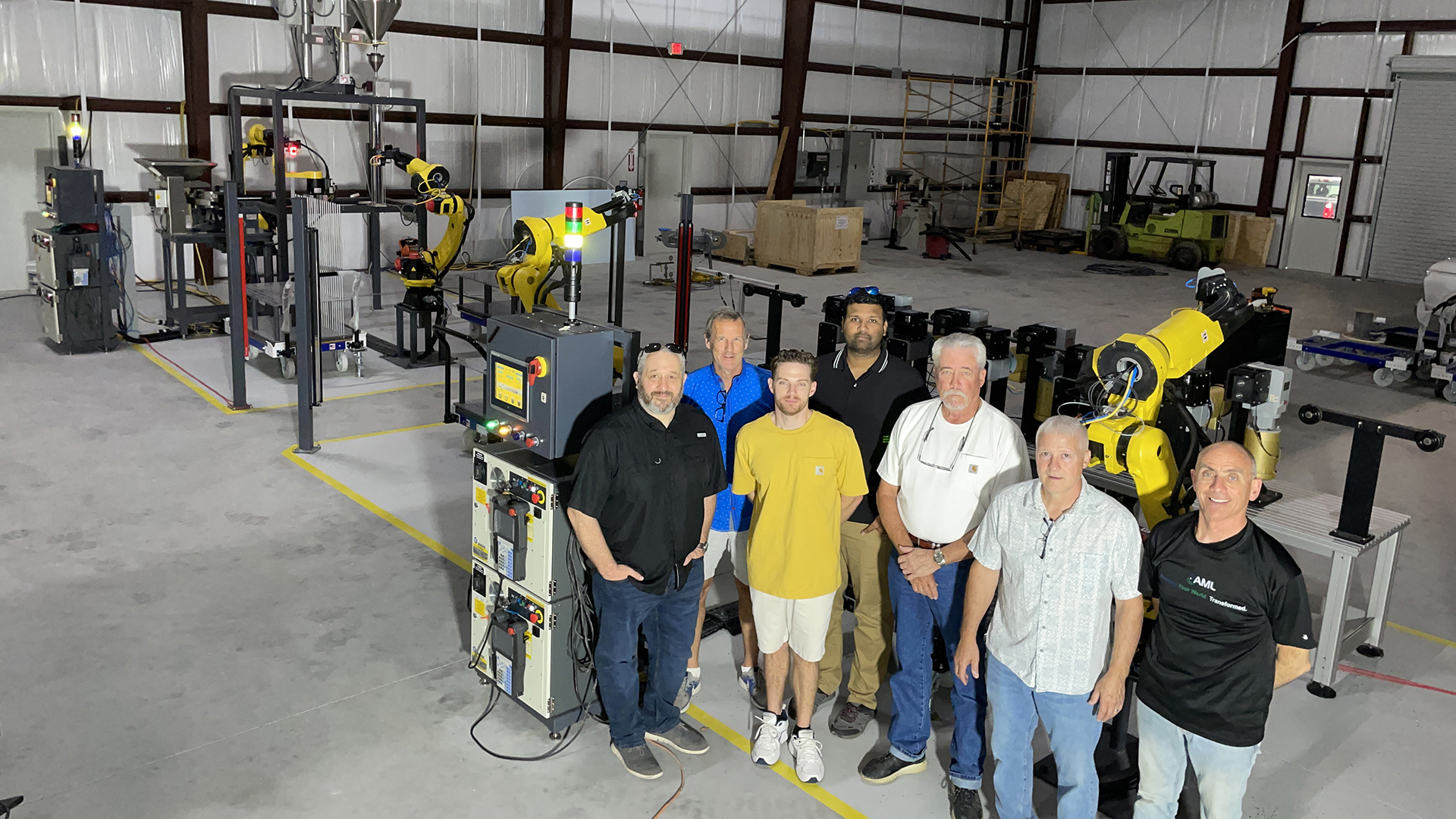
    The Advanced Magnet Lab (AML), Melbourne Florida,  has taken a completely different approach. Breaking China’s stronghold requires breakthrough innovations for enabling a sustainable magnet supply chain to re-invent technology and transform the industry.

    To do this, AML is innovating all aspects of the supply chain, including materials, magnets, magnet manufacturing, and the largest magnet market electrical machines. This new approach will result in a sustainable and decommoditised magnet supply chain.

    The conventional approach to the magnet supply chain is wrong
    While scale has increased and materials have improved, the materials used to make magnets, magnet technology, and the methods for manufacturing magnets and how the magnets are used in applications have been the same for decades.

    Conventional magnets are complex to assemble and limit design engineers to configurations which are not optimised for performance and cost of the end-use products, such as electrical machines. Magnets are produced in blocks, then cut into small pieces, and sold as a commodity.

    Conventional magnets are restricted in shape, size, and mostly single-direction magnetisation, meaning the largest market motors are limited to traditional north-south magnet pole designs. This requires dozens, hundreds, and sometimes thousands of magnets in an assembly. With very strong magnetic fields, assembly into a motor is complex and costly.

    Furthermore, the trend is towards higher-grade and better-performing magnet alloy compositions, requiring expensive rare earth elements (REE) and an unclear intellectual property landscape.

    The AML market approach

    AML’s business model is to not make conventional ‘me-too’ magnets. Historically, companies entering the magnet supply chain could not compete and sustain their business due to China’s stronghold and ability to manipulate the market.

    A magnet business can only be sustainable if the magnet product provides the magnet user with a better solution.

    A solution that not only competes with but out-competes the conventional Chinese approach. AML’s approach to the market is unique. AML focuses on what matters. Improving the performance and lowering the cost of the end-use product.

    The AML technical approach

    Unlike the conventional approach, AML’s approach provides engineers with a whole new set of tools to enable fully optimised product designs. The approach can be used with existing sintered magnet alloys and opens new markets for non-sintered and non-REE alloys. Electrical machine designs can now be fully optimised for performance, including efficiency, torque, mass, operating temperature, and ease of assembly.

    To do this, AML is addressing and therefore innovating every aspect of the magnet supply chain, which will result in a decommoditised market. This includes the magnets, magnet materials, magnet manufacturing, and electrical machines.

    pm-wire magnets

    PM-Wire magnets

    AML has developed and patented a manufacturing process for sintered, non-sintered, and non-REE magnets called PM-Wire™. PM-Wire magnets are manufactured using a semi-continuous, high-yield and high-rate manufacturing process with flexibility in the magnet length, cross-section, magnet shape and magnetisation direction.

    PM-Wire is the ideal way to produce magnets; it uses a ‘wire-like’ manufacturing process where all the critical process parameters can be adjusted and precisely maintained for any magnet alloy type, including non-REE materials.

    The manufacturing process involves filling thin-walled tubes with permanent magnet alloy powder, powder densification, and applying a magnetic field with a preferred direction of magnetisation. The tube is then size reduced to its specified cross-sectional (i.e., square, rectangular, pie-shape), rolled into its final shape (i.e. straight, curved, rings, helixes), and then finally magnetised.

    For non-sintered magnets, the tube becomes the magnet powder containment and a means to optimise the packing density which optimises the magnet performance. It also eliminates the need for a bonding agent, further optimising the performance. The tube becomes the magnet jacket, resulting in virtually an unbreakable magnet, and the jacket seals the magnet, preventing oxidation and corrosion.

    The PM-Wire product line currently includes three unique configurations, which are named based on the type of magnetisation direction: PM-UNIFORM™, PM-AXIAL™ and PM-360™.

    PM-UNIFORM™

    Consisting of straight, curved, ring, or helical magnets with transverse or radial magnetisation, these can be produced in metre lengths and offer lower cost assembly and reduced part count.

    PM-AXIAL™

    Curved magnets with axial magnetisation, allowing rotor topologies with breakthrough benefits. The PM-AXIAL provides increased performance, reduced mass, and ease of assembly for any given alloy or provides equivalent performance using lower grade/cost alloys, including non-REE alloys.

    PM-360™

    Straight, ring, or helical magnets with ‘continuously changing magnetisation direction’ (continuous Halbach array), PM-360 offers increased performance, significantly reduces part count, reduces mass, and greatly simplifies assembly. These can be produced in straight metre lengths, ring, or helical shapes and offer significantly lower cost assembly and part count.

    The magnet alloys

    The AML approach improves the application performance of all existing magnet alloys and enables the use of new, lower-cost alloys including REE-free alloys.

    Today, REEs are an essential and critical aspect of the magnet supply chain. REEs are not rare at all; they are called rare due to the difficulties in extracting and separating the metals from the ore. These elements rarely exist in pure form; they are usually found mixed with other minerals, making them costly to extract into the pure form of REE oxides needed for magnets.

    There are 17 REEs, with those categorised as the critical magnet REEs being neodymium, praseodymium, dysprosium, and terbium. Other non-critical REEs to be considered for magnets are lanthanum and cerium.

    Magnet alloys and key performance drivers for electrical machines

    Magnets are produced from alloys such as neodymium iron boron (NdFeB) which can have differing compositions based on a specific application requirement. An example NdFeB composition would include neodymium praseodymium (NdPr) (29%), iron (68%), boron (1.2%), aluminium (0.3%), niobium (0.5%), dysprosium (1%). The differing compositions result in magnet grades (i.e., N40, N40H, N45, N48SH).

    The higher the grade, the greater the performance and the higher the cost. To understand the basics of a magnet grade and associated performance there are a few key parameters which strongly depend on temperature, the magnetic remanent field (Br), coercivity (Hc) and energy product (MGOe). For example, NdFeB N48SH has a Br of 1.2 tesla, Hc of 8.1 kGauss (kG) and an energy product of 36 MGOe at 120°C.

    A key performance driver for electrical machines is coercivity which, unfortunately, decreases with increasing temperature. Coercivity in a magnet determines the degree to which a magnet can withstand an external magnetic field opposing its magnetisation without becoming demagnetised.

    PM–Wire magnets can reduce the critical REE content in electrical machines

    While the magnet industry continues in the direction of higher Br, Hc, and MGOe, PM–Wire enables alloys to go in the opposite direction. As a result, the use of magnet alloy compositions with lower critical REE content or no REE is now possible. For example, an inexpensive alloy called mischmetal (Mm) can replace part of the NdPr in NdFeB magnets, which can reduce the amount of critical REEs from 20-70%.

    Mm contains NdPr and other non-critical REEs like lanthanum and cerium, which reduce the magnet coercivity, making them unusable for electrical machine applications that use conventional magnet configurations.

    Examples of non-REE magnet alloys are manganese bismuth (MnBi), which presents a low Br but high Hc which uniquely increases with temperature, and iron nitride (FeN), which has a low Hc. Both do not require an expensive sintering process.

    Breakthrough magnet technology for lower cost alloys

    PM–Wire magnets enables the use of low Hc alloys in high performance motors and generators. One example is an industrial motor which uses conventional north-south motor topology and high-grade N48SH NdFeB alloy having an Hc of 12.5kG at 80°C.

    Using PM–AXIAL, AML can achieve the equivalent performance using Mm and FeN magnets, which have a coercivity of only 3.5kG at the same temperature. Other examples of uses for PM–AXIAL are for electric vehicle motors where the NdFeB is replaced with non-REE FeN alloy and exceeds the U.S. Department of Energy’s power density goals of 50 kW/L.

    PM-Wire enables non-sintered alloys for electrical machines

    Another advantage of PM–Wire’s impact on alloys is enabling the use of non-sintered magnets. Non-sintered alloys include NdFeB (A.K.A. anisotropic bonded), MnBi, FeN, and samarium iron nitride (SmFeN). Eliminating the process of sintering significantly reduces the equipment, processing, and labour needed for manufacturing magnets.

    However, non-sintered magnets have a lower Br as compared to sintered magnets. PM-Wire enables non-sintered magnets due to three unique features: for manufacturing, it provides an ideal method to densify and contain the alloy into a virtually unbreakable magnet without a bonding agent. This optimises the performance of any non-sintered alloy allowing for higher compaction to be achieved.

    Secondly, magnetised and shaped as a PM-360 magnet, it can compete with higher grade, higher Br sintered magnet alloys in conventional north-south magnet pole configurations.

    Finally, these magnets have higher resistivity than sintered magnets, which reduces the problematic eddy currents in permanent magnet rotors, which hinder performance and can significantly increase the part count and require active cooling.

    The AML Impact

    Replacing conventional magnets with PM-Wire significantly improves the performance and lowers the cost of magnet-based applications such as electrical machines (motors and generators). The following are real-world examples showcasing the potential impact of PM-Wire magnets:

    Magnet manufacturing

    AML prides itself on its novel and state-of-the-art manufacturing. Highly automated, it provides high-rate, high-yield, high-quality, ideal magnetisation, and at a much lower capital cost than conventional manufacturing methods. AML has developed its first production line for non-sintered PM-Wire magnets. The innovative line is capable of producing ~4m of linear magnets per minute. In 2024, AML will commission its first production line for sintered magnets. These programs were funded by the U.S. Department of Defense.

    pm-wire

    To understand production capacity using the PM-Wire’s manufacturing approach, it is best represented by using the California Mountain Pass rare earth mine deposit. This deposit, having an expected production capacity of over 6,000mtpa of NdPr REE, would yield over 20,000mtpa of finished magnets.

    Using conservative manufacturing production parameters, only 7-25 production lines (depending on magnet cross-section) would be needed to produce straight non-sintered PM-Wire.

    For sintered magnets, this same manufacturing process is used for sizing and shaping. The additional steps for sintering, final sizing, and coating is the same as for all manufacturers of sintered magnets. To put this in perspective, there are magnet manufacturing plants being constructed outside of China which require tens of thousands of square metres to produce 1,000mtpa of magnets.

    Revolutionising electrical machines

    PM-Wire magnets can replace conventional north-south topologies with optimised magnet shapes, magnetisation, and topologies which result in improving the performance and lowering the cost of the end-use product, such as electrical machines.

    PM-Wire allows for optimising every aspect of the magnets used in electrical machines, the materials, shapes, magnetisation, and motor topology. Below are real-world examples which showcase PM-Wire’s high-impact enabling features and benefits:

    Electric vehicle motor using non-sintered alloy

    In a collaboration with the U.S. Department of Energy’s Oak Ridge National Laboratory, AML’s solution using PM-360 motor topology replaces 2,750 Halbach arranged sintered magnets with eight PM-360 non-sintered helical magnets and eliminates the need to actively cool the motor rotor. As a result, AML’s solution is a fraction of the cost compared to the conventional solutions.

    Electric vehicle motor with no critical rare-earth elements

    The holy grail would be to eliminate REEs in electrical machines. Unfortunately, alloys like manganese bismuth (MnBi) and iron nitride (FeN) suffer in performance due to low Hc. As described above, AML’s PM-AXIAL enables low Hc alloys which can compete with the high-grade alloys used in sintered magnets.

    Not only are MnBi and FeN free of REE, but both alloys do not require the expensive process of sintering. One example is a design for a large drive train electric vehicle. Using generation one iron nitride, AML can far exceed the U.S. Department of Energy’s goals for motor power density of 50kW/L.

    Industrial motors using the same alloy with significant improvement in performance

    Using the same magnet N48SH NdFeB alloy, AML’s solution significantly improves performance by replacing north-south pole topology with PM-AXIAL for a 375kW/11,000 RPM industrial motor. The configuration provides Halbach array performance, a 50% reduction in rotor overwrap thickness, further increasing performance, and a 20% increase in operating temperature and reduction in mass by removing the iron. This is a rotor retrofit with no change to the motor stator. Modification of the motor stator would result in an additional increase in performance.

    Industrial motor using reduced critical rare earth alloy

    For the same industrial motor and equivalent performance, an AML rotor retrofit uses mischmetal NdFeB alloy reducing the critical REE (NdPr and Dysprosium) content by 37% and an 11% reduction in active mass.

    Industrial motors with reduced content of critical rare-earth elements

    For the same industrial motor and equivalent performance, an AML rotor retrofit uses a non-sintered NdFeB alloy, reducing the active mass by 10%.

    The AML process – Going from conventional to state-of-the-art

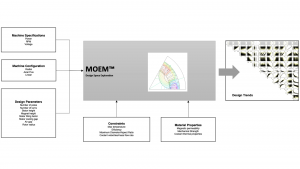
    AML utilises proprietary software called MOEM™ and electrical machine design experience for optimisation of electrical machines. This capability allows AML to perform design studies as a key component of the ‘Customer On-Boarding Process.’ The process flow for achieving an optimised solution begins with no charge first order design study providing the customer with a full design space exploration, generating design trends and the relevant design tradeoffs like, for example, power density versus efficiency, specific power versus aspect ratio, or the impact of frequency on power density and losses.

    It can include analysing the performance of different alloys and the relationship between critical REE content, specific power, and efficiency. Follow-on activities can include electrical machine design and prototyping, depending on magnet manufacturing and the customer’s preference.

    Customers have three options for considering the AML approach for their motors or generators. ‘Plug-and-Play’ retrofit of the rotor with no changes to the stator, as well as full optimisation, including changes to the stator or a ground-up new design.

    Please note, this article will also appear in the seventeenth edition of our quarterly publication.

    [ad_2]

    Source link

  • Australia releases new Prospectus for critical minerals projects

    Australia releases new Prospectus for critical minerals projects

    [ad_1]

    Today, Australia has released the Australian Critical Minerals Prospectus, which showcases 52 high-quality, investment-ready critical minerals projects.

    Critical minerals projects ready for funding include mining, processing and value-adding opportunities across the critical minerals supply chain, all of which would see more jobs for Australians.

    Madeleine King, Australia’s Minister for Resources, stated: “The road to net zero runs through Australia’s resources sector.

    “Australia’s critical minerals are key to the world’s energy transformation. But we need to attract investment to get these minerals out of the ground, process them here, and build the batteries, wind turbines and solar panels required to switch to a lower carbon economy.

    “This Prospectus will help attract the investment we need to build new industries, create jobs, and reduce global emissions.”

    Australia’s critical mineral resources are vital for a net zero economy

    The Albanese Government is committed to transitioning to a net zero economy, and Australia’s critical mineral resources will be vital in the global shift to green technology such as solar panels, electric vehicles, and wind turbines.

    The latest Prospectus showcases projects from the new Critical Minerals List and Australia’s capability to meet rising global demand in critical minerals while building supply chain security.

    Independent research has found that Australia remains the most attractive region globally for mining investment, with its secure economy backed by strong exports, services, and a stable regulatory environment.

    Strong and dedicated investment

    The Australian Government actively supports investment in critical minerals projects, including through the recently expanded $4bn Critical Minerals Facility.

    More information about the Prospectus, including updated figures of Australia’s critical mineral resources, and information on new developments in the market is here: Critical Minerals Prospectus: Australia’s Opportunity to Lead the World.

    [ad_2]

    Source link

  • Terra Balcanica announces Cumavici Ridge geochemical assay results

    Terra Balcanica announces Cumavici Ridge geochemical assay results

    [ad_1]

    Terra Balcanica Resources Corp’s Phase II drill campaign at Cumavici Ridge has confirmed high-grade epithermal vein mineralisation at the Viogor-Zanik project.

    Terra Balcanica, a polymetallic exploration company focusing on large-scale mineral systems in the Balkans of southeastern Europe, has revealed the conclusive geochemical assay results from the Phase II drill campaign at Cumavici Ridge.

    Terra Balcanica holds a 90% interest in the Viogor-Zanik Project in eastern Bosnia and Herzegovina, along with full ownership of the Kaludra and Ceovishte mineral exploration licenses in southern Serbia.

    Emphasising responsible engagement with local communities and stakeholders, the company is dedicated to adhering to Good International Industry Practice (GIIP) and implementing sustainable health, safety, and environmental management practices.

    Highlights of Phase II drill campaign

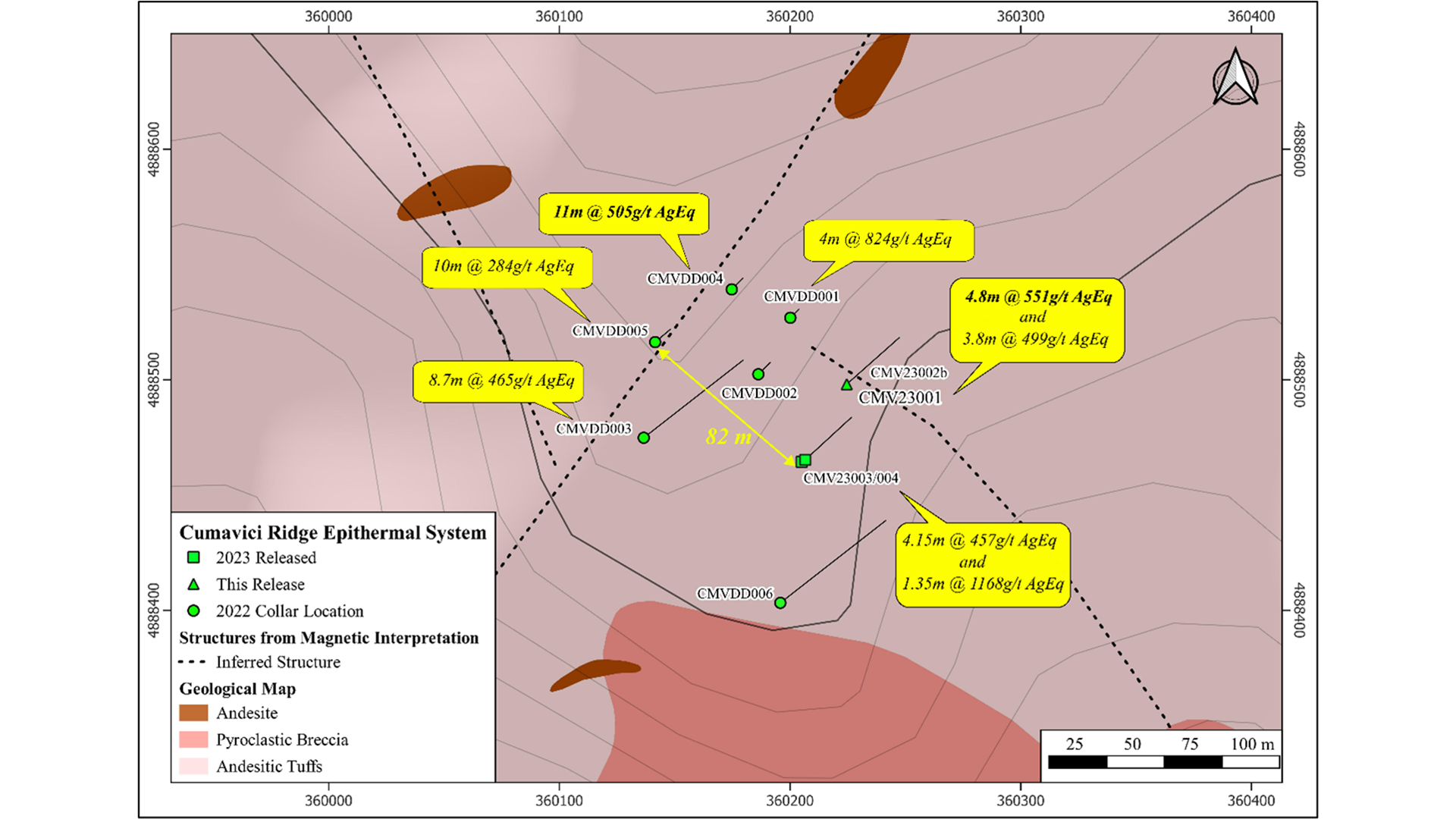
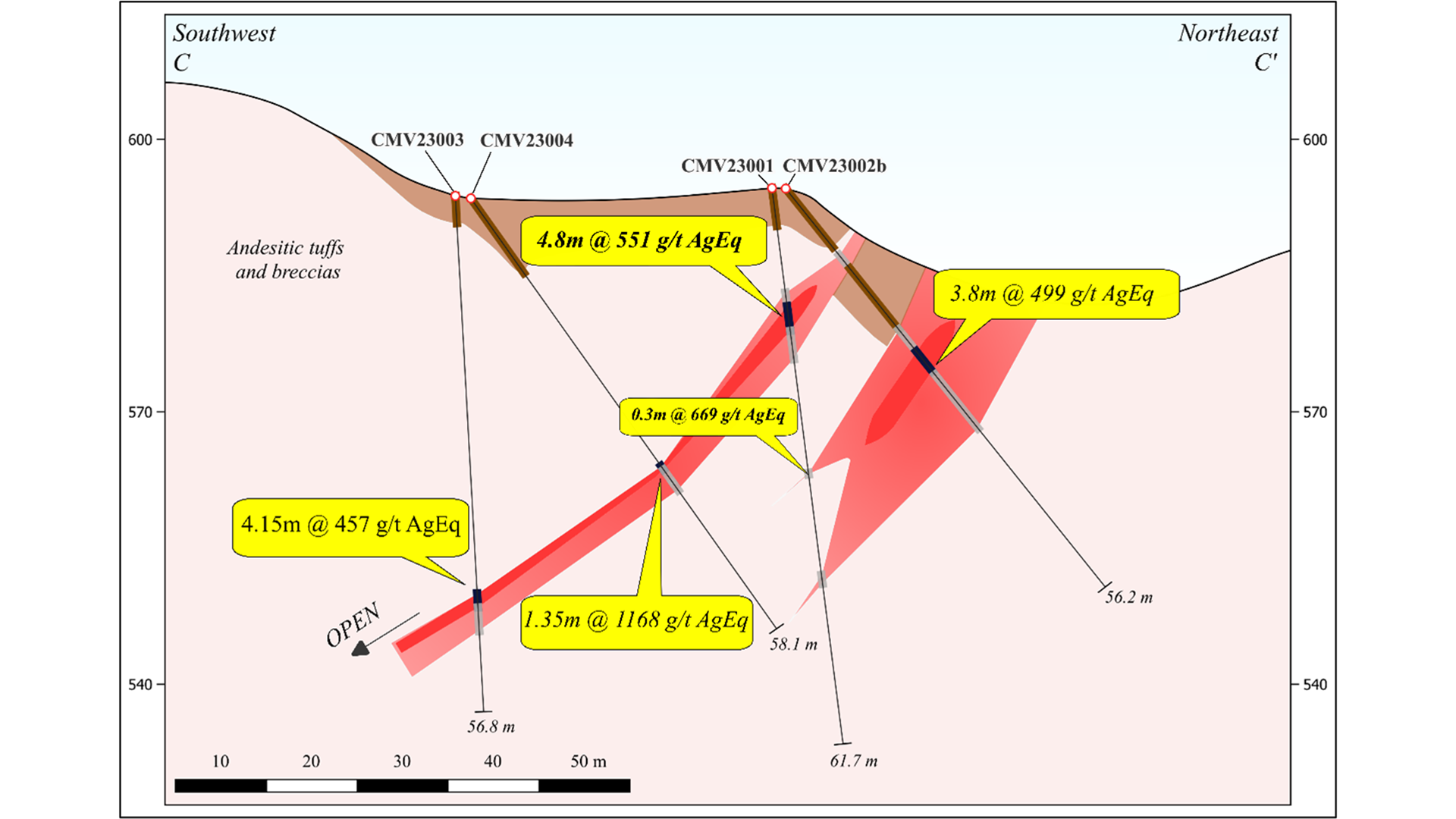
    Drillhole CMV23001 intersected 551 g/t AgEq over 4.8 m from 11 m downhole, with an additional mineralised interval of 669 g/t AgEq over 0.3 m from 31.60 m (Table 1).

    The CMV23001 drillhole is situated on the same platform as CMV23002b, which previously reported 499 g/t AgEq over 3.8 m from 22 m downhole.

    Mineralisation at Cumavici Ridge remains open and untested immediately northwest and down-dip to the southwest, providing ample opportunities for further exploration. These areas will be targeted in the upcoming 2024 Phase III drill programme.

    Additional assay results from the 2023 Phase II drilling programme are forthcoming. This includes findings from four shallow drillholes at the Brezani Au skarn, aiming to extend the previously reported 88.0 m at 0.61 g/t AuEq from the surface.

    Terra Balcanica CEO, Dr Aleksandar Mišković, commented: “Terra keeps on confirming average grades of over 500 g/t Ag Eq and average mineralisation thicknesses of approximately 5-10 m of massive sulphides and associated Ag-Sb-Pb-Zn-Au mineralogy at Cumavici Ridge which is only one of six target zones along the 7.2 km corridor of vein-hosted epithermal mineralisation.

    “This zone is de-risked by drilling shallow, high-grade silver mineralisation at both the Cumavici Ridge and Joseva targets over 2.3 km apart. We are very excited to carry on adding to the existing mineralised horizon at Cumavici Ridge by testing it down dip to SW as well as along strike to NW while expanding the drill campaign to Cumurnica and two other targets along the corridor in 2024.”

    Hole ID From

    (m)

    To

    (m)

    Length

    (m)

    Ag

    (g/t)

    Au

    (g/t)

    Pb

    (%)

    Sb

    (%)

    Zn

    (%)

    AgEq

    (g/t)

    CMV23001 11.00 15.80 4.8 132 1.61 0.57 1.56 1.51 551
    CMV23001 31.60 31.90 0.3 106 0.47 0.28 3.22 1.00 669


    Table 1. Assay results from drillhole CMV23001 of the Phase II drilling campaign. Interval lengths reported are drilled lengths, not true widths. Silver equivalent (“AgEq”) is based on assumed metal prices of US$1,980/oz for gold (Au), US$23/oz for silver (Ag), US$1.15/lb for zinc (Zn), US$5.42/lb for antimony (Sb) and US$1.00/lb for lead (Pb). Assumed metal recoveries of 90% Au, 93% Ag, 95% Sb, 94% Pb and Zn are based on published metallurgical tests on analogous intermediate sulphidation epithermal vein deposits.

    Figure 1. Geological map illustrating the drillholes at the Cumavici Ridge locality. AgEq values are labelled for selected 2022 and 2023 drill intercepts (See Company’s new releases dated 13 November 2023, 27 February 2023, 17 January 2024). Current drilling efforts confirm mineralization over 82 m NW/SE strike length. (WGS84/UTM Zone 34N)

    Hole ID Easting Northing Elevation

    (m)

    Dip Azimuth Depth

    (m)

    Recovery

    (%)

    CMV23001 360223.3 4888497.2 594.63 -85 050 61.7 98.8


    Table 2. Collar locations for reported Phase II drillhole. Coordinates and elevation were taken by local consultant surveyors using a differential GPS unit. (WGS84/UTM Zone 34N).

    Future Cumavici Ridge exploration plans

    The upcoming exploration efforts at Cumavici Ridge will focus on connecting the shallow high-grade interval to previous findings, such as 531 g/t AgEq over 0.75 m and 355 g/t AgEq over 1.10 m, located over 600 m to the northwest.

    Additionally, the shallow, vein-hosted system, which remains untested and open to the southwest down-dip, will be a primary target during the 2024 Phase III drilling.

    Figure 2. Drillhole section through step out drill fence located 42 m SE of the 2022 discovery holes at Cumavici Ridge. Assay intervals reported for CMV23001.

    Hole ID Easting Northing Dip Azimuth Depth (m) Comments
    CMV23005 360232 4888411 -85 050 58.2 Ended before target depth
    CMV23006 359917 4888823 -60 050 82.2 No visible mineralisation
    CMV23008 359865 4888914 -60 050 65.8 No visible mineralisation
    CMV23010 359770 4888949 -50 050 91.5 No visible mineralisation
    CMV23011 360225 4888446 -85 050 50.2 No visible mineralisation
    CMV23012 360245 4888471 -85 050 67.6 No visible mineralisation


    Table 3. Collar locations and comments for the remaining Cumavici Ridge phase II drillholes. Coordinates and elevation were taken using a differential GPS unit. (WGS84/UTM Zone 34N).

    Quality Assurance and Quality Control (QAQC)

    Half core samples were transported by truck to ALS Bor, Serbia, for sample preparation and analysis at the ALS laboratory in Loughrea, Ireland, an ISO/IEC 17025:2017 certified testing facility.

    Sample preparation involved the use of the PREP-31BY method on all core samples, including crushing, rotary splitting, and pulverising. Gold was assayed by 30g fire assay with ICP-AES finish (Au-ICP21), while silver and base metals were analysed through highly oxidising digestion with HNO3, KClO3, and HBr (ASY-ORE), followed by determination using ICP-AES (ME-ICPORE).

    Control samples, including certified reference materials, quarter core field duplicates, and blanks, were inserted at a rate of 9% as part of the company’s quality assurance and quality control programme.

    Terra Balcanica Resources Corp remains committed to advancing its exploration endeavours with a focus on sustainability, community engagement, and rigorous quality control measures.

    [ad_2]

    Source link