Tag: Critical Raw Materials

  • A strategic Canadian critical minerals opportunity

    A strategic Canadian critical minerals opportunity

    [ad_1]

    Mink Ventures Corporation (TSXV:MINK) is a Canadian mineral exploration company exploring for critical minerals (nickel, copper, cobalt) at its Warren and Montcalm projects, in the Timmins Nickel District, Ontario, Canada.

    The assets are strategically located, highly prospective, polymetallic, Canadian critical minerals projects, ideally situated in a top-ranked mining jurisdiction with low geopolitical risk.

    Mink’s portfolio offers significant opportunities for the discovery of critical minerals. The company’s capital structure, with only 18.8 million shares outstanding, enhances its shareholders’ potential to ride the Lasonde curve.

    Location and advantages of Mink’s projects

    Mink’s Montcalm Project covers 40 km2 and is adjacent to Glencore’s former Montcalm Mine. The former mine had a historical production of 3.93 million tonnes of ore grading 1.25% Ni, 0.67% Cu, and 0.051% Co (Ontario Geological Survey, Atkinson, 2010). Mink’s Warren Project is located just 35 km away.

    These projects sit on the western edge of the Porcupine Camp and approximately 50km southwest of Canada Nickel’s Crawford project, which has recently attracted significant investment and attention from mining companies and battery manufacturers seeking an opportunity and a secure Canadian supply of these critical minerals.
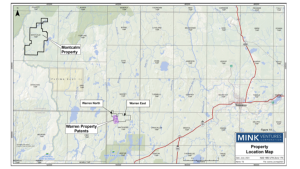
    Fig.1: Mink’s property location map

    Access and infrastructure to Mink’s projects, the adjacent Montcalm Mine, the Timmins Mining Camp, and milling facilities are exceptional. The proximity to infrastructure provides for extremely cost-effective exploration, with the availability of drills, crews, skilled labour force, equipment, and lower mobilisation costs.

    All in diamond drill costs are in the range of approximately CAD$230 dollars per metre. This is extremely reasonable compared with drill programmes conducted outside of established mining areas.

    Further, there is plentiful green, hydropower and all-weather road access to the projects.

    Work on the Warren Project

    Mink is currently working on its recently acquired Warren Nickel Copper Cobalt Project. The Warren property covers 1,010 hectares of land and is located in Whitesides Township, approximately 35km west of Timmins (Fig. 1).

    The Warren patented mining claims have a sporadic exploration history from the late 1920s to the present day, and yet a number of promising historical mineralised Cu Ni zones were outlined. That said, the majority of the exploration completed to date was conducted in a very minimal area of the property and completed over 60 years ago, as the patents were locked up and remained relatively untouched since.
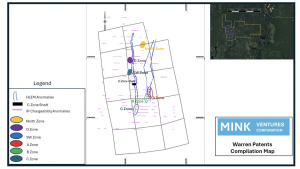
    Fig. 2: Warren compilation map (IP & mineralised zones)

    More recent geophysical surveys from the early 1990s and 2008-2009 outlined a series of untested targets along strike from known mineralisation and/or new targets proximal to known mineralisation.

    With the favourable geology, more recent geophysics, and extensive surface mineralisation, there is a significant opportunity for new Canadian critical mineral discoveries on the patents and across the expanded Warren project, which now includes additional staked claims (Warren East) and acquired claims (Warren North).

    Mink’s work commitment to earn a 100% interest in the patented claims is $300,000. The company made a significant dent in that obligation with its recently completed $150,000 drill programme, half of which was funded by non-dilutive capital received through an Ontario OJEP exploration grant.

    Though significant historical work exists on both the A and B zones, the bulk of the exploration efforts were limited to fairly shallow drilling and/or surface work, and the strike extents remain virtually untested. Consequently, there is a limited understanding of the geometry of these mineralised zones at depth.

    Initial drill programme

    The ‘A’ Zone (Fig. 2,3,4) was the focus of Mink’s initial drill programme. It was selected as a high-priority target for drill testing as a result of a geological data review, a field examination, and a confirmation sampling programme during the summer of 2023. The ‘A’ Zone is exposed in historical trenches over a strike length of 120 metres.
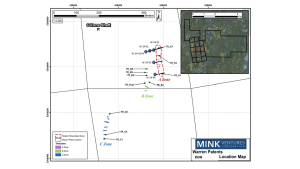
    Fig. 3: Warren trench and drill hole location map

    Mink’s grab samples on the ‘A’ Zone returned assay values ranging from 1.075% to 2.08% Cu. Nickel values ranged from 0.313% to 0.348% Ni. Cobalt values ranged from 0.0389% to 0.0498% Co and silver values of interest ranged from 10.3 ppm to 23.8 ppm Ag. (See press releases: February 5, 2024, September 20, 2023).

    The drill programme consisted of a series of short holes on the A Zone to determine the extent of the mineralisation down plunge, down dip and along strike prior to evaluating the other mineralised zones and numerous untested priority geophysical targets on the property.
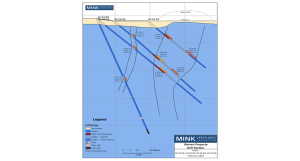
    Fig. 4: ‘A’ Zone drill section: Drill holes W-24-01, W-24-02, W-24-03 and W-24-04

    The programme consisted of six drill holes (507 metres) in the A Zone. Drilling confirmed the geophysical data and intersected broad zones of sulphide mineralisation in all six holes with anomalous nickel, copper and cobalt values associated with disseminated and net textured sulphides.

    Drill hole W-24-01 was drilled to a depth of 60 metres and intersected 0.48% Nickel (Ni), 0.12% Copper (Cu), and 0.07% Cobalt (Co) over 0.9 metres in semi-massive sulphides typical of those found in the ‘A’ Zone surface trenches.
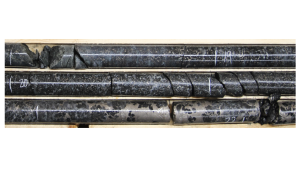
    Drill core from W24-01 0.48%Ni over 0.9m in semi massive to massive sulphides

    Assisting future drill programmes

    Further, in several holes, Mink fortuitously clipped a sulphide zone in the upper portion of the holes which is interpreted to be the extension of the ‘B’ Zone. This valuable information provided some detail of how the A&B zones sit relative to one another which will assist in future drill programmes.

    ‘B’ Zone mineralisation is now known to extend approximately 75 metres beyond the historical trenches, for a total interpreted strike length of 200 metres. The ‘B’ Zone intercepts support the continuity of mineralisation along strike in general, as interpreted by geophysical surveys.

    The geophysical signature for both the ‘A’ and ‘B’ Zones have a projected strike length of approximately 700 metres. Minimal drilling has been conducted on the ‘B’ Zone.

    Two historical bulk samples on the ‘B’ Zone returned 0.21% Cu, 0.96% Ni, 0.11% Co and 0.10% Zinc (Zn), and a second bulk sample returned 2.83% Cu, 0.58% Ni, 0.10 Co and 0.13 Zn. Reference: Technical Report for Western Troy Capital Resources on the Warren Property (W. Hawkins P. Eng, 2021).

    Surface sampling on the ‘A’ Zone and the recent drill programme have shown that the best values to date are associated with massive to semi-massive sulphides.

    The current interpretation is that the initial ‘A’ Zone massive sulphide may have formed as a typical sulphide lens and then been broken apart by a later pulse of gabbro. This is based on a number of features seen in the drill core, the extent of massive and semi-massive sulphides, and Ni Cu Co values seen in the ‘A’ Zone trenches.

    Further drilling is required to ascertain the extent of potential massive sulphide zones down the plunge and along the strike, as the ‘A’ Zone has only been tested by very shallow drilling (65 metres vertical) over a short strike length. The ‘A’ Zone geophysics suggests a strike length of approximately 700 metres.
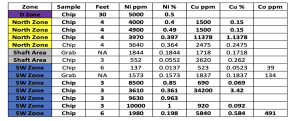
    Select historical sample data – see Fig. 2 compilation map
    Reference: Ontario Resident Geologists Office Timmins Ontario; Maxmin, Magnetometer and VLF Surveys Evaluation Report, Whitesides and Massey Twp. Claims (C Mackenzie Consulting Geologist, 1990)

    Evaluating high-priority zones

    The Warren project contains numerous historical, trenched surface zones, with significant Cu and Ni values which are associated with coincident geophysical responses including magnetics, electromagnetic (EM) and induced polarisation (IP) anomalies over long strike lengths. The majority of these occurrences have had little or no drilling.

    At this time, it is thought that the ‘Shaft Area’, along with the ‘D’ Zone, and ‘SW’ Zone are extensions of the ‘C’ Zone. This system has had very minimal exploration along a strike length of approximately 1.5 km from geophysical data.

    Mink plans to evaluate a number of these high-priority zones in order to outline a follow-up drill programme. The initial prospecting work will be conducted in the early spring/summer in order to prioritise targets for future drill testing in 2024.

    The project has only gotten more compelling with the results of this programme. Given the extent of surface mineralisation on the property over seven historical mineralised zones, with significant untested strike lengths, the data is captivating and more drilling is warranted. The team looks forward to reporting its progress as the geological puzzle unfolds.

    Warren property geology

    The Warren property, one of Mink’s Canadian critical minerals projects, is hosted within the Kamiskotia Gabbro Complex (KGC) and is thought to be broadly equivalent to the Montcalm Gabbro Complex (MGC) but separated by a granitic arch.

    The MGC hosts the former Montcalm Mine, which produced approximately 3.93 million tonnes grading 1.25% Ni, 0.67% Cu and 0.05% Co (OGS, Atkinson, B, 2010).

    According to an estimate in the Ontario Mineral Inventory Record MD 142B09NE00007, dated January 2009, the mine hosted Mineral Reserves of 2,800,000 tonnes grading 1.26% Ni, 0.59 Cu, and 0.05% Co. *The reserve calculation is historical in nature and is not NI43-101 compliant; it is not to be relied upon and is reported as a historical statement only. 

    Gabbro complexes such as MGC and KGC are known to be prospective for magmatic nickel copper sulphide deposition, as demonstrated by the Montcalm Mine located within the MGC. The Warren property complements Mink’s Montcalm property due to the distinctly similar prospective geological environments found in the MGC and the KGC, as well as the presence of significant Cu Ni zones on the Warren Property.

    Adhering to ESG measures

    Environment

    Mink complies with all environmental and permitting requirements of the province. The mineralised zones at Warren are present on patented mining claims which means that the company controls the surface rights and mineral rights. Early-stage exploration efforts such as diamond drilling do not require permitting when working on patented claims.

    However, the same standard of care with respect to the environment is taken on Mink’s patented claims, and all activities conducted adhere to or supersede the permit guidelines.

    Social

    Mink is led by a female CEO, and the company has nearly equal representation. Additionally, the company is operating in a part of Northern Ontario, where there is a clear and articulate process to build solid relationships and work side by side with local communities and First Nations.

    Governance

    The company operates with high standards and conduct and has excellent governance due to the experienced directors and officers with track records of success in the industry.

    [ad_2]

    Source link

  • Critical Raw Materials Act formally adopted by the EU

    Critical Raw Materials Act formally adopted by the EU

    [ad_1]

    The European Council has reached a significant milestone today by adopting the Critical Raw Materials Act.

    The Critical Raw Materials Act aims to establish a robust framework ensuring a secure and sustainable supply of critical raw materials crucial for various sectors, including the green and digital transitions, as well as defence and space industries.

    Once signed by the President of the European Parliament and the President of the Council, the regulation will be published in the Official Journal of the European Union.

    It will enter into force on the twentieth day following its publication, signalling a significant stride towards securing the EU’s access to critical raw materials.

    Jo Brouns, Flemish Minister for Economy, Innovation, Work, Social Economy and Agriculture, explained the significance of the act: “With the Critical Raw Materials Act, we want to turn the challenges of our dependencies into strategic autonomy and an opportunity for our economy.

    “This legislative act will boost our mining sector, enhance our recycling and processing capacities, create local and good quality jobs, and ensure that our industry is up and ready for the digital and green transitions.”

    Importance of raw materials supply chains for the EU

    The EU’s economic wellbeing hinges on reliable access to raw materials. These materials form the foundation of countless goods and technologies, from everyday items to renewable energy systems. The EU faces a growing concern: securing a steady supply of certain critical raw materials.

    Critical raw materials are essential for the EU’s economy but are at risk of supply disruptions. This can be due to limited sources or heavy reliance on a single supplier. To address this, the EU is prioritising resilient raw material supply chains.

    © shutterstock/Dancing_Man

    One key reason is the green transition. As the EU moves away from fossil fuels, demand for critical raw materials like lithium for batteries will soar. A secure supply is crucial for building a clean energy infrastructure and meeting climate goals.

    The EU’s Critical Raw Materials Act reflects this urgency. It aims to diversify supply sources, reduce reliance on single suppliers, and promote recycling to lessen dependence on virgin materials.

    Clear guidelines and benchmarks

    One of the key features of the Critical Raw Materials Act is the introduction of clear deadlines for permit procedures concerning EU extraction projects. Additionally, the Act allows the Commission and Member States to designate projects strategically, mandates supply-chain risk assessments, and necessitates national exploration plans from member states.

    Moreover, ambitious benchmarks have been set to guarantee the EU’s access to critical and strategic raw materials, focusing on extraction, processing, recycling, and diversification of import sources.

    Identification of critical materials

    The Critical Raw Materials Act identifies two crucial lists of materials: 34 critical and 17 strategic. These materials play pivotal roles in enabling crucial transitions and industries.

    The act also establishes three benchmarks for the EU’s annual consumption of raw materials: 10% from local extraction, 40% to be processed within the EU, and 25% to originate from recycled materials.

    To expedite the development of strategic projects, member states are tasked with creating single points of contact at relevant administrative levels throughout the critical raw materials value chain.

    Extraction projects are expected to receive permits within a maximum period of 27 months, while recycling and processing projects should obtain permits within 15 months, with limited exceptions aimed at ensuring community engagement and proper environmental assessments.

    Supply chain risk assessment

    Large companies manufacturing strategic technologies, such as batteries, hydrogen, or renewable generators, will be required to conduct risk assessments of their supply chains to identify vulnerabilities, enhancing resilience in critical sectors.

    As the EU embraces the Critical Raw Materials Act, it sets a precedent for proactive resource management and resilience-building in the face of evolving global dynamics.

    By fostering innovation, promoting sustainable practices, and diversifying supply chains, the EU aims to safeguard its economic prosperity and advance its transition towards a greener future.

    [ad_2]

    Source link

  • Transforming mining waste into waste heat recovery materials

    Transforming mining waste into waste heat recovery materials

    [ad_1]

    The START project aims to produce thermoelectric devices for waste heat recovery applications from secondary mineral resources (mining waste).

    The START project is co-funded by the European Union (EU), Grant Agreement No 101058632, via its Horizon Europe programme, under the topic ‘Building innovative value chains from raw materials to sustainable products’ (HORIZON-CL4-2021-RESILIENCE-01-07).

    It is a breakthrough project that aims to use secondary resources from mining waste and tailings to develop sustainable tellurium-free thermoelectric (TE) devices.

    START approach and concept: Recovering heat from mining waste

    The ultimate goal is to build an innovation ecosystem in the EU related to the production of TE devices with the highest economic efficiency suitable for use in waste heat recovery systems.

    This represents an opportunity to efficiently use the EU’s discarded secondary resources, reduce its waste and dependency on third countries, and offer a competitive solution for the sustainable development of renewable energy ecosystems using TE systems, in line with the strategies outlined in the European Green Deal and the EU Action Plans on Critical Raw Materials and Circular Economy.

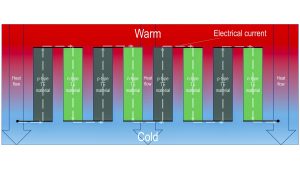
    A TE device is a solid-state energy converter made from several TE junctions electrically connected in series that consist of n- and p-type TE semiconductor materials (Fig. 1). It converts thermal energy into electrical energy. It possesses unique attributes: No moving parts, no maintenance, quiet operation, and absence of production of environmentally deleterious mining waste.

    mining waste, start project
    Fig. 1: Schematic illustration of a thermoelectric device

    Currently, most commercial TE devices use bismuth telluride (BiTe) or lead telluride (PbTe) as TE materials, which depend on the availability and price of tellurium. Considering, simultaneously, that China is responsible for around 60% of the world’s tellurium production and the restrictive export policies it has recently adopted about certain raw materials, this dependence on tellurium-based materials becomes a huge disadvantage that hinders the large-scale implementation of TE technology in Europe.

    To overcome this issue, START is proposing a solution based on the production of p-type materials that incorporate abundant sulphide minerals not currently in use, the tetrahedrite-tennantite mineral series, a copper antimony sulfosalt mineral, with generic formula (Cu, Fe)12(Sb, As)4S13, which does not contain tellurium in its composition. These minerals are being collected in the respective European countries of the Geological Survey institutions included in
    the consortium.

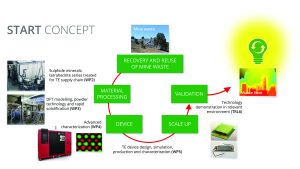
    The general concept of the START project is based on a ‘waste material-waste heat to power’ methodology (Fig. 2), which is the genesis of a completely new value chain linking secure European mineral resources and energy production. At the same time, it also contributes to the advancement of scientific knowledge and technological innovation in the field of thermoelectrics, as well as promoting a decarbonised society.

    mining waste
    Fig. 2: START project concept based on ‘waste material-waste heat to power’ methodology

    START outcomes

    START will have many outcomes. By creating an innovative, flexible, scalable, adaptable mineral-derived value chain for TE devices based on raw materials that are readily available in Europe, START will create a new rapid-growth commercial ecosystem that will attract new stakeholders exploiting market opportunities for replication and market development.

    In fact, this will be a new market opportunity for European mineral resources, converting discarded waste secondary sulphide materials available in Europe into useful and valuable mineral resources, boosting EU competitiveness on raw materials through the recycling of such mining waste, fostering the transition to a greener society and economy through eco-innovation, and promoting energy security.

    START impact

    START strengthens and expands the European raw materials supply sector by replacing a key component of thermoelectric (TE) devices with new materials sourced within the EU. This will substantially contribute to the main expected impact of Cluster 4 (‘Industrial leadership and increased autonomy in key strategic value chains’) of the Horizon Europe Programme. It is then expected to impact several areas significantly, as explained below.

    For the environment, START plans to reprocess sulphide-containing mining residues, thereby reducing the environmental impact of mining activities by remediating potential acid mine drainage while preventing the loss of valuable resources currently ending up in mine tailings.

    START will address the sustainable supply of raw materials, securing a reliable supply of raw materials for green technologies and, more specifically, for TE applications, as it aims to replace the current TE materials (BiTe and PbTe) and produce tellurium-free TE devices based on tetrahedrite. This mineral in START is being sourced from European mining sites.

    Regarding materials and technology innovation, START is using scalable and cost-effective methods for producing high-quality p-type tetrahedrite powder materials that will be assembled into the TE devices. The production of tetrahedrite powders by High-Energy Ball Milling has already been scaled up to pre-pilot capacity. Innovations in assembling TE modules for demonstration are also being adopted.

    The goal of promoting the development of a sustainable society is pursued by several dissemination and communication activities about the project aims and topics to inform about the benefits and potential of the TE technology and the importance of ensuring secure, sustainable and competitive supply chains for green technologies in Europe. The project has also started a benchmark analysis of life cycle assessment (LCA) and life cycle costing (LCC) studies to evaluate the environmental and economic impacts of its TE devices compared to conventional ones.

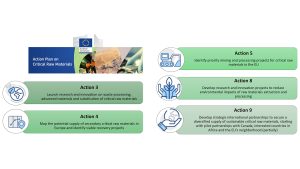
    Thus, the START project also contributes to the UN Sustainable Development Goals 7 (affordable and clean energy), 9 (industry, innovation and infrastructure) and 11 (sustainable cities and communities) and to the implementation of the actions of the EU Action Plan on Critical Raw Materials outlined in Fig. 3.

    start project
    Fig. 3: Actions of the EU Action Plan on Critical Raw Materials to which START contributes

    START main achievements during the first 15 months

    In accordance with the specific objectives planned, START already obtained some important results.

    Concerning the objective of developing a resilient and sustainable raw materials supply chain for the TE technology, first of all, donor sites containing mineralogically suitable sulphide minerals for producing the p-type semiconductor thermoelement were identified in various historical European mines, based on: The volume of sulphides; the presence and content of tetrahedrite; and accessibility and logistical issues. Sampling protocol methodologies have been established that follow a scientifically sound approach to sample collection and subsequent treatment.

    Based on this, several hundred kilogrammes of discarded mining waste sulphides were collected. Tetrahedrite-rich concentrates from these minerals were successfully processed via High Energy Ball Milling (HEBM) in a pre-pilot scale (300g batches) to produce kilogramme-scale batches of mineral-derived tetrahedrite p-type powder materials incorporating different amounts of synthetic material to adjust the composition. Spark Plasma Sintering subsequently achieves the production of mineral-derived tetrahedrite p-type thermoelements. Work is progressing to optimise the composition, performance, and maximum amount of mineral concentrate that can be added to the initial mixture simultaneously. At the same time, a compatible n-type TE material was identified.

    Based on simulated performances, two applications for the TE devices have been defined: Combined heat and power (CHP) and low-grade waste heat from heavy industry. Work is underway to assemble the first TE device of the START project.

    To define the commercial ecosystem and business environment, a comprehensive analysis towards benchmarking the life cycle assessment (LCA) and life cycle costing (LCC) studies to measure the environmental and economic performance of the TE devices has started. The first component of the prospective exercise, i.e., focus groups, was initiated to assess the market perspective and social acceptance. A first-round Delphi Survey was prepared.

    Dissemination/communication activities were carried out, including the publication of a biannual project newsletter entitled ‘RECOVER-REFORM-REUSE for a Sustainable Future’ (available on START’s website), the organisation of three free webinars on project activities, whose videos are accessible on START’s YouTube channel (more are being organised in 2024), and the multilingual comic storyboard ‘Starty explains START’, where Starty, a robot character, addresses and explains the project topics in an easily understandable way.

    START consortium

    start project
    Fig. 4: The START consortium

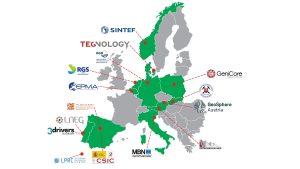
    The START project is co-ordinated by LNEG, a Portuguese public research and development institution. It brings together a total of 15 partners (Fig. 4) from ten EU countries and one associated country, including: Six research organisations with strong knowledge of geology, materials science and renewable energies; seven SMEs that cover the entire supply chain from production to exploitation and ecological footprint assessment; and two non-profit international associations with a wide network of partners and stakeholders.

    Co-Funded by the European Union. Views and opinions expressed are however those of the author(s) only and do not necessarily reflect those of the European Union or the European Health and Digital Executive Agency. Neither the European Union nor the granting authority can be held responsible for them.

    Please note, this article will also appear in the eighteenth edition of our quarterly publication.

    [ad_2]

    Source link

  • Pursuing cathode active material purity in EV battery manufacturing

    Pursuing cathode active material purity in EV battery manufacturing

    [ad_1]

    Anoop Suvarna, Global Battery Materials Manager for Energy Storage at Pall Corporation, discusses how cathode active material filtration technology optimises the efficiency of lithium batteries for use in EV manufacturing.

    A global drive to reduce emissions and encourage more sustainable transportation is prompting advancements in EV manufacturing. Mandates in some territories for manufacturers to produce higher percentages of EVs and state-backed exports from other countries are fuelling competition.

    Meanwhile, research on variable battery materials and debates on vehicle size and charging infrastructure are leading to new avenues being explored.

    For most auto manufacturers, lithium-ion batteries remain the best option to power their vehicles due to their energy capacity, fast charging, low discharge rate and lifespan.

    Yet astute battery producers know they must develop units that operate more efficiently than their rivals to be preferred suppliers. Each battery’s four functional components – the cathode, anode, separator, and electrolyte – contribute to its efficiency.

    The formation of the cathode – or positive electrode – is the most complex process in manufacturing EV batteries, and its composition via the cathode active materials can account for around 40% of the battery’s cost. This elemental part of the technology also significantly affects the battery’s performance.

    These materials must be as pure as possible to allow the battery to operate at an optimal level. Contaminants diminish performance and must be eliminated.

    The key to cathode active materials

    Cathode active materials (CAM) are typically composed of metal oxides that are ground and mixed into a water-based slurry and then coated onto an aluminium foil, which is then compressed (known as ‘calendaring’) to create the cathode electrode.

    The most common cathode materials used in lithium-ion batteries include lithium cobalt oxide, lithium manganese oxide, lithium iron phosphate, and lithium nickel manganese cobalt oxide.

    CAM manufacturers face several challenges due to the presence of other chemicals and materials that need to be removed and the requirement to meet specifications on particle size and levels of contaminants. They must also preserve the structure of crystals and control their surface area and porosity.

    This is where high-performance filtration systems are needed to achieve the requisite levels of purity. These systems remove undissolved salts, iron contaminants, and larger particles from the precipitated mix at various stages in the process.

    A range of coarse metallic strainers, 0.3-5µm depth filters, and regenerable ceramic filters can achieve liquid, chemical and gas purity levels, making the final cathode electrode more efficient and stable.

    Contamination in the cathode active material slurry mix will reduce the electrode’s effectiveness, resulting in lower battery performance and shorter discharge life.

    With increased cathode active material purity, manufacturers can maximise performance, but only if other complementary factors, such as electrolyte cleanliness and polymeric separator materials, are also of a high standard.

    The processes for creating the anode are similar, but graphite is mixed with a binder (often polyvinylidene fluoride) and a solvent such as N-methyl-2-pyrrolidone. This anode slurry is coated onto copper foil.

    Preventing corrosion from the electrolyte

    The electrolyte’s cleanliness is necessary to transfer ions between the anode and cathode. Lithium salts and organic carbonate solutions, such as ethylene carbonate or dimethyl carbonate, must be pure enough to enable ionic conductivity, chemical and electrochemical stability, and thermal stability.

    Controlling water content is also essential. Moisture in the electrolytes can result in hydrofluoric acid (HF) from fluoride lithium salts. As HF can corrode certain metals – such as those in internal battery components – it is critical to prevent moisture from encountering the electrolytes.

    Due to the high degree of acidity of the electrolytes, chemically resistant filter materials and fluoropolymer-coated stainless steel filter vessels are recommended. Filters with fine particulate removal ratings (0.45m-2m) are appropriate to achieve high levels of electrolyte cleanliness.

    Quality control to meet EV battery manufacturing demand

    Batteries require separators to prevent short circuits and ensure safe operation. Several steps are involved in producing them, with challenges to ensure cleanliness, uniformity, robustness, and porosity for ion transportation.

    ev battery manufacturing, cathode active material
    © shutterstock/IM Imagery

    To achieve quality control, manufacturers must consider the homogeneity and purity of cathode active materials, such as plasticines and additives, temperature and thickness control, and constancy of production speed.

    Polymer melt filter technology ensures chemical companies can supply high-quality polymeric separators to EV battery manufacturers. Purification steps include filtration of the molten polymer before film formation and filtration of various other additives and coatings used in the process.

    As the production of lithium-ion batteries grows to meet the global demands of EV battery manufacturing, battery suppliers must consider how to optimise their place in the value chain. A battery’s performance has a major impact on a vehicle’s overall performance, safety, durability, and range.

    Removing contaminants is vital in achieving purity of the various materials, so filtration will be crucial in producing batteries that will power the world’s growing fleets of electric vehicles.

    [ad_2]

    Source link
  • Unlocking Australia’s critical minerals potential

    Unlocking Australia’s critical minerals potential

    [ad_1]

    Shannon O’Rourke, CEO of the Future Battery Industries Co-operative Research Centre, explores the significance of Australia’s Critical Minerals Prospectus in driving investment and fostering innovation in the nation’s critical minerals sector

    Australia stands at the forefront of the global critical minerals landscape, boasting abundant geological resources and a world-class mining sector.

    The country recently released its 2024 Critical Minerals Prospectus, inviting both domestic and foreign investment in its critical industries.

    We asked Shannon O’Rourke, CEO of the Future Battery Industries Co-operative Research Centre (FBI CRC), about the prospectus’s role in shaping the trajectory of Australia’s critical minerals sector.

    What is the significance of Australia’s Critical Minerals Prospectus in the national and global context?

    Australia has world-leading geological resources across the full breadth of critical minerals. Our mining sector is world-class, and Australia’s resource, logistics, and energy advantages make it an attractive investment destination.

    The prospectus sends a signal that Australia is open for business, and that it is looking for inward investment in these critical industries.

    How does the prospectus aim to promote investment and innovation in the critical minerals sector, and what strategies are outlined to achieve this goal?

    Austrade is Australia’s global investment and trade agency, and their prospectus highlights the breadth of both mining and mineral processing opportunities available to investors.

    The prospectus is available in multiple languages to make it easier to consume for foreign investors.

    The Commonwealth Government offers a range of financing vehicles, including the National Reconstruction Fund, Northern Australia Infrastructure Fund, Export Finance Australia’s Critical Minerals Facility; as well as some not mentioned in the prospectus, including the Clean Energy Finance Corporation and ARENA, who can offer syndicated finance and supporting grants to help deliver these investments.

    Can you provide an overview of the FBI CRC’s involvement in Australia’s Critical Minerals Prospectus?

    The prospectus curates Australia’s most compelling upstream and midstream investments. Compared with previous editions, the prospectus has a broader focus. Not just mines, but also midstream processing and manufacturing opportunities.

    We were involved through our contribution to Australia’s Critical Minerals Strategy.  Our Charging Ahead report revealed the strategic and economic benefits to Australia to undertake more midstream processing of its critical minerals resources.

    Our map of Australia’s battery ecosystem is contained in the report.

    How does the FBI CRC contribute to identifying and prioritising critical minerals for Australia’s economic growth and national security?

    The FBI CRC was one of many organisations who contributed to the update of Australia’s critical minerals list.

    The changes made to the list in 2023 enable Australia to better align its critical mineral efforts with trading partner needs in the current geopolitical environment.

    What are some of the key challenges faced by Australia’s critical minerals sector, and how is the FBI CRC working to address these challenges?

    Critical mineral processing is a competitive industry, and the established technologies have room for improvement. Through investment in capability and technology, Australia can sharpen its competitive edge.

    The FBI CRC has developed new capabilities in advanced materials and improved mineral processing technologies in lithium, nickel, cobalt, and vanadium. Our work in the assessment and use of mine wastes is helping to accelerate environmental approvals for upstream developments. Our work is building a domestic capability and a capable workforce.

    Looking ahead, what are the FBI CRC’s strategic priorities and objectives in advancing the critical minerals industry, and how do you envision the future trajectory of the sector?

    Our mission is to build a vibrant battery industry for Australia. Our immediate priority is to deliver new common user facilities which will support continued industry growth, in mining, refining, materials, and battery manufacturing.

    Despite short term price pressure, we see a bright long term future. Global clean energy spending is up 17%, and EV sales are up 35% year on year. It takes ten years to bring on new mines versus two to three years for mid and downstream investments, and the volumes will need to be supplied from somewhere. Watch this space.

    [ad_2]

    Source link

  • Ensuring sustainability in Europe’s critical materials industry

    Ensuring sustainability in Europe’s critical materials industry

    [ad_1]

    EIT RawMaterials is collaborating with policymakers and industry to foster innovation, establish policies, and develop a clear roadmap that enables Europe’s critical materials industry to meet its sustainable goals.

    As Europe races towards its 2050 climate neutrality target, a significant hurdle stands in its path: Access to the critical raw materials that power key green technologies, such as solar panels, wind turbines, and electric vehicles.

    Currently, Europe is largely dependent on just a handful of countries – including China – for these essential materials and, as a result, is reliant on risk-exposed and often untransparent supply chains, which pose potential challenges to the region’s economic and regulatory objectives.

    So EIT RawMaterials, the world’s leading innovation community in the raw materials sector, is on a mission to bolster Europe’s transition to a sustainable economy. Its focus is securing a sustainable supply of raw materials, promoting a circular economy, and driving innovation, education, and entrepreneurship.

    EIT RawMaterials also manages the European Raw Materials Alliance (ERMA), a network of over 750 European and international partners whose mission is to ensure the sustainable competitiveness of the European raw materials sector along the entire value chain by driving innovation, education, and entrepreneurship.

    Strengthening Europe’s competitive edge: ERMA’s action plans

    ERMA has an important role to play in securing financing to help boost Europe’s competitiveness in the international supply chain.

    Alongside encouraging investment in the sector and rigorously evaluating raw materials business proposals before presenting them to potential investors, it conducts studies, makes policy suggestions for the sector, and cooperates closely with the EU to secure international partnerships.

    Since its formation in 2020, ERMA has released two Action Plans tailored to specific market fields in collaboration with industry partners.

    First was the Rare Earth Magnets and Motors Action Plan: A European Call for Action from 2021, which outlines current and projected European demand for rare earth elements and steps that should be taken to secure their supply.

    The action plan has already resulted in a total of 14 de-risked and bankable projects, estimated to supply around 20% of Europe’s permanent magnets needs by 2030 from almost 0% today.

    ERMA’s most recent action plan – The European Call for Action on Energy Storage and Conversion – was launched in May 2023 and seeks to strengthen Europe’s position in the energy storage and conversion sector.

    As green technologies gain wider adoption, the significance of energy storage and conversion is becoming increasingly important due to the intermittent nature of energy sources like wind and solar power. However, ensuring a consistent energy supply demands robust storage and conversion systems, which, in turn, need substantial quantities of raw materials.

    The roadmap aims to quantify the enormous investments needed to secure the supply of these raw materials, and it focuses on four primary areas:

    • Materials in solar energy;
    • Battery materials;
    • Fuel cells and electrolysers; and
    • Alternative energy storage and conversion.

    The specific recommendations outlined in the roadmap for each of the four strategic areas include key actions to promote societal acceptance of mining projects, securing raw material supply by opening new mines, increasing recycling capacity, diversifying raw material supply through diplomacy, enhancing transparency and sustainability in solar supply chains, developing a skilled workforce, and implementing digital tools to monitor material flows using Industry 4.0 technologies.

    Crucially, it offers a comprehensive strategy covering the entire mineral value chain, from exploration to processing, and identifies investment opportunities exceeding €15bn, potentially elevating the EU’s self-reliance on critical materials by 2030.

    Support from EU policy

    The roadmap goes beyond outlining measures to secure raw materials supply into strategies for making the European raw materials sector more competitive.

    For example, it points out that the EU could enhance competitiveness in battery materials production by harmonising standards to showcase sustainability as a unique selling point, and by introducing fit-for-purpose mining standards linked to the Sustainable Development Goals.

    It also suggests that a smart mix of trade measures would help establish a level playing field and increase the likelihood of attracting investment cases for Europe.

    According to the paper, the European Commission and Member States could align import duties, establish clear requirements for battery second life, including recycling and traceability measures, and implement strict control and monitoring of end-of-life batteries and exports for recycling.

    Environmental responsibility: Reducing the impact of mining

    One of the more controversial action areas identified in the Roadmap is the need to expand mining operations within Europe whilst maintaining strict ESG standards.

    To support this, the proposal advocates for the creation of a European Raw Materials Fund, offering support across all project phases, with funding derived from a combination of EU and member state policies.

    europe's critical materials industry
    © shutterstock/ SkazovD

    In terms of European-wide policy initiatives, the roadmap emphasises the need to integrate mining, refining, and recycling activities into the Sustainable Finance Taxonomy, aligning them with the climate goals outlined in the European Green Deal and establishing common sustainability criteria for mining operations.

    Innovative technologies to enhance mining and processing capabilities

    Innovation is key to reshaping the mining industry’s image from an antiquated, polluting sector to a modern and environmentally conscious one, and EIT RawMaterials is at the forefront of driving this transformation.

    Many of EIT RawMaterials’ partners are actively developing new safety and technological solutions aimed at enhancing mining conditions. One such partner, Worldsensing, from Spain, has successfully created a risk management system that improves the environmental impact of existing mining processes and mitigates operational risks associated with Tailings Storage Facilities.

    In the field of mining waste utilisation, two significant projects, SCALE-UP and VALORE, have made substantial progress. Currently, they are in the process of scaling up the utilisation of more than 700,000 tons of bauxite residues annually. These efforts include extracting valuable metals such as Scandium and Vanadium from these residues.

    EIT RawMaterials collaborates with top industry companies in northern Europe, like Epiroc, Sandvik, Metso, and Outotec, to enhance the use of advanced mining equipment and processing plants. They also work with firms like Keliber, the Finnish Minerals Group (FMG), and Umicore to create a sustainable EV battery supply chain in Europe, using advanced technologies for responsible resource management.

    In Africa, they have organised three open innovation challenges in collaboration with ERAMET over the past three years, focusing on Responsible Mining, Worker Safety, and Water Resources Management.

    In the ‘Safety First’ challenge of 2022, a solution was developed that utilises AI and data processing to automate asset maintenance and detect anomalies, reducing railway incidents.

    The Eramet Responsible Mining Innovation Challenge was won by the startup Bind-X, which introduced an innovative solution to improve dust emission control at the Group’s mining sites by replacing the traditional use of water. During the trial of this innovative method at a mine in Senegal, they managed to reduce water usage by 85% and cut CO2 emissions by 94%.

    Improving resource efficiency and circularity

    With the recent approval of the Critical Raw Materials Act, Europe has set an ambitious target of recycling at least 25% of the EU’s annual raw materials consumption through domestic recycling.

    EIT RawMaterials aims to enhance resource efficiency and advance circularity through a range of projects and initiatives.

    Notable initiatives include the ReLieVe project, which has delivered a closed-loop industrial process for recycling Li-ion batteries from electric vehicles, and the Charamba project, which uses artificial intelligence-powered technology to streamline the handling of complex waste streams.

    EIT RawMaterials also addresses specific challenges related to critical raw materials such as Vanadium and Gallium, which are vital – amongst other things – for semiconductor manufacturing. To reduce dependency on imports, the VALORE project aims to recover Vanadium and Gallium as by-products from an alumina refinery.

    In the field of battery technology, EIT RawMaterials supports innovations like E-Magy, which produces nano-porous micron-sized silicon material for batteries. This material increases battery energy density by 40%, extending the driving range and enabling faster charging for electric vehicles.

    Nurturing skills for future challenges

    Supporting education is crucial for fortifying the raw materials sector as it addresses technological and innovation needs while also nurturing essential skills. This is particularly important as projections indicate that by 2030, the raw materials sector will need 1.2 million skilled professionals.

    Education is a cornerstone for EIT RawMaterials, which collaborates with over 300 universities and offers Master’s and PhD Labelled programmes to train future industry leaders. They have expanded raw materials education to schools and led projects like the Deep Tech Talent Initiative, with the ambitious goal of training one million students by 2025.

    They also provide education courses for current industry professionals, covering topics such as Circular Economy and Social Licence to Operate.

    They also tackle gender imbalances in STEM fields through initiatives like the GirlsGoCircular programme, aiming to engage more young women in geosciences and related disciplines.

    In 2024, EIT RawMaterials is set to launch Europe’s first Raw Materials Academy, and by the end of 2024, EIT RawMaterials expects significant progress expects to have trained over 80,000 participants in innovation and entrepreneurship and provided mentoring for more than 25,000 people.

    Promoting international cooperation

    As the examples of innovation development projects in Africa demonstrate, EIT RawMaterials is also very active in promoting international cooperation within the raw materials sector.

    EIT RawMaterials has a strong presence across Europe through 14 Innovation Hubs, which are strategically positioned in regional areas to drive innovation, education, and entrepreneurship within the raw materials sector.

    In January, EIT RawMaterials opened the Regional Innovation Centre in Albania, which will serve as a hub for stakeholders in Albania’s raw materials sector and aims to forge partnerships between EIT RawMaterials and the Albanian innovation ecosystem, as well as the wider Balkan region.

    EIT RawMaterials also collaborates with the European Commission to strengthen relationships with governments and markets such as Ukraine, Greenland, Africa, Australia, Kazakhstan, Latin America, and Canada. Attracting international companies and fostering cooperative relationships is essential to their mission.

    Please note, this article will also appear in the seventeenth edition of our quarterly publication.

    [ad_2]

    Source link

  • Navigating Australia’s critical minerals landscape

    Navigating Australia’s critical minerals landscape

    [ad_1]

    Dr Chris Vernon, Critical Minerals Lead Expert at CSIRO, discusses the promise of Australia’s critical minerals to propel the country towards a resilient and sustainable future.

    Australia’s abundance of critical minerals holds a promising opportunity for the country’s growth.

    The sector thrives on innovation and collaboration, positioning the nation for sustained economic prosperity and strategic resilience.

    At the forefront of groundbreaking discoveries and technological advancements is Australia’s National Science Agency, CSIRO.

    From pioneering research in mineral processing to developing cutting-edge technologies for renewable energy, CSIRO continues to push the boundaries of scientific exploration and drive innovation across various sectors.

    To find out more about Australia’s critical minerals sector, opportunities for growth, and CSIRO’s work in the industry, Innovation News Network spoke to CSIRO’s Critical Minerals Lead Expert, Dr Chris Vernon.

    What are the significance of critical minerals to Australia’s economy and strategic interests?

    We’re quite enthused about Australia’s abundance of critical minerals. Nearly all the minerals on the critical list are found here.

    However, their current economic impact isn’t as substantial as commonly perceived. While there’s often hype about critical minerals leading to vast wealth, the most current economic value is in iron ore, gold, and alumina.

    For instance, in a good year, iron ore constitutes an industry worth $80 to $100bn. This is followed by gold at $25bn and alumina, which is estimated to be around $20bn.

    The only critical mineral that came close, until recently, was lithium, reaching approximately $16bn in exports.

    Nonetheless, there’s significant potential in Australia’s critical minerals, especially if we invest more in downstream processing. By refining these minerals into higher-value products like lithium hydroxide or cathode active materials, we can greatly increase their export value.

    Strategically, merely exporting lithium concentrate isn’t particularly advantageous for Australia.

    However, by advancing our processing capabilities, we can tap into different markets, diversifying our trade and strengthening our position in global supply chains. This shift towards value-added production opens up new opportunities and reduces dependence on conventional markets.

    © shutterstock/Jason Benz Bennee

    Can you elaborate on the complexities surrounding critical minerals?

    Critical minerals is a captivating field because it’s not just about complex chemistry or understanding supply chains; geopolitics plays a significant role. Although China dominates refined mineral production, the materials are available elsewhere. It is just a matter of initiating and funding the extraction process.

    Adding to the industry’s complexity is the Critical Minerals List, which has expanded over time. Recently, Resources Minister Madeleine King added nickel to the list, bringing the total to around 30 minerals.

    However, when focusing on essential needs, such as critical minerals for the energy transition, the list narrows down considerably, highlighting those crucial for lithium-ion batteries and high-efficiency motors like rare earths.

    In addition to the expanding Critical Minerals List and the essential role of critical minerals in the energy transition, it’s worth noting that the Australian Government’s Critical Minerals Prospectus plays a pivotal role in navigating the complexities of this field.

    What are the primary objectives and goals outlined in the Australian Government’s Critical Minerals Prospectus?

    Released annually, the Critical Minerals Prospectus is a showcase of potential. It sifts through ongoing projects, highlighting those on the cusp of fruition or those needing a bit more support to get there.

    Its main aim is to attract both national and international interest to the wealth of opportunities within our borders.

    How does the prospectus address the challenges and opportunities associated with the exploration, extraction, processing, and supply of critical minerals in Australia?

    The sector is predominantly driven by investment, with many smaller companies leading the charge. It’s not your usual big players like BHP or Rio Tinto diving into rare earths or lithium, although there’s some shifting interest from them as well.

    However, cash flow isn’t abundant in this sector.

    Consequently, numerous small enterprises are facing significant hurdles. They require partnerships and substantial investments just to kickstart operations. Many promising projects are still in the pre-digging phase, lacking essential machinery, processing plants, and established supply chains.

    Thus, the critical ingredient for progress is investment, which currently stands as a major bottleneck in Australia’s critical minerals sector.

    © shutterstock/Parilov

    What can Australia do to bridge the gaps in policy and investment?

    Our Federal Government has a Critical Minerals Fund and the upcoming National Reconstruction Fund, which provides equity loans for any manufacturing activity.

    Australia is a small economy compared to the US and Europe, for example, and if these regions make a large intervention in the economy, they can do it.

    If Australia tried to imitate this, the pools of funding available would be nowhere near as big. Hence, our approach has always been to work harder and smarter.

    What specific expertise or capabilities does CSIRO bring to the table in terms of research, innovation, and technology development related to critical minerals extraction, processing, and recycling?

    One interesting thing about CSIRO, both for people overseas and Australians, is its size and the range of areas it covers. From agriculture and space to data science, manufacturing, and the environment, CSIRO has a lot of diverse expertise under one roof.

    For example, we’re currently working with our environmental teams to figure out how to recycle critical minerals within Australia, building on decades of experience. Since as far back as 1930, we’ve been studying Australian mineral processing and collaborating with local companies to solve various problems.

    We cover everything from understanding how minerals form to improving mining techniques and processing efficiency. Our organisation aims to add value and integrate minerals into manufacturing processes, contributing to innovation across the entire supply chain.

    At the moment, we are exploring nickel and lithium value chains, looking at deposit discovery, processing, and incorporating the material into a lithium-ion battery anode or cathode. We engage in a wide array of activities aimed at supporting the industry.

    © shutterstock/Steve Tritton

    How significant is it that CSIRO has expertise across the entire value chain?

    In Australia, the reality is that our manufacturing sector is relatively limited, and CSIRO was established to support industry.

    Recently, we conducted a mapping exercise to identify our strengths along various value chains, such as batteries and rare earths. We excel in the early stages of discovery and extraction, as well as in implementation, systems thinking, and integration.

    However, there’s a gap in the middle concerning value-added chemicals and precursor materials for manufactured products.

    We’re actively working to bridge this gap, driven by both our commitment and government policies, as well as collaboration with companies equally interested in filling this area.

    What are the key priorities and areas of focus for CSIRO in the near future regarding critical minerals research and development, and how do these align with the government’s strategic objectives outlined in the prospectus?

    There are some noteworthy projects, many of which have been developed by CSIRO or ANSTO, our sister organisation, the Australian Nuclear Science and Technology Organisation.

    Recently, there has been notable activity in Perth involving the production of cathode active materials. This process involves carefully combining nickel, cobalt, and manganese in precise proportions, precipitating them into the correct crystal form, and ensuring the appropriate particle size distribution for battery integration. It is a complex endeavour to get all these factors aligned.

    This achievement was made possible through a collaborative effort involving industry consortia, cooperative research centres, universities, and CSIRO.

    This breakthrough paves the way for several companies keen on establishing production facilities in Australia, highlighting that contributing to the battery value chain doesn’t necessarily mean manufacturing batteries locally.

    Producing active materials is a vital aspect that doesn’t necessarily entail the entire battery assembly process.

    These endeavours hold significant importance for Australia’s positioning in the critical minerals market in the coming years.

    [ad_2]

    Source link
  • An update on QPM’s sustainable battery metals and energy projects

    An update on QPM’s sustainable battery metals and energy projects

    [ad_1]

    Queensland Pacific Metals provides an update on the status of the Moranbah project and the TECH project and how these already-promising works continue to show the company’s commitments to sustainable battery metals and clean energy.

    Queensland Pacific Metals December 2023 Quarterly Report has provided further insight into their ongoing commitments to sustainable battery metals and the growth of the business.

    The Moranbah project

    In the previous article, Queensland Pacific Metals (QPM) updated us on the Moranbah project and the TECH project, stating that Moranbah had been 100% acquired by QPM.

    Moranbah is a project that collects waste gases from metallurgical coal mining that would otherwise go to waste, and processes said gas to be used for sustainable energy.

    The Moranbah project is capable of producing up to 30 petajoules per annum. The purpose of this acquisition, via subsidiary Queensland Pacific Metals Energy (QPME), was to de-risk the energy supply to the TECH project as well as to generate standalone revenue.

    Now, in their December 2023 report, QPM confirms that operations of the Moranbah project have been efficient, with no incidents that caused a loss of time, a consistent growth of both production and revenue every month, and a reduction of base operating costs from the previous owners of the project. In January 2024, the Moranbah Project became cash-flow positive.

    During the process of acquiring the Moranbah project, the previous owners were producing 28 terajoules (TJ) per day, which declined to 23TJ per day. Having acquired the project, and to date, QPME has brought production back up to around 28TJ per day, with all signs pointing towards continued growth of this number throughout 2024. This efficiency has seen a turnaround in revenue production, as in September 2023, Moranbah saw a revenue of $4.7m but an operating loss of $4.9m, whereas in January the company produced in excess of $12.3m, with an operation surplus of $2m, all while both retaining key operating staff and bringing aboard new members of the team.

    QPME already has a number of customers that excess gas is sold to, and has inquiries coming for more, as well as sending gas to the nearby Townsville Power Station.

    The TECH project

    The TECH project (Townsville Energy Chemical Hub) is a project aiming to produce sustainable battery metals such as nickel- and cobalt-sulphate in an efficient and clean manner.

    In the previous update, QPM told us about some of the advancements that had been made in the feasibility of the project, including:

    1. Pilot test work that confirmed the project could make nickel-sulphate that meets offtake agreements for several large clients;
    2. Construction of a pilot plant for aluminium and iron hydrolysis test work; and
    3. Via partner Lava Blue, operation pilot plant for High Purity Alumina (HPA) production.

    Now the TECH project has reached a point where the lead engineers have been demobilised, as the majority of workstreams are mature enough to do so. The project continues to be worked on to increase project optimisation and to reduce costs. December 2023 saw a 62% reduction from the previous two quarters average, and 2024 should see a continued fall in cost.

    The TECH project is also set to continue to be funded in the face of depreciating spot values of battery metals, particularly nickel and lithium. Although the near future may be difficult, QPM remains confident that the project will remain attractive to investors, especially given the continued optimisation of the project making it as robust as possible when the economic conditions surrounding the materials change to a more positive light.

    Meanwhile, alongside Lava Blue, QPM has completed the first campaign of their HPA demonstration plant, producing 62kg of 4N (or 99.99% purity) HPA. This initial batch serves as a confirmation that the TECH project’s flowsheet is successful, and provides a series of samples to be used in offtake marketing.

    © shutterstock/metamorworks

    Engaging with the government

    Both the projects are in strong alignment with Federal and State objectives, as the TECH project deals with nickel, which is a strategic metal according to the Critical Metals Office and Australian Federal Government.

    Along with advanced manufacturing and resource downstream processing, elite ESG credentials, and its support of the sustainable battery metals, and electric vehicles industry, TECH not only complies with governmental policies but it is strongly favoured by them.

    For the Moranbah project, the gas produced is a critical transitional energy source, and sees a lot of carbon reduction, aligning the project with the 30% methane reduction target from COP28. On top of everything, QPM will investigate funding from the National Reconstruction Fund for the TECH project and the Queensland Government’s $520m Low Emissions Industry Partnerships fund for carbon abatement in the Bowen Basin for the Moranbah project.

    QPM’s support for sustainable battery metals and energy

    It’s clear to see that QPM has many assets that support its business, as well as itself supporting various industries and a transition to sustainable practices. It is also clear that they intend to keep up this momentum, and as we travel into 2024, the horizon looks bright for QPM.

    Please note, this article will also appear in the seventeenth edition of our quarterly publication.

    [ad_2]

    Source link
  • Discovering high-grade copper and gold in North America

    Discovering high-grade copper and gold in North America

    [ad_1]

    Aston Bay is advancing high-grade copper in Nunavut and gold in Virginia.

    Aston Bay (TSX.V: BAY, OTCQB: ATBHF) is an exploration company focused on discovering high-grade copper, zinc, cobalt, and gold in North America. Aston Bay makes the energy metal discoveries that the mining industry then takes to the next stage.

    Aston Bay is exploring two very different geographical regions, Nunavut in Canada and the state of Virginia in the US. Both are Tier 1 jurisdictions, and Aston Bay has made exciting discoveries in both areas.

    Storm Copper: High-grade copper advancing toward production

    At the Storm Copper project in Nunavut, Aston Bay has partnered with ASX-listed American West Metals (ASX: AW1) and has undertaken an aggressive reverse circulation (RC) drilling to delineate high-grade near-surface copper resources to support the potential development of a low-impact, small-footprint ore-sorting type of mining operation.

    A significant exploration programme, incorporating 10,000m of RC drilling, has been completed this past spring/summer. Several intersections demonstrate the extensive and high-grade nature of the mineralisation, such as 41m length of core running 4.18% copper from 38m depth.

    A maiden ore resource report is anticipated for Q1 2024, as well as beneficiation studies on the mineralisation and a scoping study for the development plans. Mineralisation commences at, or very close to, surface level and can potentially be accessed with open-pit mining. This near-surface mineralisation is open in all directions; a significant drilling programme is planned for 2024 to significantly expand the maiden resource and drill for new near-surface discoveries in this belt-scale opportunity. Planning for a potential open-pit operation is underway.

    Storm Copper: Deeper potential for ‘Congo-style’ copper in Canada

    In addition to this ongoing development work at Storm, Aston Bay geologists have predicted that the near-surface mineralisation delineated in the copper resource may indicate a potentially significant amount of copper hidden in the rocks at depth. This geologic model is the same as that of the very large and high-grade copper deposits of Central Africa, such as Kamoa-Kakula.

    Gravity and electromagnetic geophysics have yielded several compelling drilling targets that corresponded well to the geological model, a very prospective combination. Deep diamond drilling this past summer confirmed the presence of the predicted copper mineralisation at depth in widely spaced drill holes, amplifying the prospects of discovering a significant, deeper, regional-scale copper system.

    Thomas Ullrich, CEO of Aston Bay, says the discovery has been some time in the making: “We’ve known about copper at the surface at Storm since the work conducted by Cominco and Teck in the late nineties, and we are rapidly advancing plans to extract that copper with a low-cost mine. That alone will add significant value to Aston Bay. Even more exciting, however, is that our geological model has predicted the presence of copper hidden deeper in the subsurface – the discovery of this past summer proves it. The copper is there.”

    These are exciting days for the Storm project, with additional geophysics and deep drilling planned for this coming season.

    Virginia: High-grade gold and copper-cobalt potential

    The company has made two recent discoveries in Virginia: a high-grade gold vein and SEDEX-style zinc-copper-cobalt mineralisation. The high-grade gold (e.g., 24.73 g/t gold over 3.57m core length) vein is unusual for Virginia, more typical of a ‘Kirkland Lake’ style quartz vein, with mineralisation remaining open at depth and along over 1.6km strike length.

    The discovery of cobalt mineralisation is also new and unusual for Virginia, providing the potential for a significant discovery of energy metals in the US. Drill programmes for both the gold and base metals projects are planned for 2024.

    For more information, please visit the Aston Bay website: www.astonbayholdings.com

    Please note, this article will also appear in the seventeenth edition of our quarterly publication.

    [ad_2]

    Source link

  • Securing critical raw materials for western markets

    Securing critical raw materials for western markets

    [ad_1]

    GREEN14’s plasma technology facilitates greener, cheaper silicon production for solar, semiconductors, and batteries.

    GREEN14, a startup established in 2021, is poised to modernise silicon production. The Sweden-based firm aims to decarbonise and reshore silicon production for semiconductors, battery electrodes, and solar cells within Europe and the US, reducing emissions by up to 95%. Currently, about 90% of silicon production is concentrated in China, but GREEN14’s innovative approach seeks to change this dynamic, positioning Europe as a key player in the field.

    GREEN14’s focus

    The company’s focus is not just on shifting the geography of production but fundamentally altering the production process itself. Traditionally, producing pure silicon from silicon dioxide involves a carbon-intensive process, using an electric arc furnace at high temperatures, followed by the Siemens process in which refinement takes place. These methods are both energy-intensive and release significant amounts of carbon dioxide through direct and indirect emissions. This is similar to the shift from outdated iron production methods using blast furnaces, which the green steel movement aims to modernise. GREEN14 aims to overhaul silicon production entirely by making it greener and cheaper than competitors with the added benefit of a transparent supply chain.

    The company’s technology drastically reduces the operating cost by up to 50% and the embodied carbon by up to 95% in the silicon production process by implementing a novel method that eliminates direct carbon dioxide emissions and dramatically decreases energy requirements. Up to 80% of the embodied emissions come from electricity in the main process, therefore, reducing energy consumption in the value chain will reduce emissions and the cost of production.

    Moreover, moving the production to markets with large shares of renewable electricity allows for a significant abatement of carbon emissions. This approach positions the company to be competitive in the European, US, and global markets outperforming traditional methods in both cost and sustainability.

    GREEN14’s patents also apply to 16 of the materials listed in the EU’s Critical Raw Materials Act including copper, cobalt, and titanium. The company aims to produce silicon and silane (silicon gas) for the solar, semiconductor, and battery markets while its business model is to licence out its plasma reduction-refinement (PRR) technology where the processing of high purity metals is concerned. Copper is a large market to which it could licence its technology. For example, hydrogen plasma reduction refinement can be used to form ultra-pure copper from a mixture of copper oxide and recycled copper.

    Company tools and assets

    A key component of GREEN14’s strategy is the use of Artificial Intelligence (AI) to expedite research and development. The company applies reduced-order modelling wherein AI neural networks are applied to computational models to significantly accelerate the development process. This AI-driven approach enables the company to quickly iterate and improve its technology, reducing both the time and cost typically associated with R&D in the silicon production industry.

    The raw material for GREEN14’s process is quartz, which is abundantly available. This is processed with hydrogen in the form of plasma. The emissions of GREEN14’s operations are minimised through the use of green hydrogen – hydrogen produced with renewable electricity – but its emissions are not tied to the use of such low-emission hydrogen. Hydrogen is used in relatively low amounts in the process: Less than 10% by weight per kilogramme of silicon. To be optimal, sites with available renewable electricity for industry is essential for the startup’s base of operations. Sites in the EU, US, India, and Australia are being considered for GREEN14’s first factory.

    © shutterstock/Philip Steury Photography

    The company’s pilot plant, under construction with the collaboration of KTH Royal Institute of Technology in Stockholm, is expected to initially produce up to five kilogrammes of silicon per hour, with plans for a larger demo plant capable of producing up to 100 kilogrammes per hour. This scaling up is not just a demonstration of the technology’s viability but a stepping stone to larger production efforts in the EU in line with the Critical Raw Materials Act. Silicon is classified as a critical raw material within this new piece of Brussels legislation, as it is a key factor in semiconductors for computing and renewable energy devices, including solar panels, batteries, and wind turbines.

    GREEN14’s technology development is not without its challenges. Scaling up plasma metallurgy to industrial levels, particularly where megawatt-scale equipment is required, faces significant limitations due to the limited number of suppliers capable of producing such high-powered plasma equipment. This can lead to longer lead times for equipment procurement and potentially higher costs due to the lack of competitive pricing. The dependency on a few suppliers also poses risks related to supply chain disruptions. To address this, GREEN14 is working closely with several suppliers of plasma equipment, and investing in the development of alternative plasma generation technologies. Furthermore, the limitations in science around modelling plasma, especially in the context of plasma metallurgy, form a crucial area of ongoing research. Plasma behaviour is incredibly complex and dynamic, making accurate modelling a difficult task. GREEN14 prioritises its in-house simulations for optimising its patent pending processes and works to integrating this progress with its AI development roadmap.

    Interestingly, GREEN14’s technology also encompasses the recycling of silicon. Retired solar panels, which degrade over time, can be reintegrated into the company’s silicon production process. This circular approach not only reduces waste but also maximises the utility of existing materials. The waste from silicon wafer production, known as kerf, is also well suited to be integrated into the process. The recycling of solar modules and silicon kerf have presented challenges to date with respect to their integration in the silicon value chain.

    Upgrading silicon production technology

    In the realm of battery technology, GREEN14’s silane – a by-product of their silicon production process – addresses significant supply constraints. Silane, a gas consisting of a silicon atom and four hydrogen atoms, is a preferred material for silicon-based battery anode manufacturers. Major American scale-ups such as Sila Nanotechnologies Inc. and Group14 Technologies Inc. require increasing amounts of silane for their next-generation battery electrodes as well as European scale ups such as Leyden Jar. This shift from traditional graphite anodes to silicon-graphite anodes is expected to enhance batteries’ efficiency and storage capacity by 30%, meeting the automotive industry’s demands for faster charging electric vehicles.

    The installation of such silane plants facilitates these next generation anodes, as there is currently significant under-supply of silane for such technologies. The inclination of customers to adopt green silicon varies significantly between industries, primarily driven by the proportion of embodied energy or emissions that silicon contributes to the final product. In the solar panel industry, where silicon constitutes up to 50% of the embodied energy, the impact of switching to green silicon is much more pronounced. This substantial contribution means that using green silicon can dramatically reduce the overall carbon footprint of solar panel production. Customers in this industry, who are typically more environmentally conscious and invested in sustainable solutions, are likely to view the switch to green silicon as a critical step towards achieving their environmental goals. Furthermore, the solar panel industry’s inherent focus on sustainability aligns well with the adoption of green silicon, making it an attractive option for both manufacturers and end-users.

    In contrast, the scenario in the computing industry presents a different dynamic. Silicon accounts for only about 8% of the embodied emissions in computing devices, positioning it as a less impactful factor in the industry’s overall carbon emissions. Consequently, the motivation for customers to switch to green silicon in the computing industry may be less compelling. However, supply chain security ought to influence this industry more, given the critical nature of semiconductor devices. In this sector, the focus tends to be more on performance and cost-efficiency rather than on the environmental impact of components, but transparent and secure supply chains are becoming more apparent.

    The future for GREEN14 looks promising as it aligns with the global shift towards more sustainable and efficient manufacturing processes. The company’s innovative approach of producing in the silicon market while licensing for other markets, combined with its strategic utilisation of AI in R&D, positions it not only as a pioneer in green technology but also as a key player in the global effort to reduce carbon emissions in industrial manufacturing. With its pilot plant set to operationalise and plans for expansion underway, GREEN14 is on the cusp of leading a significant shift in how silicon is produced, setting new standards in both environmental sustainability and cost-efficiency.

    Please note, this article will also appear in the seventeenth edition of our quarterly publication.

    [ad_2]

    Source link