Tag: Fusion Energy

  • US and UK to deliver $52m ST40 spherical tokamak upgrades

    US and UK to deliver $52m ST40 spherical tokamak upgrades

    [ad_1]

    The United States Department of Energy (DOE), the United Kingdom’s Department of Energy Security and Net Zero (DESNZ), and private fusion firm Tokamak Energy Ltd. (TE) have unveiled a groundbreaking plan to upgrade the ST40 spherical tokamak.

    This $52m initiative is poised to propel fusion research closer to realising commercial fusion energy, a game-changing source of carbon-free, sustainable power.

    Speaking on the major collaboration, Kerry McCarthy, UK Minister for Climate in the DESNZ, said: “Fusion has the potential to be a clean and sustainable energy source, transforming how we power our country and countries around the world.

    “This strategic partnership between the UK and US governments is therefore crucial to develop this new and exciting technology and bring it into use quicker, and is a vote of confidence in the skills and expertise of those working in this innovative new field in the United Kingdom and the United States.”

    A collaborative leap towards fusion energy

    The ST40 spherical tokamak is set to undergo significant enhancements under a joint sponsorship by the DOE, DESNZ, and TE.

    The project, valued at over $100m in assets, will provide a platform for researchers from universities, national laboratories, and institutes across the US and UK to advance fusion science and technology.

    The $52m upgrade, spanning five years, aligns with both the US Bold Decadal Vision for Commercial Fusion Energy and the UK’s Fusion Strategy.

    Through this collaboration, researchers will gain access to state-of-the-art facilities for fusion research and development (R&D).

    This endeavour also underscores the DOE’s broader initiative to partner with private entities through its Milestone-Based Fusion Development Program.

    Tokamak Energy, one of the program’s eight awardees, plays a pivotal role in pushing forward industry-led designs for a future fusion pilot plant.

    The role of the ST40 spherical tokamak

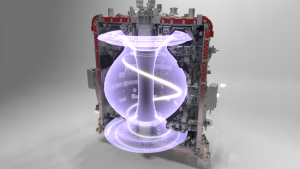
    The ST40 spherical tokamak represents a crucial asset in fusion research. Using applied magnetic fields to confine plasma, the facility is dedicated to studying plasma physics and optimising the conditions necessary for fusion.

    Despite its significant scientific contributions, the facility’s development and operations have not been publicly funded by the US or UK governments, making it a unique platform for advancing public-private research efforts.

    Previous experiments at the ST40 have achieved temperatures exceeding those at the core of the Sun, a critical milestone in fusion research.

    The upcoming upgrades aim to enhance these capabilities, including efforts to achieve sustained fusion conditions through innovative techniques like lithium wall coatings and advanced fuelling methods.

    Pioneering technologies to revolutionise fusion research

    A key component of the ST40 upgrade involves the development and deployment of cutting-edge technologies.

    Tokamak Energy is leveraging high-temperature superconductors to create powerful, very high-field magnets.

    These innovations are expected to enable compact, cost-effective fusion devices capable of meeting the stringent requirements of fusion: sufficient temperature, particle density, and energy confinement.

    Collaborative expertise from the DOE’s Princeton Plasma Physics Laboratory (PPPL) and Oak Ridge National Laboratory (ORNL) will play a vital role in the upgrade.

    PPPL will contribute knowledge on lithium coatings, a method proven to improve energy confinement. Meanwhile, ORNL will focus on integrating advanced pellet fuelling systems to optimise plasma performance.

    The future of fusion

    This initiative highlights the growing synergy between public and private sectors and underscores the strategic international partnership between the US and the UK.

    The collaboration on the ST40 spherical tokamak not only strengthens ties but also accelerates progress toward a shared goal of achieving commercial fusion energy.

    The project’s $52m funding is evenly distributed among the three sponsors. The upgrade is slated for completion by 2027, contingent on continued appropriations and steady progress.

    By pooling resources and expertise, the initiative represents a significant step in the pursuit of clean, sustainable, and abundant energy through fusion technology.

    As global energy demands rise, fusion stands as a beacon of hope for a sustainable future. The ST40 spherical tokamak upgrade is a testament to the commitment of international governments and private companies to address the challenges of climate change through innovation and collaboration.

    With its advanced capabilities and strong partnerships, the ST40 project is set to play a critical role in transforming the dream of fusion energy into a reality.

    [ad_2]

    Source link

  • Realising fusion energy’s potential in Europe

    Realising fusion energy’s potential in Europe

    [ad_1]

    Massimo Garribba, Deputy Director-General responsible for the co-ordination of EURATOM policies in the Directorate-General for Energy at the European Commission, details Europe’s journey towards the realisation of fusion energy.

    As Europe works towards achieving net zero targets and sustainability goals, could fusion – powering the sun and stars – be the energy of the future?

    With a long history in fusion science and technology, Europe is well positioned as a leader in the journey to fusion commercialisation. Most notably, Europe is home to one of the most ambitious energy projects in the world – ITER, located in southern France. ITER is a major international collaboration working to build the world’s largest tokamak – an experimental machine designed to validate the scientific and engineering viability of fusion energy. ITER Members will then be able to be design their prototype or demonstration power plants on the basis of ITER construction experience, technological and scientific results. This will further drive the transition from a scientific experiment to fusion commercialisation.

    The EU also co-funds EUROfusion consortium through the Horizon Europe Euratom Research and Training Programme. Via this consortium, European fusion laboratories collaborate to further advance the fusion research, design and manufacture systems that are necessary for the future fusion reactors.

    To find out more about Europe’s fusion activities, The Innovation Platform spoke to Massimo Garribba, Deputy Director-General responsible for the co-ordination of EURATOM policies, Directorate-General for Energy, European Commission.

    Can you elaborate on the current state of fusion in the EU?

    The European Union (EU) considers fusion has the potential to provide a safe, cost-efficient and sustainable solution to European and global energy needs in the future. For this reason, the EU has supported for decades cutting-edge research and innovation, with the goal of developing fusion power plants for electricity production for a greener and more sustainable energy mix.

    The EU is part of one of the most ambitious energy projects in the world – ITER. Located in the south of France, ITER is a unique project to build the world’s largest and most advanced fusion machine – a tokamak. Once completed, ITER will be approximately 30m high and 30m wide, weighing 23,000 tonnes. It aims to prove the technical and scientific feasibility of using the fusion process for electricity production. Tokamaks are vacuum-chambered devices designed to replicate on Earth the process of fusion – the energy source of the sun and stars – using a powerful magnetic field generated by superconducting magnets.

    Beyond ITER, the EU collaborates with Japan on fusion activities under the Broader Approach Agreement. This privileged partnership oversees the development of key infrastructures, such as a test facility for fusion materials (The International Fusion Materials Irradiation Facility / Engineering Design and Engineering Validation Activities – IFMIF-EVEDA). The materials to be used in fusion reactors will need to withstand immense temperature and neutron fluence generated during the fusion process. Under the same agreement, the EU and Japan have jointly built a tokamak device known as JT-60SA. This device, located in Naka, Japan, is currently the largest operational superconducting tokamak in the world, after its inauguration in December 2023. JT-60SA was designed to support the operation of ITER by providing a complementary research and development programme.

    Recently, Spain and Croatia have teamed up to lead the development of the International Fusion Materials Irradiation Facility – Demo Oriented Neutron Source (IFMIF-DONES), which is being constructed in Spain. IFMIF-DONES builds on the results of IFMIF-EVEDA and will provide a neutron source essential for further testing and validating materials that will be used in future fusion power plants.

    The EU has also been supporting research in national fusion laboratories and universities, such as the Joint European Torus (JET) in the UK and the Wendelstein 7-X stellarator in Germany. Now, we are looking into opportunities to support joint initiatives between the private and public sectors. For instance, the European Innovation Council has recently awarded a €2.5m grant to a fusion start-up to support progress on the design of its stellarator and the integration of key stellarator components. We are encouraging EU fusion start-ups to work and co-operate with EU fusion laboratories, but also with industrial partners who are part of the current ITER supply chain.

    How can findings from major European fusion activities and organisations such as JET, EUROfusion and ITER inform the future direction of European fusion development?

    Fusion development is a long-term endeavour that requires sustained efforts across various initiatives, including the ones you mentioned.

    ITER is one of the most complex machines ever to be constructed. It is meant to establish a demonstration fusion power plant and there are no shortcuts on this path. ITER will help demonstrate the feasibility of technologies needed for a fusion power plant, bridging the gap between today’s smaller-scale experimental fusion devices and the future demonstration of fusion power plants. Through ITER, scientists will be able to study plasmas under conditions similar to those expected in a future power plant and test essential technologies such as heating, control, diagnostics, cryogenics, and remote maintenance. Moreover, ITER will provide a unique opportunity to test, under real fusion conditions, the production of one of the fusion fuels for future fusion reactors: tritium.

    fusion energy
    Illustration of the ITER tokamak © ITER Organization

    In other words, ITER operations and the results of its research and experiments in the production of tritium and construction materials for fusion machines are necessary steps for the EU to transition fusion energy from research to demonstration reactors.

    The findings from major European fusion activities, such as JET and EUROfusion, play a crucial role in informing the future of European fusion development. The JET machine concluded its operational journey on 18 December 2023, over four decades after its inception. It has been fundamental in laying the groundwork for ITER and future fusion power plants through its innovative deuterium-tritium experiments. JET also played a key role in training several generations of fusion scientists and engineers across Europe.

    EUROfusion – a consortium of around 30 national fusion research laboratories across the EU – conducts fusion research under the Euratom Research and Training Programme. This focuses on the development of key fusion-related technologies, advancing training and education, and the development of the conceptual design of a future demonstration fusion power reactor (DEMO). EUROfusion’s co-ordinated efforts continue to drive progress in critical technologies while fostering new generations of fusion experts.

    The collective knowledge obtained from all these different initiatives (e.g. on plasma behaviour, fusion materials, operational challenges, etc.), will shape the future course of European fusion development. Co-ordinated research efforts will help the EU transition from research to industrialisation, paving the way for the development and operation of commercial fusion power plants.

    What are the main bottlenecks preventing fusion energy from being fully realised? How can these be removed?

    There are a series of key technological bottlenecks related to the demonstration of critical technologies of future fusion reactors. For example, the qualification of materials that can withstand the extreme conditions within fusion reactors, or the demonstration of key components’ performance under reactor conditions. The development of plasma scenarios and the remote maintenance design and qualification remain significant challenges as well.

    Another important bottleneck is the demonstration of tritium production within the reactor for fuel self-sufficiency. Fusion reactors rely on tritium, which is scarce in nature. Therefore, future commercial power plants will need to ‘breed’ their own tritium for economic viability. Breeding blanket concepts are being developed, and will need to be tested, to produce tritium fuel directly during the fusion reaction.

    Addressing these challenges is crucial for fusion to transition from experimental reactors to a reliable and sustainable energy source. This can be achieved by the fusion industry and research institutions complementing their knowledge and helping to close the technological gaps affecting the path to fusion energy generation.

    What is needed to enable fusion research and technology to flourish in Europe?

    Several key actions are required to support the growth and development of fusion research and technology.

    Firstly, we need to secure continued and sufficient commitment of financial, technical, and human resources to complete the ITER project. Despite the challenges the project is facing and the rise of private investment in multiple fusion machine designs, ITER remains not only highly relevant, but in fact the centrepiece of global efforts towards the commercialisation of fusion energy.

    Secondly, an appropriate fusion-specific regulatory framework will also facilitate the deployment of fusion technologies. In this regard, the European Commission has launched a dialogue with the European nuclear safety authorities in the European Nuclear Safety Regulators Group on possible regulatory approaches to fusion facilities.

    Thirdly, as indicated in Draghi’s latest report on the future of European competitiveness, we need to create ‘a stable and predictable fusion ecosystem for industrial innovation, leveraging the ITER project, while ensuring a clear technology development roadmap.’ A coherent EU-level approach should be adopted to facilitate research and technology innovation, incentivise private sector engagement, de-risk investments when necessary, and create the environment where private companies and publicly funded research organisations work hand in hand towards a common goal – bringing fusion energy to the grids.

    Finally, once the first commercial power plants are built, there will be a massive industrial effort required to scale up production. Therefore, we will need to support the EU utilities and supply chain industry to be well positioned – either as fusion energy deployers or as key suppliers to leading commercial fusion projects.

    How close do you think Europe is to fusion commercialisation?

    We are seeing several private initiatives working to achieve electricity production with ambitious timelines. Some of them have announced that they will demonstrate significant progress within the next five years, aiming for a technology readiness level (TRL) of 4 or 5 and potential net energy gain or high-power multiplication. These companies plan to complete a pilot plant between 2030 and the mid-2030s. The success of these plants depends on the performance of the upcoming devices, securing further funding, and resolving design, engineering, procurement, and construction issues. We also need to recognise important differences between public and private approaches to fusion technology development: Public initiatives, like ITER, aim to develop the entire fusion system, including fusion-enabling technologies such as blanket breeding and tritium technologies. While it may require more time, this comprehensive approach addresses long-term issues critical to the future commercial deployment of fusion power plants.

    It’s hard to predict an exact timing, but we can realistically expect to still have some decades of work ahead of us before achieving fusion commercialisation. Although, there’s always hope for a breakthrough or major discovery in the meantime.

    What is important to keep in mind is that the benefits of having fusion energy as a part of the future energy mix are worth pursuing and we remain committed to making fusion energy a reality as fast as possible.

    Please note, this article will also appear in the 20th edition of our quarterly publication.

    [ad_2]

    Source link

  • Germany boosts investment in fusion research

    Germany boosts investment in fusion research

    [ad_1]

    Professor Christian Linsmeier, Director of the Institute for Fusion Energy and Nuclear Waste Management, outlines Germany’s recent increase in funding for fusion research and the Institute’s role in advancing fusion technology.

    Germany has been investing in fusion research for several decades, creating a programme that encompasses  a variety of projects and topics. About a year and a half ago, the German government announced an increase in funding to further advance these efforts towards the construction of the first fusion reactor.

    The German fusion programme is carried out by three research organisations: the Max-Planck-Institute for Plasma Physics (IPP), with two locations: the main site in Garching and another in Greifswald, along the Baltic coast. At the Garching site, researchers operate the ASDEX Upgrade tokamak. The Greifswald facility is home to the globally renowned Wendelstein 7-X stellarator, celebrated for being the most advanced and closest to a reactor among current technologies.

    The Max-Planck-Institute for Plasma Physics is Germany’s leading fusion research institution, representing approximately three-quarters of the nation’s research efforts in this area. The IPP operates these devices and conducts essential plasma physics research to advance fusion technology. The Karlsruhe Institute of Technology plays a significant role in this field. Finally, the Jülich Research Centre (FZJ) houses the Institute of Fusion Research and Nuclear Waste Management, which consists of two primary institutes: one focused on fusion research (IFN-1) and the other on nuclear waste management (IFN-2).

    FZJ, with its IFN-1, specialises in the research areas of plasma-wall interactions and plasma-facing materials and components. This includes the diagnostics and modelling of the edge plasmas of tokamaks and stellarators, the physics of plasma-wall interactions, as well as development, characterisation and testing of materials and components for the plasma-facing units. As one of the few international research sites, FZJ includes nuclear aspects by operating a lab with hot cells in a radiation-controlled area.

    Investment in Germany’s fusion landscape

    Germany has launched a programme called Fusion 2040, stimulating collaborative efforts among fusion researchers and industry. The programme has been allocated a budget of €370m for the next four years. This funding is in addition to Germany’s standard fusion budget and contributions to the European Union’s ITER programme. Notably, this €370m constitutes supplementary funding for cooperative activities between research centers and the fusion industry. This strategy aims to realise a fusion reactor by transferring knowledge from research to industry.

    The Fusion 2040 programme was established by interactions between the federal government and fusion research representatives and finally commenced its first project between FZJ and industry partners on November 1, 2024.

    Our strategy is to utilise this funding to strengthen traditional research institutions such as Jülich, Karlsruhe, Garching and Greifswald and promote collaborative efforts between fusion researchers and industry partners. This funding concept by federal ministries, known in German as ‘Verbundprojekte, i.e. Collaborative Projects,’ requires us to establish partnerships with industry stakeholders for any topics submitted within this programme.

    The situation is quite flexible, allowing for a small part of the industry to link with a larger public sector or vice versa. There are various options available. The primary aim is to leverage the knowledge we have developed over decades in fusion, plasma-wall interactions, technology, and plasma physics, transferring that knowledge to industry to foster its growth. This concept of collaborative projects is not new; it typically requires funding from federal government sources in other technological areas as well, and it must be accomplished in collaboration with industry.

    The Institute of Fusion Research and Nuclear Waste Management

    The Jülich contribution to the German fusion programme via the Plasma Physics institute within the Institute of Fusion Energy and Nuclear Waste Management (IFN-1), is the smallest organisational partner within the German fusion programme. Our primary focus is on plasma interactions with and materials for the first wall and divertor. This topic is closely linked to understanding plasma physics at the edge of the fusion plasma, the physics of the plasma-material interactions, as well as surface and materials physics and chemistry. Therefore, this field is, by definition, genuinely multi-disciplinary. Our strength lies in our ability to study the behaviour of particles at the plasma edge, bridging the plasma-material interface, and extending a few centimetres into the materials.

    There are many institutes worldwide specialising in materials and plasma physics; however, none combine these fields in the same way we do. Our team consists of engineers, material scientists, chemists, and physicists who collaborate to address the challenges related to optimising plasma-facing components and their interactions with fusion plasma. Ultimately, this interface determines the components’ lifetime and, therefore, the economic viability of fusion as a new primary energy source.

    Researching edge plasma

    The fusion process occurs primarily in the hot plasma core, while the edge plasma limiting that volume presents additional unique challenges. Transitioning from the hot core to the wall requires a high-density barrier to confine the plasma and maintain temperature; without it, surrounding structures risk damage. The principles governing edge plasma physics are distinct from those of the core.

    The core plasma behaves mostly like a fluid, but at the edge, individual atomic collisions and neutral atom behaviour become significant. Our research is focused on the edge plasma in order to control the plasma-material interface. In fusion reactors, perfect confinement is unrealisable, as it would suffocate the plasma and halt fusion reactions that generate alpha particles and impurities from wall erosion. Therefore, it is vital to remove fusion byproducts, mainly helium, and impurities, through the edge plasma to sustain fusion reactions.

    We are investigating edge plasma and developing models and codes, including EIRENE and ERO 2, which are widely used in the fusion community for edge plasma processes. Our work also explores interactions with the reactor wall, studying particles that escape the plasma toward the first wall or the divertor, where most power and particles are expelled.

    These areas experience high power and particle loads.
    In fusion systems, we focus on a range of up to 20 megawatts per square meter, managing heat and particle load effectively.

    Developing effective materials

    The German Helmholtz Fusion programme, focuses on four key areas: Stellarator, Tokamak (both led by IPP), Materials and Fusion Technology (led by KIT), and Plasma-Wall Interactions, which we lead at Forschungszentrum Jülich (FZJ). Plasma-wall interactions are relevant to both stellarators and tokamaks, enabling us to apply our findings across different fusion confinement concepts.

    Our research examines the interactions between plasma and wall materials, particularly those exposed to plasma. Effective materials must demonstrate low erosion rates, minimal retention of fuel (specifically deuterium and tritium), and efficient heat transfer to prevent overheating in the divertor.

    Tungsten is a strong candidate due to its properties, including a high melting point of over 3,400 degrees Celsius. However, it is very brittle, especially after exposure to high temperatures and neutrons, which can further increase brittleness.

    Tungsten’s high surface binding energy leads to quite a high sputtering threshold, meaning that if the energy of impinging plasma particles is maintained below that threshold, erosion is minimised. This characteristic significantly extends the lifespan of the divertor and first wall, making tungsten a preferable choice despite its brittleness. Clearly, the lifetime of plasma-facing components before a necessary replacement greatly impacts the economy of fusion as an electricity source.

    The brittleness issue of tungsten is tackled and solved by one of our main material development strategies: By integrating tungsten fibers into a tungsten matrix – and providing a stable and well-defined interface between fibers and matrix – the brittleness problem can be solved. Such fiber-matrix composites behave like a ductile material, although the constituents are still brittle. The trick is the clever interface: cracks, which would immediately destroy a brittle component, are stopped at these internal interfaces and can therefore control the macroscopic behaviour of such a composite material.

    Besides its intrinsic brittleness, pure tungsten poses an additional problem in case of an off-normal reactor condition. In a loss-of-coolant accident with air ingress, the plasma-facing components quickly reach high temperatures due to the decay of neutron-activated elements. Above around 700°C, air and humidity react with pure tungsten, producing tungsten oxide, which sublimates at these temperatures. This volatilisation of activated elements raises safety concerns in such an accident scenario.

    Our approach to solving this issue is inspired by stainless steel, where pure iron, which tends to rust, is alloyed with elements like chromium to create a rust-resistant material. We applied this principle to tungsten by selecting specific alloying elements, including also chromium, to develop what we call a self-passivating tungsten alloy. This innovation enhances tungsten’s stability in the presence of moisture and air without sacrificing its premier qualities as a plasma-facing material.

    Our research in these two exemplary material fields, conducted over approximately 15 years, led to the development of these material solutions to a degree where a transfer into the industry – and, therefore, an upscaling from lab scale to production – has started.

    Dedicated and specialised technology

    In addition to our focus on material development, edge plasma physics and modelling, we design diagnostic systems, including spectrometers, for fusion facilities like the Wendelstein 7-X and over decades for the European tokamak JET in Culham. Our instruments investigate interactions between edge plasma and the first wall and are essential tools for studying the physics of plasma-wall interactions at large-scale fusion devices.

    As a further research field, we specialise in Jülich in analysing hydrogen isotopes in materials, particularly also the hydrogen isotopes deuterium and tritium. Hydrogen isotopes can weaken tungsten, steel, and other metals by penetrating into atomic spaces in the lattice of metal atoms. To analyse these changes, we use e.g. thermal desorption analysis, ion-beam based accelerator techniques, as well as laser-based techniques. For the latter, we also develop technological concepts in order to apply them not only in a laboratory environment but also as analysis techniques compatible with large-scale fusion devices like ITER.

    Finally, we operate a specific laboratory with a controlled area and hot cells to handle and analyse radioactive materials and components, e.g. after exposure to neutrons and the respective activation reactions.

    Research at neutron-exposed components

    In a fusion reaction, deuterium combines with tritium to produce an alpha particle (a Helium-4 nucleus) and a neutron. The neutron, as indicated by its name, is electrically neutral. However, the plasma itself is contained within a magnetic cage in a stellarator or tokamak; the neutrons from the fusion reaction escape because they carry no charge and are, therefore, not affected by the magnetic field.

    As the neutron travels through materials – specifically the first wall and the blanket behind it – it plays a beneficial role in breeding tritium. However, neutron impact also has drawbacks, as it can alter the properties of the materials it passes through. The neutron can displace some atoms, which leads to disorder and affects material properties, including hydrogen or tritium trapping, as well as mechanical properties.

    Another important aspect to consider is the divertor, which experiences very high power loads. It is crucial to test both the materials and components under these high power loads and in exposure to plasmas, including after exposure to neutrons. Typically, when a material has been exposed to neutrons, it becomes radioactive due to various transmutation reactions.

    Therefore, it is essential to have a controlled-area laboratory where the radioactivity of all incoming and outgoing samples is monitored and measured. If the radioactivity of the samples is too high, additionally, a hot cell may be required within that controlled laboratory space in order to protect operators and the environment during the experiments with those components and materials.

    State-of-the-art facilities

    Our “High-Temperature Materials Laboratory – HML” is unique, providing the ability to handle radioactive materials and components. In particular, they can be exposed to electron beam devices for high-power loading tests, as well as to plasmas from a linear plasma device for plasma-wall interaction studies. These devices are located in hot cells and provide a unique environment for these studies.

    Unlike tokamaks or stellarators, the new linear plasma device “JULE-PSI” generates plasma in a horizontal column, allowing us to simulate reactor first wall conditions with greater operational control than in large fusion devices. This allows well-defined plasma-material interaction studies. Currently, we are constructing two new hot cells to house JULE-PSI and the electron beam device “JUDITH 3”. These cells will enable us to safely work with radioactive materials irradiated in nuclear reactors.

    Globally, our linear plasma device JULE-PSI is one of a kind; while other labs can also handle nuclear materials, none have a linear plasma setup like JULE-PSI within a hot cell. This allows for a comprehensive exploration of plasma-wall interactions under conditions that are unique to a fusion reactor.

    Cooperation is key

    We work together with various large-scale fusion devices, including Wendelstein 7-X, JET, and other international facilities. This is particularly significant for us when combining our extensive laboratory and theory research on plasma-wall interactions with research at large fusion experiments.

    Although we operate as a separate institute and are not part of the Max-Planck-Institute for Plasma Physics (IPP), the Greifswald branch of the Max-Planck Institute for Plasma Physics frequently seeks our expertise in plasma-wall interactions. They do not have a dedicated Department of Plasma-Wall Interactions, so this responsibility falls to us in Jülich. Our work includes operating research devices, conducting physics research, and engaging in modelling.

    To the UK, we have strong connections, particularly with Culham as the JET site, and this network is expanding as the UK STEP programme progresses. In Europe, we also collaborate with the WEST tokamak located in Cadarache, France, to expose materials and components in the course of our cooperative research. Outside Europe, we have particularly strong collaborations with colleagues in Hefei, China, who operate EAST (Experimental Advanced Superconducting Tokamak), a modern superconducting tokamak, leading in many aspects of tokamak research. In the US, the Oak Ridge National Laboratory is one of our strong partners, along with the University of Wisconsin at Madison.

    The outlook for fusion

    Germany’s fusion research landscape has significantly evolved with the emergence of four notable companies, two of which focus on magnetic fusion: Proxima Fusion and Gauss Fusion. Both companies focus on a stellarator fusion reactor (like Wendelstein 7-X). In particular Gauss Fusion’s efforts are centred on constructing the stellarator as core of a fusion reactor facility, including the necessary infrastructure.

    While the concept of nuclear fusion differs from traditional energy methods, concerns about its long-term viability persists. However, successful demonstrations have generated global interest, particularly in the US and Europe.

    Facilities like the Joint European Torus (JET) are crucial for fusion research but primarily serve experimental purposes. Unlike experimental setups, developing a reactor that generates electricity requires specialised design and careful consideration of operational parameters. The focus must shift towards energy production, necessitating significant investment and large-scale construction, as exemplified by ITER in southern France, which relies on extensive infrastructure to function effectively.

    Achieving fusion power in a first-of-a-kind reactor still depends on government funding and support, as no large-scale industrial project of this magnitude can succeed without it. Typically, such developments take about 20 years, similar to past advancements in photovoltaics and wind energy, which have also relied and still rely on government initiatives.

    Overall, the current landscape for realising fusion in Germany is quite positive. We are witnessing an influx of additional funding, and our objective is to construct a fusion reactor rather than merely establish a new experimental setup. The Fusion 2040 programme, designed to attract industry involvement, is a pivotal component in the development of a fusion reactor. This collaboration is only feasible if we set a clear goal and allocate funding to support it, something the government is currently facilitating. I am convinced that we can be optimistic that this initiative will continue with the aim of developing the first prototype reactor.

    Please note, this article will also appear in the 20th edition of our quarterly publication.

    [ad_2]

    Source link

  • Fusion energy café launched in UK to boost public awareness

    Fusion energy café launched in UK to boost public awareness

    [ad_1]

    The world’s first fusion energy café has opened its doors in Worksop, marking a groundbreaking step in public education about fusion energy.

    Nestled within the Bridge Skills Hub, this innovative café aims to demystify the science behind fusion energy and spark interest in its transformative potential.

    With interactive displays, themed décor, and opportunities for community engagement, the café is set to become a hub for both learning and inspiration.

    What is fusion energy, and why does it matter?

    Fusion energy is a process inspired by the Sun’s power. Unlike nuclear fission, which splits atoms, fusion combines hydrogen atoms to create helium, releasing vast amounts of energy in the process.

    This reaction produces no greenhouse gases and minimal long-lived radioactive waste, making it a promising low-carbon solution for future energy needs.

    Fusion can potentially revolutionise global energy systems by offering a virtually limitless, safe, and sustainable energy source.

    With energy demand rising and climate change accelerating, fusion energy could be pivotal in securing a clean energy future.

    However, achieving this vision requires more than scientific breakthroughs; it demands public understanding and support.

    By educating communities about the benefits and challenges of fusion, initiatives like the fusion energy café can foster enthusiasm and investment in this game-changing technology.

    A community-centric vision

    The fusion energy café is part of a broader initiative to involve local residents in the region’s evolving energy landscape.

    The centrepiece of this transformation is the planned STEP (Spherical Tokamak for Energy Production) prototype fusion plant, which is set to be constructed at the nearby West Burton site.

    The project promises to bring significant opportunities for skills development and job creation, further establishing Worksop as a future hub for energy innovation.

    Funded by the United Kingdom Atomic Energy Authority (UKAEA), Bassetlaw District Council, and North Notts Business Improvement District, the café exemplifies a partnership approach to community engagement.

    Nick Walkden, Head of Fusion Skills at UKAEA, added: “We are proud to be working with Bassetlaw District Council and North Notts Business Improvement District on this unique and exciting community-focused initiative in Worksop.

    “The fusion energy café will highlight the potential of fusion energy to local communities, particularly through the STEP Programme at West Burton, while advancing our commitment to unlocking the social benefits fusion can bring.”

    Local entrepreneur Diana Kaponas operates the café, which also serves as a venue for work placements aimed at individuals with disabilities, NEET (not in education, employment, or training) status, and long-term unemployment.

    A café like no other

    The fusion energy café goes beyond serving coffee and snacks. Its interactive displays and guest talks offer visitors a unique opportunity to explore the science and societal impact of fusion energy.

    From themed décor that reflects the dynamic nature of plasma to presentations highlighting fusion’s role in combatting climate change, every aspect of the café is designed to inspire curiosity.

    UK Climate Minister Kerry McCarthy, who recently toured the West Burton STEP site, praised the café as a vital tool for raising awareness and building community connections.

    McCarthy commented: “The Fusion Energy Café is a fantastic way to inspire a whole generation to learn more about this groundbreaking technology and its potential to deliver safe, sustainable, and low-carbon energy, helping us in our fight against climate change.

    “This initiative, inspired by the development of the STEP prototype power plant at West Burton, will not only help to drive progress in clean energy but also bring valuable skills, jobs, and investment to the area.”

    Fusion Energy Cafe Minister McCarthy Visit. Credit: UKAEA

    As the UK’s first prototype fusion power plant takes shape, the café will serve as an important link between science and society.

    Open Monday through Friday from 8:30 AM to 5:00 PM and Saturdays from 9:00 AM to 3:00 PM, the fusion energy café invites the public to learn, engage, and savour its unique offerings.

    Beyond its role as an educational space, the café reflects a vision for an inclusive and sustainable future – one cup of coffee at a time.

    [ad_2]

    Source link

  • TU/e’s multidisciplinary impact on fusion research

    TU/e’s multidisciplinary impact on fusion research

    [ad_1]

    Roger Jaspers, Chair of the Science and Technology of Nuclear Fusion Group, discusses TU/e’s role in training fusion engineers and advancing research in the dynamic fusion field.

    Fusion research is rapidly advancing, with new fusion startups emerging thanks to private investment. Public awareness and interest are growing, driven by climate concerns, while a global competition is unfolding to be the first to achieve nuclear fusion power, leading to increased government funding.

    What impact do these developments have on the TU/e university research group focused on the Science and Technology of Nuclear Fusion? First and foremost, the university has a large responsibility in training and educating people. Around ten years ago, TU/e launched a dedicated two-year master’s programme in Science and Technology of Nuclear Fusion – unique in setup and one of the leading programmes in this field worldwide.

    Research and development in nuclear fusion

    The field of research and development in nuclear fusion is characterised by broad interdisciplinarity, bringing together fields such as technical physics, mechanical engineering, sensor and control technology, and electrical engineering. Additionally, aspects of societal relevance and a socio-economic perspective are crucial. It features complex collaborations and a highly international, open work environment. Leveraging these factors, the TU/e master’s programme trains engineers with a new profile: multidisciplinary, versatile, flexible, and goal-oriented, capable of working in multicultural, international teams, and aware of the socio-economic aspects of their work. This unique approach sets the fusion master’s apart from many existing programmes.

    Close collaboration with current research

    A key component of the master’s programme is its strong connection to current research. With 25 fusion students per year who must complete an external research project and a thesis, a significant workforce becomes available, facilitating collaboration with nearly all major fusion institutes worldwide. These external projects have often led to new partnerships or the integration of TU/e’s in-house expertise to various fusion devices. Major fusion institutions, such as ITER, IPP in Germany, EPFL in Switzerland, UKAEA in the UK, GA in the USA, NIFS in Japan, and KFE in Korea, have hosted TU/e students. Support from FuseNet, an association dedicated to promoting fusion education with around 70 member universities, institutes, and companies, is crucial. The presence of FuseNet on the TU/e campus is a significant advantage for the MSc programme. However, to attract students and make a meaningful impact in the fusion field, it is even more important to have a robust and recognised in-house research programme at TU/e.

    Our research spans multiple branches, with a key focus on integrating expertise from other university areas into the fusion field. This approach amplifies our impact, allowing us to make significant contributions to the fusion field despite being a relatively small team of ten PhD students and three principal investigators.

    One particularly successful example is the work on fusion control initiated by Professor Marco de Baar, currently the director of the Dutch Institute for Fundamental Energy Research (DIFFER). Control engineers take a distinctly different approach compared to fusion physicists, which has proven essential for the complex, multidimensional control required in a fusion power plant. By using advanced tools developed in control theory, constraints on precise physics modelling can be eased. Today, this group has demonstrated the ability to manage the immense power flux leaving the plasma, preventing any damaging effects, or reducing the reactor performance. This is closely tied to the advancement of real-time diagnostics that visualise plasma state and dynamics, which are essential for ensuring successful and safe operation. This area of instrumentation is a key focus of the TU/e fusion group. By deploying these systems on major European tokamak devices, such as TCV in Switzerland and MAST-U in the UK, the group maintains a strong connection to the core of European experimental fusion research, coordinated by EUROfusion. The TU/e group’s expertise in 2D multi-spectral plasma imaging systems is highly valued and well recognised in the field.

    This research directly connects to one of the critical topics in fusion. With new reactor designs, such as ITER, SPARC (US), and STEP (UK), aiming for net power output by generating more fusion power than is needed to heat the plasma, managing power exhaust has become a top priority. These reactors will concentrate a significant fraction of their power on small areas, which cannot withstand the extreme heat flux without active control or advanced divertor solutions.

    The TU/e group is exploring two main approaches to address this challenge of power exhaust. First, they are investigating the potential of liquid walls, which offer several advantages over solid ones. Liquid walls can be continuously replenished, and the evaporated vapour helps protect the underlying structure by radiating away and redistributing heat over a larger area. However, handling liquid metals in a magnetic field is complex. To tackle this, the new LIMES lab is being built in collaboration with DIFFER and TU/e, where various liquid wall designs will be developed and tested under fusion-relevant heat load conditions.

    fusion energy
    Credit: UK Atomic Energy Authority

    The second approach focuses on alternative divertor solutions, with the divertor being the component that handles most of the heat exhaust from the hot plasma. Since divertor research is a major topic in the fusion field, it is co-ordinated across Europe by EUROfusion, where Kevin Verhaegh from TU/e plays a key role. Beyond their scientific importance, the TU/e involvement in these projects provides TU/e students with direct engagement in cutting-edge research.

    Credit: DIFFER/Rekel producties

    Work with Max Planck Institute

    The TU/e group is also strengthening its collaboration with the W7-X team at the Max Planck Institute in Greifswald, Germany – home to the world’s largest stellarator. This alternative fusion reactor concept offers several fundamental advantages over the more developed tokamak design, such as ITER.

    Two of our former staff scientists, Proll and Warmer, have had the chance to establish their own research groups at Max Planck. While we initially thought this would be a significant loss for our team, it has actually worked out to our benefit. We now have a strong partnership with the W7-X team, with numerous collaborative PhD and MSc projects. Proll and Warmer remain connected to our group, contributing to education and student supervision, creating a win-win situation.

    Credit: TU/e/DIFFER

    Their research focuses on optimising the stellarator’s performance by reducing turbulence. Proll explores ways to incorporate turbulence reduction into the geometric design, while Warmer bridges physics knowledge with engineering requirements and constraints, aiming for a systematic approach to reactor design.

    Fusion energy deployment

    A key area of focus within our group has been the study of fusion energy deployment. In recent years, TU/e has made a significant impact on discussions surrounding this theme, largely through the work of the former group leader, Professor Lopes Cardozo, and his team.

    Even after we develop the first working prototype of a fusion reactor, numerous challenges remain before fusion can supply a significant portion of the world’s energy needs. These include material availability, fuel breeding, cost competitiveness compared to other energy sources, the speed of scaling up fusion production, and whether to prioritise electricity generation or also explore the direct use of fusion heat. Importantly, these considerations may already influence current reactor designs.

    fusion energy
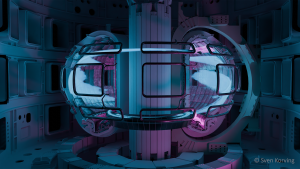
    Credit: Sven Korving

    Although Professor Lopes Cardozo has recently retired, the group remains committed to this topic. We believe it is crucial to address these deployment challenges alongside the development of fusion power plants. There’s little sense in advancing fusion technology without also planning for its future integration into the global energy landscape.

    Supporting the future of fusion

    Overall, TU/e provides a dynamic and stimulating environment for fusion research. The university’s close proximity and strong scientific ties to the on-campus DIFFER institute, along with access to an extensive pool of expertise from various departments, create valuable opportunities for advancing fusion technology. The vibrant student atmosphere further enriches this environment, with numerous student teams developing innovative solutions to societal challenges, including energy and fusion.

    This supportive ecosystem often inspires the creation of new start-ups. Two recent examples linked to TU/e’s fusion activities are Starwarden, founded by former MSc student Nick Maassen, which focuses on 3D-printed heat pipes designed to handle the extreme heat loads in fusion applications, and Ignition Computing, established by a former TU/e PhD student, specialising in high-performance computing solutions for fusion and beyond.

    This breadth highlights fusion as a multidisciplinary field where a university group’s role extends beyond contributing to scientific research. While research remains crucial, fostering talent and providing an attractive breeding ground for innovation may be the most essential components needed to make fusion a long-term success.

    If this  research sounds interesting to you or if you are interested in the Fusion master programme, then please contact Roger Jaspers.

    Please note, this article will also appear in the 20th edition of our quarterly publication.

    [ad_2]

    Source link

  • From fission to fusion neutronics and multi-physics simulations at the University of Tennessee

    From fission to fusion neutronics and multi-physics simulations at the University of Tennessee

    [ad_1]

    A team of professors at the University of Tennessee has embarked on research and training for the next generation of fusion nuclear engineering graduates.

    Nuclear power generation has been dominated by fission-based systems for several decades. There are hundreds of operational nuclear reactors around the world that have recorded operational data that can be useful to help the modelling and simulation of the many new advanced reactor designs.  In contrast, fusion energy holds tremendous potential for carbon-free power generation, but the few existing fusion reactors are largely experimental facilities not designed for power generation. Thus, designers of fusion-based power generating systems currently must rely on sophisticated computer simulations, which have limitations related to the lack of operational and experimental data.

    Research Focus: Neutronics and Multi-Physics Simulations

    Professor G Ivan Maldonado has spent over three decades in modelling and simulation of fission reactors throughout his career in the US industry and academia.  In 2020, with support from the Oak Ridge National Laboratory, he and his colleague, Professor Nick Brown, began extending their expertise in fission reactor physics toward fusion neutronics and other related multi-physics simulations.

    This work was extended in 2021 by a U.S. Department of Energy (DOE) three-year grant funded by the Office of Fusion Energy Sciences (FES), led by Professor Brown.  This work was intended to support the design and licensing of a fusion engineering demonstration facility. They contributed analyses and analysis tools for the fusion community focused on neutronics, e.g., for tritium breeding ratio (TBR) and other assessments, including thermal-hydraulic/mechanical simulations.

    fusion neutronics

    The capabilities developed are intended to support the design and licensing of a future fusion engineering demonstration facility and a future engineering demonstration plant. One of the major needs was related to blanket and fuel cycle integrated design simulations for neutronics and thermal-hydraulics of the fusion system’s blanket so as to provide projections under normal operation and during operational transients.

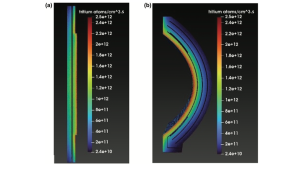
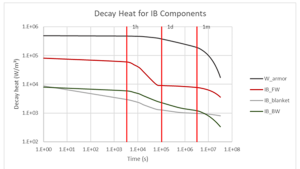
    This work was funded by the DOE Award No. DE-SC0022308 and has led to several peer-reviewed journal publications.1-10 The figure below illustrates tritium buildup in the inner (a) and outer (b) lead-lithium blanket of a representative fusion reactor, while (c) shows trends in decay heat density for the inboard components.

    Educational initiatives: Building a diverse workforce in fusion energy

    In 2023, Maldonado and Brown won a three-year subcontract in conjunction with University of New Mexico (UNM) titled: “Heavy Liquid Metal-Materials Interactions: An Integrated Education and Research Project,” led by Professor Osman Anderoglu at UNM, under the Fusion Energy Science – Reaching a New Energy Sciences Workforce (FES-RENEW) programme from the DOE that provides training opportunities for students and researchers from institutions that are underrepresented in the DOE’s Office of Science research portfolio. The programme’s goal is to build a foundation for future research by developing a pool of talented young scientists, engineers, and technicians.  Many of the related activities are synergistic with previous and ongoing work at UTK.

    The main objective of this project is to establish an inclusive, experiential-based educational programme for the next generation of researchers and engineers in key areas of heavy-liquid metal (HLM) coolant-materials interactions. This will include experimental and computational opportunities for diverse students by utilising the unique capabilities and expertise of the participating university partners. This work is currently funded by the US DOE Award No. DE-SC0024668.

    Integrating experimental data into simulations

    Most recently, in 2024, Maldonado and Brown added UTK NE Assistant Professor Livia Casali to their team and secured an additional grant from the DOE’s Office of Science FES that will enable them to pursue validations of their simulations against real fusion experimental data.  The aim is to help validate simulations using experiments from three fusion facilities: the DIII-D tokamak in San Diego, California; the Frascati Neutron Generator in Italy; and the MAST-U facility in the UK, among others.  Along with access to those facilities, Professor Casali’s experience and connections with the DIII-D and MAST-U experimental fusion reactors will help take the fusion neutronics simulations to the next higher level of trustworthiness.  This work is currently funded by US DOE Award No. DE-SC0025500.

    In the process, the UTK NE team will also be helping promote and validate an emerging, open-source neutronics simulation package co-developed by the Massachusetts Institute of Technology (MIT) and Argonne National Laboratory (ANL). The software, called OpenMC, has already cut the time it takes to generate a simulation from months to weeks and provides several modern features, such as a Python interface for easy data access and graphical manipulations.  The UTK team is very appreciative of the support our students have received from Dr Paul Romano (ANL) and Professor Ethan Peterson (MIT), among several other colleagues in the community.

    Professor Maldonado, along with UTK students, attended the 2024 TOFE (Technology of Fusion Energy) Meeting in Madison, Wisconsin, on July 2024.

    Shaping the future of nuclear power generation

    Maldonado, Brown, and Casali have emphasised developing a workforce pipeline as part of their latest grant, which includes funding for each professor to work with one PhD and one undergraduate student.

    So, the plan is for some of these undergraduates to continue as graduate students and ultimately help mentor future graduate students. The efforts in these fusion-neutronics and multi-physics-related activities have already led to two PhD and six MS degrees, one of which is currently a postdoc at MIT supporting the OpenMC team and MIT’s efforts toward a new fusion power plant.

    The support provided by the US DOE taps into a well-oiled machine of nuclear research, nuclear engineering education, and commercial/government nuclear entities at and near the University of Tennessee.  A fusion engineering workforce pipeline has not yet been fulfilled; however, Knoxville and Oak Ridge, Tennessee, are the perfect places to start it.

    References

    1. M. Rizk, N. R. Brown, and G. I. Maldonado, “Neutronics Analysis of Shielding Material Alternative to Tungsten Carbide in the FESS-FNSF Facility,” in IEEE Transactions on Plasma Science, doi: 10.1109/TPS.2024.3477551.
    2. S. N. Quang, N. R. Brown and G. I. Maldonado (2024), “Testing the Activation Analysis for Fusion in OpenMC,” in IEEE Transactions on Plasma Science, doi: 10.1109/TPS.2024.3426323.
    3. J.L. Barthle, N. Meehan, G.I. Maldonado, N.R. Brown (2024). A RELAP5-3D Model of the Lobo Lead Loop. Nuclear Technology, 1–12. https://doi.org/10.1080/00295450.2024.2374661.
    4. S.N. Quang, J.F. Wing, N.R. Brown, G.I. Maldonado (2023), “Activation Analysis for the Inboard Region of FNSF Using SERPENT,” Fusion Science and Technology,” DOI: 10.1080/15361055.2023.2185043
    5. F.S. Novais, N.R. Brown, G.I. Maldonado (2023), “Tritium Breeding Ratio Evaluation of Solid Breeder Concepts for the FESS-FNSF,” Fusion Science and Technology, DOI: 10.1080/15361055.2022.2161263
    6. M. Rizk, F.S. Novais, N.R. Brown, G.I. Maldonado (2023) Radiation Damage Analysis of FNSF Components Using McCad and MCNP, Fusion Science and Technology, DOI: 10.1080/15361055.2022.2140580
    7. N. Meehan, G.I. Maldonado, N.R. Brown, “Demonstration of RELAP5-3D for transient analysis of a dual coolant lead lithium fusion blanket concept,” Fusion Engineering and Design, Volume 180, 2022, 113192, ISSN 0920-3796, https://doi.org/10.1016/j.fusengdes.2022.113192.
    8. M.S. Tillack, S.A. Bringuier, I. Holmes, L. Holland, F. Santos-Novais, G.I. Maldonado, “GAMBL – A dual-cooled fusion blanket using SiC-based structures,” Fusion Engineering and Design, Volume 180, 2022,113155, ISSN 0920-3796, https://doi.org/10.1016/j.fusengdes.2022.113155.
    9. M. O’Neal, S.B. Seo, G.I. Maldonado, N.R. Brown, “Assessment of BISON capabilities for component-level prediction of tritium transport in fusion and fission applications,” Fusion Engineering and Design, Volume 175, 2022, 112996, ISSN 0920-3796, https://doi.org/10.1016/j.fusengdes.2021.112996.
    10. S.B. Seo, R. Hernandez, M. O’Neal, N. Meehan, F. S. Novais, M. Rizk, G. I. Maldonado, N. Brown, “A Review of Thermal Hydraulics Systems Analysis for Breeding Blanket Design and Future Needs for Fusion Engineering Demonstration Facility Design and Licensing,” Fusion Engineering and Design, 172, doi:10.1016/j.fusengdes.2021.112769, Nov. 2021.

    Please note, this article will also appear in the 20th edition of our quarterly publication.
    [ad_2]

    Source link

  • Magnetic Drive Inertial Fusion Energy (MD-IFE)

    Magnetic Drive Inertial Fusion Energy (MD-IFE)

    [ad_1]

    As sustainable fusion energy inches closer to reality, Dr Simon Bott-Suzuki of the University of California San Diego explores progress and persistent challenges.

    Fusion energy has the potential to help address global energy needs as the demand for power continues to rise. Renewable sources such as solar and wind are a vital piece of the puzzle. However, renewables only produce energy when, for example, the sun shines or the wind blows. Modern society, and what is aspired to by the enormous population of the developing world, demands power be available at a moment’s notice, any time of day.

    Storage methods can help optimise these for our usage demands throughout the day, but this doesn’t increase the overall energy available, it just makes what is generated more flexible. This is one reason the move from fossil fuel power plants continues to be so difficult: they provide a baseload – the ‘always on’ power we demand to run our lives 24/7.

    Magnetic Drive Inertial Fusion Energy (MD-IFE)

    Fusion plants will produce this baseload power and accelerate the retirement of fossil fuel power plants. The U.S. Department of Energy has recently set out several programmes to accelerate the realisation and commercialisation of fusion power based on the White House’s Bold Decadal Vision for Fusion Energy.

    This investment is driving innovation in the field and pushing researchers to develop the practical implementation of their research schemes. Alongside this, the rapid emergence of the private fusion industry means fusion power can be achieved by more than one solution – an unlikely scenario under solely federal support. The co-operation of federal and private funding seems to be the most practicable way forward and is already allowing productive partnerships to develop.

    Within the two main approaches, magnetic and inertial confinement, MD-IFE sits within inertial fusion energy. The inertial fusion approach has been supported for several decades by the National Nuclear Security Administration (NNSA), which includes both the achievement of ignition at the laser-fusion National Ignition Facility (NIF), and the underpinnings for development of MD-IFE discussed here. This support has enabled the investigation and understanding of many of the basic physics principles governing how we can achieve fusion in single experiments. The Department of Energy funding focuses on the engineering challenges of repeating those experiments sufficiently quickly and accurately to achieve net energy gain.

    The MD-IFE approach

    The magnetic drive approach to inertial fusion has been led by Sandia National Laboratories, and takes advantage of the high efficiency of energy delivery possible with large pulsed power drivers. But what is pulsed power, and how can it be used to make energy? Conceptually, pulsed power is quite simple; it is the compression of electrical energy in time to provide a large electrical pulse to a target. It’s the same method we use to make lights blink or generate a camera flash; a capacitor is charged slowly, then discharged quickly by closing a switch when we want it to fire.

    For fusion, it’s only the scale that is different. Instead of charging one small capacitor with, say, 9V from a battery or 110V from a wall outlet, we charge hundreds of capacitors to 100 kilo-volts (kV), and fire them all at the same time, giving short mega-volt output voltages. This electrical pulse drives a very high current in the target, typically millions of amperes. The world’s largest pulsed power driver, called ‘Z’, is housed at Sandia National Laboratories, and can apply 26,000,000 amps (26 MA) to a centimeter-sized target in just 100 billionths of a seconds (100ns).

    In accordance with the laws of electromagnetism, a current makes a magnetic field, and it is this magnetic field that is used to compress a metal target filled with fuel very quickly and uniformly to drive fusion. Very large currents make very large magnetic fields, and compressional forces of billions of atmospheres (Gbar) are regularly achieved. Presently, experiments on Magnetised Liner Inertial Fusion (MagLIF) 1-4 are carried out one at a time on Sandia’s Z Machine to optimise performance. This fusion target is central to the MD-IFE method, and again is relatively simple.

    MD-IFE

    We start with a 6mm diameter metal cylinder, 10mm tall, and fill it with deuterium and tritium gas. This is placed inside the Z machine and attached to the electrodes so we can drive the large current through it. The whole experiment takes place in a vacuum and is shielded to prevent radiation and neutrons from escaping.

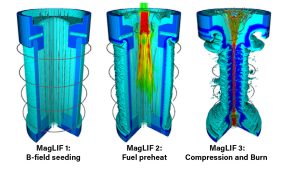
    This ‘liner’ is then seeded with a magnetic field (MagLIF 1), heated with a laser beam (MagLIF 2), and then rapidly compressed onto its central axis (MagLIF 3) using the current drive. The compression is very similar to the ‘can crusher’ experiments hobbyists build, but on a much larger and far more accurate scale. The liner contains and rapidly heats the fusion fuel (deuterium and tritium) to high temperatures, releasing energy primarily as neutrons. These neutrons are captured in a power plant, and their energy is used to heat water to turn a steam turbine and produce electricity. We then take out the electrodes, which are damaged from the fusion event, replace them along with a new liner target and electrode set, and repeat the process. This method is well suited to generate large yields (500 MJ to several GJ) with each fusion shot, and to repeat shots every ten seconds in a large-scale power station.

    Recent performance breakthroughs

    Since the introduction of the MagLIF approach for MD-IFE in 2011, fusion performance has progressed at a remarkable rate. Performance of a fusion system can be measured in a number of different ways, but one primary method is the ‘triple product’ derived from the Lawson Criterion. This allows a fair comparison between the wide range of methods presently being pursued both in federal and private endeavors.

    MD-IFE

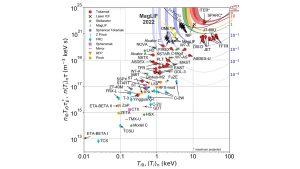
    The three important quantities are the plasma density (ion density ni), the plasma temperature (more specifically the ion temperature Ti) and the time the plasma is held together (the confinement time, t). The higher the product of these quantities are, the closer a system is to achieving fusion, and we need niTit > 3 x 10²¹ (m-3 keV s) to make energy.

    Fig. 1 reproduces Fig. 2 from Wurzel and Hsu 2022.5 This plots the triple product (nTτ) against the measured ion temperature for a wide range of experimental platforms. The premier laser-driven IFE platforms, OMEGA and NIF, show high nTτ at moderate ion temperatures (few keV), with a notable exception being the NIF ignition shot N210808, with an nTτ of 5.2×10²¹ keV m-3 s and an ion temperature of 10 keV. This is the only point on the plot above a Lawson criterion of unity. Magnetic confinement facilities like D-IIID at General Atomics, JET in the UK and TFTR previously at Princeton Plasma Physics Laboratory, typically show significantly higher ion temperatures, triple products in the range of ~1020 keV m-3 s, and a Lawson criteria between 0.1 and 1. The MagLIF data for MD-IFE on the original plot (black x points labeled “MagLIF”) showed data from Z shots in 2015 which demonstrated nTτ ~3×10²⁰ keV m-3 s and ion temperatures approaching 3 keV. Data from Knapp 20226 (yellow circles points labelled ‘MagLIF 2022’) improves on these values, where the best shot gives nTτ exceeding 1021 keV m-3 s.

    This makes MagLIF the only platform other than NIF to achieve such a high triple product value to date. Peak ion temperatures were 3.3 keV and the Lawson criterion was close to 0.1. This breakthrough result places MagLIF and MD-IFE in an ideal position to make rapid progress on the technological challenges that remain for energy production.

    Translating physics progress to energy production

    This excellent single shot performance needs translation to a repetition-rated environment suitable for fusion energy. The large-scale machines we are presently using to achieve fusion in one-time experiments will not work to produce energy; they were simply never designed to do so. There remain significant challenges to build a power station from these highly promising foundations, and much of the fusion field is working hard to understand and address how we will achieve this.

    There are a number of areas we can work on together as a community, such as making sure materials are developed that give a power station a long lifetime, or how we handle and recover fusion fuels. Both of these will determine the costs of a fusion power plant, and how it will operate safely close to populated areas where the power is needed. There are also needs for each specialised fusion approach that must be addressed by those developing it. Here, MD-IFE may have significant advantages over several other approaches which are enabled by two key technologies; advanced targets and scalable pulsed power drivers.

    Advanced targets: The Liner targets on the Z machine use large external field coils to produce the initial seed magnetic field required. These are difficult to build and expensive, and so not compatible with repetition-rated operation for energy. Advanced targets are under development in which the magnetic field is generated through the target itself by introducing a helical element to the current flow.7,8 These targets also reduce load inductance, allowing higher energy deposition, and are more amenable to mass manufacture for a power plant. Testing so far looks very promising, and experiments and simulation works continue to optimise designs.

    Scalable pulsed power driver technology: The Z machine is sub-scale, in that there is insufficient electrical current to achieve fusion ignition. Z is also based on 1970s Marx bank technology, which has proven very effective for the job it was designed for, but is not tailored to fusion energy needs. A power plant will use a 70MA driver, about a 3x scale-up of Z, and capable of one shot every ten seconds. Sandia and its collaborators have already developed several pulsed power architectures which could be used to construct this driver, including Linear Transformer Driver (LTD)9 and the Impedance Match Marx Generator (IMG).10 These can be designed specifically for achieving energy output, can operate rapidly, and deliver electrical pulses far more efficiently to the liner target than can be achieved at present.

    Building any new power plant is a complicated and expensive endeavor, and a fusion energy power plant is no exception. As we engineer solutions to critical issues, the costings and efficiencies will become more apparent and each individual fusion scheme will make advances. Of those approaches with triple products close to the required threshold, MD-IFE is likely to be one of the most economical and practical on the timescales required to be part of the solution to the energy crisis.

    The fusion driver and target technology exist, and performs impressively at sub-ignition scale. The required repetition rate is consistent with our ability to reload the system to produce energy. The technology challenges to automatically reload targets, safely recycle damaged electrodes and fuel, and to recover heat are under rapid development. The next five to ten years will be very exciting as we piece together the complicated puzzle of fusion energy.

    The university ecosystem supporting progress

    To reach this point in the long development of fusion energy has taken several decades of continued research into how to control the physics of plasmas. Recent achievements not only in fusion plasmas, but in broader plasma physics, high energy physics, semiconductors, quantum computing, nano- and meta-materials, amongst many others, show the importance of sustained efforts to unlocking the potential of new areas of physics. University programmes supported by federal funding are the keystone to progress in research. Researchers and faculty develop enthusiastic undergraduates into high quality, well-trained graduate students, and help place them in national laboratory programmes, private industry R&D efforts, federal programmes, and more.

    The Pulsed Plasma Physics Group at UC San Diego is working with a number of collaborators to drive MD-IFE forward. These include Sandia National Laboratories, Pacific Fusion Inc, the University of Michigan, Lawrence Livermore National Laboratory, Imperial College London, Los Alamos National Laboratory, and General Atomics.

    A key collaboration that has allowed a highly productive research environment to develop has been an NNSA-sponsored Center of Excellence. This was led by Professor David Hammer and Professor Bruce Kusse at Cornell University since 2003, and is now being led by Professor Ryan McBride at the University of Michigan since 2023. This foundational support has allowed students and researchers to thrive, develop innovative solutions, and push the boundaries of plasma physics research. The students we train actively participate in many areas of plasma science, including remarkable achievements in fusion science. Each achievement moves us one step closer to the realisation of fusion power in our modern lives.

    References

    1. S. A. Slutz et al, Phys. Plasmas 17, 056303 (2010)
    2. S. A. Slutz and R. A. Vesey, Phys. Rev. Lett., 108, 025003 (2012)
    3. Gomez, M. R. et al, Phys. Rev. Lett. 113, 155003 (2014)
    4. Gomez, M. R et al, Phys. Rev. Lett. 125, 155002 (2020)
    5. S.E. Wurzel and S. C. Hsu, Phys. Plasmas, 29, 062103 (2022)
    6. P. F. Knapp et al, Phys. Plasmas 29, 052711 (2022)
    7. S. A. Slutz et al, Phys. Plasmas 24, 012704 (2017)
    8. P. F. Schmit et al, Phys. Rev. Lett. 117, 205001 (2016)
    9. Stygar, W. A. et al, Phys. Rev. Accel. Beams (2015)
    10. Stygar, W. A. et al, Phys. Rev. Accel. Beams 20, 040402 (2017)

    Please note, this article will also appear in the 20th edition of our quarterly publication.

    [ad_2]

    Source link

  • Spin polarisation revolutionises nuclear fusion fuel efficiency

    Spin polarisation revolutionises nuclear fusion fuel efficiency

    [ad_1]

    Fusion energy, often hailed as the ultimate clean and sustainable power source, faces significant scientific and engineering hurdles.

    However, groundbreaking research from the Princeton Plasma Physics Laboratory (PPPL) suggests a promising approach to overcoming these barriers. By leveraging spin polarisation and optimising the fusion fuel mixture, scientists have demonstrated a way to significantly boost fusion energy efficiency, paving the way for smaller, more cost-effective fusion reactors.

    The potential of fusion fuel innovation

    The research focuses on using deuterium and tritium, widely regarded as the most viable fusion fuel combination.

    By adjusting their quantum properties using a process called spin polarisation, scientists found a way to increase the efficiency of tritium consumption.

    Spin polarisation aligns the quantum spins of fuel atoms, which enhances the likelihood of fusion reactions.

    Additionally, the study proposed increasing the proportion of deuterium in the fuel mix to more than 60%, further amplifying the fusion reaction’s efficiency.

    Computer models indicated this approach could enable tritium to burn up to 10 times more effectively, significantly reducing the amount needed for sustained reactions.

    Maximising tritium efficiency

    Tritium, a rare and expensive radioactive isotope, is crucial for initiating and maintaining fusion reactions.

    Yet, in conventional fusion processes, a significant portion of tritium remains unburned, leading to inefficiencies and high operational costs.

    The PPPL team’s innovative strategy optimises the ‘tritium-burn efficiency,’ likened by researchers to maximising the efficiency of a gas stove. Burning a higher percentage of available tritium could reduce the amount required to operate a fusion reactor.

    The role of spin polarisation

    At the heart of this breakthrough is the application of quantum spin manipulation. Unlike the physical spin of a baseball, quantum spin refers to the intrinsic angular momentum of particles, which has only discrete states, such as ‘up’ or ‘down.’ Fusion reactions are more likely when the quantum spins of two fuel atoms align.

    While current spin-polarisation techniques don’t achieve perfect alignment, the PPPL study shows that even modest polarisation can substantially enhance efficiency. By improving the fusion cross-section, this approach generates more energy from the same amount of fusion fuel.

    Compact and cost-effective fusion systems

    One of the most exciting implications of this research is the potential to develop more compact and affordable fusion systems.

    Reduced tritium requirements translate to smaller storage and processing facilities, which simplifies licensing and regulatory approval processes.

    Moreover, minimising tritium use enhances safety by decreasing the risk of leaks or contamination. Tritium’s relatively short-lived radioactivity already makes it safer than nuclear fission byproducts, but reducing its volume adds another layer of security.

    A step toward practical fusion energy

    While the findings are promising, scaling this approach for real-world applications presents challenges.

    Producing and storing large quantities of spin-polarised fusion fuel will require the development of new technologies. Additionally, maintaining high-grade fusion plasmas with the proposed fuel configurations needs further investigation.

    Ongoing work funded by the Department of Energy (DOE) is exploring methods for injecting spin-polarised fuel into fusion reactors. These advancements could open new avenues for innovation, enabling fusion power plants to operate more efficiently and cost-effectively.

    By improving tritium efficiency and reducing reactor size, this approach represents a major step forward in making fusion a practical and scalable energy source.

    As the fusion community continues to refine these techniques and address implementation challenges, the vision of clean, limitless energy moves closer to reality.

    [ad_2]

    Source link

  • Nuclear fusion power patent boom reflects rising innovation

    Nuclear fusion power patent boom reflects rising innovation

    [ad_1]

    Nuclear fusion power, often considered the ‘holy grail’ of clean energy, has seen unprecedented growth in innovation, evidenced by a continued rise in patent filings, according to the latest data from intellectual property firm Appleyard Lees.

    The recent Inside Green Innovation: Progress Report highlights that patent applications for nuclear fusion technology rose from 165 filings in 2021 to 167 in 2022, marking a nearly 50% increase from previous years.

    Fusion energy development, primarily focused on harnessing sustainable, low-waste power through the merging of atomic nuclei, continues to attract substantial investment.

    According to the Fusion Industry Association, over $7.1bn has been invested in fusion startups, with around $900m infused just in the past year. This surge in funding is fuelling a wave of new research and technological breakthroughs in the field.

    New technological approaches to fusion power

    Recent patent trends show that innovators are exploring alternative paths to achieve controlled nuclear fusion.

    Many recent filings focus on plasma generation methods, including particle beam techniques and advanced electrical discharge technologies.

    Companies are also making strides in magnet technology, which is essential for maintaining the extreme temperatures required for nuclear fusion power.

    Tokamak Energy, a leading UK-based company in fusion research, recently launched a new business division dedicated to magnet technology, solidifying its position as a key player in the fusion space.

    Another significant contributor is the UK Atomic Energy Authority, which is actively involved in patenting groundbreaking fusion technologies.

    The US leads fusion innovation, while fission declines

    While Asian countries once dominated nuclear fusion innovation, the United States is now at the forefront, with a variety of smaller companies driving new developments.

    Unlike in fission technology, no single US organisation has emerged as the leader, but collectively, these companies are increasing the US share in fusion patent filings.

    Meanwhile, nuclear fission, the technology that powers today’s nuclear reactors, has seen a sharp decline in patent activity.

    Filings are at a 60-year low, primarily due to a focus on safety features rather than groundbreaking advancements.

    In Asia, companies such as Korea Hydro & Nuclear Power Co. and Hitachi GE Nuclear Energy remain active in fission patents, emphasising emergency cooling, monitoring, and safety mechanisms.

    Fusion power’s future looks bright

    The continued rise in patent filings, coupled with substantial funding, suggests a promising future for nuclear fusion power as an emerging clean energy source.

    With a global shift towards sustainable energy, fusion technology could play a key role in addressing the world’s long-term energy needs.

    [ad_2]

    Source link

  • Paving the way for future fusion energy: Exhaust control for SPARC

    Paving the way for future fusion energy: Exhaust control for SPARC

    [ad_1]

    The realisation of a fusion plant faces multiple challenges, for example controlling the heat load on the wall. An expert team of the Dutch Institute for Fundamental Energy Research (DIFFER) is helping Commonwealth Fusion Systems (CFS) to develop the SPARC tokamak.

    In 2024 the Dutch Institute for Fundamental Energy Research (DIFFER) and the American private fusion company Commonwealth Fusion Systems (CFS) signed a two-year Statement of Work to advance the realisation of fusion energy. The collaboration project aims to develop a framework for exhaust control, including models, observers, and controllers for CFS’s SPARC tokamak fusion machine.

    Challenges for SPARC

    CFS is building the SPARC tokamak in Devens, Massachusetts, possibly the world’s first demonstration plant that will generate net energy from fusion using magnetic confinement, generally seen as the path to a commercial power plant. In terms of size, it’s a tokamak smaller than ITER in France, similar in size to ASDEX Upgrade in Germany or KSTAR in South Korea.

    With SPARC, CFS aims to pave the way for ARC, the first fusion power plant that will supply energy to the power grid. The road to a tokamak like ARC has several major challenges, such as controlling the heat load on the wall. That’s the challenge DIFFER will focus on in this project.

    SPARC is planned to achieve a ‘burning plasma’, a self-sustaining fusion reaction in which different isotopes of the element hydrogen fuse together to form helium without the need for any further input of energy. CFS aims to be the first company to achieve that on the path to a commercial power plant.

    The SPARC design would be far more powerful than existing fusion plants, achieving fusion performance comparable to that expected in the much larger ITER tokamak. The high power in a small size is made possible by advances in superconducting magnets that allow for a much stronger magnetic field to confine the hot plasma.

    New insights

    DIFFER is known for its leading role in controlling the heat load on the wall of a fusion plant by controlling the exhaust of the machine. The institute has past experience and expertise in developing control frameworks for fusion machines. In former projects, DIFFER researchers developed and demonstrated exhaust control on ASDEX-U, TCV, and JET (the largest tokamak in the world).

    sparc tokamak

    Moreover, DIFFER has been on the front of developing dynamic exhaust models that are necessary for the development of advanced control.

    Requirements for SPARC

    Despite all efforts, more research is needed. Heat exhaust control on a SPARC tokamak is a complex problem which requires managing core and edge performance at the same time. SPARC is designed to operate in a highly dissipative edge plasma regime using impurity gas puffing.

    Previous edge plasma modelling work using the 2D SOLPS-ITER code (SOLPS stands for ‘Scrape-Off Layer Plasma Simulation’) has successfully informed the SPARC technical requirements of the gas puffing time scales, its location, and the pumping louvres. Whilst gas puffing can help with heat exhaust management, it can also help mitigate plasma core disturbances and help maintain high-performance plasmas.

    However, given the compact design of SPARC, gas puffing can adversely impact core performance if not properly orchestrated with the requirements of plasma scenarios. Therefore, an exhaust-control-oriented controller is required to manage gas puffing for SPARC plasma scenarios.

    DIFFER’s expertise

    Due to the compact size of a fusion-producing plant made possible by a super high magnetic field, a really precise and quick cooldown of the plasma towards the wall becomes extra challenging. The specific knowledge required for this will be provided by the DIFFER expert team.

    SOLPS-ITER simulations will help map out the operational space of the SPARC exhaust conditions for the so-called divertor, a region that redirects the plasma-wall interaction further away from the core plasma where the fusion process should take place. This helps to minimise the impact of seeded impurities and gas puffing on the overall plasma performance. The exhaust operational space will be provided as a function of (controllable) parameters, like the neutral pressure in the divertor (responding to the gas puff applied) that helps to mitigate the heat-flux arriving at plasma-facing components (PFCs) by plasma-neutral interactions. A second parameter is the impurity concentration from seeded impurities (inter gases like Argon or Krypton) that additionally reduces the PFC heat-flux by redistributing energy through line-radiation. SOLPS-ITER is also capable of assessing the Helium particle exhaust, the latter a product of the fusion process that takes place in the plasma core.

    Driving a fusion plasma is also very dynamic: the core plasma will be likely required to be fuelled from the core with hydrogenic ice pellets (D & T isotopes), and the expel of particles transient ablated from a fuelling pellet and transients in the power fluxes from the core into the edge require capabilities to model the exhaust problem in a time-dependent way. Ultimately, advanced high-fidelity models must be interconnected with dynamic models that will provide the foundation for further analysis of the controllability of the plasma exhaust.

    One of the biggest challenges is to get the exact amount of hydrogen gas and noble gasses into the exhaust to cool down the plasma sufficiently without degrading the core plasma where the fusion process takes place. As these gas injection systems are generally slow, slower than the plasma processes that modify the exhaust, prediction is needed to counteract these variations.

    Therefore, DIFFER is developing model predictive control for SPARC using core power fluctuation predictions and safety constraints such as melting limits and disruption limits. This work requires both good models of the exhaust, which are partly based on SOLPS-ITER simulations of the exhaust partly being developed at DIFFER, and simulations of the core with other codes.

    The JINTRAC integrated code suite combines the plasma core and plasma edge models together, which, in principle, allows whole-device modelling ‘from the wall to the core’. However, SOLPS-ITER simulations at high fidelity by themselves are relatively slow with respect to their numerical speed. DIFFER, in recent years, has gained significant experience in the establishment of fast surrogate models using artificial intelligence techniques in collaboration with other European institutions.

    sparc tokamak
    Tokamak Hall is the room where SPARC will be built soon. The wall shows a life-size illustration of SPARC. © CFS

    These fast models, which can also be improved to work at higher fidelity, will finally allow for a fast integration at reasonable computing times of the simulation and thus will allow for full-device modelling required for integrated core/edge control techniques within a reasonable timeframe of the project.

    Leveraging the numerical expertise, DIFFER will develop a control-oriented framework that can be executed on CFS computing resources. In the framework, the focus will lie on exhaust control, including models, observers, and controllers; DIFFER is going to make state-of-the-art controllers which will effectively decouple the heat flux from the core plasma in the tokamak and the power on the divertor tiles. The project scope is limited to the activities that take place before the start of SPARC plasma operations.

    In the future, the scope could be expanded to the demonstration and testing of controllers and models on SPARC.

    Relevant topical areas the Dutch research institute will work on:

    • Development of both static and dynamic modelling of the exhaust
    • Exploiting AI techniques to speed up the numerical capabilities
    • Supporting the development of exhaust diagnostic and observer development
    • Developing the model predictive control

    Implementation

    As CFS gets closer and closer to SPARC operation, control system development and campaign planning become increasingly important to the project. Results from plasma heat exhaust simulations and controller tests on simulated plasma parameters will inform the development of the final SPARC control system and will be an important input to plans for early operations. SPARC operations will continually improve understanding of the physics of heat exhaust and will provide the data necessary to improve future modelling and controllers.

    For DIFFER, the collaboration with a private company like Commonwealth Fusion Systems underscores DIFFER’s commitment to conduct fundamental research on materials, processes, and systems for a sustainable global energy infrastructure, all in close partnership with (inter)national academia and industry.

    Please note, this article will also appear in the 20th edition of our quarterly publication.

    [ad_2]

    Source link