Tag: Fusion Energy

  • Harnessing fusion energy with benefits for Europe

    Harnessing fusion energy with benefits for Europe

    [ad_1]

    Fusion energy can be a long-term source for clean energy, but we need to prepare for the future now.

    Fusion energy cannot satisfy our acute need for green energy and it cannot replace a rapid energy transition to renewable energies. However, it can play an important role in meeting our ever-growing future energy needs. It can deliver locally produced, base-load capable and CO2-free energy, independent of geological and climatic conditions, in a comparatively compact setup.

    Advancing fusion research closer to commercialisation

    Fusion research has long been regarded as fundamental research. However, technological breakthroughs like new and extremely powerful supercomputers, advances in the development of artificial intelligence (AI), new laser diodes, and high-temperature superconductors have brought fusion much closer to commercial application. In recent years, these technological leaps have also motivated private investors to invest in the fusion industry for the first time, in the context of an ever-growing demand for energy.

    Worldwide, more than 45 fusion start-ups, including several in Germany, have raised a total of more than $7bn in private investment.1 The start-ups are pursuing a very broad range of technological approaches, and each start-up has its own unique approach. The variety of technologies being explored by all the start-ups increases the chances of finding a commercial approach quickly. However, at this stage of development, it is not possible to predict which technologies will ultimately reach the market. Therefore, focusing on one or a few technologies cannot be scientifically justified today and is not recommended.2

    What is SPRIND?

    SPRIND – the Federal Agency for Disruptive Innovation in Germany – is a federal government company tasked with identifying, developing, financing, and scaling groundbreaking innovations. Inspired by DARPA in the US, its main goal is to provide agile and proactive support, both financially and structurally.

    Fusion energy, if done right, will be one of the major breakthrough innovations of the future and part of the solution to satisfy our hunger for energy. Society will be enabled to power mobility and industry, but also a circular economy or new ways of desalinating seawater. For Germany and Europe, this can result in additional economic success. It can be a key technology for which Europe can provide large parts of the supply chain with industrial sectors in which Europe is strong.

    SPRIND is therefore supporting companies that are tackling the challenge of building a commercially viable fusion plant and at the same time is a spokesman in favour of supporting developments in the supply chain.

    Supporting fusion innovation

    So far, SPRIND has established the subsidiary Pulsed Light Technologies (PLT), with the aim of developing laser systems for laser-driven inertial fusion that are built in such a way that they can later support commercially viable power plant operation. The developments are carried out together with the co-operation partners Focused Energy and Marvel Fusion, who pursue different approaches and will need different laser systems ultimately. But both are united by the fact that currently available systems exhibit too low efficiency and too low repetition rate. By financing this work with €90m, SPRIND supports these German start-ups to further de-risk their technical developments and attract private investors.

    The other large cluster of fusion approaches – magnetic fusion – has a strong research history in Germany and Europe must also be enabled to further de-risk key technologies and answer central engineering questions before a clear path towards a fusion power plant can be evaluated.

    Actions needed to accelerate the fusion energy sector

    But if this technology is to succeed on a timescale to meaningfully contribute to a future energy mix, governments must create the right conditions right now. Apart from financial support and incentives, private industries and investors need reliable and predictable framework conditions to act upon. Minimum requirements for political action and primarily concern regulations and the organisation of training in universities and companies.

    Reliable and risk-appropriate regulatory frameworks need to be put in place. There are few hazards associated with fusion power plants, and they are significantly less risky than fission power plants. By establishing safety guidelines now that are tailored to the hazard and risk profile of fusion power plants, a predictable and trustworthy environment can be created for start-ups and their investors facilitating technological roadmaps and the assessment of economic viability. Adopting overly strict regulations from the regulation of fission power plants would drive up the cost of fusion power plants. The United States and the United Kingdom are already adapting their regulatory frameworks – Europe needs to follow.

    A crucial point will be the organisation and detailed structuring of public financial support. The schedule and cost plan for the ITER experimental fusion reactor has been revised several times in recent years. This shows how a potentially excellent project can be slowed down by complex frameworks, competitive bidding requirements, ineffective collaboration, political diplomacy and a lack of market orientation that go hand in hand with purely government funding and long-term research agendas.

    Driven by their private investors, fusion start-ups are following a rigorous milestone-based roadmap and are very focused on the commercial viability of their fusion power plants. In contrast to fully government-funded projects, they can adapt their strategy very flexibly and quickly to new findings, technologies and market developments. A clever design of private-public partnerships can leverage the combined advantages of private drive and flexibility, as well as the broad expertise of public research and financial support.

    Start-ups, as well as relevant industry in the supply chain, should be supported through milestone-based public-private partnership models. This ensures that high-risk projects with high potential returns are supported, but also that approaches that prove unsuitable can be weeded out to limit financial damage.

    Developing a stable fusion economy

    Over the last few decades, research has laid an excellent foundation for the commercial exploitation of fusion. However, the development of commercial power plants will not be the result of research, but must be driven by industry and start-ups. This process of development towards a fusion energy economy needs to be supported structurally and through public-private partnerships, and flanked by research. As it is not yet clear which fusion concepts will actually reach the market and be viable in the long term, flexible milestone-based programmes are the way to go. The most important, however, is to start acting now.

    References

    1. Fusion Industry Association Report 2024
    2. F Metzler and J Messinger 2023, The Spectrum of Nuclear Energy Innovation (June 1, 2023). Available at SSRN: https://ssrn.com/abstract=4531998

    Please note, this article will also appear in the 20th edition of our quarterly publication.

    [ad_2]

    Source link

  • Simplifying stellarator technology to achieve fusion energy

    Simplifying stellarator technology to achieve fusion energy

    [ad_1]

    Francesco Volpe, Co-founder of fusion startup Renaissance Fusion, talks us through the company’s unique stellarator technology that promises to accelerate fusion development in Europe.

    “We decouple energy from fuels and emissions by building a super-star on Earth.” This is the foundation of magnetic confinement fusion startup, Renaissance Fusion. Founded in 2020 by Francesco Volpe and Martin Kupp, the company is dedicated to building stellarators – the most efficient, steady, and stable fusion reactors – using unique high-temperature superconducting magnets and liquid metal shields.

    Located in France, Renaissance Fusion is ideally situated amongst a hub of European fusion talent. The company’s simplified stellarator design offers many competitive advantages in the race towards fusion commercialisation. To learn more about what makes Renaissance Fusion’s technology unique, The Innovation Platform spoke to Co-founder Francesco Volpe.

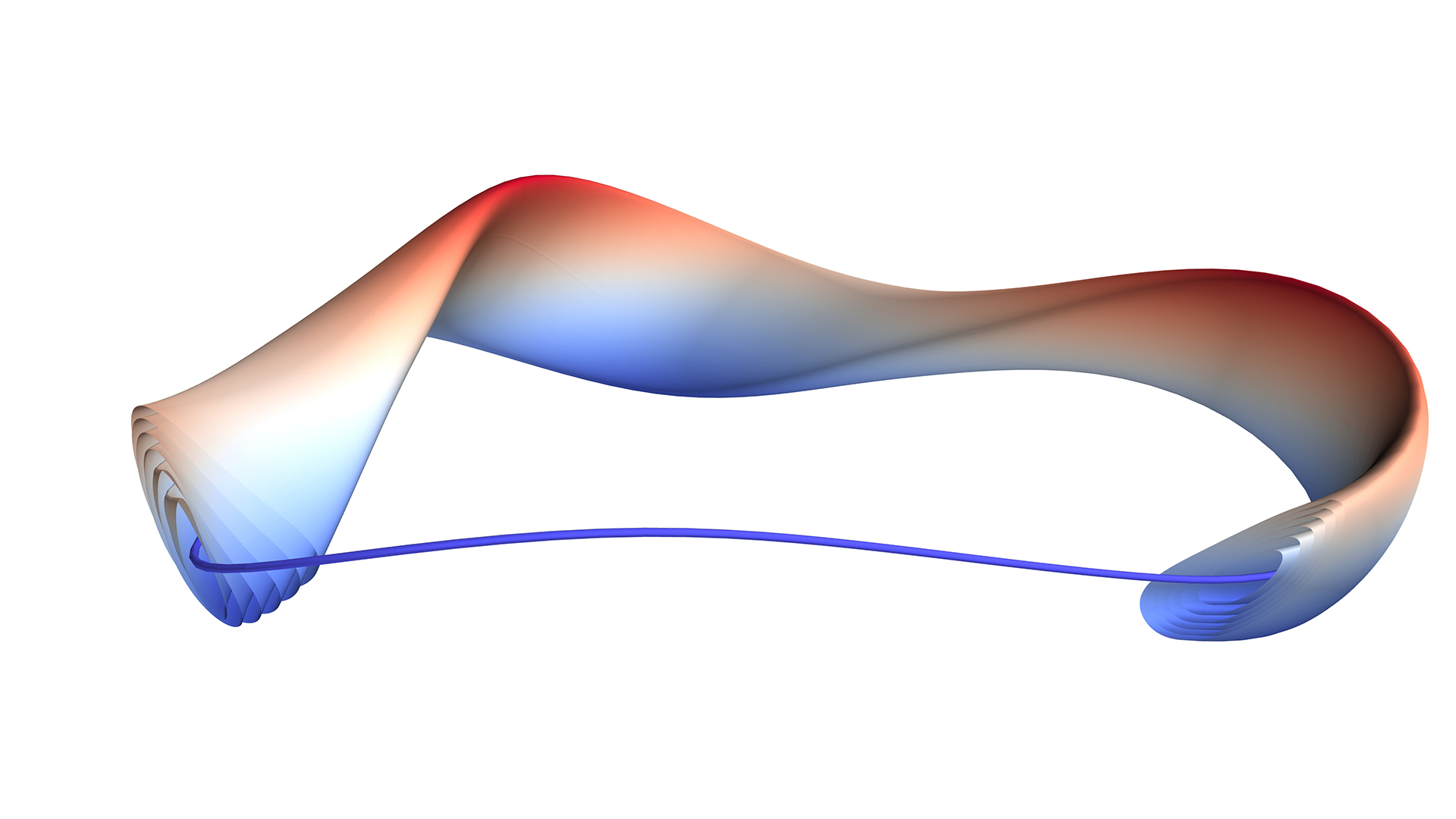
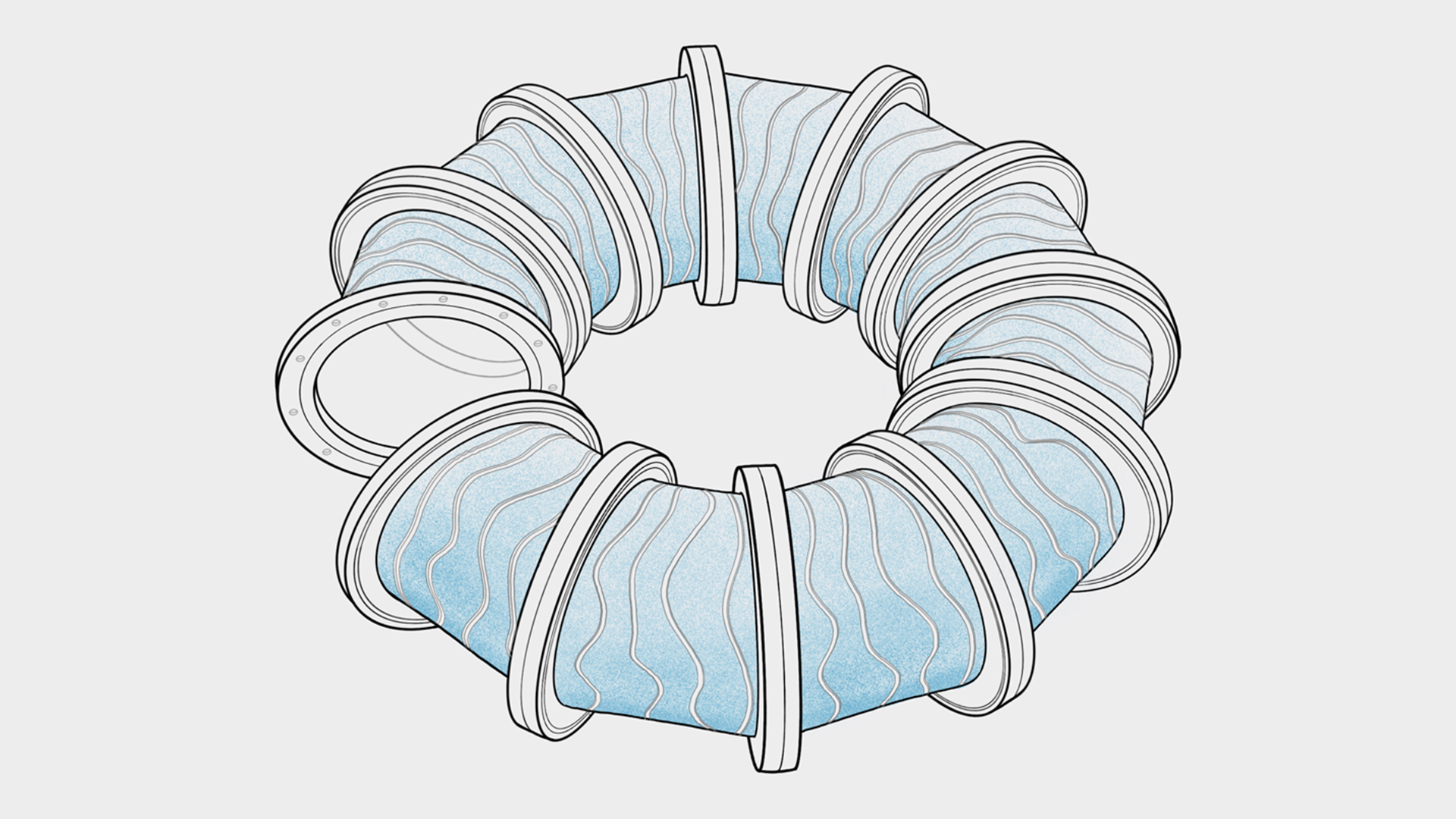
    Sketch of Renaissance Fusion’s stellarator, illustrating the technological distinction of its design © Renaissance Fusion

    Can you explain more about Renaissance Fusion as a company, its background, and what the company offers?

    I am a physicist from Italy. I studied in Germany and specialised in the UK, but spent most of my career in the US. I then returned to Europe, where I started Renaissance Fusion. Renaissance Fusion is a startup located in Grenoble, France, realising the stellarator. A stellarator is a highly complex magnetic fusion device, but we make it simple.

    Renaissance Fusion’s stellarator configuration showing the flux surfaces and magnetic axis © Renaissance Fusion

    In the process of simplifying the stellarator, we also simplify the manufacturing of high-temperature superconductors (HTS). This is a relatively new class of materials, allowing the generation of strong magnetic fields and thus enabling more compact and affordable fusion devices. It is typically a very lengthy and expensive process, but we speed it up.

    Another innovation is the plasma-facing walls. The conditions of fusion are extreme (extreme heat, extreme neutron flux) and no solid materials withstand those conditions for prolonged periods of time without being damaged and becoming radioactive. We decided to embark on liquid walls facing the plasma, thick enough to stop the neutrons and flowing continuously, to extract the heat. The liquid walls fulfil multiple purposes.

    Firstly, they shield the solid parts of the device and humans from radioactivity, both direct and induced. They also extract the heat that can then be converted into electricity. Lastly, the application of these liquid walls is breeding the fuel for the reactor. When we say that the fuel for fusion reactors is inexhaustible, strictly speaking that is only true for one of the two fuels, deuterium. This liquid metal wall based on lithium breeds the second fuel, tritium.

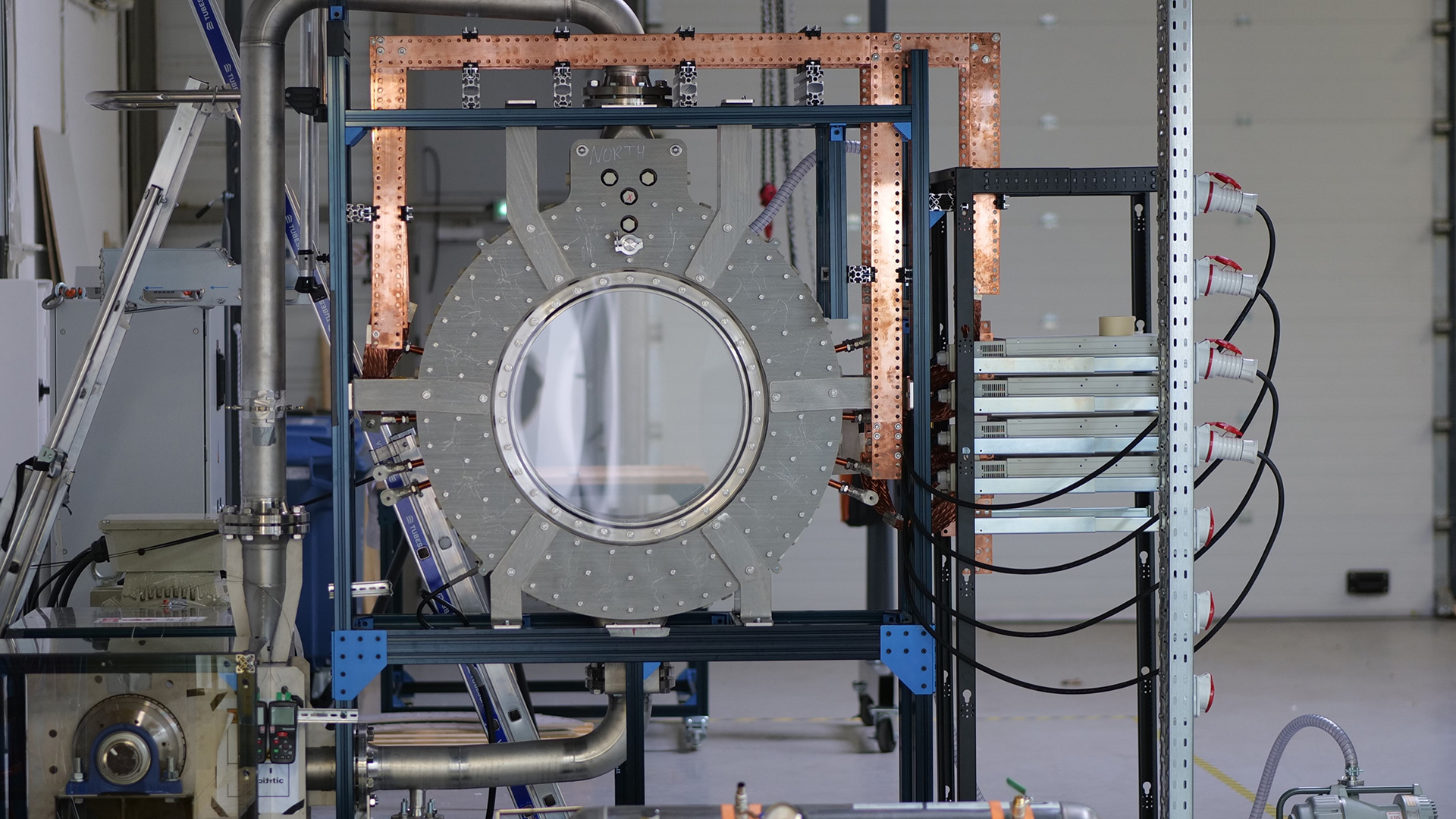
    Renaissance Fusion’s experimental liquid metal device © Renaissance Fusion

    What makes your technologies different? How do they address the challenges commonly associated with other stellarators?

    There are several challenges associated with conventional stellarators.

    The challenge of the complexity of the magnets is always the highest concern, which we are addressing by simplifying the coils. Instead of making three-dimensional sculptures, we coat large surfaces with superconductors and then engrave these surfaces with a laser to achieve large superconducting circuits that carry current. This is a very simple and versatile way of making coils.

    Secondly, most stellarators look like bicycle tyres. They are shaped like doughnuts, but ‘high aspect ratio’ donuts. However, it is more efficient for them to be shaped like cored apples. We focus on making low aspect ratio stellarators, which are more affordable and perform more efficiently.

    Using HTS also allows us to make the stellarators more compact than typical ones. We are not unique in this regard as there are other startups building HTS stellarators, but we are pushing this to the limit. We are also the only stellarator company using liquid walls.

    Another advantage is the HTS tape orientation. Our HTS material is always at the best orientation with respect to the magnetic field, meaning it yields the highest performance. Or, for the same level of performance, you consume much less material. This, again, makes it more affordable.

    What stage is the company at currently?

    We have three technological pillars: the liquid metals, the larger HTS, and the stellarator. We have achieved promising experimental results in the liquid metals and in the HTS manufacturing. Our stellarator is still in development, but we have built some magnets conducive to the stellarator. We have theoretical, modelling, and experimental results in all three branches.

    The liquid metal branch is at the most advanced stage, and we have experimentally realised a layer of liquid metal 10cm thick, flowing on the inside of a cylinder. We are very proud of that result. It also spilt very minimal droplets. Droplets are undesirable in a reactor situation because they would turn off the plasma (the heat source of the reactor), meaning that the plasma would need to be restarted.

    We are currently in talks with some utilities to determine what a tolerable frequency of such droplets would be. We are also working on the next generation of our liquid metal solution, which is based on hot liquid metals. The liquid metals used so far were special alloys that are liquid at room temperature, but these are not the ideal materials for use in the reactor, and not at the temperatures of the reactor. We are now looking at fusion-relevant materials and temperatures.

    Installing Renaissance Fusion’s HTS production equipment © Renaissance Fusion

    The area of a wider HTS tape (the first of their kind ever, worldwide) is a work in progress and we are getting ready for our first major experimental result. Namely, we designed, modelled and are now building machines for the film deposition of these special materials. We commissioned the vacuum chambers and now we are in the process of installing various injectors on them. In the coming months, we expect to have our first samples of superconducting material.

    Regarding near-term objectives for the stellarators, we are working on a copper tabletop stellarator built with our innovative corrugation concept. Whilst advancing toward manufacturing our HTS, we decided to work on derisking the engraving technique using copper or aluminium. Prior to applying it to a stellarator, we successfully tested the technique on a magnetic resonance imaging (MRI) system, and a magnet used for a microwave source called a gyrotron whihc is used in telecommunication and plasma heating applications. The magnet for the gyrotron was built and proven and worked very well, and the magnet for the MRI also performed extremely well, even better than brand-new conventional MRI magnets.

    What do you hope to achieve in the near future, and what is required to do this?

    For the HTS alone, tens of millions of euros in investment are required in order to build a second line of manufacturing. We are looking for between €50-70m for our Series A funding. This investment would allow us to continue with the HTS development and, ultimately, become HTS producers.

    Another big milestone associated with this fundraise is building a module of the stellarator. Our doughnut will consist of several cylinders connected to each other. We will supply a kit of subassemblies that can be manufactured in a centralised factory and shipped to a power plant to be assembled on site. The grand objective of this funding series is to build one of these modules and demonstrate that it can work. We want to prove that we can generate the stellarator field with our wide HTS and, the layer of liquid metal flowing with the correct thickness and speed. If we can build one of these modules, we can build many.

    Our team currently stands at 60 people, but, in order to achieve our goals, we need a team of at least 100. Part of the funding will support the growth of our team. We currently have two locations, both just outside of Grenoble in Fontaine. However, fusion is a global endeavour and we need talents from all around the world. Eventually, we intend to open subsidiaries in other countries.

    What role do you hope that Renaissance Fusion can play in the commercialisation of fusion energy?

    We want to become a leading producer of stellarator power plants, with a focus of achieving full vertical integration.

    In addition, we could also be horizontally integrated. For example, we could supply HTS and liquid metal systems to other fusion startups. We are very open to supporting other organisations in the field and we don’t think it is a distraction from the ultimate goal of making fusion happen. In fact, it could bootstrap the development of fusion. It could be an early revenue generator that helps the financing of fusion in the longer term. We are already exploring this route for non-fusion applications, such as wind energy. We would be very happy to supply HTS systems to other fusion reactor producers. In fusion, we have this neologism of ‘coopetitors’ (co-operative competitors) – meaning that, even though we are competitors in the different fusion technologies, we can co-operate on advancing fusion energy development.

    What do you think could be changed to further the acceleration of fusion development?

    In my view, while the growth of fusion startups is exciting, there are many of us pursuing similar paths. Although we complement each other in certain areas, there is also a lot of overlap, with multiple companies competing for the resources. This can sometimes slow down overall progress. I believe that by working together more closely, through collaborations or even mergers, we could accelerate advancements and better support the commercialisation of fusion.

    Please note, this article will also appear in the 20th edition of our quarterly publication.

    [ad_2]

    Source link
  • UK Industrial Fusion Solutions set to lead STEP programme

    UK Industrial Fusion Solutions set to lead STEP programme

    [ad_1]

    In a milestone moment on the journey to deliver the UK’s first prototype fusion energy plant, leadership of the STEP (Spherical Tokamak for Energy Production) programme today transitions to UK Industrial Fusion Solutions Ltd (UKIFS).

    UKIFS is a wholly owned subsidiary of the UK Atomic Energy Authority (UKAEA) Group. It was established to lead a public-private partnership to design, build, and operate the STEP prototype plant at the West Burton site in Nottinghamshire.

    UKAEA will continue to be STEP’s fusion partner, working alongside two industry partners – one in engineering and one in construction – to spearhead the development of a UK-led fusion industry.

    Selecting long-term partners for the STEP programme

    A major procurement exercise is currently underway to select strategic, long-term industry partners for the STEP programme, with the shortlist expected to be announced by the end of the year.

    Paul Methven, CEO of UK Industrial Fusion Solutions and Senior Responsible Owner for STEP, said: “The launch of UK Industrial Fusion Solutions demonstrates significant progress and commitment to developing fusion as a viable clean energy source and also to creating a UK-led fusion industry.

    “The STEP programme is a national endeavour with global impact, and we will continue to work closely with public and private sector partners to ensure the UK remains at the forefront of a revolutionary sustainable new energy source that will drive economic growth.”

    Paving the way for commercial fusion energy in the UK

    The STEP programme aims to pave the way for the commercial viability of fusion by demonstrating net energy, fuel self-sufficiency and a viable route to plant maintenance.

    The programme’s holistic approach was recently published in a special edition of the Royal Society Journal, Philosophical Transactions A.

    “UKIFS brings together an experienced team dedicated to translating decades of fusion research into a functioning prototype plant that will be capable of supplying low-carbon, safe, and sustainable energy to the grid,” explained Professor Sir Ian Chapman, CEO of UKAEA Group.

    “UKIFS will integrate partners in a national endeavour to build STEP as well as focussing on delivering enormous social and economic benefits to the UK, especially for the East Midlands region where the plant will be built.”

    The West Burton site in Nottinghamshire was chosen as the home for STEP due to its infrastructure, proximity to skilled workforces, and community support for innovative energy solutions.

    For the latest updates about UK Industrial Fusion Solutions and the STEP programme, visit the newly launched website.

    [ad_2]

    Source link

  • Fusion as the future of baseload energy and a decarbonised world

    Fusion as the future of baseload energy and a decarbonised world

    [ad_1]

    Karl Tischler from the European fusion research consortium EUROfusion discusses the potential of fusion energy in achieving global decarbonisation.

    The energy landscape is rapidly evolving as the urgency to reduce carbon emissions and achieve energy security grows. Fusion energy, long seen as a scientific dream, is now approaching a pivotal moment that could redefine how we power our world. With strong partnerships between the public and private sector, science and industry are integrating their approaches to fusion power.

    As a potential source of clean, reliable baseload energy, fusion holds the promise of filling critical gaps left by existing renewable technologies like wind and solar. With recent breakthroughs and increasing investments, fusion energy is poised to emerge as a cornerstone of the future energy mix, complementing renewables and reshaping our path to a sustainable and resilient energy system.

    fusion energy
    Artist’s impression of the European Demonstration Fusion Power Plant DEMO, which will demonstrate the feasibility of fusion as an energy source by producing power for the grid
    Credit: EUROfusion Consortium and F4E

    Fusion: The ultimate baseload power

    Unlike renewable energy sources such as solar and wind, which are intermittent and dependent on weather conditions, fusion provides a consistent and reliable source of power. The fusion process combines atomic nuclei to release massive amounts of energy, just as they do in stars. This process has the potential to generate power 24/7, regardless of external conditions. Fusion’s fuels, deuterium and tritium, are derived from resources such as seawater and lithium. Because fusion requires ten million times less fuel than a coal-fired power plant to release the same amount of energy, it is not only sustainable but also secure against the geopolitical and supply chain risks associated with fossil fuels.

    As an energy source, fusion is inherently safe, producing no carbon emissions, no long-lived nuclear waste, and no risk of a meltdown. The byproducts of fusion reactions are helium and short-lived, low- to mid-level radioactive materials that are far easier to manage compared to the high-level waste from fission reactors. This positions fusion as a uniquely clean baseload power source that can operate continuously, balancing the variability of other renewables and stabilising the grid.

    Beyond power: Heat production and its applications

    Fusion’s potential extends beyond electricity generation, as it also produces heat that can be harnessed for certain applications, such as district heating. Currently, the heat generated by fusion reactors is not suitable for all industrial processes, particularly those requiring very high temperatures, like hydrogen production or advanced manufacturing processes. This limitation arises because the heat must be kept below a certain threshold to maintain the reliability of materials like Eurofer steel, a reduced-activation ferritic/martensitic (RAFM) steel specifically developed for fusion environments.

    fusion energy
    Artist’s illustration of a fusion power plant
    Credit: UKAEA

    However, this limitation is tied to the materials we use today. In the future, different materials may be developed that can withstand higher temperatures, opening the door to a broader range of industrial applications. With advancements in material science, it is possible that fusion-generated heat could be applied to more high-temperature processes.

    Eurofer steel is designed to endure high radiation and temperature conditions typical of fusion reactors, making it essential for critical components such as the breeding blanket and divertor. However, exceeding certain temperature limits can compromise Eurofer’s structural integrity, which restricts its suitability for some high-temperature industrial uses compared to heat from fission reactors. Despite this, material innovations on the horizon might enable fusion reactors to generate heat suitable for more demanding industrial applications.

    Fusion heat offers a valuable resource for district heating and other moderate-temperature applications, contributing to fossil fuel reduction in residential and some commercial settings. As material technologies evolve, so too will the potential uses of fusion heat, possibly transforming its role beyond moderate applications and extending into a wider array of industrial processes.

    EUROfusion: Leading the charge toward a fusion-powered future

    EUROfusion, Europe’s premier fusion research consortium, is at the forefront of this transformation. Our mission goes beyond advancing fusion science; we are committed to bringing fusion to the market as an integral part of Europe’s decarbonised energy portfolio.

    EUROfusion’s research supports ITER, the world’s largest fusion experiment in southern France, where 35 nations collaborate to demonstrate the scientific and technological feasibility of fusion energy. Our work directly contributes to overcoming the remaining technical hurdles, ensuring that fusion will be ready to complement existing energy sources within the next few decades.

    EUROfusion’s leadership in fusion research is not just about scientific achievement; it is about creating a sustainable, economically viable energy future. Our strengths lie in our global expertise, our collaborative spirit, and our ability to bring together a cohesive research community that now seeks to expand and forge strong partnerships with industry and private fusion ventures as equal partners. This approach has already led to significant advancements in plasma physics, materials science, and reactor design, paving the way for fusion to become a practical and competitive energy source.

    The role of fusion in the future energy mix

    As the world moves towards electrification, particularly in sectors like transportation, heavy industry, and data centres, the demand for reliable and clean energy will only intensify. Fusion offers a unique synergy with renewable energy. By providing consistent baseload power, fusion can reduce the need for large-scale battery storage and grid-balancing technologies, which are costly and resource-intensive. This integration could result in a more resilient and cost-effective energy system, where renewables provide variable power and fusion ensures a steady supply, optimising the overall performance and reliability of the grid.

    Overcoming challenges and looking ahead

    While fusion’s potential is enormous, challenges remain. The transition from experimental reactors to commercial power plants requires significant investment, regulatory clarity, and continued technological innovation. Recent advancements, including achieving net energy gain – measuring the energy produced by fusion reactions compared to the energy delivered to the fuel – have invigorated global interest and investment. However, this measure does not yet account for the total energy required to operate the system, underscoring the need for further development.

    EUROfusion is committed to addressing these challenges head-on, working closely with international partners in research and industry to bring fusion energy from the laboratory to the power grid. Our efforts align with broader global goals of achieving climate neutrality, with the understanding that fusion’s major impact will be felt after 2050. Fusion is poised to help meet the growing energy demands of a transitioning world, ensuring that the benefits of this clean, safe technology are shared globally, supporting energy justice by enabling all countries to power their societies and fuel their development.

    Next great leap

    Fusion represents the next great leap in energy technology – a leap that EUROfusion is leading with vision, innovation, and collaboration. As we stand on the brink of realising fusion’s potential, we invite policymakers, industry leaders, and the public to join us in supporting this revolutionary technology. Fusion is more than just a scientific milestone; it is the future of clean, reliable, and abundant energy that will power the next generation and beyond.

    With fusion, we have the opportunity to redefine baseload energy and secure a sustainable future for all.

    Please note, this article will also appear in the 20th edition of our quarterly publication.

    [ad_2]

    Source link