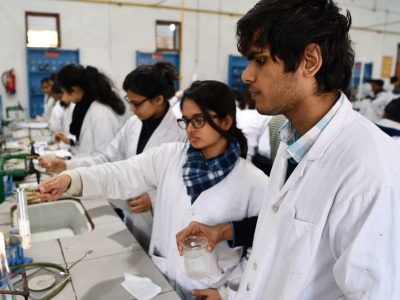
A PhD student works in a clean room at the University of Tokyo.Credit: Yuichi Yamazaki/AFP via Getty
In response to a decline in the number of PhD holders in Japan, the Japanese government has announced plans to not only stop the trend but reverse it, by tripling the number by 2040.
Japan is the only major economy that has recorded a dip in PhD numbers since 2000. In 2022, there were 14,382 new PhD admissions across the country — down 21% from a high of 18,232 in 2003.
As a proportion of the population, there are now fewer PhD holders in Japan than in many other leading research countries. According to Japan’s National Institute of Science and Technology Policy (NISTEP), in 2020, the country had 123 PhD graduates per million people, well below the rate of 315 per million in Germany and 313 per million in the United Kingdom for that year, and 285 per million in the United States in 2019.
A survey published by NISTEP in 2021 revealed that many doctoral students in Japan feel demoralized because of financial uncertainty, career insecurity and a lack of career progression.
To address the problem, Japan’s Ministry of Education, Culture, Sports, Science and Technology (MEXT) announced a three-pillared plan in March, with a focus on boosting career opportunities as well as institutional support and outreach for PhD students. The government is hoping to promote a cultural shift that raises the status of PhD holders in Japanese society.
“We want to create an environment that increases the number of people aiming for doctoral degrees, produces many excellent candidates, and realizes a fruitful life for each candidate and the sustainable development of society as a whole,” Mitsunari Yoshida, director of the Policy Division in MEXT’s Higher Education Bureau, told Nature Index.
Career choices
The first pillar of the initiative focuses on diversifying career choices, to ensure that doctoral candidates have a more active role in research outside academia, such as in local and central government, start-up companies and other private-sector groups.
2024 Research Leaders
This focus on industry and government roles aims to address a long-standing cultural issue in Japan, namely that having a PhD might actually limit someone’s chances of being hired.
“The greatest obstacle is the perception that once one gets a PhD in a subject, one is regarded as an expert in that particular field,” says Ken Mogi, a researcher in neuroscience at Sony Computer Science Laboratories in Tokyo, and a visiting academic at the University of Tokyo. “With that image comes the assumption that a person with a PhD is inflexible in work in the real world. For that reason, Japanese companies are typically not forthcoming in employing people with PhDs, discouraging students to consider a career with a PhD.”
MEXT plans to promote long-term, paid internships for PhD students in the private sector, as part of a broader effort to entrench internships in Japanese society.
Symbolic of this is Cooperative Education Through Research Internships, a programme introduced in 2021 with the support of 45 universities and 45 companies, including major Japanese brands. The paid internships run for at least two months, are eligible for academic credit, and aim to support doctoral researchers by matching them to companies and diversifying their career options. The ministry wants to increase the number of PhD candidates in these internships to 5,000 by 2030, up from 3,000 as of May this year.
Boosting support
As its second pillar, MEXT wants to raise the quality of graduate schools by providing extra funding and tracking their progress.
MEXT will part-fund PhD students’ living and research expenses through the Support for Pioneering Research Initiated by the Next Generation (SPRING) scheme, which is run by the Japan Science and Technology Agency to support outstanding doctoral students; and the Japan Society for the Promotion of Science’s Research Fellowship for Young Scientists programme, which supports doctoral students to pursue innovative research of their own choosing.
“Financial issues are significant in Japan, and many PhD students are struggling,” says Tomokazu Iwabuchi, a PhD student in urban planning at Kyushu University in Fukuoka.
After years of taking on part-time jobs during his master’s programme, Iwabuchi says he can now spend more time focusing on PhD research because he was chosen for the university’s Future-Creation course, which is part of the SPRING programme. Doctoral students on the programme receive ¥200,000 (US$1,360) per month to cover living expenses and language training, up to ¥850,000 yen per year in research expenses, and a 50% reduction in tuition fees.
In 2023, Iwabuchi started his own consulting business rooted in his research on urban planning and geographic information system (GIS) data. “I’m really happy to hear that the government is putting more resources into supporting PhD students,” he says. “I hope they will have more career options in the near future.”
Strengthening motivation
The third pillar is about boosting student motivation by supporting more outreach programmes. One example is the Future Doctoral Festival, an annual gathering in Tokyo at which doctoral students give presentations and take part in panel discussions related to their research. The goal of initiatives such as this is to showcase the appeal of pursuing a PhD, not just to students, but also to leading figures in the public and private sectors.
Ranny Herdiantoputri, a doctoral student in oral pathology at the Tokyo Medical and Dental University welcomes this outreach, but says more attention must be given to the mental health of prospective PhD students, especially those from overseas who might struggle with the Japanese language and feelings of isolation.
“Students can suffer from imposter syndrome and anxiety, and wonder, ‘Am I really good enough for this?’,” says Herdiantoputri. “Without proper support, outreach gatherings can make it worse.” She adds that teaching jobs at Japan’s public universities are almost impossible to get, and she plans to return to her home country, Indonesia, after her degree.
Will it work?
Koichi Sumikura, who studies science and technology policy at the National Graduate Institute for Policy Studies in Tokyo, thinks that a change in mindset among those in industry is a must. “A majority of industry managers in Japan consider that the expertise and the area of interest of PhD holders are too narrow and do not fit their business,” he says. “However, PhD holders tend to be trained for acquiring a wider field of view.”
Sumikura emphasizes the importance of PhD programmes teaching skills that are relevant to industry. “PhD holders themselves should be trained not only in a specific academic expertise, but also general scientific knowledge, communication skills and business and social literacy,” says Sumikura.
Nobuko Kobayashi, who works for EY-Parthenon, a consultancy based in Boston, Massachusetts, and who writes about innovation and human resources in the Japanese media, says she hopes that Japan will consider and support entrepreneurship opportunities for its PhD holders.
“It’s important that universities strengthen education and opportunities around entrepreneurship, so students can bridge their research with real-world applications,” says Kobayashi. One encouraging factor is the increase in start-ups in Japan. In particular, she says, the number of start-ups spun off from Japanese universities has increased every year, and these firms “also hire significantly more PhD graduates compared to other Japanese companies”.
It is to soon to tell whether the measures Japan is now undertaking can motivate its doctoral students, change hiring practices and overhaul its research culture. But Sumikura agrees that the effort is worthwhile. “It is not easy to achieve that goal, but it is worth trying,” Sumikura says.
From tackling the COVID-19 pandemic to addressing climate change, the success of most policies depends on how they are implemented on the ground. This responsibility usually falls to local governments, municipalities and community-based organizations. They must respond to wildfires, heatwaves and disease outbreaks, for instance, and judge how to safely embed autonomous vehicles into traffic. But it’s hard for local bodies to access all the knowledge they need to make decisions. Scientists and engineers can help. And, in my experience, they often want to, but don’t always know how.
That’s why I started Engineers & Scientists Acting Locally in 2017, a US non-profit organization dedicated to increasing local civic engagement by people in science, technology, engineering and mathematics. As a technologist working in California, I missed my former policy work as a legislative adviser for the US Congress and an analyst at the White House. So I applied to join a task force in my local city of Hayward. I found that my professional and community work intersected in a way that enabled me to make a difference where I lived, and I realized many others might wish to do so, too.
Do scientists make good presidents? How five national leaders performed
How can scientists engage locally? My advice is to ‘show up’ and participate actively in civic decision-making.
For example, in 2020, at the onset of the COVID-19 pandemic, researchers at the University of California, Berkeley, partnered with wastewater treatment agencies, local and state public-health departments and the state water board. Together, they analysed waste water to track the spread of the SARS-CoV-2 virus and identify local hotspots.
Because of the sensitive nature and public-health implications of the information, data sharing was an issue. Only local government officials received data not available to the public, including from wastewater analyses and contact tracing. They then decided how and when to share estimated infection rates with the public. This collaboration required building trust between parties and having a common cause. Moreover, as an emerging area of research, it required innovative methodologies that were still under development. Despite the scientific unknowns and the difficulties, by working together with local decision makers, the researchers were able to help to improve their community’s pandemic response (B. M. Pecson et al.Environ. Sci. Water Res. Technol.7, 504–520; 2021).
Engaging effectively with communities need not always involve your own research or field of expertise. Volunteering your time can also be beneficial.
Give UK science the overhaul it urgently needs
Over the past decade, I’ve held several appointments with my municipal government, most recently as a planning commissioner. I’ve engaged with issues well beyond my training in astrophysics and aerospace engineering and day job in artificial intelligence and advanced computing. Although such roles are open to anyone in the community, my ability to interpret scientific research has been invaluable for informing decisions in areas ranging from early HIV intervention and public safety to addressing the impacts of historical racism.
So, where does one begin? Approaching your local government might feel daunting. You might lack spare time. And you might worry that engaging in policy-oriented discussions could impact your reputation as an objective scientist. Let’s address these one by one.
First, in a democratic society, many local government meetings are open to the public. They are a great place to learn how decisions are made, meet like-minded community members and potentially find a stepping stone to deeper engagement. For scientists, observing these policy-making processes can feel like a natural entry point, because it taps into our tendencies to gather data and form theories about unfamiliar things. As researchers become more actively involved in policy making, their insights expand and they can bring innovative perspectives to problem solving.
Misinformation poses a bigger threat to democracy than you might think
Second, it is true that consistent civic engagement takes time. But if you are willing to put in some effort, there are probably opportunities that fit your availability. Some local committees meet monthly or quarterly. Chats over coffee can build a relationship with elected leaders, as can sharing your perspective at official meetings. However, I have seen that most people find civic engagement so rewarding that they seek to increase it over time.
Finally, scientists are often passionate individuals. The choice of a scientific career often stems from a desire to make a difference in the world. Physicists, like me, have long engaged in policy discussions, particularly for the governance of nuclear technologies, which necessitates deep technical expertise. For issues such as the use of artificial intelligence, for which technical information evolves quickly and the risks of making poor decisions can be high, I would posit that scientists have a responsibility to society to engage proactively.
The idea that researchers must remain objective and dispassionate is misguided, in my view. It is also impossible to achieve — scientists are human and full of biases. In reality, it is the scientific method that allows biased and passionate people to objectively and systematically assess information and draw conclusions. These skills, and a desire to improve their communities, are what make scientists and engineers uniquely valuable in local decision-making.
Competing Interests
A.G. is a volunteer leader at Engineers & Scientists Acting Locally.
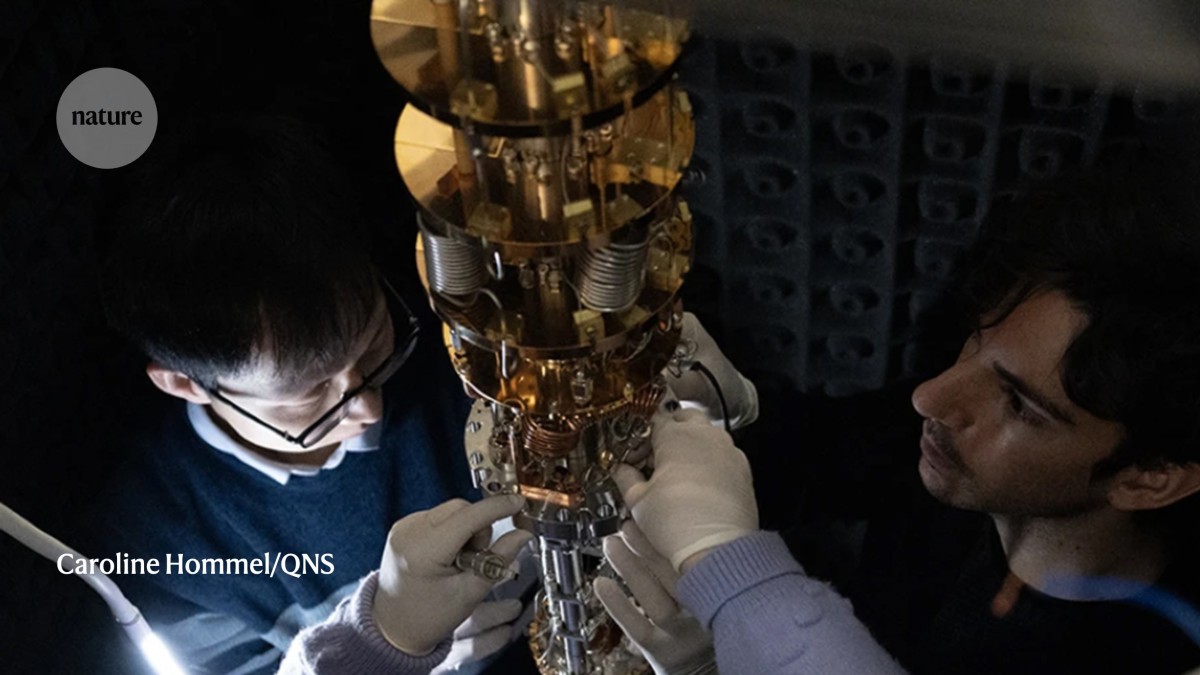
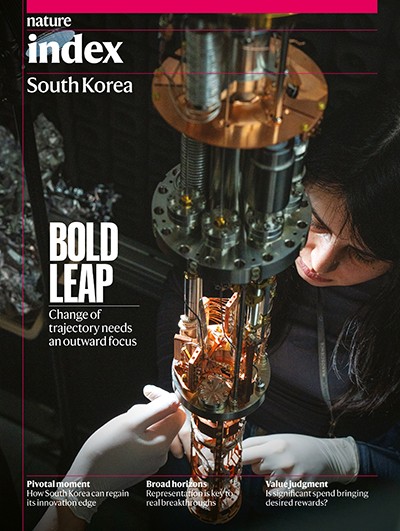
At the Center for Quantum Nanoscience (QNS), nestled in the hilly campus of Seoul’s Ewha Womans University, director of operations, Michelle Randall, shows off the facilities. “This is where we isolate our scanning tunnelling microscopes (STM) from any vibrations,” she says, pointing to an 80-tonne concrete damper, a mechanism that reduces interfering movements to near zero. Researchers at QNS are using STMs to image and manipulate individual atoms and molecules, chasing breakthroughs akin to last year’s assembly of a device made from single atoms that allows multiple qubits — the fundamental units of quantum information — to be controlled simultaneously (Y. Wang et al. Science382, 87–92; 2023). The work, done by QNS in collaboration with colleagues in Japan, Spain and the United States, could have applications in quantum computing, sensing and communication.
What gives QNS its edge, says Randall, is the diversity of teams that populate its labs. “Our composition is 50:50, South Korean and international, and we are an English-speaking workplace as a result,” she says. “We invest heavily in building relationships with our domestic scientific community and worldwide,” she adds, pointing to one room with four women — two South Koreans, one French, and one Iranian — exemplifying the collaborative spirit.
Nature Index 2024 South Korea
The diversity of the QNS team offers a glimpse of what research looks like in a country that is betting big on international collaboration. For 2024, South Korea has more than tripled its budget for global research and development (R&D) collaboration, committing to 1.8 trillion won (US$1.3 billion), up from 2023’s 500 billion won. The investment, which represents an increase from 1.6% to 6.8% of the government’s overall R&D budget, could see a shift away from using metrics such as university rankings, quantified research outputs and international student and faculty recruitment in favour of boosting ties with leading overseas research institutions in strategic areas. “There’s a huge amount of money that has suddenly been assigned to international research. With this comes many opportunities,” says Meeyoung Cha, scientific director of the Max Planck Institute for Security and Privacy, in Bochum, Germany, who holds joint positions at the Korea Advanced Institute of Science and Technology (KAIST) and the Korean Institute for Basic Science, in Daejeon.
The budget increase is part of the Korean Ministry of Science and ICT’s (MSIT) wider R&D Innovation Plan, announced in November 2023. It includes a new Global R&D Strategy Map, which will guide tailored collaboration strategies with specific countries based on their strengths in 12 critical and emerging technologies, such as semiconductors, artificial intelligence (AI) and quantum science. Industry strengths in 17 technologies related to achieving carbon neutrality and mitigating climate change will also be considered. In addition, MSIT has amended laws to allow overseas research institutions to directly participate in state R&D projects and aims to develop Global R&D Flagship Projects in key areas that will receive prioritized allocation of government funds.
Such moves are designed to refocus South Korea’s R&D, which has become stagnant over the past decade, according to MSIT, despite the country being the world’s second highest spender on R&D as a percentage of GDP, after Israel. In 2023, South Korea’s legislative national assembly approved a 14.7% cut to the overall 2024 R&D budget, from 31.1 trillion won in 2023. The cuts include shifting some more general funds for universities to a separate budget.
Foreign students line up to submit their applications at a job fair in Busan, South Korea.Credit: YONHAP/EPA-EFE/Shutterstock
“It seems that the term ‘budget cut’ really means redistributing money to more applied projects and international research initiatives,” says computational biologist, Martin Steinegger, based at Seoul National University. Steinegger experienced a 15–25% reduction in existing grants, paid annually from the National Research Foundation of Korea, the country’s main funding agency. This forced him to reduce conference travel for his students and use older hardware for research. “I have effectively less money than I did last year, but I can apply to many new things, it seems,” says Steinegger.
Off the back of such policy shifts, becoming the first Asian country to join the European Union’s Horizon Europe programme, the world’s largest research-funding scheme, is a major win for South Korea. Announced in March, the new partnership will drive collaborations between South Korean and European researchers in areas such as quantum technologies, semiconductors and next-generation wireless networks. South Korea is also forging bilateral cooperation agreements across Europe, such as with Denmark on clean-energy technologies and Germany on basic sciences, including the launch of a joint centre with the Max Planck Society, Germany’s flagship basic-research organization, at Yonsei University in Seoul.
Taking on more joint projects with Europe could help to diversify South Korea’s internationally collaborative outputs in the Nature Index. The United States, which has deep historic ties with South Korea dating back to the Korean War in the 1950s, is the country’s most important research partner in natural-sciences output, with a collaborative Share — a measure of joint contribution to research tracked by the Index — of 639.94 in 2023. China forms South Korea’s second-strongest partnership, with a collaborative Share of 300.81, followed by Japan, at 114.88 (see ‘Research ties’).
The number of natural-sciences articles in the Nature Index that have been co-authored by China- and South Korea-based researchers has grown considerably in recent years, up 222% between 2015 and 2023, compared with US–South Korean output, which dropped by 4% over the same period. But South Korean researchers report that collaborations with China are becoming more difficult, particularly in technology areas. According to data from South Korea’s national police agency, of the 78 cases of industrial technology leaks recorded between 2018 and mid-2023, 51 involved leaks to places or people in China. There is now also more oversight of collaborations with China than with other major research partners. “Researchers occasionally receive requests from their institutions or the government asking who is collaborating with China, says Cha. “They are aware that any collaboration may be monitored, creating a sense of censorship.”
In order to minimize its exposure to any supply-chain disruptions or political risks associated with ongoing US–China tensions, South Korea must look farther afield when establishing research links, says Lee Myung-hwa, who studies policy and innovation at the Science and Technology Policy Institute think tank, in Sejong. “The key is building trust with collaboration partners, which needs to be long-term, stable and maintained without being swayed by policy directions,” she says.
Cha highlights southeast Asia, a region that has long been of strategic and diplomatic interest to South Korea, as a place with untapped potential for joint innovation projects. “For instance, in Indonesia, there’s no governmental institution in charge of AI,” she says, which could open up the possibility of future collaborations around ethical and strategic development of AI technologies.
In 2023, the South Korean government committed to boosting cooperation with southeast Asia in areas including cybersecurity and communications technologies, and with individual nations, such as Vietnam, to help advance digital transition and clean-energy sectors. “Huge collaboration could happen if we work together,” says Cha.
Domestic challenges
With more than 10 million visitors moving between southeast Asian nations and South Korea each year, the region could also be important to South Korea in dealing with its dual demographic challenge: attracting overseas scientists in a country that is traditionally conservative towards immigration, and retaining homegrown talent. Solving these problems is paramount, as South Korea contends with the world’s lowest birthrate, driven by factors such as the rising costs of housing, education and childcare, a highly competitive and demanding work culture, and gender inequality issues, including the biggest gender pay gap among Organisation for Economic Co-operation and Development members. Student numbers are also in steep decline, which is putting some universities at risk of closure. An analysis of 195 Korean universities published by Seoul-based institute Jongro Academy in March showed that 51 had failed to fill their enrolment quotas for 2024. Of those, 43 were located outside the Seoul metropolitan area, accounting for 98% of the total unfilled seats.
To boost numbers, the South Korean Ministry of Education has announced new initiatives, including annual financial support for master’s, doctoral and postdoctoral researchers. These measures, which are part of the overall R&D budget, aim to incentivize mostly local students to continue their careers in research. For foreign students, the ministry wants to attract 300,000 of them by 2027 through its ‘Study Korea 300K Project’. Students will be targeted at events and language centres abroad and science graduates may be offered an easier pathway to permanent residency and South Korean citizenship. Language proficiency requirements for admission will also be reduced. Scholarship programmes are being expanded, including the government-funded Global Korea Scholarship invitation programme, which will increase recipient numbers from 4,543 in 2022 to 6,000 by 2027. The ministry has identified India and Pakistan in particular as important sources of science and engineering talent.
It’s unclear whether efforts to attract international students will bring more of a spotlight to the challenges faced by those who are already in the country. Lewis Nkenyereye, who studies computer and information security at Sejong University in Seoul, expresses concern for the many foreign students who work part-time to satisfy the minimum bank balance requirements of their enrolments. Language barriers and administrative hurdles have led to some of them being deported for not having adequate permits, says Nkenyereye, who is originally from Burundi. “The government is aware that most foreign students have part-time jobs and should adapt its policies to better accommodate their needs,” he says.
Religious and cultural differences also pose difficulties. Muaz Razaq, a student, who left Pakistan to pursue his PhD in computer science at Kyungpook National University in Daegu, is involved in a small mosque-reconstruction project next to his university that has ignited strong opposition from segments of the local community. Razaq says he’s heard many stories from other Muslim students across South Korea who describe being taunted by their peers over food choices and who lack designated spaces for practices such as ablution before prayers.
Challenging conditions for foreign students might be contributing to South Korea’s low levels of retention after graduation. According to a 2022 report by the Korea Research Institute for Vocational Education and Training in Seoul, the number of foreign students that are earning doctorates in South Korea quadrupled in the period 2012 to 2021. But the proportion of foreign students who returned to their home country after graduation has consistently increased, from 40.9% in 2016 to 62.0% in 2021.
Source: Nature Index
It is hoped that government-funded initiatives such as the Brain Pool programme, which gives doctoral researchers access to up to 300 million won annually for three years, and Brain Pool Plus, which offers outstanding researchers with expertise in core technology fields up to 600 million won annually for up to ten years, can help to attract and retain foreign talent. MSIT also plans to introduce support programmes to help new arrivals settle in and build networks.
Recent updates to visa rules for foreign researchers and students could make it easier for universities to attract overseas talent. In July, the Korean Ministry of Justice, which oversees immigration, greatly expanded the number of universities that are eligible to recruit foreign postgraduate and undergraduate students on D-2-5 research study visas and waived the three-year work-experience requirement for international master’s and PhD holders to obtain E-3 research visas.
New opportunities
The relatively low levels of English used at South Korean universities and research institutions is a major hurdle in the country’s drive towards internationalization. The number of university courses taught in English has increased in recent years, but Korean remains the primary language of instruction at many institutions. This affects foreign researchers at all career stages because they often require help from others or full-time assistance to navigate the environment, particularly in administrative matters, says Steinegger, who can manage daily life in Korean, but needs staff to help him with paperwork.
Seoul Robotics, a company that develops AI-powered software for autonomous driving and traffic management, has mandated an English-speaking work environment to attract international talent. Such a culture is unusual in South Korea; although many companies have English-speaking requirements, these are often not enforced, says Evan Thomas, business development manager at Seoul Robotics. “The ability to communicate in English without constant translation and cultural interpretation has been a significant advantage compared to more traditional South Korean companies,” he says.
Cultural attitudes towards foreigners can also hinder long-term retention, says Thomas. “Many South Koreans view foreigners as temporary visitors rather than potential long-term residents, discouraging them from settling in,” he says. A 2023 survey by the Korea Institute of Public Administration, a government-sponsored research institute in Seoul, seems to back this up, reporting that less than half of the respondents say they accept foreign nationals as members of South Korean society.
Given the shortages of local staff that are being recorded in strategic industries such as semiconductors and AI, it’s a problem that South Korea needs to address. Another report, by the University of Science and Technology in Daejon and the Korea Industrial Technology Association in Seoul, found that just 24% of 300 South Korean companies surveyed had foreign staff. Many cited a lack of information about foreign students as the reason, suggesting that there is a disconnect between academia and industry regarding graduate careers.
Hong Bui, a student from Vietnam, accepted a postdoctoral position at the Swiss Federal Institute of Technology Zurich in April, after completing her PhD at QNS. Bui cites the limited permanent career opportunities that are available to international researchers in Seoul as one of her reasons for wanting to leave, despite having a positive experience in QNS’s internationally focused environment. “South Korean companies often value overseas experience more than domestic experience, and many workplaces require Korean language proficiency,” she says.
As South Korea devotes record levels of resources to building ties with overseas institutions and attracting foreign researchers and students, its leaders hope that stronger research performance and innovation prowess will follow. But the success of such efforts hinges on the country’s ability to foster a more diverse research ecosystem, with fewer cultural challenges for foreigners to contend with.
“If the barriers are lowered and support is provided for overseas researchers to utilize South Korea’s leading research facilities and equipment, I think South Korea will become an attractive country for conducting research activities,” says Lee.
Seoul National University (SNU), the largest public university in South Korea — where I have worked for nearly 40 years — has roughly 22,000 undergraduate students and a similar number of postgraduate students. Around 36% of undergraduates, and 49% of postgraduates, are women. The university’s 450-odd full-time female faculty members, by comparison, account for 19.7% of the total. As of 2022, nationally, across the academic, government and industry sectors, just 23% of the research workforce is female.
Nature Index 2024 South Korea
The fall in numbers that occurs during women’s research careers is a major concern. In South Korea, female students in STEM fields constitute 31% of university entrants, and as graduates — generally in their 20s — they are employed at similar rates to men in science and technology roles. But a significant gap emerges in their 30s and continues to their 50s, with a 30% difference in employment rates between men and women in these age groups. There are now roughly 180,000 women in science and technology roles in South Korea who are on a career break, whose return to workplace is urgently needed to shore up the country’s future in science and innovation.
Retention is not the only issue — inequitable access to research funding and leadership positions is another serious problem for South Korea. Out of the roughly 49,000 principal investigators (PIs) who are pursuing governmental research projects across the country, 17.7% are female. This number needs to increase at least two-fold over the next decade to reflect the proportion of female PhD students.
Equally important as the number of PIs is the amount of research funding that is available to them. In South Korean universities, the average amount of government funding won by male PIs in science and technology areas is 165 million won (US$119,393). For women, that figure is 67 million won.
We see further disparity in the number of PIs at universities who were pursuing large projects of more than 1 billion won in 2022; 1,100 men versus 70 women. Considering this gap — which is far wider than in countries such as the United States and United Kingdom — it is noteworthy that women PIs in South Korean universities produce more output per research expenditure than men, in both the total number of papers and the top 25% cited papers in Clarivate’s Science Citation Index.
Since 2001, South Korea has initiated programmes to support the country’s female early career researchers with salaries and its established researchers with grants. These programmes have certainly contributed to the growth of female PIs but have not closed the gap in research funding. Similarly, affirmative action by the government and legislative changes by the National Assembly over this period — many of which have been influenced by initiatives led by female researchers — have improved female faculty numbers in public universities, but do not go far enough.
In 2015, for example, the Association of Women Faculty Councils at National Universities in Korea — a nation-wide network launched through the efforts of the Women Faculty Council and Diversity Council at SNU— set out to highlight the stark gender imbalances in the university sector. This included the fact that public universities hired far fewer female faculty members (15% of the total faculty) than private universities (25%). This initiative prompted the Law on Public Officials in Education to be amended in 2020, recommending that a specific gender does not exceed 75% of faculty composition in public universities. Each university must now submit a yearly plan to achieve this goal until 2030.
Measures such as these have been a strong motivator for improving gender diversity in research, but new strategies are needed if South Korea is to achieve gender parity. Female representation at academic conferences needs be improved, for instance, and the government and funding agencies need to make more proactive measures to increase the number of women PIs in medium- and large-scale research projects.
More female professors need to be hired in science and innovation areas to meet the needs of the growing population of female students, which in engineering and the natural sciences have actually increased over the past 10 years, both in undergraduate and graduate level.
Faced with the fastest declining population in the world, South Korea must do more to bolster the ranks of its highly skilled workforce. Implementing the policies and initiatives necessary to improve the recruitment, retention and the upward mobility of women researchers is of utmost importance for the country’s future success.
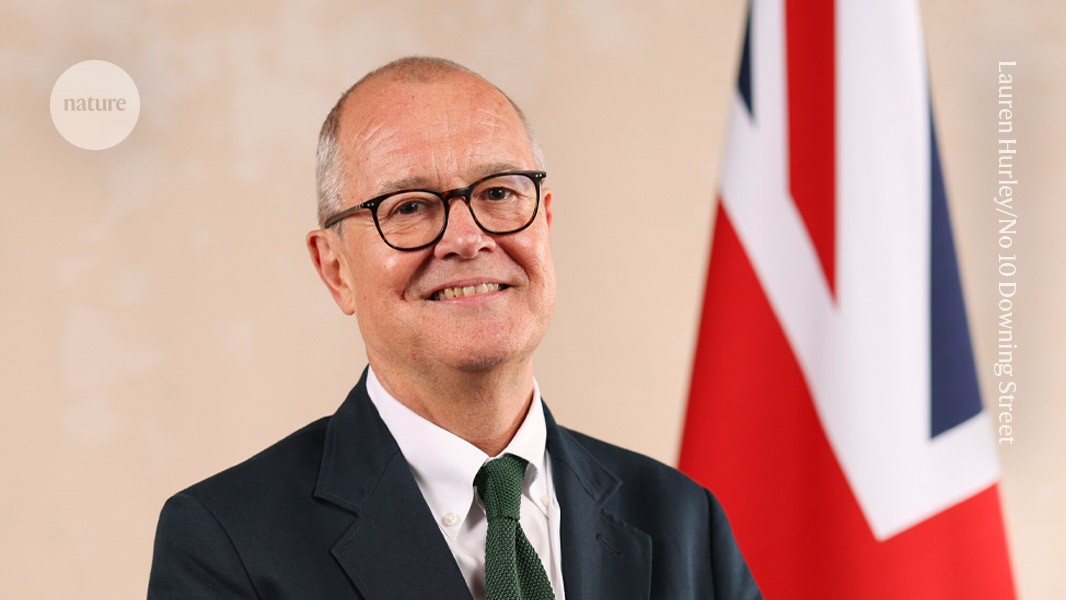
Last month, UK researchers welcomed the appointment of one of their own as science minister, the ultimate position of power in British research. Patrick Vallance is a former government science adviser who became a household name during the COVID-19 pandemic.
Following the Labour Party’s landslide election win on 4 July, Prime Minister Keir Starmer, who ousted the Conservative Party from government, appointed Vallance as a minister in the Department for Science, Innovation and Technology — which is responsible for the country’s science strategy and budget.
Five weeks into the job, Vallance — a clinical researcher and former head of research and development at drug firm GlaxoSmithKline — spoke to Nature about the challenges ahead of him.
Why did you take the job as minister?
Because I was asked to. It seems like if you’re given an opportunity to do something to make a difference, and you say no, then you should shut up. And I didn’t feel like shutting up.
The previous government had a target to increase research funding to £22 billion (US$29 billion) by 2026, up from about £20 billion this year. Is that still a goal?
The new government’s undoubtedly very, very pro trying to get science and technology right at the forefront of what it does. I need to protect and grow the basic, curiosity-driven part of the science work — which I think is so fundamental — while making sure we bolster the ability to translate that into development and economic success. The government’s going to have to go through a spending review and has inherited a number of unfunded commitments that it needs to look at.
You will not be surprised to know that I’m going to be arguing very strongly for the science budget, because it’s crucial to all of the things that the government needs to do.
Many UK universities are financially on their knees. Is there a plan to get their funding back on an even keel?
I hope it’s been pretty clear in the last few weeks that the government is very pro-universities. The universities are the jewels in the crown and we need to look after them, nurture them, love them and make sure they’re successful. They’re also autonomous institutions.
Some, not all of them, are struggling. There are a number of pressures on universities: a fall in overseas students, no increase in domestic fees, and the full economic costs of research. And I think there needs to be a long-term solution to all of that. That is where we need to see what universities come up with as options.
It’s not for government to tell them exactly what to do. But this government is very concerned that our very successful university sector needs to thrive.
This month, the government shelved plans to build an £800-million supercomputer in Edinburgh. Was that one of the unfunded commitments you mentioned?
In computing, it’s not just about size, it’s the configuration that is becoming increasingly important, particularly if you’re targeting it towards artificial intelligence (AI) applications. And so Matt Clifford, an entrepreneur and chair of the UK Advanced Research and Invention Agency, has been asked to undertake a review on AI opportunities, over the next few weeks, in which ‘compute infrastructure’ will definitely have to play into that. It’s going to have to be part of a spending review process.
Are you an AI optimist or doomsayer? What’s your personal approach to AI?
Of course there’s a safety element to this. There’s no question about it. I do worry that the safety element is dominating the whole narrative. And there’s a massive opportunity here that spans across medicine, materials, public services, our ability to run things more efficiently. We need to make sure that we can influence globally on all of this. To do that, you need to be at the forefront of it.
The cost to bring a family of four to the United Kingdom on a five-year global talent visa is about £20,000, which is many times the cost in other countries. Will the government seek to make it easier for scientists to immigrate?
We need to recognize clearly that the visa situation is both expensive and complicated in the United Kingdom, and we’ve relied a lot historically on international scientists coming here. There are some things that need to be looked at, for sure. And I know the Migration Advisory Committee, a public body, is being asked to look at the key sectors and international recruitment. And I’m, as you would expect, going to be very keen that they look at this side of it as part of that.
Last year, the United Kingdom agreed a post-Brexit deal with the European Union on science. But damage had been done in the previous seven years. How do you plan to improve relations?
We shouldn’t shy away from the fact that this was a very bad period for our ability to work with our European colleagues in science. What we now need to do is to make sure that participation picks up, because we’re not back where we were. It’s going to be one of the things that the department’s going to be very focused on.
When should scientists judge how well you’ve done in this role?
I know my colleagues well enough to know that they will judge me very quickly. But the reality is, there’ll be some changes quite quickly, and there’ll be some things that take longer to come through. It would be foolish to suggest that this is a turnaround job that that can be done in months. This is going to take years.
The interview has been edited for length and clarity.
The metascience unit will fund studies that analyse UK research in the hope of boosting its quality and efficiency.Credit: Sanjeri/Getty
With the launch of a metascience unit late last year, the United Kingdom became one of the first countries to formalize the practice of using scientific methodology to study how research is done. The question now is whether it will produce insights to help elevate UK research and, if so, whether this will influence other countries to launch their own metascience initiatives.
The UK metascience unit was announced in November, under the previous Conservative government, and will continue under the Labour government that took power last month. Its remit is to explore better ways of conducting, publishing and reviewing UK research, as well as distributing and funding it. More broadly, the unit is focused on improving the overall quality and efficiency of UK research.
The project will be run jointly by the UK Department for Science, Innovation and Technology and national funder UK Research and Innovation, in partnership with Open Philanthropy, a charitable research funder based in San Francisco, California, which is contributing £2 million (US$2.6 million) of the total £5 million for the first call for applications.
The first call for grant proposals went out in April, seeking applications from UK researchers from all disciplines who want to conduct metascience studies in their area of expertise, says Stian Westlake, executive chair of the UK Economic and Social Research Council, who was involved in setting up the unit. Applications are also welcomed from dedicated metascience researchers, such as those working in science and technology studies, scientometrics and bibliometrics. Topics of interest include innovations in peer review, funding processes and reproducibility.
Studying science
Applications will be reviewed by a panel of representatives of the UK government, Open Philanthropy and academics in relevant fields, and a maximum of £300,000 will be distributed to each successful grant applicant for a period of between six months and two years.
“It’s not a huge amount of money,” says James Wilsdon, a research policy scholar at University College London, who will be the panel’s chair, but “it’s certainly a very positive step forward”. He adds: “It’s encouraging to see any government or funding organization taking seriously the need for more systematic, robust meta-scientific evidence to inform decision strategies and the managing and monitoring of research innovation systems.” Wilsdon is also founding director of the Research on Research Institute, a UK-based consortium.
2024 Research Leaders
The review process for grant applications will be similar to what UK researchers are used to when applying for government grants, at least for the first funding call, says Westlake. He adds that there are no plans yet to experiment with the review process, although insights from the studies funded by the metascience unit could inform future processes. “We’re not quite in the realm of meta-metascience yet,” he says.
Katy Börner, an information scientist at Indiana University Bloomington, hopes that findings that stem from research funded by the metascience unit will inform decisions by policymakers, funders, educators and other influential groups. Börner notes that it has been difficult to secure funding for research on research in the past.
Behavioural nudges
The launch of the metascience unit follows another initiative in 2010, when the coalition UK government at the time opened a ‘nudge unit’. The unit was dedicated to using insights from behavioural sciences to inform public policy, by ‘nudging’ people to make certain decisions that were in their own interest — for example, prompting people to meet their tax deadlines and avoid fines. The idea stemmed from the 2008 book Nudge, by US economists Richard Thaler — who won the Nobel prize in economic science for his work on the topic in 2017 — and Cass Sunstein.
After the United Kingdom, nudge units were launched in countries including the United States, the Netherlands, Canada, Germany, India, Indonesia, Singapore and Peru. The UK nudge unit, formally called the Behavioural Insights Team, produces regular working papers and reports on the outcomes of experiments it conducts. It was acquired in 2021 by London-based innovation charity Nesta.
Wilsdon says it’s possible that other countries will see the UK metascience unit and want to launch similar initiatives. “Things become fashionable and they travel around,” he says. “Maybe this is the first of many. Who knows?”
Barbara Lancho Barrantes, a scientometrician at the University of Brighton, UK, is not sure whether the idea of a metascience unit can be rolled out in or be applicable to all countries. Every country has its own priorities and resources, she says, and research funding is already scarce in many regions.
Long-term outlook
The search for innovative approaches to funding science has been gaining traction elsewhere. In September, the US National Science Foundation (NSF) announced that it is partnering with the Institute for Progress, a think tank based in Washington DC, to find new ways of funding research. A standout feature of the deal is that it sought to give academics better access to internal NSF data, which is typically not released to external entities, even if it is to analyse their own processes.
The first big challenge for the UK metascience unit will be to ensure that it is funding a good mixture of short-term, eye-catching projects and projects that aim to produce longer-term evidence and insights into how well the system is working, says Wilsdon.
“The big win for me would be less about short-term project wins and more about long-term system reform,” says Wilsdon. This would mean the United Kingdom has the “structures and systems of metascientific data and analysis that it needs over the medium and long term to actually make intelligent decisions about the system”, he adds.
South Africa is caught in an energy bind. From sunlight to wind and biomass, the country has an abundance of resources to generate renewable energy. But the nation’s power system is still largely reliant on fossil-fuel power plants, with scheduled power outages being the norm — until recently.
In the run-up to the country’s elections in May, Eskom, the state-owned power company that supplies almost 80% of South Africa’s electricity, stopped load shedding — the practice of scheduling outages, each lasting several hours, to lessen demand on the country’s ageing energy infrastructure. As South Africa’s incoming government takes shape, President Cyril Ramaphosa has indicated that the load-shedding battle is not yet over. With a concerted effort from the government, I know that power outages need not resume.
As a researcher working on energy optimization and the energy transition, I have studied the previous governmental efforts to end load shedding and found many ways through which the current energy system can be further optimized. More collaboration with consumers is also needed to better understand how, and when, they use electricity.
Nature’s message to South Africa’s next government: talk to your researchers
South Africa’s energy crisis began in around 2007, when Eskom became unable to meet the country’s energy needs and had to implement power cuts to decrease demand on the energy system. Since 2019, these outages have escalated to the point that, in 2023, power was unavailable to South Africa’s population for 78% of the year (see go.nature.com/3szorvd).
People and businesses have been hit hard. Many have faced insecurity and discomfort; appliances and electronics from refrigerators to laptops have been damaged; food has regularly gone to waste. Last winter, I endured cold nights with a sick infant, whose much-needed electric nebulizer to help treat pneumonia was rendered useless because of long power cuts. In townships, for example, by 2023, 64% of small businesses had to pause operations during periods of load shedding, 5% closed down altogether and 66% had to reduce employees’ working hours or even let them go.
Over the past decade or so, the government has implemented various measures to reduce pressures on the power grid. It has incentivized private energy generation, as well as energy efficiency — for example, encouraging people to consume electricity during non-peak hours. Renewable energies, including photovoltaic power generation, are on the rise. Scheduled plant shutdowns have been delayed. Some power plants have been converted to run on gas rather than diesel, and maintenance has been improved. But these steps have not been enough to avoid load shedding, which is projected to continue beyond 2030.
Meanwhile, wind and solar capacity has increased. But these resources are intermittent — and storage is costly. What’s more, solar- and wind-power generators are mostly located in areas with constrained grid capacity, so most of the energy produced cannot be transmitted widely.
‘Stop the xenophobia’ — South African researchers sound alarm on eve of election
There are several ways for the government to expand its efforts. First, support Eskom’s existing power-generating capacity by combining real-time fault-detection monitoring with continuous preventive maintenance. Maintenance schedules should be updated to take into account the country’s ageing infrastructure, rising energy demand and greenhouse-gas-emissions targets, in accordance with the United Nations’ Sustainable Development Goals.
Second, boost renewable-energy storage. Batteries are the most common storage option, and have been installed on Eskom’s Hex site in the Western Cape and in Elandskop, KwaZulu-Natal — but they are expensive. Other, potentially more sustainable options need to be explored. Pumped hydropower, for example — which stores water in two reservoirs at different elevations, generating power when water flows from one to the other — would work well. The method can stores more energy than batteries do and, importantly, store it over cycles lasting almost twice as long as those of most batteries.
Third, optimize the mix of energy sources in the power grid. But to maximize the contribution of each type of energy, many factors need to be taken into account. For photovoltaic energy, for example, these include the Sun’s irradiance; the power generated by solar cells; consumer energy demand; the costs of generating solar- and coal-based energy; and the capacity for energy storage.
Fourth, evaluate the robustness of the grid. Factors such as the type of technology used to generate energy, the generators’ locations, resource quantities, costs and demand vary. Models can aid grid assessment, planning and scheduling. They can help to optimize which type of energy (coal or solar, for example) should be dispatched at any time by quickly assessing the generator’s location, grid capacity in the area, quantity of energy generated and generation periods. Tools such as machine learning — which can process vast amounts of data in a short time — promise to boost the data-processing capability of such modelling.
Fortunately, South Africa already has the knowledge and expertise needed to develop solutions that will put an end to load shedding. Let us keep optimizing, measuring and optimizing again.
Scientists advising the National Institutes of Health suggested a five-year time limit for postdoctoral support and a rise in funding for intermediate positions such as staff scientist.Credit: Ariana Drehsler/AFP/Getty
The US National Institutes of Health (NIH) is considering limiting postdoctoral researchers to a maximum of five years of financial support from the agency. The idea is a bid to improve the working conditions and job prospects of early-career researchers, but has prompted a heated debate about its potential effects.
Some researchers say that the five-year cap and other restrictions that the agency is weighing up could perpetuate inequities in the biomedical workforce and discourage researchers from continuing in academia. Rigid time limits also send the message “that science has to be done very quickly”, says Anna Cliffe, a virologist at the University of Virginia School of Medicine in Charlottesville. “Science is not always fast.”
The NIH, which is based in Bethesda, Maryland, put out a request on 25 July for feedback about the ideas, and has acknowledged the concerns raised so far. The aim “for taking such a step would be to accelerate the career transition for these researchers into thriving biomedical-research careers”, says a spokesperson for the agency’s Office of Extramural Research.
Replenishing the talent pool
The NIH’s request comes as biomedical graduate students increasingly turn to positions in industry, prompting many principal investigators to raise concerns, saying that they are struggling to fill postdoc positions. To find solutions, the agency asked a working group of NIH researchers and external scientists what the agency could do to cultivate postdoctoral talent.
Postdoctoral researchers warn NIH that cost-of-living pressures are gutting the workforce
The panel also recommended a five-year limit for its funding of postdoc positions and changes to a key grant called a K99, which is designed to help postdocs find their footing as they search for faculty positions. At present, researchers can apply for a K99 if they have less than four years of experience as a postdoc; the panel recommended restricting applications to those with less than two years of experience.
Senior postdocs, instead of continuing in that role, should be promoted to an intermediate position sometimes called ‘staff scientist’ or ‘laboratory associate’ that comes with higher pay, says Shelley Berger, an epigeneticist at the University of Pennsylvania in Philadelphia who co-chaired the NIH panel. The working group recommended that, within one year of the report’s release, the agency expand support for these intermediate roles.
The panel recommended these changes to encourage researchers to move into more permanent positions rather than remain stuck in postdoc positions with salaries that aren’t commensurate to their skill set, says Donna Ginther, a member of the working group and an economist at the University of Kansas in Lawrence who studies the composition of the scientific workforce. “You don’t want people to spend their most productive years in a postdoc,” she says.
But the agency has not yet implemented or sought feedback on the recommendation for extra funding for intermediate roles, Berger says. That lack of action is “very disappointing”, says Berger, adding that it would be logical to roll it out in tandem with the five-year postdoc cap.
Funding inequities
Encouraging senior postdocs to move to positions that provide the pay they deserve is a noble goal, says Tiffany Ho, a clinical neuroscientist at the University of California, Los Angeles. But she worries that without extra funding to support such positions, only well-funded labs would be able to attract and retain such individuals as staff scientists. That would perpetuate inequities between the best-funded labs and those with more modest support, she says.
The cap could also prevent researchers from pursuing multiple postdoc positions in different labs, as some choose to do. Cliffe, who studies herpesviruses, says the cap would have stopped her from doing a second postdoc in a neuroscience lab, which was “totally different” from the area she’d trained in. “But it allowed me to be creative, combine my expertise and set up a truly novel research area,” she adds.
‘Keep your options open’: postdocs offer advice on academic-research careers
In addition, halving the eligibility window for the K99 would have a chilling effect on international scientists, Ho says, because it is the only NIH funding specifically for postdoc support that is available to those who are not US citizens. “US citizens would be favoured heavily, because they already have the networks and communities to hit the ground running,” she says. This could work against efforts by the NIH to train researchers from backgrounds underrepresented in the biomedical sciences, says Camila Coelho, a vaccinologist at the Icahn School of Medicine at Mount Sinai in New York City. “You are feeding a system where you are giving privilege to people that already have privilege,” she says.
The NIH hopes that researchers respond to its request for feedback “so we can hear more about these concerns” and “ensure a sustainable, diverse future workforce”, the agency spokesperson says.
Stagnating budget
These proposals come at a time of tight budgets for the agency: the NIH budget for 2024 remained essentially flat at $47.1 billion, which amounts to a net loss when inflation is taken into account, Berger says, and the 2025 budget is expected to be about the same. The increase in postdoc salaries will probably mean cuts have to be made elsewhere, Ginther says.
Ho says the dire situation for postdocs should prompt a conversation in the scientific community about how it can invest more in “early-stage researchers, even if it would probably come at the cost of supporting researchers like me”. In 2017, a proposal was made, although it wasn’t implemented, that would have restricted the amount of NIH funding awarded to an individual scientist at any given time. “If we, as a community, can decide that’s okay because we’re investing in the future, maybe that’s a workable solution,” Ho says.
One thing that US politicians seem to agree on, despite a great many other differences, is that the country needs to lead technologically to maintain a position of economic and geopolitical preeminence. How to ensure such leadership will be a critical question for the next US president and his or her staff.
The past two administrations have taken some extraordinary steps to maintain an edge in both chipmaking and AI, two fields that are inextricably and intricately entwined. The US and its allies have restricted exports of cutting-edge chips and silicon-manufacturing equipment to key geopolitical rivals (aka China). In 2022, the US also passed the CHIPS Act, legislation that will pour $280 billion into bringing more microchip manufacturing back to American soil.
Laurie E. Locascio, undersecretary of standards and technology at the Department of Commerce and director of the National Institute of Standards and Technologies, helps oversee the government’s chip investments. She tells WIRED that it is crucial to invent new chip designs and manufacturing techniques to ensure the US’s technological preeminence in AI. She adds that chip packaging—the process of combining components in new ways to boost performance—may be especially vital to the next wave of AI.
Locascio recently sat down with WIRED senior writer Will Knight at the Commerce Department’s headquarters in Washington, DC. Their conversation has been lightly edited for length and clarity.
How have generative AI and ChatGPT changed the US government’s microchip priorities?
During Covid, we couldn’t get basic chips, the technologies we rely on for everything. But the conversation is now shifting. People realize that we need the most advanced chips. We’re really at the top of our game in AI, and AI is changing the game for so many businesses. So now what’s important, what’s on everyone’s minds, is AI chips.
What does that actually mean when it comes to the CHIPS Act?
We don’t just want to bring today’s technology onto our shores. We really need to follow that up with being able to manufacture the next generation and the next innovations that come out of laboratories. We have always been really at the leading edge of innovation and creativity in this space, and so that’s our advantage.
That’s why the CHIPS Act has these two components—the $11 billion for R&D and the $39 billion for manufacturing. Those two have to operate in sync with each other, because it’s really our ability to innovate that will make these manufacturers want to stay here. And so we are developing, in sync with the R&D community, new types of technologies that can be plopped right into the manufacturing lines.
Faster AI chips are crucial to AI companies’ efforts to build more powerful AI. How is that need shaping investment in next-gen manufacturing?
I would say it has really focused some of our thinking in certain areas. For example, as we’re thinking about how we’re going to spend the $3 billion associated with “advanced packaging,” we are really now thinking about the AI problem. We understand how important packaging could be for that particular problem set. I would say it has really focused some of our thinking in certain areas both on the manufacturing side and the R&D side.
Why is packaging—fitting different components together—so important?
Maybe it sounds like a mundane topic, but packaging enables the development of three-dimensional chip architectures that will really accelerate the power of AI chips and will help to build out the AI revolution. We just announced a $1.6 billion notice of intent for funding. It’s really focused in many areas, but the power requirements and thermal requirements associated with AI chips are a really important one.