“In this photo, I’m visiting a once-abandoned well, known as the Three Trees Well, north of Bengaluru, India. In the past, this type of well would have been filled with concrete and the land used to build properties, but thanks to community outreach efforts it has been protected and cleaned by local community members. Their work has been rewarded by the well reconnecting with the below-ground aquifer and bringing water to the community again. It now contains around 3 metres of water during the peak summer months.
This is a success story, and we need more of those. People on the city’s outskirts are struggling, and the state’s government has responded by arranging tankers to bring water from the Kaveri River, 100 kilometres away. Unfortunately, this kind of event is taking place across much of urban India. Around 50% of the supply in Indian cities comes from groundwater and, without it, life grinds to a halt.
I work as an adviser for the Biome Environmental Trust in Bengaluru and develop policies related to sustainable water management. I am also an adjunct faculty member at Azim Premji University in Sarjapura, where I teach courses on water conservation and management.
Here in Bengaluru, I’ve been working with the traditional well-digging community, known as the Mannu Vaddar or Bhovi, to complete works in the city and surrounding rural areas. If the culture of the well can be revived in India, it might help people to find a path to sustainability in the face of climate change.
Since our success at the Three Trees Well, the government has funded a further programme to rejuvenate wells and shallow aquifers in 10 cities across India. Now, the government wants to replicate that programme across a further 5,100 urban areas in the country. I am a small part of this journey, and it all began with Bengaluru’s wells.”
This interview has been edited for length and clarity.
In late March, a smoke shop in Dyersburg, Tennessee, announced the arrival of a new product in its store: a disposable nicotine vape with an LCD display that can be connected to a smartphone via Bluetooth. Marketed under the brand name RAMA, the strawberry- and kiwi-flavored vape looks more like a cell phone from the early 2000s than a typical e-cigarette. It allows users to customize the screen background, see how many puffs of nicotine are left, and even track the device’s location using an accompanying app. “NEVER LOSE YOUR VAPE AGAIN!!!!” Mk Smoke Shop said in a Facebook post.
Far from a one-off novelty, the RAMA model is part of a wave of technologically sophisticated and highly potent disposable vapes that have begun appearing on shelves in smoke shops and convenience stores across the United States in recent months, according to industry data, social media posts, and other records viewed by WIRED.
Almost exclusively manufactured in China, the vapes are colorful and come in eye-catching metallic finishes, squishy silicone textures, and rounded shapes that fit comfortably in a person’s hand. But what really sets them apart are LCD screens, which make the devices even more harmful for the environment than normal disposable vapes. And like the vast majority of all e-cigarettes available in stores, they are technically illegal and haven’t been approved for sale by the US Food and Drug Administration.
These so-called smart vapes are the product of an innovation boom taking place in China’s $28 billion e-cigarette export industry. It was spurred, in part, by the United States’ lax enforcement of nicotine regulations. The US accounts for nearly two-thirds of Chinese vape exports, according to the China Electronics Chamber of Commerce. From 2020 to 2023, the CDC foundation estimates that sales of non-tobacco-flavored vapes in the US surged more than 60 percent, increasing from 11.2 million to 18 million units.
As competition for the American market intensified, vape producers in Shenzhen needed to find ways to make their products stand out. So they developed vapes that were more affordable, better designed, and delivered higher doses of nicotine compared to their predecessors. In many cases, these innovations allowed them to move up the value chain for e-cigarettes.
Robert Jackler, an emeritus professor of head and neck surgery at Stanford University and the founder of an interdisciplinary research group studying the impacts of tobacco advertising, said that American companies have long manufactured vapes in Shenzhen. But after the Chinese government banned the sale of flavored vapes in 2022, Chinese suppliers began focusing more on marketing their own products directly to overseas customers.
“They cut out the Americans,” Jackler says. As of last year, the Associated Press reported there were over 9,000 kinds of vaping products available for sale in the US, a nearly threefold increase since 2020.
The proliferation of disposable flavored vapes from China has alarmed lawmakers in both the US and Europe. Regulators say they are especially worried about the impact the devices are having on children, who may find the sweet flavors and flashy designs they come in particularly appealing.
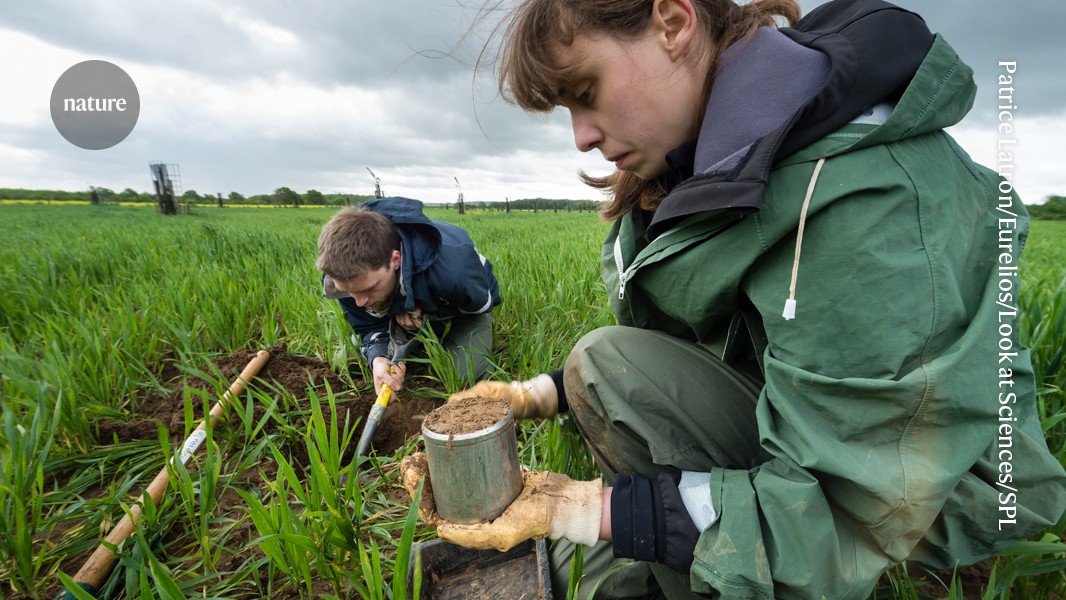
Scientists can measure the carbon-storage capacity of various types of soil.Credit: Patrice Latron/Eurelios/Look at Sciences/Science Photo Library
When it comes to carbon, humanity has two pressing problems. First, there’s too much of it in the atmosphere. The atmospheric concentration of carbon dioxide has increased by about 50% since the start of the industrial age, from 280 parts per million to nearly 420 parts per million in 2023 (see go.nature.com/2j4heej). Much of that comes from the combustion of fossil fuels, but agriculture is a major contributor. Each year, around 13.7 billion tonnes of CO2 or equivalent greenhouse gases is released into the atmosphere by agricultural processes, with more than one-quarter of global greenhouse-gas emissions arising from food production1.
The second carbon problem is that there isn’t enough of it in the soil. Soil carbon has been drastically depleted around the world, thanks to intensive farming practices that have been developed to feed the growing population. One estimate suggests that around 133 billion tonnes of carbon — about 8% of total organic soil carbon — has been lost from the top 2 metres of soil since the advent of agriculture some 12,000 years ago. Around one-third of that loss has occurred since the Industrial Revolution in the 1800s2.
This imbalance means that agriculture has an ace up its sleeve: although it’s currently a carbon source, it also has the potential to be a carbon sink, which could alter the planet’s climate-change trajectory (see ‘Green horizons’). It’s not only possible, but it’s relatively easy to recharge soil organic carbon stocks by supporting and enhancing the natural processes that draw and convert CO2 into soil carbon.
Source: FAOSTAT for 2021 and model projections for future years
The latest Intergovernmental Panel on Climate Change (IPCC) synthesis report3 puts carbon sequestration in agriculture as one of the highest potential contributions to reducing net emissions. At around 3.5 gigatonnes of CO2 or its equivalent greenhouse gases per year, this is greater than the emissions from the entire European Union in 2022 — exceeded only by a conversion of current energy supplies to solar or wind energy, or reduced destruction of natural ecosystems. The challenge is to ensure that this happens fast enough, and at a low enough cost, for it to make a substantial contribution to achieving global net-zero carbon emissions by 2050.
The agricultural techniques that can help to increase soil carbon sequestration aren’t necessarily complex. But with the looming deadline of net-zero carbon emissions by 2050, as set by the Paris climate agreement, the pressure is on scientists to identify the most efficient, effective and rapidly scalable methods for soil carbon sequestration and how these can help to achieve the dual goals of mitigating climate change and improving soil health.
Carbon farming
Soil organic carbon is the result of the CO2 that plants have extracted from the atmosphere and incorporated into their structure, especially root systems, being used to nourish other living organisms in the soil.
Nature Spotlight: Agricultural sciences
“Before soil carbon was even a thing from a climate-change perspective, people were promoting the increase of organic matter in the soil to improve its fertility, to improve water-holding capacity and resilience to droughts, and to prevent erosion,” says Peter Smith, a soil scientist at the University of Aberdeen, UK, and science director of Scotland’s ClimateXChange centre in Edinburgh, UK. “Nobody disagrees that increasing the amount of soil organic matter is a good thing,” Smith says.
The good news is that increasing soil carbon isn’t high tech. Evolution has already done most of the hard work by giving plants the ability to extract CO2 from the atmosphere through photosynthesis, turning it into carbohydrates and oxygen. The plants assimilate that carbon into their cells and tissues, which eventually become integrated into the soil when the plant sheds matter in the form of leaves, branches, flowers or fruit, or when it is consumed by other organisms, or when the plant dies and decomposes.
The biggest barrier to this process is humans and the bad habits that we have developed to squeeze better short-term yields out of soil. One of these is tilling, particularly the deep ploughing that is commonly used to prepare the soil for planting. “A century ago, one of the things that made the prairie regions across the globe so fertile is that when we tilled them, the organic matter degraded and that released tremendous amounts of nutrients and produced bountiful crops,” says David Burton, a soil scientist at Dalhousie University in Halifax, Canada. That process breaks up the soil, including the root systems of the crops and grasses, causing the release of CO2 into the atmosphere. Tilling also destroys the structure of the soil and increases the risk of erosion by wind or water, which can in turn cause more CO2 to be released.
Agricultural practices such as ploughing release carbon dioxide into the atmosphere.Credit: Jonas Gratzer/LightRocket/Getty
Therefore, one way to potentially keep that carbon in the soil is to reduce or eliminate tilling in what’s called no-till or zero-till agriculture. Instead of turning over large amounts of soil to plant seeds or seedlings, farmers use equipment that creates either a narrow channel or a hole into which the seed or seedling can be planted. The residue of the previous season’s crop — stubble, stalks and stems, for example — is left in the soil and on the surface. The idea is that this reduces the disturbance of the soil structure and leaves more of the soil organic carbon in place.
Although carbon sequestration through no-till is promising, the evidence is mixed. Research suggests that the amount of soil carbon sequestered with no-till farming varies with climate and soil type. One analysis found evidence that the greatest increase in soil carbon with no-till agriculture occurred in warmer and wetter climates rather than in cooler and drier climates4. However, less tilling does mean less fuel consumption — because farmers don’t have to plough as often and as deep — and therefore lower emissions. For example, the use of low-till farming in the United States is estimated to have saved the equivalent of around 3,500 million litres of diesel annually, enough to offset the annual CO2 emissions of around 1.7 million cars5.
Another method to increase the retention of soil carbon is to grow cover crops alongside the main crop, instead of manually pulling up or poisoning weeds that appear. This keeps the root structure and its soil carbon contribution intact and in place. A study of two Australian vineyards found that allowing grasses to grow in between the rows of grape vines was associated with a nearly 23% increase in soil organic carbon over a 5-year period compared with the conventional method of using herbicide to control grass growth6. The practice is gaining momentum in North American vineyards , and it is already well established in European ones, where cover crops such as clover and barley have been shown to improve soil carbon levels while reducing weeds7.
There is also a growing interest in the carbon sequestration potential of adding inorganic, or mineral carbon, to agricultural soils through a process called enhanced weathering. This involves adding ground-up silicate rock, such as basalt, to the soil. The minerals in the rock dust — mainly magnesium and calcium — interact chemically with CO2 in the atmosphere to form carbonates, which remain in the soil in a solid form or dissolve and gradually drain out to the ocean through the water table8.
A four-year study, which was published in February, of the US corn-belt region found that applying crushed basalt to maize (corn) and soya bean fields was associated with sequestration of an extra 10 tonnes of CO2 per hectare per year, while also increasing crop yields by 12–16%9. “It’s one of the most intensively managed areas of agricultural land in the world, so if it works there, then you’ve got kind of instant scalability,” says study co-author David Beerling, a biogeochemist and director of the Leverhulme Centre for Climate Change Mitigation at the University of Sheffield, UK.
Deforestation is another major contributor to agricultural sector carbon emissions, particularly in cattle farming10, in which forests are bulldozed to create pastures for animals. Agroforestry — the integration of trees into farming systems — is one way to mitigate this problem. Growing trees and shrubs among crops and pastures not only increases carbon sequestration in the soil and the tree biomass, but also provides further benefits including wind-breaks and shade for cattle. Agroforestry is well established in many parts of the world, including in tropical areas where trees provide shade for crops such as coffee beans.
As promising as soil carbon sequestration looks on paper, it has a limit, says Smith. “If we’re chucking it all up from geological sources, the biological sinks aren’t enough to suck up all that carbon,” he says. It’s also finite — there is a limit to how much carbon an area of land can sequester. The question is: what is that limit?
Measure, monetise, incentivize
Soil scientist Rattan Lal, director of the Lal Carbon Center at Ohio State University in Columbus, says that if the world switches to non-fossil-fuel sources of energy, it will be possible to achieve a long-term positive soil carbon budget in which more carbon is absorbed by agriculture than is generated by it. “By 2100, the [carbon] sink capacity of the land is about 150 to 160 gigatonnes of carbon, and another of the same amount for trees,” Lal says. That amounts to around two gigatonnes of carbon per year that could be sequestered in soils. Other studies suggest that number could be as high as 4–5 gigatonnes of carbon per year11. Given global emissions now sit at around 35 gigatonnes per year, this is a substantial proportion12.
Even at the lower estimate, if the entirety of that atmospheric carbon removal is realized, Lal’s research suggests it could reduce global atmospheric concentrations of CO2 by around 157 parts per million13, which would completely remove all the extra CO2 emitted since the start of the Industrial Revolution. “Agriculture could be a part of the solution,” he says.
Soil scientist Rattan Lal at Ohio State University in Columbus says that a switch to non-fossil fuels should make it possible for more carbon to be absorbed by agriculture than is generated by it.Credit: The Ohio State University
However, the soil-science community is divided over whether sequestering carbon in soils could be part of the climate-change remedy, says Alex McBratney , a soil scientist and director of the Sydney Institute of Agriculture at the University of Sydney, Australia. Even today, there are some people who think it’s simply too difficult because of the challenge of measurement.
Soil carbon content varies a lot geographically, even over short distances, so getting a reasonably accurate measurement at a point in time means taking lots of samples — and that can add up financially. Soil carbon also fluctuates naturally, depending on weather conditions and other factors. And the change in soil carbon levels over time might also be small relative to the overall amount of carbon in the soil, which makes it harder to record a significant change.
Soil carbon levels also change slowly. “We would say, as a rule of thumb, that it probably takes of the order of five years to show observable differences … that you can detect against the background of this natural variation,” McBratney says. Combined with variability, this makes it challenging to show that extra soil carbon has been sequestered, especially in a cost-effective manner.
Cultivating change
Despite the uncertainties of soil carbon sequestration, it is a hot topic when it comes to emission reductions. Governments have leapt enthusiastically, and sometimes prematurely, into capitalizing on the possibility of buying and selling carbon credits from agriculture. These are credits earned from reducing carbon emissions that can be used to offset carbon emissions from other sources or sectors — a win-win situation, given the added benefits of improving soil health.
Marit Kragt, an agriculture and resource economist at the University of Western Australia in Perth, became interested in soil carbon sequestration shortly after the Australian government introduced the Carbon Farming Initiative act in 2011. Her concerns were that the policy had been formulated with little scientific or economic data on, for example, the best practices for sequestering soil carbon, the impact of climate, the cost to farmers and whether soil carbon sequestration would truly increase overall soil carbon.
This cost-benefit analysis will be crucial to overcoming the sociocultural barriers to change. There is resistance to changing farming practices, particularly when the advice to do so comes from scientists or policymakers, says Kragt. “Sociocultural change is actually really important in any society, but is often forgotten,” she says. “When you have a group of people advocating for something and they’re not part of the farming community or trusted peers, there is push back.”
However, Kragt says that most farmers who implement carbon-positive farming techniques don’t do it for the credits. “I think most people that have taken up carbon farming practices will have done so because they wanted to regenerate their environment,” she says. Many farmers are also concerned about climate change because they can see the impact on their livelihoods. “They have seen the bushfires, droughts and extreme heat that’s affecting their harvests, so they know that something needs to change.”
A revolution is needed at the UK general election next month to put science at the heart of government and policymaking. The current political discourse in the United Kingdom is dominated by debates about the quality of public services, strategies to boost economic growth and concerns related to the environment. Politicians care about these issues, but they do not always realize that science has an important role in delivering effective solutions.
Having co-authored a review of the United Kingdom’s research landscape in 2023 and on the basis of my own experience as director of the Francis Crick Institute, a biomedical research centre in London, I have come to the conclusion that although the country’s scientific endeavour is still generally of a high quality, it is becoming increasingly fragile.
Public investment in UK science has languished. The review estimated that in 2019 the UK government spent about 0.46% of its gross domestic product (GDP) on funding research and development (R&D), putting it 27th on a list of the 36 wealthy nations that then constituted the Organisation for Economic Co-operation and Development (see go.nature.com/4cjezj2). That’s below most other leading research-driven economies, such as the United States, Germany and South Korea, which invest 0.66–0.96% of their GDP. Moreover, R&D done by UK government institutions, such as the Met Office and the National Physical Laboratory, was funded at a mere 0.12% of GDP — half the OECD average.
How to track the economic impact of public investments in AI
The current government has said it aspires for the United Kingdom to be a ‘science superpower’, but there are no concrete proposals in place to achieve this vision. The incoming government, which will assume office in July, needs to put forward a credible ten-year plan for supporting science. Addressing the investment deficit will be difficult in the short term, given the country’s stagnant economy, but a stable R&D policy environment that aims to gradually increase investment levels over the next few years is an essential first step. Research spending is a long-term investment in a nation’s future, unlike short-term tax cuts. So, a justifiable case can be made to fund some of this investment through borrowed money.
The mechanisms that govern how R&D funds get spent also need reform, beginning with a reappraisal of the current focus on merely paying direct research costs. Under the guise of improving efficiency and lowering administrative costs, government grants do not fully cover a variety of essential research-related expenses, such as the provisioning of well-equipped laboratories, access to well-maintained databases and high-quality technical and administrative support. A more complete ‘end-to-end’ funding model that reflects the full cost of doing research will improve the quality of scientific output.
These issues are of particular concern to UK universities, many of which are underfunded and cannot provide high-quality support services. At the Crick, some core funding has been directed at institute-wide end-to-end support, centralizing crucial legal, administrative and other services. Moreover, all scientists can use its scientific platforms, such as genome-sequencing equipment and electron microscopes, providing equal access to all research groups, including those headed by early-career group leaders.
Government funding streams also come with peculiar forms of bureaucracy. For instance, during a government-led quality-assurance review to determine its future level of funding, the Crick had to submit more than 5,000 pages of documentation. The government also places restrictions on the salaries paid to scientists.
A win for science: UK finally joining Horizon Europe will boost research
Furthermore, UK public-sector research organizations have declined in number and immigration policies are affecting the country’s ability to attract scientific talent.
Between 1985 and 2020, research done at universities has grown to around 80% of the United Kingdom’s non-business R&D (compared with 45–60% in other countries). By contrast, research performed by other public-sector research organizations has shrunk by two-thirds over the same time. This is a cause for concern because such institutions are uniquely positioned to support government priorities and missions — for example, by spearheading research on dementia and infectious diseases, plant breeding, fire and explosives safety and particle accelerators. Given the current state of these organizations, it is doubtful that the UK government has the necessary scientific capability to run the country properly.
By offering a platform for high-quality discovery research, well-functioning public R&D institutions can attract accomplished scientists from all over the world.
Therefore, strengthening R&D institutions must go hand in hand with more-sophisticated discussions about immigration. The nation should not only encourage and provide the best training for home-grown talent, but also attract global talent at all career stages. Complex and expensive immigration procedures and prohibitive visa costs, combined with the current tone of political discussion, will only end up driving away rare talent, to the detriment of UK research and business.
The priorities laid out here are all deliverable with sufficient political will. If making the country a ‘science superpower’ is crucial to securing its future prosperity, then these issues must be a part of the political debate.
The United Nations’ SDGs have transcended the policy world and entered the public consciousness.Credit: Noriko Hayashi/New York Times/Redux/eyevine
When a well-thought-out plan isn’t succeeding, what should the response be? Abandon the plan entirely? Hope that it just needs more time to work? Or get to grips with why it’s not working and make changes accordingly?
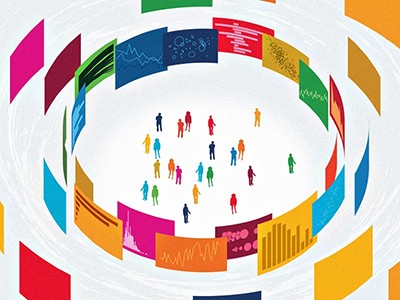
In the case of the United Nations’ Sustainable Development Goals (SDGs), giving up cannot be an option. However, this global plan to end poverty and achieve environmental sustainability is clearly not working. None of the 17 goals, which include combating climate change and reducing inequality, is expected to be achieved by the UN’s 2030 deadline. Only about 12% of the 169 underlying targets are likely to be met. For example, 2.2 billion people around the world lack access to safe drinking water and more than 300 million people go to bed hungry every night. The stated aim of the SDGs is to drive both numbers to zero.
Extending the Sustainable Development Goals to 2050 — a road map
Is it possible to improve on the existing approach? In a Comment article this week, a group of researchers from institutions in Europe and the United States suggest a combination of responses. The researchers propose that the 17 goals should all remain the same, as should many of the targets and indicators for those targets. But they are also calling for greater ambition. The goal to end poverty should include providing social protection for vulnerable people, for example. The goal for zero hunger should also tackle undernutrition.
In other cases, they suggest that actions should align with international agreements — such as the Paris climate agreement’s commitment to achieve net-zero emissions by 2050, so that global temperatures do not exceed 1.5 °C above pre-industrial levels.
There are other lessons to be learnt since the SDGs were first agreed in 2015, such as the potential impacts of artificial intelligence (AI), the authors say. One study finds that AI could benefit 134 targets across all the goals, such as making better weather forecasts or improving medical diagnoses, but that AI could also inhibit 59 targets by, for example, fuelling the spread of disinformation (R. Vinuesa et al. Nature Commun.11, 233; 2020).
Their advice is well timed. Talks on a post-2030 future for the SDGs have not yet officially begun, but because adjustments to them cannot be made quickly, the earlier that discussions can begin, the better. Any new indicator would need to meet the UN Statistical Commission’s criteria of being conceptually clear and having an internationally established methodology and agreed standards. All relevant data, moreover, would need to be regularly produced by a large proportion of countries.
Shortly after the SDGs were settled, only around 60% of the indicators had an agreed methodology and standards. Achieving this for the remaining indicators took four years. At the latest tally (in 2022), data are still not being produced by all countries for one-third of the indicators, often because of a lack of funding or because of other constraints (see ‘The $100m data drop’).
Source: UN/PARIS21
For these and other reasons, some of the goals are still not being assessed using quantitative measures. The standout example is SDG 13, the goal for climate action, which lacks a measurable target for reducing greenhouse-gas emissions. To be part of the SDGs, national emissions would be reported annually and to a standard to be defined by expert bodies and then agreed by all member states — as would all other newly proposed targets and indicators.
Collaborate, collaborate
There’s a second reason why this proposal is well timed. UN secretary-general António Guterres has invited representatives of world leaders to gather in New York City this September for a meeting called the Summit of the Future. A draft of the document to be agreed on at this event — called the Pact for the Future — refers to a proposal to identify 10–20 SDG-like indicators of economic growth, well-being and sustainability. Few of the SDGs have the priority, status and attention in national policymaking that SDG 8 (economic growth) does. Guterres wants to change this and get policymakers to focus not just on economic indicators such as gross domestic product (GDP), but on a dashboard of indicators that he is calling Beyond GDP.
The world’s goals to save humanity are hugely ambitious — but they are still the best option
It’s important that this idea does not compete with the SDGs. That would be unproductive, given that both have similar aims. It is not surprising that this has happened — the UN is a large organization that is both complex and highly siloed. But with the opening of a debate about how best to iterate the SDGs, there is now an opportunity to allow these two processes to converge.
The SDGs ought to “remain at the centre of global policy agendas”, as the authors of the Comment article argue. The international community would then choose its favoured 10–20 indicators from any updated list. A huge amount of work has gone into creating and refining the SDGs. Guterres’s parallel effort will benefit by linking to the SDGs, taking advantage of almost a decade of accumulated learning, rather than trying to reinvent the wheel.
A big win of the SDGs is that they have transcended the world of policymakers. Their multicoloured logos can be found everywhere from classrooms to company websites. They took a long time to negotiate, and a much has gone into their refinement. Any future efforts must build on what the world has learnt — while not losing the sense of urgency that comes with the existing deadline.
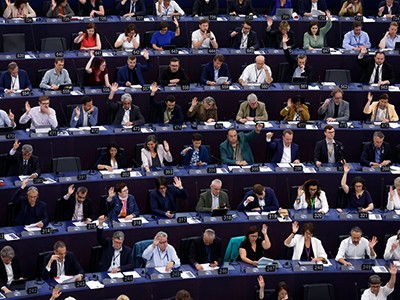
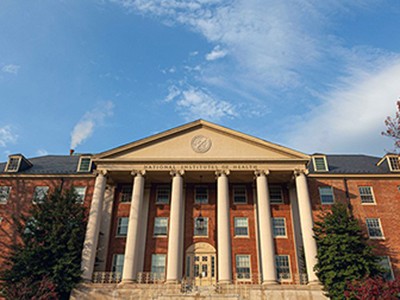
The US Food and Drug Administration, based in White Oak, Maryland, is considering whether to overhaul its use of advisory panels.Credit: Sarah Silbiger/Getty
Researchers are calling on the US Food and Drug Administration (FDA) to be more transparent in how it incorporates recommendations from independent scientists on its advisory panels when it approves drugs or makes other key decisions.
Will the FDA change how it vets drugs following the Alzheimer’s debacle?
These pleas came during a 13 June public listening session organized by the agency to ‘optimize’ its use of the panels, which are composed of scientists and industry and patient representatives. They also follow some controversial decisions made by the FDA in recent years to approve drugs against the recommendation of its advisers — as well as hints made by FDA commissioner Robert Califf that he would like these panels to host fewer votes. Usually, at the end of advisory meetings, after panellists have heard evidence about the safety and performance of a potential drug or medical device, they vote to either formally recommend that the FDA approve it or not.
That the agency is considering revamping its advisory-committee procedures is a “huge deal”, given that much of the world looks to the FDA for its scientific analyses, says Reshma Ramachandran, a health-services researcher at Yale School of Medicine in New Haven, Connecticut. “They don’t do this often.”
At the listening session, Califf said that “one of the most difficult areas that we need to address” is how to have a disagreement as a scientific community “without undermining the public’s confidence and trust in science”.
Pointing to some of the high-profile cases in which the FDA has overridden the consensus of its advisers, Peter Lurie, president of the Center for Science in the Public Interest in Washington DC, tells Nature that it’s “hard to escape the suspicion” that any move to get rid of voting isn’t just “rooted in a desire to avoid controversies”.
High-profile overrulings
The FDA typically uses its 50 advisory committees and panels only in situations that warrant additional analysis — for example, the first time a specific class of drug comes up for approval, or when a broader discussion is needed about how to measure the success of treatments for a particular disease.
MDMA therapy for PTSD rejected by FDA panel
The advisory committees are just that — advisory — leaving the FDA to make the final decision, usually within months of a committee meeting. Yet the agency’s decisions usually align with its advisers’ votes: one analysis of panels from 2010 to 20211 found that the agency’s actions mirrored its committees’ votes 97% of the time when the committee voted in favour of the treatment, and only 67% of the time when it did not.
For example, in 2021, despite a nearly unanimous vote suggesting the agency should reject the Alzheimer’s drug aducanumab, the FDA approved it. The advisers thought that safety concerns over the drug, an antibody intended to reduce the accumulation of protein plaques in the brain associated with Alzheimer’s, outweighed the limited evidence that it improved cognition in a subgroup of people.
Three advisory-panel members resigned to protest the decision, and an inquiry by the US Congress later found that the agency’s approval process had been “rife with irregularities” and involved “lapses in protocol”, including an unusually close coordination between FDA officials and the biotechnology company that developed aducanumab, Cambridge, Massachusetts-based Biogen. The firm discontinued the drug in January of this year.
In addition to this and other high-profile overrulings that have put the spotlight on how the FDA uses its advisory committees, the agency has been making its panels more accessible. Since the COVID-19 pandemic, meetings have been held virtually, which has increased media attention and participation from the public, Ramachandran says. This tension became clear at the listening session, when several patients and their families called on the agency to listen to their lived experiences and increase patient representation on the advisory committees.
Airing concerns
Since taking the helm of the FDA in 2022, Califf has suggested at conferences and in media interviews that he would like advisory-committee members to have “more space to meet and discuss the issues”, with less emphasis on voting, according to the healthcare-news website Regulatory Focus. He has said that part of his motivation is that the public sometimes confuses the advisory-committee votes with the agency’s ultimate decision.
Crackdown on skin colour bias by fingertip oxygen sensors is coming, hints FDA
Many researchers at the 13 June listening session agreed with high-ranking officials at the FDA who have publicly disagreed with Califf on this issue. Without voting, it’s “harder to crystallize the recommendations from a long day of [panel] discussions”, making it possible for an overzealous company to, for example, more easily spin the discussions at a meeting to give a favourable impression of its drug through public relations, says Aaron Kesselheim, a health-policy researcher at Harvard Medical School in Boston, Massachusetts.
Kesselheim tells Nature that the FDA should certainly reflect on public trust and confusion. But he says that the voting process isn’t the problem; instead, when the FDA goes against its advisers’ recommendations, it should spend extra time explaining its reasoning as to how and why it made its decision, he adds.
That would be in stark contrast to current practices, Ramachandran says. In a forthcoming publication, she and her colleagues analysed the FDA’s press releases for new-drug approvals and found that the agency generally does not mention whether there has been an advisory-committee meeting and what the outcome was.
Kesselheim suggests that instead of scrapping voting, the agency should standardize its voting questions — which often vary depending on the committee and topic at hand — given that research has shown that small changes in wording can heavily influence voting outcomes. In addition, he is worried by the dwindling proportion of new-drug approvals in recent years2 that have undergone discussion by an advisory committee.
Government spending on artificial intelligence (AI) is surging worldwide. In the United States, for example, the federal government invested more than US$3 billion in the 2023 fiscal year and an influential US taskforce — the National Artificial Intelligence Research Resource (NAIRR) — recommended channelling at least $2.6 billion more to public-funded research over an initial six-year period1. The private sector is pumping even more into AI research, spending hundreds of billions of dollars each year2. The stakes are high.
Why is AI research a priority for public funding? Governments are betting on investments in innovative emerging industries such as AI as a means to transform their economies and generate sustained job growth. But with limited public resources, it’s crucial that these bets are well placed — and informed by data and evidence. That is the only way to maximize the return on public AI investments and steer the trajectory of AI towards serving the public.
However, quantifying spending in frontier areas of research and innovation — let alone the return on such spending — is notoriously difficult. Most national and state statistics systems are ill-equipped to track how investments in AI work their way through the economy because the companies and individuals who are driving the deployment of emerging AI tools are dispersed across a variety of conventional industrial sectors.
Will AI accelerate or delay the race to net-zero emissions?
The existing statistical classification framework, the North American Industry Classification System (NAICS), was modified in 2022 to add a single category for AI activities: AI research and development laboratories (see go.nature.com/4ayvk5a). In February, Adam Leonard, the chief analytics officer at the Texas Workforce Commission in Austin, applied the new NAICS classification to Texas data and found a mere 298 AI research and development firms employing just 1,021 workers in total3. The real workforce involved in AI-related activities, meanwhile, is likely to be much larger and spread across multiple industry sectors, ranging from hospitality and health care to oil exploration.
Similar challenges relating to the quantification of research spending and estimating the size of the current workforce plague other emerging industries, such as robotics and electric mobility. Indeed, some scholars have postulated that about four-fifths of the economies of some advanced countries can now be characterized as ‘hard to measure’4. This is a serious concern, because governments can’t manage what they can’t measure. And measurement is particularly crucial in emerging and dynamic areas, in which policy action is most needed.
Here, we outline a way to describe where AI ideas are being used and how they spread — by analysing the people and academic communities involved in AI research. When an individual transitions from a government-funded research lab to a private-sector company, they take cutting-edge ‘AI know-how’ with them. By meshing existing university administrative data with state employment records, we offer a mechanism through which to draw quantifiable inferences about the value of AI research.
A pilot implementation of this system is being developed in the state of Ohio by the University of Michigan’s Institute for Research on Innovation and Science (IRIS), which is based in Ann Arbor; the Ohio State University in Columbus; and the US Social Science Research Council in New York City (see go.nature.com/3vdf5us). It offers a template for governments and policymakers all over the world. Importantly, the metrics discussed below offer a way to measure the economic impact of scientific research in general, with implications for emerging technologies beyond AI.
How to track ideas
Conventional economic accounting is ill-suited for a research-led field such as AI. At this early stage of the technology’s evolution, what constitutes AI-related employment is uncertain. Stanford University’s One Hundred Year Study on Artificial Intelligence (AI100), which aims to convene a study panel once every five years to analyse the affect of AI on society5, has noted that “AI can also be defined by what AI researchers do”.
In other words, any attempt to describe the economy-wide impact of public investments in AI would involve identifying the people at the heart of these investments. It is people who generate ideas, launch start-ups and influence the next generation of innovators through academic and professional networks6. In emerging industries, where ideas matter a lot, people are the main value-creating unit — not machines or office floor space.
Garbage in, garbage out: mitigating risks and maximizing benefits of AI in research
In the United States, a data system already exists to identify the people who benefit from federal research grants. Proposed more than a decade ago as a vehicle to bring more transparency and accountability into government funding of science, UMETRICS, hosted at IRIS, captures comprehensive information on more than 580,000 grants.
The funds tied to these grants support 985,000 employees — including students and research assistants — and 1.2 million vendors, who supply equipment and technological aids (see go.nature.com/3rerv4e). In the context of AI research, vendors provide crucial hardware, such as the graphics processing units (GPUs) needed to run large language models and the semiconductors needed for microchips7. Collectively, the expenditures recorded on UMETRICS represent about 41% of the US government’s research and development spending at universities in 20228.
The subset of the researchers who receive AI-specific research grants can be identified by cross-referencing grant recipients against authors who speak at big AI conferences (see ‘From the laboratory to the labour market — how AI ideas spread’). This ‘seed set’ would have direct relationships with larger networks of collaborators, including students and vendors. Government funding enables the work of all these individuals.
To illustrate this point, consider the 3,143 principal investigators (PIs) with US National Science Foundation (NSF) grants in the UMETRICS database who have also presented at AI conferences. The transaction information recorded on UMETRICS links these PIs to more than 46,000 other people. Most — about 30,000 — are students and doctoral or postdoctoral trainees. The rest are research staff and faculty collaborators. The money trail links each PI with, on average, 15 other individuals, who are directly supported by federal funds.
Many of these individuals might never publish a paper, file a patent or become a PI themselves. But conducting AI research teaches them about cutting-edge algorithms and the application of these technologies in several fields that the NSF supports. It gives them access to specialized professional networks. It makes them both competitive for and interested in AI jobs.
All these factors make these people key employees for companies across many sectors. In other words, these often unrecognized research-funded people are important, underexamined ‘results’ of grant-funded research and are key to identifying currently unmeasurable workforce effects (see go.nature.com/3vf1f7u).
The movement of these trainees and staff through to the wider economy, and the transmission of their ideas, is captured when they get jobs in the private sector. Their earnings and employment are recorded in state administrative data9. This linkage — between academia and private-sector employment — is the new data layer that is being analysed in the Ohio pilot.
Living guidelines for generative AI — why scientists must oversee its use
The employment footprint of these individuals across conventional industry sectors offers a snapshot of the cross-sectoral workforce of the emerging industry of AI. Initial results using a version of this people-based methodology suggest that AI science investments affect more than 36 million US workers employed in industries that span 18 different sectors — from manufacturing to utilities, health care, finance and IT (see go.nature.com/45pjo2c).
Those industries, and many more, are all home to businesses that employ AI researchers. These preliminary data provide an estimate well in excess of conventional metrics, but it is still likely to be an undercount. The second stage of the pilot project will provide more granular information on employer characteristics and job-market dynamics.
These data suggest that people who are employed in AI industries tend to earn more on average than those who are not. The difference in pay between the workers whose previous research experience demonstrates AI know-how and those without such experience who are employed in the same economic sector is deeply informative. Better pay for the former could be seen as a quantifiable return on the initial research investments.
A finer understanding of these emerging pay disparities could reveal not just the market premium attached to AI skills but also how this varies across economic sectors, which could influence the design of academic curriculums and government policies. In the pilot study in Ohio, for instance, it will soon be possible to characterize whether firms hiring AI scientists pay higher wages to new employees across the board, and whether the growth rate in earnings at these firms is greater than that at other companies.
The framework discussed can be generalized to other fields of scientific research. The key insight is this: in some fields, people are the main value-creating unit.
Looking beyond bibliometrics
Researchers and scientists must start paying greater attention to how academic research affects the private-sector job market. This is one way to sidestep the endless race to keep producing scientific publications that often go unread. What we measure will determine the outcomes we get.
By looking beyond publications and citations and focusing on more tangible measures of impact — such as the career trajectory of grant-funded students — dialogue on the need to increase investments in scientific research can be opened up with elected officials.
AI technologies were displayed at the 2024 Mobile World Congress in Barcelona, Spain.Credit: Bruna Casas/Reuters
Enough has been written on why tracking the value of academic output purely on the basis of publications is flawed. Women, for instance, are less likely to be credited for their academic contributions in published content, which affects their career prospects10. The disruption caused by AI, and its anticipated affect on the economy, has forced many governments to do something. But the response should not just be to spend taxpayer money on research and expect miracles to happen. It should be to understand how science works and build a data infrastructure that is designed to accurately measure progress.
This vision can be achieved. The final NAIRR report, which was submitted to President Joe Biden and the US Congress in January 2023, recommended the people-centred evaluation approach we describe here1. It recommended the use of the type of data systems outlined here, which match rich — although restricted — workforce data with detailed bibliometric and university information. The results could change how we measure the impact of science investments.
In the AI science boom, beware: your results are only as good as your data
The work we are doing is scalable to many industries. The data infrastructure is adaptable, because it draws on administrative records used for human-resource management and tax purposes. Such data are typically engineered to meet a small number of standard accounting procedures. The code to collect, integrate and analyse the data could be replicated and reused across many organizations.
Similar data are available internationally and can be applied to innovation-based economies globally. The approach can also be scaled to other emerging technology domains. This is possible because the fundamental building block — using people’s careers to track economic impact — applies equally to all technologies.
Although the potential of this approach is clear, several challenges do exist. Change is hard. Policymakers have, so far, settled for using the numbers of publications and patents to draw inferences on how public funds are being used. Fresh approaches and databases generate insights but also require considerable groundwork and a change in mindsets.
Confidentiality issues need to be addressed. Privacy-preserving features are crucial in any system that uses information about people’s careers11. There is also the possibility that new metrics could be biased or manipulated12. Focusing on economic impact can distort the organization of science away from the pursuit of scientific discovery. But current arrangements are clearly inadequate, and we must make a start somewhere. In general, economic outcomes might be harder to manipulate than bibliometric outcomes, and economic impact is increasingly becoming a goal of national science policies as laid out by governments.
None of these challenges is insurmountable, however. The 29 nations that came together at Bletchley Park near Milton Keynes, UK, in late-2023 to sign the Bletchley Declaration — a commitment to develop AI safely and responsibly — showed that there is determination and political will to take effective policy action on AI. The formation of the UK’s AI Safety Institute took less than a year after the initial idea was mooted. An international AI jobs and economy monitor, built on a sound empirical framework such as the one described here, could be formed on a similar timescale. We must start now.
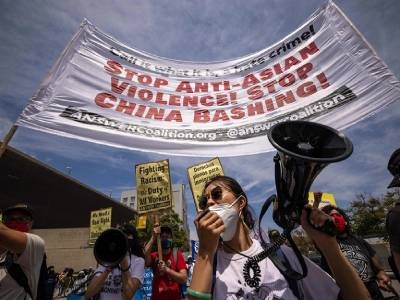
The FBI arrested a number of scholars of Asian descent under a national security programme called the China Initiative, which ran from 2018 to 2022.Credit: Stefani Reynolds/AFP via Getty
In a rare meeting between the US Federal Bureau of Investigation (FBI) and the academic community on Thursday, members of the FBI sought to reassure researchers of Asian descent that their concerns over discrimination are being heard. The 6 June public forum, held at Rice University in Houston, Texas, was lauded by participants as an important step in building trust, though several said much more work remains to be done.
China Initiative’s shadow looms large for US scientists
“We want you to feel comfortable. That’s why we’re here,” said Douglas Williams, special agent in charge of the FBI’s Houston field office, which, among other things, investigates hate crimes based on ethnicity. “More importantly, we want you to trust us, so that when something does happen in this community, which I believe it does, that you feel comfortable calling us and that we can investigate it.”
The two-hour session, sponsored by the Asian Pacific American Justice Task Force and others, was organized in response to fears among students and professors of Asian descent, which have flared in the United States in recent years. One reason for the concerns is the China Initiative, a programme launched in 2018 by the US Department of Justice (DoJ) under Donald Trump’s administration. The initiative aimed to curb the theft of US scientific research by the Chinese government, and saw a number of scientists of Chinese descent arrested by the FBI and swept into criminal court. Most were eventually acquitted or had their cases dropped. The DoJ discontinued the initiative in 2022, acknowledging that cases against the researchers triggered a perception of racial bias.
But scrutiny of Chinese-born scholars by the US government seems to have continued. In April, the Chinese embassy of the United States said that since July 2021, at least 70 foreign students with valid documents have been turned away at US airports and forced to fly to China. David Donatti, a senior staff attorney at the American Civil Liberties Union (ACLU) of Texas, a non-profit organization, said at the forum that those students, including fifth-year PhD students working in the United States and ready to defend their dissertations, were interrogated and deported without explanation. Many face five-year bans on entry to the country.
Feeling unwelcome
Gisella Perez Kusakawa, executive director of the Asian American Scholar Forum, a non-profit organization based in New York City, said that ending the China Initiative was a crucial step towards de-escalating tensions and decriminalizing Asian scholars, but only a single step. “There is still significant progress that needs to be made to ensure that the US is a welcoming environment that can attract and retain the best and brightest talents,” she said.
US universities call for clearer rules on science espionage amid China crackdown
According to a survey of more than 1,300 US faculty members of Chinese descent that her group conducted between December 2021 and March 2022, 89% said they wanted to contribute to US leadership in science, but 42% felt fearful of conducting their research, with around half saying their fear led them to avoid applying for federal grants. About 61%, particularly younger researchers, said they felt pressure to leave the country.
FBI representatives said that while their charge includes protecting the United States from foreign threats, including technological espionage, it also includes protecting the civil rights of all individuals in the country. That includes protecting Chinese citizens working in the United States, said Kelly Choi, supervisory special agent at the FBI’s Houston Field Office — although she made a point that the protection offered would be against any attempt by the Chinese government to harass or silence those individuals.
Although the FBI investigates crime, it is not in charge of screening people coming into the United States. That responsibility falls under the purview of US Customs and Border Protection (CBP), an arm of the Department of Homeland Security (the FBI is part of the DoJ). Steven Pei, an electrical engineer at the University of Houston, in Texas, who moderated the forum, told Nature that although the CBP had been invited to the panel, it had declined. The CBP did not respond to Nature’s request for comment before this story published.
The Department of Homeland Security created an Academic Partnership Council last year, with members including the presidents of US universities and higher education groups, to make recommendations to the department about issues that involve it and academia. Earlier this week, the council released a report from its Foreign Malign Influence in Higher Education subcommittee that, among other things, recommended more training for border officials about the role of travel in academic research.
Border protection
Donatti of the Texas ACLU said that people have little recourse at the US border. Technically, a person who has landed at the airport but hasn’t made it through the immigration process is still outside the country, and therefore rules about probable cause and access to an attorney aren’t in effect. He advised travelling scholars of Asian descent to carry a letter from a lawyer saying that they have legal representation and one from their university saying they have a position at that institution. It could help, he said, but it still provides no guarantees of protection. “It used to be that coming to the United States was a gold standard,” he said. “Now it is terrifying because you truly do not know if you begin your studies, if you will be able to re-enter the United States.”
When contacted by Nature, Qin Yan, president of the Asian Faculty Association at Yale University in New Haven, Connecticut, who helped to organize the forum, called for direct dialogue with CBP representatives to address border issues. He also expressed worries about other efforts to tamp down foreign influence, such as a Florida law that limits universities’ ability to recruit students and faculty members from China and other countries of concern. “We are still a long way from repairing the damage caused by the China Initiative. The chilling effects will last a very long time,” he added.
This week, Mexico elected its first female president, Claudia Sheinbaum Pardo — a politician with a background in physics and environmental engineering. Despite her scientific pedigree, not all researchers are confident that she will have their interests at heart, given that her mentor and predecessor, Andrés Manuel López Obrador, cut science budgets and had a sometimes antagonistic relationship with the Mexican science community.
Speculation now abounds about whether Sheinbaum Pardo will prioritize evidence-based decision-making.
To get a view of what might come, Nature talked to historians and policy experts about how five other scientists-turned-world-leaders fared in office, and whether their backgrounds in science were a benefit — or a detriment.
Some say science expertise is a double-edged sword. Researchers “know very well how to gather information from various actors in society”, says Sayaka Oki, a historian of science at the University of Tokyo. But at the same time, if they rely too much on their own intellect instead of listening to constituents, they can get “trapped in their own self-righteousness”, she adds.
Herbert Hoover, US president, 1929–33
Herbert Hoover, then a candidate for US president, poses with a radio set circa 1928.Credit: Topical Press Agency/Getty
Herbert Hoover studied geology in the 1890s at the then-fledgling Stanford University in California, and went on to earn a fortune as an international mining consultant. While living in London at the outset of the First World War, he achieved fame setting up a food-relief programme for German-occupied Belgium. Later, he was invited by Woodrow Wilson, US president at the time, to manage US food supplies for the remainder of the conflict.
Hoover became US Secretary of Commerce in 1921 and quickly solidified his reputation as an able technocrat. But that same technocratic bias might also have blinded him to the larger social, cultural and political concerns that arose as the country stumbled into the Great Depression, says David Cole, president of the Science History Institute in Philadelphia, Pennsylvania. That recession, the worst in US history, began shortly after Hoover, a member of the Republican party, was elected president in 1929.
Many of the government measures to create jobs and bring the country out of the depression were actually started under Hoover, Cole says. But he wasn’t able to sell his vision to the public, and voters ousted him after a single term. “Hoover worked himself almost to death trying to engineer the country out of the depression, but he was politically tone deaf,” Cole adds.
Margaret Thatcher, UK prime minister, 1979–90
Margaret Thatcher, at a press conference in 1979, was UK prime minister for 11 years.Credit: Bettmann/Getty
Margaret Thatcher, trained as a chemist, is probably one of the best-known and most divisive prime ministers that Britain has had. During her chemistry studies at the University of Oxford, UK, she spent a year investigating the structure of an antibiotic in the laboratory of Nobel prizewinning chemist Dorothy Hodgkin. Thatcher went on to work as a research chemist at a plastics company, and then at a food company, before quitting research for a life in politics.
She led the United Kingdom’s right-wing Conservative party to electoral victory in 1979, following a wave of trade union strikes in which more than 4 million workers demanded pay rises higher than they were being offered. During her 11-year premiership, Thatcher privatized state-owned industries and public services — including water, gas and electricity — and cut spending on health care, education and housing. The funding cuts, along with surging unemployment, damaged her popularity. But her reputation got a boost in 1982, thanks to a UK victory against Argentina in a war over ownership of the Falkland Islands.
Throughout her time in office, Thatcher did not seem to apply much of her scientific training to political leadership, says John Muellbauer , an economist at the University of Oxford. “She was a conviction politician, so she led by ideology and simple beliefs rather than evidence-driven policy,” Muellbauer says.
A. P. J. Abdul Kalam, president of India, 2002–07
A. P. J. Abdul Kalam in front of the official residence of the Indian president in 2007.Credit: Sunil Saxena/Hindustan Times via Getty
Even before becoming president, Avul Pakir Jainulabdeen (A. P. J.) Abdul Kalam was a nationally recognized figure. As an aerospace scientist at the Indian Space Research Organisation, he oversaw the development of India’s first home-grown satellite launch vehicle, which in 1980 thrust the Rohini Satellite 1 into low-Earth orbit. “He did marvellous work,” says Venni Krishna, a science-policy researcher at the University of New South Wales, in Sydney, Australia. Kalam later moved to India’s Defence Research & Development Organisation, where he headed the country’s strategic ballistic missiles programme.
In 2002, Kalam was elected India’s 11th president, with support from both the ruling and the opposition parties. The role of president in India is largely ceremonial — the prime minister is head of government — but Indian presidents have the power to reject bills passed by parliament. Kalam’s election was “hugely inspiring”, especially for young scientists, says Rohini Godbole, a particle physicist at the Indian Institute of Science in Bangalore.
Kalam belonged to a generation of scientists who rose to prominence in an India that had become newly independent of British colonial rule. He had a vision of using home-grown science and technology to propel the country’s development, and injected “confidence in the scientific systems”, Godbole says.
Angela Merkel, chancellor of Germany, 2005–21
Angela Merkel, shown in 2014, was Germany’s second-longest-serving head of government.Credit: Jochen Zick/Getty
Trained as a quantum chemist, Angela Merkel was the first woman to become chancellor of Germany, when she was elected in 2005. By the time she left office as leader of the centre-right Christian Democrats, 16 years later, she had become Germany’s second-longest-serving head of government.
Merkel obtained a PhD in quantum chemistry in 1986, studying reaction dynamics at the Academy of Sciences in Berlin–Adlershof, in what was then East Germany. As a political leader, she was known for her pragmatism in dealing with issues ranging from the European debt crisis to the phaseout of nuclear energy in Germany to the COVID-19 pandemic, says political scientist Matt Qvortrup at Coventry University, UK. “The way she approached political questions was by using a sort of scientific testing, seeing what theories might work and being willing to falsify them,” he says.
Overall, her background in science “was definitely a virtue”, says Qvortrup, and it probably influenced her ability to work collaboratively. Her focus was on policy — how to solve a problem — rather than on politics, which is more about how to win an argument, he says, adding that as a result, she had high approval ratings among people in Germany.
Yukio Hatoyama, prime minister of Japan, 2009–10
Japan’s former primer minister Yukio Hatoyama giving an interview in 2012, after he had left office.Credit: Yuriko Nakao/Reuters
Yukio Hatoyama’s time as the head of Japan’s government was short-lived, which some researchers attribute partly to an idealism that many scientists possess. Hatoyama, a leftist, was too “pure” and theoretical in his reasoning, says Oki.
Hatoyama received a PhD in industrial engineering from Stanford University. He worked as a researcher in applied probability, first at the Tokyo Institute of Technology and then at Senshu University in Tokyo, before launching his political career. Coming from a family of politicians, he was part of “a political genealogy”, says Yasushi Sato, who studies science policy at Niigata University in Japan.
In September 2009, Hatoyama became Japan’s 93rd prime minister, following an election victory by his Democratic Party of Japan. The party immediately set to work cutting government spending, including funds for science programmes. But pushback from the scientific community preserved key projects, including a synchrotron radiation facility.
Only eight months after taking office, Hatoyama resigned, having failed to fulfil his campaign pledge of relocating a controversial US military base from the island of Okinawa. Instead, he had agreed to move the base to a less crowded location on the island, which angered locals. Oki says public discourse at the time labelled Hatoyama as “naive” and lacking an understanding of the world.
The upshot?
Scientists who have succeeded in leading their countries tend to think first and foremost like politicians, says Mike Lubell, a physicist at the City College of New York, who tracks federal science-policy issues. With regard to Sheinbaum Pardo, he recommends that she draw on her scientific knowledge, but not depend on it. “Science is not the be-all and end-all in politics.”
Many of Sheinbaum Pardo’s critics, including some scientists, worry about Mexican democracy, arguing that she has become too close to the increasingly powerful political machine built by her predecessor. “If I were advising her,” Lubell says, “I would say that making sure that Mexican democracy thrives is going to be essential to Mexico’s ability to advance in science and technology.”
Over the past two decades, China has risen to become the world’s largest producer of scientific knowledge. According to Digital Science’s Dimensions database, last year there were almost 830,000 papers featuring researchers based in China, representing around 15% of the world’s 5.4 million articles. In 2022, the country overtook the United States in the Nature Index for contributions to natural-sciences articles for the first time. The majority of this research was disseminated in journals published by companies based in Western countries, rather than China’s own domestic publishers. The biggest 20 international publishers by output published 83% of all research articles involving authors based in China from 2012 to 2021.
“China’s journals are generally not that high-profile, so Chinese researchers tend to publish in international journals,” says Nicko Goncharoff, managing director of the London-based company Osmanthus Consulting. Goncharoff co-authored a 2023 report on the scientific-publishing market in China.
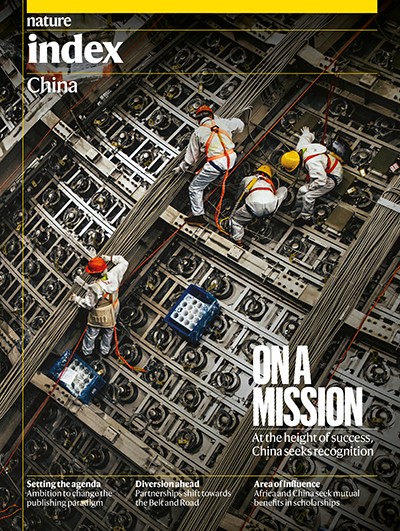
Nature Index 2024 China
China is making efforts to reverse that trend by launching several initiatives to build its portfolio of domestic academic journals. Those changes, albeit slow, could not only transform China’s publishing sector, but also have major effects on how international scientific collaboration is conducted and communicated.
Part of the motivation for this is economic. China spends more than US$1 billion on scientific publishing each year, and that expenditure is growing fast, with the rise of ‘gold’ open-access publishing models, in which authors are charged article processing charges (APCs) by a journal to get their papers published. APC spending in China has increased, on average, by 25% per year from 2017 to 2020. Around 90% of that money went to international publishers. “China is looking for a way to capture a portion of that APC spend that is currently going to international publishers,” says Goncharoff.
But Lili Yang, a higher-education researcher at the University of Hong Kong, says China is also motivated by a desire to move away from Western-dominated agendas in science and encourage more research that better serves the country’s needs. “To meet [international journals’] expectations, our research might not directly tackle local issues and topics,” she says. So, the Chinese government and the country’s research institutions hope domestic journals can help researchers “connect with local communities and domestic issues better”.
Beyond that, China wants to become more active in helping to shape how the global academic-publishing system works, and not always be following models and rules set up by Western countries, she says.
Journal plans
Reforming China’s fragmented publishing sector will be a major undertaking. In 2020, the latest year for which data are available, 4,963 journals were published by 4,261 publishers, 96% of which publish a single journal. Just 375 of those journals are English-language and 184 are in English and Chinese. Of these, just a handful have any international impact, says Goncharoff.
Most efforts at developing domestic publishers have had modest success. The most recent initiative, and most consistently funded and supported, is the China Journal Excellence Action Plan (CJEAP). Launched by the government in 2019, the CJEAP is a five-year plan that aims to create a portfolio of 400 world-class journals owned by Chinese institutions. The first tranche of 285 journals was announced in late 2019, with funding of 205 million yuan (US$29 million). Another 30 journals were announced in July 2020 and September 2021, and a further 50 in September 2022. The plan includes extra support such as a digital publishing platform and a training programme to develop local publishing and editorial talent.
Source: Nature Index
Being selected for support under the CJEAP is not easy, says Shu Fei, who studies scholarly communication at Hangzhou Dianzi University in China. “It requires an ambitious plan for improvement, and to be indexed in the Web of Science within three years,” he says. That indexing can be difficult to attain if the journal is not affiliated with a top university or the Chinese Academy of Sciences, the country’s largest research institution, in Beijing. One journal Shu is involved with, which he helped launch in 2021, has so far been unsuccessful in its attempts to become part of the CJEAP, he says.
Indexing in the Web of Science, a database of research publications owned by US firm Clarivate, is seen as a mark of quality for journals in China, says Shu. “If you’re not indexed, you have no attraction for Chinese scientists,” he says. Only 2–3% of journals in the index are published in China, so increasing that presence is a major goal of the Chinese government, says Shu.
So far, China has kept to its schedule of selecting new journals for the CJEAP, but progress on improving quality and impact has been intermittent, says Goncharoff. However, “once they put their mind to something, sooner or later, it gets done”.
One way for journals to kick-start their growth under the CJEAP is to partner with international publishers, a practice that is common for Chinese journals that are seeking more global impact. Because of the relative lack of publishing expertise within China, most of the country’s English-language journals are published in partnership with international publishers, which provides Chinese institutions with access to technology and expertise. The Chinese partner, usually a research institute or university, retains copyright and editorial control, and the foreign publisher gets to maintain a foothold in the country, says Goncharoff. Between them, the major publishers, Springer Nature and Elsevier, publish more than 200 China-based journals. (Nature Index’s news and supplement content is editorially independent of its publisher, Springer Nature.)
The CJEAP is not the only tool that China has to develop its domestic publishing system. The government can also use its influence to dictate where researchers publish, says Goncharoff. Over the past five years or so, the country has been working to reform its research assessment and academic promotion systems, moving away from rewarding scientists on the number of papers they publish to a more nuanced evaluation based on quality that is similar to those used in many other countries, says Yang. According to Goncharoff’s report, researchers focused on basic science are now assessed on ‘representative works’, of which at least one-third must be published in domestic journals with international influence, with the rest published in top international journals or presented at major international conferences. “They are trying to encourage more Chinese publications,” says Yang.
Many Chinese funders, research institutes and universities maintain lists of preferred journals and ‘warning lists’ of ones to avoid. As these directly reflect the wishes of the government and the researchers’ employers, these lists have a big influence on where scientists publish and the publications to which libraries subscribe.
Source: Dimensions
“These lists are very important,” says Yang. When assessing researchers for promotion, “universities will often have specific requirements” for how many publications were in journals deemed to be of a higher level, she says. “So, to meet that bar you need to benchmark against the preferred lists.”
One particularly influential list is the Chinese Academy of Sciences’ Early Warning List, which aims to identify journals that are viewed as having poor management, a lower academic reputation or favouring commercial interests. Launched at the end of 2020, the list evaluates journals based on a number of criteria that have included self-citation rates, retraction rates, the cost of APCs and, most recently in 2024, citation manipulation. The first iteration of the list included 65 journals; the 2024 version had just 24, with only two remaining from the original list.
Yang says Chinese universities pay close attention to the Early Warning List, and papers in listed journals risk not being counted for assessment and promotion, or worse, can damage an author’s academic reputation. This has had a major impact on the journals, with some seeing submissions from China decline by as much as 70% within six months of being listed, as well as an increased number of requests to retract submissions and China-based editors stepping down from editorial boards.
Access issues
One aspect of publishing that China seems less interested in pursuing is open access. The country produces hundreds of thousands of open-access articles each year, and the total is growing fast, but as a proportion of all research output, it remains lower than the rest of the world: just under half of China’s 2022 articles were open access, according to data from Dimensions, compared with 65% for non-China papers. There are only around 178 English-language open-access journals published in China, just 0.9% of the total registered in the Directory of Open Access Journals — although this does not include all of the journals that are co-published by Chinese and international organizations.
Although the Chinese government and many leading institutions officially support open access, they remain suspicious of it, says Goncharoff, especially the trend towards gold open access. “China is quite resistant to gold open access. They see it as a Western business model that is being foisted on them,” he says. The gold model could be costly for China. Goncharoff estimates that if most publishing shifts to gold open access, China might have to spend three to four times more on APCs than it does now, even with some declines in subscription costs.
In an effort to control rising costs, there has been much discussion in China of what ‘reasonable’ APCs would be. There is funding available for Chinese researchers to pay APCs, but if the cost exceeds about US$2,800, it must be reviewed by an academic committee. Some universities have started rejecting any APC above US$2,000, and there are suggestions that a reasonable APC is around US$1,200.
Chinese universities talk about making transformative agreements, which are designed to gradually shift publishers from subscription to open-access models, cost neutral. This could seriously hit the profits of international publishers because many Chinese institutions have already been able to negotiate deep discounts on subscriptions, says Goncharoff.
Source: Dimensions
Given the reticence around open access, neither Goncharoff nor Yang expect China to introduce a national policy on it anytime soon. But the country is pragmatic about the direction of travel in global publishing, says Goncharoff. Every journal supported by the CJEAP offers open-access options — some gold, but many diamond, where the costs are covered by a publisher or a sponsoring institution.
It is not clear whether, or how, China’s efforts to boost domestic journals will affect international scientific collaboration. It will probably play out differently according to the type of Chinese institution, says Simon Marginson, a higher-education researcher at the University of Oxford, UK. Big universities with strong ties to the rest of the world will likely maintain links and keep publishing in major international journals, but smaller institutions with fewer connections might become less concerned with pursuing international publications, he says. The goal of building up domestic journals is not just to capture the output of China’s own scientists. “The goal is to attract a global author base and build a world-class portfolio of journals that is used by the global research community,” says Goncharoff.
Some of China’s strongest Chinese-language journals in the field of education studies are establishing English versions and are inviting global scholars to join their editorial board, says Yang. “They’re not just for Chinese authors, they want to be properly international.”
Many Western scientists might be hesitant to publish in Chinese journals, says Goncharoff. Worries about political interference and policies in their own countries that discourage certain kinds of collaboration with China have cooled cooperation. But, says Marginson, China increasingly has a great deal of influence at the global level, especially in emerging economies such as those involved in its Belt and Road global trade initiative. Scientists from those countries might be more willing to publish in their Chinese partners’ preferred journals, he says. This might especially be the case if Chinese partners are making the biggest financial contribution to the project.
Although changes to China’s domestic publishing landscape will take time, it is a process that can’t be ignored by researchers and publishers elsewhere. “China is a big ship that takes a lot of time to turn, but when they do, they go all the way around and completely reorient,” says Marginson. “If they want to” grow their science-publishing capacity, he adds, “it will happen”.