Tag: Medical science

  • Artificial pancreas revolutionises NHS type 1 diabetes care

    Artificial pancreas revolutionises NHS type 1 diabetes care

    [ad_1]

    The NHS has secured cost-effective deals to provide tens of thousands of children and eligible adults with type 1 diabetes access to an innovative device known as the ‘artificial pancreas.’

    This groundbreaking technology continuously monitors glucose levels and automatically administers insulin through a pump, offering life-changing improvements in diabetes management.

    What is type 1 diabetes?

    Type 1 diabetes is a chronic autoimmune condition where the pancreas produces little or no insulin, the hormone responsible for regulating blood sugar levels.

    This condition typically develops during childhood or early adulthood. Without insulin, glucose builds up in the bloodstream, leading to high blood sugar levels that can cause long-term damage to organs and tissues.

    The risks associated with unmanaged type 1 diabetes are severe, ranging from heart disease and kidney failure to blindness and nerve damage.

    People with this condition also face the daily challenge of managing their blood sugar levels to avoid hypoglycemic (low blood sugar) and hyperglycemic (high blood sugar) episodes, both of which can result in life-threatening complications.

    Now, expanding access to the revolutionary artificial pancreas promises to improve care for thousands of NHS patients.

    A game-changer for diabetes care

    The artificial pancreas, also referred to as the Hybrid Closed Loop (HCL) system, is a significant breakthrough in the treatment of type 1 diabetes.

    By automatically adjusting insulin levels based on real-time glucose monitoring, the device eliminates the need for frequent injections and provides better control of blood sugar levels.

    This system not only enhances the quality of life for patients but also helps prevent serious complications like hypoglycemia and hyperglycemia, both of which can be life-threatening if not managed properly.

    Thanks to new agreements between the NHS and technology suppliers, eligible patients across England will have access to this life-saving device at reduced prices.

    The NHS has been identifying suitable candidates for this technology since April 2024, with a mass rollout set to expand in the coming months.

    Dr Clare Hambling, NHS national clinical director for diabetes, said: “The NHS continues to lead the way in care and treatment for people with diabetes, and this is just the latest example of those efforts – by ensuring cost-effectiveness of the latest technology, we can roll out these groundbreaking devices to thousands more eligible patients over the next five years.

    “The technology behind the Hybrid Closed Loop systems will be completely life-changing for many people living with type 1 diabetes, promising a better quality of life as well as clinical outcomes.

    “Type 1 diabetes is an easily missed diagnosis, so if you are concerned about symptoms – the 4Ts – going to the Toilet, passing urine more frequently, Thirst, feeling Tired and getting Thinner (losing weight), please come forward for support.”

    Cost savings and improved patient outcomes

    The UK is at the forefront of implementing this revolutionary diabetes technology. With £14.1m allocated by NHS England to support the first year of the rollout, the initiative will make a major impact on the lives of people with type 1 diabetes.

    With approximately 270,000 people in England living with type 1 diabetes, the rollout of the artificial pancreas is expected to deliver significant benefits to both patients and the NHS.

    The technology has already proven successful in pilot programmes, with 835 adults and children seeing improvements in managing their condition.

    By securing favourable pricing on these devices, the NHS will also achieve considerable cost savings, benefiting both patients and taxpayers.

    Professor Partha Kar, NHS England’s Type 1 Diabetes Technology Clinical Lead, highlighted the importance of this development: “This is a significant milestone in the national rollout of Hybrid Closed Loop systems, and is fantastic news for many people living with type 1 diabetes.

    “NHS trusts can access these devices at cost-effective prices, not only benefiting more patients but benefiting the taxpayer through significant savings to the NHS.”

    A phased rollout over five years

    The National Institute of Health Care and Excellence (NICE) approved the rollout of the artificial pancreas in December 2023.

    The five-year strategy aims to phase in the technology across England, prioritising children, young people under 19, pregnant women, and adults who struggle with high glucose levels.

    [ad_2]

    Source link

  • UN Political Declaration to combat antimicrobial resistance

    UN Political Declaration to combat antimicrobial resistance

    [ad_1]

    At the United Nations General Assembly (UNGA) held this week in New York, UN Member States have reached a Political Declaration aimed at tackling antimicrobial resistance (AMR).

    Antimicrobial resistance is one of the greatest global health threats facing the planet, directly causing over one million deaths annually.

    To combat this urgent health issue, Member States have established a Political Declaration at UNGA to fight AMR across all sectors through a ‘One Health’ approach. This type of approach considers that human, animal and environmental health are intrinsically linked.

    Stella Kyriakides, European Commissioner for Health and Food Safety, explained: “This Political Declaration is a strong signal of the global commitment to address antimicrobial resistance – a significant and evolving health threat to every person, community and country.

    “The Declaration puts a much-needed spotlight on AMR. We now need to turn these commitments into real actions and intensify our global collaboration in tackling AMR. We are at a turning point that could define the health and well-being of future generations.”

    Global impacts of AMR

    In 2021, antimicrobial resistance was directly responsible for nearly 1.2 million deaths worldwide and played a role in an additional 4.7 million deaths.

    Alarmingly, one in five of these victims were children. If immediate action is not taken, experts warn that the global death toll linked to resistant bacteria could exceed 8.2 million by 2050.

    These statistics are more than just numbers—they reflect lives lost, families broken, and futures cut short. What makes these tragedies even more devastating is that they are preventable.

    AMR presents a significant threat to sustainable development, costing the world an estimated $800bn annually in healthcare expenses and productivity losses. It also risks undoing decades of medical progress.

    The AMR crisis is closely tied to issues like poverty, food insecurity, environmental degradation, inadequate water and sanitation, and limited access to healthcare and essential medicines. Vulnerable populations, particularly in the Global South, bear the brunt of this growing challenge.

    Aims of the Political Declaration

    World leaders have pledged a series of actions to tackle antimicrobial resistance, focusing on prevention, surveillance, funding, access, innovation, and awareness. Key commitments include:

    • A target to reduce global deaths from bacterial AMR by 10% by 2030.
    • Implementation of national action plans in every country, adopting a One Health approach.
    • Creation of an independent panel, funded by the EU with €2.5m in 2025, to consolidate data and provide evidence-based guidance on AMR to global policymakers.
    • Utilisation of existing frameworks to share best practices and monitor national progress with regular ministerial reviews.
    • A pledge to significantly reduce antibiotic use in agriculture by 2030.
    • Promotion of sustainable financing for AMR efforts, especially supporting low- and middle-income countries.

    The adoption of the Political Declaration at UNGA marks a pivotal moment in the global fight against antimicrobial resistance.

    It reflects a united commitment to address AMR across sectors, emphasising the interconnectedness of human, animal, and environmental health. However, this is only the beginning.

    With millions of lives at stake, the world must now intensify its efforts to reduce AMR, safeguard public health, and ensure a sustainable future for generations to come.

    [ad_2]

    Source link

  • Fleming Initiative generates £100m to combat antimicrobial resistance

    Fleming Initiative generates £100m to combat antimicrobial resistance

    [ad_1]

    The battle against antimicrobial resistance (AMR) gained fresh momentum with two new partners, LifeArc and Cepheid, joining the Fleming Initiative’s global effort to curb this escalating public health threat.

    The announcement comes just ahead of the upcoming United Nations General Assembly (UNGA) meeting on AMR in New York, where world leaders will convene for the second time to address this urgent issue.

    With a growing number of drug-resistant infections worldwide, action is needed more than ever. In the US alone, someone contracts a drug-resistant infection every 11 seconds, and every 15 minutes, someone dies. Many other nations are grappling with even higher rates of AMR-related illness and mortality.

    What is antimicrobial resistance?

    Antimicrobial resistance occurs when microorganisms—bacteria, viruses, fungi, and parasites—evolve to resist the effects of drugs designed to kill them.

    The misuse and overuse of antimicrobials in human medicine, agriculture, and veterinary practices have significantly accelerated this process. As a result, once-treatable infections are becoming more challenging and, in some cases, impossible to cure.

    AMR has been identified as one of the most pressing global health challenges, with experts predicting that, without concerted action, it could cause up to 10 million deaths annually by 2050.

    LifeArc and Cepheid join the Fleming Initiative

    The Fleming Initiative, named after the scientist who discovered penicillin, is at the forefront of efforts to address AMR by fostering collaboration across science, technology, and policy.

    LifeArc, a medical research charity, and Cepheid, a global leader in molecular diagnostics, have pledged additional funding and expertise to the initiative.

    Their involvement marks a critical boost to the project, which now has over £100m in initial funding, just a year after HRH Prince William launched the global appeal.

    LifeArc brings vast knowledge in drug discovery, intellectual property management, and technology transfer, while Cepheid provides cutting-edge diagnostics to improve early detection and prevent the spread of resistant infections.

    Lord Ara Darzi, Chair of the Fleming Initiative and a leading voice in global health, expressed optimism about the future. “Antimicrobial resistance represents one of the most significant public health threats facing the global population.

    “Only by mobilising action and resources across countries, sectors and industries will we start to make progress at the pace and scale that is required.”

    UNGA meeting to tackle AMR

    The upcoming UNGA meeting will be a pivotal moment in the global effort to combat AMR. Lord Darzi will use the platform to call for tighter regulations around antibiotic prescriptions, aiming for a significant reduction in unnecessary antibiotic use by 2035.

    Specifically, he advocates for policies that prevent antibiotics from being prescribed without a confirmed diagnosis.

    The Fleming Initiative’s multifaceted approach to AMR

    The Fleming Initiative’s strategy is designed to address the complexity of AMR through collaboration and innovation. The initiative focuses on:

    • Advanced drug discovery: Using artificial intelligence (AI) and high-throughput experimentation to develop new treatments.
    • Diagnostics innovation: Creating tools for early detection, preventing the transmission of resistant infections, and enabling targeted therapies.
    • Fungal AMR: Addressing the rising threat of fungal infections that are resistant to current treatments.
    • Climate and environmental factors: Investigating the connections between AMR, climate change, and environmental degradation to better understand the emergence of new resistant strains.

    A call for global action

    Both LifeArc and Cepheid have expressed their commitment to the cause. Dr Dave Powell, Chief Scientific Officer at LifeArc, highlighted the potential human cost of inaction: “As many as 39 million people could die over the next 25 years due to antimicrobial resistance.

    “LifeArc is proud to join the Fleming Initiative and contribute our expertise to accelerate solutions that could save millions of lives.”

    As AMR continues to rise, the need for coordinated global action is more urgent than ever. The Fleming Initiative, backed by major partners like LifeArc and Cepheid, provides a model for the multidisciplinary and multi-sector collaboration required to make a lasting impact.

    By leveraging cutting-edge research, innovation, and policy, the Fleming Initiative aims to slow the tide of antimicrobial resistance before it becomes an even more devastating global crisis.

    [ad_2]

    Source link

  • TnpB tool promises big results

    TnpB tool promises big results

    [ad_1]

    Recent advancements in genome editing have introduced new possibilities for treating genetic disorders, with tools like CRISPR-Cas taking center stage.

    Now, scientists have developed a more efficient and compact genome editing system using TnpB, a protein that offers significant improvements in precision and delivery.

    This breakthrough opens doors for therapeutic applications that could transform how genetic diseases are treated, particularly familial hypercholesterolemia.

    Origins of CRISPR and genome editing

    The CRISPR-Cas system, which revolutionised genome editing over the past decade, originally evolved as a defence mechanism in bacteria to fend off viruses.

    It works like molecular ‘scissors’ by identifying and cutting specific locations in DNA, making it possible to correct genetic mutations.

    However, the size of Cas proteins often poses challenges when delivering them to human cells. This has driven scientists to explore smaller alternatives that can still provide precise genome editing capabilities.

    TnpB: A smaller, more efficient tool

    A new study led by Gerald Schwank from the University of Zurich and ETH Zurich focused on a smaller and more efficient genome editing protein called TnpB, which is a precursor to Cas12.

    TnpB is found in various bacteria and archaea, including Deinococcus radiodurans, one of the most radiation-resistant organisms.

    The research team successfully engineered TnpB to increase its efficiency by 4.4 times, solving the challenge of low functionality seen in earlier versions.

    Enhanced DNA targeting and precision

    One of the key achievements of the research team was improving TnpB’s ability to bind to DNA. The initial version of TnpB had limited targeting abilities, but by modifying the protein, researchers enhanced its range and accuracy.

    ” The trick was to modify the tool in two ways: first, so that it more efficiently goes to the nucleus where the genomic DNA is located, and second, so that it also targets alternative genome sequences,” explained Kim Marquart, the study’s first author.

    To better understand how TnpB interacts with DNA, the team tested the protein across 10,211 different DNA sites.

    Collaborating with artificial intelligence experts, they developed a predictive model that can forecast TnpB’s editing success based on target site characteristics. This model achieved genome editing efficiency rates of up to 75.3% in mouse livers and 65.9% in mouse brains.

    Targeting genetic diseases

    A significant focus of the study was the potential application of TnpB in treating familial hypercholesterolemia, a genetic condition affecting over 31 million people worldwide.

    This disease leads to dangerously high cholesterol levels and an increased risk of cardiovascular diseases. Using their optimised TnpB system, researchers were able to edit the genes responsible for regulating cholesterol, reducing levels by nearly 80% in treated mice.

    The future of genome editing

    The development of TnpB represents a critical advancement in genome editing, offering a smaller and more efficient alternative to CRISPR-Cas systems.

    By overcoming the size limitations of traditional Cas proteins and improving editing precision, TnpB has the potential to make gene therapy more accessible and effective for a wider range of genetic diseases.

    As this tool continues to evolve, it may reshape the future of medicine by providing safer, more reliable ways to treat complex genetic disorders through precise genome editing.

    [ad_2]

    Source link

  • Cutting-edge tubular scaffolds enhance bone regeneration

    Cutting-edge tubular scaffolds enhance bone regeneration

    [ad_1]

    Scientists from Sun Yat-sen University’s School of Biomedical Engineering have made a significant breakthrough in the field of bone regeneration.

    By developing advanced tubular scaffolds using electrospun membranes, they have created a cutting-edge solution to promote the healing of critical skull defects.

    These scaffolds, designed to mimic the structure of natural bone, provide an ideal environment for stem cells to flourish and accelerate the healing process, marking a major step forward in tissue engineering and regenerative medicine.

    Addressing critical bone defects

    Critical-sized bone defects have long been a major challenge in the medical world. Traditional treatments, such as autografts and allografts, often face limitations, including the scarcity of donors, size mismatches, and potential immune rejection.

    These issues have hindered the widespread use of these methods for bone repair. However, the growing field of bone tissue engineering offers a promising solution.

    Adipose-derived stem cells (ADSCs), which are easily accessible and possess strong osteogenic (bone-forming) capabilities, have attracted significant attention for their potential in bone regeneration.

    While injecting ADSCs directly into defect sites often results in a short survival time, combining them with scaffold materials has proven to enhance retention and improve bone regeneration.

    Researchers are now exploring new ways to develop scaffolds that mimic the natural structure of bone, utilising methods like electrospinning and 3D printing.

    Innovative tubular scaffolds for bone regeneration

    The team at Sun Yat-sen University tackled these challenges head-on by developing multilayer composite nanofibrous membranes made from polycaprolactone (PCL), poly(lactic-co-glycolic acid) (PLGA), and nano-hydroxyapatite (HAp).

    These materials, created using electrospinning technology, are engineered to replicate the structure of bone. When shaped into tubular scaffolds, they create an optimal environment for adipose-derived stem cells (rADSCs) to promote bone regeneration.

    The scaffolds not only simulate bone structure but also enhance the proliferation and osteogenic differentiation of rADSCs, meaning they help these stem cells transform into bone-forming cells more effectively.

    In laboratory and animal studies, the scaffolds demonstrated remarkable results in promoting bone growth and healing.

    With a bilayer thickness ratio of 1:2 and an initial total thickness of 2.5 μm, these materials can spontaneously transform into 3D scaffolds when exposed to certain conditions, adding to their practicality in medical applications.

    The future of bone regeneration

    The success of these scaffolds points to a bright future for bone regeneration treatments. The research has shed light on the mechanisms behind how these scaffolds, combined with growth factors like VEGF and BMP-2, promote bone formation.

    By integrating both chemical signals and physical properties, these advanced scaffolds have the potential to revolutionise bone defect repair.

    Further research is needed to optimise the design of these fibrous scaffolds and explore the mechanisms by which mesenchymal stem cells (MSCs) promote bone regeneration.

    However, the results thus far are highly promising, offering a new approach to treating bone defects that could soon be applied in clinical settings.

    [ad_2]

    Source link

  • EU and Canada partner to tackle global health challenges

    EU and Canada partner to tackle global health challenges

    [ad_1]

    In a significant step towards strengthening global health cooperation, the European Union (EU) and Canada have launched the EU-Canada Health Policy Dialogue.

    This new initiative, established under the EU-Canada Strategic Partnership Agreement (SPA), aims to enhance collaboration on key health issues affecting populations in both regions and worldwide.

    The virtual meeting, held between Stella Kyriakides, EU Commissioner for Health and Food Safety, and Canada’s Minister of Health, Mark Holland, marked the formal beginning of this partnership.

    The dialogue will focus on three global health priorities: antimicrobial resistance (AMR), health security, and non-communicable diseases, including cancer and mental health.

    As Commissioner Kyriakides stated: “Canada is a key partner for the EU when it comes to tackling global health challenges.

    “With today’s launch of the first EU-Canada Health Policy Dialogue, we are reaffirming our mutual commitment to a closer partnership on health under the SPA.

    Global cooperation is key when it comes to responding to pandemics, tackling AMR and improving cancer and mental health care.

    “I firmly believe that the EU and Canada working together helps to improve healthcare in the EU and beyond and deliver on our commitments in the EU Global Health Strategy.”

    Tackling antimicrobial resistance

    The EU and Canada underscored the growing global health threat posed by antimicrobial resistance, recognising it as an urgent public health and socio-economic issue.

    Both parties highlighted the upcoming United Nations High-Level Meeting on AMR as an important opportunity to reinforce global commitment to addressing this challenge.

    The dialogue commits the EU and Canada to closer collaboration on monitoring antimicrobial use, enhancing surveillance, and setting targets to reduce resistance.

    Additionally, both sides will promote the ‘One Health’ approach, which integrates environmental factors into the fight against AMR and explores economic incentives to stimulate the development of new antimicrobials.

    This united effort aims to strengthen global health systems and prevent the rise of drug-resistant infections.

    Reinforced cooperation on health security

    Another critical area of focus is global health security, particularly in pandemic preparedness and response.

    The EU and Canada pledged to strengthen international collaboration to improve pandemic detection, prevention, and response mechanisms.

    Central to these efforts is the World Health Organization (WHO), which both parties emphasised as a vital institution for global health governance.

    The discussion also highlighted the recently amended International Health Regulations as an essential tool in enhancing global health security.

    Furthermore, they will support the development of a new Pandemic Agreement aimed at ensuring the world is better prepared for future health emergencies.

    Climate change was also a significant point of discussion. The EU and Canada committed to addressing the health risks posed by extreme weather events, such as heatwaves and the spread of vector-borne diseases.

    By pooling resources and expertise, both regions aim to mitigate the impact of climate change on global health.

    Advancing cancer care and mental health

    The third pillar of the dialogue centres on non-communicable diseases, with a particular focus on cancer and mental health.

    Both the EU and Canada aim to improve cancer prevention, detection, and treatment through collaborative research and knowledge-sharing initiatives.

    This partnership will prioritise equitable access to cancer care, with the EU and Canada exchanging best practices on modern healthcare approaches.

    High-impact, transnational research will play a central role in identifying more effective methods to combat cancer on a global scale.

    Mental health was also a key topic, as both sides recognised the need for more comprehensive and accessible mental health services.

    Through a series of knowledge exchanges, the EU and Canada will share policies and strategies to enhance mental health support, both in-person and through digital platforms.

    Holland added: “The launch of the first Canada-EU Health Policy Dialogue emphasises the importance of global partnerships to make progress on our common health priorities, including AMR, health security, climate-related health risks, and our approaches to non-communicable diseases.

    “Our collaborative efforts to address these priority areas will help us improve health and wellbeing for people in Canada and also contribute to global efforts for a healthier world for everyone.”

    [ad_2]

    Source link

  • Trinity College Dublin secures €800,000 for tissue engineering

    Trinity College Dublin secures €800,000 for tissue engineering

    [ad_1]

    A Trinity College Dublin researcher has been awarded major funding to pioneer an innovative tissue engineering approach.

    Dr Josephine Wu, a distinguished researcher from Trinity College Dublin’s School of Engineering and the Trinity Centre for Biomedical Engineering, has been awarded a prestigious Wellcome Early Career Award.

    This €800,000 grant will support her pioneering work in tissue engineering over the next five years.

    Dr Wu’s project, known as OPTO-BIOPRINTING, aims to revolutionise regenerative medicine by developing a novel approach to creating living organ replacements.

    How tissue engineering will revolutionise healthcare

    Tissue engineering is an interdisciplinary field that combines principles of biology, engineering, and materials science to create functional tissues that can replace or repair damaged organs.

    By using a combination of cells, scaffolds, and growth factors, researchers aim to develop tissues that can perform as well as, or even better than, natural tissues.

    The importance of tissue engineering lies in its potential to address the growing shortage of donor organs for transplantation, offering new hope for patients with chronic diseases, injuries, or congenital disabilities.

    Moreover, tissue engineering holds promise for advancing personalised medicine, where treatments can be tailored to the individual patient using engineered tissues derived from their own cells.

    This reduces the risk of immune rejection and enhances the efficacy of treatments. As the field continues to evolve, innovations like the OPTO-BIOPRINTING project could bring us closer to a future where engineered tissues and organs are widely available, improving the quality of life for countless individuals.

    Advancing the field of tissue engineering

    Despite the immense potential of tissue engineering, current strategies often fall short as they struggle to replicate the complex processes involved in natural tissue development.

    During physiological development, finely coordinated gradients of signalling molecules guide cellular and tissue growth.

    Current artificial tissues lack this intricate guidance, resulting in constructs that do not perform as well as fully native tissues.

    Dr Wu’s OPTO-BIOPRINTING project seeks to address this challenge by establishing a new platform for tissue engineering.

    This platform will leverage the natural ability of cells to self-assemble into complex structures while introducing spatiotemporal control over the process.

    One of the groundbreaking aspects of this project is the use of light to trigger cells to produce specific proteins on demand, allowing for precise control over tissue formation.

    A proof-of-concept for future applications

    As part of her research, Dr Wu will focus initially on developing a cartilage-bone unit, serving as a proof-of-concept for the OPTO-BIOPRINTING platform.

    The success of this project could extend beyond cartilage-bone engineering, opening up new possibilities for creating a wide variety of tissue types.

    This breakthrough could have significant implications for regenerative medicine and disease modelling, providing new avenues for treatment and research in various medical fields.

    Dr Wu expressed her gratitude for the Wellcome Trust’s support: “I’m immensely grateful for the support of a Wellcome Trust Early Career Award. It represents an important stepping stone in my pathway to independence, and I’m excited to bring together two powerful technologies for patterning tissue complexity and see where it can take the field of tissue engineering.

    “Previous funding support from a Marie Skłodowska-Curie fellowship (ADMIRE COFUND) made this award possible, and I’d also like to acknowledge the continued support from friends, colleagues, mentors, and Trinity’s Research Development Office.”

    Dr Wu’s work represents a significant step forward in the field of tissue engineering. With the support of the Wellcome Early Career Award, her innovative approach has the potential to narrow the gap between artificial and natural tissues, paving the way for more effective regenerative therapies.

    [ad_2]

    Source link

  • Co-creating a better world for all

    Co-creating a better world for all

    [ad_1]

    Dr Eric Li explains how the UBC Social Innovation Hub is helping to build a better future with agile, sustainable, and multifaceted community-university partnerships.

    The COVID-19 pandemic has profoundly impacted various facets of life in Canada and globally, affecting individual relationships, institutional operations, and international supply chains and collaborations. It has exposed the interconnectedness and vulnerability of complex systems. In response to the challenges of the post-pandemic world, social innovation, social entrepreneurship, social enterprise, social financing, and social business are increasingly recognised as innovative solutions and mechanisms.

    The UBC Social Innovation Hub emphasises the multi-stakeholder model, aiming to design and nurture high-impact social innovations, social enterprises, and social businesses. It is also committed to educating the next generation of social innovators and entrepreneurs while fostering long-term collaborations with key partners and communities both locally and globally.

    The work of the Social Innovation Hub

    The Social Innovation Hub focuses on three main pillars:

    Social Innovation Research Network

    The Hub facilitates a diverse range of research projects and partnerships and establish an international social innovation research network to connect Canadian scholars with global collaborators and partners.

    Social Innovation Learning

    The Hub co-ordinates courses, work-integrated learning (WIL) programmes, and other experiential learning activities to engage educators, learners, and community partners at all levels, promoting a deeper understanding of social innovation.

    Social Innovation Incubator

    The Hub collaborates with key partners to develop a ‘humanitarian-centric’ social innovation incubator. This new programme also supports the development of social businesses, social enterprises, Indigenous social ventures, and other socially-driven enterprises.

    Bridging the community-academia gap

    Community-university engagement is at the core of the Hub’s approach to innovation. By fostering engagement between academia and the broader community, the Hub aims to enhance collaboration, co-creation, knowledge sharing, and expertise.

    Another guiding principle for the Hub’s innovation strategy is inclusivity. By involving stakeholders from multiple sectors and disciplines, the Hub ensures a collaborative, inclusive, sustainable, and participatory approach to solving today’s complex problems. The socio-economic dynamics of current challenges are intricate, necessitating collaboration among the public sector, private sector, academia, industry leaders, community leaders, ecosystem enablers, innovators, and entrepreneurs. The Hub serves as a key integrator, connecting relevant stakeholders across various sectors and disciplines.

    Current themes of the Hub’s work include:

    Health and wellness

    The Social Innovation Hub is dedicated to advancing social innovation research to address diverse health challenges and concerns both within and beyond Canada.

    Food system and food security

    The Hub works with local, regional, national, and international partners to co-develop innovative social ventures that support food production, redistribution, and consumption in local and global food systems.

    Sustainable production and consumption

    In alignment with Sustainable Development Goal (SDG) 12 ‘Responsible Consumption and Production’, the Hub aims to reduce carbon footprints by promoting eco-friendly production systems and responsible consumption, thereby building climate resilience.

    Climate resilience

    The Hub collaborates with partners, educators, and learners to co-develop an ecosystem that supports ‘planet-first’ social innovation.

    Affordable housing

    The Hub is committed to addressing the issue of homelessness by working on affordable housing projects, contributing to the development of sustainable cities and communities and reducing inequality within communities.

    These themes provide direction for team building. Developing a sustainable and resilient platform to support social innovation and the establishment of social ventures is crucial. The Hub also creates an integrated impact measurement mechanism to capture social impact and outcomes.

    Please note, this article will also appear in the 19th edition of our quarterly publication.

    [ad_2]

    Source link

  • Population-level health research for a healthier Canada

    Population-level health research for a healthier Canada

    [ad_1]

    Dr Philip Awadalla, National Scientific Director of CanPath, explains how the population cohort works to facilitate health research with a vision that includes creating healthy environments, partnering with Indigenous communities, and fostering better data security practices.

    The Canadian Partnership for Tomorrow’s Health (CanPath) has become a cornerstone of health research in Canada and, as it hits 15 years since its launch, the longitudinal population health cohort is in its prime. Representing one in every 100 Canadians between the ages of 30 and 74, CanPath is not just a platform – it is a reflection of our nation’s commitment to understanding and improving health for all Canadians.

    With over 330,000 participants who have generously contributed their health and biological information, we have created an unparalleled resource for researchers. CanPath makes genomic, environmental, lifestyle, and electronic health-related data available to the scientific research community. This data is the foundation for long-term population health studies that delve into the intricate interplay between health, lifestyle, and risk factors.

    As our participants age, some may encounter health challenges like cancer or heart disease. At these critical junctures, CanPath data becomes invaluable. Researchers can examine this wealth of information to identify factors contributing to disease onset.

    Supporting environmental protection and Canadians’ right to a healthy environment

    Over the years, CanPath data has illuminated the health risks of air pollutants and their connection to chronic disease and cancer through studies published in Nature Communications and Nature. This research supports the principles of Canadian parliamentary Bill S-5, which aims to strengthen environmental protection and acknowledges the right to a healthy environment. It’s a reminder of our surroundings’ impact on health and the importance of policy in safeguarding our air quality.

    We are excited to take the impact of our data further. Our upcoming Diet & Physical Activity study will enhance our environmental exposure data and explore the influence of retail food environments (RFEs) on diet quality. This study, a first in Canada, will assess how access to various food sources like restaurants and grocery stores shapes dietary habits on a large scale. It will examine the effects of RFEs on diet quality, considering factors such as the built and social environment and individual-level chronic disease risk factors. This aligns with the 2019 Canada’s Food Guide and aims to provide insights across communities and provinces.

    Our partnership with the Canadian Urban Environmental Health Research Consortium (CANUE) has enriched our datasets with walkability, greenness, and air quality measures. These variables are linked to CanPath data and are available to researchers. This collaboration is a stride towards a comprehensive understanding of how our environment impacts health, particularly in the context of climate change.

    By leveraging our extensive resources and data, we are poised to deliver timely insights into the effects of climate change on Canadians’ health.

    Honouring Indigenous voices in health research

    At CanPath, we are ensuring our research reflects the respect and partnerships we value with Indigenous communities. Indigenous communities are diverse and span Canada, including First Nations, Inuit, and Métis peoples. Over 7,000 CanPath participants have self-identified as Indigenous and shared their health and lifestyle information with us.

    CanPath is committed to meeting the unique needs of Canada’s diverse communities through a transparent approach that upholds the principles of ownership, control, access, and possession (OCAP). To honour this commitment, CanPath is collaborating with Indigenous partners and scholars to develop appropriate processes for accessing and using Indigenous data and biosamples.

    We approach this process with humility and dedication as we continue to learn from Indigenous scholars and partners. As we move forward, we’re dedicated to collaborating with Indigenous partners to ensure our research upholds the rights and values of First Nations, Inuit, and Métis Peoples.

    By stepping back to listen and learn, we’re finding better paths forward, ensuring our research honours principles of Indigenous data governance and the spirit of collaboration and respect with Indigenous Peoples.

    Advancing health research with secure data access

    With our soon-to-be-launched trusted research environment, CanPath will provide researchers with a more secure and efficient way to access and analyse vital health data. With a generous $6.2m grant from Genome Canada, this cloud-based platform will revolutionise how researchers utilise the rich health data from over 330,000 Canadians in our cohort.

    This new environment aligns with the practices of leading international data resources and adds an extra layer of security, ensuring that the privacy and integrity of participant data are maintained. By centralising data access, we eliminate the need to move large datasets around, making it easier for researchers to collaborate and integrate various data sources.

    This initiative is a testament to CanPath’s unwavering focus on advancing health research. We are enhancing how we share data and ensuring we remain at the cutting edge of health research infrastructure.

    Fostering collaboration

    Our new approaches foster diversity and inclusiveness in research, encourage international collaboration, and ultimately enhance the cohort’s value in advancing global health. While we evolve our data access process, engage with diverse communities in Canada, and enrich the CanPath resource with more diet, physical activity, and environmental data, we’re ensuring that future health research and personalised treatments can benefit Canadians and the global scientific community. Our goal is to set a global benchmark for disease risk understanding and prevention. Reaching CanPath’s 15-year mark is exhilarating, and we are eager to witness the advancements that the next 15 years will bring.

    Please note, this article will also appear in the 19th edition of our quarterly publication.

    [ad_2]

    Source link

  • Pursuing excellence in healthcare innovation and research

    Pursuing excellence in healthcare innovation and research

    [ad_1]

    The Jewish General Hospital and the Integrated Health and Social Services University Network for West-Central Montreal are committed to enhancing patient care through healthcare innovation. Here, they discuss their recent efforts to guide the institution towards a user-centric and technology-driven future.

    TO FULLY appreciate the deep, long-term commitment to healthcare innovation at the Jewish General Hospital (JGH), one must start by looking back to 1934, the year the hospital was launched. Within days of opening their doors, surgeons were already using a mechanised, adjustable operating table – the first of its kind in Canada – that was particularly effective in fracture cases since it allowed X-ray imaging to be performed on the spot.

    Pursuit of innovation in healthcare

    Since those early days, a great deal has changed. Back then, the JGH was an autonomous healthcare institution. In contrast, today, it is the central pillar in a network of 34 interconnected and interdependent facilities, known as the Integrated Health and Social Services University Network for West-Central Montreal (or, more commonly, CIUSSS West-Central Montreal).

    What has not changed, however, is the hospital’s – and, by extension, the entire network’s – intense dedication to healthcare innovation and research. This dedication is driven by a determination to deliver exceptional care that focuses on and responds to the needs of individual patients, clients, and other healthcare users.

    Far from being a recent product of the digital age, the pursuit of innovation is deeply embedded in the DNA of the Jewish General Hospital and CIUSSS West-Central Montreal, with roots that date all the way back to that early operating room.

    Dr Lawrence Rosenberg, President and CEO of CIUSSS West-Central Montreal, said: “This drive for innovation has manifested itself not just in a willingness to embrace change, but in a desire to actively nurture creative thinking and evidence-based research.

    healthcare innovation

    “At the same time, we understand what should not be changed: Compassion for our patients, one-to-one contact with them, respect for their feelings, and a commitment to listening to their concerns. Though we take pride in improvements to our practices and technology, our obligation is to keep asking ourselves, ‘What more can we do?’”

    The result, most recently, has been a spate of impressive and, on occasion, award-winning initiatives. These include C4, a Command Centre where dozens of screens provide staff with real-time, network-wide data about numerous aspects of patient care; the Hospital@Home programme, in which certain qualified patients return home, where a hospital-based care team continuously and remotely monitors them; and the Connected Health Record (now in its preliminary phase), which will enable staff to use a single application to quickly and easily review a full range of up-to-date medical information about any patient seen at any CIUSSS site.

    OROT

    Of key importance in guiding the JGH and the CIUSSS in new directions is OROT (Hebrew for ‘illumination’), a connected health innovation hub and incubator.

    With one of the most comprehensive and distinctive innovation programmes in a healthcare setting in Canada, OROT has a mandate to support organisation-wide efforts to reimagine the future of care through adaptive culture change, strategic foresight, digital transformation and the co-creation of technology.

    Over the past four years, OROT has helped the CIUSSS leap toward a future where user-centric technology is assisting clinicians to provide more and better care, with improved results, to patients who are empowered to take charge of their health.

    OROT’s many services are designed to support the network’s employees in reimagining the way they provide care. They do so by helping them gain knowledge and skills related to digital technology, leading them through the process of open, user-centric innovation, and offering them expertise in managing innovation and integrating technology.

    To assist in building a future-proof healthcare system, OROT employs methods that involve strategic foresight to help the organisation consider how the trends that shape healthcare will affect the way that services must adapt in order to be resilient and thrive amid change.

    In 2023, OROT facilitated two major cross-functional workshops to lead the directorates of CIUSSS West-Central Montreal through the process of future backcasting by equipping them with the means of anticipating and growing excited about taking the lead in transforming healthcare. Their goal was to re-imagine a primary-care centre and medical library of the future.

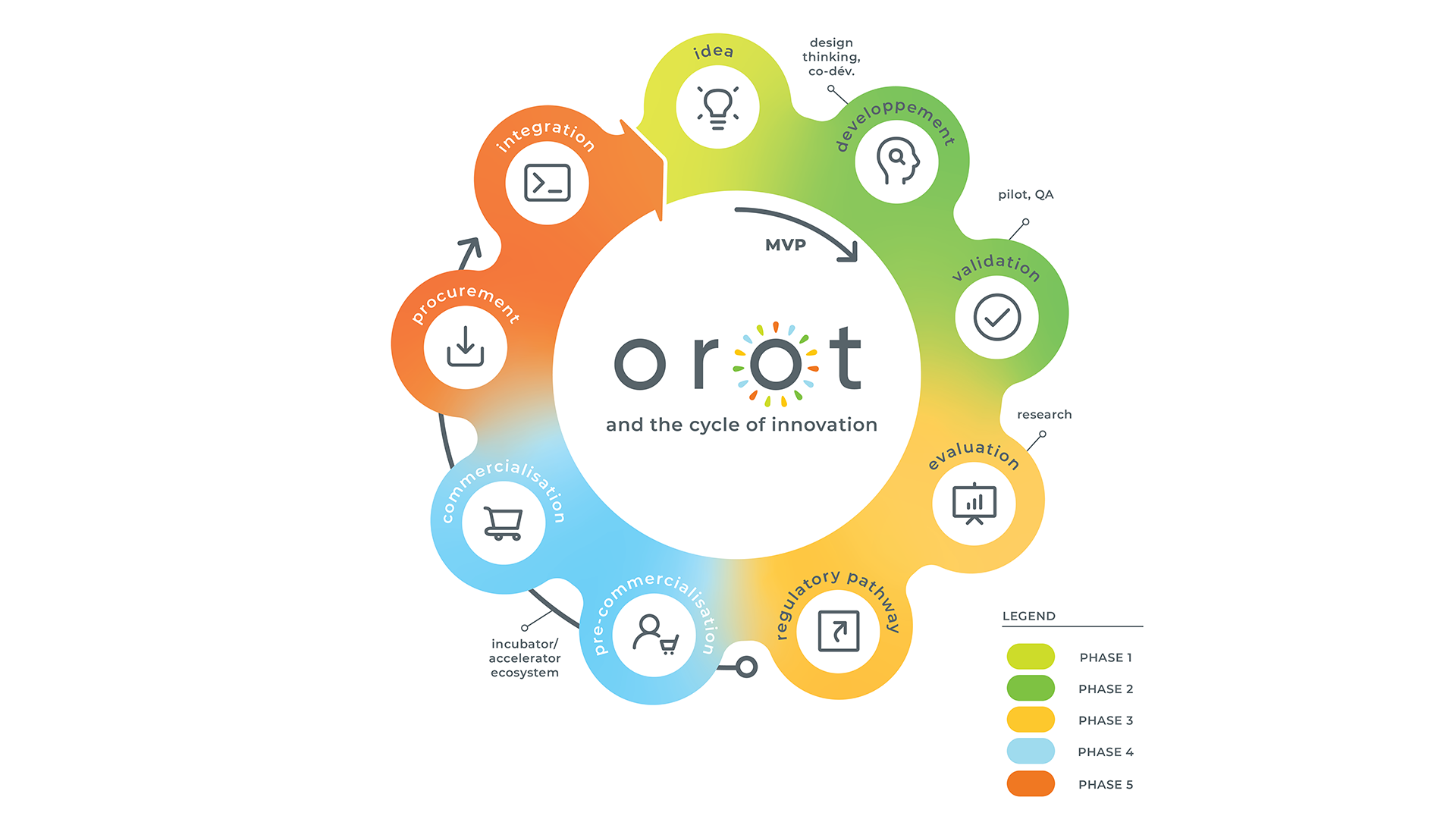
    Through its internationally recognised incubation programme, OROT also fosters the creation and commercialisation of the next generation of digital health technologies. OROT offers a unique and integrated environment based on interdisciplinary collaboration and the process of co-creation and validation of new technologies. The aim is to catalyse their development, commercialisation, market launch, and, ultimately, user adoption.

    To do this, OROT facilitates access and collaboration among health professionals, users, and entrepreneurs. Together, they cooperate in developing and implementing tools and products that satisfy the practical, real-world needs of patients and the requirements of the professionals who provide care.

    The creation of innovative digital health technologies begins with an idea, which is tested, developed, and then commercialised. The process ends when the innovation – often in the form of a new tool or product – arrives in the hands of users, who may be clinicians, patients or caregivers. However, the journey to the marketplace can be very treacherous, as more than 95% of companies fail in the course of trying to serve the healthcare sector.

    Danina Kapetanovic, the CIUSSS’s Chief Innovation Officer, Founder, and Head of OROT, notes that few companies succeed in developing and integrating technologies that truly transform healthcare because they use strategies that originate in the tech sector. As a result, companies start by inventing a product and then hope prospective consumers will find a good reason to buy it.

    Ms Kapetanovic explained: “A better approach – our approach – is to support needs-driven innovation. As an initial step, we help entrepreneurs acquire a deep understanding of a particular problem in the healthcare sector. They gain this understanding through direct contact – facilitated by OROT – with healthcare professionals, patients and their families. This gives them a sound basis for designing technology that is uniquely suited to solving a problem.”

    Working with entrepreneurs and experts from CIUSSS West-Central Montreal, OROT uses an integrated model of co-development, testing and evaluation, and implementation that is user-centric and informed by large-scale data science. The goal is to ensure that the proposed product will meet everyone’s requirements by the time it reaches the marketplace.

    Utilising the OROT platform

    Using this dynamic approach, OROT has made many unique endeavours possible. Among them (to name only a few):

    Improving communication

    Braver, a Québec startup that had developed an app for secure clinical communication, worked with OROT to enhance the platform to improve contact between clinicians and patients. Since early 2023, the app has been used in a paediatric setting in CIUSSS West-Central Montreal to give parents greater insight into the nature of their child’s therapy and to improve communication with therapists.

    Harnessing AI

    Partnering with IVADO Labs for their AI expertise and the CIUSSS’s Logistics Directorate, OROT has helped co-design and is currently testing an AI tool that will make logistics at the CIUSSS more accurate, cost-effective, efficient and proactive, thereby saving valuable resources.

    Improving telephone services

    OROT is collaborating with a CIUSSS directorate for proximity services and with a Québec company, VitrAi, by bringing in AI support to optimise the regional health consultation telephone service.

    Optimised patient triage

    In collaboration with the Toronto company Signal 1 and with the CIUSSS’s Hospital@Home programme, OROT is supporting the co-design of an algorithm that will allow for optimised patient triage.

    Cutting-edge technologies

    OROT has helped bring several cutting-edge technologies into the network. These include remote vital-sign monitoring devices currently used in the Hospital@Home programme, augmented reality to improve the care and stimulation of elderly individuals with Alzheimer’s disease, AI support to optimise patient scheduling in oncology clinics, sensors to optimise telerehabilitation services, and point-of-care blood and urine testing.

    Comprehensive and tailored approach

    Ms Kapetanovic points out that OROT is internationally recognised as a rarity among incubators. It guides and steers companies throughout the cycle of innovation while providing them with ongoing support and coaching until their products are integrated into the healthcare continuum.

    This invaluable assistance – and its subsequent contribution to improving the quality of care – is the reason OROT has become an essential component of ‘Care Everywhere’, the broad-based, patient-centred approach to care that is fundamental to CIUSSS West-Central Montreal. As Dr Rosenberg notes, “Using ‘Care Everywhere’ as our guidepost, we continually strive to achieve the right outcomes by delivering the right care at the right time in the location that is most appropriate, safest and most convenient for patients and other healthcare users.” See OROT and the cycle of innovation graph pictured below.
    Dedicated research facilities

    Like innovation, research also has deep roots in the many facilities of CIUSSS West-Central Montreal, particularly at the Jewish General Hospital. During the JGH’s earliest decades, research was conducted in any adequate corner that happened to be available.

    However, as the hospital grew in size and stature, the need for a dedicated research wing became increasingly apparent. Since its inauguration in 1969, the Lady Davis Institute for Medical Research (LDI) has grown into one of Canada’s leading research facilities. In addition to conducting pure research, it encourages researcher-clinicians to pursue projects that have practical applications, taking them from the bedside to the laboratory and back again.

    Over the years, the LDI has attracted outstanding investigators with national and international reputations in such specialised areas as cancer therapeutics, molecular oncology, cell and gene therapy, AIDS/HIV, ageing, hypertension and cardiovascular disease, clinical epidemiology, and the psychosocial aspects of the disease.

    With a staff of over 400 employees, including more than 200 investigators and at least 290 trainees, the LDI received nearly $32m in grants and produced a total of 829 peer-reviewed publications in 2023.

    Success stories

    The LDI has made a significant impact with many of its projects, including the following:

    BioPortal

    The BQC19-JGH Biobank implements hospital-based genomic medicine to improve clinical care, improve the diagnosis of disease, upgrade the efficiency of test ordering, and enhance the prediction of drug responses.
    Building on the success of BQC19, the BioPortal was established in 2022 as a bio-banking programme dedicated to conducting research into a range of diseases. Investigators are using the genetic information collected from a diverse population to better understand risk factors and causes of diseases, with the ultimate goal of improving clinical care.

    BioPortal currently focuses on improving care for diabetes and will expand to other diseases.

    Brain cell research

    A team of researchers from across North America, co-led by a principal investigator at the LDI, has discovered that certain brain cells may be inherently vulnerable to mutations that cause high-grade gliomas (highly aggressive and fatal paediatric brain tumours). These findings could help guide the design of clinical trials for new and improved therapies against the leading cause of cancer-related deaths in children and young adults.

    The Scleroderma Patient-centred Intervention Network

    The Scleroderma Patient-centred Intervention Network (SPIN), led by a senior LDI investigator, is the largest cohort-based trial infrastructure in any rare disease in the world. It maintains a cohort of over 2,300 active participants in 50 centres in seven countries, in collaboration with more than 100 researchers and patients from almost 15 patient organisations. Individuals and organisations involved in SPIN are working on a novel project to develop, adapt and test new and existing programmes to help people with scleroderma cope with their illness and manage their daily lives.

    Plasmonic PCR

    A team of LDI researchers has developed a rapid plasmonic point-of-care PCR platform to detect pathogens associated with pandemics or antimicrobial resistance. This was the first plasmonic POC prototype built entirely in Montreal. Plasmonic PCR is simple, quick and efficient, with a prototype that has been successfully tested in detecting chlamydia, gonorrhoea, sars-COV2, HIV, HCV and e. coli.

    Virtual biopsy development

    One of the most powerful and novel technologies in oncology is the development of assays to detect cancer DNA (ctDNA) in the blood. A lab at the LDI is developing a virtual biopsy for precision oncology – i.e., a platform to detect minimal residual cancer in breast cancer patients treated with chemotherapy and surgery.

    This test aims to generate personalised ctDNA assays to accurately predict the prognosis of each patient and determine the indication for further anti-cancer therapy. The project is funded by a grant from Genome Québec to support the translation of this platform to the clinic for patients with early breast cancer.

    Dr Rosenberg said: “No doubt, a time traveller from 1934 would be dazzled by these and many other of our developments in innovation and research. However, the impetus behind them would be instantly recognisable: To acquire, adapt or develop the best existing practices and technology and to place them in the caring, compassionate hands of our staff. Today and for nearly a century, we have not simply been waiting for tomorrow to arrive; we are making it happen.”

    Please note, this article will also appear in the 19th edition of our quarterly publication.

    [ad_2]

    Source link