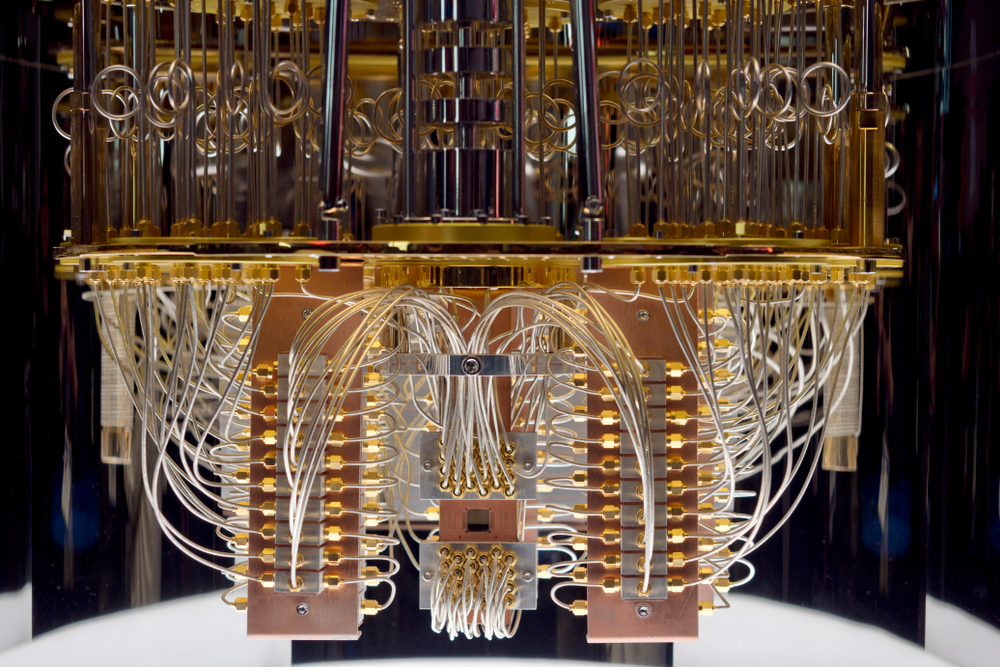
The U.S. Department of Energy (DOE) has announced a significant $65m investment in quantum computing research, funding ten projects with a total of 38 separate awards.
These projects aim to advance the capabilities of quantum computing, a technology with the potential to revolutionise problem-solving in modern science by overcoming the limitations of classical computing.
By leveraging the principles of quantum mechanics, quantum computers are expected to solve large, complex scientific challenges more quickly and efficiently than traditional computers.
Ceren Susut, DOE Associate Director of Science for Advanced Scientific Computing Research, emphasised the transformative potential of this technology: “With these awards, we are equipping scientists with computational tools that will open new frontiers of scientific discovery.
“Quantum computers may ultimately revolutionise many fields by solving problems that are currently out of reach.”
Focus on software and control systems
This $65m investment will primarily target software, control systems, and algorithmic advancements, which are critical to demonstrating the practical utility of quantum computing for scientific research.
The funded projects will focus on improving the entire software stack, from programming tools to control systems that can manage quantum systems at scale.
Key areas of research include the development of quantum algorithms that offer error detection, prevention, and correction, ensuring the resilience and performance of quantum systems.
By creating robust software ecosystems, researchers aim to achieve modularity, interoperability, and specialisation in quantum computing applications.
Quantum computing research and the National Quantum Initiative
The U.S. Congress passed the National Quantum Initiative Act in December 2018, recognising the vast potential of Quantum Information Science (QIS) and the need to stay ahead of international competition in this field.
The DOE’s Office of Science is a major partner in this initiative, launching a range of research programmes that address various aspects of QIS.
These quantum computing research projects span from single-discipline investigations to large, integrated centres dedicated to exploring the potential of the technology.
The goal is to ensure that the United States maintains its leadership in quantum computing research while also advancing scientific discovery in fields like energy, materials science, and medicine.
The total funding for these projects amounts to $65m over a five-year period, with $14m allocated for Fiscal Year 2024.
Further funding will depend on future congressional appropriations. This investment underscores the nation’s commitment to advancing quantum computing research and ensuring it remains at the forefront of this groundbreaking technology.
The Korea Institute of Science and Technology (KIST) has made a groundbreaking advancement in quantum error correction, a critical solution for the practical application of quantum computing.
Led by Dr Seung-Woo Lee, the KIST team has developed a world-class quantum error correction technology that significantly outperforms previous efforts, marking a major leap forward in the global race for quantum supremacy.
This breakthrough not only sets new global standards but also places South Korea at the forefront of quantum technology development, offering the potential to revolutionise the future of computing.
Quantum error correction: A necessity for scaling quantum computers
Qubits, the fundamental units of quantum computing, are notoriously prone to errors due to their sensitivity to environmental interference.
As quantum systems grow in size and complexity, error rates increase exponentially, making complex computations unfeasible.
Quantum error correction offers a path to address these errors by ensuring that, even as systems scale up, the accuracy of calculations remains intact. Without it, achieving the full potential of quantum computing would be impossible.
With the global race to lead the quantum revolution intensifying, many leading research institutions and corporations are prioritising the development of robust quantum error correction systems.
It is through these advancements that quantum computers may one day perform tasks far beyond the reach of today’s most powerful supercomputers.
KIST’s quantum breakthrough
The KIST research team has achieved a significant milestone in quantum error correction. Their newly developed technology not only outpaces previous efforts but sets a new global standard.
By creating a fault-tolerant quantum computing architecture, KIST has demonstrated that its technology can outperform even PsiQuantum—a global leader in the field.
PsiQuantum, known for its photon-based quantum computing systems, has set a photon loss threshold of 2.7% in its quantum architecture.
This threshold refers to the system’s ability to tolerate photon loss while still maintaining error correction capabilities.
Moreover, KIST’s method is significantly more resource-efficient, making it a viable and competitive alternative to other leading technologies.
Global implications
This breakthrough is not only a technological achievement for KIST but also a significant milestone for South Korea.
Historically seen as a latecomer in the quantum computing arena, Korea’s leap forward demonstrates its potential to rival and perhaps surpass global leaders in quantum technology.
The development of this advanced quantum error correction technology places Korea on the map as a serious contender in the international quantum race.
Quantum error correction is not only vital for photon-based qubits but is equally important across other quantum systems, such as superconducting qubits, ion traps, and neutral atoms.
This versatility underscores the importance of KIST’s research and positions the country as a future leader in building an independent, world-class quantum computing ecosystem.
The future of quantum computing
Dr Seung-Woo Lee highlighted the importance of error correction in the evolution of quantum computing: “Just like semiconductor chip design technology, designing fault-tolerant architecture is critical for quantum computing.”
His statement underscores that without quantum error correction, even systems with thousands of physical qubits would struggle to perform logical quantum tasks effectively.
While the practical realisation of quantum computing is still some years away, KIST’s advancements bring that future closer. This breakthrough in quantum error correction provides the foundation upon which more complex and reliable quantum systems can be built.
Northwestern University’s Center for Molecular Quantum Transduction (CMQT) has received a new $14.5 million reinvestment from the U.S. Department of Energy (DOE), extending the centre’s quantum information funding for another four years.
Since its founding in August 2020, CMQT researchers made significant progress in understanding quantum transduction, the exchange of information between quantum systems.
For example, CMQT researchers published more than 60 peer-reviewed studies on key issues related to quantum information research.
The renewed funding will enable further contributions to the emerging field.
“We are energised by this award and eager to build our portfolio of unique contributions to the rapidly growing field of quantum science in the state of Illinois and around the world,” said Northwestern’s Michael Wasielewski, CMQT director.
“CMQT research aims to achieve quantum-to-quantum transduction, an essential element of quantum information science.”
Quantum information is at the forefront of fundamental research
Funded by the DOE’s Office of Basic Energy Sciences, all EFRCs address grand scientific challenges at the forefront of fundamental energy science research.
At Northwestern, the renewed funding is complemented by the University’s existing contributions to quantum information science.
“The future of quantum information science is extremely promising, offering the potential to revolutionise artificial intelligence, information technology, security, manufacturing, transportation and logistics,” explained Eric Perreault, Northwestern’s vice president for research.
“At the same time, quantum is here today, with Northwestern already making incredible contributions to the field.”
Accelerating new quantum breakthroughs
The award will help CMQT researchers build upon their recent breakthroughs in landmark coherence times and stabilities of molecular qubits and quantum materials, as well as the ability to create hybrid qubits and resonant photonic architectures.
An interdisciplinary collaboration among Northwestern chemists and physicists also developed a new method to create custom qubits by chemically synthesising molecules to encode quantum information into their magnetic, or ‘spin’ states, an advance that allows atomistic control over the structure.
As CMQT moves forward, its approach includes both ensemble-level studies to rapidly understand interactions and the development of single-molecule methods to interface molecular quantum information science with other platforms.
CMQT will also leverage cutting-edge physical measurement techniques with high spatial, temporal, and spectral resolution to understand how to transition quantum-to-quantum transduction from the ensemble to the single-molecule level.
Professor Maia Vergniory leads pioneering research at Université de Sherbrooke in topological quantum materials, poised to revolutionise quantum technology and drive interdisciplinary innovation.
Navigating the 21st century, our reliance on silicon-based technology faces significant challenges due to intrinsic physical barriers. The size of atoms imposes constraints on device miniaturisation: Addressing these problems could demand a departure from silicon, the fundamental building block of contemporary devices. The use of other categories of more efficient materials, such as quantum materials, is therefore essential. Advances in these areas will help develop environmentally friendly technologies, addressing pressing issues of climate change and energy demand. However, discovering which compounds are suitable for quantum applications, among the tens of thousands of chemically stable compounds, has always been a daunting task. Overcoming the challenge of discovering workable quantum materials is key to developing new quantum technologies.
Canada Excellence Research Chair
This challenge is being met head-on by the Canada Excellence Research Chair (CERC) in Topological Quantum Matter, led by Professor Maia Vergniory at the Université de Sherbrooke, one of Canada’s top ten research universities¹ and a pioneer in quantum technology. Backed by a major grant of $4m over eight years, the CERC enables Professor Vergniory and her team to pursue ambitious research aiming to advance quantum materials science through the development of topological quantum chemistry to discover topological materials.
Professor Maia Vergniory
Professor Maia Vergniory holds a prominent position in the global field of quantum condensed matter. Her remarkable achievements include co-creating topological quantum chemistry (TQC), a new research field, twice gracing the cover of the prestigious journal Nature for her highly cited scientific papers, and earning significant recognition for her contributions to science, such as the L’Oréal-UNESCO For Women in Science Award in 2017, and being named a Fellow of the American Physical Society in 2022.
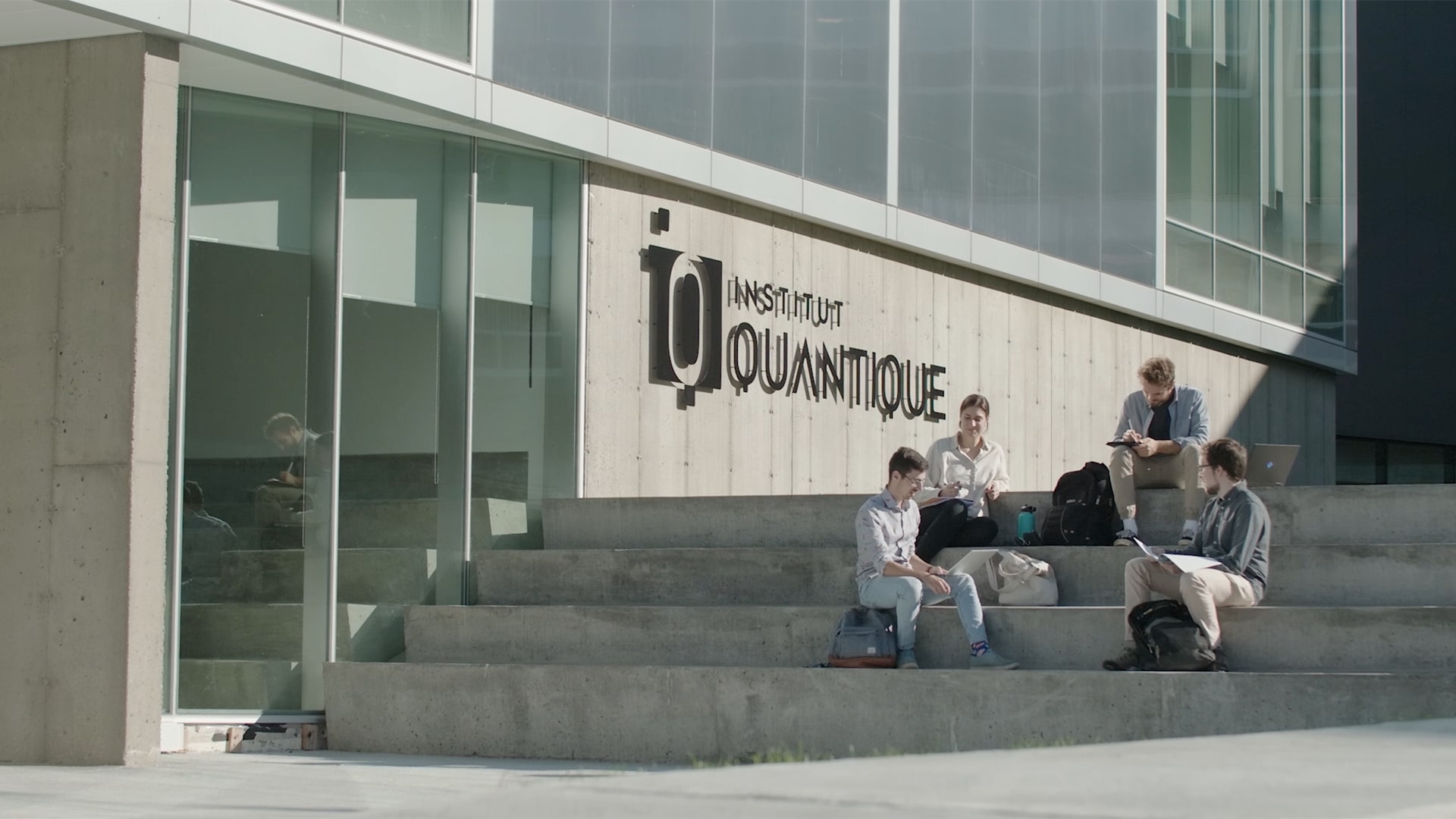
The Université de Sherbrooke’s Institut quantique (IQ), an establishment recognised worldwide as a leader in the field of quantum science with state-of-the-art facilities and strong industry connections, provides an ideal environment for Professor Vergniory’s interdisciplinary research. Her team, comprising talented students and researchers, focuses on theoretical and simulation-based studies to design new quantum devices and materials. These efforts contribute to advancements in quantum sensing, fault-tolerant quantum computing, and other cutting-edge technologies. The IQ’s unique interdisciplinary quantum research environment will facilitate the transition from theory to experimentation.
Exploring new quantum materials through Topological Quantum Chemistry
Professor Vergniory is a trailblazer in the field of topological quantum chemistry, a discipline that merges quantum mechanics with materials science. It provides a clear path to understanding the electronic structures of materials by connecting their topological properties with their chemical and orbital symmetries, using both graph and group theory. This new framework enhances our understanding of materials like topological insulators and semimetals by unifying the chemists’ focus on local bonding and interactions with the physicists’ emphasis on electronic band structures. It allows us to classify and predict topological phases, aiding the discovery of new topological materials. These recently discovered materials exhibit unique electronic properties, featuring insulating interiors and conductive surfaces that are highly resistant to defects and interactions. Such characteristics hold immense potential for applications in a variety of fields.
Bridging theory and practical applications
Currently, the transition of topological materials towards quantum technologies is in its infancy. Professor Vergniory’s goal is to stimulate this transition by discovering new functional topological materials. This highly interdisciplinary project sits at the nexus of physics, chemistry, and computer science. Using topological quantum chemistry, her team has already identified that, among the materials in the Inorganic Crystal Structure Database (ICSD) – the largest repository of fully identified inorganic crystal structures – about 50% display topological properties. The electronic structure and topological properties of these materials have been uploaded to a public website.
Despite this success, much work remains, and topological quantum chemistry has thus far relied on Density Functional Theory (DFT) calculations, which fail in materials with strong electronic correlations. An important objective is to incorporate electronic correlations into the theory and to bridge TQC-based materials discovery with the design of technologically useful devices. This involves developing new theoretical and numerical frameworks to study the electronic and magnetic properties of real materials in low dimensions and designing new metamaterials.
“It’s very exciting because we are pushing the limits of knowledge,” stated the researcher. “There are still many questions remaining, and we have no idea what the outcome will be.”
The unique properties of topological materials enable a range of transformative applications. Their robust electronic states can enhance the efficiency of microelectronic components, improve the performance of catalysts, refine thermoelectric converters, and lead to the development of innovative magnetic storage media. By incorporating electronic correlations into topological quantum chemistry, Professor Vergniory aims to unlock the potential of quantum materials with strong electronic interactions, such as high-temperature superconductors, further expanding the scope of quantum technologies while contributing to the creation of eco-friendly technologies.
A vision for the future
The Université de Sherbrooke’s excellence in research and strategic investments in quantum technologies make it a prime candidate for international partnerships. The university’s successful track record in securing funding from prestigious programmes like the CERC underscores its capability to lead ambitious projects that address global challenges. By highlighting Professor Vergniory’s groundbreaking work, the Université de Sherbrooke invites researchers and institutions worldwide to collaborate in advancing the frontiers of science and technology. Moreover, Professor Vergniory is recruiting students to join her research group.
Her work epitomises the university’s commitment to innovation, collaboration, and interdisciplinary research. It is not just a step forward in theoretical materials science but a leap towards practical, sustainable technology solutions for the future, opening the way to hitherto unforeseen areas of science.
For more information or to discuss partnering with our innovative university, please contact us at [email protected].