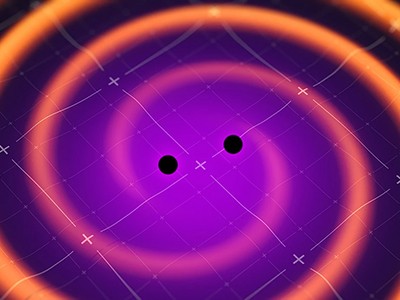
Astronomers have spotted a pair of enormous jets emanating from a supermassive black hole with a combined length of 23 million light years — the biggest ever discovered. Jets are formed when matter is ionized and flung out of a black hole, creating enormous and powerful structures in space. Thought to be unstable, physicists had theorized there was a limit to how large these jets could be, but the new discovery far exceeds this, suggesting there may be more of these monstrous jets yet to be discovered.
Research Article: Oei et al.
09:44 Research Highlights
The knitted fabrics designed to protect wearers from mosquito bites, and the role that islands play in fostering language diversity.
Research Highlight: Plagued by mosquitoes? Try some bite-blocking fabrics
Research Highlight: Islands are rich with languages spoken nowhere else
12:26 A sustainable, one-step method for alloy production
Making metal alloys is typically a multi-step process that creates huge amounts of emissions. Now, a team demonstrates a way to create these materials in a single step, which they hope could significantly reduce the environmental burdens associated with their production. In a lab demonstration, they use their technique to create an alloy of nickel and iron called invar — a widely-used material that has a high carbon-footprint. The team show evidence that their method can produce invar to a quality that rivals that of conventional manufacturing, and suggest their technique is scalable to create alloys at an industrial scale.
Research article: Wei et al.
25:29 Briefing Chat
How AI-predicted protein structures have helped chart the evolution of a group of viruses, and the neurons that cause monkeys to ‘choke’ under pressure.
Nature News: Where did viruses come from? AlphaFold and other AIs are finding answers
Nature News: Why do we crumble under pressure? Science has the answer
Subscribe to the Nature Briefing, an unmissable daily round-up of science news, opinion and analysis free in your inbox every weekday.
André, M., Toledo-Redondo, S. & Yau, A. W. in Space Physics and Aeronomy Collection Vol. 2:Magnetospheres in the Solar System (eds Maggiolo, R. et al.) Geophysical Monograph 259 (American Geophysical Union, Wiley, 2021).
Kistler, L. M. et al. Cusp and nightside auroral sources of O+ in the plasma sheet. J. Geophys. Res. Space Phys.124, 10036–10047 (2019).
Strangeway, R. J., Ergun, R. E., Su, Y.-J., Carlson, C. W. & Elphic, R. C. Factors controlling ionospheric outflows as observed at intermediate altitudes. J. Geophys. Res. Space Phys.110, A03221 (2005).
Collinson, G. et al. Ionospheric ambipolar electric fields of Mars and Venus: comparisons between theoretical predictions and direct observations of the electric potential drop. Geophys. Res. Lett.46, 1168–1176 (2019).
Li, K. et al. The effects of the polar rain on the polar wind ion outflow from the nightside ionosphere. J. Geophys. Res. Space Phys.128, e2023JA031496 (2023).
Varney, R. H., Solomon, S. C. & Nicolls, M. J. Heating of the sunlit polar cap ionosphere by reflected photoelectrons. J. Geophys. Res. Space Phys.119, 8660–8684 (2014).
Khazanov, G. V., Liemohn, M. W. & Moore, T. E. Photoelectron effects on the self-consistent potential in the collisionless polar wind. J. Geophys. Res. Space Phys.102, 7509–7521 (1997).
Collinson, G. A. et al. The electric wind of Venus: a global and persistent “polar wind”-like ambipolar electric field sufficient for the direct escape of heavy ionospheric ions. Geophys. Res. Lett.43, 5926–5934 (2016).
Xu, S., Frahm, R. A., Ma, Y., Luhmann, J. G. & Mitchell, D. L. Magnetic topology at Venus: new insights into the Venus plasma environment. Geophys. Res. Lett.48, e2021GL095545 (2021).
Coates, A. J., Jonstone, A. D., Sojka, J. J. & Wrenn, G. L. Ionospheric photoelectrons observed in the magnetosphere at distances up to 7 earth radii. Planet. Space Sci.33, 1267–1275 (1985).
Fung, S. F. & Hoffman, R. A. A search for parallel electric fields by observing secondary electrons and photoelectrons in the low-altitude auroral zone. J. Geophys. Res. Space Phys.96, 3533–3548 (1991).
Collinson, G. A. et al. Rocket measurements of electron energy spectra from Earth’s photoelectron production layer. Geophys. Res. Lett.49, e2022GL098209 (2022).
Gombosi, T. I. & Nagy, A. Time-dependent modeling of field-aligned current-generated ion transients in the polar wind. J. Geophys. Res.94, 359–369 (1989).
Liemohn, M. W., Khazanov, G. V., Moore, T. E. & Guiter, S. M. Self-consistent superthermal electron effects on plasmapheric refilling. J. Geophys. Res.102, 7523–7536 (1997).
Wahlund, J.-E., Opgenoorth, H. J., Häggström, I., Winser, K. J. & Jones, G. O. L. EISCAT observations of topside ionospheric ion outflows during auroral activity: revisited. J. Geophys. Res.97, 3019–3037 (1992).
Wu, J. et al. Observations of the structure and vertical transport of the polar upper ionosphere with the EISCAT VHF radar. II – first investigations of the topside O(+) and H(+) vertical ion flows. Ann. Geophys.10, 375–393 (1992).
Collinson, G. et al. Electric Mars: a large trans-terminator electric potential drop on closed magnetic field lines above Utopia Planitia. J. Geophys. Res. Space Phys.112, 2260–2271 (2017).
Schunk, R. & Nagy, A. Ionospheres (Cambridge Univ. Press, 2009).
Collinson, G., Chornay, D. J., Glocer, A., Paschalidis, N. & Zesta, E. A hybrid electrostatic retarding potential analyzer for the measurement of plasmas at extremely high energy resolution. Rev. Sci. Instrum.89, 113306 (2018).
Among those following the 2024 Paralympic Games, which kick off next week in Paris, will be John McFall, a former medallist who has since begun working with with the European Space Agency (ESA).
McFall made headlines in 2022 when he became the world’s first disabled astronaut, joining ESA’s astronaut reserve team. Before this, he enjoyed international success as a sprinter — winning a bronze medal in the 2008 Paralympics — and subsequently trained as an orthopaedic surgeon.
After a motorcycle accident as a teenager, McFall had his right leg amputated, and he now wears a prosthesis. He’s been participating in ESA’s ‘Fly!’ feasibility study, a project to assess the challenges a disabled person might face in space flight.
Nature spoke to McFall about the project’s importance, and its progress so far.
What made you want to become an astronaut?
Being an astronaut wasn’t on my radar originally. A colleague told me that ESA was recruiting for a new class of astronauts — uniquely, it was specifically looking to recruit someone with a physical disability. I’ve always been really adventurous and very curious about science and the way that things work.
When I saw the vacancy, I thought, “This sounds awesome!” The adventure, the challenge, the learning. And what a great opportunity, if it did ever turn into an opportunity to fly to space. One thing that really interested me was that ESA was asking if it is feasible to send someone with a disability into space on a long-duration mission. I thought, with my background and my skills, it would be awesome to help the agency answer this bold question.
McFall (left) won a bronze medal for the 100-metre sprint in the 2008 Paralympic Games in Beijing.Credit: Andrew Wong/Getty
Tell us about the Fly! study — what are its aims?
The study explores the technical feasibility of something like going to the International Space Station (ISS) for six months. Being in space for more than 30 days has particular requirements, such as dealing with the long-term effects of microgravity on the body.
The study looked at all the phases of space flight: what it takes to get off the ground, living and working on the ISS, and then coming back to Earth. We also considered the effects of training. ESA requires astronauts to do winter survival training, sea survival training, all these sorts of things. So we looked at different aspects of training and how I might use some of the platforms and equipment.
We also looked at the requirements of spacecraft and ISS operations — for example, assessing whether I can undertake all the safety and emergency procedures in the spacecraft. We did some parabolic, zero-gravity flights to look at whether I could move around in microgravity. And we did some assessments to make sure that my prosthesis would still fit and still be comfortable irrespective of changes in the size of my stump, because of the shift of fluid that you get in microgravity.
What were the results of the study and what are the next steps?
The study so far has demonstrated that it is technically feasible for someone with a physical disability like mine to fly to space and to live and work as a fully integrated member of the ISS crew for a long mission.
This part of the study will conclude towards the end of this year. The next stage, ideally, would be to move forward and get someone with a physical disability flying.
I hope that I get the opportunity to fly in the future. That would be tremendous. And I also hope that I can sow the seed for a legacy to follow on from, to look at the feasibility to fly with a wider range of disabilities.
Among other things, the reduced-gravity flights tested how McFall’s prosthetic leg behaved during weightlessness.Credit: ESA/Novespace
What has been your favourite part of the study so far?
My favourite bit was changing people’s preconceptions in the space industry of what people with physical disabilities are capable of. I’m proud that I’ve had that opportunity to demonstrate what we are capable of as humans. I also love the mountains in the winter, so winter survival training for me was great fun.
My least favourite part was probably sea survival training in the Baltic Sea. It was about 30 °C, and we were in full, hooded neoprene wetsuits, which was quite uncomfortable in that heat.
What have your experiences taught you about the importance of the Paralympics and ESA’s parastronaut programme?
Elite athletes inspire so many people. Lots of people do sport and have this admiration for what it takes to compete at the elite level. From the Paralympic point of view, it’s hugely important to connect with a wider audience, to make wider society aware of what people with physical disabilities are capable of.
In the same vein, I think you can probably consider being an astronaut as a difficult, challenging job. So there is that admiration there to have someone with a physical disability in this position. ESA is boldly going out and saying: we believe this is possible. We believe we can have someone with a physical disability performing the same duties as a professional astronaut. This is a tremendously powerful way to reduce stigma around disability, increase inclusivity and have healthy debates around what roles people would expect to see people with physical disabilities taking in society.
This interview has been edited for length and clarity.
Observatories, experiments and techniques are being developed to spot ripples in space-time at frequencies that are currently undetectable. The main detectors, LIGO and Virgo, look for gravitational waves by detecting small differences in travel time for lasers fired along perpendicular arms, each a few kilometres long.
But they can only find gravitational waves in a narrow range of frequencies, so physicists are also exploring entirely different techniques. These strategies, which range from watching pulsars to measuring quantum fluctuations, hope to catch a much wider variety of gravitational waves, with frequencies in the megahertz to nanohertz range.
Five new ways to catch gravitational waves — and the secrets they’ll reveal
An algorithm that reactivates dormant ‘neurons’ in deep-learning-based AIs could help them overcome their inability to learn new things and make future systems more flexible, research has shown. AIs based on deep learning struggle to learn how to tackle new tasks indefinitely, making them less adaptable to new situations. The reasons for this are unclear, but now a team has identified that ‘resetting’ parts of the neural networks underlying these systems can allow deep learning methods to keep learning continually.
Research Article: Dohare et al.
News and Views: Switching between tasks can cause AI to lose the ability to learn
08:55 Research Highlights
To stop crocodiles eating poisonous toads researchers have been making them sick, and a sacrificed child in ancient Mexico was the progeny of closely related parents.
Research Highlight: How to train your crocodile
Research Highlight: DNA of child sacrificed in ancient city reveals surprising parentage
11:20 Briefing Chat
How video games gave people a mental health boost during the pandemic, and where the dinosaur-destroying Chicxulub asteroid formed.
Nature News: PlayStation is good for you: video games improved mental health during COVID
Nature News: Dinosaur-killing Chicxulub asteroid formed in Solar System’s outer reaches
Subscribe to Nature Briefing, an unmissable daily round-up of science news, opinion and analysis free in your inbox every weekday.
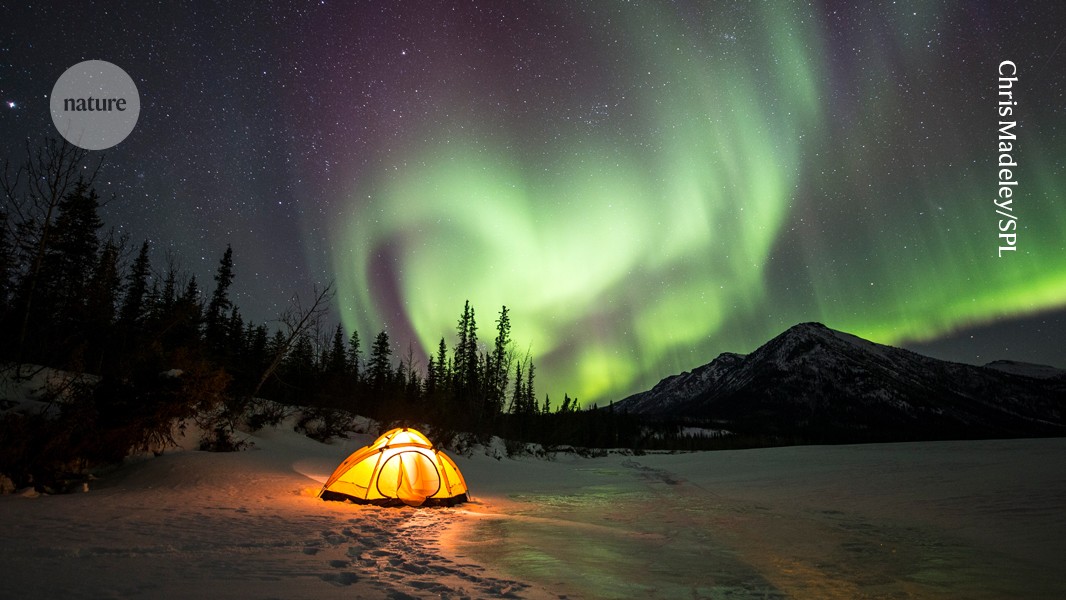
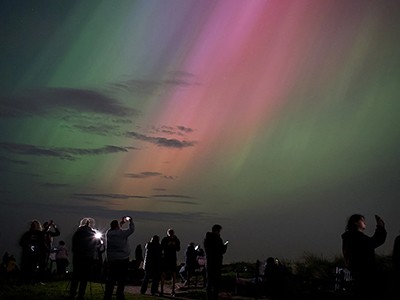
Garden-variety auroras (pictured) take the form of pillars or curtains of light, whereas polar rain auroras are seen as diffuse glows across the sky. Credit: Chris Madeley/Science Photo Library
On Christmas night in 2022, a massive aurora lit up the sky for thousands of kilometres around the North Pole1. The light show gave scientists a unique glimpse of the elusive ‘polar rain aurora’, a rare shimmering phenomenon that forms when energetic electrons from the Sun cascade onto Earth’s polar regions.
Auroras form when charged particles flowing from the Sun hit and interact with Earth’s magnetic field. Their energy is usually transformed into light shows of dancing green curtains, towering red pillars, or other spectacles such as those that dazzled skywatchers around the world in May.
Polar rain auroras are a special type that form when electrons travelling directly from the Sun’s corona, or outermost atmosphere, crash into Earth’s atmosphere. Polar rain auroras are a special type that form when electrons travelling directly from the Sun’s corona, or outermost atmosphere, crash into Earth’s atmosphere. These auroras are rare because there are seldom enough of these electrons hitting the atmosphere to generate a glow. And other types of charged particles often interfere with these electrons, preventing polar rain auroras from forming.
When the wind died
But for 28 hours in December 2022, the flood of other solar particles — known as the solar wind — dropped to a trickle. The polar rain electrons showered unimpeded onto Earth, creating a greenish glow that spanned more than 3,000 kilometres across the North Pole.
Anyone looking up that night in the high Arctic might have been able to spot it, says Keisuke Hosokawa, a space physicist at the University of Electro-Communications in Tokyo who led the team that reports the discovery today in Science Advances. Unlike the distinct curtains and pillars of light of standard auroras, this auroral glow was diffused across the sky.
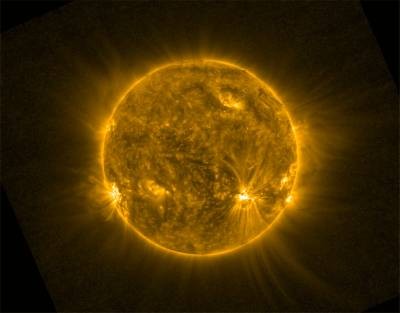
Staring at the Sun — close-up images from space rewrite solar science
Scientists have occasionally spotted polar rain auroras in observations from satellites that look down on the poles from above2. Since 2011, Hosokawa has had a robotic camera pointed at the sky above the Norwegian islands of Svalbard in the Arctic Ocean, hoping to catch the first-ever glimpse of polar rain aurora from the ground. He did not succeed until January 2023, when he trawled through data from around three weeks before. The aurora from that period leapt out as being “very much different” from other types of aurora, he says.
Hosokawa then checked images of the polar regions taken by US military weather satellites at the same time as the Svalbard observations. In these, he saw the auroral glow filling almost the entire northern polar cap.
Satellites have spotted small-scale polar rain auroras in the past few decades, but the most recent observation of a large one was in May 1999 — when the solar wind also waned temporarily. Studying polar rain auroras could help scientists to understand how the solar wind interacts with Earth’s magnetic field, says study co-author Yongliang Zhang, a space physicist at the Johns Hopkins University Applied Physics Laboratory in Laurel, Maryland.
In May, millions of people were dazzled by the vibrant hues of the aurora borealis and australis — the northern and southern lights. The product of a large solar storm, curtains of green, red and purple light rippled across the night sky in regions where the spectacle is seldom seen. I saw them for the first time in the United Kingdom, from my back garden just outside Birmingham. More displays are expected in the coming months as solar activity starts to reach its peak.
But what most people didn’t see were the repercussions — and the preparations that went on behind the scenes to mitigate them. Radio communications systems experienced blackouts; Starlink, the satellite Internet provider, faced outages; and disruptions to global navigation satellite systems caused problems for sectors reliant on positioning. Meanwhile, flights were re-routed and electric grids were safeguarded.
Dazzling auroras are just a warm-up as more solar storms are likely, scientists say
This illustrates a dilemma faced by space-weather scientists such as myself: how can we issue and communicate effective warnings when even such a significant storm changes little in most people’s lives? I think part of the problem lies in how we classify space weather. Current systems are simplistic; space weather is not.
Geomagnetic storms are classified using scales developed by the US National Oceanic and Atmospheric Administration in collaboration with the space-weather community. The geomagnetic storm scale (G-scale), solar radiation storm scale (S-scale) and radio blackout scale (R-scale) range from one to five, with five denoting an extreme event.
These scales have been invaluable in highlighting the risk of space weather to industries and governments, but they are due a refresh. The geomagnetic storm that caused the May auroras was classified as G5, or ‘extreme’. However, the effects of a solar storm are challenging to quantify. This storm was triggered by a rapid sequence of at least seven coronal mass ejections — massive bursts of solar matter and magnetic fields expelled from the surface of the Sun. As these collided with Earth’s magnetic field, they compressed and disturbed it, triggering geomagnetic storms.
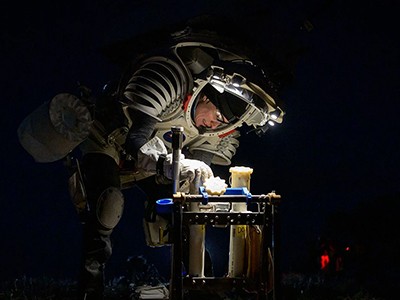
How NASA astronauts are training to walk on the Moon in 2026
But many factors, including the speed, mass, duration and magnetic orientation of coronal mass ejections, influence a storm’s impact. In terms of peak geomagnetic activity, the May storm was a 1-in-10-year event. What set this storm apart was its prolonged duration. Geomagnetic disturbances remained high for 24 hours, making it more like a 1-in-75-year event. Auroras were visible for longer, allowing more people to witness them.
Such details make it hard to convey the risks of space weather without overstating or understating them. If an event such as that seen in May, deemed ‘extreme’, results in minimal obvious disruption, how should the risks of an even stronger 1-in-100-year storm be conveyed?
A superstorm is a looming reality. Costs could reach billions of dollars. Electric grids could be disrupted, causing local blackouts. Satellites, and the essential systems they support, could be impaired. Radio signals, crucial for aviation, maritime operations and emergency services, would be disrupted. For example, in October 2003, geomagnetic storms affected satellite communications, GPS systems and power supplies in Europe, North America and Africa.
To communicate the severity of truly extreme storms, scientists need to rethink the classification scales. Some researchers suggest extending severity levels to six and above. Others propose covering more phenomena, including the D-Scale (radiation dose rate) and the T-Scale (radio-wave propagation through Earth’s upper atmosphere).
Staring at the Sun — close-up images from space rewrite solar science
My preferred approach is to shift to a ‘traffic light’ model of warnings for specific sectors. For example, yellow space-weather warnings could alert industries, such as aviation and agriculture, that might be affected by minor geomagnetic storms. An orange warning might require users, such as power grid and radar operators, to consider taking pre-emptive action to protect their services and prepare for interruptions. A red warning would signal that dangerous space weather is expected, with potentially significant impacts requiring immediate action, and power companies, satellite operators and emergency services must implement contingency plans without delay.
Such a system would quickly alert those who should be most concerned. It could accommodate uncertainties by allowing for updates and escalations in warnings as data become available. For example, a geomagnetic event might start with a yellow warning (high impact, but unlikely) when a coronal mass ejection is first observed. It could be upgraded to orange or red if the probability of disruption increases with further modelling and data. Its reach could easily be expanded by adding sectors to the warning list.
A unified approach to refining space weather reporting and response strategies is crucial, and space weather centres worldwide must come together to discuss and agree on an updated approach. They must ensure that terms such as ‘extreme’ are not misused and that these align with events that truly warrant attention and action, and that industries and the public are adequately prepared for the real risks.
As we navigate the peak of the solar cycle, it is important to acknowledge that space weather affects our daily lives. By refining classification and reporting systems, scientists can better align public perception with reality, ensuring that we are neither crying wolf nor caught unprepared.
A staff member works at the construction site of the underground neutrino observatory in Jiangmen, China.Credit: Deng Hua/Xinhua/Alamy
The Jiangmen Underground Neutrino Observatory (JUNO) near Guangdong in southern China is undoubtedly big science. Centred on a colossal sphere filled with 20,000 tonnes of liquid and housed in a subterranean laboratory some 700 metres deep, it is designed to answer fundamental questions in particle physics. It is the largest and most sensitive instrument of its kind ever built.
On a similar bold scale is the China Jinping Underground Laboratory, in the country’s southwestern Sichuan Province. The dark matter-hunting experiment has recently been expanded to become the world’s largest and deepest underground lab, at 2,400 metres below the Jinping Mountains. Earthlab, a high-performance virtual laboratory in Beijing that simulates Earth’s climate system, and the Large High Altitude Air Shower Observatory (LHAASO), in Sichuan, which uses an array of detectors spread across a Tibetan plateau to scan for high-energy cosmic- and γ-rays, are two more big-infrastructure science facilities that have been launched in China over the past two years. There are other facilities under construction, including the High Energy Photon Source, in Beijing, which is China’s first high-energy synchrotron radiation facility, to be opened in 2025.
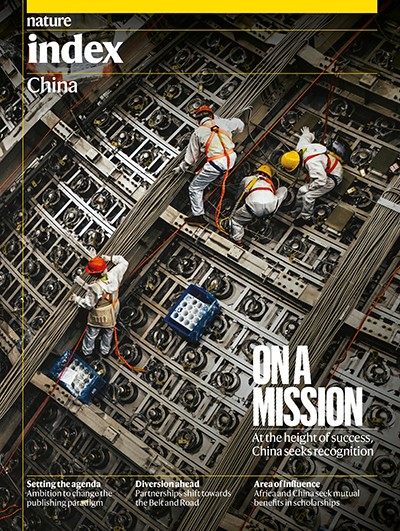
Nature Index 2024 China
A focus on big science is the next phase in China’s rapid ascendancy in the global research hierarchy, says Denis Simon, a distinguished fellow at the Institute of China-America Studies, a non-profit organization in Washington DC. After overtaking the United States in natural-science output in the Nature Index in 2022, China is now almost 5,000 Share ahead. The prestige that comes from building and operating massive facilities, which are designed to produce large amounts of data and insights that can feed into multiple fields and industries, could further cement the country’s status as a science superpower, says Simon.
Spin-off opportunities that come from big science are a major draw for China. Technologies spun out of the European Organization for Nuclear Research’s (CERN) vast particle accelerators, for example, have revolutionized medical imaging and sparked the development of the World Wide Web. And miniaturized camera technology that is now widely used in smartphones, webcams and other products can be traced back to NASA interplanetary-mission work. “China is still looking for a major breakthrough that can highlight just how fast it’s moving,” says Simon. But there’s another factor that’s pushing China to amass big-science infrastructure, he adds: “China wants to win a Nobel prize.”
Given the size of its research community, China’s Nobel count is very low. The only recent win for research undertaken in China — the Nobel Prize in Physiology or Medicine 2015, for the discovery of the malaria drug artemisinin — celebrated research conducted mainly in the 1970s. Winning more Nobels to affirm China’s lead in global science is something that is openly discussed by its leaders, says Simon. “It’s partly about national pride — a kind of continuous morale builder to show that China is no longer a follower and can be a leader.”
Historically, most of the world’s big-science projects have been hosted by the United States, Europe and Japan, which started building facilities several decades before China launched its first major piece of science infrastructure, the Beijing Electron Positron Collider (BEPC), in 1984. But it hasn’t taken long for China to catch up. “In 1980, when China decided to begin collaboration with the West, relationships were very asymmetrical, with China far behind,” says Simon. Now, the country enjoys a much more even footing, “and may even be a leader in some research fields or sub-fields”, he adds.
In particle physics, for example, after a series of upgrades, BEPC became the first instrument in the world to detect a confirmed ‘tetraquark’, an exotic form of subatomic matter (M. Ablikim et al.Phys. Rev. Lett.110, 252001; 2013). In astrophysics, LHAASO captured the highest-energy γ-ray burst ever detected, an event so bright that it challenges classical theories of physics (The LHAASO Collaboration Sci. Adv.9, eadj2778; 2023). “I think [China’s president] Xi Jinping sees an era in which China is a more proactive and influential player, shaping the rules of the game,” says Simon.
How this shift will affect the global research ecosystem is yet to be seen. There is ongoing discussion, including within China, that the country has played an important role in international science by operating just behind the frontier, excelling at high-quality follow-up work, rather than pioneering new trends itself, says Anna Lisa Ahlers, who heads a research group studying China in the global science system at the Max Planck Institute for the History of Science in Berlin. “If they build scientific infrastructure that other countries don’t have, this may change,” she says. In a policy meeting earlier this year, Xi called for more “disruptive innovation” in science and technology, and boosted the country’s science budget by 10%, despite the slow growth of the overall economy.
High-pressure science
Much of whether China’s new, big-science infrastructure delivers the intended gains hangs on the Chinese Academy of Sciences (CAS) in Beijing, the largest scientific research organization in the world, which is responsible for building and operating most of China’s big-science facilities. As the country’s foremost research-funding recipient, CAS is expected to deliver the game-changing discoveries that China’s leadership craves. “The academy has been arguing that if China wants to become a big science and technology power, it needs to up its game in basic research, including big-science infrastructure,” says Simon. “Their wish came true, and they’re under a lot of pressure to deliver. Among Chinese leaders, there is a constant admonishment to the system as a whole that you’ve got to do a better job.”
Researchers pour liquid nitrogen at the China Jinping Underground Laboratory.Credit: Imago/Alamy
One major challenge for CAS in building such large and specialized infrastructure is that China’s skilled workforce is being stretched thin, as multiple projects commence at the same time. Within high-energy photon science, for example, which is an important area of research for China, facilities are poaching workers from each other, as projects funded by regional governments compete with those in development by CAS and other research institutes in Beijing and Shanghai. “I’m not sure it is wise to have so many infrastructure projects [running] at the same time,” says Marcus Conlé, an area-studies researcher at the German Electron Synchrotron, a fundamental-science institute in Hamburg, Germany. Conlé visited China last year as a part of a delegation exploring potential research collaboration.
The facility-first approach of many of China’s big-science projects is another pain-point, Conlé says. “In Europe, the process would be that researchers would propose an experiment that is beyond the limits of existing research infrastructure, and then put forward the case for a new instrument to be built.” In China, there is more of a drive to build instruments to claim world-first status — particularly where infrastructure is funded by local governments — “and then the scientists try to work out what to do with it”, says Conlé. The situation reflects China’s relative inexperience in building and operating such instruments, he adds, although that situation is changing rapidly in major centres for research such as Shanghai.
Learning from other countries through collaboration is strategically very important for China’s big-science future, even as political relations with the West remain tense, says Caroline Wagner, a public-policy researcher who studies international science collaboration at Ohio State University, in Columbus. Wagner points out that most of the big-science infrastructure that China has invested in has been designed in consultation with scientists at world-leading facilities overseas. “Researchers know that disengagement is the pathway to lower quality work, as we can see from Russia’s experience, for example,” she says.
There have been concerns in some Western countries that a collaborative research relationship with China equates to a one-way technology transfer. As a result, “it has become much harder for Chinese universities to convince international scientists” to work in China, says Ahlers. But the country’s big-science projects have a more powerful draw. “To be a global science power player, you need to attract international researchers, and that’s exactly what these big-science infrastructure projects are doing,” says Ahlers. “Many researchers really want to go to these unique big-science infrastructure facilities because it’s a source of new data that they wouldn’t get elsewhere.”
Global benefits could also flow from China’s investment in big science, says Conlé. “Cooperating with Chinese partners is getting more difficult, but also more interesting,” he says. “In the past, it would usually involve cooperation at facilities in Europe — but now it could also be cooperation at their facilities.”
Simon also sees mainly upsides for global science in China’s big-science push. “We need to go in with both eyes open,” he says. “But the West would be foolish to walk away from China just when the term ‘mutual benefit’ has some potential meaning — when the flows can be not only from us to them, but now also from them.”
This week, space and planetary scientists are meeting at the Goddard Space Flight Center in Greenbelt, Maryland, to scope out a new flagship NASA mission — the Uranus Orbiter and Probe. Still on the drawing board, the project would entail sending a spacecraft to orbit Uranus and drop a probe into the planet’s atmosphere. The spacecraft, which could be built and launched within a decade, would investigate the nature of Uranus, including its unusual tilt and magnetic field. It would also search the planet’s moons for signs of hidden oceans and other potentially habitable environments.
Such a mission would be groundbreaking — the first to orbit an ‘ice giant’ planet. Thought to be made mostly of ices, or perhaps dominated by rocks, ice giants Uranus and Neptune have more exotic chemistry than do Jupiter and Saturn, which as ‘gas giants’ consist mainly of hydrogen and helium gas1,2. Ice giants are also the most common type of exoplanet in the Milky Way3. With characteristics that lie between those of gas giants and of Earth and other terrestrial planets, it’s crucial to learn how such systems formed and evolved.
That’s why the Uranus Orbiter and Probe was given priority status in the 2022 US Planetary Science and Astrobiology Decadal Survey. And NASA is set to lead it. At the Goddard workshop, scientists will scope out the mission and consider its design, technologies and costs.
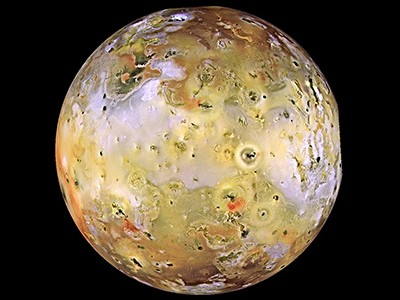
Violent volcanoes have wracked Jupiter’s moon Io for billions of years
The mission has been under discussion for some time, and it will be exciting to see it begin to take shape. But, to make sure it is successful and happens as quickly and cost-effectively as possible, we would like to see others involved in its design, too. As a first step, we call for the European Space Agency (ESA) to join the project by, for example, building the entry probe — a possibility that was foreseen in the decadal report and has been assessed by ESA but has not yet been agreed.
The window for such an agreement is closing fast. There is a strong scientific benefit to reaching Uranus near 2050, when its position in its orbit will mean that sunlight will fully illuminate all parts of the spinning planet and its orbiting moons. Given a typical 10-year development time for a flagship mission, paired with long flight times to Uranus (12–15 years, depending on launch date and vehicle), this would require work on the Uranus Orbiter and Probe to commence in the next few years.
NASA has stated that it hopes to start releasing funding for the mission in 2026 or 2027. By contrast, ESA’s current budgetary programme does not include any substantial contribution to a NASA flagship mission in the coming years. This is a troubling, and in our view short-sighted, stance with long-lasting repercussions. Here’s why.
Distant worlds
The scientific drivers for a Uranus mission are compelling. Dedicated missions to Jupiter and Saturn, including Galileo, Juno and Cassini–Huygens, have made major discoveries, including subsurface oceans on icy moons that might have the potential to harbour life4. Yet Uranus and Neptune have so far been snapped only briefly, as the Voyager 2 spacecraft sped past them in the 1980s.
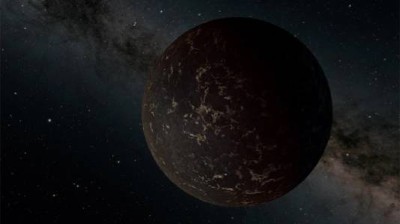
This super-Earth is the first planet confirmed to have a permanent dark side
Little is known about how these ice giants formed. Was Uranus a failed gas giant that formed too late to accrete hydrogen and helium gas before the Sun’s gaseous nebula dissipated? Or was it created through a different process, with more in common with Earth’s genesis? Did Uranus form closer to Jupiter and then move away, ejecting comets into the inner Solar System that ultimately delivered water to Earth, as theories suggest? Finding answers will teach us about the origin of the Solar System as well as systems around distant stars.
Measuring the composition of Uranus’s atmosphere would constrain the conditions under which the planet formed and show how these have changed with time5. The puzzlingly large tilt of Uranus’s axis of rotation (almost parallel to the plane of the Solar System) could be examined, along with the planet’s internal structure and magnetic field1,2,6,7. The mission would unravel the origin of Uranus’s extensive dusty rings and moons8. Repeated fly-bys could check whether Uranus’s satellites have subsurface oceans, as those of Jupiter and Saturn do.
Shared goals
With so much fundamental knowledge at stake, we argue for broader involvement of the planetary-science community in planning the Uranus Orbiter and Probe. The 2022 decadal survey emphasized the opportunity for international partnerships for this project. It noted that in 2021, a committee of senior scientists advising ESA on its long-term plan (Voyage 2050) recommended that ESA pursue a ‘medium class’ contribution to an ice-giant orbiter mission led by an international partner. ESA has evaluated the possibility of providing the entry probe, which it estimates could be done within the medium-sized-mission budget of around €500 million (US$537 million). But no commitment has yet been made.
A partnership between NASA and ESA to explore the Uranian system would offer advantages for both space agencies. For NASA, it would reduce costs and facilitate the provision of instruments. For ESA, it would offer European scientists the opportunity to participate in a groundbreaking, flagship-class mission at a relatively low cost. It would also foster collaboration between the two continents in this long mission, echoing the success of Cassini–Huygens — the most scientifically prolific robotic endeavour so far in the exploration of the outer Solar System.
Curious blocks of ice and rock on Uranus’s moon Miranda were spied by Voyager 2.Credit: NASA/JPL-Caltech
Furthermore, a lack of substantial European involvement in a perhaps once-in-a-lifetime ice-giant flagship mission would undermine the large community of scientists, engineers and technicians engaged in space exploration across Europe who have strong interest in planets and the search for extraterrestrial life. It could also affect the mission itself, because the need for NASA to fund both the orbiter and the probe could delay the mission’s start and arrival, which would diminish its scientific return.
Next steps
Given the long timelines involved in constructing the mission and its long travel time, we urge NASA to swiftly initiate the study of the Uranus Orbiter and Probe mission. This would generate excitement to foster international cooperation with ESA and with national space agencies that have well-established collaborations with NASA, such as JAXA in Japan and the United Arab Emirates Space Agency.
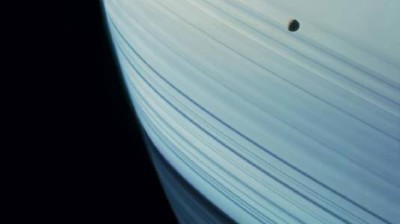
The Solar System has a new ocean — it’s buried in a small Saturn moon
We also call on ESA to prioritize funding to support this strategic collaboration, building on past successes through Cassini–Huygens and at a fraction of the cost of a European-led ice-giant flagship mission. Contributing an entry probe to the project would accelerate the mission’s timeline, add international momentum and reduce the costs for NASA. We would all get these crucial results sooner rather than later, and be able to visit the system when it is fully illuminated rather than in partial darkness.
In the absence of such a commitment from ESA, a promising alternative would be to establish a consortium of individual European countries to be responsible for constructing the probe. Financial-resource constraints would probably limit the instrumentation, and perhaps the depth such a probe could penetrate, but with careful design, the probe could still return crucial data.
Tension between ambitious Solar System exploration goals and budgetary pressures is likely to remain a reality for Europe and the United States in the short term. Increasing international collaboration could be the key that allows NASA and ESA to achieve their plans and maximize scientific return in an era of constrained budgets.
It would also pave the way for other breakthroughs. ESA’s programme includes support for a flagship life-detection mission to the surface of Saturn’s moon Enceladus in the early 2050s, and a similar mission was the second highest priority flagship mission identified for NASA in the 2022 decadal survey report. A NASA–ESA partnership for Uranus now would set the stage for future joint missions.
Stunning photographs of the northern and southern lights, seen at much lower latitudes than usual, saturated social media on Friday and Saturday. For space-weather scientists, the auroras, created by a raging solar storm, were long-expected but dramatic evidence that the Sun is nearing the peak of its 11-year cycle of activity.
Satellite operators, electrical-grid managers and others who maintain crucial technological infrastructure are still assessing the impacts of this historic event — the severest geomagnetic storm since 2003. But most major systems seem to have weathered the blast.
That’s encouraging, because more storms are likely: the most powerful geomagnetic storms of a solar cycle can occur after the ‘solar maximum’, which is expected later this year. Nature explains what happened over the past few days and what solar physicists are anticipating next.
Why is this happening now?
The immediate cause is a cluster of sunspots, known as active region 3664, that appeared below the Sun’s equator on the side currently facing Earth. The cluster is around 17 times as wide as Earth, and is probably the largest and most complex sunspot region observed during the current solar cycle, which began in 2019, says Shawn Dahl, a space-weather forecaster at the US National Oceanic and Atmospheric Administration’s Space Weather Prediction Center in Boulder, Colorado.
Starting around 8 May, active region 3664 sent at least seven blasts of magnetized plasma, or coronal mass ejections, racing in Earth’s direction at speeds of up to 1,800 kilometres per second. Along with waves of charged particles and other solar debris, the coronal mass ejections swamped space-weather detectors. The experience was “hypnotic”, says solar physicist Ryan French of the National Solar Observatory in Boulder — first in watching the data flood in, and then later with the “raw awe” of witnessing the aurora.
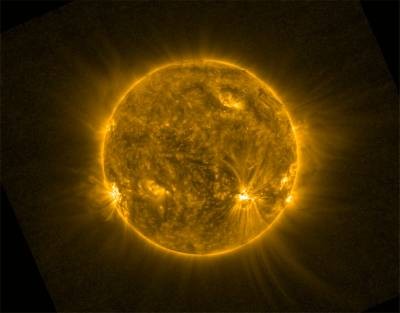
The Sun unleashed blasts of magnetized plasma (one seen at lower right in this ultraviolet image) during a ferocious solar storm that began around 8 May.Credit: NASA/SDO
How big was this storm?
Huge — by a number of measures. It was ‘extreme’ on the five-tiered scale that describes geomagnetic storms, and a ‘superstorm’ according to an index of changes in Earth’s magnetic field.
And then there were the auroras. Earth’s magnetic field shields humans and other life from the effects of solar storms by redirecting harmful particles around the planet. But when the material from coronal mass ejections slams into the magnetic field, it dumps energy into Earth’s upper atmosphere. Chemical elements there, such as oxygen and nitrogen, become ionized and glow in various colours, creating auroras. The lights are usually seen near Earth’s poles, but on 10 May, because of the intensity of the solar storm, auroras were seen at remarkably low latitudes, including in Mexico.
“Unforgettable,” says Steph Yardley, a space physicist at Northumbria University in Newcastle-upon-Tyne, UK. The auroras were so active that she had to look south, rather than north, from her viewing point in Scotland to see it.
What impacts did it have?
The solar storm interrupted radio and GPS communications across the globe. The broadband internet connection provided by Starlink, a division of the aerospace firm SpaceX — a service that relies on more than 5,000 satellites — reported some temporary degradation in the quality of its signals. That could be because of communications disruptions or because the storm changed the density of Earth’s atmosphere and created drag on the satellites, space-weather physicist Tamitha Skov posted on the social-media platform X (formerly Twitter).
Staring at the Sun — close-up images from space rewrite solar science
In anticipation of the extreme solar activity, electrical-grid operators had taken protective measures — geomagnetic storms can induce extra electrical currents in the grid, causing power cuts. New Zealand’s electrical-transmission service temporarily turned off some circuits around the country to prevent equipment damage.
NASA said on 10 May that it foresaw no threat to the four US and three Russian astronauts aboard the International Space Station. Three people are aboard China’s Tiangong space station, but there have been no reports of precautionary actions taken there either.
Some satellites did stop making scientific observations. For instance, NASA’s Chandra X-ray Observatory temporarily ceased gathering astronomical data as a precaution before the storm and stowed its instruments to protect them from radiation blasts. And during the storm, NASA’s ice-measuring ICESat-2 satellite automatically stopped doing science when it experienced unexpected rotation, most likely from increased atmospheric drag, an agency spokeswoman said.
What else can scientists learn from the storm?
There might be fresh insights to come. The European Space Agency’s Solar Orbiter probe is nearly behind the Sun with respect to Earth, giving it a different view of the storm. Active region 3664 is now rotating off of the side of the Sun seen from Earth and into the field of view of Solar Orbiter. “We should get a better idea in the next few days if this sunspot intends to keep packing the punches on the other side of the Sun,” says David Williams, the spacecraft’s instrument operations scientist. NASA’s Parker Solar Probe — which is in the middle of a series of dives through the Sun’s outer atmosphere — happens to be at the outermost part of its looping orbit around the Sun and could be able to provide an extra perspective, but the data might take some time to reach Earth.
Researchers expect a coronal mass ejection to slam into Mars in the next few days, says Shannon Curry, a planetary scientist at the University of Colorado in Boulder. That collision could be observed by NASA’s MAVEN spacecraft, which is orbiting the red planet.
When could the next big storm affect Earth?
At any time. Scientists expect the current solar cycle to peak some time this year, owing to the number of sunspots they are observing. The biggest storms typically happen months to years after this official peak. Furthermore, as the solar cycle progresses, sunspots tend to appear closer to the Sun’s equator, increasing the chances of coronal mass ejections that will head directly for Earth rather than out into space, Dahl says.