Critical raw materials (CRM) are of increasing importance for a sustainable future. Editor Maddie Hall discusses the future of CRM production in the Australian state of Queensland, with a spokesperson of the Queensland Government.
Australia is, according to the 2023 Innovate UK report, a top producer of several critical raw materials. The Innovation Platform Editor Maddie Hall spoke with a Queensland Government spokesperson to find out more about Queensland’s plans to continue its excellent production.
Can you outline the Queensland Critical Minerals Strategy and its key objectives? How does the Saint Elmo Vanadium Project align with the strategy, and what other critical mineral projects are a priority for the Queensland Government?
The strategy is about positioning Queensland as a leader in the global critical minerals market and future proofing the next generation of jobs for Queensland through the development of new industries spanning the entire value chain – from mining to the final product – to drive innovation and create jobs.
Several key actions have already been taken, including:
Reducing rent to zero for mineral exploration permits for five years, making Queensland the lowest cost jurisdiction in Australia to hold mineral exploration tenures.
Establishing a dedicated office, Critical Minerals Queensland, that serves as a central point of contact for investors and stakeholders and facilitating growth in Queensland’s critical minerals sector.
Opening the $5m Collaborative Development Program for applications to extract and process residual minerals in mine waste, aligning with our commitment to building a circular economy.
Further to this, $75m in funding has been pledged to establish Critical Minerals Zones, aimed at maximising collaboration opportunities, achieving resource efficiencies, and promoting sustainable development.
The Julia Creek/Richmond Critical Minerals Zone, where the Saint Elmo Vanadium Project is located, is the first of its kind established under the strategy, with plans for more zones in the North West Minerals Province.
The Queensland Government has also committed $75m to the Queensland Resources Common User Facility in Townsville, to support the development, extraction and production of critical minerals.
The strategy ties into other government initiatives, such as the Queensland New Industry Development Strategy, which focuses on critical minerals processing, manufacturing and product development – essential for transitioning to renewable energy technologies.
The $570m Queensland Battery Industry Strategy aims to leverage Queensland’s strengths in critical minerals and advanced manufacturing to accelerate our energy transition and create new economic opportunities.
The $100m Critical Minerals and Battery Technology Fund is designed to support companies to reach commercialisation and accelerate the pit-to-product supply chain to meet the growing demand for clean energy technologies.
Why is vanadium significant and what is its potential?
As Queensland progresses toward its renewable energy targets, batteries, firming, and other storage options will become increasingly important for a reliable system.
It’s the use of vanadium in creating batteries that has put this element front and centre in conversations about renewable energy.
What is the Saint Elmo Vanadium Project?
Multicom Resources Ltd proposes to develop a greenfield, open cut mine, a processing plant to extract vanadium pentoxide, and associated infrastructure about 25km east of Julia Creek. It is expected the mine life will be at least 30 years.
The $470m project is expected to support 200 jobs during construction and about 100 ongoing jobs for a mine that has the capacity to produce up to 20,000 tonnes per annum of vanadium pentoxide.
How is the Queensland Government supporting the project and what is its current status?
The Saint Elmo Vanadium Project is a declared prescribed project under the State Development and Public Works Organisation Act 1971.
A prescribed project declaration allows Queensland’s Coordinator-General to work with local governments and regulators to ensure that there are no unnecessary delays in approvals required for a project.
The Saint Elmo Vanadium Project triggered a controlled action under the federal Environment Protection and Biodiversity Conservation Act 1999 in relation to listed threatened species and communities and was assessed under a single environmental impact statement (EIS) process as per the bilateral agreement with the Queensland Government.
The EIS was assessed by the Queensland Department of Environment, Science and Innovation under the Environmental Protection Act 1994 (EP Act). The EIS assessment report for the project can be accessed via this link.
As part of the EIS process, the Office of the Coordinator-General undertook a social impact assessment under the Strong and Sustainable Resource Communities Act 2017. Conditions were set to require the project to provide benefits for nearby regional communities (Richmond and Julia Creek), including skills development and training and local procurement.
How will the Saint Elmo Vanadium Project contribute to Queensland’s broader energy transition goals? Is it expected to pave the way for additional vanadium projects in Queensland?
The Saint Elmo Vanadium Project remains on target to be one of the first vanadium mines to be established in north-west Queensland. The Office of the Coordinator-General is working with several other vanadium proponents seeking to establish mines in north-west Queensland.
The vanadium projects are at various stages of development and will support Queensland’s transition to a net-zero emissions future and help tap into a burgeoning global market for critical minerals.
Given the importance of critical minerals for meeting broader Queensland Government strategic objectives and recognising access to secure water as a major impediment to project development, the Coordinator-General has directed Sunwater Limited to undertake a strategic assessment of water delivery options under the State Development and Public Works Organisation (Julia Creek-Richmond Critical Minerals Zone Water Delivery Options) Amendment Regulation 2023.
This work is to be completed by Sunwater by mid-2024.
Please note, this article will also appear in the 18th edition of our quarterly publication.
How Canada’s Mineral Exploration Research Centre, a geoscience research and education hub at Laurentian University, is improving exploration targeting, providing data, and supporting talent development.
Canada’s mineral sector is critical to supplying global demands for raw materials that form the foundation of our manufacturing, technology, agricultural, and commercial sectors. From fertiliser and forks to fibre optics and the latest smartphones and low-carbon technologies, almost anything we use or consume relies on a mining supply chain that begins with minerals.
Mineral exploration involves identifying concentrations of minerals in the Earth’s crust, where they can be extracted to meet market demands. One of the largest countries in the world, Canada is also one of the most mineral-rich. It produces 60 minerals and metals, is the top global supplier of potash (used in agriculture and other industries) and ranks among the top five producers of cobalt, diamonds, fluorspar, gemstones, gold, indium, niobium, palladium, platinum, tellurium, titanium concentrate, and uranium. Since 2021, Canada’s most valuable mineral products have been gold, coal, iron ore, potash, and copper. As demand for minerals and metals to support the battery electric vehicle industry grows, exploration interest and investment in cobalt, graphite, lithium, and nickel is increasing and is expected to continue.
The Mineral Exploration Research Centre (MERC) at the Harquail School of Earth Sciences
The Mineral Exploration Research Centre, or MERC, is one of the world’s leading mineral economic geology research centres. It aims to advance the fundamental science needed to discover the next generation of orebodies.
Dr Ross Sherlock leads MERC as its Director. He keeps the Centre and its scientists and students focused on collaborative academic, government, and industry research projects across Canada and worldwide. These projects support the development of new exploration methods and technologies, including artificial intelligence and digital environments, to ensure the research reflects industry best practices and addresses changing needs while training highly qualified personnel for careers in the minerals industry, academia, and government.
MERC facilitates and manages research projects, typically field-based and exploration-related, taking these findings to the next level through data compilation, processing, and interpretation. Its most significant current project is Metal Earth, a $104m global applied R&D effort primarily supported by the Canada First Research Excellence Fund. This initiative supports a strategic consortium of outstanding researchers from academia and allied Canadian and international research centres, government, and industry. In addition to Metal Earth, MERC continues to manage and deliver other research projects with industry and academic partners.
The Mineral Exploration Research Centre is part of the Harquail School of Earth Sciences research arm at Laurentian University in Sudbury, Ontario. Home to one of the deepest mines in the world,² Sudbury has a rich history in mineral exploration and mining. One of Sudbury’s major landmarks is the Big Nickel, a replica coin three storeys high, commemorating the City’s relationship to the shiny metal. Nickel is just one of the valuable commodities mined in Sudbury, and visitors to the landmark can learn all about it at Dynamic Earth. This renowned science centre provides immersive, hands-on experiences to educate the public about mining and Earth’s mineral resources.
The Laurentian campus in Sudbury is located on the edge of the world’s second-largest meteor impact craters, which has left behind accessible ore deposits and a stunning natural topography, including more than 330 lakes and many rivers. The university is located on the traditional lands of the Atikameksheng Anishnawbek, and the City of Greater Sudbury includes the traditional lands of the Wahnapitae First Nation. Laurentian is a bilingual (French and English) and tricultural (English, French, and Indigenous) university, attracting diverse students and faculty. The university has 113 undergraduate, graduate and post-doctoral programmes.³ Graduates may work across the mining and minerals sector, which requires a broad range of professionals with education in fields including engineering, geoscience, health, finance, law, human resources, Indigenous and community relations, and environmental and social governance and sustainability.
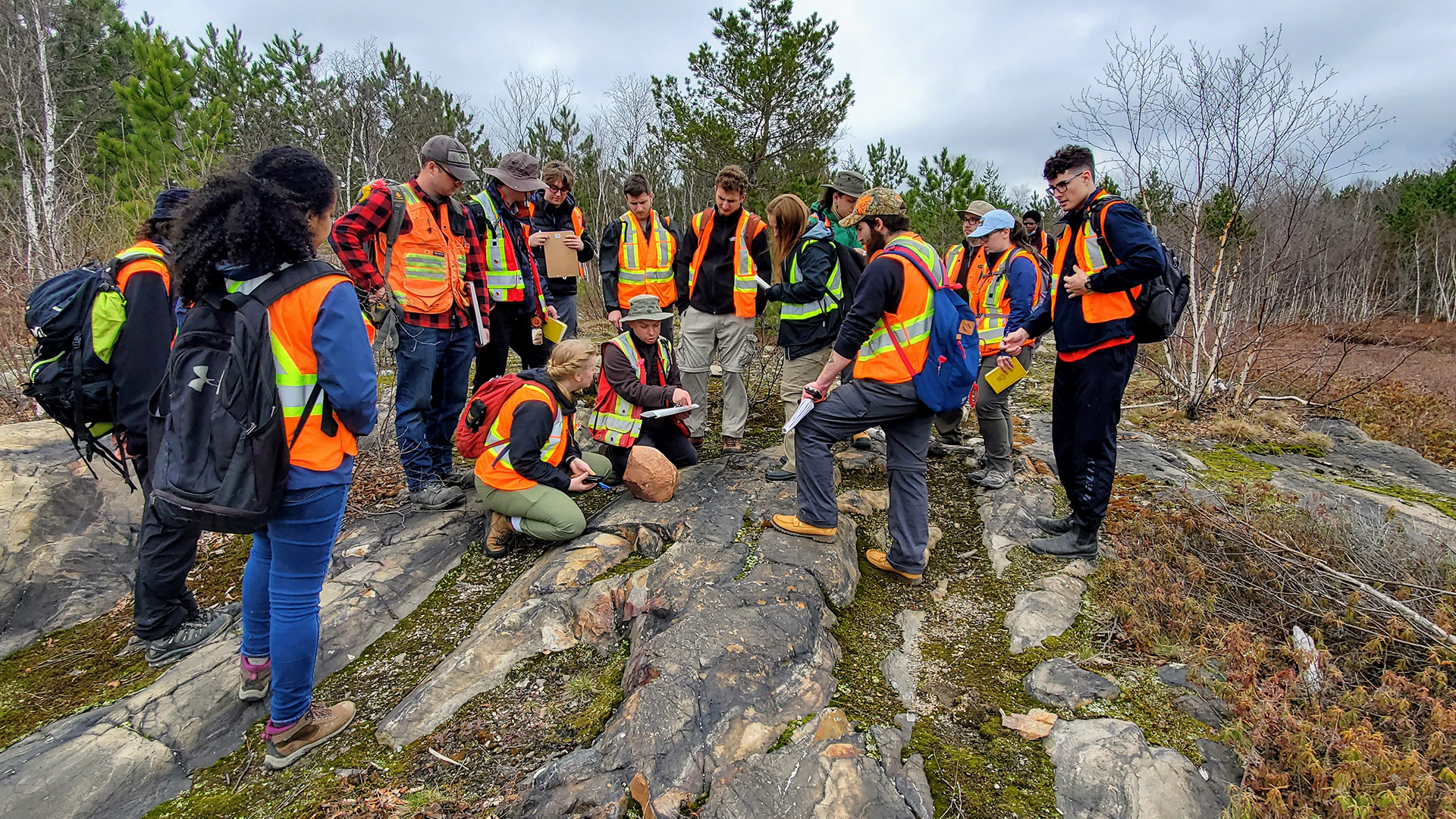
Laurentian University Earth Sciences students and faculty on a rock outcrop close to the campus, taking part in a mapping field school, spring 2022
Laurentian’s Harquail School of Earth Sciences is focused on geoscience research and education, which are crucial for advancing the mining and minerals industry, the professionals who will shape it, and the society that will benefit from it.
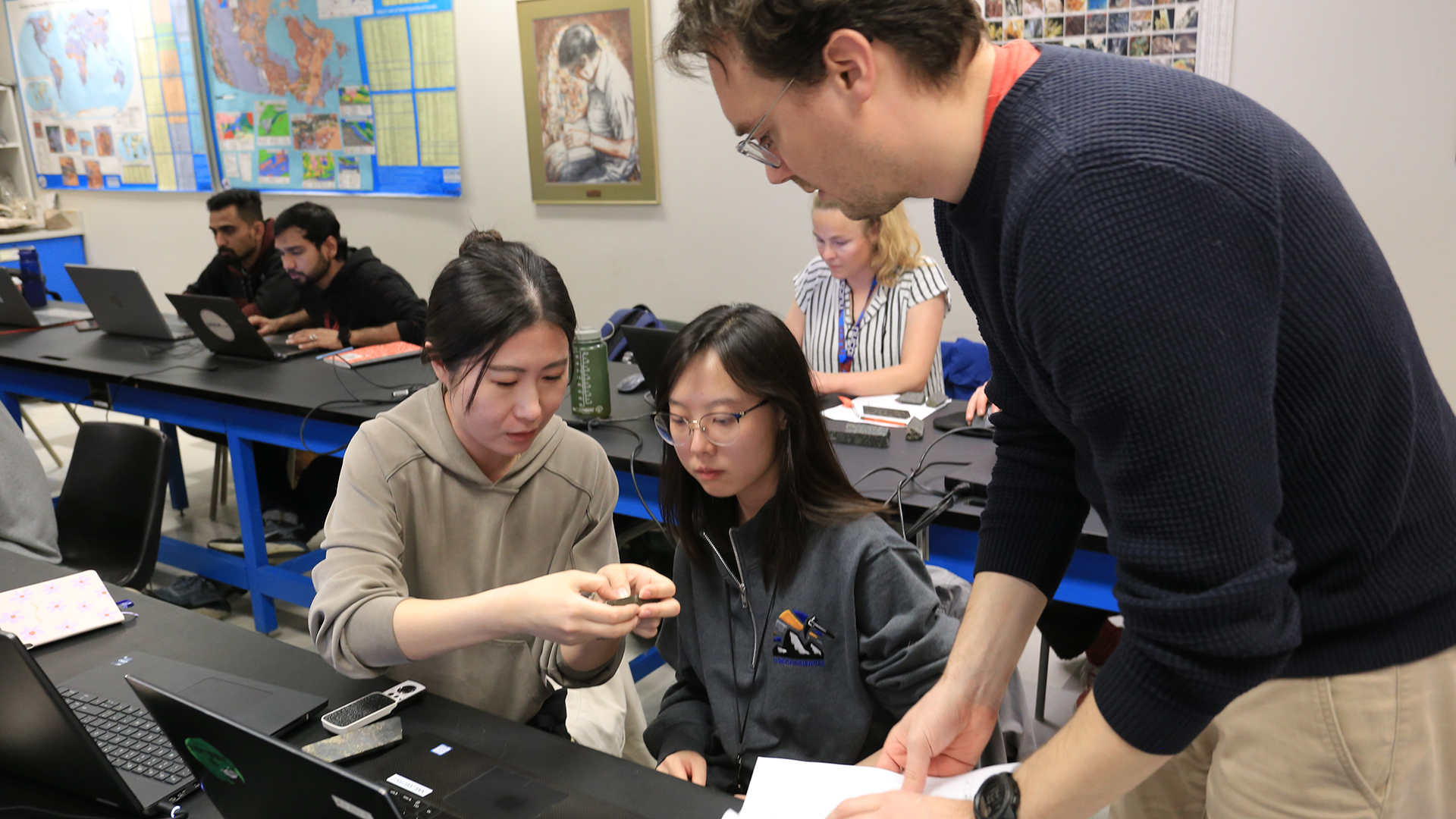
Students in the Magmatic Ore Deposits Modular Course come from all over the world to advance their education in geoscience
The need to recruit young people into this field is critical. In a 2023 infographic, the Mining Industry Human Resources Council outlined the issue: “Canada’s mining industry faces a tight, and tightening, labour market. With critical minerals and metals needed to transition to a clean economy, today’s mining labour shortages threaten the world we want to create tomorrow.” Despite rewarding opportunities supporting the advancement of low-carbon technology and infrastructure, as well as opportunities to develop skills with high-tech machinery and contribute to environment-saving initiatives, mining is not a top career choice with today’s youth.4
The Harquail School of Earth Sciences offers academic and research opportunities for students, professors, and researchers in Canada and worldwide. Students choose from a range of programmes and courses, including: • BSc in Earth Sciences • MSc Geology (thesis) and MSc Geology – Applied Mineral Exploration (course-based) • PhD in Mineral Deposits and Precambrian Geology • Modular Courses for registered geoscientists, graduate students, and industry professionals
MERC also delivers Short Courses at global conferences, which provide geologists and graduate students with opportunities to stay updated on the latest developments in mineral exploration targeting, new data, and research outputs.
MERC at the Harquail School of Earth Sciences offers an integrated approach to undergraduate and graduate studies through applied research, education and HQP training that is designed to: • Solve challenges related to mining and mineral exploration • Fill knowledge gaps and promote the advancement of geological and exploration education, and • Supply the sector with a qualified workforce.
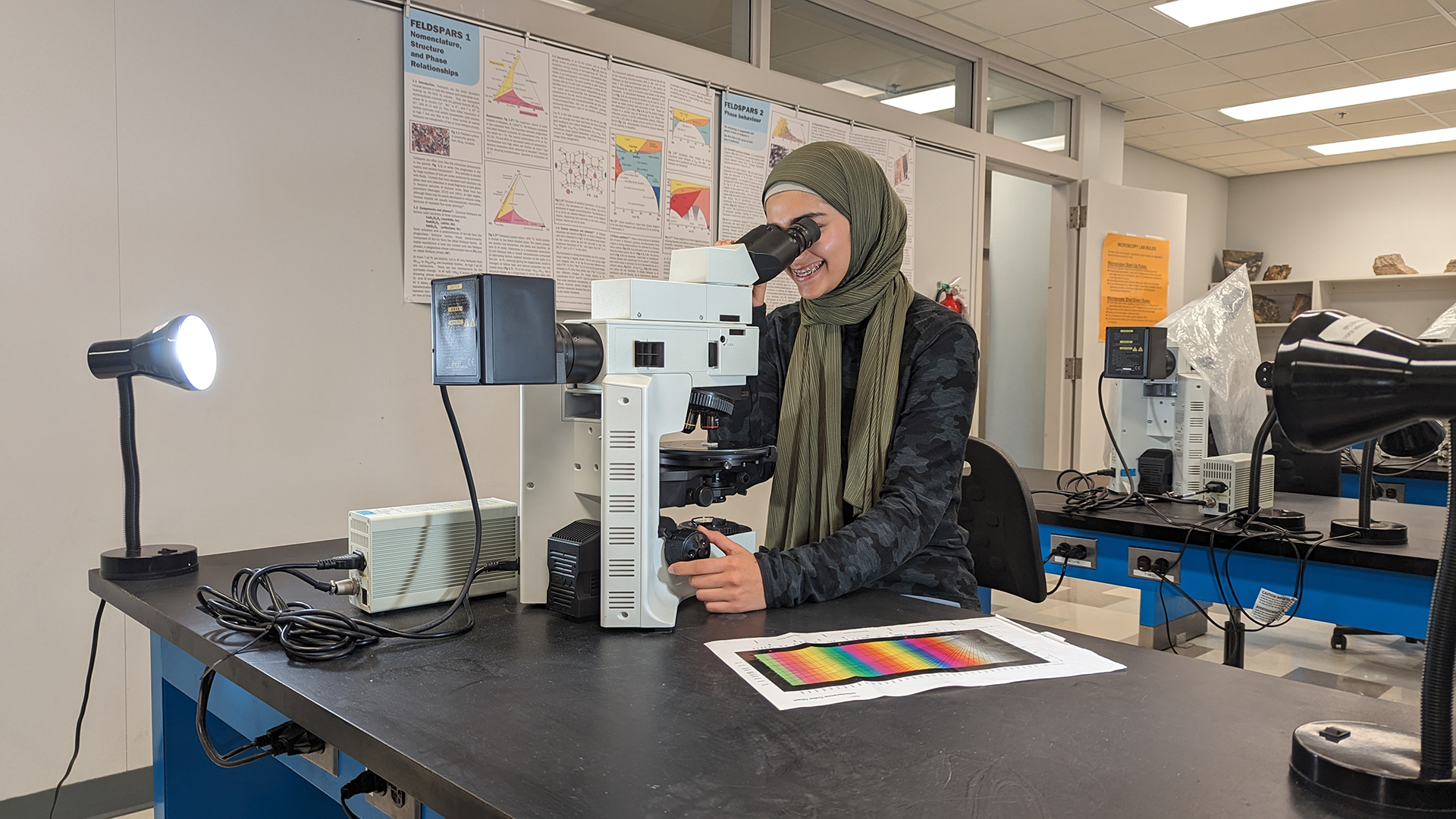
Undergraduate Earth Sciences students like Weeda Tiraei (pictured above) gain work experience in industry, academic, and government geoscience positions before graduating
The Metal Earth project: Advancing Canada on the world stage
Now in its eighth year, the Metal Earth project has contributed significantly to ore deposit research in Canada and globally. Some of the most valuable outcomes are groundbreaking research publications, the advancement and training of highly qualified personnel, and public data and methods of interpreting that data.
Metal Earth core goals and objectives
1. Fundamental Science • Transform our understanding of Earth’s early evolution and processes that govern differential metal endowment. • Improve the science for targeting and finding new orebodies. 2. Applied Innovation and Commercialisation • Cement Canada’s position as a global leader in mineral exploration research through open-source delivery of new knowledge and the development of transformative technologies targeted at increasing exploration success. • Improve training of quality young geoscientists for the mineral industry.
Scientists and industry leaders gather several times a year to review Metal Earth results and discuss how to apply the findings. Hundreds of papers, theses, government reports, presentations, abstracts, and datasets have been completed. This work has prompted lively debates and triggered thoughtful and innovative ways to advance geoscience and mineral prospectivity mapping, which involves various techniques to model or interpret the geology of the Earth’s crust from an ore deposit perspective.
There are several places where this information is made available to the public for scientific and industrial use. MERC produces an Annual Report that includes the latest research updates and plans for every project. The most significant Metal Earth peer-reviewed journal articles are open-access, and others are available through contacting the researcher. There are also two other places to locate the latest Metal Earth data and information: The Metal Earth Hub and the MERC website’s data repository. As the project matures, additional resources will be added to better catalogue all of the Metal Earth products.
The Metal Earth Hub features interactive web maps detailing sampling locations, collected field data, and analysis for all framework geoscience products developed by Metal Earth.
These new tools display: • Data collected at sample locations • Gravity and magnetotelluric source data files • Geochemical analysis in spreadsheet format • Instructions to download complete seismic datasets.
The Hub and MERC website also host links to open access papers, government reports, theses, and other documents from early in the project.
In an interview in Global Business Reports, Metal Earth Director Ross Sherlock stated that today’s challenge: “Is compiling and integrating the datasets collected by the various projects. MERC has partnered with five other universities to deliver Metal Earth, and each of our partners has contributed according to their expertise. The challenge now lies in combining and integrating these data to quantify what geologic processes control metal endowment and how to use this to be predictive when exploring for metals.” ⁵
Building expertise in the years ahead
Sherlock contributes his expertise and learns from others around the world by serving on various Boards and Committees in academia and industry. Recently, Ross joined the Advisory Board of Sweden’s Smart Exploration Centre, a new multidisciplinary research Centre that’s advancing knowledge and innovation for the exploration and development of critical raw materials in the EU. Like MERC, this Centre creates international interdisciplinary partnerships to solve complex geoscience questions. MERC also benefits from industry expertise from its own Board and support from its members, who offer feedback on its direction and sustainability. They echo the concern shared in the Mining Industry Human Resources Council studies, which state that shortages of skilled personnel might constrain economic growth opportunities and restrict mineral exploration projects in Canada. The need to bring youth into geoscience is critical. MERC is a part of the solution, recruiting students from Canada and abroad and facilitating geoscientists to pursue professional development through its graduate research projects.
At Laurentian University, the Harquail School of Earth Sciences is increasing its faculty complement. Dr Stefanie Brueckner will join the School this summer, coming from the University of Manitoba with a focus in economic geology and critical minerals. Graduate students continue to be attracted to new projects working on ore deposits in Canada and globally. Further, the Harquail School engages with more than 1,000 people each year in its outreach efforts to recruit undergraduate students to the field of Earth Sciences through initiatives ranging from summer geoscience tour activities to high school classroom visits.
The greatest ambassadors are graduates and students in the programme who work in geosciences and use its opportunities to develop themselves and their talents professionally. Some students are passionate about mineral exploration and being outdoors in the field, others about volcanism, plate tectonics, geochemistry, or geophysics, and still others are fascinated by techniques involving data and building computer models. It is a field where having curiosity and skill sets in different disciplines is welcome and rewarding.
In addition to its contributions to the development of highly qualified personnel, the Metal Earth project has also left a lasting legacy of open-access data and publications that can be used by researchers and industry geologists worldwide. It demonstrates that MERC is a Centre with worldwide connections and influence and a track record of success in directing and managing some of the world’s most significant collaborative geoscience research initiatives.
Laboratory Services
The Mineral Exploration Research Centre – Isotope Geochemistry Laboratory (MERC-IGL) at Laurentian University’s Harquail School of Earth Sciences specializes in in-situ analyses of rock and mineral specimens.
The MERC-IGL is equipped with a scanning electron microscope (SEM) and a high-resolution (15 μm) micro-x-ray fluorescence spectrometer (μXRF), an ArF excimer laser ablation (LA) system paired with two inductively coupled plasma mass spectrometers (ICPMS), a multi-collector (MC), and a triple quad (TQ) that combine to offer a range of analytical applications that can be optimised for specific research objectives.
Capabilities: • Backscattered Electron (BSE) and secondary electron (SE) imaging • Energy-dispersive detector (EDS) • Cathodoluminescence imaging (CL) • Feature analysis (SEM/EDS and μXRF, non destructive) • Compositional mapping (LA-TQ-ICPMS) • Phase identification/particle search • X-ray element mapping (SEM/EDS or μXRF) • Mineral analysis (SEM/EDS, semi- and full-quantitative) • U-Th-Pb analysis • Lu-Hf analysis • Laser ablation split stream (LASS)
Trained undergraduate and graduate students conduct field work on essential and innovative projects with support from faculty, research agencies, industry, and government
LASS enables simultaneous measurement of U-Th-Pb analysis combined with trace element analysis on the triple-quad ICPMS.
For information and pricing, please contact Dr Kirk Ross, Lab Director, at [email protected].
Frankie Wood-Black, Division Chair, Engineering, Physical Science and Process Technology at Northern Oklahoma College, explains the history of helium and its exploration in the US and highlights importance of safeguarding this valuable reserve.
Helium is a noble gas with unique properties. It is the second lightest element and possesses the lowest boiling point of any element. Initially discovered on the Sun – earning it the nickname ‘the alien element’ – helium has since been found on Earth in the atmosphere, radioactive minerals, natural gases, and mineral springs.
The discovery that natural gas was rich in helium led to an increased supply, making it indispensable to various industries such as aerospace, technology, healthcare, and manufacturing.
Despite its significance, helium reserves are finite, making it crucial to explore alternative sources and consider sustainable practices to ensure a stable supply for the future.
Mannen kunnen soms tegen problemen aanlopen die invloed hebben op hun intieme leven, wat hen kan frustreren en onzeker kan maken. Deze uitdagingen zijn niet ongebruikelijk en kunnen voortkomen uit verschillende oorzaken, zoals stress, angst of fysieke aandoeningen. Gelukkig zijn er oplossingen en middelen beschikbaar die hen kunnen helpen om hun zelfvertrouwen en welzijn te herstellen. Een nuttige stap is om betrouwbare informatie te zoeken en producten te bekijken op websites zoals. Het is belangrijk dat mannen zich realiseren dat ze niet alleen zijn en dat er ondersteuning en opties zijn om hun seksuele gezondheid te verbeteren.
Mannen kunnen soms tegen problemen aanlopen die invloed hebben op hun intieme leven, wat hen kan frustreren en onzeker kan maken. Deze uitdagingen zijn niet ongebruikelijk en kunnen voortkomen uit verschillende oorzaken, zoals stress, angst of fysieke aandoeningen. Gelukkig zijn er oplossingen en middelen beschikbaar die hen kunnen helpen om hun zelfvertrouwen en welzijn te herstellen. Een nuttige stap is om betrouwbare informatie te zoeken en producten te bekijken op websites zoals. Het is belangrijk dat mannen zich realiseren dat ze niet alleen zijn en dat er ondersteuning en opties zijn om hun seksuele gezondheid te verbeteren.
To provide insight into the history of helium and its many uses, The Innovation Platform Editor Maddie Hall sat down with Frankie Wood-Black.
Can you outline how helium was first discovered?
The 19th century was a time of scientific revolution, with numerous inventions and discoveries. One such invention was the spectroscope, an instrument that dispersed sunlight into measurable wavelengths. This process revealed distinct dark lines amidst the usual colours. Scientists Gustav Kirchhoff and Robert Bunsen noticed that some of these lines corresponded to emission lines observed when heating chemical elements. When atoms are excited, they emit light, creating spectral lines. These lines can be seen as either an absorption spectrum, where specific light wavelengths are taken in by the atoms, or as an emission spectrum, where specific light wavelengths are given off by the atoms. Each element produces a unique set of spectral lines that are key to understanding the chemical composition of bodies like the Sun.
In 1868, during a solar eclipse, a new bright yellow line was detected in the solar spectrum that didn’t correspond to any known chemical element. While a number of scientists noticed this new line, this discovery is attributed to both Pierre Janssen and Norman Lockyer. Bearing a similar set of spectral lines, it was initially thought that this could be sodium. Lockyer, however, believed it was a new element.
Further research led to the identification of helium, named after Helios, the Greek god of the Sun. This marked the first observation of helium, an element that was later found to exist on Earth as well.
How was helium confirmed to exist on Earth?
In 1882, Italian physicist Luigi Palmieri detected helium’s spectral line in lava from Mount Vesuvius. This marked the first discovery of helium on Earth. A more formal discovery came through Scottish chemist William Ramsey’s isolation of helium from the mineral cleveite in 1895. Though helium was clearly present on Earth, at this point, there was no clear idea of how abundant it may be and, therefore, whether it was going to be commercially viable.
This was until the discovery of helium in natural gas wells. During their analysis of a natural gas sample in Kansas, Cady and McFarland identified helium, and lots of it, among the expected gases. Subsequent testing of over 40 other gas samples also revealed an abundance of helium, dispelling the notion that helium was rare on Earth.
Where is helium found on Earth?
Helium is a fascinating element that can be found in small, non-commercial quantities in the Earth’s atmosphere. However, the main commercial source of helium comes from natural gas wells. While these wells are typically sought after for methane and butane as fuel sources, some wells in Western Kansas have been found to contain high concentrations of helium along with other unburnable gases. Interestingly, the helium content in these old natural gas wells has become more valuable than the fuel they were originally intended for.
In the US, helium-rich wells are primarily located in the Texas Panhandle, Oklahoma, Kansas, Wyoming, and parts of Colorado. In Wyoming, helium production has advanced to the point where companies are actively extracting helium directly from gas pockets rather than just considering it a byproduct of natural gas extraction. This process demonstrates the evolving importance and value of helium as a natural resource.
Are current methods of helium extraction sustainable?
Helium is formed by fusion in stars. Hydrogen is compressed, and four atoms combine to form a helium nucleus. This natural process takes place in stars, with intense heat and pressure enabling nuclear fusion. Helium is an abundant element, but it is not always visible because it filters out through the atmosphere.
However, helium is not produced on Earth; it is isolated after being trapped here. As such, helium is a non-renewable resource, which is concerning given that its current extraction rate is fast exceeding its replenishment. This demand shows no signs of slowing, thanks to helium’s versatility. With potential applications in sustainable air transport and energy systems, it is more likely demand will only increase. Therefore, it’s crucial to conserve our helium reserves to ensure a stable supply for future generations.
Helium, being a small and light atom, presents challenges in terms of resource management once it is isolated. Our current abilities to recycle helium are limited. Given the importance of safeguarding the helium reserve, it is crucial to develop innovative solutions that can effectively address the complexities associated with both preserving and utilising this valuable resource.
Traditional helium extraction is sustainable in that the industry has regenerated older oil and gas fields that have been in use since the early 1900s. In some cases, helium production is a byproduct or extension of the fuel industry. However, this gas extraction remains carbon-intensive, and though helium will remain an important resource in the green transition, the same cannot be said for the natural gas and oil fuel sources we are aiming to transition from. If we are to continue relying on helium extraction through traditional methods, it is imperative that we explore and invest in alternative and more sustainable extraction processes.
The presence of helium in the atmosphere is a potential solution, but the concentration is very low, with helium making up only 0.00052% of the atmosphere. The moon is also considered a potential alternative for helium extraction, as it has more abundant helium deposits on its surface, deposited by the solar wind due to the relative lack of atmosphere and magnetic field. Although tapping into lunar helium presents a significant opportunity, there are still challenges related to high costs, technology, and transporting the helium back to Earth.
Nonetheless, it remains a promising option for securing our future helium supply. However, if we are to invest time, research, and resources into exploring lunar helium, it must be accompanied by circular practices that conserve and recycle this non-renewable resource.
Why is helium such a crucial resource, and what are its uses?
Helium is an incredibly versatile resource with applications across medicine, defence, aerospace, and critical infrastructure. Its lighter-than-air, inertness, high thermal conductivity, and low boiling point properties are employed across industries to cool, protect, and lift. Some examples include:
Medicine
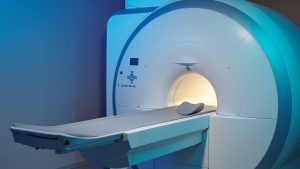
Helium plays a vital cooling role in the operation of superconducting magnets, which are integral components of MRI machines and other equipment that necessitate low temperatures. Thanks to its lighter-than-air quality, it can also be used to treat respiratory conditions.
Due to its unique properties, helium is frequently used to inflate airships and balloons – including weather balloons. Its low density and non-reactive nature make it ideal for lifting objects, and its non-flammable characteristic distinguishes it from hydrogen.
Semiconductor manufacturing
Helium is used in reactive ion etching in semiconductor manufacturing. It is frequently combined with other gases to produce plasmas and assists in controlling the temperature throughout the process. It can also be used to dissipate heat generated during manufacturing, protecting essential components.
Welding
Helium can be used in welding processes to prevent oxidation and contamination from the atmosphere. It is particularly used in this shielding capacity when welding materials like titanium and aluminium.
Should helium be classed as a critical mineral, and are there efforts to protect and conserve helium?
There are ongoing efforts to conserve helium as a resource. Currently, the US Geological Survey (USGS) is seeking input on whether helium should be reinstated on the critical minerals list. In 2022, helium was removed from the list, indicating that it no longer met the necessary criteria that include supply risk, economic importance, and potential disruptions to supply. Helium’s removal is likely due to the discovery of additional helium deposits.
It is a question of where we are regarding supply versus demand. A decade ago, our known supply of helium was lower, placing it on the critical list. However, the current known supply is higher, suggesting it should be removed from the list. The complicating factor is helium’s non-renewable status. Even though the supply may have increased, the resource remains finite, adding complexity to the debate. Additionally, demand has also increased. In light of recent exploration efforts leading to increased supply, it might be considered an endangered rather than a critical mineral.
In spite of its debated status, efforts remain to conserve and protect the helium supply. In the US, the Bureau of Land Management (BLM) manages the Federal Helium Reserve. Though the reserve is mandated to be slowly privatised, the 2013 Helium Stewardship Act ensured extended government authority to protect and ensure a reliable helium supply.
The US Government regularly assesses the supply and demand of the helium market and adjusts its policies accordingly. While new exploration is supported, there are also efforts to promote recycling in industries with heavy helium use, encouraging programmes that capture and reuse helium. Investment is additionally directed into the development of alternative helium sources and research into new technologies that can improve efficiency.
Ultimately, we must excel in establishing more circular practices. By establishing a robust helium industry that maximises its resources, we can secure a sustainable and reliable supply for years to come.
Please note, this article will also appear in the 18th edition of our quarterly publication.
The importance of critical raw materials is driving increasingly fierce competition between global powers. Olimpia Pilch, Co-founder and Director of the Critical Minerals Association USA, tells us more about one such competition.
Fuelled partially by the pursuit of net zero, and partially by China’s decoupling from the US, critical minerals have become tools of diplomacy in the race to control sensitive sectors. By bolstering domestic security via expanding defence capability, diversifying energy sources, or betting on the cusp of cutting-edge technology, critical minerals play a fundamental role in the geopolitical game of chess.
Monopolised supply: A problem of our own making
China has long had its sights on strategic sectors, and the raw minerals and specialty materials required for many vital technologies. Free markets and the US-backed ascension of China to the World Trade Organization have provided the perfect platform for China to capitalise on the de-industrialisation of the collective West. The global race to offshore and lower costs had chief executives trading the longevity of companies, market share, and propriety information for spectacular and rapid profits. US permanent magnets, semiconductors, and critical minerals industries were all shipped off to China one by one.
China’s lack of compliance with the conditions of its ascent to the WTO went relatively unaddressed for two decades, while quotas and export restrictions became more frequent and targeted at the US market. The industry has long lamented a number of Chinese companies’ methods: Quick and easy credit, loans, and infrastructure deals for raw materials, corporate espionage and IP theft, sabotage of mining operations overseas, market flooding coupled with Chinese share-buying sprees and acquisitions of struggling Western companies, amongst many other accusations of in-country coercion and intimidation of China-based executives.
The golden age of offshoring, however, came crashing down amidst a series of tit-for-tat export restrictions, election meddling, and espionage balloon sagas. By then, the US had drawn, quartered, and sold off its critical minerals midstream industry. Even the infamous Mountain Pass mine, the only rare earth mine in the US, continues to sell offtake to China due to insufficient demand outside of the biggest market, where refining takes place before the US imports ready-made magnets.
Meanwhile, China has banned exports of processing technology to prevent the US or other players from taking its rare earth crown.
Now, the US is facing difficult decisions about protecting its values and interests while managing the effects of short-term vision. However, modern problems require modern solutions, and the US is taking the challenge head-on.
Unlocking domestic resources
The US has since taken a variety of measures to bolster its national, energy, and economic security by incentivising re-industrialisation of the US via the landmark Inflation Reduction Act (IRA), which sent waves across the world. Paired with the Bipartisan Infrastructure Law (BIL), the US critical minerals supply chain has been benefiting from concentrated support from the demand side. The US is taking two approaches, one focusing on energy security, spearheaded by the Department of Energy (DOE), while bolstering national security naturally falls under the U.S. Department of Defense (DOD).
On the defence side, the U.S. DOD has been propping up projects of strategic importance, including the first US nickel refinery hopefuls, Westwin Elements, and Perpetua Resource’s antimony and gold project in Idaho. Through the Defense Production Act Investment (DPAI) programme, the DOD backed Canadian companies Fortune Minerals and Lomiko Metals, focusing on cobalt and graphite, respectively. At the same time, Albemarle and Talon Metals received more than $110m in grants for the domestic production of lithium at Kings Mountain in North Carolina, and nickel at the Tamarack project in Minnesota.
Further, South32’s Hermosa manganese and zinc project in Arizona is the first mining project covered by the FAST-41 programme, for critical infrastructure projects that benefit the nation. FAST-41 was signed into law by President Obama in December 2015, and the FAST Act also created the United States Federal Permitting Improvement Steering Council (FPISC), an independent federal agency composed of 16 members, including 13 federal agencies responsible for environmental reviews and permitting for infrastructure projects. The success of Hermosa has the potential to open the doors for more critical minerals projects to flow through the FAST-41 programme, and cut down the time lag between the discovery of deposits and production.
Several structural issues, however, remain unresolved in unlocking US critical minerals independence. The abolishment of the United States Bureau of Mines in 1996 left US critical minerals affairs unaddressed and floating between several federal agencies and the White House, leading to fragmentation. There is also a visible misalignment between the Federal agenda on critical minerals, particularly concerning China’s monopoly, and individual State approaches to dealing with both the development of critical minerals resources and Chinese investments. States such as Utah and Nevada are leading the charge and have ranked as number one and two, respectively, on the Fraser Institute’s investment attractiveness index for mining.
The outdated Mining Law of 1872 does not reflect the modern realities of critical mineral exploration and extraction, nor does it enable the timely development of projects. It has also faced criticism from activists, non-governmental organisations, and Native American communities for failing to direct mineral exploration towards sites that are perceived as culturally and environmentally appropriate (albeit there is no consensus of where that is), and not promoting early meaningful engagement with communities. Despite mining (collectively and not just for critical minerals) generating a gross output of nearly $702bn in 2023, the industry has been criticised for insufficiently compensating the American taxpayer for extracting on public land.
Strong leadership to undertake the monumental task of updating the mining law to safeguard public interests and remove barriers to responsible and speedy exploitation of America’s critical minerals natural endowment is much needed, especially to unite two opposing sides of the debate under one common goal: a better tomorrow built on American critical minerals for the American people.
Leading the West to critical minerals diversification
The US has taken decisive strides and remains the key driver of supply chain diversification across the globe. Ambitious domestic policy and active investments in critical minerals companies are supplemented by a drive to onshore critical minerals from like-minded jurisdictions. The U.S. International Development Finance Corporation (DFC) has been slow to provide alternative financing options to those typically provided by Chinese companies and state entities such as the Export-Import Bank of China.
However, the DFC now has a growing portfolio of investments in rare earths in South Africa and nickel in Brazil via TechMet. Syrah’s Mozambique graphite project has benefitted from a $150m conditional loan while the Australian company focuses on simultaneously setting up an anode facility in Louisiana. The Export-Import Bank of the United States (US EXIM) has issued a non-binding Letter of Interest to another Australian company, Australian Strategic Materials, to provide a debt funding package of up to $600m (AU$923m) for the construction and execution phase of the rare earths project in New South Wales.
The US-led Minerals Security Partnership (MSP), a collaboration of fourteen countries, has also been providing finance to 15 projects across five continents across lithium, cobalt, nickel, manganese, graphite, rare earth elements, and copper. The announcement of the MSP Forum, aimed at bringing more producer nations to the table, can give the US and its allies another tool to drive diversification and build robust partnerships.
There has also been a concentrated effort to invest in infrastructure that could spur investments and significant development, such as the $2.3bn Lobito Corridor and the Gabon Special Economic Zone, positioning the US as an alternative development and finance partner to China. However, the US has lagged in engaging producer nations across Latin America, Africa, and Central Asia at a political level. Where typically competing interests from China and Russia disadvantage US and Western critical minerals companies. However, the US remains seen as an attractive partner and investor across many producer nations.
Lithium spotlight
Despite electric vehicles being around for over a century, it was a Brit working at American ExxonMobil in the 1970s who propelled lithium-ion batteries forward. Amidst the tribulations of corporate life and soaring oil prices, lithium-ion batteries disappeared into the void before making a strong comeback in the shape of Exxon’s drive to tap into US resources through direct lithium extraction (DLE) in Arkansas. Other notable players include: • Standard Lithium recently commissioned a commercial-scale DLE plan of significant importance to North America • Pure Lithium secured significant investment from Saudi Arabia and boasts an all-star cast, from the legendary MIT Professor Donald Sadoway, entrepreneur and inventor Emilie Bodoin, and mining mogul Robert Friedland • Piedmont Lithium is developing lithium projects across the US, Canada, and Ghana • Albemarle Corporation is the largest provider of lithium for EV batteries in the world, and • Piedmont Lithium recently obtained a North Carolina state mining permit and is set to supply Tesla.
There is also a growing junior lithium exploration sector, both home-grown and from neighbouring Canada, propped up by Canadian specialist mining capital, which has witnessed significant erosion over the past decade.
With a bipartisan push to diversify America’s supply chains, the US is truly the land of lithium opportunity. According to the USGS, America has 14 million metric tons of lithium resources, ranking third worldwide after Bolivia. Recent studies place the US as a frontrunner in creating an ex-China lithium supply chain. The McDermitt Caldera, located on the Nevada-Oregon border, could prove to be one of the largest known lithium reserves in the world – the area already hosts the Thacker Pass Lithium Mine, the largest lithium mine in the US. The Australian company, Jindalee Lithium, is anticipating the results of its Pre-Feasibility Study later this year for its signature McDermitt Lithium Project. Meanwhile, Lithium America’s Thacker Pass has received a conditional loan of $2.26bn from the U.S. Department of Energy (DOE) to build an on-site refining facility. Ioneer, who is developing the Rhyolite Ridge lithium project, has also benefitted from DOE backing in the form of a $700m conditional loan to ensure on-site processing of lithium-carbonate.
Researchers have also pinpointed California’s Salton Sea as a lithium hotspot. Controlled Thermal Resources began the construction of their lithium extraction plant and geothermal plant earlier this year at their Hell’s Kitchen lithium brine project located within the Salton Sea geothermal field in Imperial Valley. Whereas, the Tonopah Flats in Nevada have a potential mine life of over 400 years with an average lithium carbonate equivalent production of 30,000 metric tons per annum. Arkansas, Arizona, and California also have significant lithium potential.
Speciality materials and battery manufacturers have also benefitted from DOE’s investments administered by the Office of Manufacturing and Energy Supply Chains, including the likes of American Battery Technology, ICL Specialty Products, Fluor, Solvay, and others, in a bid to create strong mine-to-battery supply chains.
Policy incentives, including the IRA and safeguards such as 25% tariffs on imports of Chinese critical minerals and the Foreign Entity of Concern Rules (FEOC), favourably position US lithium miners to develop projects and for supply chain integration from mine to battery to start taking place. They do, however, have a counter effect of keeping advanced Chinese technology inaccessible to the US in areas such as processing and refining where expertise and scalability know-how have been lost.
If, however, history has taught us anything, it is that necessity is the biggest driver of innovation. The US must innovate, commercialise, and scale up to become globally competitive without the need for government guardrails and safety nets in the future. The US needs to tap into its world-renowned entrepreneurial spirit, take big risks, and reap the rewards in a truly American fashion.
Please note, this article will also appear in the 18th edition of our quarterly publication.
Scandium Canada is developing one of the largest primary sources of scandium in the world.
In the mining-friendly jurisdiction of Québec, Scandium Canada Ltd. is currently developing one of the largest primary sources of scandium in the world, with its Crater Lake Project.
The project is unique as it is one of the only primary scandium deposits in the world and the only one that is as advanced down the development path as it is.
Scandium in Canada
Scandium, number 21 on the periodic table, has been identified as a critical metal by the governments of Canada, the US, and the EU.
Critical metals, such as copper, aluminum, manganese, indium, rare earth elements, helium, lithium, cobalt, graphite, and scandium all play key roles in carbon reduction efforts, and therefore, securing safe national supplies is an important goal for multiple countries.
When combined with aluminum, scandium creates different alloys that hold unique properties. Aluminium-scandium (AlSc) alloys create materials that are lightweight, strong, and corrosion resistant. Scandium is also a good conductor of electricity and heat. Aluminium-scandium (AlSc) wires could replace copper in the wiring of electric motors, significantly reducing the weight.
AlSc alloys are utilised in the manufacturing of high-performance components for aerospace, aircraft, missiles, and satellites. Green energy technology could also benefit from these alloys in electric vehicles (EV) frames and battery casings, as well as wind turbine parts. Scandium-oxide is currently used in solid oxide fuel cells.
Current scandium production is entirely the result of the production of another mineral. Being a by-product has numerous implications in terms of supply consistency, security, and the ability to respond to market demand with increased production.
Today, scandium is mainly obtained from Russia and China. Primary sources of scandium, such as the one found at the Crater Lake Project, are essential to the growth of the aluminium-scandium alloys markets, and the many potential commercial uses of the alloys.
Before industry commits to components that require an aluminium-scandium alloy, a dependable, long-term supply must be available. Crater Lake represents such a source of scandium; a safe, dependable, and long-term supply.
For example, AIRBUS SA has patented aluminum-scandium alloys for both welding of aircraft structures and as AM (advanced manufacturing) powders for 3D printing as a platform lightweighting product. Such a use-case scenario can only be implemented when large commercial quantities become available.
Scandium Canada’s team believes that a stable source of scandium will allow OEM players to begin incorporating Aluminium-scandium components into their product offerings with the confidence that they can access a supply of the AI-Sc alloy for an extended period. In support of this perspective, the company is engaging in discussions with potential end users, with the intention of signing agreements or LOIs for the scandium master alloy (AlSc 2%) it will produce.
Carbon neutrality, and the future
Mr Guy Bourassa, CEO of Scandium Canada, believes that scandium is the metal of the future due to its unique properties and applications that centre around carbon neutrality.
The limited supply has constrained the market utilisation to date. With a dependable supply, the expected potential market is significant. Primary sources of scandium such as the Crater Lake Project are the reliable sources that the sector needs.
Scandium demand projections show a very significant need for new supply to meet 2040 potential demand, current capacity needs to increase by a factor of over 50, which will require the development of primary sources
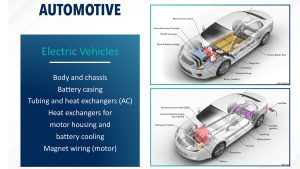
It is anticipated that the Automotive industry could be a large consumer of aluminium-scandium alloys as the number of parts where the alloys can be incorporated are extensive. Components such as the chassis, battery casing, and heat exchangers are just a few examples. The reduction of weight, especially for EV, and more efficient components will have a significant impact on the performance and range of EVs.
Similarly, the aerospace industry could benefit from the integration of aluminum-scandium alloy parts. Reducing the weight of an aeroplane will significantly reduce its carbon emissions and operating costs.
The potential additional uses are numerous and will contribute positively to the global end goal of a reduction in green house gases
Quebec: A unique mining opportunity
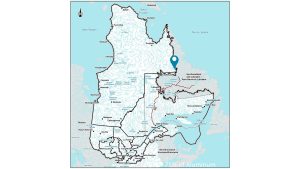
The company’s Crater Lake Project is located in Quebec, about 200km north of the town of Schefferville. The project has significant blue-sky potential both in the amount of scandium-oxide that can be produced as well as the life of the mine.
The project has progressed from an exploration stage to a development stage over the last few years. A preliminary economic assessment (PEA) on the project was released in 2022, a 43-101 resource estimate update was filed in June 2023 and work to complete a pre-feasibility study is currently underway.
The current life of mine is 25 years with over 40 years in potential resources; however, this is based on the resource estimate contained within a 350m long zone in one of multiple showings identified within the 47km² mining rights owned. The project’s full strike zone is 14km in length. The potential for significant growth in the project capacity is untested, as there are multiple additional zones to drill. The company feels it has barely scratched the surface of the project’s full potential.
At present, the resource is open in all directions and at depth where it thickens and gets richer in concentration. The company will run an in-fill drilling programme for the summer 2024 season to convert inferred resources to be measured and indicated in the TG Zone, where the initial mine will be developed.
The Provincial Governments of Quebec, Newfoundland, and Labrador, as well as the Government of Canada currently offer numerous grant programmes specifically for critical minerals projects. These grants are designed to support mine development and construction. The grants cover infrastructure, ground work, and technology implementation. These grants require a percentage of matched funds to be raised by the company. Scandium Canada has submitted applications in for a number of these relevant grants.
Relationship with First Nations
The corporation is aware of and adheres to the principles of the United Nations Declaration on the Rights of Indigenous Peoples as recently ratified by Canada, particularly with regards to obtaining the free, prior, and informed consent of the Indigenous peoples for the development and use of their lands, territories, and other resources.
The corporation recently signed a pre-development agreement with the Naskapi Nation of Kawawachikamach in order to establish a framework, through various undertakings to continue the current relationship in a mutually beneficial manner with regards to the corporation’s activities on the Crater Lake property.
Furthermore, in the spirit of current and future co-operation, the corporation and the Naskapi Nation of Kawawachikamach have negotiated that pre-development agreement to be a binding declaration of the principles they intend to build on for the negotiations of a final agreement – a Socio-Economic Participation Agreement (SEPA), also commonly known as an Impact and Benefit Agreement (IBA) for the property – at the earliest reasonable opportunity and before the commencement of any construction works.
Upcoming catalysts
This year’s focus will be the Pre-Feasibility Study (PFS) and activities that support the PFS completion. On site work will include geotechnical work and infill drilling, as metallurgical pilot tests are being conducted in Lakefield SGS facilities. On site work will begin in early summer 2024.
In addition, the company will continue to seek potential partnerships and pursue ongoing discussions with communities to advance pre-development agreements.
Please note, this article will also appear in the 18th edition of our quarterly publication.
Agricultural trade policies are integral to keeping people fed and economies going. How will these policies need to change to reflect new challenges globally, from climate change to population growth?
In the intricate web of global trade, agricultural products stand out as vital commodities that not only feed nations but also shape economies and livelihoods worldwide. The significance of agricultural trade extends far beyond mere transactions; it’s a delicate balance between supply and demand, influenced by various factors, including trade policies, land management practices, and the looming spectre of climate change. In this article, we delve into the multifaceted realm of agricultural trade policy, exploring its significance, key players, collaborative efforts, and sustainability imperatives.
Significance of global agricultural trade
Global agricultural trade serves as the backbone of food security, ensuring a steady supply of diverse products to meet the demands of a growing global population. It facilitates access to food in regions where local production falls short and enables surplus-producing countries to leverage their resources effectively. By fostering interdependence among nations, agricultural trade promotes economic growth, stability, and mutual prosperity.
Rising demand, expanding markets, and advancements in transportation and communication technologies have driven growth. However, challenges such as trade barriers, price volatility, and supply chain disruptions underscore the need for robust trade policies and international co-operation.
Crucial players and collaborative efforts
Several countries wield significant influence in the global agricultural trade network, with the United States, China, the European Union, Brazil, and India occupying central positions. Collaboration among these key players is paramount, especially in the context of recent trade policy agreements such as the Comprehensive and Progressive Agreement for Trans-Pacific Partnership (CPTPP) and the African Continental Free Trade Area (AfCFTA). These agreements aim to reduce trade barriers, streamline regulations, and promote fair competition, fostering a more efficient and inclusive global trade environment.
Effective land and soil management are fundamental pillars of global agricultural policy, as they directly impact productivity, sustainability, and resilience in the face of environmental challenges. Sustainable land practices, including conservation agriculture, agroforestry, and precision farming, are essential to preserving soil health, minimising erosion, and mitigating the negative effects of land degradation. Embracing innovative technologies and implementing robust regulatory frameworks are key to promoting responsible land stewardship on a global scale.
The European Union’s Soil Deal represents a significant milestone in advancing soil protection and sustainable land management within its member states. This ambitious initiative seeks to address soil degradation, contamination, and biodiversity loss through a combination of regulatory measures, financial incentives, and knowledge-sharing initiatives. By promoting soil health and resilience, the EU aims to safeguard agricultural productivity, enhance ecosystem services, and mitigate climate change impacts across the continent.
The EU Soil Deal includes a range of policy instruments, such as the Common Agricultural Policy (CAP) reform, the Farm to Fork Strategy, and the European Green Deal, which collectively aim to promote sustainable farming practices, reduce chemical inputs, and enhance soil carbon sequestration. Moreover, the EU Soil Observatory provides a platform for monitoring soil quality, sharing best practices, and facilitating scientific research to support evidence-based policymaking.
Impact of climate change on agricultural trade policy
Climate change poses unprecedented challenges to global agricultural trade, disrupting traditional production patterns, exacerbating resource scarcity, and increasing the frequency of extreme weather events. In response, trade policies are evolving to prioritise resilience, adaptation, and mitigation strategies that align with broader sustainability goals. Initiatives such as carbon pricing, sustainable certification schemes, and climate-smart agriculture are gaining traction, signalling a growing recognition of the interconnectedness between trade, climate, and food security.
In conclusion, navigating the complex terrain of global agricultural trade requires a multifaceted approach that balances economic imperatives with environmental sustainability and social equity. By fostering collaboration, embracing innovation, and prioritising responsible stewardship of land and resources, policymakers can ensure that agricultural trade remains a catalyst for prosperity and resilience in an increasingly interconnected world.
Please note, this article will also appear in the 18th edition of our quarterly publication.
Boron is a critical material for global decarbonisation. 5E Advanced Materials is set to extract boron in a safe and sustainable manner.
5E Advanced Materials, Inc. is poised to massively progress in the field of boron-driven advanced materials, with a strong focus on enabling global decarbonisation through the production of boron. The company is strategically positioned to meet the increasing demand for sustainable and innovative solutions in key industries such as electric transportation, clean energy, food security, and reshoring. With a secure boron resource located in Southern California, designated as Critical Infrastructure by the US government, 5E Advanced Materials is at the forefront of providing a stable and reliable source of boron for both domestic and international markets.
Boron and decarbonisation
The global push for decarbonisation has never been more urgent, with governments, businesses, and consumers alike recognising the need to reduce carbon emissions and transition towards sustainable energy sources. Boron, a versatile element with a wide range of applications, plays a crucial role in this transition, particularly in industries that require high-performance materials for energy storage, transportation, and infrastructure. By harnessing the unique properties of boron, 5E Advanced Materials is driving the shift towards a more sustainable and carbon-neutral future.
One of the key strengths of 5E Advanced Materials lies in its vertically integrated business model, which encompasses the entire value chain from resource extraction to downstream processing and product development. This integrated approach not only ensures greater control over the quality and supply of boron-based materials but also allows the company to deliver tailored solutions to meet the specific needs of its customers. By forging strategic partnerships with leading companies in various industries, 5E Advanced Materials is able to leverage its expertise in boron production and processing to co-create advanced materials that drive innovation and sustainability.
The importance of boron in the global decarbonisation effort cannot be overstated. In the automotive sector, boron-based materials are used in lightweight components that enhance fuel efficiency, contributing to a more sustainable transportation system. In the field of clean energy, boron is essential for the production of solar panels, wind turbines, and other renewable energy technologies that help mitigate climate change and promote environmental stewardship.
Other sustainable measures
In addition to its environmental benefits, boron also plays a critical role in enhancing food security and agricultural sustainability. As a micronutrient essential for plant growth and development, boron is used in fertilisers and soil amendments to improve crop yields and nutrient uptake. By incorporating boron-based products into agricultural practices, farmers can enhance the efficiency of their operations, reduce the use of synthetic chemicals, and promote soil health and biodiversity. This holistic approach to sustainable agriculture not only benefits the environment but also supports food security and economic development in rural communities.
The global demand for boron-based materials is expected to grow significantly in the coming years, driven by the expanding adoption of electric vehicles, renewable energy technologies, and advanced manufacturing processes. 5E Advanced Materials is well-positioned to capitalise on this trend and meet the evolving needs of its customers. By investing in research and development, expanding its production capacity, and exploring new applications for boron, the company aims to drive innovation and shape the future of sustainable materials across a wide range of industries.
Boron for the future
5E Advanced Materials’ strategic vision of becoming a vertically integrated global leader in boron+ advanced materials aligns closely with the broader goals of global decarbonisation and the transition to a low-carbon economy. By focusing on sustainability, innovation, and strategic partnerships, the company is driving positive change in key industries and paving the way for a more sustainable and resilient future. With its unique boron resource, advanced processing capabilities, and commitment to responsible practices, 5E Advanced Materials is poised to make a significant impact on the global decarbonisation effort and contribute to a more sustainable world for future generations.
Please note, this article will also appear in the 18th edition of our quarterly publication.
As Horizon Europe expands their funding opportunities, tools such as EURAXESS North America will make communication easier.
Canada is now associated with Pillar II of Horizon Europe, which opens Canadian researchers to funding opportunities and facilitates closer collaboration with European researchers.
EURAXESS was launched to facilitate communication between Horizon and associated countries. The Innovation Platform sat down with Jackson Howard, the Regional Representative for EURAXESS North America, to learn more about this co-operation and EURAXESS’s work.
What are the goals of EURAXESS North America, and how do you support researchers?
EURAXESS is a European Union project that promotes researcher mobility and co-operation. It was first created in 2003 to promote the mobility of researchers within Europe, and its success led to the establishment of EURAXESS Worldwide, with the same aim but physically based outside of Europe and with the understanding that the EURAXESS Worldwide hubs may be the first and primary point of contact that people have with European research and innovation. Same as the whole initiative, EURAXESS is for researchers of all nationalities, all disciplines, and at all career stages.
At the North American hub, we cover Canada and the US and promote researcher mobility in both directions. In addition to highlighting the free EURAXESS services for researchers’ career development and finding job opportunities inside and outside of academia on our portal, we promote Horizon Europe, which is the EU’s framework programme for research and innovation.
These programmes operate on a seven-year basis, and we are currently approaching the middle of the 2021-2027 period during which Horizon Europe runs. This is an exciting time because many calls for 2024 are open, and we have plenty of years’ worth of resources informing on Horizon Europe already,meaning those learning about it for the first time can jump right in and check out our past events and info sessions to get familiar.
Why is participation in major research programmes like Horizon Europe so important for Canadian researchers?
I frequently think of the factoid from studies that demonstrate that research with international collaboration tends to have more citations – no matter where you are based, collaboration supports excellent research. In the case of Canada, Prime Minister Trudeau himself recently underscored that his country and Europe share many challenges. The purpose of the top-down open calls in Horizon Europe is to tackle societal challenges, meaning that as like-minded countries, we are in this together and will benefit from combining expertise and enjoying the results of these collaborations.
Canada already has a strong tradition of research collaboration, so participating in Horizon Europe serves as an important outlet for maintaining these partnerships.
The European Union recently announced Canada’s association with Pillar II of Horizon Europe. What opportunities does Pillar II offer compared to previous involvement in the programme?
The news that Canada will associate with Pillar II of Horizon Europe is huge and cannot be understated. Canada has always been a large participant in EU research and innovation framework programmes, but what that meant in the past is that Canada-based principal investigators had to bring their own funding. The Tri-Council, or the three funding agencies in the country, consisting of the Canadian Institutes of Health Research (CIHR), the Natural Sciences and Engineering Research Council of Canada (NSERC), and the Social Sciences and Humanities Research Council (SSHRC), had previously set up the New Frontiers in Research Fund (NFRF), which allowed researchers to join EU consortia without funding and then apply to that fund to get it from the Canadian side, but this involved extra steps and uncertainty, e.g. what if you were accepted by one side, but not the other?
It was a great mechanism given the circumstances, but the idea of going ‘all in’ and associating means that, in simple terms, Canada-based PIs join consortia and are eligible for funding on the same basis as their colleagues in the EU. In fact, this is why nearly all countries in Europe and the wider neighbourhood have associated with Horizon Europe—you have the 27 EU member states, plus 18 countries, from Norway to North Macedonia to Tunisia, that are in the neighbourhood and see the value of buying into the programme.
Under Horizon Europe, the condition of being geographically near Europe was removed, and New Zealand joined (for Pillar II only) last summer. The success of their example makes me confident that when the ink dries from Canada and the EU signing later this year, both sides will benefit immensely from the streamlined process and additional benefits.
How can Canada’s involvement in Horizon Europe strengthen its position as a global leader in innovation?
As an associated country, Canada can give policy input and, therefore, be involved in the strategic programming of Horizon Europe. Naturally, there is the networking and development of additional partnerships that come with joining. And because Canada has now established National Contact Points, or NCPs, to provide expertise on the thematic areas within Pillar II of Horizon Europe, researchers and institutions can feel more connected and get answers to their questions more easily. And, of course, we at EURAXESS North America are thrilled to be part of the conversation and assist with any questions as well.
Ultimately, I think researchers in Canada and Europe will be more likely to explore partnerships together knowing that they can both apply to Pillar II calls and, if successful, receive funding without the previous dynamic of the uncertainty of Canadian funding or the additional administrative burden. In addition to the more formal aspects I mentioned, I believe existing partnerships will deepen, and new ones will form organically, thanks to the momentum from the association with Horizon Europe.
How important is international collaboration in solving some of the planet’s most important issues?
Just look at the names of the clusters within Pillar II (see page one here) – these are problems that confront the world as a whole, and precisely the reason why countries like Canada and New Zealand are making what was previously a more European programme even more global. It is how global solutions arose to significant challenges like the pandemic, and it is clear that this collaboration is necessary for the benefit of the planet and society.
How important is mobility between Canada and Europe in helping researchers further their careers?
Mobility is hugely important, and on this metric, Canada ranks very high in both sending researchers to Europe and hosting European researchers. I should mention that as Canada associates with Horizon Europe, it will be to Pillar II only, which are the top-down open calls for collaborative international consortia; the topics are predetermined, and PIs remain at their existing institutions.
Pillar I is all about mobility, and the main schemes are Marie Skłodowska-Curie Actions and the European Research Council grants. The MSCA Postdoctoral Fellowships allow for researchers from Canada to go to Europe for one- to two-year postdocs and for Europeans to go to Canada (or any country they choose) for postdocs for the same period with an additional one-year mandatory return phase to Europe.
ERC grants allow researchers of any nationality to go to Europe with generous funding to set up labs for high-risk, high-reward research. Because Canada is associating with Pillar II only, nothing changes with the dynamic above, and as you can see, it’s already extremely open. So, as more and more institutions become aware of Canadian association with Horizon Europe’s Pillar II, I should urge them to take full advantage of the already robust mobility taking place under Pillar I – universities and other research institutions in Canada should post to the EURAXESS Hosting portal so that researchers in Europe can apply to an MSCA Postdoctoral Fellowship with that institution as their host. They should promote opportunities for their researchers to go to Europe on both MSCA fellowships and ERC grants; with the latter, team members outside Europe can be hired, and Synergy Grants allow for one PI to be based outside of Europe.
What advice would you give to Canadian researchers and institutions looking to engage more deeply with the programme?
You have a big toolkit of resources at your disposal. We at EURAXESS North America are tasked with providing info sessions and answering your questions, as are the Canadian NCPs for Pillar II of Horizon Europe. You also have NCPs based in Europe who will answer your queries, including for Pillar I, where we don’t have such NCPs in North America.
It’s commonly expressed that institutions deepen their connections to EU R&I programmes when they first begin hosting MSCA fellows as they get familiar with Horizon Europe (or its predecessors) that way. There is a great Marie-Curie Alumni Association, with its local North America Chapter (MCAA-NA) and board members and co-ordinators throughout Canada, who assist current fellows, alumni, and prospective applicants alike.
While an obvious self-promotion, I would encourage anyone with an interest in Europe to subscribe to our flashnote emails, where we post information on webinars and in-person events, research-related news, and specific funding and job opportunities. Whether you are a researcher yourself or staff supporting researchers, whether you want to move to a new country or stay where you are but develop connections, we have something for you. As an EU project promoting European – North American research connections, our work is free. Don’t hesitate to contact us to share your questions or thoughts so we can connect further!
The Innovation Platform delves into the world of North American Battery Metals, considering the challenges faced by the sector and the importance of collaboration in establishing robust supply chains.
The rise of electric vehicles (EVs) and renewable energy technologies has intensified the demand for battery metals, pushing the United States and Canada to secure a stable and sustainable supply of these critical materials. As the battery supply chain is crucial for technological advancement and economic stability, both nations are actively addressing the challenges, fostering collaborations, and driving innovations to strengthen their position in this global market.
This article delves into the challenges faced by North America in securing battery metals, the strategies and collaborations in place, the research and innovations in refining and processing capabilities, recycling initiatives, and funding efforts aimed at bolstering the supply chain.
Securing domestic supply of battery metals
One of the primary challenges facing the US and Canada is the limited availability of domestic resources for critical battery metals such as lithium, cobalt, nickel, and graphite. Despite possessing some reserves, the extraction and processing capabilities are not yet fully developed to meet the burgeoning demand.
To address the limited availability of domestic resources, both the US and Canada are investing in the exploration and development of new mining projects. For instance, Canada is leveraging its rich geological landscape to identify and develop new sites for lithium and cobalt extraction.
Stringent regulatory frameworks can also pose challenges. These frameworks are designed to ensure that mining and processing projects adhere to high standards, which can sometimes slow down project timelines and increase costs.
Efforts are underway to streamline regulatory processes to make mining and processing projects more feasible. This includes revising permitting procedures and fostering collaboration between government agencies and private enterprises to balance regulatory compliance with economic development.
North America’s heavy reliance on imports from countries like China, which dominates the battery metals market, exposes it to supply chain disruptions. Geopolitical tensions, trade policies, and global market dynamics can all impact the availability and cost of these critical materials.
North America is also focusing on diversifying its supply sources by forming strategic alliances with other countries. The US, for example, is strengthening ties with allies like Australia and South American nations to secure additional supplies of lithium and other essential metals.
US-Canada collaboration on the battery supply chain
The United States and Canada have recognised the importance of a collaborative approach to establishing a secure and reliable North American battery metals supply chain. In 2020, both countries signed a Joint Action Plan on Critical Minerals Collaboration aimed at securing supply chains for critical minerals and promoting joint research and development initiatives.
Several cross-border projects have been initiated to enhance the battery supply chain. For example, the US-Canada Critical Minerals Working Group facilitates the exchange of information and best practices while encouraging investment in mining and processing facilities that benefit both nations.
Aligning policies and regulatory frameworks is another critical aspect of the collaboration. By harmonising standards and regulations, the US and Canada can create a more integrated and efficient supply chain, reducing barriers to investment and fostering innovation.
Research and innovation in refining and processing
Research and innovation are key to overcoming the technical challenges associated with refining and processing battery metals. Significant investments are being made in developing new technologies that can improve the efficiency and sustainability of these processes.
Both government and private sector initiatives are driving advancements in this area. For instance, the U.S. Department of Energy (DOE) has launched various research programmes focused on improving battery recycling and refining technologies. Meanwhile, private companies are investing in state-of-the-art facilities to enhance domestic processing capabilities.
Collaboration with academic institutions is also playing a crucial role. Universities and research centres across North America are partnering with industry players to develop innovative solutions for refining and processing battery metals. These collaborations are essential for translating cutting-edge research into practical applications.
Recycling initiatives and resource conservation
Recycling initiatives are becoming increasingly important as a means of conserving resources and reducing dependency on primary raw materials. Recycling can recover valuable metals from used batteries, thus reducing the need for new mining projects and supporting sustainability.
Both the US and Canada are establishing robust battery recycling programmes. For instance, the US recently launched the Battery Recycling Prize, a $5.5m initiative aimed at incentivising the development of innovative recycling solutions. Canada is also investing in similar programmes to boost its recycling infrastructure.
The private sector is actively participating in recycling initiatives. Companies are leading the charge by developing advanced recycling technologies and expanding their operations across North America. These efforts are crucial for creating a circular economy for battery materials.
Priority battery metals and funding initiatives
North American supply chains prioritise lithium, cobalt, nickel, and graphite. These metals are essential for making high-performance batteries used in EVs and energy storage systems.
Both the US and Canadian governments are launching new funding initiatives to support the development of a robust battery supply chain. In the US, the Infrastructure Investment and Jobs Act includes significant funding for battery supply chain projects. At the same time, Canada’s Critical Minerals Strategy provides financial support for the exploration and development of critical mineral projects.
Private investment is also critical. Venture capital firms and large corporations are investing heavily in battery metals projects, from mining and processing to recycling. This influx of capital is essential for scaling up operations and advancing technological innovations.
Securing a stable and sustainable supply of battery metals is vital for North America’s economic and technological future. The challenges are significant, but through strategic investments, regulatory reforms, and international collaborations, the US and Canada are making considerable progress.
Innovations in refining, processing, and recycling are set to enhance the efficiency and sustainability of the North American battery metals supply chain. At the same time, government and private sector funding will ensure continued growth and development. As North America strengthens its position in the global battery market, these efforts will contribute to a more resilient and sustainable energy future.
Please note, this article will also appear in the 18th edition of our quarterly publication.
The Innovation Platform spoke with André Faaij, Chairman of NERA, about the role of research and collaboration in realising a widespread energy transition in the Netherlands and beyond.
The Dutch government has set the target of halving greenhouse gas emissions by 2030. Recognising the significance of renewable energy in achieving this target, the Netherlands Energy Research Association (NERA) is actively involved in promoting and advancing sustainable energy solutions.
NERA aims to provide sustainable energy for all, supporting universities and research institutions in the development of new technologies that will facilitate a large-scale green transition. To delve into NERA’s role in the Dutch energy transition and provide insights into the research and initiatives driving the sector forward, The Innovation Platform Editor Maddie Hall spoke with NERA Chair André Faaij.
Fostering collaboration and co-operation in the Netherlands energy sector
NERA is typically Dutch in its approach to research, aiming to bring the community together. Closely aligned with the European Energy Research Alliance (EERA), we discuss the research and development agendas of the various bodies, identify gaps, and foster collaboration.
NERA has been able to utilise and build upon EERA’s well-developed infrastructure, with the TNO and many of the universities we support collaborating on EERA’s joint programmes – gathering expert opinions on a variety of subjects in the development of research programmes and proposals.
Regarding national developments in the energy transition, the Netherlands is a busy place. A significant amount of activity is jointly funded by industry and the government. While this has increased the possibilities for research, it has created a busy and somewhat chaotic research landscape that makes the innovation process – from fundamental research to market uptake – inefficient. This has become a key focus of NERA, and we are determined to improve efficiency across the whole innovation system, particularly in regard to research capacity.
NERA’s board consists of university presidents and senior members, providing a vital link to the more political and governance-based discussions around the organisation of research, development, and innovation in the energy field.
In recent years, this has included helping our members to make use of the €20bn National Growth Fund. The first objective is sustainable economic development, allowing for proposals of around €300m and up to €1bn, many of which are centred on energy and circular economy. Examples are a green hydrogen programme and a programme to develop a new generation of solar cells. The latter aims to diversify solar cell technology as well as to establish a new manufacturing industry that can compete with China’s classic PV solar panel industry.
In such a busy research landscape, NERA aims to provide necessary support. Facilitating research initiatives, bringing together partners in innovation, and providing a platform for research will help the industry gain speed and continuity and deliver on research and development.
NERA provides a network for the exchange, communication, and dissemination of information about the wider impact of the research community. Furthermore, it is the national pendant of the European Energy Research Association (EERA), which is an established network and infrastructure in the EU setting.
The importance and challenge of achieving sustainable energy
Every week, a new climate record is broken. Climate change is by far the biggest global challenge we are facing and the primary motivating factor in transitioning as fast as possible to a sustainable energy system. It is crucial that we keep global mean temperature change as low as possible, as failing to do so will be disastrous in terms of economic damage and social disruption.
However, delivering on the total energy transition necessary to mitigate and tackle the dangers of climate change is an immense challenge. It requires the creation of a viable, competitive alternative to fossil fuels, meaning existing green technologies must become more efficient and cheaper, and they must do so in a shorter period of time.
This is certainly achievable with aggressive innovation efforts directed at new and existing technologies such as bio-based products, nuclear energy, and bio- and synthetic, to name a few. A diversified and complementary combination of green technologies will have the capacity to support our energy demand and remove reliance on fossil fuels.
In many areas, Europe is world-leading in its green energy efforts. There is little debate that European countries around the North Sea are leading one of the strongest developments in the global energy field – offshore wind. We also export this technology globally, which strengthens our economies. Besides the overriding argument of tackling, or at least mitigating, climate change, the whole energy transition is a major economic opportunity.
Implementing and achieving sustainable energy solutions is crucial for achieving economic security worldwide. Europe is extremely dependent on foreign energy imports of oil and gas, importing over 90% of its energy supply. While Europe is meeting targets regarding renewable energy, that dependence on imports can and should be reduced to around 10-15% in the long term.
This is possible, given the potential for solar, wind, bioenergy, and other options. This will enable the estimated €1tr/yr currently spent on foreign energy imports to be directed into supporting industries, as well as into the conservation of forestry and agriculture; the latter can play a crucial role in providing sustainable biomass for energy and circular materials.
Establishing domestic and continental energy supplies will provide a more affordable energy system, increased energy security, and stable economic growth.
There is still much to learn, clarify, and legislate on the profitability of green solutions, and this is another challenge to overcome. More sophisticated and stable policy strategies and governance are required to ensure that everyone benefits from this shift.
However, from a macro perspective and in terms of incentivising global investment in green developments, there stands to be a multitude of economic benefits from this energy transition.
Sustainable energy production and consumption in the Netherlands
In the Netherlands, renewable energy currently accounts for approximately 16-17% of the national energy supply, with the largest share coming from biomass, followed by wind and solar. For electricity, in particular, a striking 50% of last year’s energy supply came from renewable sources. There has been a lot of positive progress in increasing energy efficiency, and we are on track to meet the 2030 targets.
Investment in the renewables sector is booming, and we are seeing aspirations and planning for its capacity to grow alongside it. The Netherlands is aiming for over 20 gigawatts in wind power capacity by 2030, a considerable increase from its current output of 5 gigawatts, and while ambitious, the pipeline of projects aiming to achieve this is full.
The same can be said for initiatives in the solar and biomass industries. Thanks to this strong growth and awareness, these targets will not only be met but potentially even surpassed, as the profitability of many of these projects is a competitive alternative to high gas prices.
Electrification has gained momentum over the last few years, with a rapid expansion in the number of electric vehicles and the development of the associated infrastructure. Electric cars are now dropping in price and, in many cases, are cheaper over their lifetime than gasoline cars, making them an affordable alternative.
Overall, we are seeing that sectors keep innovating, scaling up, and advancing their performance, which is driving down the cost factors presented by the purchase of capital and fluctuating prices of critical raw materials.
This is aided by the transition by major utility firms, manufacturing industries, and electricity firms to invest in renewable rather than fossil energy, which is fundamental to achieving green energy goals and sets an example that renewable energy is the future. Those who lag behind will pay the price in terms of missing out on business opportunities.
Key sustainable energy initiatives or policies implemented in the Netherlands The European Emission Trading System (ETS) and Carbon Border Adjustment Mechanism (CBAM) have been hugely influential in both the Netherlands and Europe as a whole. It is one of the most powerful European measures to combat emissions, putting a price on carbon-intensive imports to avoid unstable competition.
In the Dutch arena, we see a complex landscape of support measures across a variety of technologies in research, development, and demonstration. There are dedicated targets, sector-oriented agreements – such as individual industries for the built environment – and a wide range of investment support and benefits.
There has been steady progress in efficiency improvement, especially in industry. Given that the industry is also facing the pressure of high energy prices, increased attention has been paid to developing efficiency standards and streamlining policy, which has helped to reduce energy use per unit of output. Nevertheless, the full transformation of industry to new processes that are more circular and carbon neutral still needs to be realised in the coming decades.
For the built environment, we should now routinely convert 300,000 houses a year to much better insulation and use renewable sources to achieve climate neutrality. We are far from achieving this, as there are additional challenges in involving communities and co-ordinating this effort on a local level. However, many projects are underway that should help us meet this target.
The National Energy System Plan (NPE) System is an important policy step forward. It provides a solid sketch of how the energy system can transform over time within bandwidths and meet the set climate targets.
The plan outlines the Dutch priorities for the energy transition, considering the required action, direction for innovation, investment, and more clarity for the industry. Recently, emphasis has developed to focus on meeting 2050 targets, as focusing on 2030 only may partly conflict with what is needed in the period after that.
Challenges faced in the Netherlands’ transition to a more sustainable energy system
International transport is a major area for improvement for the Netherlands, with Schipol airport and major harbours responsible for heavy gasoline, diesel, and kerosene usage. Solving this challenge will require increased sector organisation and legislation, with targets to be set and faster combined with innovation. Synthetic and biofuels can contribute to this, and we are currently investigating the potential role of green ammonia in the shipping sector.
Another key consideration is grid congestion. Demand for renewable electricity is already exceeding supply, partly due to the crisis in Ukraine and the subsequent soaring gas prices. We have seen a huge increase in the installation of solar panels and heat pumps in an effort to avoid natural gas, which has skyrocketed demand and expansion of grid capacity (as well as flexibility options), which is lagging behind.
While geopolitical factors such as this are difficult to predict, it was certainly possible to foresee that the demand and supply of renewable electricity was going to increase as part of meeting green targets, and this is a lesson to learn from for the coming decades in terms of good planning.
The widespread rollout of green technologies also demands appropriate infrastructure and stable planning. An important consideration when scaling up these technologies is developing the capabilities to source, process, manufacture, and recycle critical raw materials in a circular way. The key to this will lie in designing and planning the entire supply chain, prioritising sustainability at every step. Guidelines and roadmaps must be established to direct areas of research and innovation that can facilitate an efficient and comprehensive scale-up, taking circularity into account.
Developing best practice guidelines and standards is complicated by incredibly complex legal procedures. Objections to building work or sustainable energy development are notorious and are currently a subject of contention and potentially major policy intervention. On a government level, policymakers are considering the legal options to override some complaints to speed up progress. This is a work in progress and requires a balance to be struck in terms of responding and adapting to objections while still rolling out green infrastructure on time.
Dutch research capacity is world-leading, with high-quality innovation, considerable funding, and diverse research efforts across sectors. Our scientific community’s commitment to collaboration (very much including international) and open science is a huge benefit. There is an awareness of key societal needs and the time pressure to deliver on issues such as the energy transition, circular economy, biodiversity, etc.
However, this openness to collaboration and working towards common goals is not reflected at the governance and policy level, where competition, still seen as a leading principle, is encouraged and expected. If we are to deliver timely solutions to the energy transition, we must collaborate, not compete – a concept that the research community is eager to act upon. NERA is part of this debate, encouraging a mission-oriented, faster, and more efficient way of working that fosters collaboration and advocates for an open science attitude to research.
Recent innovations in sustainable energy research
The Netherlands is keen to collaborate within Europe and beyond in its research efforts, and this is clearly reflected in recent achievements.
The biobased arena is full of innovation and industrial activity. In recent years, a Dutch company has developed a biobased alternative for PET, a commonly used plastic. While PET can be fully recycled, having two circular, sustainable options, with the ability to be recycled back to monomers, could potentially reduce the industry’s carbon footprint by 95%.
This is no longer a laboratory idea but a commercial process. It bodes well for subsequent innovation in the biobased field, as the combination of high-quality chemistry, engineering, technology, and industry is proving incredibly effective.
The carbon capture utilisation and storage (CCUS) industry is another sector receiving much attention. The Porthos project intends to transport CO2 from the Port of Rotterdam to be stored offshore and is currently awaiting an investment decision. This world-leading project utilises the chemical industry’s refining capacity to collect CO2 from emitters and store it in an empty gas field in the North Sea.
As the first step to the anticipated larger CO2 infrastructure, the project is developing our knowledge of the geology, technology, and logistics of offshore CCUS. Alongside the storage capabilities, this research also encourages consideration of utilisation options, looking ahead to CO2 chemistry for synthetic fuels or chemicals.
Offshore energy is a continued area of innovation for the Netherlands and Europe in general. Key industry players in Denmark and Germany, combined with Dutch research efforts in offshore logistics and installation, have created a competitive offshore energy industry. In fact, the offshore projects in the North Sea and across Europe have attracted world markets, resulting in collaborations with Korea, Japan, and Taiwan, among others.
This, in turn, has been followed by a strong push for electrolyser technology and investment, as well as a focus on the green hydrogen supply that is a component of scaling up offshore energy.
NERA’s role in transforming the research environment
As an umbrella organisation, NERA considers research development, demonstration, and deployment, identifying gaps and areas for initiative. We act as an intermediary between the research community and governing bodies, communicating the workflow and needs of researchers to improve the environment.
In recent years, NERA has strongly diversified its board, adopting a more interdisciplinary approach. Engineers and natural scientists have dominated classic energy research. However, the total energy transition will be, as the name suggests, a complete societal shift with challenges beyond what can be addressed by scientific research and development alone. An efficient and effective transition will require the input of psychologists, social scientists, and legal experts as part of the discussions. NERA’s network and activities have equally shifted to reflect this.
Conclusion
Despite the time pressure, there remains a lot of criticism around many alternative energy solutions, with many pleading for the few options that are truly sustainable. While, in principle, we can transition solely to solar and wind power, the investment and the infrastructure required to do so would be huge, and the steps needed to convert the power for different uses means this presents an inefficient and, therefore, expensive alternative.
This attitude ignores the immense challenge presented by the green transition. We use a huge amount of energy, and its uses are diverse. To realise a sustainable energy transition, it is very important to have the whole portfolio of options available and understand where each option and combination of options delivers best.
NERA has adopted a ‘technology agnostic’ attitude to energy transition, believing that speed must be the primary objective. With climate targets to meet and increasing pressure to reduce emissions at a reasonable cost, it is crucial that viable alternatives are able to be rolled out on a large scale in a timely manner.
The faster we are able to achieve the transformation to a profitable renewable energy system, the sooner we will see the economic and environmental benefits.
Please note, this article will also appear in the 18th edition of our quarterly publication.