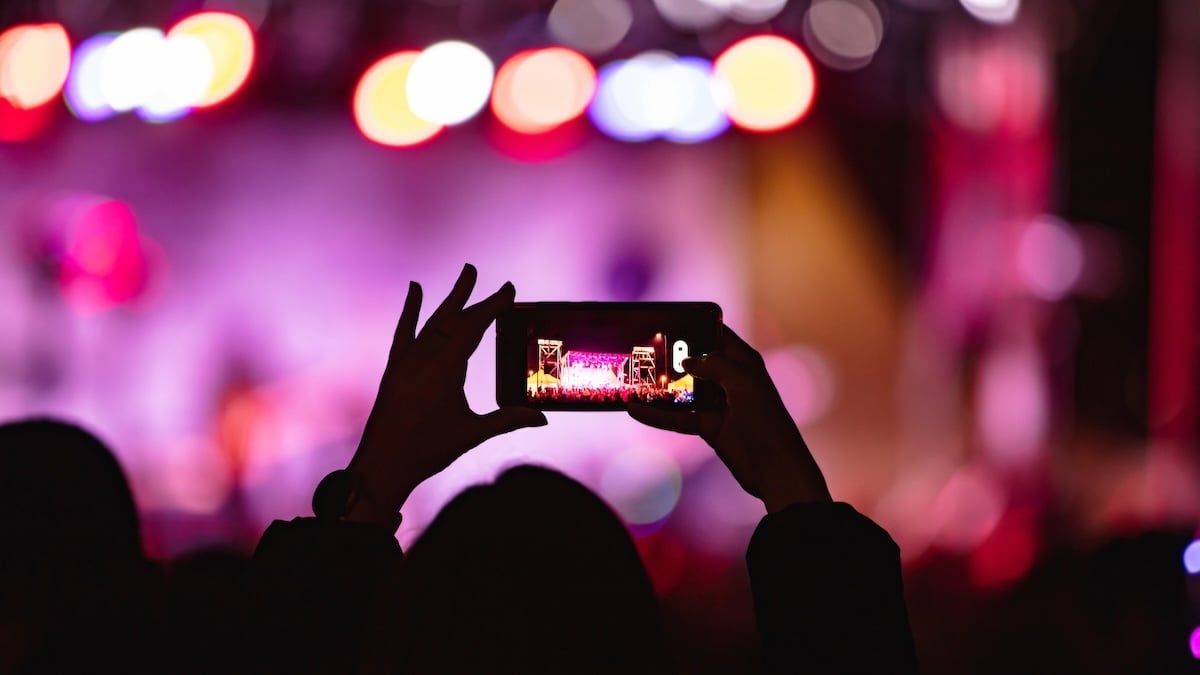


Chances are, there are thousands of photos on your phone right now – and you probably never look at them.
Selfies at parties. Brunch spreads, carefully staged for Instagram. Your cat sleeping in slightly different positions. Sunsets, supermoons, and travel snaps.
One of the main reasons people take photos is to help us remember an experience or event. But it turns out that stopping to snap a selfie could actually hinder your memory of something.
It sounds counterintuitive – surely it’s easier to recall something more vividly with the help of a visual cue, right? But a growing body of research keeps finding that this isn’t the case.
A new study, published in the journal Memory & Cognition, adds more evidence, showing that taking screenshots consistently impaired participants’ memory across seven different experiments.
“The results of the current study suggest that we are likely harming our memory for information and experiences with the press of a button, and that this impairment may even extend beyond what is captured,” says Sophia Fabrizio, a psychologist at Binghamton University.
The idea that taking photos reduces our ability to remember is not new – the effect has shown up in research for decades. But exactly why the so-called ‘photo-taking impairment effect’ occurs remains unclear.
Scientists have proposed a few potential explanations. One suggests that the act of using your camera or phone could be dividing your attention or disengaging you from what’s going on around you, so that your brain isn’t devoting as many resources to encoding the memory of the event itself.
The leading hypothesis, though, is what’s called cognitive offloading. Basically, your brain might dedicate less effort to remembering something if it knows that memory is already being stored in the form of a photograph.
Whether this is a conscious or unconscious decision doesn’t seem to matter.
It’s similar to what’s called the ‘Google effect‘ – why bother storing information in your brain when you can find it in seconds online? That’s why many of us don’t really memorize phone numbers anymore, instead consulting the contacts list saved on our phones.
To investigate these ideas, the Binghamton team tested 892 participants across seven experiments, teasing out different aspects of the phenomenon. In all experiments, however, the results were broadly the same.
Participants consistently performed worse on memory tests after snapping images.
In the first experiment, participants were shown 44 images of art on their phones, and asked to screenshot or simply view each one. After a 10-minute distraction task, participants were then given a memory test, in which they were asked to identify the original images they’d seen out of three similar variations of each.
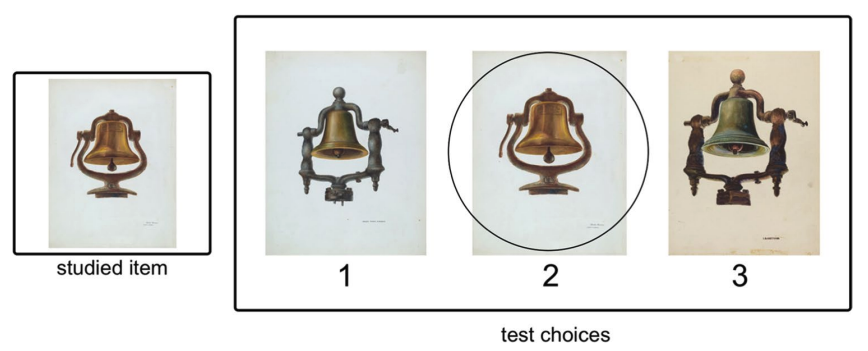
The participants performed consistently worse on images they’d screenshotted than images they’d just viewed.
The second experiment was designed to test if there was some kind of trade-off – a benefit that countered the memory deficit. This time, the researchers added a new question to the memory test phase at the end, asking participants if they recalled whether they’d viewed or screenshotted each image.
Again, participants remembered less about images they’d screenshotted than those they’d just viewed.
The next few batches of experiments were designed to see if maybe those cognitive resources were being used elsewhere. The scientists had participants perform math problems or memory tasks unrelated to the images.
However, there were few signs that participants who screenshotted images performed any better than those just viewing images.
In later experiments, the researchers explored what happened when participants were specifically told they were going to have a memory test of the images and would have a chance to review their screenshots.
Some participants were told they would be tested within 30 minutes; others were told they’d come back a month later for the memory test. In reality, however, both groups were tested 10 minutes after the image session.
The team’s hypothesis was that those who thought they’d have a bigger gap before the test would rely more on cognitive offloading than those who knew they were being tested straight away.
Intriguingly though, there was little difference between those groups. Instead, participants from both groups continued to demonstrate weaker memory for images they’d screenshotted compared to images they’d viewed.

“In sum, the present study suggests a pronounced memory impairment associated with screenshotting, with only modest benefits to subsequent learning observed under very circumscribed conditions and measures of memory performance,” the study authors conclude.
Related: Ghosts of ‘Forgotten’ Memories May Linger in The Brain, Study Suggests – And Could Even Be Restored
It’s a complicated area of research – after all, other studies have suggested that taking photos does aid your memory.
Either way, it’s enough to make you hesitate next time you reach for your phone to take a picture.
While few people probably miss memorizing phone numbers, the potential loss feels much more personal if getting too snap-happy means we’re harming our ability to remember life milestones like weddings, birthdays, and vacations.
The research was published in the journal Memory & Cognition.
This article was fact-checked by Rachel Garner and edited by Rebecca Dyer. While we pride ourselves on our process, we are only human. If you spot a mistake, please let us know.