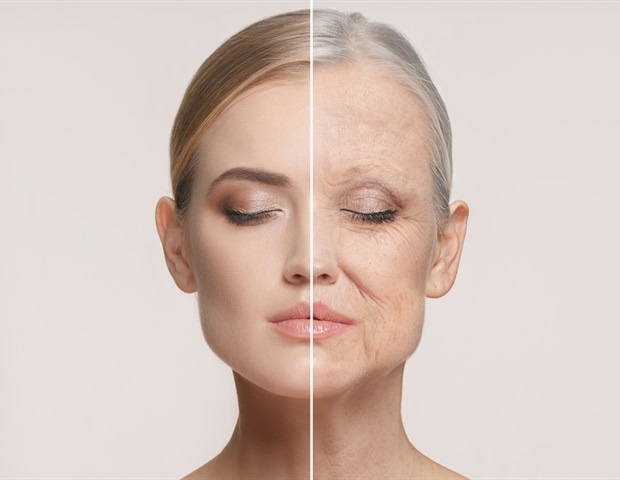




Why do older adults often report better emotional well-being despite facing more negative life events? A U.S. lifespan study examined how personality and present-moment awareness may help unravel this long-standing paradox.
Study: Dispositional mindfulness and neuroticism are associated with age differences in emotional well-being in a U.S. adult lifespan sample. Image Credit: WUT.ANUNAI / Shutterstock
A recent study published as an ‘Article in Press’ in the journal Scientific Reports examined whether personality traits and dispositional mindfulness mediate age differences in emotional well-being.
Older individuals generally have better emotional well-being than younger people, despite experiencing more negative events. Nevertheless, the psychological factors underlying this so-called well-being paradox remain poorly understood. Older adults perceive their future as more limited, shifting towards the present-moment focus. In contrast, younger people are more future-oriented and perceive that they have a substantial amount of time ahead of them.
Future-time orientation is associated with worry and anxiety, whereas present-time orientation is associated with better emotional well-being. People may better appreciate experiences and events with less negative bias when present-focused, as there are more positive and neutral experiences every day. Present-time orientation is also a major component of mindfulness, which involves paying attention in a particular way, purposely and non-judgmentally.
Studies suggest that dispositional mindfulness, i.e., the intrinsic tendency to be mindful in everyday life, is linked to better emotional well-being. It is also related to personality traits that are associated with better well-being. Prior research has not investigated personality traits alongside dispositional mindfulness. As such, it remains unclear whether dispositional mindfulness and personality traits independently account for age differences in emotional well-being.
About the study
In the present study, researchers evaluated whether personality traits and dispositional mindfulness account for age differences in emotional well-being. This study was part of a larger project in the United States (US) that enrolled a lifespan sample of adults, stratified into younger, middle-aged, and older adults. This study included participants with normal cognitive functioning, as indicated by a score ≥ 27 on the Mini-Mental State Examination.
Participants self-reported their demographic details, including age, race, gender, income, and education. Dispositional mindfulness was examined using the Mindfulness Attention Awareness Scale. The Big Five Inventory was used to measure personality traits, including agreeableness, openness, conscientiousness, extraversion, and neuroticism. Subjective happiness was assessed using the Subjective Happiness Scale. Mood was assessed using the Positive and Negative Affect Schedule.
Depressive symptoms were assessed using the Center for Epidemiologic Studies–Depression (CES-D) Scale. Anxiety symptoms and severity were measured using the seven-item Generalized Anxiety Disorder (GAD-7) Scale. Exploratory factor analyses were performed separately on the negative and positive indicators of emotional well-being. The researchers treated these as related but distinct dimensions that can occur simultaneously. Positive well-being measures included life satisfaction, subjective happiness, and positive affect.
Negative well-being measures included the GAD and CES-D scales, as well as negative affect. In addition, parallel mediation analyses were conducted to assess the relationship of age with emotional well-being via the Big Five traits and dispositional mindfulness. Analyses were controlled for gender, race, mindfulness practice experience, education, and family income.
Findings
The study included 129 participants with a mean age of 51.3 years. The sample comprised 47 older individuals, 40 younger adults, and 42 middle-aged persons. Most participants were female (67%), White (81%), and had post-secondary education (95%). Older age was correlated with higher agreeableness, dispositional mindfulness, conscientiousness, openness, and positive emotional well-being, and with lower neuroticism and negative emotional well-being.
Moreover, dispositional mindfulness was linked to lower negative emotional well-being and neuroticism, and to higher positive emotional well-being, agreeableness, conscientiousness, and openness. Meanwhile, extraversion, conscientiousness, and agreeableness were associated with lower levels of negative and higher levels of positive emotional well-being.
Further, higher neuroticism was associated with greater negative but lower positive emotional well-being, whereas openness was associated with higher positive emotional well-being. Notably, age was indirectly associated with positive emotional well-being via neuroticism. Specifically, older age was linked to lower neuroticism, which, in turn, was associated with higher positive well-being. Age was also directly associated with positive emotional well-being.
Furthermore, age was indirectly associated with negative emotional well-being via neuroticism, agreeableness, and dispositional mindfulness. In particular, older age was linked to higher dispositional mindfulness and lower neuroticism, which were, in turn, associated with reduced negative emotional well-being. Older age was also associated with higher agreeableness, which was associated with increased negative emotional well-being. However, the researchers cautioned that this counterintuitive finding about agreeableness likely reflected a statistical suppression effect, as agreeableness was correlated with lower negative emotional well-being before the other mediators were considered. Overall, neuroticism was the only personality trait that reliably and uniquely statistically accounted for age differences in emotional well-being.
Conclusions
The researchers cautioned that the cross-sectional design cannot determine whether the observed associations reflect developmental changes with age or generational differences, nor can it establish the temporal relationships among mindfulness, personality, and emotional well-being. The relatively small, predominantly White and female sample came from one US region; all measures were self-reported, and only one measure of dispositional mindfulness was used, limiting the generalizability of the findings.
In summary, older age was associated with higher dispositional mindfulness and better emotional well-being. Dispositional mindfulness statistically mediated the association of age with negative, but not positive, emotional well-being. Older age was associated with lower neuroticism, which statistically mediated the association between age and both positive and negative emotional well-being. These results suggest that neuroticism and dispositional mindfulness may uniquely contribute to the well-being paradox.
Journal reference:
- Lin M, Ramírez-Esparza N, Shook NJ (2026). Dispositional mindfulness and neuroticism are associated with age differences in emotional well-being in a U.S. adult lifespan sample. Scientific Reports. DOI: 10.1038/s41598-026-66024-z, https://www.nature.com/articles/s41598-026-66024-z