

In his 1985 book Origins of Life, the inventive British physicist Freeman Dyson imagined two distinct routes for that event. Either replication came first, he said, or metabolism did. That’s to say, the earliest proto-organisms first figured out either how to fuel themselves or how to copy themselves. The latter ability is needed for natural selection to get any purchase. Once there is the potential for copying errors that alter the replicator’s fitness (its rate of replication relative to the others in the population), the fittest gain the upper hand.
This seems like another chicken-and-egg problem at the beginning of life, like that adduced for the DNA–protein relationship: each of the pair can’t exist without the other. How, after all, can replicators make copies without something to power that process?
The origin of prebiotic replicators has traditionally been explored with reference to the RNA World, in which RNA molecules precede both DNA and proteins because they can act both as heritable stores of genetic information and as chemical catalysts. But it’s tough to see how RNA-based systems could give rise to metabolism, forcing us to suppose that RNA replicators must have been able to draw on some nonequilibrium energy source in their environment rather than having an autonomous metabolic cycle.
The notion of replicating single molecules as a kind of proto-organism never looked very convincing to me. But in the 1990s, the evolutionary biologists John Maynard Smith and Eörs Szathmáry argued that there are other kinds of chemical replicator, including autocatalytic cycles or networks: groups of molecules mutually able to catalyse one another’s formation.1 In the simplest case, A would catalyse the formation of B, and B catalyse the formation of A.
Such autocatalytic sets, postulated theoretically many decades ago by complexity theorist Stuart Kauffman, look like metabolic cycles, which are also series of catalytic reactions that return the system to its initial configuration, supplying work and dissipating energy in the process. Indeed, Kauffman, evolutionary biologist Bill Martin, and their collaborators have argued that autocatalytic chemical networks sit at the very origin of prebiotic metabolism.2
A problem of inheritance
So autocatalytic networks look like pretty good candidates for the simplest and earliest chemical systems displaying key features of living organisms: they can replicate and metabolise. Here’s the catch though: it’s not clear how they could display heredity: the ability to pass on information to progeny that might undergo mutation and selection. Without that, Szathmáry has pointed out, the potential for such systems to evolve is low. It’s not that autocatalytic networks can’t replicate with errors (mutations); the problem is more subtle. In 1990 Szathmáry showed that autocatalytic networks become more stable with large numbers of components – except that this increase in size creates more side reactions which will undermine their operation.3 Small networks, meanwhile, have few variations: they would be evolutionary dead ends.
So things didn’t look too good for any notion that autocatalytic networks could provide evolvable prebiotic systems before nucleic acids came along as information carriers for heredity. Not, that is, until now. Szathmáry and his coworkers have described a theoretical model system of replicating autocatalytic networks that can preserve and pass on differences stored not in DNA or RNA but in stable chemical states.4
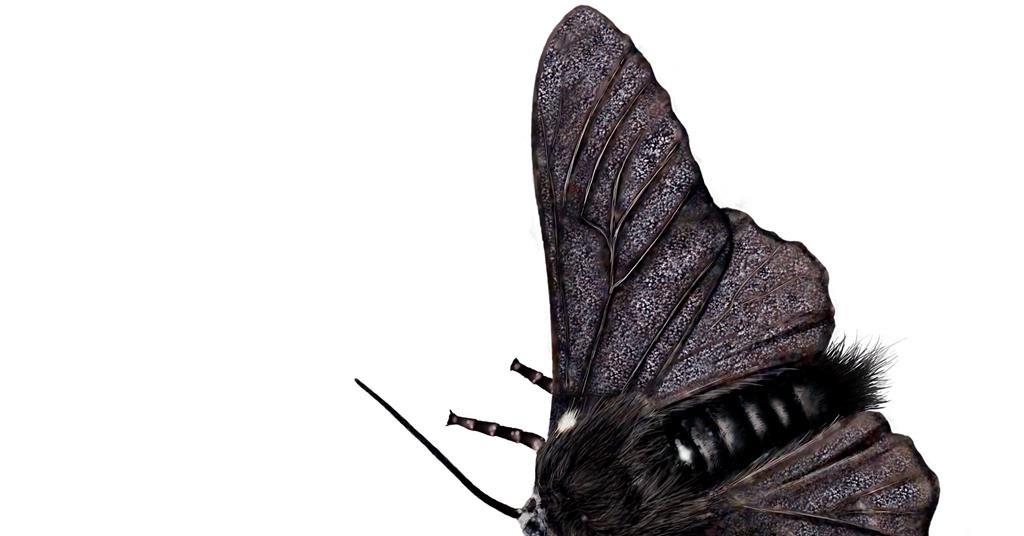
They imagine two such networks, each with their own stable ‘attractor’ state (think of it as a kind of phenotype), that interact by weak cross-catalysis. The researchers imagine these as echoing the famous case of peppered moths, which had a predominantly light- and dark-coloured phenotype. The light moths dominated in England until the Industrial Revolution, when soot pollution gave the dark moths an adaptive advantage. By the end of the 19th century, they were the most common variant – until the Clean Air Act reduced the pollution and the situation reverted.
The researchers have shown that, if the molecules in the networks are marshalled into lipid compartments, they will segregate into two types of protocell with different networks, which can replicate through autocatalysis. The proportions of these two types of compartment can shift, as with the moths, in response to changes in the environment. What’s more, new attractor states can arise by chance when the compartments divide, and can spread if they grow at a faster rate. Inheritance, then, is not encoded in some molecule, but is ‘collective, attractor-based, and chemical’.
This scheme, say the researchers, ‘provides a possible route to Darwinian-like adaptation before modern genetic molecules appeared.’ Better still, it is one we might imagine synthesising experimentally. In fact, something like that has already been made from aqueous droplets in an emulsion that host the cyclic formose reaction through which sugars are formed from formaldehyde.5 Let’s get evolving!