


The immune system of a honeybee extends well beyond the individual.
Each beehive is a marvel of insect architecture, and a new study published in ISME Communications shows just how sophisticated they are when it comes to protecting the colony from lethal outbreaks.
“The success of social insects relies on dense colony living, but these conditions also favor pathogen transmission,” writes microbiologist Kenya Fernandes and her colleagues at the University of Sydney and the New South Wales Department of Primary Industries in Australia.
“Colonies mitigate this risk through social immunity, a coordinated system of behavioral, chemical, and immunological defenses.”
The antimicrobial properties of honey, beeswax, and propolis (a special resin made by bees) in isolation are well-known.
But until now, we hadn’t fully grasped how their spatial organization in a hive – in tandem with other immune defense strategies – adds to the colony’s security against pathogens like fungi and bacteria.
The new study found layers of immune defense are built into the colony, from the hive entrance, to the brood comb, to each bee’s own guts.
“As we travel closer to the hive center, the antimicrobial defenses become more targeted, with wax comb, stored pollen and the bees’ own bodies helping to filter out harmful bacteria and fungi, while encouraging helpful species,” Fernandes explains.
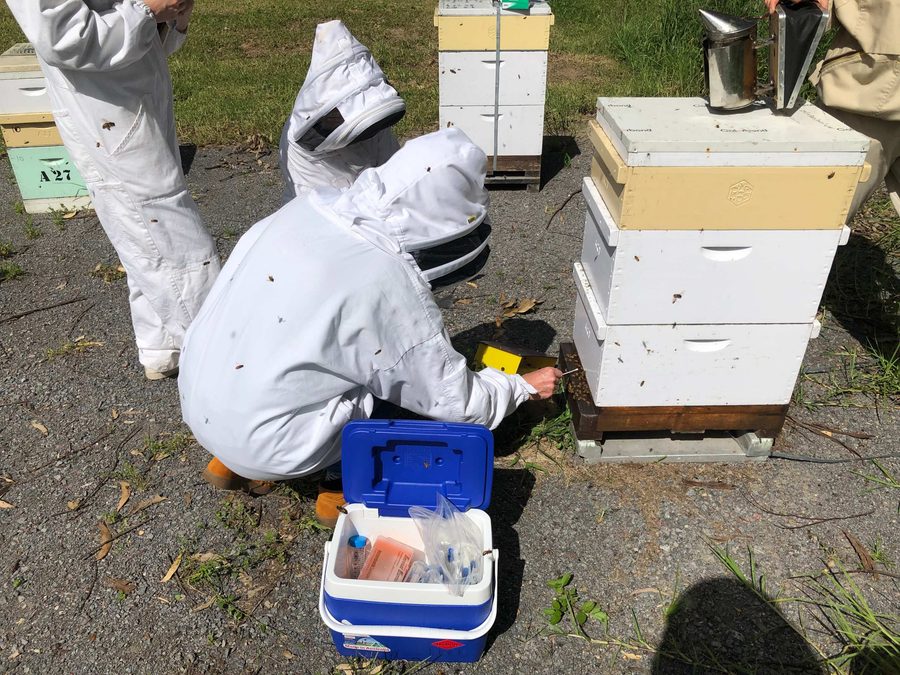
She and her team collected samples from the hives of 24 different European honeybee (Apis mellifera) colonies based at five different apiaries in New South Wales, Australia.
Across the hives, the scientists tested the antimicrobial and chemical contents of honey, propolis, wax, and pollen, as well as the microbiomes of the hive entrance, pollen, brood combs, and the guts of forager bees.
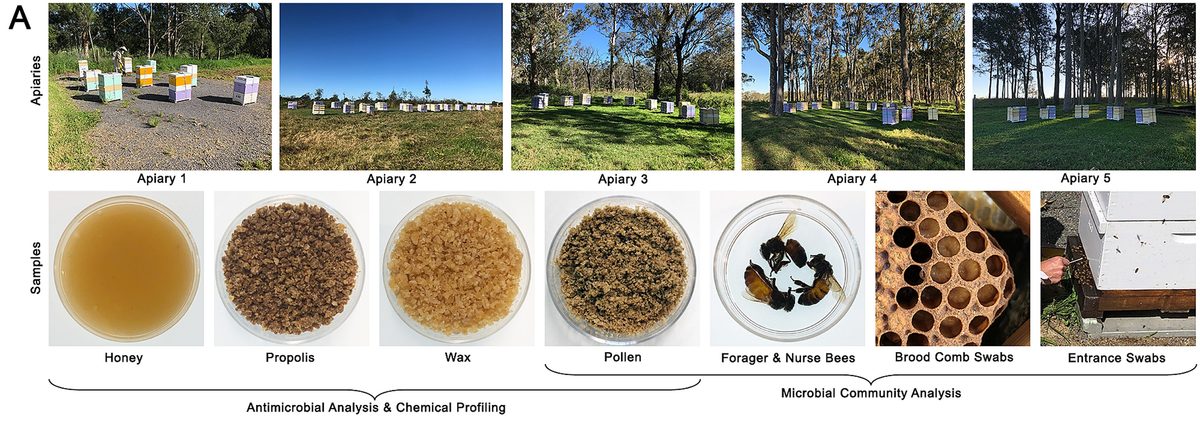
“Microbial communities, antimicrobial activity, and chemical composition vary predictably across hive compartments, forming a gradient from internal bee tissues to environmentally exposed hive surfaces,” the team writes.
“These gradients are functionally coherent: compartments facing concentrated pathogen pressure, such as bee-associated tissues, exhibit more targeted activity against bacterial hive pathogens, whereas environmentally exposed materials, such as propolis, display broader, diffuse antimicrobial profiles.”
Hives were most strongly fortified against the bacterial pathogens Paenibacillus larvae and Paenibacillus alvei, which makes sense given infection with these bacteria can completely decimate a colony.
The kinds of flowers available locally had a particular influence on the chemical defenses available to a colony.
Defenses against fungal infections, on the other hand, were a bit less structured and weaker overall. That might be because not many fungi are actually lethal to bees: many are beneficial, and even some of the pathogenic strains are pretty tolerable.
The bacteria associated with each layer of the colony were distinct, even though bees likely bring in microbes from flowers all the time, which suggests the hive actively filters which microbes settle where.
Stressed colonies seemed to be a bit more disorganized in this regard.
The immune ‘strength’ of each colony varied depending on the location of the apiaries, hive health, and pest exposure (e.g. small hive beetles), which suggests their defense systems are quite sensitive to environmental differences.
“This shows healthy hives depend on and are influenced by healthy ecosystems,” says co-author Elizabeth Frost, a bee specialist with the NSW Department of Primary Industries.
“Land clearing and intensive farming could be quietly eroding the bees’ natural defenses. This builds a strong case for protecting diverse flowering habitats that support healthy hives.”
The research has been published in ISME Communications.
This article was fact-checked by Fiona MacDonald and edited by Fiona MacDonald. While we pride ourselves on our process, we are only human. If you spot a mistake, please let us know.


