Global food prices have been trending upwards for 20 years, thanks to climate change. This year brings additional strains.
“It’s a triple whammy of high fertilizer costs, high energy costs, and now massive droughts across the tropics,” says Berkeley Earth climatologist Zeke Hausfather, who is watching the situation unfold. “It’s not a great story.” The El Niño is one phase of a natural climate pattern called the El Niño–Southern Oscillation, which has a dramatic impact on global rainfall patterns. El Niño years are marked by unusually warm waters in the tropical Pacific, which weaken winds across that patch and alter global patterns of rising and falling air pressure. The results are complicated and variable, but they tend to bring dry conditions to some tropical areas — including the Amazon and parts of Australia and Africa — and rain to other places, including Florida. The other side of the oscillation, La Niña, is marked by cooler ocean temperatures and a different pattern of wet and dry. The planet swings between the two in irregular intervals of years, sometimes with neutral periods in between.
Both sides of this cycle can harm crops, though one prominent 2014 study found that El Niño affects a larger swath of the globe’s harvested land. While some places get more water, and some crops thrive, in many spots drought withers production. That same study found that an El Niño tends to improve global soybean production by up to 5 percent but suppresses maize, rice, and wheat by up to 4 percent. The numbers in any one country can be much more dramatic than that: Since 1980, South Africa’s maize output, for example, has averaged about 28 percent below normal during El Niño years.
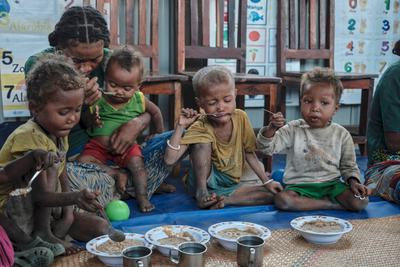
Children are treated for malnutrition in Ifotaka, Madagascar. Drought, fueled by El Niño, is expected to worsen food shortages.
Razafindrakoto Mamy Nirina / AFP via Getty Images
Cereal disruptions, even if small, can hit hard if they come on top of other economic strains, says Stanford agricultural economist David Lobell. “When markets are tight, then if there’s a drought somewhere, that’s a much bigger deal.”
And the markets are, indeed, tight. Global average food prices have been trending upwards for about 20 years, says Lobell, thanks to climate blows stacking on top of each other. And this year has brought additional strains. When the U.S. and Israel launched an attack on Iran at the end of February, marine traffic through the Strait of Hormuz ground to a near halt for months. The transport of oil was choked, energy prices spiked, and the supply of fertilizer, which is most often made with hydrogen sourced from cheap natural gas, was severely pinched: The Middle East usually produces a quarter of the world’s fertilizer. Meanwhile, the ongoing war in Ukraine continues to play havoc with the cost of fuel and restrict the transport of wheat from a major hub on the Black Sea.
As of October, the warming in the mid-tropical Pacific that’s used to measure the strength of an El Niño hit 3.5 degrees C — breaking the previous record of about 2.75 degrees C — and is on its way to an unprecedented peak of around 4 degrees C, according to Hausfather. “That’s scary,” he says. Broadly speaking, he says, the more powerful the El Niño, the more powerful its effects on weather events, including droughts.
In northern Sudan, rainfall totals have been less than half of normal, which is expected to take a toll on both crops and livestock.
Unusually, this year’s El Niño is the third “strong” El Niño event to hit within a relatively short span of 11 years, which means some areas have been hit repeatedly with drought. The higher-than-usual frequency of El Niños may itself be caused by climate change, some researchers have suggested — though this is still an area of hot debate, Hausfather says.
All these factors act together, with cascading impacts that can take months to develop and last for years. “The confluence of drought and conflict drives some of the worst outcomes we see,” says Richard Choularton, director of climate and resilience for the World Food Programme in Rome. A farmer can’t afford fertilizer; then his fields face drought. In anticipation of a bad year, he plants less and hires fewer people. The river used to transport his crop dries up, and the port that takes it overseas has been bombed out of commission. His cows have little to eat. A year later, he can’t afford to buy groceries or fuel his farming equipment. The lack of rain allows seawater to seep into aquifers, so fresh water gets rationed. Hydropower plants sputter. And on it goes.
While any year brings its own spates of bad weather — some of it random, and some made more likely by the pressures of climate change — plenty of events this year have been attributed to the El Niño. Among the first to be hit was the Peruvian anchovy fishery, which was closed dramatically early this year to give anchovies a fighting chance in the face of warm waters and less plankton, one of their main food sources. This industry, typically worth between $2 billion and $3 billion, is a huge contributor to global feed for livestock and aquaculture. As of September, global fishmeal output was about half what it was the year before; fishmeal prices have spiked, with some European salmon farmers turning to cheaper chicken byproducts.
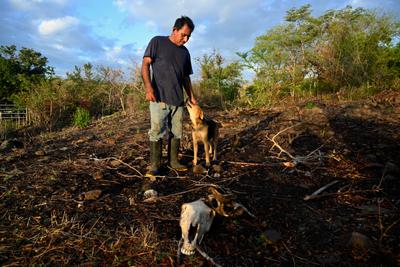
Farmer Darwin Cruz in Los Piches, Honduras, where animals are dying amid one of the worst droughts in decades.
Orlando Sierra / AFP via Getty Images
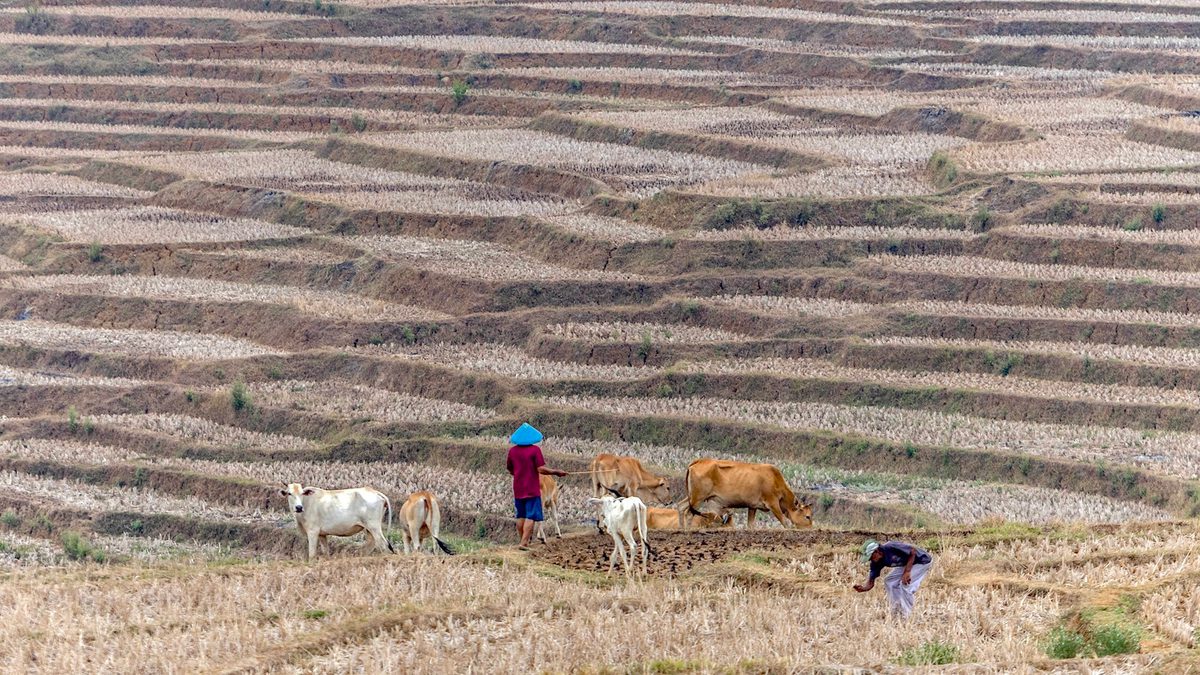
In Indonesia, palm oil mills stopped buying fruit from farmers because an ongoing drought shriveled the area’s main transportation artery, the Kapuas River. In Cambodia, a delayed rainy season is drying out rice fields. Panama has declared a national state of emergency (as it did for the 2023 and 2015 El Niños), and the Panama Canal is carrying less ship traffic and transporting less food in the face of dwindling rainfall. In northern Sudan, rainfall totals have been less than half of normal, which is expected to take a toll on both crops and livestock from March to August next year. El Niño-induced drought alongside record summer temperatures in Central America has eaten away at crop yields and threatens that region’s second planting cycle: The E.U.’s Joint Research Centre projects an 83 percent spike in people suffering from acute food insecurity in that area.
Perhaps surprisingly, the global food production outlook for this growing season isn’t as bad as one might think: The Famine Early Warning Systems Network (FEWS NET) notes that the USDA projects worldwide production of maize, wheat, and rice for 2026-2027 to be just 2.7 percent below the previous year’s production, which will still make it the second largest annual crop on record. “Globally, food supply is not of high concern,” says FEWS NET advisor Amy Ostrander. “The concerns are production changes in some specific regions, such as Southern Africa, and food access.” Even if sufficient crops are harvested in those regions, in other words, some food won’t make it to market and some people won’t be able to afford it.
An analysis by the United Nations Food and Agriculture Organization concludes that the highest risks from El Niño-prompted droughts will be in the Sahel, Southern Africa, South and Southeast Asia, and in Central America’s Dry Corridor and the Caribbean.
While 2026 is warm, “2027 is going to be the record-shattering year,” says a climate scientist.
One good thing about an El Niño is that meteorologists can see it coming almost a year in advance, unlike freak weather events, which are harder to forecast. This gives agencies a fighting chance to protect people by distributing drought-resistant seeds, for example, securing deals for future emergency food supplies and transport, or setting up income assistance for struggling farmers.
The World Food Programme first tested its forecast-based financing program in Zimbabwe during the 2015 El Niño: Delivering cash to families in one district facing drought helped them to sustain their quantity and quality of food, while a neighboring district that didn’t receive cash aid saw a massive drop. This year, the WFP has been delivering cash and other assistance, including, for example, more than 3,000 airtight silos for farmers in Guatemala to help them safely store grain. As of October, the program says it has reached 28 million people across 15 countries with early warning information and assistance.
Cash is strapped for such programs, though. Funds for global aid were down 30 percent in 2025 from their 2022 peak and are still falling, making it hard for the WFP and others to do their work. In Somalia, the WFP helped 10 million people during a drought in 2022; today, in the face of similar conditions, says Choularton, they can afford to reach less than a million.
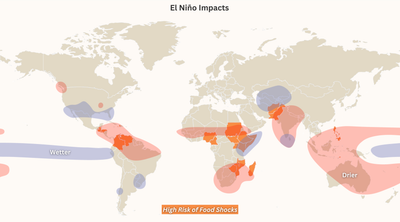
El Niño is fueling both drought and floods, leaving vulnerable countries at risk of food shortages. Sources: Food and Agriculture Organization / World Food Programme / Columbia Climate School.
Yale Environment 360 / Made with Flourish
Advanced warning is good, says Lobell, but challenges will still abound, and even harder times may lie ahead as El Niños pile on top of climate change. The peaks of strong El Niños are almost always followed by record-breaking years for the global average temperature. The anomalously hot years of 1998, 2016, and 2024 (the current record holder) all followed hot on the heels of El Niño peaks the year before. While 2026 is warm, “2027 is going to be the record-shattering year,” says Hausfather.
Global warming, of course, also has impacts on food supply. Last year, Lobell published a paper showing that total wheat, barley, maize, rice, and soybean yields are now altogether about 5 percent lower overall than they would have been in a world without climate change. “To a lot of people that sounds like a small number. But the kind of shocks that we talk about can be far smaller than that,” he says. “It doesn’t take much of a supply shift to have an important effect on people’s lives.”
Because the specific places that get warmer and drier during El Niños are different from the specific places that get warmer and drier from climate change, researchers caution that what we see in 2026 won’t be a precise forerunner of things to come. But how we deal with this temporary challenge does say something about the resilience of our food systems, says Lobell, and it will reveal how we might cope in the future with other climate disruptions to crops. “That’s one of the big questions,” he says. “How much can you adapt when the conditions are bad?”