


If you close your eyes and cover your ears, it can feel like most of the world has disappeared – yet you yourself remain completely present, in your own head.
This awareness of your own experience is considered one of the fundamental components of whatever it is that makes us human – what it means to be a conscious being, rather than an organism driven by pure reaction.
One of humanity’s deepest unanswered questions is: Where does this consciousness come from? How did it evolve? And how many other beings on this world of ours share a similar awareness of their individual experience of living?
Traditionally, neuroscience views the cerebral cortex – the folded, squishy outer layer of the brain – as the so-called “seat of consciousness“, from which our subjective experience of the world is thought to arise.
But what if the true origin of consciousness lies somewhere far deeper and older?
That question forms the basis of a new paper by neuroscientists Marshall Devor of the Hebrew University of Jerusalem and Mark Baron of Harvard Medical School, who argue that we may have been looking for the human sense of self in the wrong place.
And if consciousness arises in the brainstem, as their argument suggests, then maybe its origins are not quite so human after all.
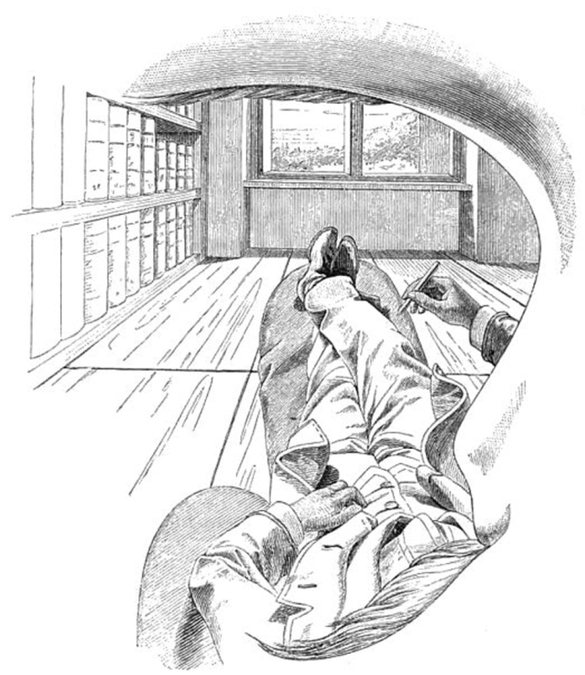
The cerebral cortex plays an undeniably crucial role in the way we experience the world. It’s where the brain processes a great deal of the sensory information our senses are constantly gathering, helping us make sense of the world around us.
But processing information and consciously experiencing it are not the same thing – after all, our senses take in far more information than we can possibly experience.
According to Devor and Baron, the cerebral cortex may not be where the experience part begins.
One of the major clues, they argue, is pain.
Imagine you have touched a hot stovetop. Even before you may be consciously aware of it, your nervous system has detected the searing heat, and you have snatched your hand away. Only then may you start to feel the sting alerting you to a burn wound.
There’s a very clear distinction between detecting harm and feeling pain; the first is nociception, and it can be objectively gauged. Feeling the pain, on the other hand, is very much a subjective experience – and its origin in the brain is an open question.
Senses such as hearing, vision, or olfaction have well-defined processing regions in the cerebral cortex. Pain does not, which Devor and Baron argue hints at a more basal origin.
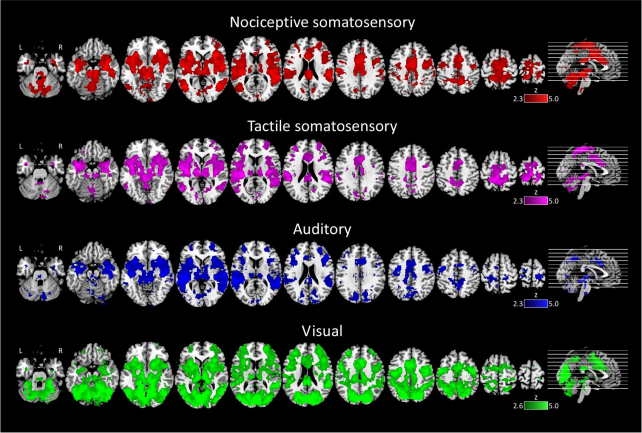
There’s another strange difference between pain and other sensory experiences, too.
When scientists stimulate the parts of the cerebral cortex associated with senses, they can reproduce sensory experiences – phantom flashing lights and sounds, for example, where no lights or sounds exist.
But such stimulation rarely produces pain – even in regions of the brain normally involved in processing it.
This raises the possibility, the researchers say, that while the cerebral cortex processes information regarding pain, the actual experience of pain arises from elsewhere.
And that elsewhere, they believe, could be the brainstem – the stalk-like structure at the base of the brain that connects the cerebrum to the spinal cord.
This is one of the most evolutionarily ancient parts of the vertebrate brain, with an architecture shared across a large swath of the vertebrate world. Long before the elaborate cerebral cortex evolved, early versions of the brainstem were helping animals regulate their essential functions.
Today, the brainstem helps regulate processes such as breathing, heart rate, and sleep cycles. And brainstem damage is bad news – it can cause a person to lose consciousness or slip into a coma, even when the cerebral cortex remains mostly intact.
Traditionally, this has been interpreted as evidence that the brainstem helps keep us conscious, rather than being the source of consciousness itself.
In earlier work from Devor’s lab, scientists injected tiny amounts of anesthetic drugs into a particular region of the brainstem in rats, causing them to become profoundly unresponsive – a state similar to general anesthesia, despite the remarkably small doses involved.
It’s a compelling demonstration of the role the brainstem plays in keeping us awake, but Devor and Baron argue that its role may be much more fundamental.
Some of the most intriguing evidence, they propose, comes from people and animals whose cerebral cortices have been severely damaged, or are largely absent.
In rare cases, children born with a condition called hydranencephaly, in which much of the cerebral part of the brain is missing, have displayed behaviors suggesting some degree of awareness.
They may respond to familiar people, show preferences, and react to the world in ways consistent with joy or pain.
Similarly, experiments involving animals whose cerebral cortices have been surgically removed have revealed that some can still display surprisingly complex behaviors, including responses to pain that suggest an emotional component.
None of this proves that these individuals or animals are consciously experiencing the world. Behavior alone cannot establish subjective experience.
But it raises the possibility that at least some rudimentary form of awareness can exist without the elaborate cortical machinery traditionally associated with consciousness.
Devor and Baron suggest that both parts of the brain contribute to conscious experience. In their model, the brainstem provides the fundamental experience of being conscious, while the cerebral cortex processes the information that fills that experience.
“The brainstem computation that we envision is strictly biological and a relatively simple, ‘primitive’ one,” they write in their paper.
“What it provides is a kind of ‘flavor’ to the complex, nonconscious computations carried out mostly in the cerebral cortex, a ‘presence,’ a subjective ‘feel,’ like color added to a grayscale image.”
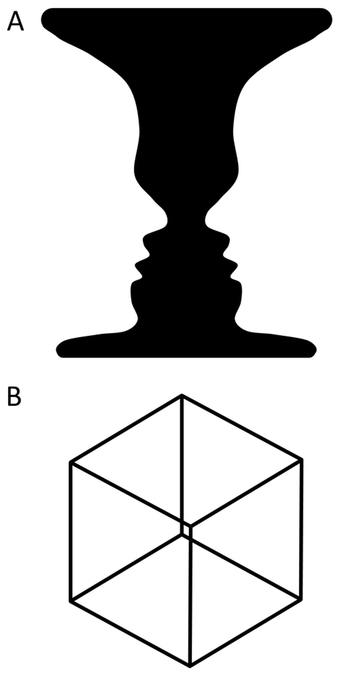
The cortex allows us to interpret our surroundings, draw on memories, imagine possibilities, and reflect on our own thoughts. But the underlying sensation of being someone who experiences these things, the researchers suggest, may originate much deeper in the brain.
That inevitably leads to the idea that, if the foundations of consciousness lie in such an ancient part of the brain, then the capacity for subjective experience may be far more widespread throughout the animal kingdom than we once imagined.
But that doesn’t mean other animals necessarily experience the world in the same way that humans do.
Our elaborate cerebral cortex may build upon those ancient foundations to produce something richer and more complex – a conscious experience that is more than the sum of its computational parts.
The research has been published in The Neuroscientist.
This article was fact-checked by Rebecca Dyer and edited by Rebecca Dyer. While we pride ourselves on our process, we are only human. If you spot a mistake, please let us know.


