








A popular drug that is commonly used for hair loss may also help someone grow a thicker beard or mustache.
Minoxidil was first developed as an oral medication for high blood pressure in the 1970s, yet, unexpectedly, the drug also appeared to stimulate hair growth.
In 1988, a topical version was approved by the US Food and Drug Administration (FDA) for treating male-pattern hair loss, marketed as Rogaine.
A few years later, the treatment was approved for female pattern hair loss, too.
For years now, patients and physicians alike have wondered: If Rogaine stimulates hair growth on the scalp, could it also work ‘off-label’ for facial hair, too?
A recent randomized, double-blind, placebo-controlled trial among transgender men now suggests the answer is yes.
The findings join a previous study among cisgender men, published in 2016, which was the first to show that topical 3 percent minoxidil can improve beard growth compared to a placebo.
The results also support a number of case studies and a growing online community that advocates for minoxidil as a possible way to make facial hair fuller and thicker.
The recent experiments were conducted at Mahidol University in Bangkok, Thailand, and provide some of the best evidence yet that minoxidil works safely on the face in a similar way to the scalp.
The findings are published in The Journal of Dermatological Treatment.
For the trial, 34 participants receiving gender affirming hormone therapy were randomized to use topical minoxidil (3 percent) twice daily on their faces for 12 weeks, while another 35 participants used a placebo.
At 8 weeks, those taking minoxidil had denser, thicker facial hair than the placebo group.
At 12 weeks, the minoxidil group showed a roughly 17 percent increase in mustache density and a 15 percent increase in beard density from baseline.
Many participants also reported greater quality of life and higher satisfaction scores.
Side effects like itching, red skin, and flakiness were minimal, and no serious adverse events were reported.
What’s more, the blood pressure of participants remained stable throughout.
“Topical 3 percent minoxidil represents an effective, safe, and well-tolerated adjunctive treatment for facial hair enhancement in transgender men receiving gender-affirming hormone therapy,” conclude the authors of the study, led by dermatologist Kantarat Wattanawinitchai.
“The excellent safety profile observed is reassuring, particularly given theoretical concerns about systemic absorption.”
After all, minoxidil is a known blood vessel dilator, and if enough of the drug is absorbed, it could theoretically cause dizziness, low blood pressure, rapid heartbeat, or palpitations.
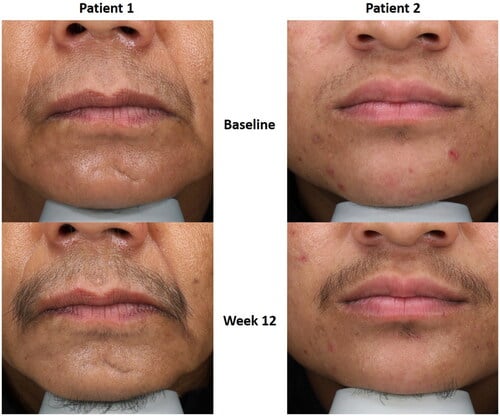
(Wattanawinitchai et al., Journal of Dermatological Treatment, 2026)
The current research is based on transgender men, so it is unclear if the results also apply to other groups.
It’s possible, for instance, that ongoing testosterone therapy produces a synergistic effect with minoxidil, leading to greater hair growth over a shorter time period.
But there are several other intriguing case studies that suggest minoxidil could work for the facial hair of cisgender men, too.
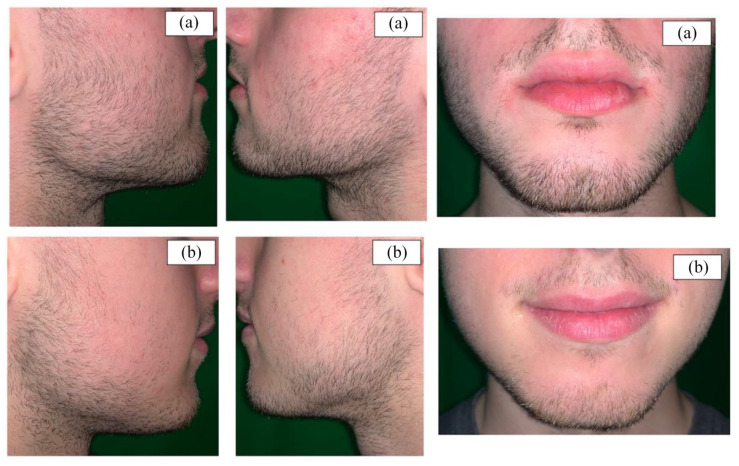
One of the most compelling reports is of two male identical twins, one of whom used topical 5% minoxidil for over a year on the beard and mustache area.
Compared to the twin who didn’t use the drug, the one who did showed greater hair count and density in both the beard and mustache areas after 16 months.
Research is still in the early stages, and topical minoxidil is not yet approved by the US FDA for facial hair in any group.
That said, the drug is sometimes recommended off-label for certain patients.
Based on these results, researchers in Thailand argue that “minoxidil should be considered as a first-line adjunctive treatment for transgender men who experience incomplete or unsatisfactory facial hair development despite adequate testosterone therapy.”
“Despite the masculinizing effects of testosterone therapy, facial hair development often remains incomplete or unsatisfactory for many transgender men,” the research team explains.
“This discrepancy between expectation and outcome can perpetuate gender dysphoria and negatively impact quality of life.
For others, the benefits are less certain.
The American Academy of Dermatology warns that before trying minoxidil to enhance facial hair, it is wise to consult a dermatologist.
“When people use minoxidil to help them grow hair on their face, a common side effect is raw, irritated skin,” the site explains.
“A dermatologist can offer you treatment options for growing facial hair.”
The research has been published in The Journal of Dermatological Treatment.
This article was fact-checked by Rebecca Dyer and edited by Rebecca Dyer. While we pride ourselves on our process, we are only human. If you spot a mistake, please let us know.


