

Dark Mode Light Mode
New “Central Dogma of Aging” Highlights the Complexity of Getting Older
The Uterus May Have an Overlooked Microbiome, And It Could Affect Pregnancy
Chemistry, medicine, materials and the technology shaping tomorrow — the best science stories from trusted sources, every day.

The Uterus May Have an Overlooked Microbiome, And It Could Affect Pregnancy

The Uterus May Have an Overlooked Microbiome, And It Could Affect Pregnancy The Uterus May Have an Overlooked Microbiome, And It Could Affect Pregnancy


We humans would be mere shells of ourselves were it not for the trillions of microbes that live in or on our bodies.

Bacteria, viruses, fungi, and archaea are a crucial part of our eyes, mouths, guts, lungs, and vaginas.

But for more than a century, the uterus – the place where we all once came from – was thought to be a fairly sterile environment, free of most microbes.

Perhaps that isn’t quite right after all.

From the moment a human embryo embeds itself in the lining of the uterus, recent research suggests that bacteria have a role to play in our survival.

While the idea is contentious, the findings, published in Human Reproduction, suggest that microbes may be shaping our future even before birth.

The existence of a stable uterine microbiome remains unproven. Some are skeptical, for instance, that a fetus could grow safely if microbes were present in the womb.

But growing evidence suggests that bacteria may still sneak into this part of the body and possibly impact fertility.

For this recent study, researchers from Trinity College Dublin in Ireland analyzed a group of 29 women with unexplained infertility.

They found evidence that bacteria within the lining of their uteruses may help determine whether pregnancy from assisted reproductive technologies (ART), such as in vitro fertilization (IVF), is successful.

Compared to women who achieved pregnancy, those who had unsuccessful ART outcomes showed a more diverse uterine microbiome.

“While the research was conducted in a relatively small patient cohort and further studies are needed, the results highlight the potential importance of considering both the endometrial microbiome and inflammation when evaluating fertility,” says senior author and immunologist Cliona O’Farrelly.
The Uterus May Have an Overlooked Microbiome, And It Could Affect Pregnancy
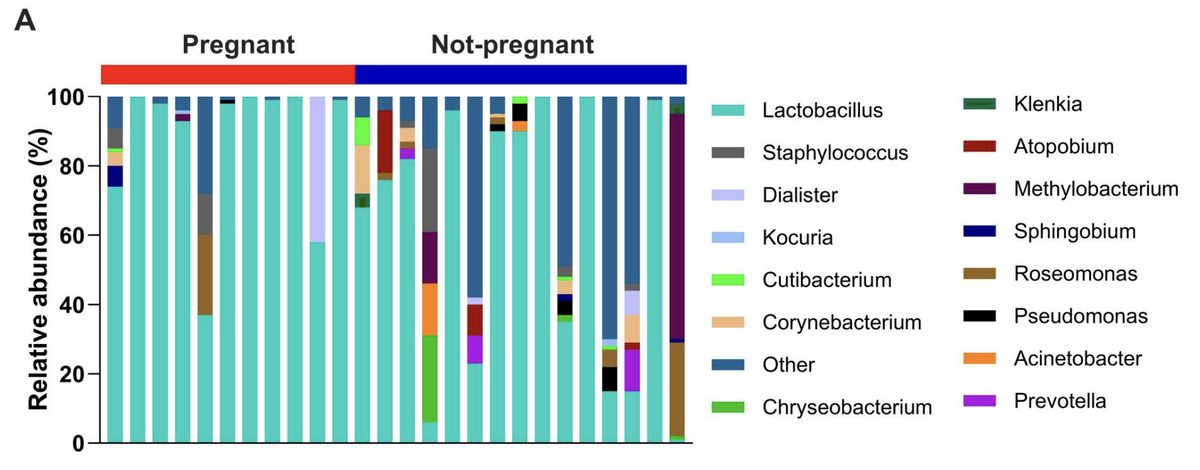
The relative abundance of bacteria detected in endometrial samples from women who became pregnant (left) and those who did not (right) following assisted reproductive treatment. Women who did not become pregnant generally had fewer Lactobacillus bacteria (turquoise) and a more diverse bacterial profile. (Giangrazi et al., Human Reproduction, 2026)

For the research, samples of endometrial tissue were taken directly from patients before ART treatment, but researchers did not culture living bacteria from those samples. They instead relied on bacterial DNA sequencing, which is less direct.

In the last decade or so, DNA sequencing studies have found suspicious traces of some microbes hiding within the uterus.

But not all experts are convinced that this organ has a resident microbiome, even when direct samples of the uterine wall are removed and sequenced in the lab.

Skeptics argue, for instance, that there are issues of contamination that are not being accounted for.

While there is not yet an established consensus surrounding the uterine microbiome, some researchers have begun linking differences in endometrial bacterial profiles to IVF outcomes.

They argue that the endometrial microbiome may have an impact on human conception.

This research from Ireland adds further evidence to the mix.

It finds that women who did not have a successful outcome from ART appeared to have fewer signs of Lactobacillus bacteria and higher levels of other bacterial species in their uterine samples.

These findings are similar to previous research, although they come with a major caveat: It is possible these microbes may have contaminated the uterine samples from the vaginal microbiome.

In other words, Lactobacillus may not be a typical resident of the uterine microbiome but of the vagina.

One of the more interesting associations that researchers from Trinity College found, however, had to do with gene expression in the uterine samples.

Women who experienced unsuccessful ART outcomes showed higher levels of expression for genes associated with endometrial receptivity.

These are generally considered signs that the endometrium, which lines the uterus, is ready to receive an embryo.

Biochemist and first author of the study Federica Giangrazi says that was a surprising finding. It suggests these signals may not necessarily translate into better pregnancy outcomes, after all.

More studies are needed to investigate how microbes in the uterus may impact the conditions for embryonic growth.

In initial lab experiments, however, when researchers at Trinity College exposed endometrial cells to a substance some bacteria produce called butyrate, it caused inflammation and weakened the barrier between endometrial cells.

The findings suggest that certain bacterial profiles in the uterus could create conditions that make pregnancy less likely.

“In the future, a better understanding of these interactions could help clinicians identify which patients are most likely to benefit from specific ART strategies and improve the timing of embryo transfer,” says O’Farrelly.

The research has been published in Human Reproduction.

This article was fact-checked by Fiona MacDonald and edited by Fiona MacDonald. While we pride ourselves on our process, we are only human. If you spot a mistake, please let us know.


Source link

Previous Post
New “Central Dogma of Aging” Highlights the Complexity of Getting Older

New “Central Dogma of Aging” Highlights the Complexity of Getting Older