






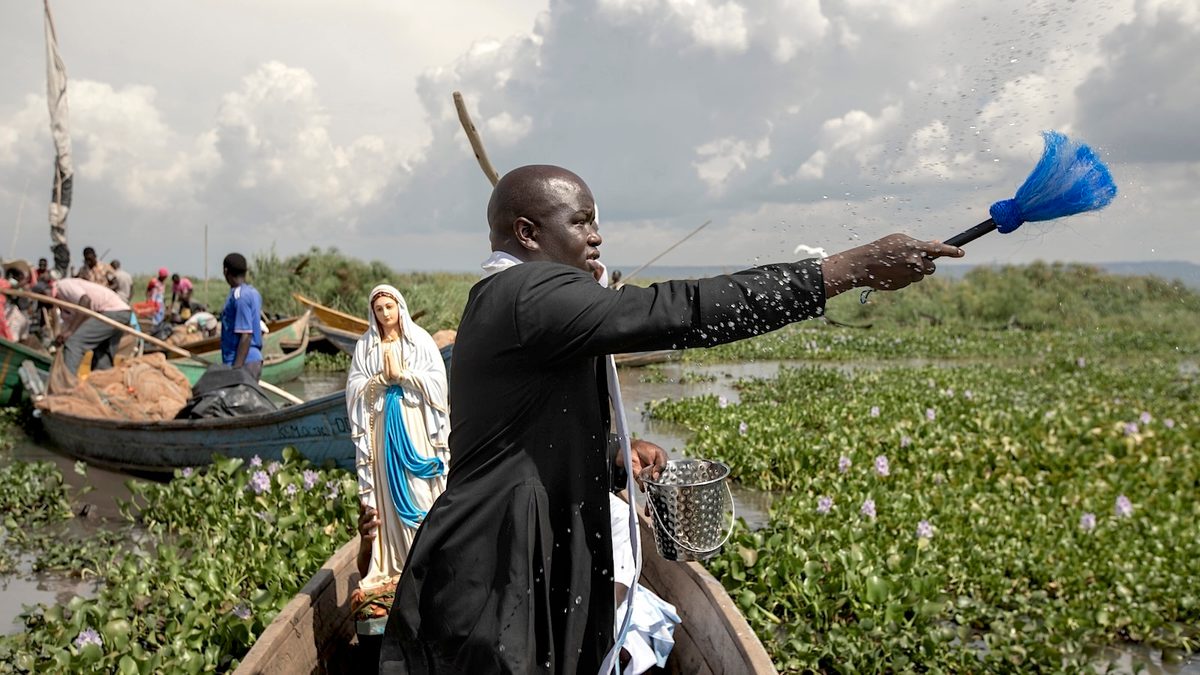
Lake Victoria, the largest tropical lake on Earth, is under enormous strain as overfishing, pollution, and a changing climate are decimating its fisheries, contaminating its waters, and bringing record floods to its shores. The losses have spurred renewed calls to protect the lake, whose basin supports more than 45 million people across the region.
For decades, Lake Victoria’s fishing industry relied on bountiful catches of Nile tilapia and Nile perch, both introduced to the lake in the 1950s. The perch, a voracious predator blamed for the disappearance of some 200 native cichlid species, became the lake’s most lucrative prize, with its filets exported to Europe and the Middle East. In recent years, overfishing has dramatically reduced fish stocks, including perch, pushing many fishermen to use illegal fine-mesh nets that catch juvenile fish before they can reproduce. Kenya’s catch fell from 94,349 metric tons in 2021 to 70,231 metric tons in 2025, according to the country’s fisheries service. In Uganda, the number of plants processing Nile perch has dropped from 21 to six, according to the director of operations at Victoria Treasures, one of the few surviving factories.
Pollution from farms, gold mining, and booming shoreline cities — including Kampala, Uganda’s capital, and Mwanza, Tanzania’s second-largest city — has compounded the damage as untreated sewage and fertilizers feed recurring algal blooms and water hyacinth invasions, which starve the water of oxygen and suffocate fish.
Making matters worse, exceptional rains linked with climate change lifted the lake to record levels in 2020 and again in 2024. The floods have forced hundreds of thousands of people from their homes and swallowed farmland and fish landing sites. The World Meteorological Organization expects this year’s El Niño, which typically brings heavier rains to East Africa, to last into 2027, raising the risk of further displacement.
In July, during the UNESCO World Heritage Committee meeting in Busan, South Korea, more than 100 civil society groups from 35 countries proposed recognizing Lake Victoria as a living cultural landscape, based on the fishing knowledge, rituals, and oral traditions its lakeside communities have accumulated over generations. The groups insisted that any nomination should protect local communities from displacement and safeguard the livelihoods of both fishers and the women who sell their catch.
If approved, inscription on the World Heritage list could bring international attention, technical help, and limited funding. It would also commit the governments of Kenya, Uganda, and Tanzania to protecting the lake under an agreed management plan.
Photographer Matilde Gattoni spent February and March on Lake Victoria’s Kenyan, Ugandan, and Tanzanian shores. This photo essay combines images that reflect the lake’s dire condition — from the water hyacinths that clog landing sites to the residents displaced by floods — with images that speak to the countless ties, both economic and spiritual, that continue to bind the people to the lake.
Scroll down to see the images, or click on the photo below to launch a slideshow.