



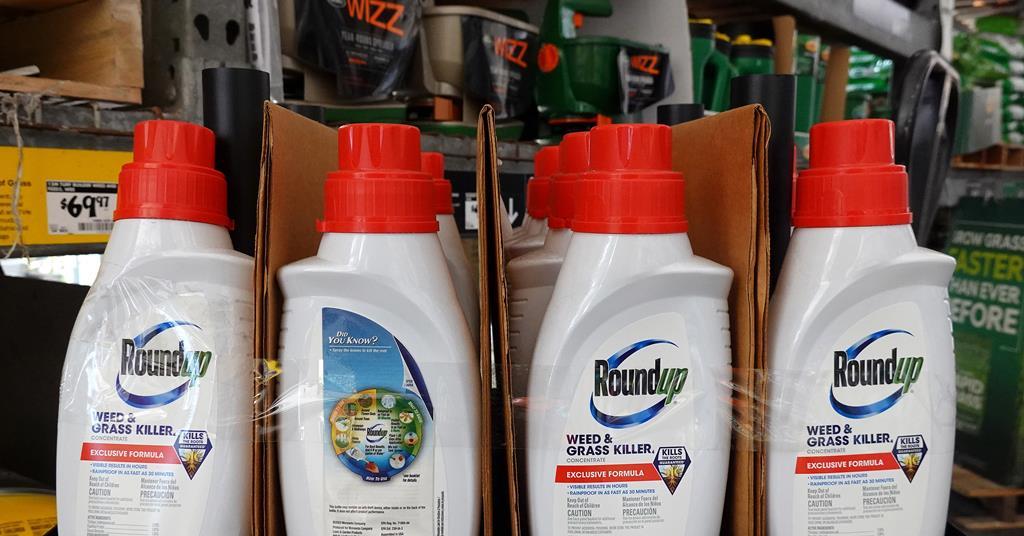
A US Supreme Court ruling has backed Bayer–Monsanto’s arguments relating to more than 60,000 lawsuits pending in US courts, claiming that exposure to the company’s glyphosate weedkiller Roundup has contributed to cancer cases, and arguing that the company should have provided warnings about cancer risk.
On 25 June, the court held that a federal pesticide law (FIFRA) pre-empts individual states’ laws that could require cancer warnings on Roundup labels. It also overturned a jury verdict in Missouri from 2024 that ordered Monsanto to compensate a man $1.25 million (£940,000) after he argued that his use of Roundup had caused his blood cancer, and that Monsanto should have provided a warning.
In December 2025, US solicitor general John Sauer had indicated that the government supported Monsanto’s position that FIFRA, combined with Environmental Protection Agency (EPA) rules on labelling, prevented Monsanto from adding warnings without EPA approval. The EPA classifies glyphosate as ‘unlikely’ to be a human carcinogen, so does not require the warning.
The stakes are substantial. Brent Wisner – a managing partner at law firm Wisner Baum, who is representing around 1000 clients with cases against Monsanto – notes that Bayer has already paid more than $10 billion to resolve claims that Roundup caused cancer.
More than 60,000 cases were pending in US courts when the Supreme Court took up this case, according to Baum. He anticipates that the decision affects all his clients, as well as future cases.
However, Baum says the new ruling only impacts cases that are based on failure-to-warn in the pesticide labels and not claims based on defective design, negligence, or other arguments. For example, he suggests that nothing in this Supreme Court decision affects a claim that the company failed to warn users outside of the label, such as through advertising. ‘Make no mistake – this decision is a terrible one. But it doesn’t not end all litigation,’ Baum states.
For its part, Bayer celebrated the ruling ‘Many billions have been directed toward [this] litigation,’ the company stated. ‘Money that could have funded the next generation of sustainable crop protection tools, breakthrough therapies, or other advances that farmers, consumers, and patients urgently need.’
In February 2026, Bayer proposed a US-wide class action settlement to resolve current and future claims linking Roundup to non-Hodgkin lymphoma. The plan, which includes a long-term compensation programme has received preliminary approval.