




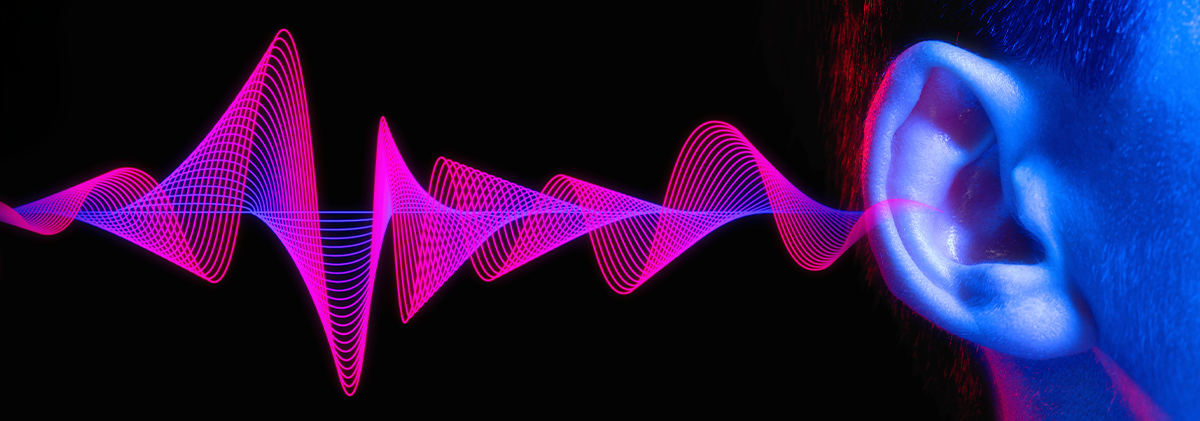
If you’ve ever experienced a feeling of unease in a spooky building at night, it might be caused by infrasound. These low frequency sound waves (below 20 hz) can come from furnaces, generators, ventilation systems, and more. While infrasound waves are technically outside of the human range of hearing, there’s plenty of evidence we can perceive them. In fact, previous research has shown that listening to infrasound played with music sends people’s cortisol levels up and makes them feel irritable.
In other words, even though our ears can’t hear it, our brains somehow know it’s there, and new research published in Scientific Reports is shedding light on how.
Read more: “The Science of Spooky Sounds”
Inside your ear (and all mammals’ ears), there are two types of hair cells: the inner hair cells and outer hair cells. When you hear a sound of a certain frequency, the inner hair cells attuned to that frequency vibrate, sending nerve impulses that your brain interprets as a tone. The outer hair cells play a kind of support role. They actively vibrate to boost the signal of faint sounds, effectively increasing the sensitivity of our sense of sound.
It turns out these outer hair cells are likely involved in our ability to perceive infrasound. When sound waves 16 hz and below hit the cells, they generate electric impulses that travel to the surrounding nerves. “These support cells, which normally receive signals from the brain to regulate hearing sensitivity, generate electric fields that are strong enough to trigger nerve signals that are sent to the brain, so that infrasound is perceived,” study author Torsten Marquardt of University College London explained in a statement.
According to the team, people may experience infrasound differently than other sounds because the vibrations bypass the traditional hearing pathway, traveling to our brain via this other route.
So remember, the next time a creepy building is giving you bad vibes, it could just be because they’re low vibes.
Enjoying Nautilus? Subscribe to our free newsletter.
Lead image: svetazi / Adobe Stock