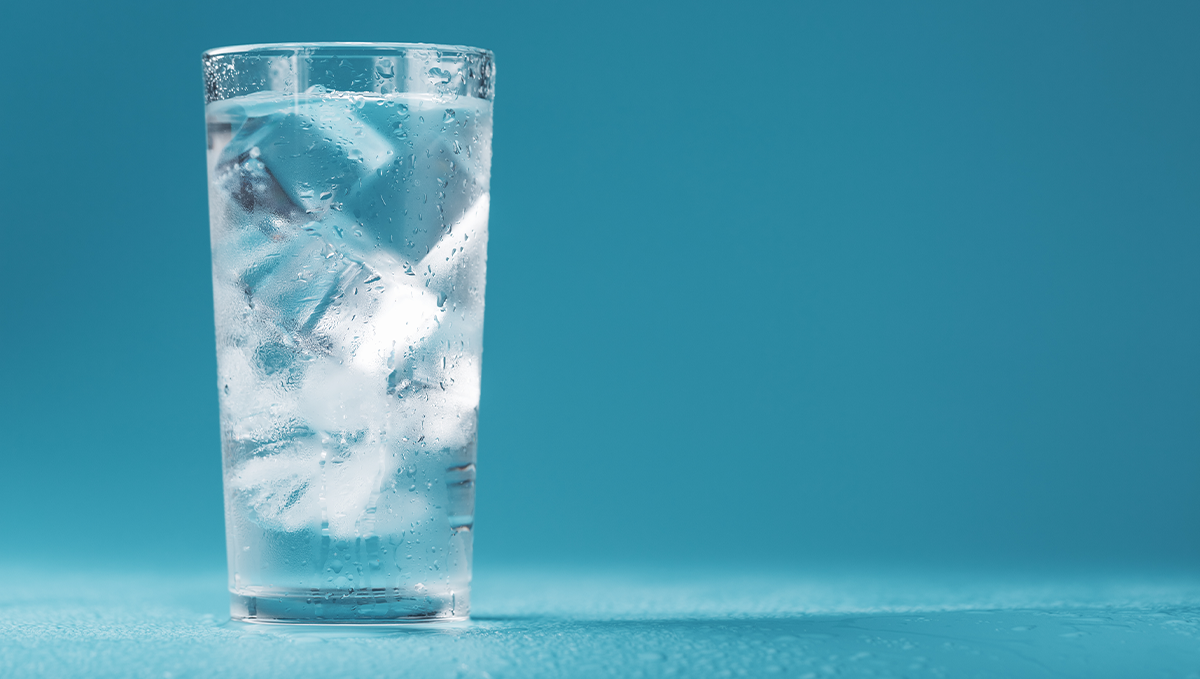

You may have heard that drinking water can make your stomach feel fuller, triggering a sense of satiety that curbs your appetite. Unfortunately, according to a new study published in Appetite, that little nugget of dietary wisdom is false.
In what sounds like a delicious experiment, food scientists rounded up 49 healthy adults and fed them a dish of their choice, either chicken tikka masala or beef chili, both served with water, while they recorded the meal on video. They found that for every 100 grams of water (3.4 ounces) someone sipped, they ate an additional 39 grams of food (which adds up to around 49 calories). Those who alternated sips and bites consumed even more, with each switch adding a little over 4 grams of food.
“There’s been this widespread advice that if we drink water, it fills us up. But water is emptied quickly from the stomach so it likely doesn’t fill us up for long,” study author Paige Cunningham of Cornell University explained in a statement. “Instead, water may increase how much we eat, providing lubrication which can speed up eating, and preventing a dry mouth which can prolong enjoyment of the food.”
Read more: “Eat Like a Neanderthal”
According to the team, switching between water and food could dull or delay something called “sensory-specific satiety.” It works like this: The more of a specific kind of food we eat, the less we enjoy eating it (even tikka masala, if you can believe it). When we introduce water in between bites, it may have a kind of palate-cleansing effect, making the subsequent bite taste “new” to us again and prolonging the meal.
There was one interesting wrinkle, however. The researchers expected that people who drank faster would consume more water, thereby increasing their food intake. Instead they found the opposite—the fast sippers ate less overall. The team thinks a longer period of time with water in the mouth (slow sipping) could heighten the contrast between water and food, making the next bite more appealing. But they’re still not sure.
“This was a secondary analysis looking at associations,” Cunningham said. “We are following up on this right now so we can make those causal inferences.”
Sounds great, where do I sign up?
Enjoying Nautilus? Subscribe to our free newsletter.
Lead image: Alexander / Adobe Stock