The liver is one of the most remarkable organs in the human body.
This multitasking dynamo performs around 500 vital functions, including processing nutrients and filtering out harmful substances in our blood.
Despite the chemical toxins it has to contend with on a daily basis, the liver is preternaturally youthful, thanks to its unique ability to regenerate itself.
Even the trusty liver isn’t immortal, though.
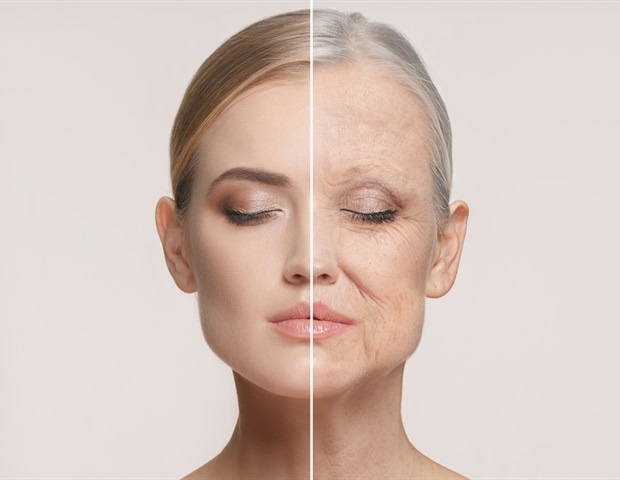
As the body starts to age, so too does the liver. And as it declines, it becomes susceptible to various forms of fatty liver disease.
But what if there were a way to help restore an aged liver to its youthful state?
In a new study published in npj Aging, scientists got a step closer to that very thing, using a compound found in citrus fruits to slow and even reverse signs of liver aging in mice.
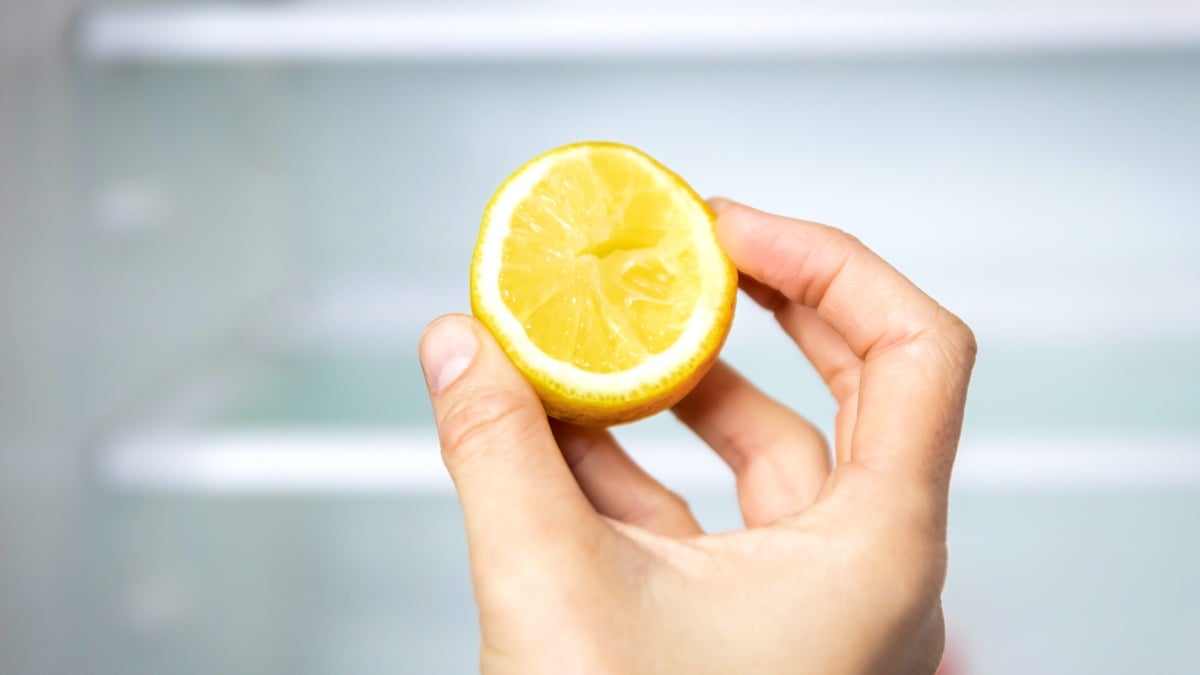
In an experiment, a team led by first author and molecular biologist Zhao-Qing Shen from National Yang Ming Chiao Tung University in Taiwan investigated hesperetin – a natural flavonoid found in lemons, limes, oranges, and other citruses – which has shown promise for a range of potential pharmacological effects, including various anti-inflammatory, anti-aging, and neuroprotective properties.
Hesperetin has previously been identified as an activator of a longevity-associated gene called CISD2 (or Cisd2 in mice), which is known to support liver and metabolic health.
“In the liver, Cisd2 deficiency promotes steatohepatitis [fatty liver disease] and hepatocellular carcinoma [liver cancer], whereas increased Cisd2 expression preserves youthful metabolic profiles and attenuates age-related hepatic dysfunction,” the researchers explain in their paper.
“Notably, Cisd2 expression declines during aging, suggesting that restoring its expression may represent a promising strategy for delaying liver aging and preventing age-associated liver diseases.”
To test their hypothesis, the researchers gave naturally old mice (21 months of age) a daily dose of hesperetin for five months, while a control group received an inactive substitute.
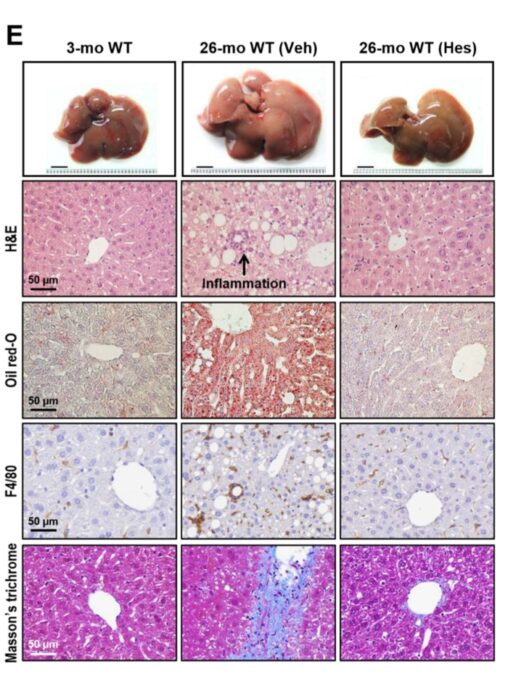
At the end of the regimen, Cisd2 levels were significantly decreased in the livers of control animals (26 months old), but the old mice that had received daily hesperetin had liver Cisd2 levels comparable to those of young mice only three months old. Several other markers of liver aging and decline were also reduced, including fatty deposits, damaged liver cells, and inflammation.
“Collectively, these results demonstrate that hesperetin consumption alleviates hepatic pathological damage and delays liver aging in aged mice, an effect that closely correlates with the upregulation of Cisd2 expression,” the researchers write.
An RNA sequencing analysis to compare gene activity showed the citrus compound had shifted gene expression in the treated animals towards a more youthful state, reversing a number of age-associated gene expression changes that were seen in the control animals.
A separate experiment showed that mice genetically engineered to lack Cisd2 in the main functional cells of their livers – which as a result already exhibited signs of poor liver health at just three months of age – did not respond to hesperetin treatment.
This supports the idea that in mouse liver cells, the citrus compound largely depends upon Cisd2 to work and is mostly ineffective in its absence, though the researchers also found some Cisd2-independent changes.

According to the researchers, hesperetin appears to work through a signaling pathway involving two different proteins, called Hmgcs2 and Pparα, which together increase Cisd2 activity.
While a lot more work will be needed to see whether hesperetin can safely produce similar effects to boost human liver health, the beginnings of the pathway might exist.
Related: The Clearest Evidence Yet That a Common Plastic Increases Risk of Fatty Liver Disease
In the study, the research team analyzed non-tumor liver samples from 80 patients who had undergone surgery for liver cancer or benign tumors, and found that PPARα and CISD2 expression declined with age in the human liver tissues.
By itself, that doesn’t prove anything, but it suggests that the reduced Cisd2 activity seen in mice might also be happening in older people. And if that’s the case, maybe boosting that pathway with hesperetin could help rejuvenate human livers too.
Given everything the liver does for us, we owe it to the guy to find out.
“These findings taken together, provide strong evidence for hesperetin being a potent liver anti-aging treatment and form the groundwork for future clinical interventions using hesperetin as a potent Cisd2 activator and as a functional food derived from the peels of citrus fruits,” the researchers write.
“Hesperetin from citrus peel and other sources has the ability potentially to slow down liver aging (or to rejuvenate an aging liver) as well as helping to ameliorate age-associated fatty liver disease.”
The findings are reported in npj Aging.
This article was fact-checked by Rebecca Dyer and edited by Rebecca Dyer. While we pride ourselves on our process, we are only human. If you spot a mistake, please let us know.