After its proof-of-principle study, The Innovation Platform spoke with Dr Ruggero Caravita and Dr Fredrik Parnefjord Gustafsson from the AEgIS Collaboration about the findings and the importance of studying atomic nuclei with antimatter.
The mysterious nature of antimatter could help answer some of physics’ most pressing questions by unlocking fundamental insights into how the Universe works. By exploring the properties and behaviours of antimatter, researchers aim to answer critical questions about the forces that govern matter and energy, which could lead to transformative advances in technology and deepen our understanding of our Universe and the principles that govern it.
At CERN, the Antimatter Experiment: Gravity, Interferometry, and Spectroscopy (AEgIS) is designed to investigate these topics, particularly how antimatter behaves in relation to gravity. Following a successful proof-of-principle study, we spoke with the AEgIS team to gain insight into the experiment’s goals and the implications of its findings on our understanding of the nature of matter and antimatter.
Can you provide an introduction to the AEgIS experiment? What questions or hypotheses does the experiment aim to address?
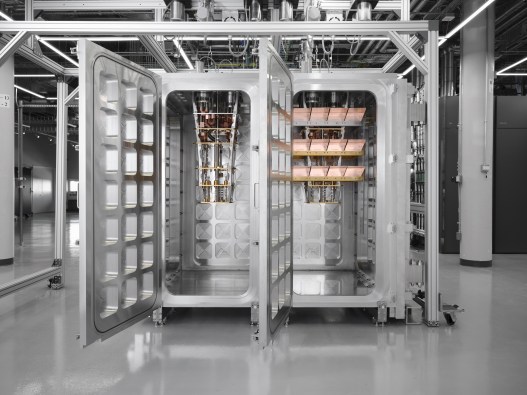
AEgIS is an international collaboration based at CERN’s Antimatter Factory, the AD–ELENA facility – the only place in the world where antiprotons can be studied at low energies. Our core apparatus is a set of cryogenic Penning–Malmberg traps inside superconducting magnets, in which we routinely capture and cool millions of antiprotons, together with positrons, to synthesise antihydrogen, the antimatter counterpart of hydrogen.
The founding question of AEgIS is deceptively simple: does antimatter fall under gravity exactly like matter? The Weak Equivalence Principle, a cornerstone of Einstein’s general relativity, says it must. AEgIS aims to test this directly by forming a pulsed beam of cold antihydrogen atoms and measuring their free fall. Behind this sits one of the deepest open problems in physics: the Universe we observe is made almost entirely of matter, yet the Big Bang should have produced matter and antimatter in equal amounts. Any measured difference in how antimatter behaves – gravitationally or spectroscopically – would be a clue to where that asymmetry comes from.
Along the way, AEgIS has become a broader antimatter laboratory. We produce, laser-cool and study routinely positronium, the lightest atom in Nature, which survives only a few hundred billionths of a second, made of an electron and a positron. And we develop techniques that turn trapped antiprotons into a precision tool, using them to probe the outer edge of atomic nuclei, which is the subject of the study we are discussing.
Why is it important to understand atomic nuclei? What insights might they provide?
The nucleus is where more than 99.9% of the mass of ordinary matter resides, and it is kept together by the strong interaction, a force we still cannot compute from first principles across the whole nuclear chart. One particularly intriguing aspect of nuclei is their neutron skin: in neutron-rich nuclei, the neutrons extend slightly further out than the protons, forming a thin skin of almost pure neutron matter at the periphery.
The neutron skin is a bridge between the laboratory and the cosmos. Its thickness is directly linked, for instance, to how matter behaves inside neutron stars, among the densest objects in the Universe. Measuring how thick the neutron skin tells us something about the structure and size of a neutron star somewhere else in the Universe. It also feeds into our understanding of how heavy elements are forged in stellar explosions and neutron-star mergers.
The problem is that neutrons carry no electric charge, so the well-established electromagnetic probes that map proton distributions with exquisite precision are nearly blind to them. Recent dedicated experiments have even produced tensions: the measured neutron skins of calcium-48 and lead-208 pull the models in opposite directions. This is precisely why new, independent techniques sensitive to the neutron-rich outer periphery of nuclei are needed, and antiprotons happen to be uniquely suited to the task.
Can you provide some background on the proof-of-principle study? How was it developed and conducted, and what were the primary goals?
When an antiproton is captured by an atom, it cascades down towards the nucleus and eventually annihilates. This happens almost always on the outermost edge of the nucleus, where the density is up to a thousand times lower than in the core. In a fraction of cases, the annihilation is ‘cold’: the mesons it produces fly off without hitting the residual nucleus, which survives intact minus a single proton or neutron. Whether that lost nucleon was a proton or a neutron directly mirrors the local neutron-to-proton ratio in the extreme periphery: exactly where the neutron skin lives. The annihilation process also strips all of the electrons from the original atom, so the surviving fragment emerges as a highly charged ion, which is what makes it trappable with laboratory electromagnetic fields.
Historically, these heavy fragments could only be studied very indirectly, with radiochemical methods, for instance. Our idea was different: to realise such annihilations directly inside our trap, which is able to capture the charged fragments in the same volume and identify them one by one via time-of-flight mass spectrometry.

The proof-of-principle experiment was conducted in the AEgIS high magnetic field trap. Every two minutes, ELENA delivered bunches of about eight million antiprotons, of which we captured roughly three million. We deliberately leaked ultra-low-density gases (helium and later argon) into the cryogenic trap as a target, and designed a multi-step ‘nested trap’ sequence: an inner potential well collects positive ions produced while the antiprotons annihilate on the gas. External annihilation detectors tag the annihilations in real time, and the collected ions are finally launched onto an ion detector one metre downstream, where their flight time reveals their mass-to-charge ratio. The primary goal was to demonstrate every building block of the technique: capture, cooling, ejection and identification of ions linked to antiproton annihilations.
What were the most significant findings from the proof-of-principle study, and how do they align with or contradict previous theories?
The headline result is that we proved it’s possible to capture and perform time-of-flight identification of highly charged ions produced following antiproton annihilations inside a particle trap. With helium, we observed a peak of singly charged helium ions from ordinary collisional ionisation, and a second peak of doubly charged helium ions (He²+) whose intensity grew linearly with the number of annihilations in the trap: a clear fingerprint that annihilations, not background processes, were producing it. With argon, the spectrum revealed a whole ladder of charge states, from Ar¹+ up to Ar⁵+.
That Ar⁵+ signal is telling. Removing five electrons from argon takes a cumulative energy of over 200 electronvolts. Slow antiproton impacts of this kind are known to produce almost exclusively singly and doubly charged ions, so collisions alone cannot explain it. Its presence demonstrates that annihilation products act as highly ionising agents inside the trap volume, in line with what theory predicts for the aftermath of an annihilation: a violent, localised event that leaves highly charged systems behind.
The study demonstrated the methodology. What is genuinely new is capability: the door is now open to studying nuclear fragments resulting from antiproton annihilations systematically. The results were published in Physical Review Research in May 2026.
Did you encounter any challenges during the proof-of-principle study? What are the primary challenges in completing experiments in this field?
Plenty. A first, almost comical one: argon gas freezes at our cryostat temperatures, and we had to inject so much to counteract the freezing effect that we ended up depositing a thin layer of argon ice all over the experiment surfaces. Luckily, you just need to heat up the machine to just above -200°C to get rid of it.
A subtler physics challenge is that the buffer gas played two conflicting roles: it was simultaneously our target to produce the annihilation fragments signal, and a neutraliser of the highly charged ions themselves. Indeed, collisions with gas neutralise the very high charge states we are most interested in, through charge exchange, so the present setup deliberately traded the capability to observe the initial annihilation fragments intact for a first robust demonstration of the method. Our trap depth was also limited to about 200 volts by the available electronics, and the captured ions were not yet fully cooled at ejection, which capped the mass resolution at around M/ΔM ≈ 4: enough to separate charge states of argon, but far from what isotopic identification will require.
More generally, antimatter experiments are exercises in scarcity (and patience). Antiprotons exist on Earth only at CERN’s Antimatter Factory, delivered in precious bunches shared among the experiments; every measurement must work within that allocation. Everything happens in extreme conditions: ultra-high vacuum, cryogenic temperatures, high magnetic fields, and a single annihilation on a stray gas molecule destroys your antimatter. The real art, and the real difficulty, is making many complex subsystems, such as traps, lasers, detectors, and control systems, work simultaneously and reproducibly for a long period of time.
What questions remain unanswered, and how might future research contribute further to this area? Are there specific goals or milestones that you hope to achieve in the subsequent phases of the experiment?
The proof of principle captured ions produced following annihilations; the next step is to capture the primary nuclear fragments themselves, cleanly. That means removing the buffer gas and triggering annihilation on demand in ultra-high vacuum. We got exciting ideas on how to get there, for example by laser-detaching the electron from negative ions mixed with trapped antiprotons. Deeper trapping wells, at kilovolt-scale potentials, will let us catch the recoiling fragments efficiently. We have exciting ideas on how to cool such fragments: we want to use positrons for that, or sympathetic cooling with laser-cooled ions. Multi-reflection time-of-flight spectrometry should push the mass resolution from today’s ~4 to the ~105-106 range needed to resolve individual isotopes. This programme is now taking shape within AEgIS, with first milestones, trapping and cooling externally produced ions, and forming antiprotonic atoms in the trap, already on our workplan.
Once mature, the technique will let us measure the ratio of neutrons to protons along chains of isotopes, mapping how the neutron skin evolves. These measurements will provide new insights into what happens at the dilute stratosphere of atomic nuclei, enabling a complementary tool to that of the PUMA experiment, which is using a different approach to probe the neutron skin of short-lived nuclei using antiprotons. Combined with the transportable antiproton traps now being developed, it could even be applied to short-lived radioactive nuclei or bring antiproton-based research to laboratories without any accelerator at all.
And in parallel, AEgIS is pursuing its founding goal: this year’s run is dedicated to producing a pulsed antihydrogen beam, the decisive step towards measuring, at last, how antimatter falls, in the absence of external disturbance fields.
Please note, this article will also appear in the 27th edition of our quarterly publication.