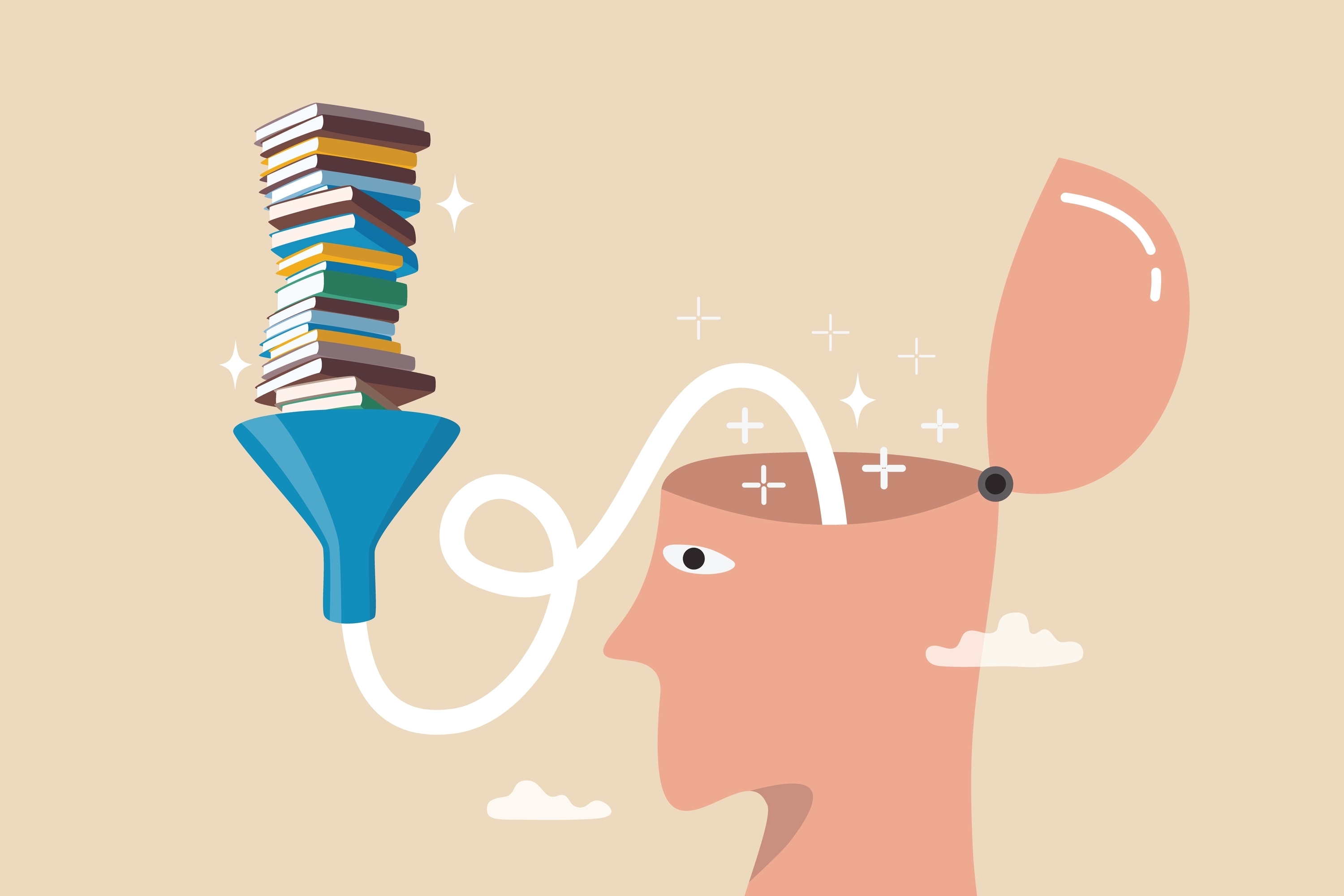


With our attention splintered into a million pieces by digital distractions, it’s no surprise that reading for pleasure has fallen off in recent years. Social media, video, and other forms of “content” are eating reading’s lunch, and it’s not particularly close. And so, it’s easy to forget that reading for fun is… fun. Now a new review published in Psychological Medicine is offering a reminder of all the ways reading for pleasure can benefit your mental health, too.
According to data from the National Literacy Trust, reading for pleasure may be at its lowest level ever recorded with the deepest plunges among children and adolescents. It’s a shame because, according to the researchers, young people reap some of the greatest rewards from reading.
Read more: “The Nautilus Reading List of Books on Evolution”
For example, a longitudinal study of more than 10,000 young adolescents found that reading for pleasure was associated with improved attention, memory, and executive functioning, not to mention better mental health, more sleep, and less screen time. Many of these benefits seem to be independent of the kids’ socioeconomic backgrounds (an important factor because reading for fun can also be free).
“Reading is a great way to support our brain health, develop important cognitive skills, and boost our wellbeing,” study author Barbara Sahakian of the University of Cambridge explained in a statement. “It’s something we ought to be encouraging from an early age, given the increasing evidence of its benefits, particularly to children.”
Per the team, developing reading habits during this critical developmental period may also lead to changes in the brain. Children between the ages of 8 and 13 with strong reading skills showed greater integrity in their white matter, the neural connective tissue of the brain that facilitates communication between different regions. In a small study of dyslexic children, an eight-week program that yielded better reading skills also resulted in increases of grey matter volume in areas associated with language skills and working memory.
Of course, reading doesn’t just benefit kids. A survey of over 4,000 adults found that those who read for pleasure showed more empathy, less stress, and a deeper interest in their own personal development. For example, books inspired 27 percent of readers to find a new job, motivated 36 percent of readers to travel, and spurred 20 percent of readers to take better care of their health.
In even better news, it’s never too late to gain benefits from reading, which seems to act as a shield against dementia later in life. A study of more than 5,400 healthy adults 55 and older who engaged in activities like reading (and playing games like chess) found they had a significantly reduced risk of developing cognitive impairment over a five-year period. Another study of nearly 2,000 people 64 and over showed frequent readers were less likely to suffer cognitive decline over a whopping 14-year follow-up period—something that held true regardless of educational background.
Additionally, reading clubs can provide the elderly with an important social outlet. “Shared reading groups and book clubs appear to provide additional benefits through social interaction,” Sahakian said. “They can help people feel less isolated and more connected to others, which has been shown to reduce the risk of dementia.”
So if you’re reading this, you’re doing great. But you can always do better. We’ve compiled a series of reading lists from both experts and Nautilus editors that are sure to spark your curiosity. Now put down your phone and pick up your e-reader! Or better yet, an actual book.
Enjoying Nautilus? Subscribe to our free newsletter.
Lead Image: eamesBot / Shutterstock