

Archaeologists have been digging near the Terme di Sorano spa in southern Tuscany since independent archaeologist Stefano Giuntoli noticed a cavity at one of the thermal pools there back in 2024. The subsequent ruins they uncovered have been dated to around 4495–4335 BCE (the Neolithic), and sit on top of an ancient thermal spring. But since the work began, only a few actual objects have been recovered, indicating this was a specialized site, rather than a village or camp where a lot of human activity was happening.
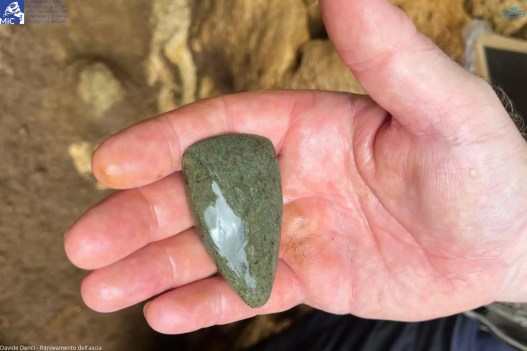
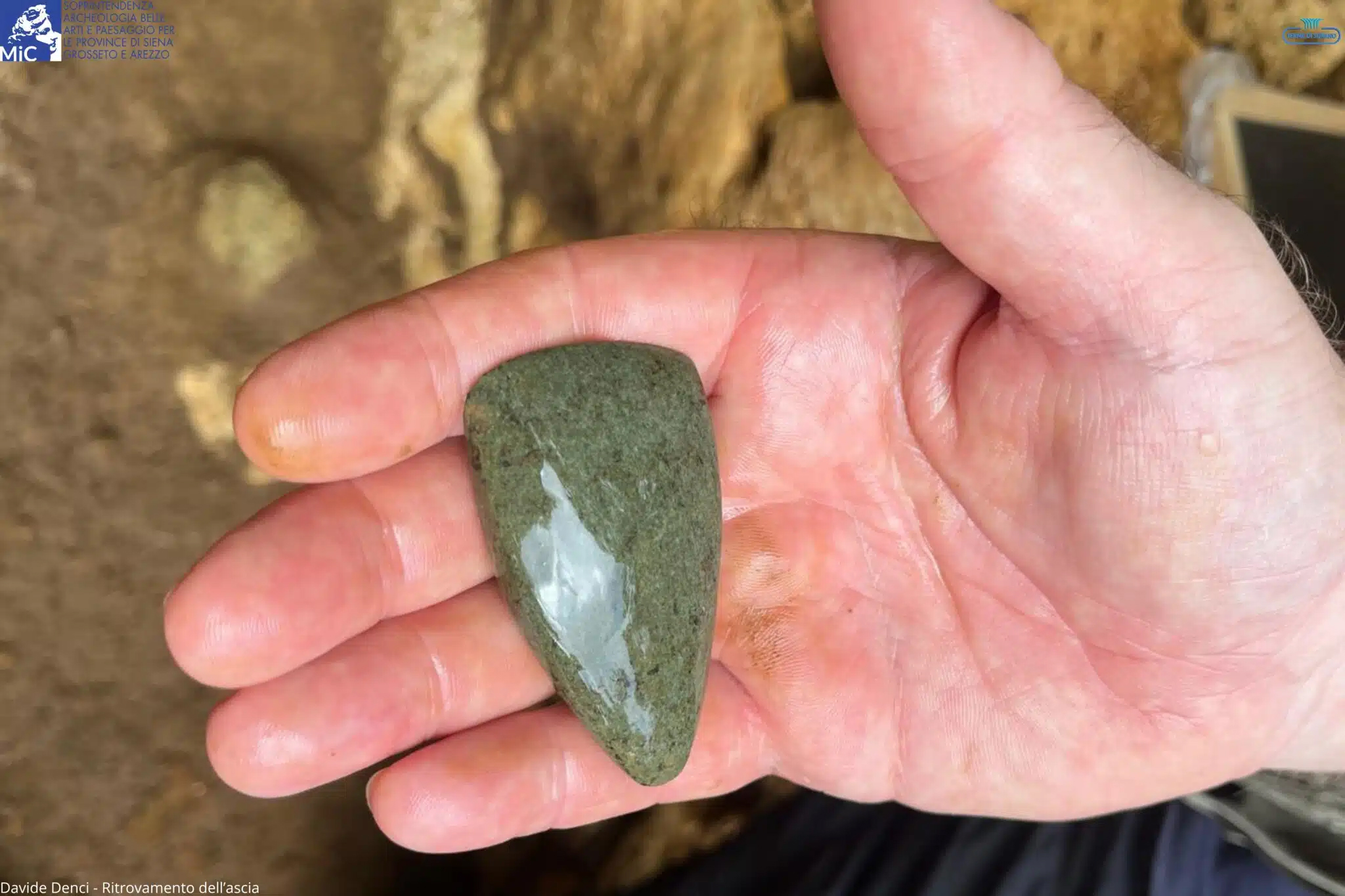
The latest find—a seemingly untouched axe head carved out of greenstone, thought to date back around 6,000 years—further backs up that theory. As the axe head was never used, it’s believed that its presence is symbolic—perhaps used as a part of some kind of religious or spiritual ceremony rather than as a weapon.
Researchers have determined that the axe head is made out of eclogite, a rock formed at great depths and intense pressures. The early European farmers who lived here during the Neolithic may have obtained the carefully crafted piece through trades and exchanges, and ultimately left it as some kind of gift.
If so, it would be considered a votive offering, which is the act of placing objects in a place for sacred reasons, without any intention of getting them back. It’s possible that the thermal spring was seen as a boundary between worlds.
“The (Terme di Sorano) site is gradually becoming more unique and significant,” Jacopo Francesco Tulipano, one of the team of archaeologists still working at the site, said in a statement (via Google Translate). “The continuation of the work will allow us to gather new data and, once the excavation work is completed, to plan the enhancement of the area.”
Enjoying Nautilus? Subscribe to our free newsletter.
Lead Image: Davide Denci / Terme di Sorano