a) Bright field (BF)-low magnification TEM image and b) BF-high resolution TEM (HRTEM) image for MgAlTi/M 10%. c) BF-HRTEM image of the area framed by the white box in (b), and corresponding FT pattern. Credit: Advanced Sustainable Systems (2024). DOI: 10.1002/adsu.202400496
Nitrogen oxides (NOx) are a group of gases formed by nitric oxide and nitrogen dioxide. They are produced, above all, by the burning of fossil fuels. Due to their harmful effects on human health and the environment, in recent years they have been in the scientific community’s crosshairs.
A research team at the Chemical Institute for Energy and the Environment (IQUEMA), attached to the University of Cordoba, has developed a photocatalytic material capable of effectively reducing these gases, achieving results similar to others developed to date, but through a more economical and sustainable process. The findings are published in the journal Advanced Sustainable Systems.
There are chemical reactions that can be favored or accelerated in the presence of light. In the case of nitrogen oxides, light energy, in the presence of a material that functions as a catalyst, makes it possible to oxidize the nitrogen oxides in the atmosphere and convert them into nitrates and nitrites.
The first author of this research paper, Laura Marín, explained that, unlike other photocatalytic reactions, which only operate under ultraviolet light, this new material boasts the advantage of working effectively with visible light, which is much more abundant and makes up most of the solar spectrum, allowing greater use to be made of the sun’s energy.
To do this, the research team has synthesized a new compound by combining two different types of materials: carbon nitride (which allows the reaction to be activated in the presence of visible light) and lamellar double hydroxides, which have the capacity to catalyze the reaction, in addition to featuring economical and easily scalable production.
Professor Ivana Pavlovic, one of the researchers who participated in the study, explained that the new process is capable of converting 65% of nitrogen oxides under visible light irradiation, a percentage very similar to that achieved by other photocatalysts, but with the advantage that this new system uses minerals such as magnesium and aluminum, which are “cheaper, abundant in nature, and benign, compared to other photocatalysts used to date, which contain cadmium, lead or graphene,” the researcher pointed out.
Professor of Inorganic Chemistry and IQUEMA Director Luis Sánchez explained that, in this way, the work represents an important step towards the large-scale development of a system that makes it possible to decontaminate the air under real-world conditions, thus reducing one of the most common pollutant gases in cities, and one whose long-term effects can cause serious health problems.
More information:
Laura Marín et al, The Efficient Coupling between MgAlTi Layered Double Hydroxides and Graphitic Carbon Nitride Boosts Vis Light‐Assisted Photocatalytic NOx Removal, Advanced Sustainable Systems (2024). DOI: 10.1002/adsu.202400496
Provided by
University of Córdoba
Citation:
A new, more economical and sustainable material design uses sunlight to decontaminate air (2024, December 11)
retrieved 11 December 2024
from https://phys.org/news/2024-12-economical-sustainable-material-sunlight-decontaminate.html
This document is subject to copyright. Apart from any fair dealing for the purpose of private study or research, no
part may be reproduced without the written permission. The content is provided for information purposes only.
Christian Solem in the laboratory at DTU National Food Institute. Credit: Lene Hundborg Koss
Currently, most vitamins are produced in factories, either synthetically or with the help of microorganisms that are not approved for food use. These production methods require extensive and often complex purification processes (to separate the vitamin from non-food-approved materials), which are costly and energy-intensive.
Now, a team of researchers from the Technical University of Denmark (DTU) has successfully produced vitamin B2, also known as riboflavin, in significant quantities using a novel, cost-effective, and climate-friendly method.
The researchers employed a food-approved lactic acid bacterium, demonstrating that it can produce vitamin B2 when subjected to heat. The study is published in the Journal of Agricultural and Food Chemistry.
“I think it’s beautiful that something as simple as gentle heating and lactic acid bacteria can be used to produce vitamin B2. The method allows for food to be fortified with vitamin B2 in an easy way, for example, during the production of yogurt or sourdough,” says Associate Professor Christian Solem from DTU National Food Institute, who led the research.
Vitamin B2 is essential for energy production and for maintaining a normal immune function. It also plays an important role in iron absorption, and deficiency has wide-ranging effects.
Fortification with B2 as part of food preparation
This innovative method integrates vitamin production into the food fermentation process. Vitamins can thus be produced and added locally. By using riboflavin-producing bacteria in food production, manufacturers can improve the nutritional value of traditional foods economically, enhancing public health while reducing environmental impact.
The method differs from existing technologies by being natural—without genetic modification—and consuming less energy and fewer chemicals compared to traditional synthetic vitamin production. Fortification only requires basic fermentation tools, which are already common in many households.
How the researchers stressed the bacteria
The team subjected lactic acid bacteria to “oxidative stress,” a natural pressure that compels bacteria to produce more riboflavin to protect themselves.
“We used the microorganism Lactococcus lactis, commonly known from cheese and cultured milk, to produce vitamin B2. Lactococcus thrives best at around 30°C, but we heated the bacteria to 38–39°C, which they didn’t like. Bacteria adapt to new conditions, and to defend themselves against the oxidative stress caused by the heat, they started producing vitamin B2,” explains Solem.
The researchers optimized the vitamin production process by adding various nutrients, achieving a production of 65 milligrams of vitamin B2 per liter of fermented substrate—nearly 60 times the daily human requirement for the vitamin.
Cultural compatibility and future potential
“It would be ideal to package these B2-producing lactic acid bacteria as a starter culture that can be added to foods like milk, maize, or cassava for fermentation. When these foods are fermented using the starter culture, which includes specially selected lactic acid bacteria along with traditional ones, they automatically produce riboflavin while maintaining the traditional flavor and texture of the food,” says Christian Solem.
Many developing countries already have strong traditions of fermenting foods, which extends shelf life and reduces waste.
The method could potentially be expanded to produce other essential vitamins and nutrients, such as folic acid (B9) and vitamin B12, which are often lacking in plant-based diets. It could also be applied to various food types, including sauerkraut.
More information:
Emmelie Joe Freudenberg Rasmussen et al, Harnessing Oxidative Stress to Obtain Natural Riboflavin Secreting Lactic Acid Bacteria for Use in Biofortification, Journal of Agricultural and Food Chemistry (2024). DOI: 10.1021/acs.jafc.4c08881
Provided by
Technical University of Denmark
Citation:
Simple, eco-friendly technique uses bacteria to produce vitamin B2 naturally (2024, December 11)
retrieved 11 December 2024
from https://phys.org/news/2024-12-simple-eco-friendly-technique-bacteria.html
This document is subject to copyright. Apart from any fair dealing for the purpose of private study or research, no
part may be reproduced without the written permission. The content is provided for information purposes only.
From left: Tasca Therapeutics’ scientific cofounder David Fisher, cofounder and CEO Milenko Cicmil, and cofounder and director Xu Wu.
Imagine, says Milenko Cicmil, a crunched-up piece of paper. The surface of the ball is riddled with creases, folds, and pockets. A protein is like a more complex version of that crunched paper ball with pockets that molecules can nestle inside.
“It’s really all about that pocket,” says Cicmil, who cofounded and now serves as CEO of a new biotech start-up called Tasca Therapeutics. “It’s all about knowledge of the pocket and understanding how to drug that pocket that will, in turn, increase the universe of proteins we are currently drugging.”
Cicmil is particularly interested in proteins with hydrophobic pockets—potential binding sites for new drugs—that undergo the process of autopalmitoylation, which determines where the protein goes and what it does.
Almost 10 years ago, when Massachusetts General Hospital (MGH) chemist Xu Wu identified TEA domain (TEAD) transcription factors that go through that process, he also determined it would be possible to develop new small molecules that could bind to those sites, Cicmil says (Nat. Chem. Biol. 2016, DOI: 10.1038/nchembio.2036). But Wu waited until February 2021 to move forward with that idea.
Wu got together with Cicmil and MGH dermatologist David Fisher to form a start-up to commercialize his idea. The trio started what is now Tasca “literally in my basement during the pandemic time,” Cicmil says.
Tasca is Italian for “pocket,” a nod to the firm’s efforts to develop small molecules that are meant to go after unique, hydrophobic pockets on proteins involved in cancer and other diseases. Cicmil says the start-up has identified about 100 proteins that undergo autopalmitoylation at specific sites, and of those, three to five proteins that will serve as targets for cancer treatment.
Tasca will start by evaluating its lead drug candidate—a molecule called CP-383—in small-cell lung cancer, colorectal cancer, head and neck cancer, and glioblastoma. The latter indication is of particular interest, Cicmil says, because CP-383 can cross the blood-brain barrier—a challenge in treating the infamously aggressive brain cancer.
Tasca has raised $52 million across a seed and series A round. Cure Ventures co-led the series A with the venture arm of Regeneron. According to Cicmil, the start-up is leaving the series A open for at least a few more months in the hopes of raising another $8 million or more. Tasca currently stands at 3 full-time employees, with plans to grow to 25 next year and move into a new lab space in Cambridge, Massachusetts, in mid-January.
Aside from cancer, Tasca is exploring the possibility of developing compounds for neurodegenerative and metabolic conditions. Still, the focus is on cancer for now: “We are very much an oncology-driven company,” Cicmil says. “But there is significant opportunity outside of oncology here as well.”
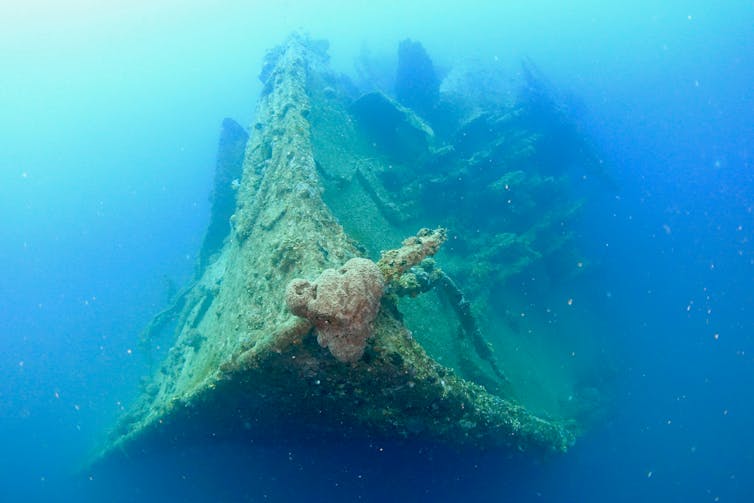
At the bottom of the oceans and seas lie more than 8,500 shipwrecks from
two world wars. These wrecks have been estimated to contain as much as 6 billion gallons of oil, as well as munitions, toxic heavy metals and even chemical weapons.
For decades, these wrecks have largely lain out of site and out of mind. But
all this time, their structures have been degrading, inexorably increasing the chances of sudden releases of toxic substances into the marine environment.
In parts of the globe, climate change is exacerbating this risk. Rising ocean
temperatures, acidification and increasing storminess accelerate the breakdown of
these wrecks.
Of course, wrecks from the world wars are far from the only ones to be found at the bottom of the sea, with many others adding to the problem. The cost of addressing this global issue has been estimated at US$340 billion (£261 billion).
How many of these wrecks pose a threat to people’s safety, to coastal communities and to the environment? What can be done – and why haven’t we done it sooner?
Mapping the problem
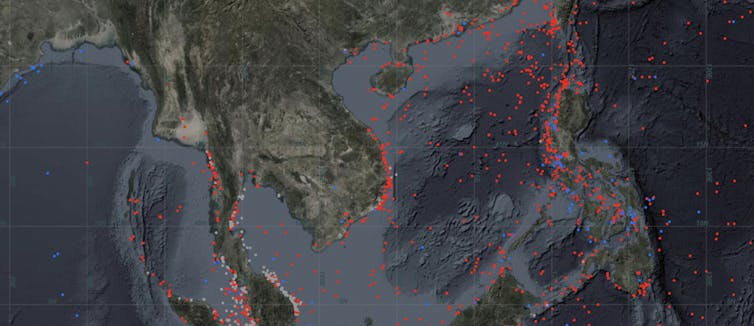
The raw figures in dollars and the numbers of wrecks on the map rightly cause concern. Work by researchers such as Paul Heersink have drawn together different datasets to help visualise the scale of the challenge. Yet these figures, and the position of dots on maps, may also give a false sense of certainty.
It remains the case that the world’s oceans and seas are not as well mapped as we
would like, with about 23% having been described and mapped in detail. Even that level of detail often falls short of what we need to positively identify a wreck, let alone determine the risk it might pose.
There is an ongoing global push to improve our mapping of ocean space under the
auspices of the Seabed 2030 project, which is looking to reach a universal resolution of 100x100m. That means one “pixel” of information would be equivalent to about two football pitches. This will be transformative for our understanding of the ocean floor, but will not reveal the detail of all those things that you could hide within those two football pitches (which includes quite a few wrecks).
Many of the wrecks that may pose the greatest problems are found in shallower coastal waters, where government mapping initiatives and work by industry provide much higher resolutions, yet still the challenge of identification remains.
What about archival records? Historical records, such as those held by Lloyd’s Register Foundation in London, are fundamental to bringing greater certainty to the scale and nature of the challenge. They contain the details of ship structures, cargos carried and last known positions prior to loss.
The accuracy of those positions, however, is variable, meaning that knowing exactly
where on the seabed a wreck might be, and so how to survey it and assess its risk, is not straightforward. This is placed in stark relief by the work of British maritime archaeologist Innes McCartney and oceanographer Mike Roberts, whose detailed geophysical and archival investigations in the Irish Sea demonstrated that historic wrecks have been frequently misattributed and mislocated. This means that the dots on the map are often in the wrong places, and up to 60% can be sitting in unknown locations on the sea floor.
Most of the wrecks causing greatest concern are of metal, or metal and wood
construction. The steel in these wrecks is slowly degrading, increasing the chance of cargos being spilt, and components breaking down. However, this is only part of the risk.
The sea is becoming an ever busier place, as we carry out more intensive
fishing and ramp up the construction of offshore wind farms and other
energy installations to meet net zero commitments. These all affect the seabed and can physically disturb or change the dynamics of wreck sites.
There is increasing global recognition of the need to address this problem. It has remained unresolved to date because of the complex international and interdisciplinary challenge it poses.
Many of the wrecks lie in waters off countries that have nothing to do with the original owner of the ship. How then, do we determine who is responsible? And who pays for the clean-up – especially when the original owner benefits from the legal loophole of sovereign immunity? Under this concept, the flag State (the country where the ship is registered) cannot be held responsible under international law and therefore is not legally obliged to pay up.
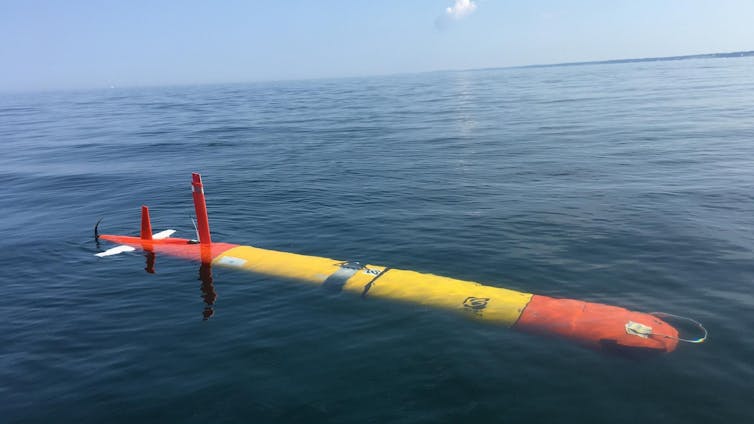
AUVs could enhance our knowledge about the locations of wrecks and their conditions. USGS
Beyond these fundamental questions of responsibility, there are technical
challenges. It’s difficult to know exactly how many wrecks of concern there are, and how to locate them. So how do we assess their condition and determine if intervention is needed? And if so, how do we intervene?
Each of these questions is a complex challenge, and solving them requires the
contributions of historians, archaeologists, engineers, biologists, geophysicists,
geochemists, hydrographic surveyors, geospatial data analysts and engineers.
This has already been happening, with regional projects making critical headway
and demonstrating what can be achieved. However, the immense scale of the
problem outweighs the amount of work done to date.
New technologies are clearly critical, as are new attitudes. At the heart of the
problem is an issue of knowledge and certainty – is this the wreck we think it is, does it pose a problem and if so, over what time scale?
Advances in subsea drones known as Autonomous Underwater Vehicles (AUVs), which are fitted with an array of sensors to measure the seabed and detect pollutants, could help enhance our knowledge about the locations of wrecks, what they’re carrying and their state of deterioration. AUVs can provide relatively cheap, high resolution data that produces fewer emissions than a comparable survey campaign conducted from a large research vessel.
But we also need to share that information, and compare it with data from archives to help generate knowledge and higher levels of certainty. Too often, underwater surveys and investigations occur in silos, with data held by individual agencies or companies, preventing a rapid and cumulative increase in understanding.
The severity of the environmental and safety risk posed by wrecks on the ocean floor, and how it changes over time, is not fully known. But this is a problem we can solve.
Action is needed now, driven by a robust regulatory and funding framework, and
technical standards for remediation. A global partnership – codenamed Project Tangaroa – has been convened to stimulate that framework – but political will and financing is required to make it a reality.
Through targeted archival and survey work, and by sharing data and ideas, we can chart a course to a future where the sea is not a place where we ignore things today that will threaten us tomorrow.
One of the more persistent concerns in the age of AI is that the robots will take our jobs. The extent to which this fear is founded remains to be seen, but we’re already witnessing some level of replacement in certain fields. Even niche occupations are in jeopardy. For example, the world of OnlyFans chatters is already getting disrupted.
What are OnlyFans chatters, you say? Earlier this year, WIRED published a fascinating investigation into the world of gig workers who get paid to impersonate top-earning OnlyFans creators in online chats with their fans. Within the industry, they’re called “chatters.”
A big part of the appeal of OnlyFans—or so I’m told—is that its creators appear to directly engage with their fans, exchanging messages and sometimes talking for hours. Relationship simulation is as crucial an ingredient to its success, basically, as titillation.
Of course, a single creator with thousands of ongoing DM conversations has only so many hours in a day. To manage the deluge of amorous messages, it’s become commonplace to outsource the conversations to “chatters” paid to sub in for the actual talent.
These chatters used to mainly be contractors from the Philippines, Pakistan, India, and other countries with substantially lower wage expectations than the US. But, increasingly, human chatters are getting replaced by AI-generated stand-ins.
A number of different startups now sell access to these AI chatters and other generative AI tools—and they say business is booming.
“A lot of creators were like, hey, there’s a need,” says Kunal Anand, the founder of a startup offering an AI OnlyFans chatting service called ChatPersona. “We built our own model with data we got from a lot of creators’ chats.”
Since launching last year, ChatPersona has around 6,000 customers according to Anand, a mix of individuals and agencies.
Anand says that ChatPersona doesn’t technically violate OnlyFans’ terms of service because it requires a human in the loop to press “send” on the messages its AI chatters generate. (It has previously been reported that OnlyFans banned the use of AI chatbots although its current terms of service do not mention AI chatters.)
OnlyFans did not respond to repeated requests for comment.
The field is already fairly crowded. Some of the better-known tools have on-the-nose names like FlirtFlow, ChatterCharms, and Botly. Another competitor, the relatively generically-named Supercreator, has a suite of AI tools, from AI-generated scripts to an assistant called “Inbox Copilot” that algorithmically sorts simps, moving “spenders” to the top of the list and ignoring “freeloaders.”
Eden, a former OnlyFans creator who now runs a boutique agency called Heiss Talent (and who would only speak on the record using her first name, citing privacy concerns) is an enthusiastic adopter of this tech. She represents five creators, and says they all use Supercreator’s AI tools. “It’s an insane increase in sales, because you can target people based on their spending,” she says.
Pigeons have a lot more going on that you might assume
I had always felt ambivalent towards pigeons. Pigeons are everywhere in London, where I live, and that made them fade into the background for me. I didn’t hate them, but neither did I take any particular interest in them.
Then a chance encounter set me wondering if I could learn to love the humble pidge, a question that I spent some of this year delving into. As I started my research, I stumbled upon pigeon fact after pigeon fact that really surprised me. Here are a few of those facts – they just might change the way you think about these much-maligned city birds.
1. Pigeons produce ‘milk’
It is odd to think of pigeons producing milk, but it’s true. It doesn’t come from a mammary gland, but instead a special area of cells in the lower oesophagus called the crop, and adult pigeons regurgitate it for their young for the first 10 days after they hatch. Although it is yellower and more solid than what we might think of as milk, it has a similar blend of nutrients and immune-boosting properties. A few other species of bird produce this “crop milk” too, including penguins and flamingos.
2. They make hilariously bad nests
Perhaps my favourite thing about pigeons is that they make truly awful nests – think a few sticks placed in the approximate vicinity of an egg. There is even an account on X that documents them called Bad Pigeon Nests. Outside of cities, pigeons would naturally have nested among rocks, so wouldn’t have…
Folded, origami-like DNA attached to a glass surface, as shown in this illustration, store data for fast, rewritable DNA-based computation. Credit: Adapted from ACS Central Science 2024, DOI: 10.1021/acscentsci.4c01557
DNA stores the instructions for life and, along with enzymes and other molecules, computes everything from hair color to risk of developing diseases. Harnessing that prowess and immense storage capacity could lead to DNA-based computers that are faster and smaller than today’s silicon-based versions.
As a step toward that goal, researchers report in ACS Central Science a fast, sequential DNA computing method that is also rewritable—just like current computers.
“DNA computing as a liquid computing paradigm has unique application scenarios and offers the potential for massive data storage and processing of digital files stored in DNA,” says Fei Wang, a co-author of the study.
In living organisms, DNA expression occurs sequentially: Genes are transcribed into RNA, which is translated into proteins. This process happens to many genes simultaneously and repeatedly. If researchers can duplicate this complex, elegant dance in DNA-based computers, these devices could be more powerful than current silicon-based machines.
Researchers have demonstrated sequential DNA computing for very focused, specialized tasks. But until recently, not much progress had been made in developing more general and programmable DNA devices that could be used and reused for various applications.
In previous research, Chunhai Fan, Wang and colleagues developed a programmable DNA integrated circuit with many logic gates that act as instructions for the circuit’s operations. Here’s how it worked:
Data, 0 or 1, was represented by a short piece of single-stranded DNA, called an oligonucleotide, that contained a series of bases: adenine, thymine, guanine and cytosine. (In nature, the sequence of bases codes for a gene.)
For example, two inputs of 1 (DNA strands 1 and 2) would interact with an OR logic gate DNA molecule.
Then in a fluid-filled tube, the input oligonucleotide interacted with a logic gate DNA molecule and generated an output oligonucleotide.
The output oligonucleotide bound to a different single-stranded DNA that was folded into an origami-like structure, called a register in computer lingo.
The oligonucleotide was “read” by reviewing its base sequence, released and used in a vial containing the next gate, and so on.
This process took hours, and someone had to manually transfer the oligonucleotide from one gate to another vial for the next computing operation. So the team, along with Hui Lv and Sisi Jia, wanted to speed things up.
To make the reaction processes more efficient and compact, the team first placed the DNA origami register onto a solid glass 2D surface. The output oligonucleotide floating in liquid from a specific logic gate then attached to the glass-mounted register.
After the output oligonucleotide was read and the logic gate instructions determined, it detached, which reset the register so it could be rewritten, thereby avoiding the need to move or replace registers.
The researchers also designed an amplifier that boosted the output signal so all the pieces—the gates, oligonucleotides and registers—could find one another more easily. In a proof-of-concept experiment, all the DNA computing reactions took place in a single tube within 90 minutes.
“This research paves the way for developing large-scale DNA computing circuits with high speed and lays the foundation for visual debugging and automated execution of DNA molecular algorithms,” says Wang.
Citation:
Fast, rewritable computing with DNA origami registers (2024, December 11)
retrieved 11 December 2024
from https://phys.org/news/2024-12-fast-rewritable-dna-origami-registers.html
This document is subject to copyright. Apart from any fair dealing for the purpose of private study or research, no
part may be reproduced without the written permission. The content is provided for information purposes only.
Close examination of these chips, labeled according to their blue, yellow or red color, that once belonged to art on the Berlin Wall reveals brushstrokes, multiple layers and the pigments used. Credit: Adapted from the Journal of the American Chemical Society 2024, DOI: 10.1021/jacs.4c12611
Street art takes many forms, and the vibrant murals on the Berlin Wall both before and after its fall are expressions of people’s opinions. But there was often secrecy around the processes for creating the paintings, which makes them hard to preserve. Now, researchers reporting in the Journal of the American Chemical Society have uncovered information about this historic site from paint chips by combining a handheld detector and artificial intelligence (AI) data analysis.
“The research highlights the powerful impact of the synergy between chemistry and deep learning in quantifying matter, exemplified in this case by pigments that make street art so captivating,” says Francesco Armetta, a co-author of the study.
To restore or conserve art, it’s important to collect information on the materials and application techniques. But the painters of the Berlin Wall didn’t document this. In previous studies of other historic artifacts, scientists brought fragments or even whole objects into the lab and, without destroying the samples, identified pigments on them using a technique known as Raman spectroscopy. Although handheld Raman devices are available for on-site investigations, they lack the precision of full-sized laboratory equipment.
So, Armetta, Rosina Celeste Ponterio and colleagues wanted to develop an AI algorithm that could analyze the output of portable Raman devices to more accurately identify pigments and dyes. In an initial test of the new approach, they analyzed 15 paint chips from the Berlin Wall.
The researchers first magnified the chips and observed that they all had two or three layers of paint with visible brush strokes. The third layer in contact with the masonry appeared white, which they suggest is from a base coat used to prepare the wall for painting.
Next, the researchers used a handheld Raman spectrometer to analyze the chips and compared them to spectra collected from a commercial pigment spectra library. They identified the primary pigments in the samples as: azopigments (yellow- and red-colored chips), phthalocyanins (blue and green chips), lead chromate (green chips) and titanium white (white chips). These results were confirmed with other non-destructive techniques, including X-ray fluorescence and optical fiber reflectance spectroscopy.
Then, the researchers mixed pigments from a commercial acrylic paint brand (used in Germany since the 1800s) with different ratios of titanium white, trying to match colors and the range of tints typical for painters. A knowledge of these ratios could help art conservators prepare the right materials for restoration, say the researchers.
Using the mixtures’ handheld Raman spectral data, they trained a machine learning algorithm to determine the percentage of pigment. The approach indicated that the Berlin Wall paint chips contained titanium white and up to 75% of pigment, depending on the piece analyzed and according with the color tone. The researchers say these results indicate that their AI model could provide high-quality information for art conservation, forensics and materials science in settings where it’s hard to bring lab equipment to a site.
Citation:
Uncovering pigments and techniques used to paint the Berlin Wall (2024, December 11)
retrieved 11 December 2024
from https://phys.org/news/2024-12-uncovering-pigments-techniques-berlin-wall.html
This document is subject to copyright. Apart from any fair dealing for the purpose of private study or research, no
part may be reproduced without the written permission. The content is provided for information purposes only.
The sun may have created a vast mass of water gas by heating asteroids
ESA/Hubble Copyright: NASA, ESA, M.A. Garlick (space-art.co.uk), University of Warwick, and University of Cambridge.
A vast cloud of vapour expelled from boiled asteroids may have lingered in the solar system for millions of years before raining down on Earth, according to a new idea for how our planet got its water.
The origin of Earth’s water has long puzzled scientists. It is hard to argue that our planet has always had the water we see today, because the young sun would have been so…
A gallium cast used to make a channel system in a soft gel, mimicking blood vessels
Subramanian Sundaram/BU and Harvard University
Lab-grown organs for transplant are one step closer thanks to a technique for making artificial blood vessels using 3D printers and liquid metal.
One challenge in developing organs in the lab is to reproduce the microscopic structure of blood vessels that permeate the tissue. In the body, cells are supported by the extracellular matrix (ECM), a gel-like network of proteins such as collagen that acts as a natural scaffolding, giving structure to tissues and organs.