



The world’s climate system is growing increasingly unstable, and it’s toppling precious ancient pyramids around the world.
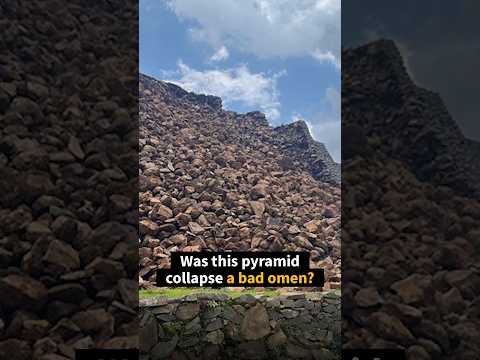
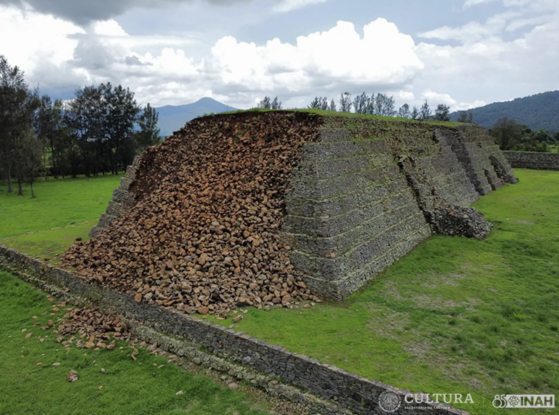
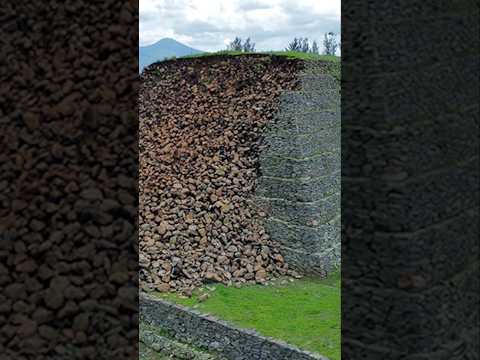
In 2024, on the night of July 29, one of the best-preserved pyramids of the Michoacán Kingdom civilization in Mexico crumbled into a pile of rubble.
After weeks of heavy rainfall, the south wall of the 15-meter-high (roughly 50-foot-high) square monument had finally and suddenly succumbed to the extreme weather.
The pyramid is located at a remarkably preserved archaeological site that was first occupied more than 1,100 years ago by Indigenous Nahuatl-speaking groups.
Later, it became the headquarters of the P’urhépechas people, the empire the Aztecs failed to conquer.
The culture still thrives to this day.
Thankfully, only one of the pyramids at the site was damaged, but officials at Mexico’s National Institute of Anthropology and History (INAH) said that at least six of its ‘stepped bodies’ are in disrepair.
This includes the outer wall, the core, and the retaining wall.
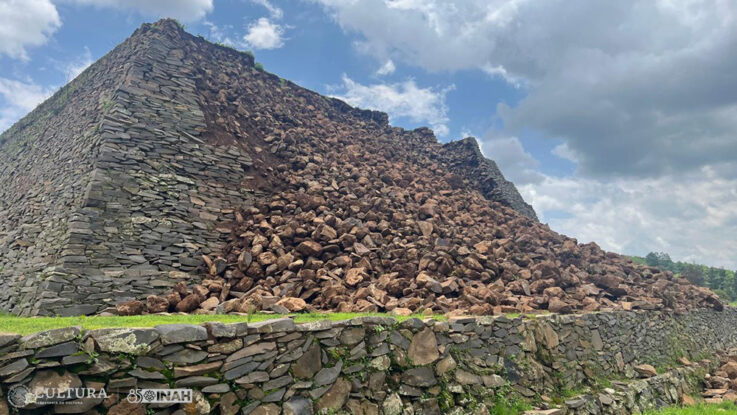
The destruction, according to INAH, is due to extreme weather.
INAH added that earlier work at the site, done with techniques and materials no longer used because of their negative effects, had also affected the structure’s condition.
Tariakuiri Alvarez, who identifies as a living member of the P’urhépecha tribe, says his ancestors would have interpreted the crumbling of the pyramid at Ihuatzio as a “bad omen”.
It would have been a sign that the gods were “displeased”.
For modern scientists, it’s also a warning.
Extreme weather events and rising seas are increasingly putting precious heritage sites like this one in harm’s way.
frameborder=”0″ allow=”accelerometer; autoplay; clipboard-write; encrypted-media; gyroscope; picture-in-picture; web-share” referrerpolicy=”strict-origin-when-cross-origin” allowfullscreen>
In recent years, heavy rainfall, flooding, and hurricanes have damaged or destroyed parts of several pyramids around the world.
Central America has been hit more than once.
In 2010, for instance, Hurricane Karl, the most destructive tropical cyclone on record to strike the Mexican state of Veracruz, took down part of another pyramid.
On September 17, the Category 3 hurricane struck an archaeological site called La Joya on the tropical coastal plains of Central Veracruz, Mexico.
The site’s pyramid is made mostly of Earth, and when high-speed winds ripped off its tarp, it was exposed to torrential rain. Weeds that had grown over the site had also weakened the structure.
A severe drying period following the hurricane merely added to the site’s destruction.
In 2022, climatologist Jørgen Hollesen warned in an article for Antiquity that “increased rainfall, more frequent extreme weather events, higher temperatures and rising seas not only create new risks” for archaeological sites, “but also exacerbate existing vulnerabilities and threats.”
And that’s a warning not just for Central or South America, where ancient pyramid structures are common.
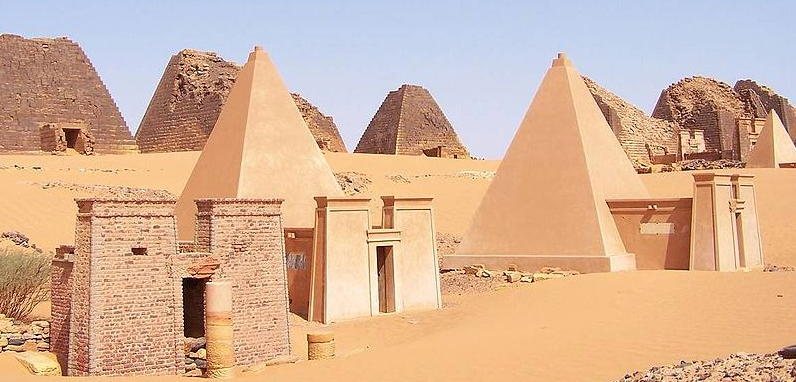
Sudan is home to more than 200 pyramids, called the Pyramids of Meroë, which were built by the kingdom of Kush between 1070 BCE and 550 CE.
Their future is threatened by sand, winds, heavy rains, and flooding events.
Studies suggest that in the last three decades alone, natural forces have increased the deterioration of these pyramids.
In 2021, the nation experienced heavy rains and flooding.
That year, researchers found that 15 of the 19 pyramids they assessed were severely damaged, compared with 12 just seven years earlier.
For pyramids, one of the most destructive qualities of climate change is how quickly modern weather events can swing from one extreme to another.
The building materials used to construct ancient pyramids often contain clay, which can shrink and swell with changes in moisture. If rain or drought occurs too quickly or dramatically, it can lead to cracking in the material.
Not long before the collapse of the Michoacán pyramid in 2024, for instance, Mexico had been gripped by its worst drought in 30 years.
It was so dry that several local lakes had dried up.
frameborder=”0″ allow=”accelerometer; autoplay; clipboard-write; encrypted-media; gyroscope; picture-in-picture; web-share” referrerpolicy=”strict-origin-when-cross-origin” allowfullscreen>
Then came the rain.
For weeks before the pyramid’s collapse, thunderstorms battered the nation.
“The rains that have fallen in the Lake Pátzcuaro basin affected the south facade of a pre-Hispanic building,” said an INAH statement at the time.
“High temperatures previously recorded in the area, combined with the resulting drought, caused cracks that allowed water to seep into the pre-Hispanic structure.”
Related: The Great Pyramid Has Survived 4,600 Years. A Strange Feature May Help Explain Why.
In June 2025, more than 10 months after the pyramid’s collapse, INAH announced that it was working to restore the site.
Three million pesos have reportedly been put aside for the project, but it’s unknown what the conservation will entail.
In 2004, after drenching rains, an entire flank of a pyramid at the Maya site of Tazumal in western El Salvador also collapsed.
Interestingly enough, however, the part that was destroyed was the new bit: the concrete reinforcements added during conservation.
The event suggests that if we want these pyramids to last, we have to be careful about how we reconstruct them.
Otherwise, they might fall apart faster than we can fix them.
This article was fact-checked by Rebecca Dyer and edited by Rebecca Dyer. While we pride ourselves on our process, we are only human. If you spot a mistake, please let us know.