




Key Insights
- A group of scientists led by Dieter Egli has demonstrated base editing in human embryos.
- Base editing was shown to precisely edit embryonic DNA but also resulted in off-target edits and mosaicism.
- Leading gene-therapy organizations have called for a moratorium on heritable genome editing, but others see value in the research.
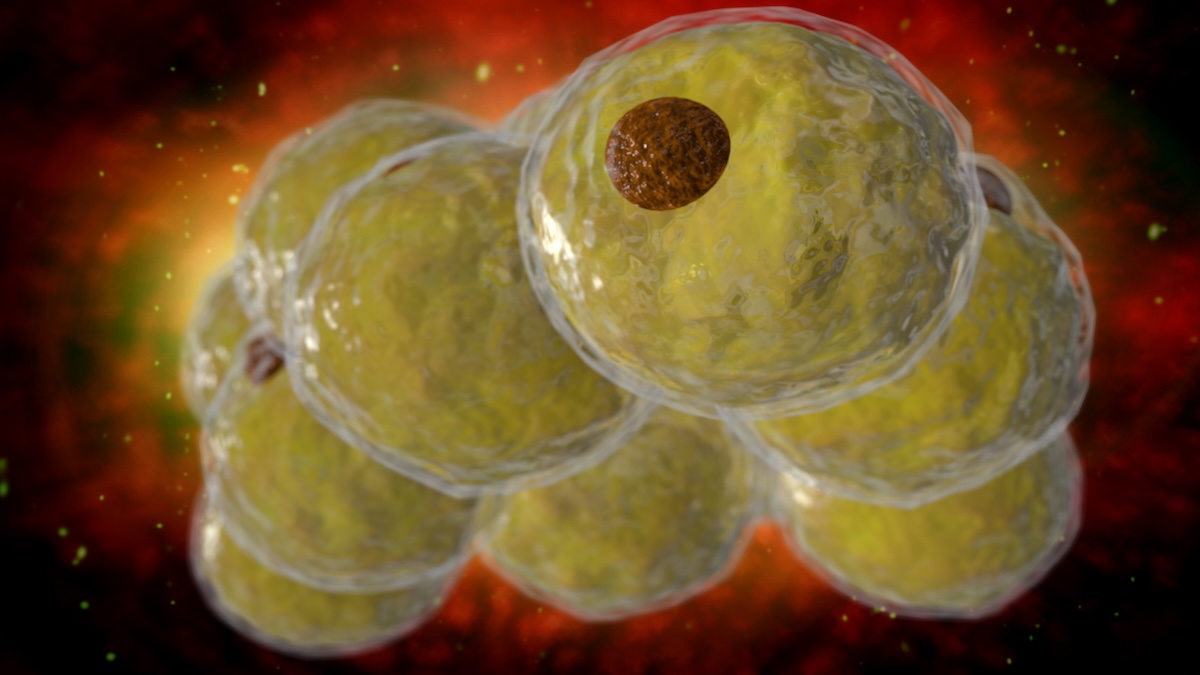
On June 1, an international group of industry and academic collaborators, led by geneticist Dieter Egli at Columbia University, released a preprint on bioRxiv demonstrating the use of base editing in human embryos (2026, DOI: 10.64898/2026.05.30.728989).
Base editing, which allows for precise swapping of one nucleotide for another without creating destructive double-strand breaks in DNA, is an evolution of CRISPR gene editing technology. The research group was able to show that this technology could, with relatively high efficiency, correct pathogenic variants of the PCSK9 and HBG genes in human embryos.
But the preprint ends with a caveat: “Though this may be a step towards heritable editing, translation to a clinical context remains premature.”
Dieter Egli led the work demonstrating base editing in human embryos. Credit:
Columbia University
Nathan Treff, chief clinical officer at Nucleus Genomics and an author on the preprint, says, “The biggest success here was that the base editing didn’t introduce aneuploidy into these embryos.” Aneuploidy, which is defined as an abnormal number of chromosomes, was an unintended effect of editing human embryos with CRISPR, as shown in a 2020 paper published by Treff, Egli, and colleagues (Cell, DOI: 10.1016/j.cell.2020.10.025).
Although the base editing didn’t result in aneuploidy, it still had significant off-target effects. The researchers observed editing at sites other than the gene of interest and cases of mosaic embryos, in which not all the cells in the embryo carry the gene edits. For those reasons, the authors argue, more work and ethics discussions are necessary before using genetically edited embryos for clinical in vitro fertilization (IVF).
Controversy surrounds heritable gene editing
Even with clinical use far off, some people find the work to be a start down a slippery slope.
David Barrett, CEO of the American Society of Gene and Cell Therapy (ASGCT), says the work is “unfortunate. It flies in the face of the moratorium that ASGCT, the International Society of Cell and Gene Therapy (ISCT), and the Alliance for Regenerative Medicine put out in May of 2025.” That moratorium proposed a 10-year ban on heritable human genome editing, genome editing in which gene edits can be passed down to subsequent generations, including editing DNA in embryos, eggs, and sperm (Cytotherapy 2025, DOI: 10.1016/j.jcyt.2025.05.007). The gene therapies that are approved or in development now work on somatic cells, creating edits that don’t make their way to the germline.
Bruce Levine, chair of the ISCT Committee on the Ethics of Cell and Gene Therapy, calls the work “worrisome,” but more for its possible implications than the nature of the work itself. “I don’t see basic research like this being concerning. What is concerning to me is the spin that I see in the preprint, and how this could be used by some actors that, let’s say, don’t have the best interests of humanity in mind.”
Levine’s concern isn’t without precedent. As advances in genetic editing have accelerated following the emergence of CRISPR gene editing in 2012, so too have calls for a moratorium on heritable human genome editing. Then in 2018 geneticist He Jiankui announced he had made edits to the CCR5 gene in human embryos, introducing an allele that provides HIV resistance. The embryos were used for IVF and resulted in the birth of twin girls with the genetic edits—and a mosaic phenotype.
Critics argued that genetic editing was unnecessary and that there were other proven ways to protect those children from HIV. Although the parents of the twins consented to having the edited embryos implanted, He was convicted of illegal practice of medicine in China, where the controversial experiment took place, and sentenced to 3 years in prison.
Basic research in embryo editing that could offer hope
In contrast, Egli and Treff’s demonstration of base editing in human embryos was never meant to produce embryos destined for implantation. And though the work has its detractors, there are others in support who see reasons to be optimistic.
R. Alta Charo, an emerita professor of bioethics at the University of Wisconsin–Madison and an independent consultant on bioethics for the biotech industry, says, “This is an exciting development on moving forward on the safety side. But the mosaicism continues to be a significant problem. . . . I am of the opinion that it is morally defensible to use [heritable] genome editing if it is in fact proven to be sufficiently safe and effective, and it is a better alternative than the others that are available.”
Alternatives to heritable genome editing that can avoid or treat genetic disease, such as preimplantation genetic testing of embryos for monogenic disorders (PGT-M), do exist. But Treff says PGT-M isn’t always effective.
“I think PGT-M is here to stay. It’s going to continue to be something suitable for a lot of people, but the reality is, not all embryos are chromosomally normal,” Treff says. Even with embryo selection via PGT-M, successful IVF is no guarantee. “Unfortunately, there’s still a lot of patients who don’t get babies with the current methodology.”
And Charo says that “IVF is an expensive and difficult procedure. . . . And it’s almost entirely a risk that’s absorbed by the woman.” She says that using genetic editing to avoid further rounds of IVF when embryos are limited “really needs to be discussed.” Treff says Nucleus, in collaboration with Egli and others, is going to continue doing the basic research on embryo editing while the ethical and regulatory frameworks catch up. “I understand that you want to avoid some rogue situation where somebody transfers an embryo without going through approval and have the appropriate data on the safety,” he says. “But I also think it shouldn’t hold back research and development in the space.”
But Barrett has a few blunt words to spare for those who see genetic editing of embryos just beyond the horizon: “Science is not ready for heritable human genome editing.”
Max Barnhart is an assistant editor and life sciences reporter at C&EN.