Agnieszka Szostok, Blanka Tarsoly and Devesh Mishra, European Sustainable Energy Week (EUSEW) Young Energy Ambassadors, discuss the socio-cultural impact of phasing out coal mining in Europe and inclusive strategies to honour heritage while transitioning to sustainable energy.
The phase-out of coal across the European Union is essential to combating climate change. However, for coal-dependent regions, particularly in Central and Eastern Europe, coal is not just a source of energy – it is part of their cultural fabric.
Understanding the socio-cultural impact of the transition away from coal is key to ensuring an inclusive transition while preserving culture and leaving no one behind.
Historical significance of coal mining in Europe
Coal mining has played a transformative role in shaping Europe’s industrial and economic history. During the Industrial Revolution of the 18th and 19th centuries, coal became the primary driver of industrialisation, powering factories, railways, and urban expansion.
In countries like Romania, Germany, and Poland, coal mining was the backbone of economic growth, providing jobs to millions.
Silesia in Poland, the Ruhr region in Germany, and Jiu Valley in Romania emerged as industrial powerhouses thanks to their rich coal reserves.
In these regions, coal was not just an energy resource; it became the foundation of local economies and fostered strong, robust working-class communities.
The danger associated with their occupation formed profound and lasting comradeship among coal miners. Coal thus did not just become a symbol of economic prosperity but also of labour solidarity within mining communities, forming a key part of regional identities.
Cultural and regional traditions tied to coal mining
In coal-rich regions, the mining industry became intertwined with local traditions and cultural identity.
For example, in Poland’s Silesia, Barbórka, celebrated on December 4th, is a vital festival that honours Saint Barbara, the patron saint of miners.
This event blends religious and secular traditions with parades, prayers, and community gatherings celebrating the mining profession and the region’s deep connection to coal.
Similarly, in Germany’s Ruhr region, coal mining is commemorated through festivals, public monuments, and museums, such as the Zeche Zollverein in Essen, a UNESCO World Heritage site.
Though the coal mines have largely closed, the Ruhr’s industrial past remains alive through such landmarks, representing the industrial development of the entire region and honouring the resilience and all the hard work that made it possible.
In Romania’s Jiu Valley, the historic Lupeni strike of 1929 came to represent the miners’ collective struggle for better and more fair working conditions. The strike’s legacy spans from features in songs, movies and statues, and up until 1989, Miners’ Days was also celebrated.
The impact of the decline in coal mining
The closure of coal mines across Europe has brought significant economic and social challenges to mining communities.
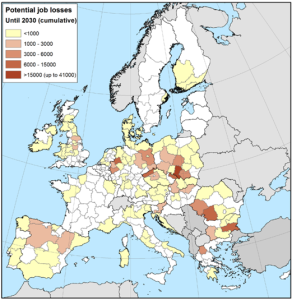
Unemployment rates surged as mines closed, leading to population decline and the erosion of long-standing traditions. In many cases, younger generations have moved away in search of opportunities, leaving behind ageing populations and weakening local economies.
Potential job losses connected to the coal industry. (Source: Joint Research Centre (JRC), 2018)
While environmental awareness has grown, and the push for renewable energy has gained momentum, coal regions have struggled to adapt.
Local traditions and cultural heritage tied to coal mining are at risk of fading as these communities grapple with the changes.
Rebuilding collective identity: The way forward
Moving forward, it is crucial to find ways to re-imagine identities tied to coal extraction to ultimately create an energy transition that encompasses a cultural shift, too.
Proposal 1: Local energy communities
Local energy cooperatives and renewable energy projects could help restore a sense of belonging to regions transitioning away from coal.
By involving locals in the management and ownership of new energy initiatives, these projects can provide new economic opportunities and foster community spirit, much like coal mining once did.
Evolving existing coal traditions and festivals by adding a new focus on the energy transition could help keep traditions alive while introducing a focus on sustainability.
This approach could highlight both the importance of the energy transition and the value of honouring the hard work and culture of coal mining communities.
This opinion editorial is produced in co-operation with the European Sustainable Energy Week 2025. See ec.europa.eu/eusew for open calls.
This initiative signals a major step forward for Europe in building a thriving ecosystem to train advanced AI models and create innovative AI solutions.
With seven proposals selected for implementation, the European Union is moving closer to fulfilling President Ursula von der Leyen’s vision of establishing AI Factories as central pillars of Europe’s digital transformation.
Henna Virkkunen, Executive Vice-President for Tech Sovereignty, Security and Democracy, emphasised the significance of the initiative for Europe’s AI landscape.
She said: “Today, we are one step closer to setting up AI Factories. Using European supercomputers, we will enable AI start-ups to innovate and scale up.
“Now, we are ready to lead with the right infrastructure in our ambition for the EU to become the AI continent. We are on track to make the AI factories initiative a reality in the first 100 days of the new European Commission. We expect a second wave of offers on 1 February.”
How AI factories will boost Europe’s AI leadership
Advancing AI capabilities is an urgent priority for Europe, given the intensifying global competition in this transformative technology.
Strengthening AI will not only secure Europe’s leadership but also unlock significant economic, technological, and societal benefits.
AI Factories can boost economic growth by empowering start-ups and SMEs to scale operations, create jobs, and enhance competitiveness in critical sectors.
These factories centralise the essential elements for AI success: massive computing power, abundant data, and skilled talent, providing advanced computing resources to enable businesses to innovate and thrive in the digital economy.
AI Factories foster collaboration among academia, industry, and policymakers, creating an ecosystem for innovation. This approach positions Europe as a leader in developing ethical and sustainable AI solutions to address global challenges.
These hubs provide the infrastructure needed to develop specialised AI models for key sectors such as healthcare, manufacturing, cybersecurity, agriculture, and the green economy. By focusing on strategic industries, Europe can strengthen its global competitiveness in AI-driven technologies.
Strategic locations for collaboration and growth
The AI Factories will be hosted at leading research and technology centres across Europe. The chosen locations include:
BSC AIF (Barcelona, Spain)
IT4LIA (Bologna, Italy)
LUMI AIF (Kajaani, Finland)
Meluxina-AI (Bissen, Luxembourg)
MIMER (Linköping, Sweden)
HammerHAI (Stuttgart, Germany)
Pharos (Athens, Greece)
Each site will play a crucial role in fostering collaboration among universities, supercomputing centres, industry leaders, and financial institutions.
This distributed network ensures that AI expertise and resources are accessible across Europe, encouraging cooperation and innovation on a continental scale.
For example, Finland’s LUMI AIF and Spain’s BSC AIF will feature experimental platforms designed to test innovative AI models and applications, further driving progress in the field.
A transformative investment in AI infrastructure
The AI Factories initiative represents a transformative €1.5bn investment, supported by both national governments and EU funding.
Half of this amount is financed through the Digital Europe Programme and Horizon Europe, underscoring the EU’s commitment to advancing AI infrastructure and services.
Five of the selected locations will deploy new, state-of-the-art supercomputers optimised for AI, while the remaining sites will benefit from significant upgrades to existing infrastructure.
These investments are expected to more than double EuroHPC’s computing capacity by 2026, positioning Europe as a global leader in AI research and application.
The establishment of Europe’s first AI Factories marks a turning point in the continent’s digital transformation. By bringing together advanced infrastructure, talent, and resources, these hubs promise to revolutionise the development and application of artificial intelligence.
As Europe moves closer to deploying these factories in 2025-2026, the continent is taking a decisive step toward a future where AI drives economic prosperity, societal well-being, and global influence.
This initiative is not just about technology; it is about shaping Europe’s role in a rapidly evolving world.
The United States Department of Energy (DOE) has announced a significant $52m investment to support six innovative projects aimed at advancing the production of low-carbon intensity energy crops.
This energy crops initiative, spearheaded by the Bioenergy Technologies Office (BETO), is a critical step toward creating a sustainable bioeconomy and achieving the United States’ clean energy goals.
Energy crops explained
Energy crops are plants specifically cultivated to produce biofuels, bioproducts, and renewable energy.
Unlike traditional crops grown for food or feed, energy crops are purpose-grown to serve as alternative carbon sources, helping reduce greenhouse gas emissions and dependency on fossil fuels.
Common examples include switchgrass, miscanthus, high biomass sorghum, and shrub willow, among others.
These crops play a vital role in the global energy transition by enabling the production of sustainable aviation fuels (SAFs) and renewable chemicals, which are essential for decarbonising sectors like transportation and industry.
By leveraging energy crops, the US can also stimulate rural economies, support farmers, and strengthen agricultural resilience.
Jeff Marootian, principal deputy assistant secretary for DOE’s Office of Energy Efficiency and Renewable Energy, explained: “DOE’s investment in biofuels and bioproducts is critical to the federal government’s efforts to support innovative energy research.
“Expanding our domestic supply chain of energy crops, like algae and switchgrass, will ensure that we can continue to develop cutting-edge technologies that significantly reduce greenhouse gas emissions, create high-quality jobs across the agricultural industry and increase our energy independence.”
Accelerating the clean energy bioeconomy
BETO’s $52m funding will support six university and industry-led projects focused on expanding the domestic supply chain of energy crops.
These initiatives aim to develop purpose-grown feedstocks like microalgae, pennycress, carinata, and camelina alongside other biomass resources.
With field and pond experiments planned across 18 states, the projects will generate data on agronomic practices and geographic adaptability, addressing the challenges of scaling these crops in diverse environments.
This investment aligns with DOE’s broader mission to advance technologies that utilise renewable carbon resources.
By creating low-carbon alternatives to petroleum-based fuels and products, the initiative not only helps combat climate change but also bolsters the US agricultural and industrial sectors.
SAFs, derived from renewable feedstocks, are pivotal in reducing aviation’s carbon footprint. By 2030, the US aims to produce three billion gallons of SAF annually, increasing to 35 billion gallons by 2050. These volumes are sufficient to meet 100% of the nation’s projected aviation fuel demand.
Additionally, the initiative supports DOE’s Clean Fuels and Products Shot™, which targets an 85% reduction in greenhouse gas emissions in the fuel and chemical industries by 2035.
Energy crops will play a central role in achieving this objective by offering cost-effective, sustainable feedstocks for bioenergy and renewable chemicals.
Regional Biomass Resource Hub Initiative
The funded projects will be integrated into the newly established Regional Biomass Resource Hub Initiative (RBRH), led by Idaho National Laboratory (INL). This collaboration will ensure that data, methodologies, and experimental results are shared among participants, streamlining progress toward shared objectives.
The RBRH aims to address regional challenges in mobilising biomass resources. By working closely with farmers, policymakers, universities, and industry stakeholders, the hub ensures that the benefits of energy crop production extend to local communities and economies.
This coordinated approach enhances the scalability and economic viability of energy crops, setting the stage for widespread adoption.
Energy crops will transform agriculture and industry
Energy crops represent a transformative opportunity for both the agricultural and industrial sectors. For farmers, they provide an additional revenue stream and promote sustainable land use.
For industries, they offer a renewable source of carbon for producing biofuels, bioplastics, and other green products. By focusing on purpose-grown crops, the US is poised to lead the global transition to a low-carbon economy.
A vision for the future
The $52m investment in energy crops underscores their critical role in the clean energy transition. As these projects unfold, they will drive innovations in biomass production, foster economic growth in rural areas, and help achieve the nation’s ambitious climate goals.
By prioritising energy crops, the US is not just investing in renewable energy—it’s investing in a sustainable future for all.
As these projects gain momentum, energy crops will become an indispensable part of the clean energy puzzle, powering a more sustainable and resilient world.
Engineers need new materials to make computer chips—and the devices they power—even smaller and more efficient.
Faculty members from the University of Dallas, collaborators, and industry partners have teamed up to design and test indium-based materials to manufacture the next generation of computer chips.
The UTD funding is part of $42.4m in FuSe2 grants announced in September to support the goals of the federal CHIPS (Creating Helpful Incentives to Produce Semiconductors) and Science Act of 2022.
This aims to make computer chips more energy-efficient and facilitate the domestic production of integrated circuits.
Improving the performance of computer chips
By introducing indium-based materials, the researchers aim to facilitate patterning in the extreme ultraviolet (EUV) range. Patterning, or lithography, is a key step in the semiconductor fabrication process in which patterns are created on the surface of a wafer to serve as pathways for transistors and other components.
Moving from deep UV to EUV range makes it possible to produce smaller, more precise features on computer chips for better performance and energy efficiency.
During the traditional patterning process in the manufacturing of computer chips, silicon wafers are coated with a removable layer of material called a photoresist before being exposed to UV photons.
The next generation of lithography uses very high-energy photons — 92 electronvolts — in the EUV region. Due to the high energy of these photons, conventional photoresist materials will not work.
The researchers’ new materials also could enable the production of 3D circuits, which are designed by stacking layers of chips like high-rises in a crowded city.
New materials are needed to build added layers on a 3D chip without disturbing the existing circuits.
Better semiconducting properties without overheating
“If you are making a layer of devices on top of another layer of devices, you cannot heat it to a high temperature. Otherwise, you will destroy the existing layers,” explained Dr Julia Hsu, professor of materials science and engineering and leader of the study.
Using indium-containing materials for the EUV photoresist and the transistors should lead to more efficiency in computer chips by eliminating a step in integrated circuit manufacturing that involves solvents.
The researchers are testing a technique called photonic curing to convert EUV-patterned structures to nanoscale devices.
Photonic curing uses pulses of light at high intensity but low energy to complete the chemical reactions that allow the indium oxide to achieve better semiconducting properties without overheating the underlying devices.
Incorporating machine learning into the process
Hsu’s preliminary work on indium-containing materials as an EUV photoresist has been supported by a Semiconductor Research Corporation (SRC) grant to investigate new materials for computer chips.
Hsu also plans to incorporate machine learning — a method she learned with support from a 2023 Simons Foundation Pivot Fellowship — into the project’s design and testing methodologies.
“The FuSe2 project will enable us to take our preliminary results from the SRC project to a much higher level and bigger impact,” Hsu said.
“We will bring computation and synthetic chemistry to expand beyond currently commercially available materials.”
Key collaborations in the project
Hsu’s co-principal investigators include Dr Cormac Toher, an assistant professor of materials science and engineering and computational materials scientist, and Dr Kevin Brenner, an assistant professor of materials science and engineering.
Toher will design the indium-containing molecules, and Brenner will fabricate and test the devices.
The project also includes semiconductor industry workforce training for community college students through UTD’s North Texas Semiconductor Institute and a class that Hsu will teach as an immersive experience in the semiconductor industry.
A £200m investment in the UK’s main research and laboratory testing facility will bolster the country’s fight against dangerous animal diseases.
The Animal Plant Health Agency’s laboratories at Weybridge, which protect the country against the increasing threats of animal diseases, will now be safeguarded and enhanced – ensuring we maintain our world-leading scientific and veterinary capability.
The move will help deliver on the government’s Plan for Change mission to deliver growth by helping to protect profits for farmers and other food producers.
Upgrading critical facilities to respond to disease outbreaks
However, the government inherited the laboratories in poor condition with their long-term future in doubt – posing a significant risk to Britain’s farmers and human health.
It is a critical national infrastructure and a global centre of expertise in a wide range of animal diseases, providing ‘end to end’ capability from research to outbreak response.
The threat from zoonotic diseases is increasing globally, with nearly two-thirds of infectious diseases in humans originating in animals, such as Avian Influenza and bovine tuberculosis.
The funding will enable the APHA to replace and upgrade the biosecurity facilities, providing increased capability to prevent, detect and respond to disease outbreaks.
This new science hub will provide additional capacity to meet both current and future requirements, including enhancing its ability to handle concurrent major disease outbreaks.
Protecting farming from outbreaks of animal diseases
Development is essential in safeguarding the livelihoods of farmers and rural communities, who face significant impacts from outbreaks of animal diseases, such as movement restrictions and livestock loss.
The export of livestock, meat and meat products, dairy, and animal by-products is worth £16bn per year to the UK economy. APHA’s services safeguard these exports.
The funding pledge underlines the government’s commitment to shielding our farmers from the devastating impacts of animal diseases.
Environment Secretary Steve Reed explained: “Animal diseases represent a significant risk to Britain’s farmers, global trade and human health.
“Recognising the importance of protecting our farming and food sector to deliver growth across the UK, we are bolstering our national biosecurity and safeguarding the county from these diseases with a £200m investment into our scientific capabilities.”
APHA is at the forefront of managing the UK’s biosecurity
APHA’s vital work includes leading the current operational response to the impacts of Avian Influenza and Bluetongue virus (BTV-3), which has been affecting farmers across the country.
This includes testing thousands of samples, which requires significant laboratory capacity.
“APHA is at the forefront of tackling animal and plant disease outbreaks, with our experts working around the clock to manage threats to the UK’s biosecurity,” said Jenny Stewart, Animal Plant Health Agency Chief Executive.
“This funding is hugely welcomed to support crucial upgrades that will allow us to continue delivering disease surveillance, detection, and research work that protects against new and existing threats of animal diseases.”
She concluded: “Our work is world-leading, and this funding affirms the government’s commitment to protecting animal and plant health and will help us protect the economy from disease risk.”
The risk to our biosecurity will continue to rise in the years ahead due to a changing climate, as it will ensure new pathways for pests, pathogens and invasive species.
This investment will help ensure we are better prepared for the future.
Circular Economy Minister Mary Creagh has announced that online marketplaces and vape producers will soon be paying their fair share of the cost of recycling electrical waste, levelling the playing field for UK retailers.
Ensuring large online retailers pay their fair share is fairer for UK businesses who already pay to cover the costs of recycling electrical waste.
It comes as the government delivers on its Plan for Change and reflects a further step in its mission to boost economic growth.
The changes will also help fund recycling services and kick-start the country’s transition to a circular economy, which is the government’s top priority.
Over 100,000 tonnes of electrical waste is incorrectly thrown away
Research from Material Focus estimates that British households incorrectly throw away over 100,000 tonnes of smaller household electrical items, such as kettles and lamps, every year.
In addition, an estimated 880 million unwanted items containing valuable commodities, such as gold and platinum, are abandoned or ignored in the back of the UK’s cupboards and drawers.
Under the new plans, online marketplaces will need to register with the Environment Agency and report data on UK sales of their overseas sellers.
This data will be used to calculate the financial contribution the online marketplace will make towards the costs of collecting and treating waste electricals collected by local authorities and returned to retailers.
A new category of electrical equipment for vapes will also be introduced to ensure that the costs of collecting and treating vapes fall fairly on those who produce them.
Vapes are rarely designed with the end of life in mind and are difficult and time-consuming to recycle, a cost that is not always being borne by those who produce them.
Acting on these important issues now will help address unfairness and deliver on our commitment to kick-start the push towards a circular economy.
New measures will reduce the likelihood of fly-tipping
Before now, UK-based firms were shouldering the majority of costs around the collection and processing of electrical waste and operating at a disadvantage.
With 100,000 tonnes of household electricals binned every year, the changes will, for the first time, make sure the burden of these costs does not unduly fall on UK-based retailers compared to their online rivals.
Electrical waste is difficult to recycle and represents a huge drain on resources when they are not collected separately.
Valuable metals such as copper are needlessly thrown away, while electrical components and chemicals can pose a health and safety risk to the waste industry.
In conjunction with this government’s wider actions to tackle waste and promote recycling, today’s announcement will help to ensure that businesses take responsibility for the huge quantities of waste that might otherwise end up being littered or fly-tipped and support our efforts to protect the environment.
Circular Economy Minister Mary Creagh said: “Electrical equipment like vapes are being sold in the UK by producers who are failing to pay their fair share when recycling and reusing or dealing with old or broken items.
“Today we’re ending this: creating a level playing field for all producers of electronics, to ensure fairness and fund the cost of the treatment of waste electricals.”
She concluded: “As part of our Plan for Change, we are helping UK businesses compete and grow, and we continue to get more households recycling, cracking down on waste and ending the throwaway society.”
Further government action to promote a circular economy
To further deliver on circular economy goals, the UK Government has formed a Circular Economy Taskforce, comprising members from industry, academia, and civil society across the UK.
They will lead the development of a circular economy strategy for England, which will be published next year and outline how individual sectors can contribute to ambitions in this area.
This is alongside plans to move forward with implementing the deposit return scheme for drinks containers and extended producer responsibility for packaging that will end the nation’s throwaway culture and stop the avalanche of rubbish that is filling up our high streets, countryside, and oceans.
These packaging reforms will collectively support 21,000 jobs, stimulate more than £10bn investment in recycling capability during the next decade, and drive £1bn worth of investment opportunities in plastics infrastructure.
In the spring of 1987, I stooped over the desk in my shared student office in Cambridge, England, running my finger across a map of Papua New Guinea and squinting at the tiny typescript. I was trying to establish the location of a cluster of tribes in the rainforest known as the Baining. Only one of those tribes was known to anthropology; the others were a mystery. As a young Ph.D. researcher, my ambition was to make friends with people as culturally different from me as it would be possible to find anywhere on the face of the Earth and to ask if I could live with them for two years.
After a very long series of flights and an arduous trek through the rainforest, I finally came face-to-face with the Mali—one of those elusive Baining groups I had been dreaming about. To my surprise, the Mali were much more like me than I could possibly have imagined. It wasn’t just that they had the same basic material needs and wants, but they also shared with me—and my compatriots back in England—fundamentally similar moral concerns, supernatural inclinations, loyalties and rivalries, as well as a deep appreciation of music, dance, and other artforms. Nevertheless, the Mali also had a great deal of knowledge and wisdom that was new to me. For one, they knew how to build very large families.
By large families I don’t just mean that they had lots of offspring—which was indeed true of many households in the village. What I mean is that they had the ability to conceptualize vast portions of humanity as one giant family, descended from common ancestors and related both physically and spiritually. Now, more than 35 years later, in a world increasingly torn apart by destructive regional conflicts and forms of polarization, I cannot help wondering if the wisdom of the Mali could help us to rethink the way we manage cooperation in the 21st century.
The Mali lived on a tropical island roughly twice the size of Wales, studded with mountains and active volcanoes and blanketed in jungle. They built their houses in small clusters around a village clearing of well-trodden earth. They used timber from the surrounding forest to create uprights and rafters, strips of interwoven bamboo for the walls, and long strands of grass to thatch their roofs.
ADVERTISEMENT
Nautilus Members enjoy an ad-free experience.
Log in
or
Join now
.
They fed themselves on tubers and fruits grown using methods of slash-and-burn horticulture, supplemented by the meat of domestic pigs and fowls as well as bats, snakes, marsupials, and wild boar hunted in the forest. Some people grew coffee or copra to sell for small sums of money to traders. The fate of such crops was a mystery to their producers. Clearly you couldn’t eat the stuff. But the coins you received in return were very useful. You could buy bush knives and axes, which were more efficient at cutting down trees or butchering animals than traditional stone tools. But money also had another use. It could bring you closer to your ancestors.
I soon realized that families were more than just groups of living relatives. They encompassed a multitude of invisible spirits of the dead, who moved among us, taking an active interest in our comings and goings. As one of the leaders in my village put it, “The eyes of the ancestors see all our thoughts and deeds, and the things we say. The ancestors can sometimes discern observances and violations of the law, even though we are not aware of what we are doing” (my translation).
The red coloration should be created by lacerating our tongues and spitting out the blood.
The ancestors were thought to see into our hearts and minds and evaluate our behavior, as well as to observe everything we said and did. Every day the people in my village left out offerings of food and water in special temples so that the ancestors would come to eat and drink. When the spirits of the deceased gathered in this way, they were said to form the “village government.”
ADVERTISEMENT
Nautilus Members enjoy an ad-free experience.
Log in
or
Join now
.
The village government comprised hundreds, possibly thousands of ancestors. Many were loved ones and remembered fondly—mostly victims of common diseases like malaria, which continually claimed people’s lives. But many were also remembered only by name, being from generations long past. The members of the village government loved them, and their living descendants loved them in return.
But the village members were always letting them down through their sinful ways. Somebody would forget to perform the right ritual, teenagers would sneak off to have sex in the forest, a man would promise to help his cousin in the garden and then fail to turn up. The ancestors saw it all. And that’s when money became most useful. There were special receptacles in the temple, where people could place the coins they had accrued from selling crops, and in return receive forgiveness for their sins.
This practice was inspired by Catholic missionaries. On his occasional visits, a priest would conduct a Mass and hear confessions in the village, but nobody believed his rituals did any good. People humored him out of politeness, but they knew that the real way to their ancestors’ hearts was through the temple rituals.
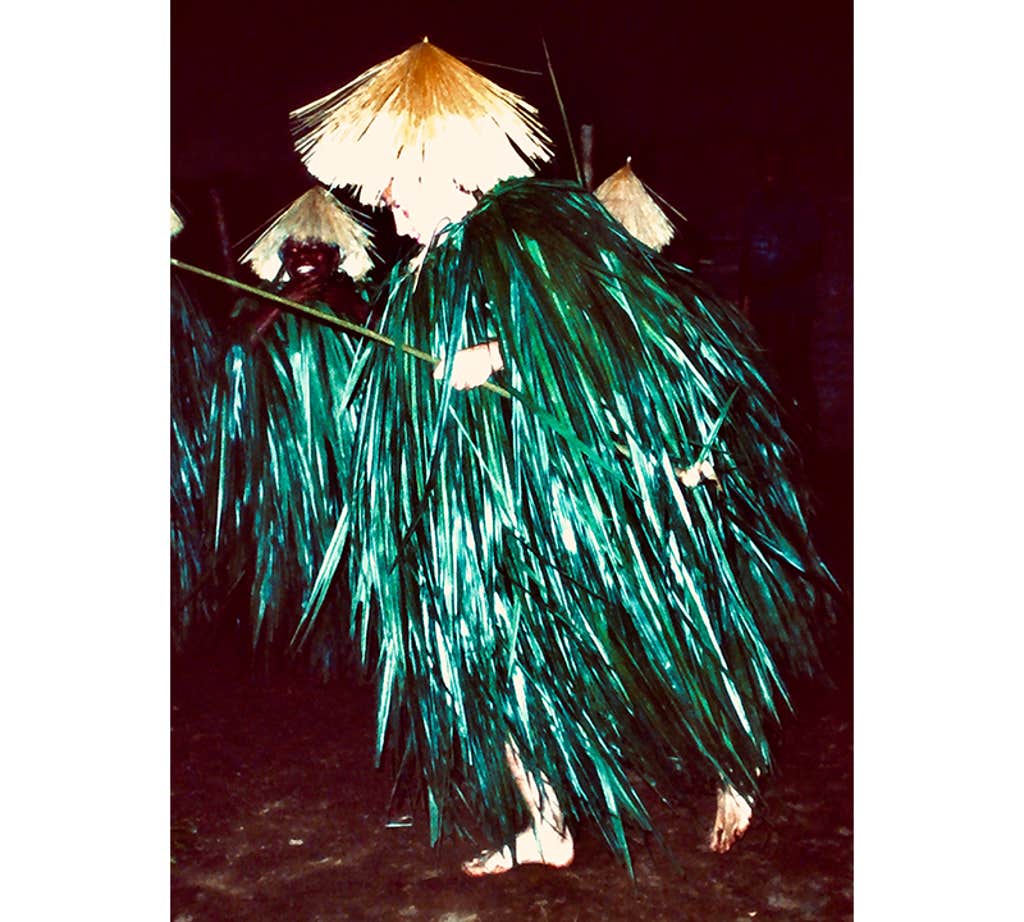
DANCE OF THE ANCESTORS: “When I first danced wearing this costume—in a ceremony to honor the group’s ancestors—I carried a long cane to demonstrate my ferocity,” writes author and anthropologist Harvey Whitehouse. Photo courtesy of Harvey Whitehouse.
ADVERTISEMENT
Nautilus Members enjoy an ad-free experience.
Log in
or
Join now
.
One day, the ancestors—gratified by the acts of devotion bestowed upon them in the temple rituals—would return from the dead and our giant family would be reunited. When this happened, it was said that the ancestors would have white skin and straight hair, just like the British, Germans, and Australians who had colonized New Guinea, bringing with them unfathomable wealth and technology.
As a young white man with passionate anti-racist convictions, I was horrified to learn about this dogma. For me, the obvious remedy was to eliminate the association between white skin, power, and wealth by establishing a more equal society in which all skin colors would be regarded with equal respect and pride. But for my Mali friends, the solution was to become one with the colonial invaders by themselves becoming white.
It was said that the returning ancestors would be rich beyond compare. And they would share this wealth with their descendants who, in turn, would peel off their earthly skin, and the many wounds and scars acquired from hard living, to discover unblemished white skin beneath. Then all of us would enjoy a period of eternal peace, health, and prosperity together.
The community I lived with frequently gathered in the village meeting house, to discuss how best to strengthen our bonds with the ancestors and hasten the miracle of their return. Sometimes people would ask me questions about England and listen in astonishment to my tales about the rituals of my college in Cambridge—especially the strange rules relating to dining etiquette, such as the wearing of gowns, saying grace in an ancient language, and passing the port in one direction only.
ADVERTISEMENT
Nautilus Members enjoy an ad-free experience.
Log in
or
Join now
.
People wanted to know if the food was laid out in the same way as in our village temples? Did all the paintings on the walls around the dining hall depict our ancestors? Why was King’s College Chapel so big? How many ancestors did the college have? Sometimes people would ask me probing questions about why I was sent to live with the Mali. How did I acquire the seemingly endless supply of money in my pockets?
I explained that my doctoral research was funded by a grant from the Economic and Social Research Council—public funds, raised from taxes. There was no other way to explain this in the local language than to use the word “government.” But as soon as I uttered it, I realized I had been misunderstood. The entire community fell silent. “So, you were sent to us by the village government?” asked one of the elders.
Later, one of my closest confidants told me of a rumour that my presence in the village was a sign. “A sign of what?” I wanted to know. He said they believed I was an ancestor, and this was a portent that more would follow. It seemed to me quite incredible that anyone could mistake me for an ancestor. I was possibly the most incompetent person in the village when it came to almost anything of importance: gardening, hunting, cooking, or even speaking properly. “And what do you think?” I asked. He paused, apparently mulling it over. “I think you are an ancestor,” he said at last.
Becoming an ancestor was one way of joining the Mali family—albeit rather unusual and not without its drawbacks. Another way was to be initiated into the tribe. I first learned about this from one of the elders, who had become used to my endless questions about the arts of warfare and raiding, how to catch pythons without getting killed, or which kinds of magic were needed to find a lost dog. When I started asking about initiations, his voice dropped to a whisper.
ADVERTISEMENT
Nautilus Members enjoy an ad-free experience.
Log in
or
Join now
.
Most of what he told me involved the secret techniques for making dancing costumes and masks. But two aspects of his account became lodged in my memory more firmly than the rest. One was that the red coloration on the masks should be created by lacerating our tongues and spitting out the blood to use as paint. The other was that we should have penis extensions fastened to us by a belt secured at our back by sharpened bones driven through the skin at the base of our spines.
When my time came to be initiated, I got off lightly. I was put through a sanitized version of the rituals, in which red paint was used instead of my blood and my dancing costume was secured by a knot, without having any sharp objects thrust into my body. But even though I was spared the most painful elements, I will never forget the pride I felt when I danced before the entire community, along with the other initiated men dressed in all our finery. I was part of the Mali family—whether or not I was also one of its progenitors.
The entire community fell silent. “So, you were sent to us by the village government?”
Then one day there was a terrible storm. As high winds and torrential rain swept through the village, some of us huddled together in the meeting house, trying to keep the fire going. People began to tell stories about tropical storms, and someone mentioned the time that a cyclone hit Australia, to the south of us.
ADVERTISEMENT
Nautilus Members enjoy an ad-free experience.
Log in
or
Join now
.
Stories about Australians whose houses had been destroyed had traveled far and wide. To my astonishment, I learned that the people in the community and hundreds of others like it throughout the rainforest had been so appalled to hear of the suffering of their “brothers and sisters” in Australia that they decided to donate much of the money they had collected in their temples to help victims of the storm.
Nobody seemed to realize that their rich neighbors in Australia were mostly well insured or that their emergency services were well equipped to help them get through the disaster. Or maybe it didn’t matter. The way they spoke about it, the Australians were like family to them. And when family is in need, you do what you can. That’s what family is for.
I returned to Cambridge in the fall of 1989, and I was soon back at my desk surrounded by books. But I found myself frequently reflecting on this extraordinary act of generosity and especially the idea that family could be extended to include people from other cultures one will never meet and even to the dead who may one day return. As an anthropologist, I had read many theories about kinship, but none of them seemed to capture exactly the ways of thinking I had encountered in the rainforest. It gradually dawned on me that kinship boiled down to the sharing of something essential to oneself with other people.
This special “something” could be some feature of your body. Where I grew up in England, we talked about shared blood among family members. In other places it might be bones or even something intangible like the Polynesian concept of mana—the spiritual power or lifeforce associated with heritable positions of high social status. But however we conceptualize it—and whatever we call it—this essence is something we inherit from our ancestors. It connects us to them and to each other.
ADVERTISEMENT
Nautilus Members enjoy an ad-free experience.
Log in
or
Join now
.
This is how we create tribes based on shared descent—and how we create the idea of ethnic groups whose shared ancestry is passed down in the form of traits we can see on the body. My family in the rainforest connected themselves in this way to me and even to people in Australia they had never met. This helped me to understand better their belief that we all share the same skin underneath.
But there was another way of sharing essences with other people. This way involved sharing something in the mind rather than in the body. It involved sharing experiences and memories that were essential to your autobiographic self, your sense of who you were as a person. That’s how the initiation rituals worked. They created memories of emotionally intense, life-changing experiences that were shared with other members of the group and with their ancestors.
If the tribe members in Papua New Guinea were capable of using these same methods of group-bonding to help people in faraway countries, then maybe they could teach us how to tackle cooperative problems on an even larger scale. By realizing that we are indeed one global family—descended from common ancestors—perhaps all of us may be capable of the same acts of generosity.
Lead photo: The Mali, an Indigenous group in Papua New Guinea, in a ceremonial dance. Photo courtesy of Harvey Whitehouse.
In this issue of Nautilus, we bring you a new understanding of kinship—and how it can unite us, ocean waves, and even distant stars.
In the rainforests of Papua New Guinea, the Mali tribe has long practiced a valuable skill: building huge families. These aren’t genealogies created through blood and marriage, mapped out into discrete trees. As the British anthropologist Harvey Whitehouse discovered in his years of living among them, “they had the ability to conceptualize vast portions of humanity as one giant family … related both physically and spiritually.”
When a natural disaster struck Australia, a well-resourced country more than a thousand miles away, the tribe, which had lean economic resources, felt inspired to pool what they had and donate it to disaster relief. To the Mali, the Australians weren’t former colonizers. They weren’t even neighbors. “The way they spoke about it, the Australians were like family to them,” Whitehouse writes, wondering if this radical disregard for geopolitical, economic, and historical boundaries could help illuminate a different way forward in a deeply fractured century.
But kinship extends far beyond other humans, even other animals. We seem driven to find relatedness throughout the natural world, as Nautilus associate editor Kristen French discovered on a recent reporting trip to Brazil. There, she unpacked her surfboard and communed with the first ocean wave to be granted personhood status. It now has its own right to existence, protected under law. The wave is opaque with sediment, polluted, hard to surf. But as one local anthropologist and surfer told French, it “brings to us this kind of request for listening … to understand the language of nature,” an effort to remind people they are also a part of the planet and its cycles.
ADVERTISEMENT
Nautilus Members enjoy an ad-free experience.
Log in
or
Join now
.
On the flipside, some kinships we create can work against us. A growing view of artificial intelligence as kin to the human brain is eroding our sense of what’s special about our own abilities to reason and make good judgments. As philosopher and AI ethicist Shannon Vallor explains to Nautilus contributor Philip Ball, large language models that employ artificial intelligence are superficial analogies to the brain. In fact, Vallor says, LLMs are more like “mindless toasters that do a lot of cognitive labor without thinking.”
In the stories ahead, we’ll explore these unexpected minefields of our quest to relate to AI, surf the protected wave in Brazil, and travel to Papua New Guinea to learn what the concept of family can truly mean. We’ll also learn about what inspires animals to adopt, discover siblings among stars, and more.
It turns out that what connects us is bigger than we thought.
Lead image: melitas / Shutterstock
ADVERTISEMENT
Nautilus Members enjoy an ad-free experience.
Log in
or
Join now
.
Katherine Harmon Courage
Posted on
Katherine Harmon Courage is the executive editor at Nautilus.
Get the Nautilus newsletter
Cutting-edge science, unraveled by the very brightest living thinkers.
Scattered across the universe are stars that shine subtle hints of a shared ancestry. They might be thousands of light-years apart, almost indistinguishable from other, nearer stars that surround them, but similarities—their ages, their compositions, and their orbits—reveal a common origin story. And astronomers can now use these stellar kin-groups to reconstruct the chaotic, often violent, history of galaxies.
Galaxies are the bustling cities of the universe, home to almost all its stars, and through their histories, we can learn about the grand forces that shape the organization of matter.
To trace these stellar genealogies, scientists look to the stars’ conception. Stars are rarely born alone. Instead, a single massive cloud of gas and dust—called a giant molecular cloud—filled with a particular proportion of elements will spontaneously collapse and fragment, popping out tens, hundreds, and sometimes thousands of stars at once. The famous Orion Nebula, a delight to backyard astronomers, is one such active star-forming region.
But shortly after their birth, these stars begin to leave the nest. While initially tightly knit, they do not possess enough gravity to bind to each other. Any little disturbance—a passing neighbor nebula, gravitational interactions with each other—sends the stars farther away from each other on a path chosen through sheer random chance, like spilled salt scattering on the counter. In only a few million years, the stars, once birthed from the same gas cloud, can be tens of thousands of light-years apart, each one set to follow its own orbital trajectory around the galaxy.
ADVERTISEMENT
Nautilus Members enjoy an ad-free experience.
Log in
or
Join now
.
It’s in the details—a similar orbital origin point, a mutual age, a common abundance of heavy elements—that stars retain a blueprint of their birthplace. And scientists are now able to start charting these pasts.
Shortly after their birth, stars begin to leave the nest.
By matching these properties to that of the sun, for example, in 2014 astronomers were able to find our own first-known stellar sibling. Located in the constellation Hercules and sitting 110 light-years away, the star, named HD 162826, can be seen with a small telescope. The discovery came as a surprise. Even though the sun likely has thousands of siblings, they were thought to be so far away by now as to elude confirmation of a match. But HD 162826 just happened to be close enough that the team could confirm its abundance of elements and reconstruct its orbital motion, indicating that four and a half billion years ago, that star and our sun likely shared a point of origin.
Essentially all stars belong to one such family group or another. If the group is young enough, such as the well known Pleiades cluster, then the identification is easy. There simply hasn’t been enough time for the members to scatter away, and the stars still live in the same neighborhood. But most stars cannot be matched to their siblings; it takes extensive surveys covering millions, if not billions, of stars to tease out the signatures of a few kin groups. The vast majority of those identified groups are easily identified as members of the Milky Way.
ADVERTISEMENT
Nautilus Members enjoy an ad-free experience.
Log in
or
Join now
.
But among the 300-odd billion stellar denizens of the Milky Way, there are some groups that simply … don’t belong. They have an odd abundance of elements, or strange orbital properties. They don’t share the genetic properties of the bulk of our galaxy’s stars.
Take, for example, the oddly named Gaia Sausage, discovered in 2018. The “Gaia” comes from the European Space Agency’s Gaia spacecraft, which has amassed, so far, a catalog of more than 2 billion stars with detailed information on their properties. The “sausage” part is less obvious. When astronomers plot the circular motion versus the radial motion of stars in our galaxy, a large elongated, sausage-like lump appears in the plot, made up of a collection of stars unlike the others in the Milky Way.
But these stars in the Gaia Sausage haven’t remained clustered together. They are currently scattered all around the Milky Way, their thin threads of commonality all that betrays their shared history. They have a common proportion of heavy elements, or “metallicity.” And their orbits are extremely elliptical, bringing the stars brushing up against the core of the galaxy then flinging them back out more than 60,000 light-years away. In their commonality, they tell the story of a once-mighty galaxy eventually consumed and obliterated.
Cosmologists give this process an innocent-sounding name: hierarchical galaxy formation. But what that means is that our contemporary Milky Way, like all massive and proud galaxies in the universe, has lived a violent life, and only acquired its present-day bulk through devouring its neighbors.
ADVERTISEMENT
Nautilus Members enjoy an ad-free experience.
Log in
or
Join now
.
Billions of years ago, there were no galaxies. In this period, some 100 million years after the Big Bang, there weren’t even any stars. There was just a relatively smooth continuum of hydrogen, helium, and dark matter spread across the universe. But within that continuum, there were small density differences, places of slightly higher or lower density. Over time—hundreds of millions of years—those regions of higher density accreted more and more material, forming the gravitational seeds that would eventually grow up to become galaxies and form stars of like-histories. As smaller galaxies venture too close to large ones, their constituent stars get consumed and scattered within them.
We can only understand the details of galactic mergers through computer simulations that recreate these titanic events, tracing them through the shared lineages of these ancient, subsumed stars. Through these simulations, cosmologists see just how cataclysmic the process is.
In the case of a minor merger, when a large galaxy such as the Milky Way consumes a small one, the process might look something like this: The smaller galaxy feels a different gravitational pull at different locations, causing it to stretch out. It elongates, turning from a dense spherical clump to a long, thin stream. This stream then plunges headlong into the consuming galaxy, where its individual stars are then strewn about into random orbits.
In the details, stars retain a blueprint of their birthplace.
ADVERTISEMENT
Nautilus Members enjoy an ad-free experience.
Log in
or
Join now
.
After a few billion years, you would never know that anything had ever happened.
The only clues we have today are the common origin of those far-flung stars. But the Gaia Sausage is not the only dispersed ancestral group. There are other such strands of these hidden histories. The Sagittarius Stream, discovered in 2002 is a “ghost” remnant of the Sagittarius Dwarf Elliptical Galaxy. It consists of a thin strand of stars and gas ripped from its parent galaxy looping around the core of the Milky Way; we seem to have caught this merger event towards the end, but not yet at its final moments.
And there are more such streams: the Arcturus, the Helmi, the Palomar 5. There is even the Monoceros Ring, a community of stars that make three complete circles around the Milky Way. Each stream represents a distinct kinship, a shared heritage from a once-intact galaxy otherwise lost to history.
Some former galaxies were defeated and swallowed by the Milky Way so long ago that we can barely discern them. Hypothesized in 2020, the Kraken galaxy is thought to have contributed roughly 10 percent of the Milky Way’s present-day collection of globular clusters—tight dense clumps of stars that retain their own shape. In this case, the remnant population of the Kraken resisted further obliteration.
ADVERTISEMENT
Nautilus Members enjoy an ad-free experience.
Log in
or
Join now
.
These smaller galaxies consumed by the Milky Way also alter their host; they change the composition, structure, and chemical makeup of their newfound home. Another name for the Gaia Sausage is Gaia Enceladus, named after the mythological giant buried under Mount Etna and responsible for its earthquakes. For the Milky Way, the collision with Gaia Enceladus disrupted its prominent thin disk of stars, puffing it out and causing the formation of an ancillary, thicker disk.
Some ancient star cousins might even be in our neighborhood of the galaxy. Recently, a team of astronomers discovered 20 stars within a few thousand light-years of the sun that all might share a common ancestry. Given their particular makeup of heavy elements and the scattered nature of their orbits, the astronomers think that they are the leftovers of a truly ancient galaxy, named Loki, which merged with ours when the Milky Way was first coalescing in the darkness of the early universe, some 11-12 billion years ago.
But those who live by the sword, die by the sword—even galaxies. The Milky Way has merged, acquired, destroyed, and cannibalized countless neighbors, engulfing their surviving stars and matter within its vast bulk. But those conflicts were all unequal, against foes far smaller than our own galaxy.
Sitting 2.5 million light-years away is a true peer to the Milky Way, the Andromeda Galaxy, resplendent with more than 1 trillion stars, and roughly equal to our own galaxy in total mass. And it’s headed right for us. In about 5 billion years, our two galaxies will begin to merge together, a process that will take more than half a billion years to complete.
ADVERTISEMENT
Nautilus Members enjoy an ad-free experience.
Log in
or
Join now
.
The new mega-galaxy will be unrecognizable. No spiral arms, no flat disk. Just an elliptical lump of stars mixed together in randomized orbits. Perhaps some future astronomer, living in an age well after our own sun has died, will scan their heavens and find a population of stars that share a common age and metallicity; a family born in the Milky Way but flung distantly through that reorganized cosmos, the faintest of patterns tying them back to a vanished homeland.
Lead image: McCarthy’s PhotoWorks / Shutterstock
Paul M. Sutter
Posted on
Paul M. Sutter is a research professor in astrophysics at the Institute for Advanced Computational Science at Stony Brook University and a guest researcher at the Flatiron Institute in New York City. He is the author of Your Place in the Universe: Understanding our Big, Messy Existence.
Get the Nautilus newsletter
Cutting-edge science, unraveled by the very brightest living thinkers.
The Gir Forest, a sere landscape of teak, acacia, and jujube trees in western India, is home to the world’s last remaining wild Asiatic lions. Park rangers track the 650 cats’ every move to protect them, and scientists have been following the endangered population’s triumphs and tragedies since the mid-1990s in one of the longest-running carnivore studies in Asia.
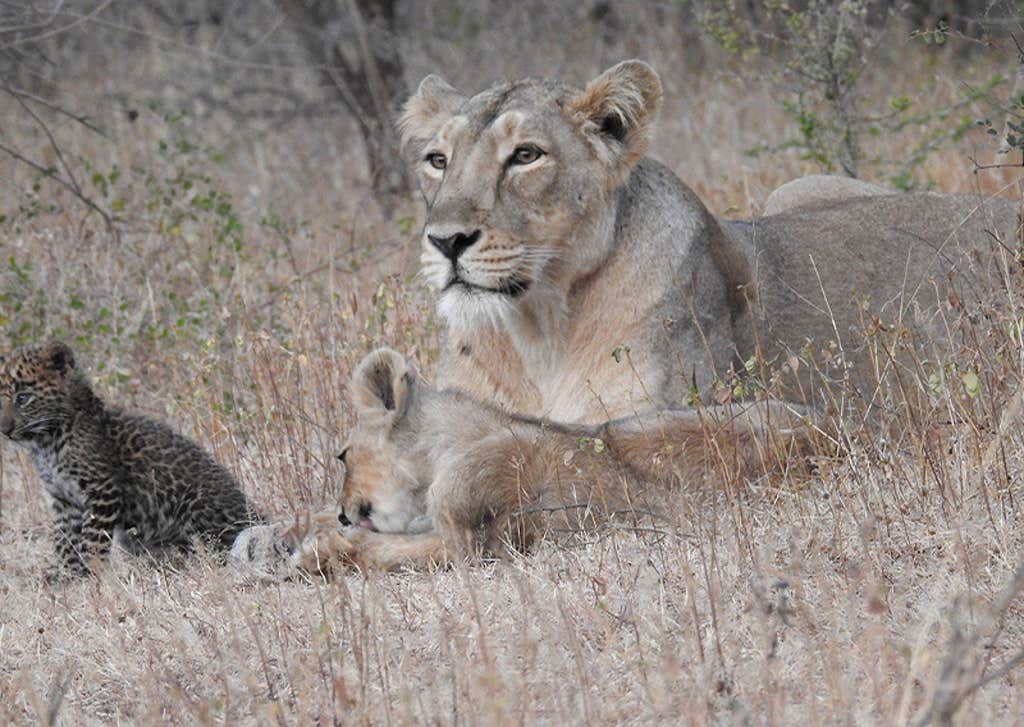
In December 2018, rangers spotted a Gir lioness with an odd litter of cubs: One of them was a young leopard. “I got the information, went there, and just couldn’t believe my eyes,” says Stotra Chakrabarti, a behavioral ecologist at Macalester College in Minnesota, who was then a graduate student doing field work in the area.
Lions and leopards compete for the same resources, so the usual reaction of an adult of either species encountering a youngster of the other would be to kill it on the spot. But for the next 45 days, the rangers and researchers watched as the leopard cub nursed from the lioness, noshed on kills she made, and romped with his adoptive lion siblings.
This offbeat family idyll was short-lived: In February 2019, the leopard cub turned up dead near a watering hole. His small body looked perfect from the outside, unscathed, but an autopsy revealed a femoral hernia—a birth defect that may have caused his biological mother to abandon him and eventually led to his death.
ADVERTISEMENT
Nautilus Members enjoy an ad-free experience.
Log in
or
Join now
.
Such relationships seem like an evolutionary paradox at first glance.
Years later, Chakrabarti remains “completely stumped” by the unusual adoption. “I will probably never see this again,” he marvels.
The word adoption “is very anthropomorphically charged,” Chakrabarti acknowledges. Adoption is known widely in human societies but is more likely to be thought of as a behavior that sets us apart from other animal species rather than a practice that unites us. Yet relationships in which an adult animal takes on a parental role for a young one that is not her or his own offspring, while rare, are widely documented across the animal kingdom. Sea otters adopt, as do elephant seals, gulls, dolphins, elephants, cheetahs, penguins, storks, African wild dogs, and a whole troop of primate species.
Such relationships seem like an evolutionary paradox at first glance. Feeding and protecting a juvenile is costly. Evolution is supposed to be about the promulgation of one’s genes; why invest time and energy in the survival of another’s, potentially at the expense of your own? Yet animal adoption may also illuminate the underpinnings of a sensibility common to humans and other animals.
ADVERTISEMENT
Nautilus Members enjoy an ad-free experience.
Log in
or
Join now
.
Most animal adoptions occur within species, often within extended family groups. Orphaned chimpanzees may be cared for by older siblings, and among red howler monkeys in Venezuela grandmothers sometimes step in to care for a daughter’s infant. These observations are easily explained by the evolutionary principle of kin selection, which holds that seemingly altruistic behavior is evolutionarily advantageous when it benefits an individual’s relatives, who after all share many of the individual’s genes.
But sometimes the connections underlying adoptive relationships are more nebulous. When a young mountain gorilla loses their mother, the rest of the troop comes together to support them. This includes older siblings, same-age peers, and especially the troop’s dominant male, who will often share his nest to help the youngster stay warm at night.
“Care for the orphan does particularly fall on the dominant male,” says Robin Morrison, an evolutionary biologist at the University of Zurich in Switzerland who also works with the Dian Fossey Gorilla Fund’s Karisoke Research Center in Rwanda. Even if the male is not related to the adopted juvenile, he and his genes may benefit: Female mountain gorillas prefer to mate with males who are good with babies.
DIFFERENT STRIPES: This lioness cared for this leopard cub like one of her own offspring. Photo courtesy of Mitta;, D., et al. Ecosphere (2020).
ADVERTISEMENT
Nautilus Members enjoy an ad-free experience.
Log in
or
Join now
.
Animals sometimes adopt unrelated young even from outside their community. Researchers at the Luo Scientific Reserve in Wamba, Democratic Republic of the Congo witnessed two cases in which female bonobos adopted infants from neighboring social groups. Similar behavior has also been seen in Angola black-and-white colobus monkeys and Taihangshan macaques.
Those adoptions are hard to square with classic evolutionary theory. Harder still are cross-species adoptions. In addition to the lioness who adopted the leopard cub, scientifically documented examples include a troop of capuchin monkeys taking in a baby marmoset; a bottlenose dolphin caring for a melon-headed whale calf alongside her own baby; and an Icelandic killer whale seen traveling alongside a long-finned pilot whale calf. And amateur observations of cross-species adoptions—cats adopting puppies, dogs adopting fawns, and so on—abound in the form of cute animal videos on the Internet, suggesting that the propensity for these relationships may be much more widespread than had previously been acknowledged.
Among Lake Erie’s ring-billed gulls, who breed in large, chaotic colonies, about 8 percent of chicks leave their natal nest each year, sneak into a nearby one, and are accepted by the neighboring parents. This so-called reproductive error, a kind of glitch whereby animals become confused or fail to discriminate between other offspring and their own, is frequently invoked to explain animal adoption. In the big evolutionary scheme of things, it seems, it’s better for gull parents to occasionally raise a chick that’s not their own than to be hypervigilant about interlopers, which could sometimes result in pushing their own young out of the nest.
A similar hullaballoo characterizes the elephant seal birthing colony at Año Nuevo, California, where one-quarter to one-half of pups each year become separated from their mothers due to storms, high tides, or the disruptive movements of galumphing males. About one-quarter of these “orphans” are subsequently adopted or frequently cared for by other females. Most often, the adoptive mothers have lost or become separated from their own pup, and many of them are young and inexperienced. (The Gir lioness, too, was relatively new to motherhood, raising only her second litter of cubs, when she adopted the leopard.)
ADVERTISEMENT
Nautilus Members enjoy an ad-free experience.
Log in
or
Join now
.
Lack of experience may contribute to the failure to discriminate between one’s own and other young, but researchers have suggested another benefit to adoption for these mothers: It’s good practice, yielding improved parenting skills that help the animal’s own young later on.
Surging maternal hormones may contribute to a new mother’s willingness to take responsibility for an unrelated mouth to feed, either in addition to her own young or as a substitute if she has recently lost a baby. Most of the time, an animal’s intense maternal instincts will be directed at her own offspring, says James Serpell, professor emeritus at the University of Pennsylvania School of Veterinary Medicine. But every so often, she’ll simply “glom on to whatever comes in handy.” This may sometimes lead to Raising Arizona-style capers documented in the scientific literature in which animals adopt young who don’t actually need adopting—a Tibetan macaque mother, for example, who had recently given birth, kidnapped another infant and ended up raising both babies as her own.
Maybe our tendency is to look at evolutionary forces too narrowly.
In the southwestern United States, biologists working to restore endangered Mexican wolves have put these widespread proclivities to use in a fostering program that places captive-born wolf pups into wild dens with litters of the same age.
ADVERTISEMENT
Nautilus Members enjoy an ad-free experience.
Log in
or
Join now
.
“We rub them all together in this little puppy pile” so that captive-born pups acquire their newfound siblings’ scent, explains Allison Greenleaf, a senior U.S. Fish and Wildlife Service biologist on the Mexican wolf recovery program. Then the new, expanded litter is put back in the wild den. Mother Nature—or mother wolf, with assistance from the rest of the pack, who cooperate to raise a single breeding pair’s litter—does the rest.
The fostering program, the researchers hope, will enrich the genetic diversity of the wild Mexican wolf population, which is descended from just seven captive-raised individuals. It’s also thought that wild-raised pups will be more wary of humans and thus less likely to become nuisance animals than captive-raised wolves released into the wild as adults, Greenleaf says.
Since 2016, 126 captive-born Mexican wolves have been fostered into 48 dens, and at least 20 have survived to reach breeding age at 2 years old—a survival rate comparable to that of wild-born pups raised by their biological parents. Fostered pups have produced 30 litters of their own, and some have even become foster parents themselves.
Adoption may be more complex, but also simpler, than this search for evolutionary explanations makes it out to be. People reflexively look to immediate biological advantages as a rationale for animal behavior, says Judith Benz-Schwarzburg, an ethicist at the University of Veterinary Medicine in Vienna, Austria. But adoption shows that other animal species, especially those who care for their young, are “driven by lots of reasons”—just like humans are.
ADVERTISEMENT
Nautilus Members enjoy an ad-free experience.
Log in
or
Join now
.
Chakrabarti, the biologist who studied the leopard cub-adopting lioness, would agree. Animals are not “automatons,” he says. “Each of them are rational, sentient beings,” with individual agency, preferences, and personality. We may never know why some feel moved to adopt.
Or maybe our tendency is to look at evolutionary forces too narrowly, on too fine a timescale. Humans and other animals with extended parental care have “had hundreds of thousands of years of evolutionary pressure to care for infants and look after them,” Morrison says. “Having strong caring instincts has been really valuable across our evolutionary history.”
Those evolutionary forces will be especially strong in the case of species, like our own, that exhibit cooperative parental care. Perhaps that helps explain why we’re the absolute champions at cross-species adoption. Although dogs and cats might have started as working additions to households, many have become more akin to “fur babies,” as the contemporary term goes; in many hunter-gatherer societies it’s common for people to bring young animals into the village and raise them as pets. This behavior may be “a natural consequence of a human propensity to care for other individuals,” as Serpell puts it.
In fact, one theory of dog domestication holds that the process began with Pleistocene hunter-gatherers bringing young wolf pups, perhaps orphans, back to camp to be suckled by human women and raised as part of the community.
ADVERTISEMENT
Nautilus Members enjoy an ad-free experience.
Log in
or
Join now
.
An early domestication of dogs might have even facilitated other cross-species adoptive relationships. “I strongly suspect that the capacity of a nursing mother dog to accept puppies that aren’t her own may have helped in the domestication of the cat,” Serpell says. “Adult dogs are not very accepting of cats, and it would have been difficult to domesticate cats in a community that already had dogs. But if you had a nursing mother dog, you could certainly foster a kitten onto her and she would adopt it.”
Several thousand years later, these phenomena remain embedded in our daily lives. Consider the three cats who live in my house: two full sisters and a half-sister who is a few months older, we’ve been told, with a foundling backstory involving a plastic tote in the woods. As in orphan chimpanzee families, the older girl has become a mother figure for the younger two, grooming them, putting them in their place with a swat when necessary, patrolling the ramparts of the windowsills for threats to her territory.
Sometimes I watch her, stretched out on her side in the pose of a nursing mother cat, the other two lying crosswise on top of her even though all three are now fully grown. In her posture, at once patient and resigned, I can see the echoes of a lioness in a clearing in the Gir Forest. I can see a half-wild wolf suckling a half-wild kitten, and I can see a fully wild wolf unfazed by the sudden growth in the size of her litter.
Then again, maybe my own devotion to the older sister, my desire to see the caretaker well cared for, also has something in common with that lioness. Maybe animal adoptive parents are not just a curiosity but a model for human behavior: we affectionate silverbacks, we Gir lionesses, weaving relationships both genetic and not, united by a drive to care.
ADVERTISEMENT
Nautilus Members enjoy an ad-free experience.
Log in
or
Join now
.
Lead image: vvvita / Shutterstock
ADVERTISEMENT
Nautilus Members enjoy an ad-free experience.
Log in
or
Join now
.
Sarah DeWeerdt
Posted on
Sarah DeWeerdt is a freelance writer in Seattle covering biology, medicine, and the environment.
Get the Nautilus newsletter
Cutting-edge science, unraveled by the very brightest living thinkers.