Category: Innovation

  • EU battery manufacturing gets €3bn boost through EIB partnership

    EU battery manufacturing gets €3bn boost through EIB partnership

    [ad_1]

    The EU is making a bold move to strengthen its battery manufacturing capabilities with a groundbreaking partnership between the European Commission and the European Investment Bank (EIB).

    This collaboration, announced today, will inject €3bn in public funding into the EU’s battery value chain, aiming to establish a competitive, sustainable, and innovative battery industry across Europe.

    Wopke Hoekstra, Commissioner for Climate, Net Zero and Clean Growth, explained: “Europe is set on a path to become the first climate-neutral continent by 2050. Battery production is a priority for the clean energy transition in the transport and power sectors and beyond.

    “The European Commission is committed to mobilising much-needed investments in cutting-edge technologies to support a resilient European battery sector.

    “We are combining different financial instruments to target our support in the most efficient way and maximise private investment. The partnership with the EIB will help EU businesses and innovators to reap the benefits of innovative net-zero technologies.”

    Why the EU must enhance battery manufacturing capabilities

    The expansion of EU battery manufacturing is more than just a matter of economic competitiveness; it is critical for the bloc’s energy security, technological leadership, and climate goals.

    Batteries play a pivotal role in enabling the clean energy transition, powering everything from electric vehicles to renewable energy storage systems. There are several compelling reasons why scaling up production is essential.

    First, the growing demand for electric vehicles underscores the urgent need for a robust EU battery manufacturing sector. As the global shift to electric mobility accelerates, the EU must establish itself as a leader to reduce reliance on imports, lower costs, and create jobs in the battery and automotive industries.

    Second, enhancing domestic battery production will bolster Europe’s energy security. By producing batteries locally and investing in recycling technologies, the EU can reduce dependence on foreign sources of raw materials and technology, ensuring a more stable and self-sufficient energy system in an increasingly uncertain geopolitical environment.

    Third, increasing battery production capacity will drive technological innovation. With additional funding for research and development, the EU can position itself at the forefront of breakthroughs in advanced battery technologies, supporting industries ranging from renewable energy to electric transportation.

    Finally, scaling up battery manufacturing is essential for achieving the EU’s climate targets. The European Green Deal, which aims to make the EU carbon-neutral by 2050, relies heavily on sustainable energy storage solutions. Investments in recycling-focused projects will minimise waste and ensure that battery production aligns with circular economy principles.

    Major investments to transform the industry

    The cornerstone of this initiative is a €200m top-up to the InvestEU programme, provided by the EU Innovation Fund.

    This additional funding complements a €1bn grant programme designed to support the manufacturing of electric vehicle battery cells.

    Alongside this, the EIB has committed to investing €1.8bn into the broader battery value chain, covering everything from research and production to charging infrastructure and recycling processes.

    The €200m InvestEU top-up is specifically aimed at overcoming significant financing challenges that have hindered the sector.

    Over the next three years, this funding will support venture debt operations, helping companies transition from research and development stages to full-scale commercial deployment.

    The investments will focus on cutting-edge advancements such as developing advanced materials, improved component manufacturing, and innovative recycling techniques.

    Goals of the EU’s investment strategy

    The EU’s approach to this partnership is transformative, targeting several key objectives to bolster the EU battery manufacturing sector.

    By supporting companies at critical stages of their development, the initiative aims to bridge the gap between research and commercial deployment. This effort will reduce market failures that have often obstructed the growth of innovative projects.

    Additionally, the programme is designed to leverage public funding to attract private investment, amplifying the overall impact of these initiatives.

    By focusing on sustainability and innovation, the EU seeks to build a robust and resilient battery supply chain that can compete globally. This includes prioritising technologies beyond basic battery cell or pack assembly and emphasising recycling as part of a circular economy.

    A comprehensive approach to strengthening the battery value chain

    The EU’s strategy does not end with manufacturing. The €3bn initiative addresses every aspect of the battery value chain, from raw materials sourcing to recycling.

    Over the past six years, the EIB has already provided €6bn in financing for projects related to battery technologies. The new €1.8bn commitment will further enhance these efforts, ensuring that the EU is equipped to compete in a rapidly evolving global market.

    The €1bn Innovation Fund call for electric vehicle battery projects, launched alongside this partnership, emphasises sustainability and advanced technology.

    By focusing on innovations that extend beyond basic assembly and promoting environmentally friendly practices, the EU is laying the foundation for a greener, more efficient battery industry.

    This major investment in EU battery manufacturing represents a transformative step toward building a competitive, sustainable, and resilient industry.

    With batteries at the heart of the clean energy revolution, the EU’s strengthened manufacturing capabilities will not only drive economic growth but also play a pivotal role in achieving long-term environmental sustainability.

    [ad_2]

    Source link

  • Phage therapy’s role in treating fracture-related infections

    Phage therapy’s role in treating fracture-related infections

    [ad_1]

    In orthopaedic medicine, fracture-related infections pose significant challenges, often exacerbated by antibiotic resistance and biofilm formation.

    Recent research into phage therapy offers a beacon of hope. This approach uses bacteriophages’ inherent ability to precisely target pathogenic bacteria. It promises to circumvent traditional antibiotic limitations and introduce innovative methods to dismantle biofilms and address intracellular infections.

    However, the path to widespread clinical application remains fraught with regulatory, safety, and efficacy considerations.

    As we navigate these complexities, what does the future hold for phage therapy in revolutionising orthopaedic infection treatment?

    Phage therapy mechanisms

    The sophisticated mechanisms by which bacteriophages target and destroy specific bacterial strains are at the heart of phage therapy’s effectiveness in treating fracture-related infections.

    Central to this process is receptor recognition, a precise interaction where phages identify and bind to specific receptors on the surface of bacterial cells. This initial step is pivotal, as it determines the phage’s specificity to the bacterial strain, ensuring that only the pathogenic bacteria are targeted without affecting beneficial microbiota.

    The attachment mechanisms involved in this process are equally essential. Once a phage recognises its target, it attaches to the bacterial cell, initiating a sequence of events that allow it to inject its genetic material into the host. This genetic material hijacks the bacterial cellular machinery, redirecting it to produce new phage particles.

    Such phage-host interactions are necessary for understanding how phages can be effectively deployed against bacterial infections, particularly in the context of fracture-related infections.

    Following the replication phase, the phage lifecycle culminates in the lysis of the bacterial cell. During lysis, phages may produce enzymes that degrade the bacterial cell wall, facilitating the release of progeny phages.

    This destructive mechanism not only eradicates the initial infection but also propagates the infection cycle, allowing newly formed phages to seek out and destroy additional bacterial cells.

    Combating antibiotic resistance

    Combating antibiotic resistance in fracture-related infections is increasingly vital as traditional antibiotics fail against multidrug-resistant bacteria.

    This growing challenge necessitates innovative therapeutic approaches, such as phage therapy, which offers a promising alternative due to its specificity and efficacy. Particularly in bone and joint infections, where pathogens like Staphylococcus aureus and Enterococcus faecium are prevalent, phage therapy provides a targeted strategy to address antibiotic resistance.

    Phage therapy’s potential to combat antibiotic-resistant pathogens stems from several key advantages:

    1. Specificity: Bacteriophages exhibit a high degree of specificity, targeting only the bacteria responsible for the infection, such as Staphylococcus aureus or Enterococcus faecium. This reduces collateral damage to beneficial microbiota and diminishes the risk of developing further resistance.
    2. Biofilm disruption: Studies have demonstrated that phage can effectively disrupt biofilms, protective structures that bacteria form to shield themselves from antibiotics. This is particularly important in treating bone and joint infections, where biofilm formation complicates antibiotic treatment.
    3. Synergy with antibiotics: Phage therapy can be used in conjunction with antibiotics, enhancing their effectiveness against resistant strains. This synergy can potentially lower antibiotic dosages, reduce side effects, and delay resistance development.
    4. Adaptability: Phage can be customised to combat specific bacterial strains, making them a flexible tool in the fight against antibiotic resistance. This adaptability is critical in managing the evolving landscape of multidrug-resistant bacteria in fracture-related infections.

    Biofilm targeting strategies

    Biofilms present an important challenge in treating fracture-related infections, yet phage therapy offers promising strategies to overcome these barriers. Biofilms, complex communities of bacteria adhering to surfaces, are notoriously difficult to eradicate due to their protective extracellular matrix.

    These structures are particularly problematic in orthopaedic scenarios, where they can form on bone or implant surfaces, sheltering antibiotic-resistant bacteria from conventional treatments.

    Phage therapy, however, provides a novel biofilm targeting approach by utilising phage lysins to disrupt these resilient biofilm matrix components.

    Phage lysins are enzymes produced by bacteriophages that degrade the structural polysaccharides and proteins within the biofilm matrix, effectively penetrating and dismantling the biofilm. This biofilm disruption is essential in eradicating persistent infections associated with fracture-related cases.

    By breaking down the biofilm, phage therapy not only facilitates the direct attack on bacteria but also enhances the efficacy of concurrent antibiotic treatments, thereby addressing antibiotic-resistant bacteria more effectively.

    Moreover, the precision of phage therapy in biofilm targeting holds significant potential for preventing recurrent infections. By specifically targeting and dismantling biofilms on orthopaedic implants, phage therapy reduces the likelihood of infection relapses, which is a common issue with traditional treatment methods. This capability is pivotal in managing fracture-related infections and represents a transformative approach in orthopaedic care.

    Intracellular infection solutions

    Intricacies in treating fracture-related infections arise especially from the challenge of addressing intracellular pathogens. The presence of intracellular bacterial strains poses a significant hurdle, as traditional antibiotics often struggle to penetrate host cells effectively.

    However, phage therapy emerges as a promising non-antibiotic solution. It demonstrates a unique capacity to target and eliminate specific pathogens within host cells, enhancing infection control in orthopaedic settings.

    Phages, or bacteriophages, exhibit a remarkable specificity in targeting bacterial strains, even those that have developed multi-drug resistance. Their precision and ability to disrupt biofilms on bone and implant surfaces make them invaluable for managing fracture-related infections.

    Particularly, phage therapy provides a multifaceted approach to tackling intracellular infections, which can be outlined as follows:

    1. Targeted action: Phage exhibits high specificity in infecting and killing only the pathogenic bacteria, thereby preserving the beneficial microbiota and reducing unintended side effects.
    2. Biofilm disruption: Phage can penetrate and disrupt protective biofilms, which are often resistant to antibiotics, thereby enhancing infection control on both bone and implant surfaces.
    3. Synergistic potential: When integrated with surgical procedures, phage therapy eradicates infections and supports bone reconstruction, leading to improved patient outcomes.
    4. Multi-resistant bacteria eradication: Phage therapy has shown efficacy against bacterial strains resistant to conventional treatments, offering a viable option for difficult-to-treat infections.

    These advances underscore the potential of phage therapy as a revolutionary tool in managing fracture-related infections, providing a sophisticated and effective solution for intracellular infection challenges.

    Innovations in phage vaccines

    Building on the promising potential of phage therapy in addressing intracellular infections, the development of phage vaccines marks a significant step forward in treating fracture-related infections.

    phage therapy
    © shutterstock/ART-ur

    These innovative vaccines leverage the specificity of bacteriophages to elicit targeted immune responses against antibiotic-resistant bacteria, such as Enterococcus faecium, a common pathogen in orthopaedic infections.

    By harnessing the natural ability of bacteriophages to infect and destroy bacteria, phage vaccines provide a novel approach to infection control, particularly in scenarios where traditional antibiotics fall short due to resistance.

    The development of phage vaccines involves a meticulous process of identifying optimal phage-host interactions and enhancing immunogenicity to guarantee effective infection control. This involves selecting bacteriophages that not only target specific pathogens but also stimulate a robust immune response capable of preventing future infections. Recent advancements in this field focus on improving the specificity, efficacy, and safety of these vaccines, making them a promising alternative to conventional antibiotic treatments for complex orthopaedic infections.

    Oncological applications

    Phage therapy is emerging as a promising treatment modality in the field of oncological applications, particularly for managing fracture-related infections where antibiotic resistance poses a significant challenge.

    The potential of bacteriophages to specifically target and eradicate multi-drug-resistant bacteria in oncological patients represents a significant advancement in this area.

    Research has demonstrated several key aspects of phage therapy’s role in oncological applications:

    1. Efficacy in multi-drug resistance: Studies have shown that bacteriophages can effectively eliminate multi-drug-resistant bacteria associated with oncological fracture-related infections, providing a potent alternative to conventional treatments.
    2. Combination therapies: When combined with standard oncological treatments, phage therapy has resulted in promising outcomes, suggesting a synergistic potential that could enhance treatment efficacy while reducing reliance on antibiotics.
    3. Pathogen specificity: Phage can be tailored to target specific pathogens found in oncology-related fractures, enabling a more precise and effective approach to managing complex bone infections.
    4. Clinical adaptability: The successful application of phage therapy in diverse and challenging clinical scenarios, such as oncological fracture-related infections, highlights its potential to be integrated into standard care practices.

    Drug delivery potential

    The exploration of phage therapy in oncological applications has highlighted its potential beyond just addressing antibiotic resistance, revealing its versatility in drug delivery systems for fracture-related infections.

    This innovative approach leverages the specificity of bacteriophages to precisely target pathogenic bacteria, offering a promising drug delivery potential that is particularly advantageous in orthopaedic contexts.

    The targeted delivery mechanisms inherent in phage therapy allow for a focused approach to treating infections, thereby reducing systemic exposure and potential side effects.

    Bacteriophages, as delivery vehicles, offer a unique advantage in addressing the persistent challenge of antibiotic resistance prevalent in fracture-related infections.

    By utilising phage in combination with carrier materials such as hydrogels, these systems can provide a controlled and sustained release of therapeutic agents directly to the site of infection.

    This localised treatment not only enhances the effectiveness of phage therapy but also greatly enhances patient outcomes by overcoming biofilm challenges and ensuring a more efficient eradication of infectious agents.

    Regulatory and safety insights

    Traversing the regulatory terrain of phage therapy for fracture-related infections involves several critical considerations. Achieving regulatory approval necessitates compliance with local legislation and institutional guidelines, ensuring that phage therapy meets the necessary standards for clinical application. The regulatory landscape can be intricate, as it must balance innovation with rigorous evaluation to secure patient safety and effective treatment outcomes.

    Safety considerations are paramount in the clinical investigation of phage therapy. Researchers must obtain informed consent from participants, guaranteeing transparency about the study’s objectives, procedures, and potential risks. This process not only safeguards participants but also supports the ethical standards upheld in medical research. In some cases, compassionate use of phage therapy is prioritised, allowing treatment without formal approval when conventional therapies fail, addressing urgent medical needs.

    Ethical standards are integral to the ethical execution of phage therapy studies. These standards ensure that patient rights and welfare are respected, fostering trust in the research process. Moreover, funding disclosures are essential, as they provide transparency regarding the financial aspects of research, indicating whether the study, authorship, or publication received financial support. This transparency helps maintain objectivity and prevent conflicts of interest.

    In acknowledging the collaborative nature of phage therapy research, author contributions are recognised, detailing individual roles and responsibilities within the study. This acknowledgement not only credits the efforts of researchers but also promotes accountability and integrity in scientific reporting.

    Future research directions

    Building upon the regulatory and safety insights, future research in phage therapy for fracture-related infections is positioned to address several pivotal challenges.

    Central to these efforts will be optimising therapeutic efficacy while overcoming bacterial resistance mechanisms. This necessitates a detailed understanding of phage-induced vulnerabilities and strain-specific interactions, akin to the precision found in particle physics, where every element plays a crucial role in the overall system.

    A promising direction involves combination therapies that integrate phage therapy with antibiotics. This approach aims to generate higher energy yields in treatment outcomes, akin to the concept of clean energy in nuclear matter, where efficiency and sustainability are paramount. Such synergies could reduce the reliance on antibiotics alone, significantly impacting the fight against antibiotic resistance in fracture-related infections.

    Moreover, continued research efforts are essential to fully realise the potential of phage therapy as an innovative treatment strategy. This includes developing tailored phage cocktails that can adapt to emerging bacterial threats, much like adapting quantum entanglement theories to new scientific discoveries.

    Ultimately, these efforts will strengthen the role of phage therapy in managing challenging orthopaedic infections, offering a frontier of clean, targeted solutions in medical science.

    [ad_2]

    Source link

  • Equal1’s quantum controller chip redefines quantum computing

    Equal1’s quantum controller chip redefines quantum computing

    [ad_1]

    Quantum computing has reached a pivotal milestone thanks to Equal1, a leader in silicon-powered quantum technology.

    The company has announced remarkable advancements in both quantum controller chips and silicon qubit performance, laying a strong foundation for scalable, practical quantum systems.

    These breakthroughs underscore the potential of silicon to drive the next generation of quantum innovation.

    Understanding the quantum controller chip

    A quantum controller chip is a critical component in quantum computing systems. Unlike traditional chips, these devices are designed to operate in extreme environments, such as cryogenic temperatures, to ensure the delicate quantum states of qubits are maintained.

    They handle the complex tasks of initialising, manipulating, and reading out qubits with the precision and speed required for high-performance quantum computations.

    This technology is essential for scaling quantum computers, as it enables the coordination of vast networks of qubits needed for solving complex problems.

    Equal1’s latest quantum controller chip not only manages these operations but also integrates advanced features, such as adaptive error correction, to optimise system reliability and performance.

    Record-breaking performance in silicon qubits

    Equal1’s silicon qubit array has achieved industry-leading performance, marking a significant step toward scalable quantum systems.

    The company demonstrated single-qubit gate operations with a fidelity of 99.4% and a speed of 84 nanoseconds, as well as two-qubit gate operations with a fidelity of 98.4% and a speed of 72 nanoseconds.

    Nodar Samkharadze, Equal1’s Chief Quantum Architect, said: “This result demonstrates the massive benefit of silicon qubits – the ability to achieve the performance required for scaling in two key areas – fidelity and speed of quantum gates.”

    These achievements were realised using a six-qubit array fabricated on a silicon-germanium (SiGe) platform compatible with CMOS manufacturing processes.

    This compatibility with existing silicon infrastructure underscores a key advantage of Equal1’s approach: the ability to manufacture high-performance quantum processors using well-established and cost-effective technologies.

    The fidelity and speed of these operations highlight the suitability of silicon as a foundation for quantum computing.

    With these metrics, Equal1 has addressed critical challenges in quantum computing, including reliability and the rapid execution of quantum gates, bringing the technology closer to practical real-world applications.

    Innovation in cryogenic quantum control

    Adding to its list of breakthroughs, Equal1 has unveiled the first multi-tile quantum controller chip integrated into its UnityQ Quantum-System-on-Chip platform.

    This chip operates at cryogenic temperatures of 300 millikelvins, a necessity for maintaining qubit coherence. It is powered by Arm Cortex cores, which provide the computational capability to manage complex operations at unprecedented scales.

    This controller chip represents a significant leap in scalability. Its multi-tile architecture enables the coordination of millions of qubits on a single chip, paving the way for quantum systems capable of tackling highly complex computations.

    Another key innovation is the inclusion of patented AI-enabled Qubit Adaptive Error Correction technology. This system dynamically adjusts error correction parameters for each tile, optimising performance in real-time and supporting advanced error correction algorithms as they evolve.

    Silicon’s role in scalable quantum computing

    Equal1’s silicon-based approach stands out for its practicality and potential. By leveraging the global silicon semiconductor infrastructure, the company ensures its solutions are both scalable and cost-effective.

    This approach avoids the need for specialised fabrication facilities, reducing costs and accelerating the path to large-scale quantum computing.

    The company’s all-to-all connectivity model further enhances its architecture, enabling efficient operations across the quantum system.

    This connectivity, combined with the high fidelity and speed of the gates, ensures the system can handle next-generation quantum algorithms required for real-world applications.

    Towards practical applications of quantum technology

    Equal1’s advancements are not just technical achievements – they have significant implications for industries and research fields worldwide.

    Quantum computing has the potential to revolutionise areas such as cryptography, material science, and artificial intelligence by solving problems that are currently intractable for classical computers.

    With its record-breaking silicon qubit performance and innovative quantum controller chip, Equal1 is accelerating the transition of quantum computing from experimental labs to practical, scalable systems.

    By harnessing silicon’s potential, the company is creating a future where quantum technology is accessible, efficient, and impactful.

    [ad_2]

    Source link

  • Germany plans $2.1 billion in new chip investments

    Germany plans $2.1 billion in new chip investments

    [ad_1]

    The German Ministry of Economic Affairs has announced newly proposed funds to support 10 to 15 chip investments, ranging from wafer production to microchip assembly.

    According to a Bloomberg report, around €2.1bn in total funding will go towards chip investments.

    The Economy Ministry published a call for semiconductor companies to apply for new subsidies in mid-November for projects that contribute to a strong and sustainable microelectronics ecosystem in Germany and Europe, following the European Chips Act (ECA).

    “Funding is to be provided for the establishment of modern production capacities that significantly exceed the current state of the art,” stated Annika Einhorn, a spokesperson from the Economy Ministry.

    The importance of chip investments

    Governments worldwide have been investing public funds in the chip industry in an effort to localise the production of components that control everything from cutting-edge artificial intelligence to everyday gadgets.

    The push comes after COVID supply disruptions and as rising tensions between the US and China over Taiwan could interfere with a key source of essential technology.

    The European Chips Act, passed in 2023, aims to strengthen the EU’s semiconductor ecosystem and double its market share to 20% of global production capacity by 2030.

    Challenges faced in the semiconductor industry

    The Bloomberg report notes that the German chip industry is facing headwinds.

    Intel’s €30bn Magdeburg factory, which was touted as the largest project supported under the European Chips Act with up to €10bn in subsidies, has been delayed due to the struggling chipmaker’s internal challenges.

    Furthermore, Wolfspeed and ZF Friedrichshafen AG withdrew plans for a semiconductor joint venture in Germany.

    New chip investments could bolster local production

    The Ministry of Economic Affairs intends to use the newly proposed funds to support 10 to 15 projects across various areas, ranging from wafer production to microchip assembly.

    However, the final allocation of the subsidies could depend on the new German government that is expected to take office in February.

    The EU has set a target to double its global chip market share by 2030. Concerns about supply chain fragility and dependence on Asian companies have triggered efforts to bolster local production.

    [ad_2]

    Source link

  • An in-depth overview of the science behind phage therapy

    An in-depth overview of the science behind phage therapy

    [ad_1]

    Phage therapy, once overshadowed by the advent of antibiotics, is now emerging as a pivotal player in the battle against antibiotic-resistant bacteria.

    This therapeutic approach harnesses the natural predatory capabilities of bacteriophages, offering a targeted method to eradicate specific bacterial strains. Recent breakthroughs extend its potential beyond traditional infections, encompassing the challenging domains of biofilm disruption and intracellular pathogen treatment.

    Moreover, the exploration of phage applications in oncology and innovative drug delivery systems presents intriguing possibilities. As research continues to unravel its complexities and regulatory hurdles, what lies ahead for this once-forgotten therapy?

    Historical background of phage therapy

    Phage therapy emerged in the early 20th century, taking root with the discovery of bacteriophages by Frederick Twort in 1915 and Félix d’Hérelle in 1917.

    This pioneering period marked the inception of utilising bacteriophages – viruses that infect and destroy bacteria – as a therapeutic approach to combat bacterial infections.

    The initial enthusiasm surrounding phage therapy was driven by its potential to offer a targeted method of bacterial eradication, distinct from the broad-spectrum nature of chemical treatments.

    However, the advent of antibiotics in the 1940s led to a decline in phage research and application. Antibiotics were perceived as a more straightforward and universally applicable solution to bacterial infections, overshadowing the potential of phage therapy.

    This shift in focus marked a significant historical development in the medical field, as the promise of antibiotics led to widespread adoption, relegating phage therapy to a secondary role.

    The resurgence of interest in phage therapy in recent decades is closely tied to the alarming increase in antibiotic-resistant bacteria. As these multidrug-resistant strains pose a growing threat to public health, the medical community has revisited the potential of bacteriophages as a viable alternative.

    This renewed focus highlights the cyclical nature of phage therapy’s prominence, underscoring the importance of historical developments in shaping current research and applications.

    Understanding the historical background of phage therapy is essential for appreciating its resurgence and potential to revolutionise modern medicine, offering a targeted strategy against formidable bacterial adversaries.

    Phage mechanisms

    Understanding the mechanisms by which bacteriophages operate is crucial for advancing phage therapy as a strategic treatment against bacterial infections.

    Central to phage mechanisms is the ability of these viruses to target specific bacterial strains. This specificity arises from the interaction between phages and the surface receptors present in bacterial cells.

    Upon attachment, phages inject their genetic material into the bacterial host, initiating a process that hijacks the bacterial cell’s machinery for replicating new phage particles.

    Once inside the bacterial cell, the genetic material of the phage commandeers the host’s resources to synthesise phage components. This strategic takeover ultimately leads to the assembly of numerous phage progeny within the host.

    As the cycle reaches completion, the bacterial cell is lysed or burst, releasing a new generation of phages into the environment, ready to infect additional bacterial targets. This lytic process underscores the efficiency of phage mechanisms in rapidly diminishing bacterial populations.

    Phage therapy leverages these mechanisms to develop targeted treatments, offering a precise approach that minimises the disruption to the body’s beneficial microbiota.

    The high specificity of phages not only curtails collateral damage but also enhances the therapeutic potential against antibiotic-resistant bacteria.

    Combatting antibiotic resistance

    In the battle against antibiotic-resistant infections, there exists immense potential to use the natural capabilities of bacteriophages. Phage therapy emerges as a promising strategy against formidable bacterial foes such as MRSA, VRE, and CRE.

    These infections have shown resilience against conventional antibiotics, prompting a need for innovative solutions. Engineered phages are skilled at targeting specific bacteria, providing a tailored assault on antibiotic-resistant strains.

    By integrating phage therapy with traditional antibiotics, researchers have observed a reduction in bacterial burden, suggesting a synergistic relationship that could revolutionise treatment protocols.

    The investigation of phage therapy parallels the precision seen in nuclear physics articles, where meticulous attention to detail and targeted approaches yield significant breakthroughs.

    Much like particle physics, where understanding fundamental interactions leads to greater control over atomic nuclei, phage therapy explores the intricate dynamics of bacterial eradication.

    This involves techniques similar to mass spectrometry, allowing for precise identification and targeting of bacterial strains.

    Phage therapy’s role in addressing Antimicrobial Resistance (AMR) cannot be overstated. In clinical studies, phages demonstrate efficacy against drug-resistant bacteria, highlighting their potential as a pivotal tool in the fight against superbugs.

    This potential is similar to the transformative energy harnessed in scientific advancements, offering a powerful alternative to combatting resistance.

    By continuing to refine and understand phage therapy, the medical community can make significant strides in overcoming antibiotic resistance challenges, ultimately leading to more effective treatments and improved patient outcomes.

    Biofilm targeting strategies

    Addressing the formidable challenge of antibiotic-resistant infections extends beyond targeting free-floating bacteria to confronting biofilms, which are complex aggregations of bacteria that exhibit heightened resistance to conventional antibiotics.

    These resilient bacterial communities pose significant obstacles in treating chronic infections, often rendering traditional antibiotics ineffective. Phage therapy emerges as a promising biofilm targeting strategy, leveraging bacteriophages’ unique ability to penetrate and disrupt these protective structures.

    Phages are viruses that specifically infect bacteria, and their natural propensity to invade biofilm-embedded bacterial communities offers a targeted approach to eradicating stubborn infections.

    Unlike antibiotics, which often struggle to penetrate biofilms, phages can diffuse into these matrices, selectively targeting and lysing the bacteria within. Recent research underscores the capability of phage therapy to degrade and disperse biofilms, providing a viable solution to combat chronic infections linked to antibiotic resistance.

    The specificity of phages to their bacterial hosts is a pivotal factor in overcoming biofilm-associated challenges. By honing in on the bacteria residing within these biofilms, phage therapy minimises collateral damage to beneficial microbiota, a significant advantage over broad-spectrum antibiotics.

    The potential applications of phage therapy in medical and industrial settings are vast, offering innovative solutions to persistent bacterial infections.

    The exploration of biofilm targeting strategies through phage therapy continues to advance, promising transformative impacts on infection management.

    Intracellular infection solutions

    While traditional treatments often struggle to reach and eliminate intracellular pathogens, phage therapy offers a promising solution to this persistent challenge.

    Intracellular bacteria, which reside within host cells, present significant treatment hurdles due to the protective environment provided by the host. However, the specificity of phage therapy has emerged as a novel approach to overcoming these obstacles.

    Phages possess the unique ability to penetrate host cells and accurately target intracellular bacteria, offering a more refined method compared to conventional antibiotics.

    Current research highlights the effectiveness of phage therapy in combating intracellular bacterial infections, underscoring its potential to act where antibiotics may fail.

    The specificity inherent in phage therapy enables targeted therapies that can distinguish between pathogenic bacteria and beneficial microbiota, thereby minimising collateral damage to the host’s natural bacterial flora.

    This precision is vital in treating infections caused by intracellular pathogens, which often exhibit resistance to standard treatments.

    Understanding the interactions between phages, bacteria, and host cells is essential in advancing phage-based therapies. Studies have shown that phages can infiltrate host cells and exert their antibacterial effects directly within the intracellular environment. This capability is crucial in developing therapies that can effectively eradicate intracellular infections without harming the host.

    Phage-based drug development continues to expand, with ongoing efforts to refine and optimise these therapies for clinical applications.

    As research progresses, phage therapy is poised to become an essential component of modern medicine, particularly in addressing the complex challenges posed by intracellular bacteria.

    Innovations in phage vaccines

    Amidst the ongoing advancements in medical science, phage vaccines emerge as a pioneering frontier in the battle against bacterial infections.

    These vaccines harness bacteriophages to target specific bacterial strains, offering an innovative means of immunisation.

    Unlike traditional vaccines, phage vaccines utilise the unique capabilities of bacteriophages to stimulate the immune system directly against pathogenic bacteria, thereby offering a targeted approach to combating bacterial infections.

    Phage display technology plays an essential role in the development of these vaccines. This technology allows for the presentation of antigenic peptides on the surface of phages, effectively creating a robust platform for vaccine design.

    By leveraging the specificity of bacteriophages, phage vaccines can potentially offer precise immunisation strategies that minimise unintended effects on the body’s beneficial bacteria.

    Current research highlights several promising advancements in phage vaccine development, suggesting their potential to revolutionise the prevention of bacterial diseases.

    These innovations not only provide a novel approach to immunisation but also hold significant promise in addressing the growing concern of antibiotic resistance.

    As the research community continues to explore these innovations, phage vaccines may soon become a cornerstone in our defence against challenging bacterial threats.

    Oncological applications

    In the field of cancer treatment, phage therapy emerges as a promising frontier, offering innovative strategies for targeting cancer cells with precision.

    Unlike traditional methods, phage therapy utilises bacteriophages to specifically target cancer cells, thereby potentially revolutionising oncological approaches.

    This precision minimises collateral damage to healthy tissues, a significant advantage over conventional chemotherapy and radiation treatments.

    By honing in on the ‘nuclear matter’ of cancer cells, phages can deliver anti-cancer agents directly to tumours, creating new composites of therapeutic solutions that enhance treatment efficacy.

    Research into phage therapy has exposed its potential to engage with the immune system, bolstering immune responses against cancer cells.

    This dual function not only attacks cancer at its core but also fortifies the body’s natural defences. The specificity of phages in recognising and binding to cancer cell markers can be likened to the principles of quantum entanglement, wherein precise targeting leads to significant reactions at a cellular level, amplifying the therapeutic effects.

    The development of phage-based therapies further considers the particle size on epoxy resin, ensuring optimised delivery systems that maximise the therapeutic potential of these agents.

    Such advancements pave the way for personalised cancer treatment strategies tailored to the unique genetic and molecular profile of each patient’s cancer.

    As ongoing studies continue to refine these applications, phage therapy stands poised to transform not only how we perceive cancer treatment but also how we approach complex medical challenges with cutting-edge technology.

    Drug delivery potential

    The versatility of phage therapy extends into its potential as a sophisticated drug delivery system, offering a targeted approach for the administration of therapeutic agents.

    This innovative method allows for the engineering of phages to carry precise drug payloads directly to specific bacterial targets, which enhances the precision of treatment.

    By leveraging the natural targeting capabilities of phages, researchers can design phage-based drug delivery systems that minimise off-target effects and maximise therapeutic efficacy.

    Phage therapy’s ability to deliver genetic material or therapeutic compounds to bacterial hosts is a promising avenue of research. This approach not only holds potential for combating antibiotic-resistant infections but also opens new possibilities for treating a variety of bacterial diseases.

    The specificity and adaptability of phages make them ideal vectors for delivering therapeutic agents directly to the site of infection, thereby reducing systemic side effects and improving patient outcomes.

    Phage-based drug delivery systems, therefore, represent a cutting-edge approach in modern medicine, promising to enhance the efficacy and safety of therapeutic interventions.

    Regulatory and safety insights

    Building on the promising potential of phage-based drug delivery systems, understanding regulatory and safety insights becomes essential for the successful integration of phage therapy into mainstream medicine.

    Regulatory frameworks play a pivotal role in shaping the development and acceptance of phage therapy. These frameworks influence how phage treatments are developed, tested, and implemented, affecting their progress within medical practices.

    The establishment of effective regulatory guidelines is necessary to guarantee the safety and efficacy of phage therapy, particularly as it positions itself as a viable alternative to traditional antibiotics.

    Central to achieving regulatory compliance are standardised purification processes. These processes are necessary for personalised phage therapy, ensuring that phage preparations are safe and effective for patient use.

    The challenge lies in manoeuvring the intricate pharmaceutical regulations that govern these processes. Current infrastructure limitations pose additional hurdles, highlighting the need for collaboration with regulatory agencies to streamline development and approval pathways.

    Addressing safety concerns is crucial for the widespread adoption of phage therapy. Historical setbacks, such as the decline in phage research due to the rise of antibiotics, underscore the importance of overcoming these challenges.

    Establishing thorough safety protocols is essential to mitigate any risks associated with phage therapy. Collaborating with regulatory agencies can facilitate the creation of these protocols, ensuring that phage therapy meets the strict requirements necessary for clinical application.

    Ultimately, overcoming regulatory hurdles and addressing safety concerns through collaborative efforts will be vital in advancing phage therapy as a mainstream solution to combat antibiotic resistance.

    Future research directions

    As phage therapy continues to emerge as a promising solution to antibiotic resistance, future research directions are focused on enhancing its clinical effectiveness and safety.

    A pivotal aspect of this research involves optimising phage mixtures to effectively target antibiotic-resistant bacteria.

    This necessitates a profound understanding of phage-bacteria interactions at the molecular level, similar to the precision seen in nuclear physics, where insights into particle yields and interactions inform advancements in other scientific fields.

    Future investigations will explore innovative phage delivery systems and their pharmacokinetics to guarantee precise targeting and eradication of bacteria in various states of matter, such as tissues and bodily fluids.

    Artificial intelligence is poised to play a crucial role in this domain by analysing complex datasets to predict phage effectiveness and streamline the development of customised therapies.

    Additionally, comprehending phage-host interactions and the mechanisms of resistance will provide invaluable guidance for developing new phage-based treatments, ensuring that these therapies remain effective over time.

    To facilitate the smooth integration of phage therapy into mainstream medical practice, collaborative efforts are essential.

    This includes partnerships between researchers, clinicians, and regulatory bodies, such as the Department of Energy, which can offer the necessary resources and infrastructure for large-scale studies and innovations.

    These collaborations will drive the adoption of phage therapy into viable medical solutions for combating antimicrobial resistance.

    [ad_2]

    Source link

  • An Archaeological Reckoning – Nautilus

    An Archaeological Reckoning – Nautilus

    [ad_1]

    Explore

    I was not allowed to see the bones of the dead when I visited Jennifer Raff. They were fragments of teeth and skulls held in a small metal cabinet in the basement of Fraser Hall, the University of Kansas’ hub for anthropology research. The bones can be thousands of years old and belong to some of the earliest-known settlers of the Americas.

    Raff, who practices martial arts, has a strong athletic build and a bright, unguarded demeanor. As we walked through the anthropology department above the basement, I noticed skulls of hominids in glass cases along the walls. So why were the bones in the basement so vigilantly out of bounds?

    Raff told me that Native Americans typically regard the remains as sacred, belonging to their ancestors. Members of some tribes had granted Raff permission to study the genetic composition and origins of the bones. But she must do so discretely, keeping the remains hidden from visitors.

    Raff, an associate professor of anthropology at the university, specializes in paleogenomics, extracting genetic material from ancient remains. The DNA preserved inside the remains has the power to vindicate or undermine carefully laid out archaeological theories about migration patterns, how and when people first arrived, and to shed light on how these early settlers lived their lives.

    ADVERTISEMENT

    Nautilus Members enjoy an ad-free experience.

    Log in

    or

    Join now
    .

    I can’t atone for the abuses of the past, but I can try to make the field better.

    For years, Raff has studied how humans first set foot in the Americas. Her 2022 book, Origin: A Genetic History of the Americas, was praised by Dartmouth College paleoanthropologist Jeremy DeSilva for drawing together archaeology and Indigenous oral traditions “in a masterly retelling of the story of how and when people reached the Americas.”

    Raff admitted that she was not always sensitive to the provenance of the ancient remains she studies. When she was working on her Ph.D., she analyzed DNA from a first-century burial site in Illinois without the consent of local tribes. She used rib bones belonging to deceased women and children to extract DNA and study relatedness. It was perfectly legal to use the skeletons, which were kept at Indiana University, but she now regrets doing so.

    “In retrospect, I should have gone to tribes who claim descent from these populations, talked to them about the work, and gotten permission,” Raff said. “But at the time I thought, ‘Oh, it’s fine,’ so I just did it. That’s an attitude that I really push back against now with colleagues and other people in the field, thinking you can just do this work without permission or engagement with descendant communities. I really regard my earlier work as very unethical. I won’t go back and publish any of it.”

    ADVERTISEMENT

    Nautilus Members enjoy an ad-free experience.

    Log in

    or

    Join now
    .

    Raff’s change of heart toward ancestral remains and artifacts represents a personal awakening for her. It also represents a generational shift in the practice of anthropology and archaeology. Raff’s mentor, Dennis O’Rourke, a professor of anthropology at the University of Kansas, said that in previous generations archaeologists rarely if ever consulted with Indigenous peoples. “There were no seeking permissions to do the work,” he said. “Most researchers relied on museums to provide permissions, and museums sometimes engaged in consultations and sometimes not.”

    As Raff and I arrived at her office, she said, “One of my missions as a scholar in this discipline is to try to improve it. I can’t atone for the abuses of the past, but I can try to make the field better in my way.”

    Raff sat at her desk in her university office, pulling her dark hair into a ponytail behind her head. A framed photograph of Muhammad Ali boxing underwater in a swimming pool hung on a wall. A Rothko print in deep blues and reds hung on an opposite wall. Sitting on a bookshelf were prizes Raff has won for Origin, one of them from the American Anthropological Association for the best science book in the field of biological anthropology. They were joined by mostly popular science and adventure books from authors she admires: In the Empire of Ice by Gretel Ehrlich and Control: The Dark History and Troubling Present of Eugenics by British geneticist Adam Rutherford, a friend and mentor.

    With the sun setting over the Kansas horizon, Raff told me it was a summer in the Arctic that shaped how she saw her own discipline. It was 2009 and she was a postgraduate, a geneticist invited to participate in the excavation of Nuvuk, an archaeological site located in Alaska’s northernmost point. Ocean storms continuously erode the coast there, pushing the frontier of the land southward. The area is home to the Iñupiat, who have lived there for more than 1,000 years.

    ADVERTISEMENT

    Nautilus Members enjoy an ad-free experience.

    Log in

    or

    Join now
    .

    The dig that Raff joined was excavating the ancient cemetery at Nuvuk, which was rapidly eroding into the water, taking away with it the cultural and physical remains of the paleo-Inuit who were most undoubtedly related to the present-day inhabitants of Utqiaġvik.

    In Body Image
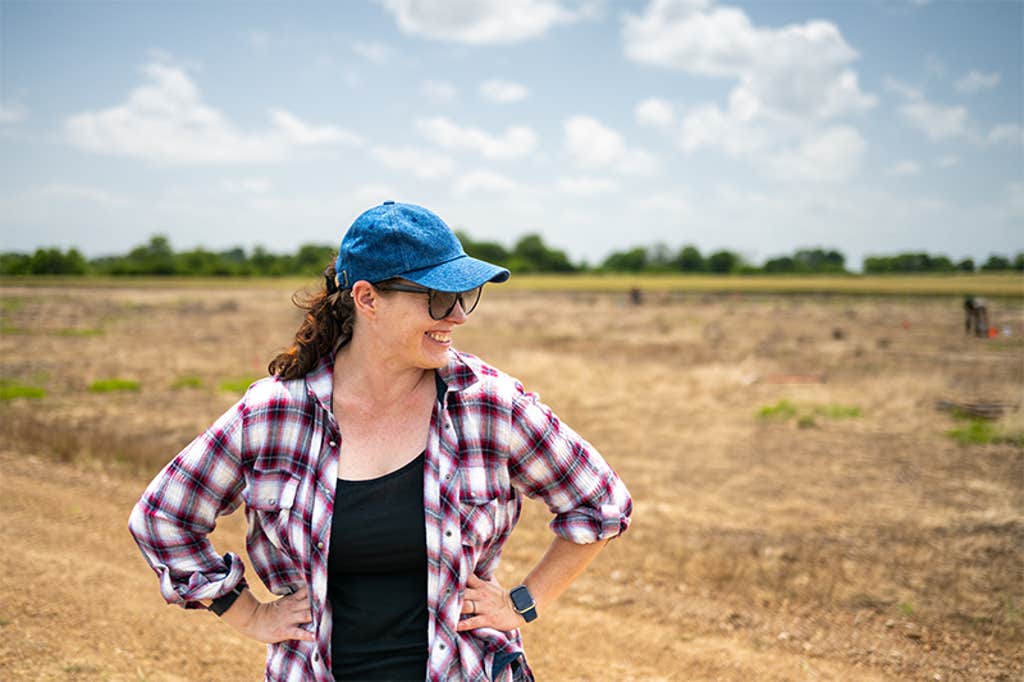
    IN HER ELEMENT: Jennifer Raff on site, helping a colleague with an excavation in Kansas, where she lives and works. Credit: Colin McRoberts.

    The Arctic landscapes left an indelible impression—the starkness of the open plains, the punishing swarms of insects, the winteriness even on the warmest days. “It’s a remarkable environment,” Raff said. The people whose genes Raff studies had survived this and harsher environments for at least a millennium. “I could really appreciate the innovations that kept them alive,” she said. 

    The scientists had sought permission to sequence the DNA preserved inside the remains unearthed at the cemetery through consultations with the Iñupiat of Utqiaġvik. The community had agreed, provided certain provisions—minimal physical damage to the excavated bodies, followed by prompt reburial.

    ADVERTISEMENT

    Nautilus Members enjoy an ad-free experience.

    Log in

    or

    Join now
    .

    “It was liberating,” Raff said. “To work within an explicitly stated framework, composed by the descendants of the peoples I was hoping to learn from, made it easy to do our scientific research on their terms.”  

    Since the 1800s, anthropology museums have stocked their collections with Native American artifacts and remains sacred to tribes. “Native peoples were essentially powerless to stop it,” said Chip Colwell, editor-in-chief of Sapiens, an anthropology magazine, and formerly a senior curator at the Denver Museum of Nature and Science. “When I was coming up in the field in the ’90s, it was extraordinarily rare for Native peoples’ concerns, insights, practices, and religions to be considered as a part of archaeology.”

    Human history belongs to all humankind, the rationale went, elevating archaeology and anthropology to the prerogative of enlightening all humanity. From that vantage point, the needs and views of a relatively small group, such as the Native Americans, seemed trifling, especially if they insisted on the reburial of discovered bones and artifacts. Reburial, rather than preservation of archaeological finds in museums, was seen as anti-science, prohibiting future investigations which might shed new light on history.

    In 1971, a burial ground was discovered in Glenwood, Iowa. Twenty-six individuals identified as white “European-American pioneers” were reburied in a nearby cemetery. The remains of a Native American woman and her child from the same burial site were shipped to the Office of the State Archaeologist in Iowa City, to be distributed to museums or universities. “Dead Native Americans were archaeological resources for the state and white people weren’t,” Colwell explained. “We had allowed Native peoples to become the subject of science in a way we hadn’t for other people.”

    ADVERTISEMENT

    Nautilus Members enjoy an ad-free experience.

    Log in

    or

    Join now
    .

    The Glenwood incident sparked a movement to defend Native American rights, challenging archaeological standard practice. In 1990, on the heels of the Civil Rights movement, the Native American Graves Protection and Repatriation Act (NAGPRA) was enacted into law. It gave Indigenous people the right to rebury their dead, provided they could make a tenable connection between ancient remains and tribal affiliation. Under NAGPRA, affiliation can be established via land ownership, so that remains discovered on federal or tribal land are recognized as belonging to the tribes themselves. At the time, Colwell said, passage of NAGPRA caused an uproar. “Some scholars equated reburial to book burning or destroying libraries of knowledge.”

    Gradually, the culture among archaeologists began to shift, thanks largely to Indigenous activism. “That began to really push archaeologists to confront the ways in which their discipline was perpetrating harm,” Colwell said. He estimates that 90 percent of anthropologists and archaeologists today are on board with the law.

    Raff said meeting tribal members and learning about their cultures from them is a boon to science. Scientists can’t approach research questions, such as when humans first arrived in the Americas “with just one discipline’s data and methods alone. You have to let multiple truths or multiple possibilities coexist at the same time.”

    Raff’s comfort with ambiguity deeply informs her work. Her central thesis in Origin runs contrary to the anthropology that has long been taught in classrooms, a tidy story of how the first people arrived on the American continent in a single wave of migration from Asia some 15,000 years ago.

    ADVERTISEMENT

    Nautilus Members enjoy an ad-free experience.

    Log in

    or

    Join now
    .

    Raff patiently unwinds this expectation, explaining how multiple disciplines and ways of knowing have, over the past two decades, converged on a richer, but muddier narrative of when humans first set foot in the Americas. The tidy Clovis-first theory held that people who settled the continent about 15,000 years ago were supported by a novel technology—a special kind of sharp spearhead (a Clovis head) that allowed them to hunt and subsist on megafauna. It was assumed that the “last glacial maximum,” an ice age that lasted for 4,000 years (between 23,000 to 19,000 years ago), covered the land in deep, year-round ice sheets that prohibited settlers before then.

    But studies of DNA from the oldest human remains unearthed in the Americas, as well as sequenced genomes of present-day Indigenous people, show that Native Americans are descendent from a single population, dating to somewhere between 25,000 to 20,000 years ago. This suggests there was a refugium—a hospitable nook where these ancestors survived—far from other human tribes roaming the plains of Asia over the same period.

    Raff’s thesis about the first Americans runs contrary to the tidy story taught in classrooms.

    There have been no confirmed human settlements that date to this time, although Raff believes the best place to look is underwater, not far from where she conducted her research in Nuvuk. Scientists know that during the last Ice Age, Asia was connected to North America by a land bridge across the Bering Strait, which may have had a climate mild enough to allow populations to flourish.

    ADVERTISEMENT

    Nautilus Members enjoy an ad-free experience.

    Log in

    or

    Join now
    .

    The genetic signatures also show a distinct spread of different tribes—a branching sometime between about 22,000 and 18,000 years ago. One branch, the Ancient Beringians, has no known living descendants. The other, known as the Ancestral Native Americans, gave rise to populations south of the Laurentide ice sheet, which cloaked the north of the continent, along a line roughly connecting present-day Seattle with New York City.

    The Ancestral Native Americans spread quickly across the whole continent, with many populations splitting extremely rapidly from one another. In Origin, Raff explains how this has long baffled archaeologists because it is not consistent with a slow overland advancement of hunger-gatherer populations.

    A hypothesis proposed by Canadian archaeologist Knut Fladmark in 1979 has gained significant traction in recent years due to the pairing of ancient DNA work and Indigenous knowledge. Fladmark argued that people could have migrated along a coastal route rather than an ice-free corridor inland. Further research by scholars, notably Jon Erlandson of the University of Oregon, has led to the theory that humans could have lived along the coast eating kelp, fish, shellfish, and marine mammals, traveling to new sites by boat, via a “kelp highway,” which ran north to south along the west coast of North America, a route that could account for the rapid spread of communities.

    This idea lacks concrete archaeological evidence—no physical artifacts related to navigation have been found—but is supported by oral traditions of the Tlingit and Haida tribes of Alaska, “who maintain that their ancestors were a seafaring people who have lived in this region since the dawn of history,” Raff writes in Origin. The oral traditions of the Tlingit are rich in narratives of ancestors traveling along the Pacific Northwest Coast and down the Stikine River, over and below glaciers, foraging for seals and other marine mammals.

    ADVERTISEMENT

    Nautilus Members enjoy an ad-free experience.

    Log in

    or

    Join now
    .

    In 2007, a genetic reconstruction of the genome of Shuká Káa, a man whose skeleton was found in an Alaskan cave and was dated to 10,000 years ago, added credibility to the kelp highway theory. It showed that Shuká Káa’s people were the ancestors of the Tlingit. At the same time, chemical analysis of his teeth showed that Shuká Káa had indeed grown up on a diet of seafood. Other archaeological artifacts found alongside his body in the cave suggested that he had engaged in long-distance trade for high quality stone, further support the coastal highway theory. The genetic sequencing work was done in consultation with the Tlingit tribe, and after the work was completed, Shuká Káa was buried in 2008.

    Raff reminds her readers that not all Native American origin stories align neatly with the results of genetics. And that genetic results are not set in stone, as new techniques overturn initial interpretations. In the closing pages of Origin, Raff calls it hubris to think a definitive history of the peopling of the Americas is possible.

    Raff ventured into writing for the public in 2015 when she created a blog called Violent Metaphors. The name, suggested by a publicist friend, reflected her feisty feelings at the time. “I wanted to go after pseudoscience and the anti-vaccine stuff that really made me mad,” she said. One post about misinformation about measles’ vaccinations begins, “Dear parents, you are being lied to.” “I learned the things that went viral were the ones that I was writing passionately about,” Raff said. “When I had a real connection, emotional connection to a topic, I wrote the best.”

    Raff’s blogging landed her in the culture wars, where she became a target for those who saw her as an embodiment of political correctness over objective science. In particular, Raff has been in the crosshairs of Elizabeth Weiss. Weiss is a professor emeritus of anthropology at San Jose State University and the coauthor with James W. Springer of Repatriation and Erasing the Past. Weiss and Springer criticize NAGPRA and the reburial of human remains in ancestral burial grounds. They argue “secular and scientific scholarship concerning human and biological differences” is being suppressed and censored by deference to Native American religious myths.

    ADVERTISEMENT

    Nautilus Members enjoy an ad-free experience.

    Log in

    or

    Join now
    .

    I don’t want to be this white savior liberal girl running around.

    In a 2022 review of Origin in the online magazine Quillette, Weiss aimed that criticism at Raff. “To defer to Indigenous creationist ideas is no different, in principle, from deferring to religious Christian attitudes,” Weiss wrote. As “an anthropologist, I find the anti-scientific trend that the book represents to be deeply unsettling.”

    In response, Raff said, “Being respectful of the beliefs and priorities of Indigenous peoples is not in opposition to science, and I’ve never been asked by any tribe to change the results of our research to fit an agenda. Weiss is stereotyping Native Americans as anti-science, which is ludicrous; they are as varied in their perspectives and belief systems as all people are.”

    Raff was born Jennifer Anne Kedzie in Carbondale, Illinois, the first daughter of three. Her youngest sister died in infancy of spinal muscular atrophy, a rare genetic disorder for which there was no cure in the early 1980s. Raff was four. After the loss of her daughter, Raff’s mother was moved to return to higher education and neuroscience, and the family lived in university towns in Missouri and Indiana. Raff’s parents divorced amid the moves and financial struggles, but Raff stayed close with both her parents. Raff’s father worked as a quality assurance engineer in industry, and she credits him for pushing her to look for answers and research. “Every time I would ask him a question, he would be like, ‘Look it up.’”

    ADVERTISEMENT

    Nautilus Members enjoy an ad-free experience.

    Log in

    or

    Join now
    .

    On the campus of Indiana University where she lived as a student, Raff grew close to Elizabeth and Rudolf Raff, both biology professors. Rudolf Raff was a pioneer of evolutionary developmental biology and director of the Indiana Molecular Biology Institute. Their son, Aaron, was Jennifer’s boyfriend, and Aaron and Jennifer married while she was in college but divorced during her last year of graduate school. “It was horrible, a really hard time,” Raff said. “But I got through it. I focused on martial arts and fighting. I thought, ‘This could be a life for me.’” And then I thought, ‘No, you know what? I love science more.’” She kept Raff as her surname.

    Raff has never lived outside the inland heart of the country—Illinois, Indiana, Utah, Texas, and now Kansas. Raff’s home is decorated with objects embedded with personal meaning—sepia photographs of her family, traditional weapons used in martial arts, and a handful of paintings. “Low Tide,” a peaceful landscape work by the Native American artist Linda Infante Lyons, hangs above the dining room table. It is also on the cover of Origin. A violent depiction of abolitionist John Brown leading a bloody uprising against enslavers in 1865 hangs in the living room.

    In the time I spent with Raff, there was only one instance I saw her look incredibly uncomfortable. It came during a dinner at her home with her husband, Colin McRoberts, a lawyer and negotiations consultant; their son, Oliver; her mother, Kathy; and a friend of Raff’s, Peter Koenig. As we discussed the success of Origin and Raff’s advocacy for the inclusions of Native Americans’ own stories in archaeology, Koenig remarked, “It took a white girl for Americans to hear the story.” Raff buried her head in her hands and hoodie.

    “I don’t want to be this white savior liberal girl running around,” Raff told me later. “I think I have a platform. I don’t know if it’s because I’m white, because I’m a professor, because I’ve been writing for the public for a long time. I don’t know. It might be all these things.”

    ADVERTISEMENT

    Nautilus Members enjoy an ad-free experience.

    Log in

    or

    Join now
    .

    In the spring of 2024, Raff received a Guggenheim Fellowship to complete her second book, The Ancients: The Untold Story of How We Became Human. “It will continue my focus on challenging pernicious concepts of biological race and colonialist practices—particularly those still prevalent in paleoanthropology and paleogenomics,” Raff said. It will continue her quest to “complicate” the picture of human origins, so the public can begin to see the complex narratives of belonging. Where an origin is not a single point on a distant horizon, but a forest of interwoven roots.

    Lead image: Zichrini / Shutterstock


    [ad_2]

    Source link

  • Causes, impacts, and future projections of Arctic sea ice loss

    Causes, impacts, and future projections of Arctic sea ice loss

    [ad_1]

    Arctic sea ice loss is expected to continue over the next decades, with implications for the climate system and Arctic communities and ecosystems.

    Arctic sea ice: A defining feature of the Arctic

    Arctic sea ice forms from freezing ocean water during the dark, cold Arctic winters. In the 1980s, the sea ice stretched across the entire Arctic Ocean in winter, even reaching parts of the adjacent North Pacific and North Atlantic Oceans.

    Each spring, as sunlight returns, the ice melts, but even at its lowest point in September, it still covers half of the Arctic Ocean. The Arctic Ocean’s year-round sea ice cover is a key feature of the Arctic as a region dominated by ice and snow.

    The rapid decline of Arctic sea ice in recent decades

    Over the past four decades, Arctic sea ice has declined significantly in both area and thickness. Since the start of continuous satellite observations in late 1978, we have seen a 50% reduction in the sea ice area in September (Fig. 1).

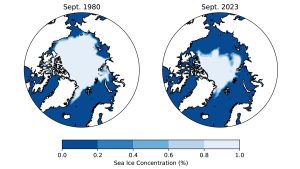
    Therefore, during the seasonal minimum in September, the sea ice now covers only about 25% of the Arctic Ocean (Fig. 2). At the same time, the ice has also become thinner, as shown by measurements from submarines and, more recently, satellites.

    Fig. 1: Observed sea ice area in September from the NSIDC Climate Data Record

    Climate models show that the dramatic loss of Arctic sea ice over the past 40 years can only be explained by the influence of human-caused greenhouse gas emissions. When models are run with only natural factors, such as changes in solar radiation or volcanic activity, they fail to replicate the observed 50% reduction in Arctic sea ice area in September.

    Impacts of Arctic sea ice loss

    The sharp decline in Arctic sea ice cover in September is one of the most visible signs of human-driven greenhouse gas emissions (Fig. 2). However, the importance of sea ice loss goes far beyond symbolism. For example, the changing sea ice cover already affects Indigenous communities in the Arctic that rely on sea ice for hunting and transportation.

    Furthermore, when sea ice melts, the bright, reflective surface of the Arctic is replaced by the darker ocean beneath. Unlike ice, which reflects much of the sun’s energy like a mirror, the darker ocean absorbs much more sunlight, warming the surface waters. This added heat accelerates sea ice melt, exposing even more dark oceans and further increasing heat absorption. This feedback loop is one of the key reasons why the Arctic has warmed two to four times faster than the global average and why sea ice loss has been so large in recent decades.

    Fig.2: Sea Ice Concentration from the NSIDC Climate Data Record

    What happens in the Arctic doesn’t stay in the Arctic, as the region is closely linked to lower latitudes through ocean currents and atmospheric circulation. As a result, the increased energy absorbed by the Arctic Ocean from melting sea ice ultimately influences the climate in regions further south as well.

    Projections of future Arctic sea ice loss and its impacts

    Climate models agree that under continued global warming, the Arctic sea ice cover will continue to decrease in the coming decades.

    This reduction is expected to persist through at least the mid- to late 2040s and across all months of the year, regardless of the greenhouse gas emission scenario considered. It is only in the late 2040s that differences in different possible future emissions pathways begin to significantly influence the extent of the Arctic sea ice cover.

    As Arctic sea ice continues to decline, the Arctic Ocean absorbs increasing amounts of solar energy, triggering profound changes. One notable impact is a shift in ecosystems: as waters warm, fish species from the North Atlantic are likely to expand into newly hospitable areas of the Arctic Ocean. At the same time, the loss of sea ice threatens the survival of species such as polar bears and ringed seals, which depend on the ice for breeding and hunting. These ecological changes, coupled with the extended absence of sea ice near shorelines, will further disrupt the traditional hunting and transportation practices of Arctic Indigenous communities.

    Less sea ice in the Arctic, especially in summer, also means it is more accessible to commercial shipping and tourism. In recent years, the number of ships crossing the Arctic has risen and is expected to grow as sea ice continues to decline. The reason for that is that the Arctic shipping route offers a faster and more cost-effective path between Europe or the US West Coast and Asia.

    However, this increased traffic through the Arctic Ocean requires planning for search and rescue operations and disaster response in the remote Arctic Ocean. In addition, a more navigable Arctic Ocean has geopolitical implications.

    Notably, all these impacts increase the more sea ice the Arctic loses.

    An ice-free Arctic Ocean by 2050

    Once the remaining sea ice area is equal to or less than 1 million km2, scientists consider the Arctic to be `practically ice-free.’ At that point, the remaining sea ice will be limited to the area north of Greenland and the Canadian Archipelago, leaving over 93% of the Arctic Ocean without sea ice.

    The Arctic Ocean has not experienced ice-free conditions for over 80,000 years, meaning that modern humans have never encountered an ice-free Arctic.

    Current climate models, which informed the 2021 Intergovernmental Panel on Climate Change Assessment Report, project a 66% probability that the Arctic will experience its first ice-free September by 2050. However, ice-free conditions could also occur decades earlier or later than 2050, as climate model projections are always probabilistic.

    The probabilistic nature of climate projections arises from the chaotic behaviour of the atmosphere and ocean, which limits precise predictions, much like the inability to forecast weather beyond about ten days.

    Climate models show that staying below global warming of 1.5°C is the only way to avoid ice-free conditions in the Arctic.

    However, even at global warming of 1.5°C, occasional ice-free months may still occur. Thus, while completely preventing ice-free conditions may no longer be feasible, the models also show that reducing future greenhouse gas emissions can limit the extent of sea ice loss.

    For instance, if warming exceeds 2.5°C, the ice-free season could extend for four months of the year, from July to October. Hence, any reduction in global greenhouse gas emissions decreases the area and duration of open water present in the Arctic Ocean, mitigating some of the impacts.

    What will Arctic sea ice cover look like at the end of the 21st century?

    The largest source of uncertainty in climate projections for the end of the 21st century is the amount of greenhouse gas emissions between now and then. Climate models simulate a range of possible outcomes for the Arctic sea ice cover based on different emission scenarios, which predict global warming levels between about 1.5°C and over 5°C by 2100.

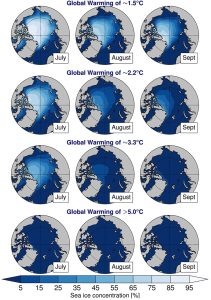
    Under lower warming scenarios (around 1.5°C), the Arctic sea ice cover in summer could still resemble its current state. However, with warming exceeding 3°C, the Arctic could become ice-free for several months each year (Fig. 3).

    Fig. 3: Projected Sea Ice Concentration from CMIP6 models by 2100 for different global warming levels

    In summary, the future state of Arctic sea ice cover will depend entirely on global greenhouse gas emissions. Any reductions in emissions will mean that more sea ice will persist in the Arctic Ocean.

    This article is based on research funded by the US National Science Foundation.

    [ad_2]

    Source link

  • How Earth Observation satellite data is used to benefit society

    How Earth Observation satellite data is used to benefit society

    [ad_1]

    The UK Space Agency outlines its role as Chair of the Committee on Earth Observation Satellites (CEOS) in utilising satellite data to tackle global challenges.

    The UK Space Agency recently assumed the Chair of the Committee on Earth Observation Satellites, marking a significant milestone for the UK in the global space community. This transition positions the UK at the forefront of international efforts to enhance the utility and impact of Earth Observation (EO) data.

    The handover ceremony, held on 24 October at the CEOS Plenary in Montreal, saw the UK Space Agency’s Chief Executive, Dr Paul Bate, take on the role of CEOS Chair for 2025. Taking on this high-profile position underscores the UK’s commitment to leveraging space-borne observations to address some of the most pressing global challenges. As the new Chair, the UK Space Agency will lead CEOS in its mission to coordinate civil space-borne observations of the Earth, ensuring that satellite data is effectively used to benefit society.

    One of the primary goals of the UK Space Agency is to unlock the power of Earth Observation satellite data. This involves enhancing the accessibility and usability of satellite data for various applications, from improving public services to inspiring the next generation through initiatives like CEOS in Schools, with a Youth Summit planned to be held at the UK’s CEOS Plenary in Bath in November 2025.

    The UK’s leadership in CEOS comes at a crucial time. As The Innovation Platform celebrates its 20th edition, CEOS celebrates its 40th anniversary and renews its collective commitment to addressing global challenges through the Montreal Statement.

    Earth Observation plays a pivotal role in the UK space sector, providing invaluable data for a wide range of applications. The UK is a world leader in Earth Observation tools, technologies, and data use, with a portfolio of activities spanning the entire value chain. From early technology development to missions and the harnessing of trusted data for use by a variety of businesses, the UK Space Agency champions the sector’s growth and innovation.

    Earth Observation satellite data for climate monitoring

    One of the key areas where Earth Observation data is making a significant impact is climate monitoring. Satellites provide a unique vantage point to observe the Earth’s climate system, offering critical data for understanding and mitigating the effects of climate change. The UK Space Agency’s role in CEOS will involve leading discussions on national strategies to drive the uptake of Earth Observation data for public service and climate action. This includes working closely with international partners to ensure that satellite data is fully utilised in global climate initiatives, such as the UNFCCC Global Stocktake, a process for evaluating progress on climate action at a global level and identifying gaps.

    earth observation satellites
    © ESA

    At the national scale, the UK Space Agency recently funded a series of grants that aim to foster climate services innovation by developing UK business-viable ideas using space data to address the impacts of climate change. These services will help identify opportunities for green financing that could support sustainable business growth.

    The UK is also involved in a range of Earth observation missions that contribute to global capabilities. These include the European Space Agency’s TRUTHS mission, which will improve confidence in climate forecasts; Biomass, which will monitor the world’s forests; Microcarb, a ground-breaking French-UK satellite mission for carbon monitoring; and the various Sentinel missions of the European Copernicus programme with its associated services.

    Earth Observation and the role of Copernicus

    The Copernicus programme, a European system established in 2014 that uses satellites and other technologies to monitor the Earth, provides a wealth of data and sophisticated services that are crucial for managing our environment, understanding and tackling the effects of climate change, and safeguarding everyday lives. The programme’s free and open data policy has driven an increased uptake in the use of space-generated data, benefiting not only the government and academic sectors but also UK businesses. Since its operations began, the mission has generated over 30 PB of data, with more than 14 million products made available to users to date.

    The upcoming launch of the Sentinel 1C satellite on December 3, 2024, is a key mission under the Copernicus programme. This satellite will provide enhanced continuity for the constellation’s capabilities by delivering high-resolution radar imagery and data essential for monitoring environmental changes and supporting climate action. Sentinel 1C will focus on delivering critical information for disaster response, land and ocean monitoring, and ice observation.

    Earth Observation for disaster management and infrastructure

    In addition to climate monitoring, Earth Observation data is essential for disaster management. Satellites can provide real-time data on natural disasters, such as hurricanes, floods, and wildfires, enabling timely and effective response efforts.

    The UK space sector’s commitment to Earth Observation extends beyond environmental monitoring. Satellite data is also used for urban planning, clean energy, and biodiversity monitoring. For instance, it can help cities plan for sustainable growth by providing insights into land use, infrastructure development, and environmental impact. Similarly, satellite data can support the transition to clean energy by identifying optimal locations for renewable energy projects and monitoring their performance.

    © ESA

    The UK Space Agency’s leadership in CEOS will focus on exploring strategies to bridge the gaps between this satellite data and its users, ensuring that this valuable information is accessible to those who need it most.

    Earth Observation and international collaboration

    The UK’s leadership in CEOS also highlights the importance of international collaboration in the space sector. By working with other space and meteorological agencies, the UK Space Agency aims to promote the goals and objectives of CEOS on the global stage. This includes participating in key international events, such as the recent COP-29 in Baku, Azerbaijan, ESA’s Living Planet Symposium in Vienna in June, and the UK hosting the CEOS Plenary in Bath in November 2025.

    These efforts will ensure that the UK remains at the forefront of global Earth Observation initiatives, driving innovation and fostering collaboration across the international space community.

    The UK’s role as CEOS Chair represents a unique opportunity to lead global efforts in using satellite data to address some of the most pressing challenges facing humanity. From climate action and disaster management to urban planning and clean energy, Earth Observation data has the potential to transform the way we understand and interact with our planet. The UK Space Agency’s leadership in CEOS will be instrumental in unlocking this potential, ensuring that satellite data is effectively used to benefit society and drive sustainable development.

    Please note, this article will also appear in the 20th edition of our quarterly publication.

    [ad_2]

    Source link

  • Tackling the global threat of antimicrobial resistance

    Tackling the global threat of antimicrobial resistance

    [ad_1]

    The World Health Organization details the issue of antimicrobial resistance and sets out the actions that need to be taken to reduce the threat.

    Driven by the misuse and overuse of antimicrobials, antimicrobial resistance (AMR) is one of the top global public health and development threats. AMR is a problem for all countries at all income levels and tackling it requires the efforts of everyone across the globe.

    The complexity of the AMR issue means that it requires both sector-specific actions in the human health, food production, animal and environmental sectors, and a co-ordinated approach across these sectors. During the 2015 World Health Assembly, countries adopted the Global Action Plan (GAP) on AMR with a commitment to the development and implementation of multisectoral national action plans with a One Health approach to tackle AMR. One Health refers to an integrated, unifying approach that aims to achieve optimal and sustainable health outcomes for people, animals, and ecosystems. The GAP was subsequently endorsed by the Governing Bodies of the Food and Agriculture Organization of the United Nations (FAO), the World Organisation for Animal Health (WOAH, formerly known as OIE), and the United Nations Environment Program (UNEP).

    To learn more about the severity of the AMR threat and what actions can be taken by us all to reduce it, The Innovation Platform spoke to the World Health Organization.

    How much of a global burden is AMR?

    Antimicrobial resistance is a major global threat, putting modern medicine, food supplies and economies at risk.  The emergence and spread of drug-resistant microbes threaten our ability to treat common infections and conduct life-saving procedures like chemotherapy, caesarean sections, organ transplants, and other routine procedures.

    It is estimated that bacterial AMR alone is the direct cause of more than 1.25 million global deaths and a contributing factor to approximately five million deaths per year.

    Although AMR is a challenge that affects countries in all regions and of all income levels, low- and middle-income countries (LMICs) are more affected, as health systems are less able to prevent, diagnose, and treat infections. Limited access to affordable vaccines, antimicrobial medicines and diagnostics, as well as lack of clean water, sanitation and hygiene (WASH) and poor infection prevention and control, also increase the threat of AMR.

    The World Bank estimates that, by 2030, AMR is expected to cause a yearly global economic loss of up to $3.4tn, and that associated costs are expected to push 28 million people into extreme poverty.

    What is driving the increase in AMR?

    The spread of AMR is largely driven by the overuse and misuse of antimicrobials in human and animal health, as well as in agriculture.

    When antimicrobials are used incorrectly or excessively, resistant microbes emerge and spread, making that specific antimicrobial ineffective against subsequent infections caused by those microbes. The result is that another antimicrobial must then be used, which, if again, overused or misused, may result in further resistance, leading to fewer or no options for treating that infection.

    antimicrobial resistance
    © shutterstock/Alena Matrosova

    It is a vicious cycle, and one that is speeding up. Since the 1930s, the introduction of new antibiotics has been followed by the emergence of resistance, usually within a decade. Whereas, since the 1980s, the emergence of resistance now tends to happen faster, usually within three years. This can be due to a number of factors, including increased antibiotic use, globalisation and travel, environmental contamination, inadequate infection control, the lack of antibiotics, and the rapid adaptability of bacteria.

    Meanwhile, the pipeline of new antibiotics is drying up; only 13 new antibiotics were introduced to the market between 2017 and 2023. In part, due to low profitability but also high development costs, regulatory challenges, and bacterial adaptation.

    Difficulties in vaccine development also arise from scientific complexity, rigorous testing requirements, funding shortfalls, public perception issues, and unfavourable market dynamics.

    Other factors which contribute to the spread of AMR include poor infection and disease prevention; limited awareness and training on AMR among key stakeholders; and lack of enforcement of relevant laws and policies. A lack of investments in strengthening primary healthcare in most LMICs, supporting veterinary services, and enhancing bio-security measures in animal food production also contribute to the AMR challenge.

    How is the WHO working to tackle the issue of antimicrobial resistance? How are you collaborating with other organisations to do so?

    WHO, the Food and Agriculture Organization of the United Nations (FAO), the UN Environment Programme (UNEP), and the World Organisation for Animal Health (WOAH) have joined forces to respond to AMR through a ‘One Health’ approach, covering human, animal, food security, and environmental health.

    Known as the Quadripartite, the four organisations, co-ordinated through a Joint Secretariat hosted by WHO, collaborate on global advocacy, technical guidance, and political engagement to address the threat of AMR.

    WHO developed the Strategic and operational priorities to address drug-resistant infections in the human health sector, 2025-2035. These priorities provide a guiding framework for accelerated national and global actions, aligned with strategies developed by WHO regional offices, and based on a people-centred approach and core package of interventions.

    WHO also collaborates with a range of stakeholders to strengthen global AMR surveillance to enhance the accuracy and reliability of AMR estimates. This data-driven approach improves accountability and supports countries in tracking their progress against national action plans. They can also track progress against the UN SDG indicator ( 3.d.2) that tracks blood-stream infections due to two drug-resistant pathogens.

    By providing guidance, tools and technical support to national public health authorities, WHO also supports countries to implement National Action Plans to curb the spread of AMR.

    What is needed to hit the target of a 10% reduction in human deaths from AMR by 2030? Is it looking like a feasible target currently?

    Achieving a 10% reduction in human deaths from AMR by 2030 will require strong commitment and accelerated, co-ordinated action. Following the recent High-Level Meeting on AMR at the UN General Assembly, leaders at the 79th UN General Assembly must now translate the commitments in the political declaration into action across human health, agriculture, and environmental sectors. This includes securing sustainable financing, with a goal of mobilising at least $100m to support national AMR action plans, particularly in low- and middle-income countries.

    antimicrobial resistance
    © shutterstock/nobeastsofierce

    Essential actions include improving infection prevention, enhancing surveillance, and promoting antimicrobial stewardship to ensure appropriate use of medicines. Expanding the One Health model to address environmental factors is also critical, as is embedding AMR efforts within broader public health frameworks achieving Universal Health Coverage, through strengthening primary healthcare.

    It looks like a feasible target based on a modelling exercise undertaken by Lewnard et al. 2024, Mendelson et al. 2024 as part of The Lancet Series on Antimicrobial Resistance: The need for sustainable access to effective antibiotics.

    National action plans enumerate many interventions as potential strategies to reduce the burden of bacterial antimicrobial resistance (AMR). In a modelling analysis, the authors estimated that improving infection prevention and control programmes in low-and middle-income healthcare settings could prevent at least 337,000 (95% CI 250,200-465,200) AMR-associated deaths annually. Ensuring universal access to high-quality water, sanitation, and hygiene services would prevent 247,800 AMR-associated deaths. Additionally, paediatric vaccines would prevent another 181,500 AMR-associated deaths. This can be achieved from both direct prevention of resistant infections and reductions in antibiotic consumption.

    These estimates translate to prevention of 7.8% (5.6–1.0) of all AMR-associated mortality in LMICs by infection prevention and control, 5.7% (3.7–8.0) by water, sanitation, and hygiene, and 4.2% (3.4–5.1) by vaccination interventions. Their findings indicate that reducing global AMR burden by 10% by the year 2030 is achievable with existing interventions – but these prevention strategies must be complemented by greater efforts to establish national structures to optimise the use of antimicrobials, greater awareness and training, and ensuring access to basic health services, timely diagnosis, and safe and quality-assured medicines.

    Please note, this article will also appear in the 20th edition of our quarterly publication.

    [ad_2]

    Source link

  • Realising fusion energy’s potential in Europe

    Realising fusion energy’s potential in Europe

    [ad_1]

    Massimo Garribba, Deputy Director-General responsible for the co-ordination of EURATOM policies in the Directorate-General for Energy at the European Commission, details Europe’s journey towards the realisation of fusion energy.

    As Europe works towards achieving net zero targets and sustainability goals, could fusion – powering the sun and stars – be the energy of the future?

    With a long history in fusion science and technology, Europe is well positioned as a leader in the journey to fusion commercialisation. Most notably, Europe is home to one of the most ambitious energy projects in the world – ITER, located in southern France. ITER is a major international collaboration working to build the world’s largest tokamak – an experimental machine designed to validate the scientific and engineering viability of fusion energy. ITER Members will then be able to be design their prototype or demonstration power plants on the basis of ITER construction experience, technological and scientific results. This will further drive the transition from a scientific experiment to fusion commercialisation.

    The EU also co-funds EUROfusion consortium through the Horizon Europe Euratom Research and Training Programme. Via this consortium, European fusion laboratories collaborate to further advance the fusion research, design and manufacture systems that are necessary for the future fusion reactors.

    To find out more about Europe’s fusion activities, The Innovation Platform spoke to Massimo Garribba, Deputy Director-General responsible for the co-ordination of EURATOM policies, Directorate-General for Energy, European Commission.

    Can you elaborate on the current state of fusion in the EU?

    The European Union (EU) considers fusion has the potential to provide a safe, cost-efficient and sustainable solution to European and global energy needs in the future. For this reason, the EU has supported for decades cutting-edge research and innovation, with the goal of developing fusion power plants for electricity production for a greener and more sustainable energy mix.

    The EU is part of one of the most ambitious energy projects in the world – ITER. Located in the south of France, ITER is a unique project to build the world’s largest and most advanced fusion machine – a tokamak. Once completed, ITER will be approximately 30m high and 30m wide, weighing 23,000 tonnes. It aims to prove the technical and scientific feasibility of using the fusion process for electricity production. Tokamaks are vacuum-chambered devices designed to replicate on Earth the process of fusion – the energy source of the sun and stars – using a powerful magnetic field generated by superconducting magnets.

    Beyond ITER, the EU collaborates with Japan on fusion activities under the Broader Approach Agreement. This privileged partnership oversees the development of key infrastructures, such as a test facility for fusion materials (The International Fusion Materials Irradiation Facility / Engineering Design and Engineering Validation Activities – IFMIF-EVEDA). The materials to be used in fusion reactors will need to withstand immense temperature and neutron fluence generated during the fusion process. Under the same agreement, the EU and Japan have jointly built a tokamak device known as JT-60SA. This device, located in Naka, Japan, is currently the largest operational superconducting tokamak in the world, after its inauguration in December 2023. JT-60SA was designed to support the operation of ITER by providing a complementary research and development programme.

    Recently, Spain and Croatia have teamed up to lead the development of the International Fusion Materials Irradiation Facility – Demo Oriented Neutron Source (IFMIF-DONES), which is being constructed in Spain. IFMIF-DONES builds on the results of IFMIF-EVEDA and will provide a neutron source essential for further testing and validating materials that will be used in future fusion power plants.

    The EU has also been supporting research in national fusion laboratories and universities, such as the Joint European Torus (JET) in the UK and the Wendelstein 7-X stellarator in Germany. Now, we are looking into opportunities to support joint initiatives between the private and public sectors. For instance, the European Innovation Council has recently awarded a €2.5m grant to a fusion start-up to support progress on the design of its stellarator and the integration of key stellarator components. We are encouraging EU fusion start-ups to work and co-operate with EU fusion laboratories, but also with industrial partners who are part of the current ITER supply chain.

    How can findings from major European fusion activities and organisations such as JET, EUROfusion and ITER inform the future direction of European fusion development?

    Fusion development is a long-term endeavour that requires sustained efforts across various initiatives, including the ones you mentioned.

    ITER is one of the most complex machines ever to be constructed. It is meant to establish a demonstration fusion power plant and there are no shortcuts on this path. ITER will help demonstrate the feasibility of technologies needed for a fusion power plant, bridging the gap between today’s smaller-scale experimental fusion devices and the future demonstration of fusion power plants. Through ITER, scientists will be able to study plasmas under conditions similar to those expected in a future power plant and test essential technologies such as heating, control, diagnostics, cryogenics, and remote maintenance. Moreover, ITER will provide a unique opportunity to test, under real fusion conditions, the production of one of the fusion fuels for future fusion reactors: tritium.

    fusion energy
    Illustration of the ITER tokamak © ITER Organization

    In other words, ITER operations and the results of its research and experiments in the production of tritium and construction materials for fusion machines are necessary steps for the EU to transition fusion energy from research to demonstration reactors.

    The findings from major European fusion activities, such as JET and EUROfusion, play a crucial role in informing the future of European fusion development. The JET machine concluded its operational journey on 18 December 2023, over four decades after its inception. It has been fundamental in laying the groundwork for ITER and future fusion power plants through its innovative deuterium-tritium experiments. JET also played a key role in training several generations of fusion scientists and engineers across Europe.

    EUROfusion – a consortium of around 30 national fusion research laboratories across the EU – conducts fusion research under the Euratom Research and Training Programme. This focuses on the development of key fusion-related technologies, advancing training and education, and the development of the conceptual design of a future demonstration fusion power reactor (DEMO). EUROfusion’s co-ordinated efforts continue to drive progress in critical technologies while fostering new generations of fusion experts.

    The collective knowledge obtained from all these different initiatives (e.g. on plasma behaviour, fusion materials, operational challenges, etc.), will shape the future course of European fusion development. Co-ordinated research efforts will help the EU transition from research to industrialisation, paving the way for the development and operation of commercial fusion power plants.

    What are the main bottlenecks preventing fusion energy from being fully realised? How can these be removed?

    There are a series of key technological bottlenecks related to the demonstration of critical technologies of future fusion reactors. For example, the qualification of materials that can withstand the extreme conditions within fusion reactors, or the demonstration of key components’ performance under reactor conditions. The development of plasma scenarios and the remote maintenance design and qualification remain significant challenges as well.

    Another important bottleneck is the demonstration of tritium production within the reactor for fuel self-sufficiency. Fusion reactors rely on tritium, which is scarce in nature. Therefore, future commercial power plants will need to ‘breed’ their own tritium for economic viability. Breeding blanket concepts are being developed, and will need to be tested, to produce tritium fuel directly during the fusion reaction.

    Addressing these challenges is crucial for fusion to transition from experimental reactors to a reliable and sustainable energy source. This can be achieved by the fusion industry and research institutions complementing their knowledge and helping to close the technological gaps affecting the path to fusion energy generation.

    What is needed to enable fusion research and technology to flourish in Europe?

    Several key actions are required to support the growth and development of fusion research and technology.

    Firstly, we need to secure continued and sufficient commitment of financial, technical, and human resources to complete the ITER project. Despite the challenges the project is facing and the rise of private investment in multiple fusion machine designs, ITER remains not only highly relevant, but in fact the centrepiece of global efforts towards the commercialisation of fusion energy.

    Secondly, an appropriate fusion-specific regulatory framework will also facilitate the deployment of fusion technologies. In this regard, the European Commission has launched a dialogue with the European nuclear safety authorities in the European Nuclear Safety Regulators Group on possible regulatory approaches to fusion facilities.

    Thirdly, as indicated in Draghi’s latest report on the future of European competitiveness, we need to create ‘a stable and predictable fusion ecosystem for industrial innovation, leveraging the ITER project, while ensuring a clear technology development roadmap.’ A coherent EU-level approach should be adopted to facilitate research and technology innovation, incentivise private sector engagement, de-risk investments when necessary, and create the environment where private companies and publicly funded research organisations work hand in hand towards a common goal – bringing fusion energy to the grids.

    Finally, once the first commercial power plants are built, there will be a massive industrial effort required to scale up production. Therefore, we will need to support the EU utilities and supply chain industry to be well positioned – either as fusion energy deployers or as key suppliers to leading commercial fusion projects.

    How close do you think Europe is to fusion commercialisation?

    We are seeing several private initiatives working to achieve electricity production with ambitious timelines. Some of them have announced that they will demonstrate significant progress within the next five years, aiming for a technology readiness level (TRL) of 4 or 5 and potential net energy gain or high-power multiplication. These companies plan to complete a pilot plant between 2030 and the mid-2030s. The success of these plants depends on the performance of the upcoming devices, securing further funding, and resolving design, engineering, procurement, and construction issues. We also need to recognise important differences between public and private approaches to fusion technology development: Public initiatives, like ITER, aim to develop the entire fusion system, including fusion-enabling technologies such as blanket breeding and tritium technologies. While it may require more time, this comprehensive approach addresses long-term issues critical to the future commercial deployment of fusion power plants.

    It’s hard to predict an exact timing, but we can realistically expect to still have some decades of work ahead of us before achieving fusion commercialisation. Although, there’s always hope for a breakthrough or major discovery in the meantime.

    What is important to keep in mind is that the benefits of having fusion energy as a part of the future energy mix are worth pursuing and we remain committed to making fusion energy a reality as fast as possible.

    Please note, this article will also appear in the 20th edition of our quarterly publication.

    [ad_2]

    Source link