



Do not underestimate the power of the humble cranberry.
In recent years, studies have confirmed that cranberries can help people prevent urinary tract infections (UTIs), harnessing traditional knowledge that goes back thousands of years in Native American culture, but which has often been debated in research circles.
Now, it appears the same compounds that make cranberries effective against UTIs could offer benefits for a completely different aspect of human health – dental hygiene.
In a new study published in Scientific Reports, researchers found that consuming cranberry juice appears to suppress the growth of dental plaque, which might come as a surprise to some.
“Most people think of cranberry juice as very sour, very acidic and sugary, and therefore may not contribute positively to oral health,” says pediatric dentist Christine Wu from the University of Illinois Chicago.
“This study found the opposite.”
Cranberries contain compounds called proanthocyanidins (PACs), which can inhibit bacterial infections.
In the case of UTIs, the proanthocyanidins in cranberry juice can make it harder for Escherichia coli to attach to the cells lining the bladder.
But evidence is emerging to suggest that proanthocyanidins can also help protect your mouth, inhibiting bacteria such as Streptococcus mutans, which build up in the plaque biofilm amassing on your teeth, producing acids that can contribute to tooth decay.
To investigate whether the proanthocyanidins present in commercially available cranberry juice might offer a protective effect, Wu and fellow researchers conducted a small study involving eight adults and 14 children.
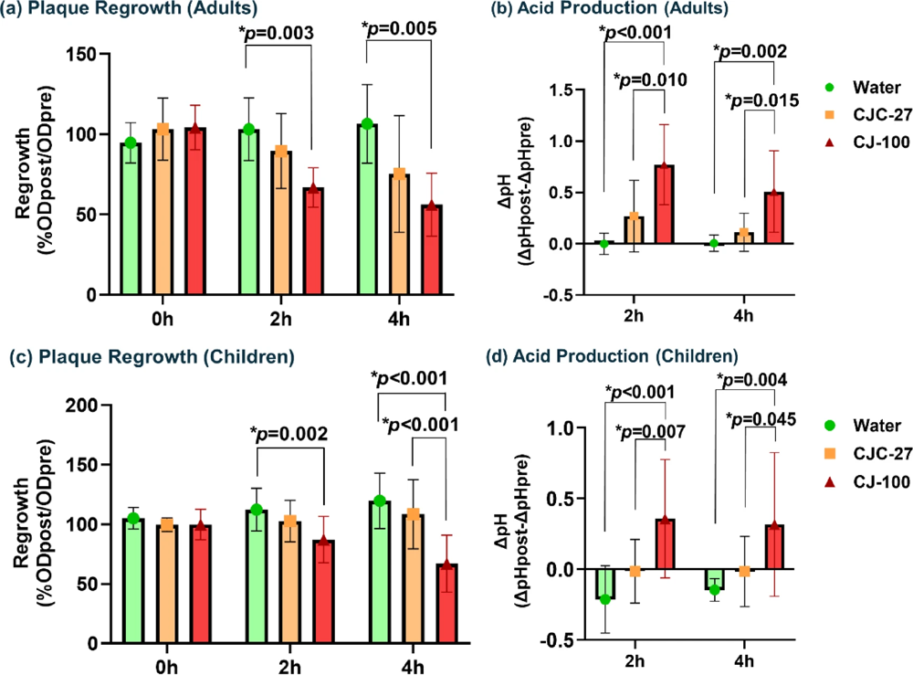
In a randomized crossover trial, the participants each tested three separate drinks on different days: pure cranberry juice, a sweetened cranberry drink containing 27 percent cranberry juice, and water serving as a control.
In each phase of the test, the participants refrained from oral hygiene for 24 hours, before having one side of their mouth swabbed for plaque.
After this first swab, the participants would take their test drink and swish it around their mouth, before swallowing it. Thirty minutes later, researchers would swab plaque from the other side of the participants’ mouths.
When the team subsequently compared the baseline swabs to the swabs taken after the drinking experiment, results showed that drinking pure cranberry juice resulted in 44 percent less bacterial growth, with a 33 percent reduction seen in the child participants, compared to the baseline swabs.
“The greater numerical reduction observed in adults may reflect age-related differences in plaque composition, leading to variable susceptibility to cranberry-derived antimicrobial compounds,” the researchers explain in their paper.
“Recent studies have demonstrated clear age-dependent differences in the composition, diversity, and abundance of the oral microbiome, with distinct microbial communities contributing to the caries process in adults versus children.”
The regrowth of plaque bacteria after exposure to the sweetened 27 percent cranberry juice drink was numerically lower than in the pre-exposed plaque bacteria, but the difference was not statistically significant.
In addition to curbing bacterial growth, the pure cranberry juice also yielded a significant reduction in plaque acid production in the participants, potentially limiting the damage these acids can cause to tooth enamel.
While the researchers didn’t specifically test for it, they suggest the pure cranberry juice outperformed the sweetened cranberry drink due to higher proanthocyanidin content, although future research would be needed to confirm this.
It’s worth noting this was only a very small study, and the researchers didn’t measure whether cranberry juice consumption protected the participants from tooth decay over time, as they only measured plaque activity and acid levels at the time of the experiment.
Another question is whether the juice’s own high acidity could damage teeth, although the researchers note that existing evidence on the dental erosion caused by acidic beverages is inconsistent, and there is research to suggest that drinking cranberry juice can reduce dentin erosion.
Given that we know plaque activity and acid production are two of the chief culprits behind dental cavities, the findings offer preliminary evidence that cranberries may be a ‘functional food’ that offers oral health benefits beyond the basic nutrition they supply.
A final concern could be its sour taste, though, with the researchers observing that the low-sugar tartness of cranberry juice could limit its palatability for people, especially children.
“Future incorporation of non-cariogenic sweeteners may improve acceptability without compromising safety or efficacy,” they suggest.
The findings are reported in Scientific Reports.


