
-Feature-CPG--Tears-as-the-next-generation-of-diagnostics-and-monitoring---439100-1:Widescreen?$responsive$&qlt=90,0&resMode=sharp2&fmt=webp&op_sharpen=1 "Our tears can help diagnose cancer, Parkinson’s, and Alzheimer’s")
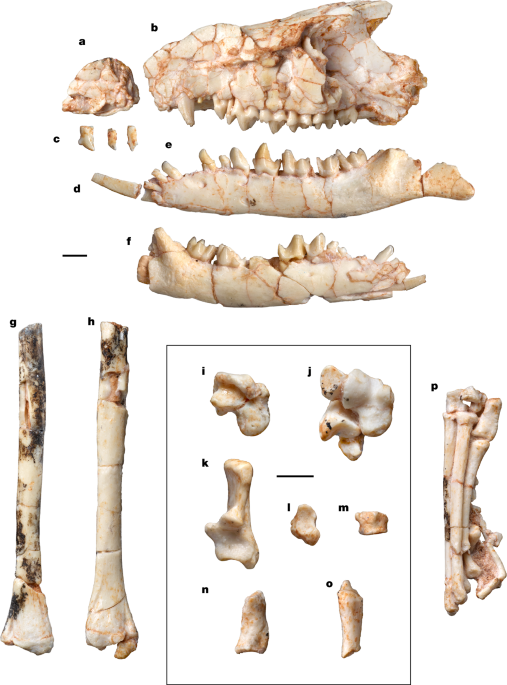
Rose, K. D. The Beginning of the Age of Mammals (Johns Hopkins Univ. Press, 2006).
Nessov, L. A. Results of search and study of Cretaceous and early Paleogene mammals on the territory of the USSR. Ezheg. Vses. Paleontol. Obs. 30, 199–218 (1987).
Nessov, L. A., Archibald, J. D. & Kielan-Jaworoska, Z. Ungulate-like mammals from the Late Cretaceous of Uzbekistan and a phylogenetic analysis of Ungulatomorpha. Bull. Carnegie Mus. Nat. Hist. 34, 40–88 (1998).
Archibald, J. D. Fossil evidence for a Late Cretaceous origin of “hoofed” mammals. Science 272, 1150–1153 (1996).
Archibald, J. D., Averianov, A. O. & Ekdale, E. G. Late Cretaceous relatives of rabbits, rodents, and other extant eutherian mammals. Nature 414, 62–65 (2001).
Archibald, J. D. & Averianov, A. O. Phylogenetic analysis, taxonomic revision, and dental ontogeny of the Cretaceous Zhelestidae (Mammalia: Eutheria). Zool. J. Linn. Soc. 164, 361–426 (2012).
Wible, J. R., Novacek, M. J. & Rougier, G. W. New data on the skull and dentition in the Mongolian Late Cretaceous eutherian mammal Zalambdalestes. Bull. Am. Mus. Nat. Hist. 281, 1–144 (2004).
Kielan-Jaworowska, Z. Preliminary data on the Upper Cretaceous eutherian mammals from Bayn Dzak, Gobi desert. Palaeontol. Polon. 19, 171–191 (1968).
Kielan-Jaworowska, Z. Evolution of the therian mammals in the Late Cretaceous of Asia. Part III. Postcranial skeleton in Zalambdalestidae. Palaeontol. Pol. 38, 5–41 (1978).
Wible, J. R., Rougier, G. W., Novacek, M. J. & Asher, R. J. Cretaceous eutherians and Laurasian origin for placental mammals near the K/T boundary. Nature 447, 1003–1006 (2007).
Okoshi, T. et al. New Late Cretaceous zhelestid mammal from the Bayanshiree Formation, Mongolia. Acta Palaeontol. Pol. 70, 193–203 (2025).
Madsen, O. et al. Parallel adaptive radiations in two major clades of placental mammals. Nature 409, 610–614 (2001).
Meredith, R. W. et al. Impacts of the Cretaceous terrestrial revolution and the KPg extinction on mammal diversification. Science 334, 521–524 (2011).
Murphy, W. J. et al. Molecular phylogenetics and the origins of placental mammals. Nature 409, 614–618 (2001).
Murphy, W. J. et al. Resolution of the early placental mammal radiation using Bayesian phylogenetics. Science 294, 2348–2351 (2001).
Wible, J. R., Rougier, G. W., Novacek, M. J. & Asher, R. J. The eutherian mammal Maelestes gobiensis from the Late Cretaceous of Mongolia and the phylogeny of Cretaceous Eutheria. Bull. Am. Mus. Nat. Hist. 327, 1–123 (2009).
Velazco, P. M. et al. Combined data analysis of fossil and living mammals: a Paleogene sister taxon of Placentalia and the antiquity of Marsupialia. Cladistics 38, 359–373 (2022).
Bi, S. et al. An Early Cretaceous eutherian and the placental–marsupial dichotomy. Nature 558, 390–395 (2018).
Wang, H. B., Hoffmann, S., Wang, D. C. & Wang, Y. Q. A new mammal from the Lower Cretaceous Jehol Biota and implications for eutherian evolution. Philos. Trans. R. Soc. B 377, 20210042 (2022).
Szalay, F. S. & Sargis, E. J. Cretaceous therian tarsals and the metatherian-eutherian dichotomy. J. Mammal. Evol. 13, 171–210 (2006).
Averianov, A. O. & Archibald, J. D. Therian postcranial bones from the Upper Cretaceous Bissekty Formation of Uzbekistan. Proc. Zool. Inst. RAS 321, 433–484 (2017).
Chester, S. G., Sargis, E. J., Szalay, F. S., Archibald, J. D. & Averianov, A. O. Mammalian distal humeri from the Late Cretaceous of Uzbekistan. Acta Palaeontol. Pol. 55, 199–211 (2010).
Chester, S. G., Sargis, E. J., Szalay, F. S., Archibald, J. D. & Averianov, A. O. Therian femora from the Late Cretaceous of Uzbekistan. Acta Palaeontol. Pol. 57, 53–64 (2012).
Eberth, D. A. et al. Assignment of Yamaceratops dorngobiensis and associated redbeds at Shine Us Khudag (Eastern Gobi, Dorngobi Province, Mongolia) to the redescribed Javkhlant Formation (Upper Cretaceous). J. Vertebr. Paleontol. 29, 295–302 (2009).
O’Leary, M. A. et al. The placental mammal ancestor and the post-K-Pg radiation of placentals. Science 339, 662–667 (2013).
Zack, S. P., Rose, K. D. & O’Leary, M. A. New cranial and postcranial remains of the once enigmatic early Eocene mammal Wyolestes (Mammalia, Ferae, Hyaenodonta) from North America and phylogenetic evidence for its interordinal relationships. Bull. Am. Mus. Nat. Hist. https://doi.org/10.1206/0003-0090.475.1.1 (2025).
Kielan-Jaworowska, Z., Cifelli, R. L. & Luo, Z.-X. Mammals from the Age of Dinosaurs: Origins, Evolution, and Structure (Columbia Univ. Press, 2004).
Wang, X. Transformation from plantigrady to digitigrady: functional morphology of locomotion in Hesperocyon (Canidae: Carnivora). Am. Mus. Novit. 3069, 1–23 (1993).
Carrano, M. T. Morphological indicators of foot posture in mammals: a statistical and biomechanical analysis. Zool. J. Linn. Soc. 121, 77–104 (1997).
Ginsburg, L. Plantigrady and digitigrady in the fissiped carnivorans. Mammalia 25, 1–21 (1961).
Arnold, P., Janiszewska, K., Li, Q., O’Connor, J. K. & Fostowicz-Frelik, L. The Late Cretaceous eutherian Zalambdalestes reveals unique axis and complex evolution of the mammalian neck. Sci. Bull. 69, 1767–1775 (2024).
Dashzeveg, D. et al. Extraordinary preservation in a new vertebrate assemblage from the Late Cretaceous of Mongolia. Nature 374, 446–449 (1995).
Lopatin, A. V. & Averianov, A. O. New Early Cretaceous zalambdalestid stem placental mammal from Mongolia and evolution of Zalambdalestidae. J. Vertebr. Paleontol. 44, e2384601 (2024).
Bremer, K. Branch support and tree stability. Cladistics 10, 295–304 (1994).
Makovicky, P. J. & Norell, M. A. Yamaceratops dorngobiensis, a new primitive ceratopsian (Dinosauria: Ornithischia) from the Cretaceous of Mongolia. Am. Mus. Novit. 3530, 1–42 (2006).
Nesbitt, S. J., Clarke, J. A., Turner, A. H. & Norell, M. A. A small alvarezsaurid from the eastern Gobi Desert offers insight into evolutionary patterns in the Alvarezsauroidea. J. Vertebr. Paleontol. 31, 144–153 (2011).
Kielan-Jaworowska, Z. Preliminary description of two new eutherian genera from the Late Cretaceous of Mongolia. Palaeontol. Pol. 33, 5–16 (1975).
Novacek, M. J., Hoffman, E. A. & O’Leary, M. A. First occurrence of the eutherian mammal Asioryctes nemegtensis from the Upper Cretaceous Djadokhta Formation, Gobi Desert, Mongolia, and a revised alpha taxonomy based on the skull and dentition. J. Vertebr. Paleontol. 42, e2196320 (2023).
Archibald, J. D. & Averianov, A. O. The Late Cretaceous placental mammal Kulbeckia. J. Vertebr. Paleontol. 23, 404–419 (2003).
Swofford, D. L. PAUP* Phylogenetic Analysis Using Parsimony (* and Other Methods), 4.0b10a (Sinauer Associates, 2003).
Sorenson, M. D. & Franzosa, E. A. TreeRot v.3 (Boston University, 2007).
Goloboff, P. A., Farris, J. S. & Nixon, K. TNT, a free program for phylogenetic analysis. v.1.1. Cladistics 24, 774–786 (2008).
Goloboff, P. A., Torres, A. & Arias, J. S. Weighted parsimony outperforms other methods of phylogenetic inference under models appropriate for morphology. Cladistics 34, 407–437 (2018).
Stamatakis, A. RAxML Version 8: a tool for phylogenetic analysis and post-analysis of large phylogenies. Bioinformatics 30, 1312–1313 (2014).
Miller, M. A., Pfeiffer, W. & Schwartz, T. Creating the CIPRES Science Gateway for inference of large phylogenetic trees. In Proc. 2010 Gateway Computing Environments Workshop (GCE) (IEEE, 2010).
Lewis, P. A likelihood approach to estimating phylogeny from discrete morphological character data. Syst. Biol. 50, 913–925 (2001).