







We know sleep and Alzheimer’s disease are intricately linked.
In a new study published in the journal Neurology, a team of scientists explores the associations between particular kinds of electrical activity that occur during deep sleep, a peptide neurotransmitter called orexin, and the progression of Alzheimer’s disease.
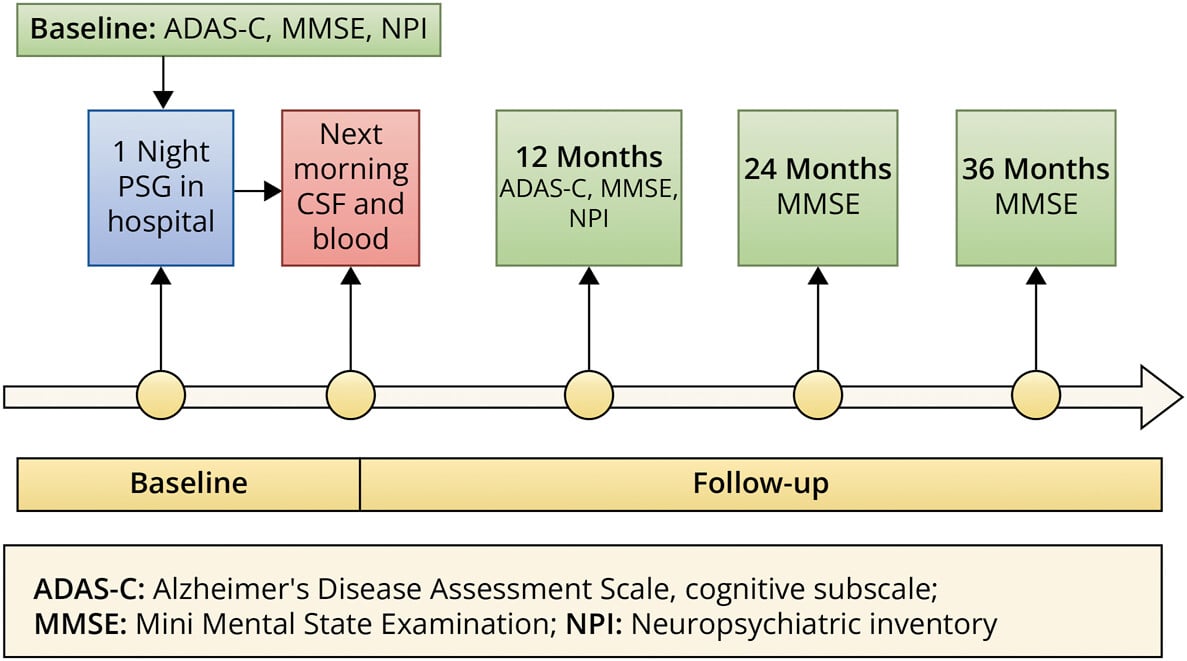
First, they recruited 60 people recently diagnosed with mild to moderate Alzheimer’s disease, aged 60 and over, and who were not taking any drugs known to interfere with brain wave activity.

frameborder=”0″ allow=”accelerometer; autoplay; clipboard-write; encrypted-media; gyroscope; picture-in-picture; web-share” referrerpolicy=”strict-origin-when-cross-origin” allowfullscreen>
The participants were monitored with a sleep study machine overnight. The next morning, the researchers collected a sample of each participant’s cerebrospinal fluid (CSF) – the colorless liquid in which the brain and spinal cord are suspended, and which carries molecules to and from the nervous system.
After the study, the researchers checked in with participants to see how their Alzheimer’s symptoms progressed across the next three years.
In the CSF samples, the researchers were looking for levels of a chemical messenger called orexin, which we know is involved in sleep and wakefulness (in type 1 narcolepsy, for instance, a lack of orexin in the brain contributes to excessive sleepiness and sudden episodes of muscle weakness called cataplexy).
Researchers are curious whether orexin might be involved in Alzheimer’s disease, especially since we already have drugs that act on orexin.
Several small studies have indicated that people with Alzheimer’s disease could have dysregulated orexin levels.
Perhaps orexin drugs could help in Alzheimer’s treatment; perhaps they could indirectly help the brain clear amyloid beta and tau proteins, which, according to lab animal experiments and human observational studies, tend to accumulate in the brain more when sleep is disrupted.
If so, the drugs could potentially slow disease progression. But for now, it’s pretty unclear what the relationship is, if any.
“Dysregulated orexin signaling is associated with apathy, depression, and anxiety and may contribute to neuropsychiatric symptoms in dementia,” the study’s authors write.
“However, few studies have examined whether orexinergic activity relates to cognitive decline or neuropsychiatric symptom severity in people with Alzheimer’s disease.”
To get closer to an answer, the researchers analyzed orexin against data collected from the sleep study, which tracked participants’ sleep spindles and slow oscillations during non-rapid eye movement (NREM) sleep.
In healthy brains, these two electrical signals indicate activity that helps us consolidate our memories and stabilize our cortical network.
People with Alzheimer’s often have disturbed sleep, and their sleep spindles and slow oscillations tend to mirror that disruption.
Higher levels of orexin in participants’ CSF were correlated with worse disease progression across the following three years.
Still, participants with relatively ‘stronger’ activity in the sleep spindle and slow oscillation department showed a weaker association between higher orexin and worse outcomes.
Those NREM signals were stronger – spindles more dense, slow oscillations longer – in people with lower CSF orexin levels.
They also noticed orexin was significantly more concentrated in the CSF of women than men.

This study, with only 60 participants, was really small. It also doesn’t include data from a control group, so it’s unclear whether the results actually show us anything that is unique to Alzheimer’s.
It also interprets the long-term results according to just that one overnight sleep study and the single CSF sample taken the next morning, which is not ideal.
As most of us probably know from personal experience, any given night of sleep can be entirely different from another – especially if that one night of sleep involves being plugged in to some unfamiliar equipment.
Related: Can Alzheimer’s Spread Through Blood Transfusions? Here’s What We Know.
So while the results might be interesting, they’re really just a starting point for further research.
Future studies with many more participants, more detailed data on their sleep at baseline, and a control group of cognitively healthy patients would be necessary to really understand what’s going on.
The research was published in Neurology.
This article was fact-checked by Peter Dockrill and edited by Peter Dockrill. While we pride ourselves on our process, we are only human. If you spot a mistake, please let us know.


