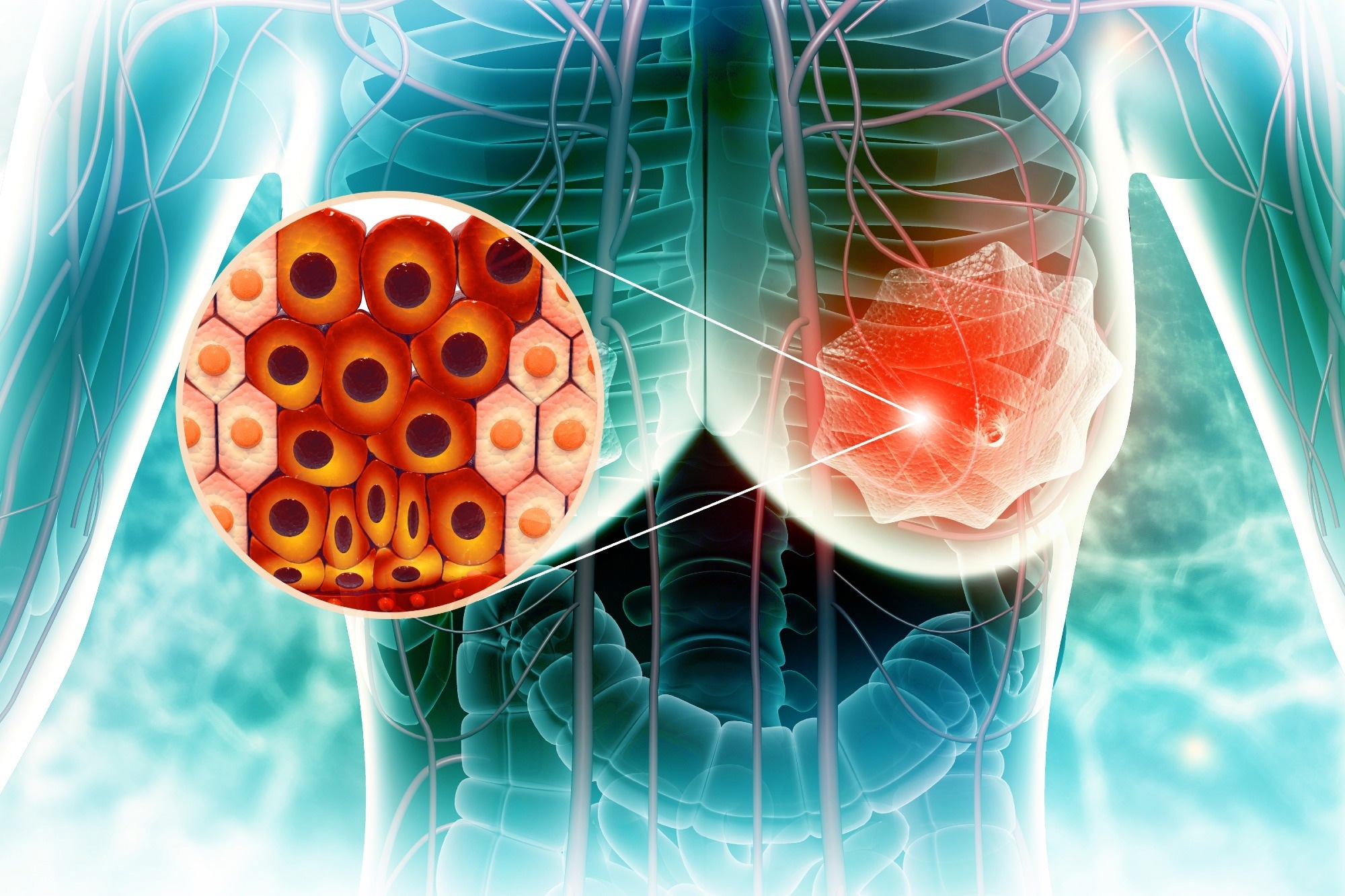


Chemotherapy has a problem with precision.
It’s one of the most effective ways we have to treat aggressive cancer – but it isn’t very good at discriminating between the cancer cells it’s targeting and the healthy tissue around them as it circulates through the body.
Likewise, immunotherapy – which guides the immune system to mount the body’s built-in defenses against malignant cells – can attack healthy tissues and result in dangerous levels of inflammation in the body, resulting in systemic toxicity.
Because cancer develops from the body’s own cells, figuring out how to target tumors directly while not damaging healthy tissue has proven to be one of the most difficult aspects of treating the disease in all its myriad forms.
Now, scientists have demonstrated a new approach – turning probiotic bacteria into tiny little drug factories that set up shop inside tumors, producing chemotherapy while helping rally the immune system against the cancer at the same time.
When tested in mice, the treatment produced complete regression in three out of seven colorectal tumors.
It’s a small result, to be sure, but one that suggests engineered probiotics could one day play an important role in the cancer-fighting toolkit.
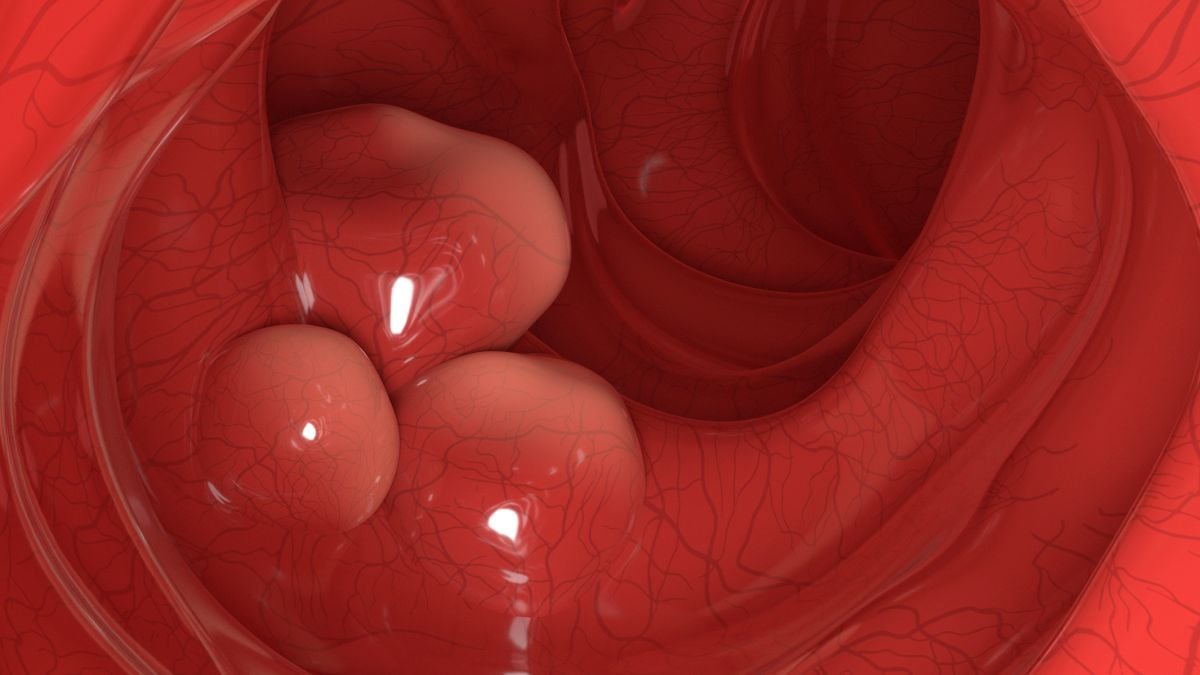
Colorectal cancer is one of the most commonly diagnosed cancers worldwide, and it remains a leading cause of cancer death. Although survival has improved considerably, treatment for advanced disease still relies heavily on chemotherapy, including the drug 5-fluorouracil, or 5-FU.
The need for new treatments is particularly pressing as colorectal cancer rates rise among younger people, for reasons scientists are still trying to understand.
One avenue researchers are increasingly exploring is the delivery of treatment directly to the affected tissue, concentrating its cancer-killing effects where they’re needed while limiting exposure elsewhere in the body.
And some of the most promising couriers are themselves alive.
A team of researchers led by immunologist Nicholas Arpaia of Columbia University turned to a bacterium used as a probiotic to promote gut health – Escherichia coli Nissle 1917.
Bacteria have some traits that make them particularly useful in targeting cancer.
When introduced into the bloodstream, certain bacteria can preferentially accumulate and multiply inside tumors, whose unusual environment can provide them with a relatively hospitable place to grow.
Their interiors can be low in oxygen and rich in nutrients from dying cells, while the local immune system is suppressed – conditions that allow some bacteria to thrive.
Because E. coli Nissle 1917 is a well-studied, non-pathogenic probiotic strain, the researchers suspected it would make a good vehicle for delivering cancer treatments.
First, they had to test if it would go where they wanted it to go. They grew colorectal tumors in lab mice, then injected the mice with the bacteria – which rapidly disappeared from the major organs.
When the researchers tested the tumors, they found massive accumulations – populations of more than a billion bacterial cells per gram of tumor tissue within just five days.
Better still, the bacteria could be programmed to release a payload once they arrived.
The researchers engineered the microbes with a synchronized lysis circuit, causing them to burst open once their population reached a certain density and spill their contents into the surrounding tumor tissue.
Now the team just needed to load the microbes up with something to spill.
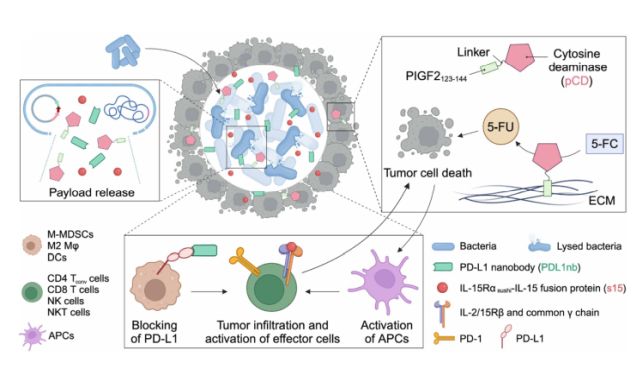
They engineered the bacteria to produce an enzyme called cytosine deaminase. When this enzyme encounters a relatively non-toxic compound called 5-fluorocytosine, or 5-FC, it reacts to produce 5-FU – the aforementioned colorectal cancer chemotherapy drug.
The idea was that the bacteria could colonize a tumor, and the researchers would administer 5-FC separately. Only when the prodrug encountered the bacterial enzyme inside the tumor would it be converted into the cancer-fighting compound.
In theory, this would concentrate the toxic effects of 5-FU where they were wanted while reducing its effects elsewhere in the body.
In the researchers’ initial experiment, while conventional 5-FU slowed tumor growth, the mice lost around 7 percent of their body weight – one indication of systemic toxicity.
When they deployed the bacterial version, that problem receded. Unfortunately, another one emerged.
The treatment actually didn’t shrink the tumors very much at all.
So, the researchers investigated – and discovered a significant flaw in their tiny drug factories: the bacteria were destroying the chemotherapy they had been engineered to produce.
E. coli naturally carries genes called preTA, which allow it to break down 5-FU into a far less toxic compound. So although the engineered bacteria were successfully converting 5-FC into chemotherapy, they were also almost immediately deactivating that chemotherapy.
So, the researchers deleted preTA in their engineered bacteria. And this time, the treatment worked significantly better.
However. This allowed another issue to reveal itself. The localized chemotherapy was indeed activating cancer-fighting immune cells inside the tumors, including T cells and natural killer cells.
But at the same time, the tumors were mounting defenses of their own, including an increase in regulatory T cells and the immune-suppressing protein PD-L1.
So it was back to the bacteria-editing board. This time, in addition to the payload for converting 5-FC into 5-FU, the researchers engineered the E. coli to produce two additional compounds: an IL-15 superagonist to goad cancer-fighting immune cells into battle, and a nanobody that blocks PD-L1, releasing one of the brakes tumors use to suppress an immune attack.
The result was a tiny microbe packing a hefty triple-whammy punch – chemotherapy produced directly inside the tumor, an immune stimulant, and a localized form of immune checkpoint blockade.
And this is where the treatment got really interesting.
In mice with established colorectal tumors, a single injection of the engineered bacteria directly into the tumor, followed by doses of 5-FC, produced significantly better tumor control than either the bacterial immunotherapy or bacterial chemotherapy alone.
Three of the seven tumors completely disappeared – 43 percent.
And there were signs that the effects didn’t remain confined to the affected tumor. The researchers implanted some mice with tumors on both sides of their bodies, but treated only one side.
The treated tumor responded – but, incredibly, growth of the untreated tumor slowed significantly too. When the researchers examined the untreated tumor, they could not detect any trace of the engineered bacteria, suggesting that the treatment had prompted a wider immune response against the cancer.

There is, of course, a long road ahead before this treatment could be used on humans. This was a small experimental study, conducted on mice with artificially implanted tumors, with much of the treatment testing involving bacteria injected directly into the tumors. That may not always be possible with human patients.
Related: A 3-Year-Old’s Metastatic Cancer Disappeared After Two Doses of Experimental Therapy
The researchers say future work will need to test the approach in models that better reflect the complexity of human cancers, as well as test delivery methods suitable for clinical use.
But the demonstration represents a promising step toward targeted cancer treatment that captures the complementary strengths of chemotherapy and immunotherapy while potentially reducing their systemic side effects.
“With a deeper understanding of tumor immunology and emerging biomarkers, this system should help advance cancer chemoimmunotherapy by offering a highly adaptable, targeted, and synergistic approach to overcoming tumor heterogeneity, toxicities, and treatment resistance across a variety of cancer types,” the researchers write.
The findings have been published in Science Translational Medicine.
This article was fact-checked by Rebecca Dyer and edited by Rebecca Dyer. While we pride ourselves on our process, we are only human. If you spot a mistake, please let us know.