





Most weight-loss drugs work largely by reducing appetite and food intake. But an experimental compound appears to work differently: In mice, it helps the body use more of the energy it takes in.
The approach could offer another way to tackle obesity. Instead of only reducing calorie intake, a treatment might also increase the calories the body uses.
In a study published in Science Advances, researchers found that the compound produced an average weight loss of 18 percent in obese male mice over four weeks, without changing how much the animals ate.
Most of the loss came from body fat, while their muscle and other lean tissues were largely preserved.
The compound is called 5-tetradecyloxy-2-furoic acid (TOFA).
A team at the University of California, Berkeley, fed the mice a high-fat diet until they developed obesity. The animals then received TOFA by mouth twice a day for four weeks.
“Food intake was unchanged, physical activity was unchanged, and body temperature did not rise, yet whole-body energy expenditure increased by as much as 18 percent,” senior author Anders Näär, a metabolic biologist at UC Berkeley, told ScienceAlert.

TOFA did not make the mice move more or prevent them from absorbing calories from their food. Instead, it appeared to change how their bodies handled fat and used energy.
The compound seems to work in two ways. It slows the production of new fat and helps cells take up and burn fat for energy.
However, exactly which cellular processes account for the entire additional energy expenditure remains unclear.
The researchers assumed they could reproduce these effects with two separate approaches: one to slow fat production and another to increase fat burning. But the combination did not produce the same results as TOFA.
“Having both activities in one molecule appears to matter, and we still do not fully understand why,” Näär said.
TOFA was first made in the 1970s and has been used in laboratory research for years. According to Näär, its ability to activate fat-burning programs had apparently been there all along, but nobody had looked for it.
The treatment appeared to bring benefits beyond weight loss. It lowered blood sugar and insulin levels, helped the mice respond better to glucose, and reduced fat in their blood and livers.
In other experiments, TOFA also reduced signs of fatty liver disease, including fat buildup, inflammation, and scarring.
Näär stresses that TOFA does not appear to protect muscle directly. Because the mice continued eating normally, most of the weight they lost likely came from fat.
“In our mice it simply did not produce the loss of lean mass that often accompanies weight loss,” he said.
The researchers then combined lower doses of TOFA with the GLP-1-based drugs semaglutide and tirzepatide. These drugs promote weight loss largely by reducing appetite, helping us to lower our food intake.
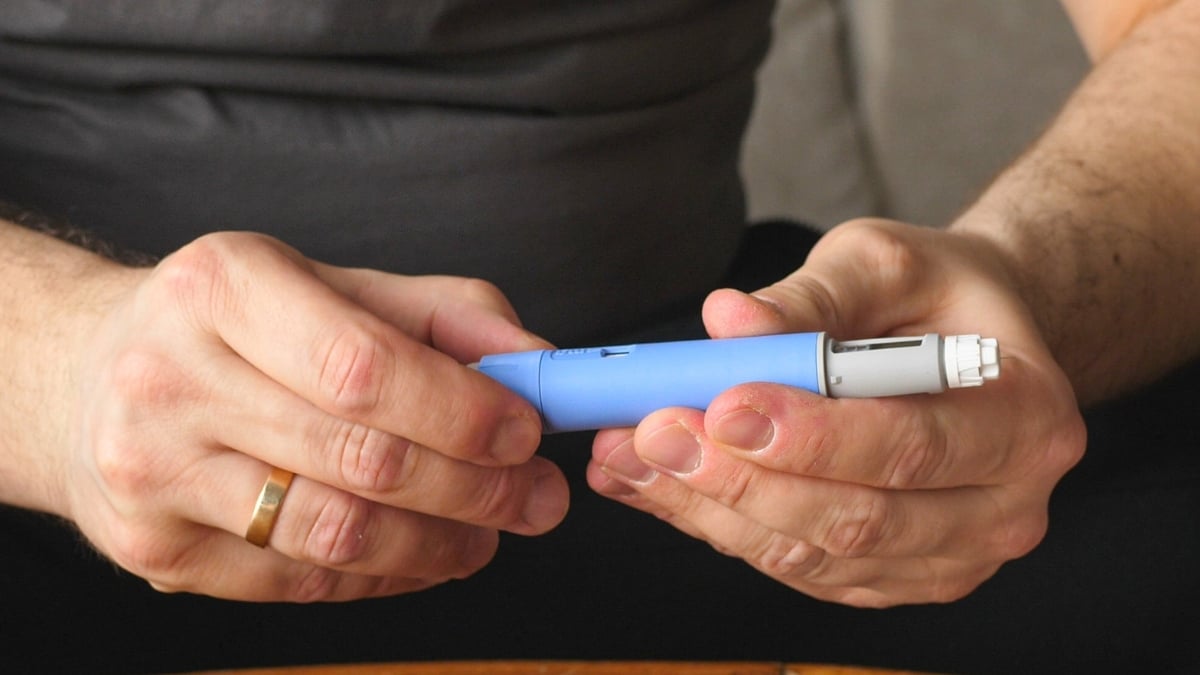
The combinations produced greater weight loss and metabolic improvements than any of the treatments used alone.
The two approaches act on different sides of the body’s energy balance. Semaglutide and tirzepatide reduce energy intake, while TOFA increases energy expenditure in mice.
“That makes combination therapy interesting, because the mechanisms could complement one another instead of duplicating,” Näär said.
In a separate experiment, TOFA-treated mice also maintained their weight for longer after treatment ended, whereas mice given semaglutide rapidly regained weight as their food intake rose.
However, these combination experiments were short and involved small groups of mice. All the live animals used throughout the study were male, so it is not yet known whether TOFA would have similar effects in females.

TOFA has never been tested in humans. The lowest effective dose is unknown, and the compound has not undergone the safety testing required for medical use.
Related: Massive Study Links The Time You Eat Breakfast to How Long You’ll Live
Näär and two other authors of the study are co-founders and equity holders in ReRx Therapeutics, which is developing TOFA as a potential treatment.
The researchers now plan toxicology and efficacy studies in rats and larger animals whose physiology is closer to that of humans. These studies are necessary before human clinical trials can begin.
For now, TOFA is not a new weight-loss treatment. But the findings point to an intriguing idea: It may be possible to help the body lose fat not only by eating less, but also by changing how it uses the energy it receives.
The study was published in Science Advances.
This article was fact-checked by Rebecca Dyer and edited by Rebecca Dyer. While we pride ourselves on our process, we are only human. If you spot a mistake, please let us know.


