



The day-to-day tasks of scientific research are rarely glamorous. As Trevor Rife worked towards his PhD in genetics, he had to extract DNA from freeze-dried tissue by grinding it in a 96-well plate. The process wasn’t difficult — it involved placing a ceramic bead into each well by hand, then capping the plate and shaking it so that the beads would crush the tissue and release the DNA. But picking up and placing beads manually was a chore. Automated bead dispensers existed, but his laboratory couldn’t afford them.
Now, as a plant scientist at Clemson University in South Carolina, Rife has bead dispensers aplenty — but he didn’t buy them. He builds them using a 3D printer. “It’s not like it’s groundbreaking hardware,” he concedes. But at roughly US$10 per bead dispenser, they save him so much time and money that they’re the favourite tools he has made with 3D printing.
Also known as additive manufacturing because of the way it builds objects layer on layer, 3D printing has been embraced by researchers for years — particularly during the COVID-19 pandemic (see ‘3D printing in the literature’). “Companies weren’t shipping materials to labs, but you could get the [printer] filament and 3D-print your own tube racks and things like that,” Rife says. Artificial-intelligence tools are also helping to optimize designs and monitor quality control.
SOURCE: PubMed/Nature analysis
Today, an entry-level 3D printer costs less than $2,500, with the cheapest selling for as little as $200. Bambu Lab in Shenzhen, China, offers several particularly popular options, and Rife has one in his lab — a Bambu X1C, which cost him about $1,200. He also has printers from other companies, such as a Prusa MINI that retails for about $550 and a Voron 0 that can be built from a kit for as little as a few hundred dollars, depending on the configuration.
Nature spoke to five researchers to learn how 3D printing is advancing their research.
Beads and seeds
Rife has designed several simple tools to help plant geneticists with their research, including a tray for counting seeds, squares to sort seeds by size and a hole-punch adapter for tubes used to collect tissue. His aim is to make plant research more accessible for researchers around the world. It’s so much easier, he explains, to e-mail someone a design file than it is to ship a piece of equipment.
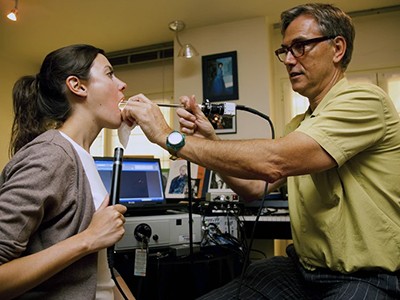
World’s smallest 3D bioprinter could rebuild tissue during surgery
Like many ‘makers’, Rife shares his designs, which are usually created using the product-development software Autodesk Fusion. He uploads them to the online code repository GitHub and to design-sharing websites such as Thingiverse and Printables. The designs are even customizable, Rife says. His bead dispenser, for example, can be adapted for 12-, 24- and 48-well plates, and researchers can adjust the size and shape of the holes in the seed counter to match the seeds they’re working with. Rife designed the files such that changing one parameter alters others accordingly. Telling the software to make the holes bigger, for instance, also increases the space between them so that they don’t overlap.
“You have the opportunity to add that customization layer and make these bespoke tools for science,” Rife says. “It’s only really limited by your creativity and your imagination.”
How to get a head
At Chiba University in Japan, electrical engineer Irwansyah and his colleagues study bone conduction to understand how sound is transmitted through the human skull. Bone conduction can be used to amplify sounds in hearing aids. However, sound travelling to the opposite ear can confound the signal.
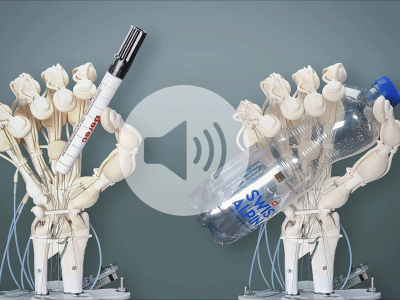
How to 3D print fully formed robots
To understand and even block this unwanted ‘crosstalk’, Irwansyah 3D-prints anatomically accurate skulls, covers them with silicone skins and adjusts them to study different aspects of sound conduction. None of the commercially available devices for simulating the human head was suitable for these studies, so he and his colleagues took a publicly available magnetic resonance imaging (MRI) model of a man and modified it for their purposes, removing parts they didn’t need and adding an opening for a sensor. The 3D-printed skull is made of a rigid thermoplastic called acrylonitrile butadiene styrene and Irwansyah tested various mixtures of silicone to find a skin analogue that transmitted vibrations most realistically. Using that design, he is investigating whether the dummy head can match the sound pattern found in human studies.
These 3D-printed skulls are cheaper and easier to work with than are commercial versions, Irwansyah says — and they have other perks. “Depending on the research question, we can change the design, sensor location, skull structure or the outer material.” He has, for instance, added models of ear canals and placed microphones where the eardrums would be. He has even placed sensors where the cochleae of the inner ear are usually located to detect when he has managed to block crosstalk in experiments.
Go with the flow
Magda Barecka, a chemical engineer at Northeastern University in Boston, Massachusetts, uses 3D printing to build flow reactors for use in electrochemistry. These devices enable chemical reactions to run continuously by pumping liquid or gas through channels. They can be used to convert carbon dioxide to different chemicals and fuels, turning a greenhouse gas into useful materials. A basic commercially available flow reactor can cost $6,000, but the ones that Barecka constructs cost less than $5 each. Researchers have to assemble them, however, joining 3D-printed pieces, such as a plastic plate containing serpentine channels, with rubber gaskets and copper electrodes cut from commercial materials.
3D printing gets a twist from a novel nozzle