



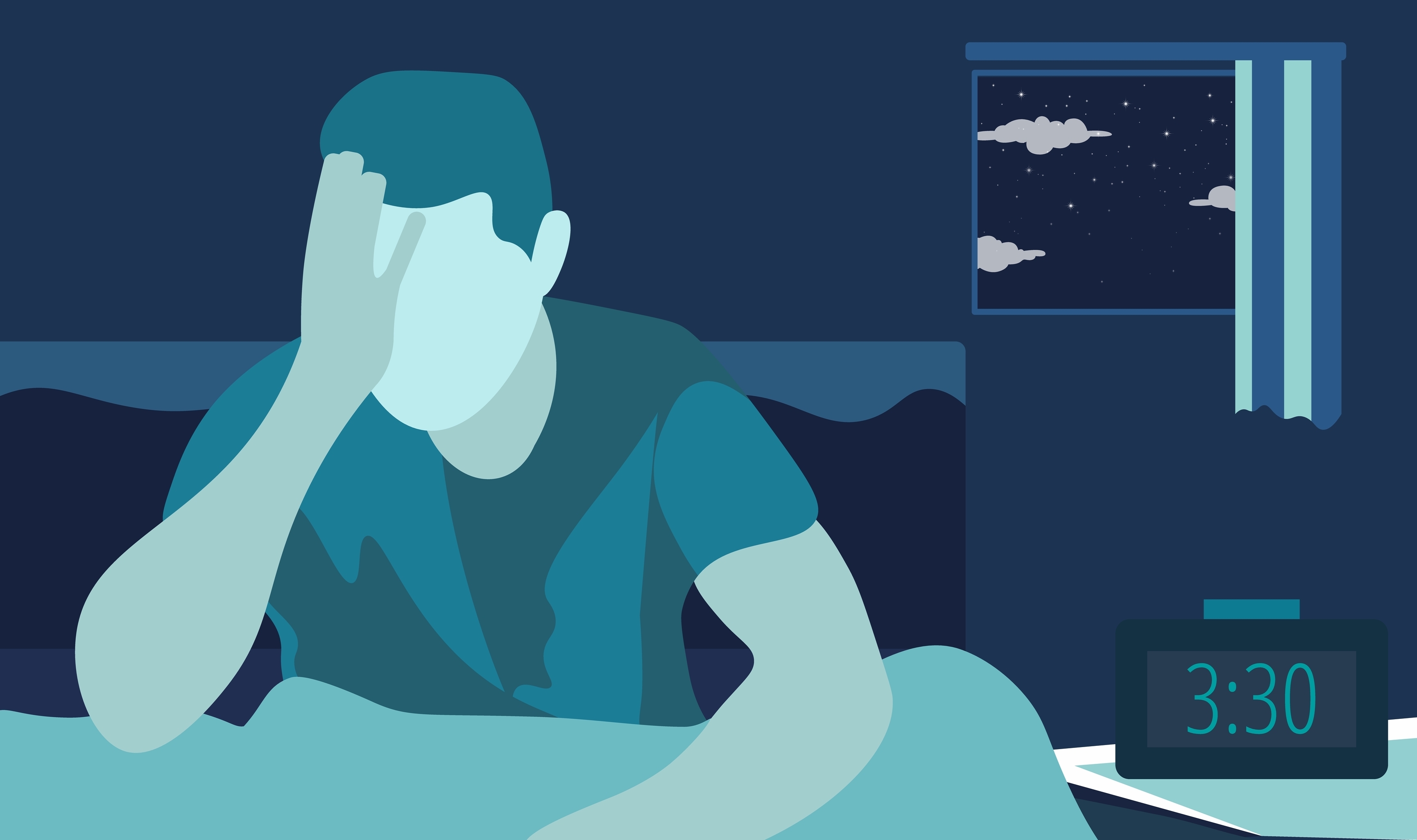
Every Dune fan knows fear is the mind killer, but it might also be the sleep killer.
Fear and sleep share a close bond, according to research, with insomnia increasing the risk of developing fear and anxiety disorders and fear and anxiety disorders robbing people of a good night’s sleep. Additionally, insomniacs live in a state of chronic hyperarousal, with their fight-or-flight systems humming away in the background even when there’s no threat.
Simply put, it’s an exhausting cycle. Now a new study published in PLOS Mental Health might give researchers a better way to understand the relationship between fear and sleep.
Read more: “Here’s Why Some Insomniacs Can’t Sleep”
Our brains overcome fear through a process called “fear extinction.” During fear extinction, we form a new inhibitory “safety memory” that combats our existing fear memory, essentially learning that a fear-causing stimulus isn’t a real threat (this is the basis of exposure therapy). Because sleep helps consolidate learning and regulate our emotions, insomnia likely gums up the works.
To find out, psychologists recruited 24 insomniacs and 24 good sleepers and put them through a classic fear conditioning process. They showed participants colored images while zapping them with a mild electric shock to cultivate a fear response. They then showed them the images without shocking them, so they could learn there was no threat. During the process, the team recorded the electrical conductance of their skin, which directly measures tiny fluctuations in sweat as a proxy for arousal. According to their findings, those with insomnia not only had stronger reactions to the conditioning they also struggled with fear extinction.
In this new investigation, a group of researchers (including some from the previous study) developed fresh statistical models based on the old data. One model estimated stress and arousal using only the isolated spikes in their skin conductance, while the other model incorporated background levels in conductance to account for hyperarousal.
They found that only the background model detected significant differences between the groups. The “high arousal index” they developed increased in those with insomnia but slightly decreased in good sleepers. “In our study, people with insomnia, compared to their good sleeping peers, became more aroused once the danger was taken away,” study author Ryan Bottary of Harvard Medical School explained in a statement. “For patients, this may help explain why the fear that ‘a bad night will ruin tomorrow’ survives so many tomorrows that turn out just fine.”
If only losing sleep wasn’t something to lose sleep over.
Enjoying Nautilus? Subscribe to our free newsletter.
Lead Image: New Africa / Shutterstock